
What 75% Cotton 25% Linen Paper Is and How It Prints


Emma is our prepress and print production voice, built from the knowledge of our production team, with over 20 years in printing.
The ratio behind US currency paper, explained by a printer: what the two fibers each do, how rag stock behaves under ink, and when a linen finish is the smarter buy.
75 cotton 25 linen paper is a sheet pulped from 75 percent cotton fiber and 25 percent flax, the plant linen comes from, with no wood pulp at all. Cotton gives the sheet its soft hand and bulk, flax gives it snap and fold strength, and the absence of wood pulp means no lignin, so the paper does not acidify or yellow. It is a fiber specification, not a texture, which is what separates it from the linen finish embossed into ordinary card stock.

Quick answer
Three parts cotton, one part flax, zero parts wood
The name describes what the pulp is made of, not what the surface looks like. Cotton linters and rag supply bulk and a soft hand. Flax, the linen plant, supplies stiffness, tear resistance and most of the fold endurance. That combination is why the ratio ended up on currency, on legal documents and on the stationery people keep.
What the 75/25 Blend Is Made Of
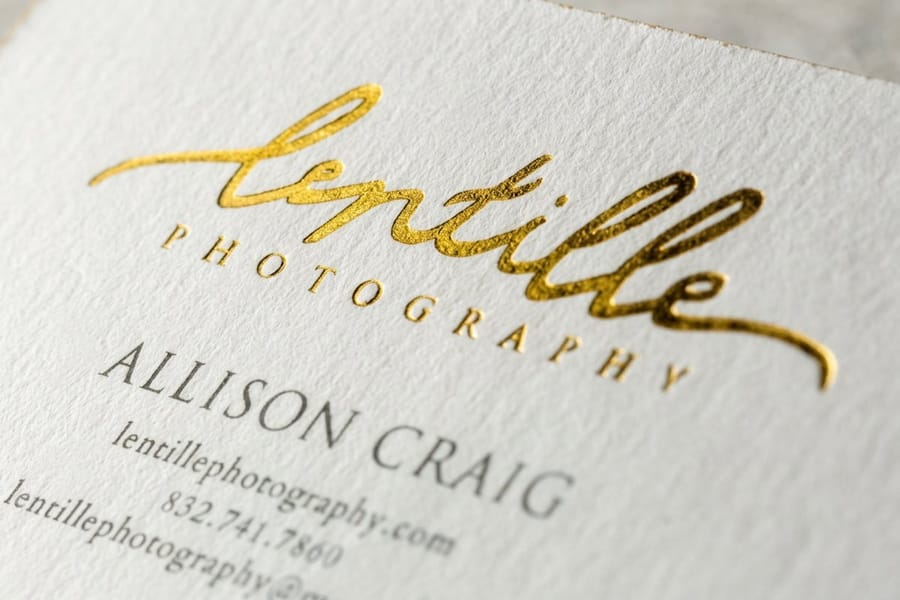
The number is a furnish, the mill term for what goes into the pulp before a sheet exists. Seventy five parts cotton, twenty five parts flax, and no wood at all.
Cotton in papermaking is not the fluffy part of the boll you think of. It is mostly linters, the short fibers left on the seed after ginning, plus cotton rag and cutter waste from textile mills. Flax is the same plant linen cloth is woven from, and paper mills use the long bast fibers from the stalk. Both are close to pure cellulose. Wood is roughly half cellulose and the rest is lignin and extractives, which is the whole reason the two sheets behave so differently over time.
Fiber length is where the ratio earns its keep. A softwood pulp fiber runs a few millimetres. Cotton runs twenty to thirty. Flax runs longer still. Longer fibers interlock across a greater distance, so the bond that holds the sheet together is mechanical as well as chemical, and a crease bends the network instead of snapping it. The Bureau of Engraving and Printing puts a banknote at roughly four thousand double folds before it fails. A sheet of copy paper gives up long before that.
So why not one hundred percent cotton? Cotton alone makes a soft, slightly limp sheet. Flax adds stiffness and tear strength, the crispness you hear when a note is snapped between two hands. Twenty five percent is enough to get that without losing the cotton hand. If you want the wider stock picture, our guide to paper stocks puts rag alongside the coated and kraft options.
How Cotton Linen Stock Feels and How It Prints
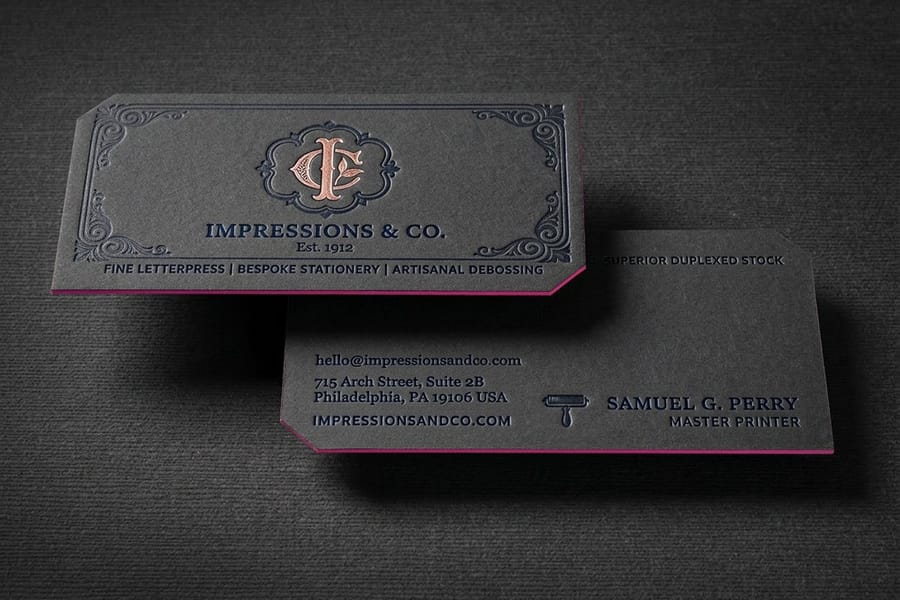
Pick up a rag sheet and the first thing you notice is that it is warm and slightly soft, closer to fabric than to a file folder. It has no shine at all, and it takes a fingernail mark if you press hard. That softness is the whole story of how it prints.
Uncoated cotton is absorbent. There is no clay layer holding ink on the surface, so the vehicle wicks into the fiber and pulls pigment with it. Practical effects: halftone dots gain, fine reversed type can fill, shadow areas plug, and colors dry back lighter than they looked wet.
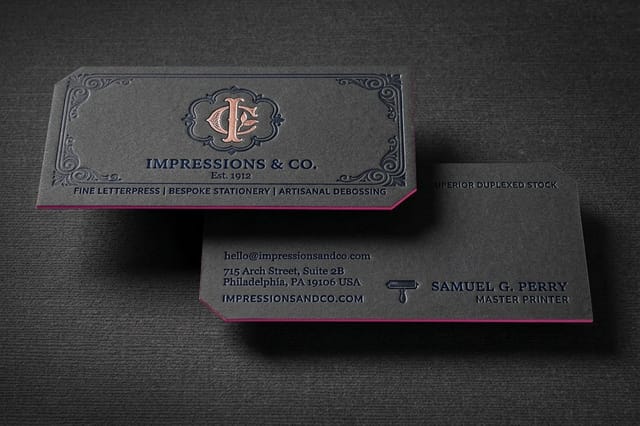
What that same softness gives you is impression. Traditional letterpress runs on soft stock because the sheet has to compress and hold the shape. Our letterpress business cards take a different route: 32pt or 48pt silk or velvet laminated board, thick enough to take embossing and debossing, not a soft rag sheet. On real rag, foil sits flat and bright against the matte fiber, and embossing holds a crisp shoulder because the fibers move rather than crack. The letterpress business cards story shows that impression card by card.
Two limits worth knowing before you commit. Toner adhesion on a textured, absorbent sheet is unreliable, so a rag card is a bad candidate for anything you plan to run through an office laser printer afterwards. And rag stock does not hide fingerprints or scuffs the way a soft touch laminate does, so a card that lives loose in a bag will show its history. If longevity in a pocket matters more than hand, our finish comparison is the better starting point.
Cotton Fiber Versus Linen Finish, and Why the Difference Costs Money
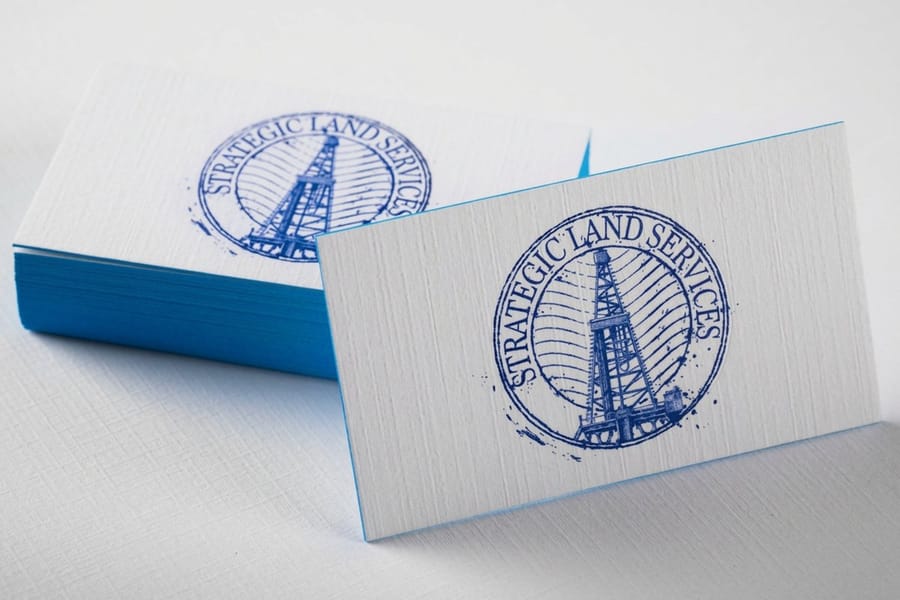
A designer asks for linen paper, a printer sends a linen finish sample, and the client who was thinking of banknote stock gets a wood pulp sheet with a woven pattern rolled into it. Both are real products. They are not the same thing and they do not cost the same.
| Stock | What it is | How it prints | What you pay it for |
|---|---|---|---|
| Cotton or rag | A fiber recipe set at the mill, cotton with or without flax, no wood pulp. | Absorbent and uncoated. Type and foil sing, photographs go soft. | Hand, longevity and impression depth. The most expensive of the three. |
| Linen finish | An ordinary sheet with a woven crosshatch embossed into the surface after making. | Prints like the base stock. The texture breaks up solids slightly and hides minor marks. | The look of woven cloth at a fraction of rag pricing. |
| Coated card | Wood pulp board with a clay coating, then matte, gloss or soft touch. | Holds ink on the surface. Sharpest detail and the most saturated color of the three. | Color fidelity, image reproduction and the lowest price per card. |
Read the last column and pick by what the piece has to do. Our ultra thick linen business cards start at $377.68 for 250 and put the woven texture on a heavy board, which is the right answer when you want texture under the thumb and full color on the face. Our cotton business cards print on 45pt Cotton, which is the right answer when the card is meant to be kept. Linen presentation folders at $844.54 for 250 carry the same texture, on 14pt White Linen, up to a folder that has to survive a meeting and go into a file. Tap through the cotton business cards and linen presentation folders stories to see both finished.
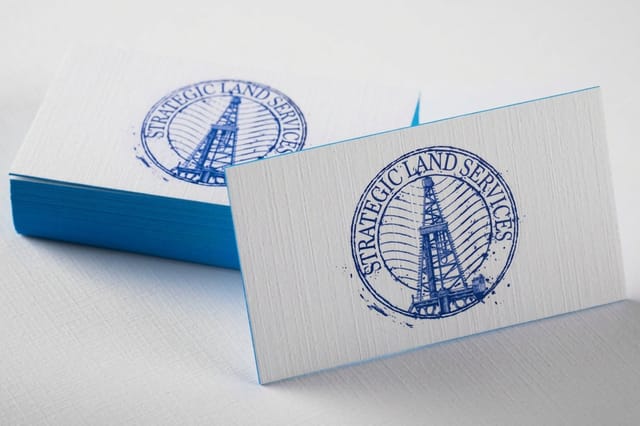
One tell in the field: run a thumbnail across the surface. A finish is a regular repeating pattern that stops at the edge of the sheet. A rag sheet is irregular all the way through, and the edge shows a slightly fuzzy fiber rather than a clean cut line.
Where the Blend Is Worth Paying For
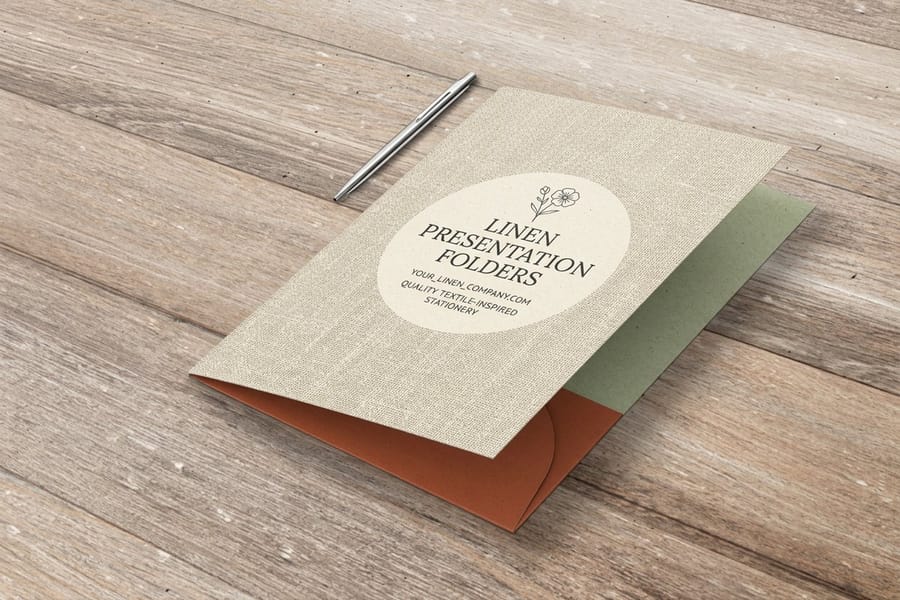
Rag stock buys two things: how the piece feels in a hand and how long it survives. Order it wherever both matter, and skip it wherever neither does.
It earns its price on cards handed over in person by people whose work is judged on judgement, such as architects, law firms, private bankers, tattoo artists and photographers. It earns it on wedding and event stationery, where the piece is read slowly and often kept. It earns it on certificates, diplomas and signature pages that have to still look right in twenty years. And it earns it on anything letterpressed, foiled or embossed, because those processes need a sheet that moves.
It does not earn its price on a trade show run of two thousand cards, on direct mail that gets skimmed, or on a design built around a photograph. In those cases spend the money on a heavier coated board or a soft touch laminate and keep the budget where it does something visible. Standard business cards start at $17.57 for exactly that reason, and the standard business cards story shows the coated stocks that price buys.
Before you order, get the file right. Rag stock is uncoated, so build with slightly more contrast than looks correct on screen, keep reversed type above six point, avoid heavy full bleed coverage that will cockle the sheet, and set solid brand colors rather than photographic gradients. Start from a correctly sized layout in the blank template library, check the trim and safety numbers in our business card stock guide, and then compare the live specs and quantity breaks in the configurators below. The full range sits in the cotton printing collection.
Wally explains the 75/25 sheet
Cotton for the hand, flax for the snap, wood for neither
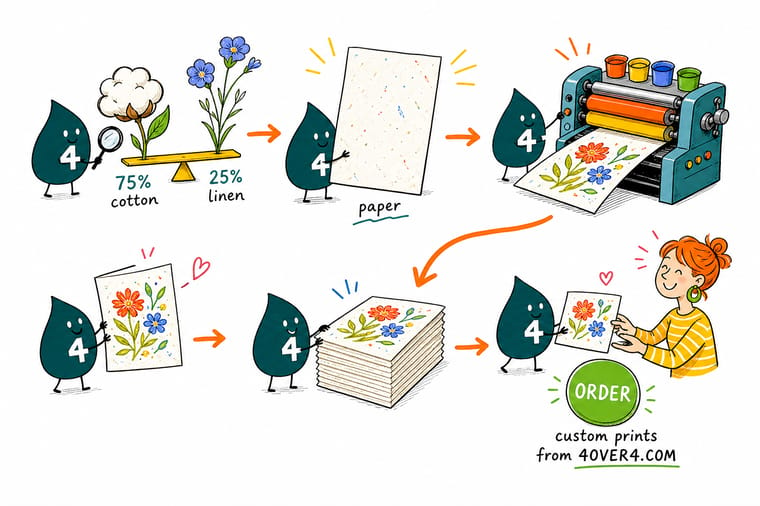
Wally throws three scoops of cotton into the vat and one scoop of flax, and skips the wood pulp entirely. Cotton makes the sheet soft and full. Flax makes it stiff enough to snap and stubborn enough to survive a crease. Because neither fiber carries lignin, nothing in the paper turns acid, so it stays the color it started. Hand him type, a foil block or a letterpress plate and it comes out beautifully. Hand him a photograph and the ink sinks in.
Order cotton business cards →
Specs and pricing
Cotton, linen and letterpress stock side by side
Cotton business cards run on 45pt Cotton from $328.42 for 250, ultra thick linen cards on 24pt White Linen from $377.68 for 250, and letterpress cards from $251.36 for 250. All three come in 2 x 3.5, 1.5 x 3.5 and 2.5 x 2.5 inches, and the live quantity breaks from the 4OVER4.COM configurator sit below.

Print it
Order a sheet people notice before they read it
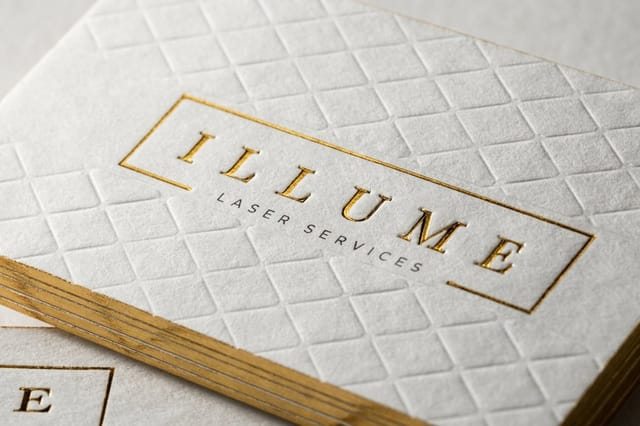
Add foil stamping, debossing, edge painting or 1/8 or 1/4 inch rounded corners to the cotton or linen card in the configurator, and plan for 15 business days of production on all three.

Explore more
Where to go next
Compare linen against matte, gloss and kraft, see every card stock from 13pt uncoated up to cotton, sort out matte against uncoated, and translate points and GSM into what you feel in the hand.



By the numbers
Specialty stock printed across 25 years
Common Questions
Your cotton linen paper questions, answered
What is 75 cotton 25 linen paper?
It is paper made from a furnish of 75 percent cotton fiber and 25 percent flax fiber, the plant linen is woven from, with no wood pulp in the mix. Cotton supplies bulk, softness and a warm hand. Flax supplies the snap, the tear resistance and most of the fold endurance. The blend is best known as the paper the Bureau of Engraving and Printing uses for United States currency, and the same recipe appears in high end stationery, archival documents and artist papers.
Is 75/25 cotton linen paper the same paper as a dollar bill?
The fiber ratio is the same, but currency paper is not something you can buy. Banknote stock carries embedded red and blue security fibers, a dandy roll watermark, an embedded security thread and a mill supply contract that is restricted by law, and reproducing it is a federal offence. What you can buy is commercial cotton stock without the security features; our cotton business cards list a 45pt Cotton stock and no blend recipe.
Does cotton paper yellow over time?
Not the way wood pulp paper does. Yellowing and edge browning come from lignin, the natural binder in wood that oxidises and produces acid inside the sheet. Cotton and flax fibers are nearly pure cellulose with no lignin, so a rag sheet has nothing to acidify. That is why archives, legal offices and watercolour makers specify cotton content.
Can you print full color photographs on cotton stock?
You can, and most of the time you should not. Uncoated cotton is absorbent, so ink spreads into the fiber, halftone dots gain, shadow detail closes up and saturated colors dry back noticeably lighter than the same file on coated stock. Type, line art, solid brand colors and foil all look superb. A product photograph does not. If the design is image led, print it on a coated sheet such as our standard business cards and keep the cotton for the piece that gets handled.
What is the difference between cotton paper and linen finish paper?
One is what the sheet is made of, the other is what was pressed into it. Cotton paper is a fiber specification set at the mill. Linen finish is a mechanical embossing step that rolls a woven crosshatch into an ordinary sheet after it is made, which is what our ultra thick linen business cards carry. Both are legitimate, they just solve different problems: fiber buys longevity and hand, texture buys appearance for a lot less money.
How much does cotton business card stock cost compared with standard cards?
Cotton cards cost about $1.31 each in a run of 250, against about 18 cents each for 100 standard cards, so this is a deliberate upgrade rather than a small one. Letterpress business cards, on 32pt or 48pt silk or velvet laminated board, start at $251.36 for 250. The sensible pattern is to run cotton for the people who will keep the card and a coated stock for volume handouts, rather than paying rag prices for a card that goes in a fishbowl.
Get Started
Print cotton and linen cards that hold an impression
Pick your stock, set the quantity, and we print cotton and linen cards that hold an impression, keep their color, and feel like the work they represent.
Legal Disclaimer
Gold Standard guarantees apply to all standard orders placed through 4over4.com. Price match requires verifiable proof of a competitor's published price for an equivalent product with matching specifications and turnaround time. Satisfaction guarantee covers manufacturing defects and print quality issues. Contact support with order number and documentation.
