
14pt vs 16pt vs 32pt Business Cards Compared by Feel, Cost and Turnaround


Emma is our prepress and print production voice, built from the knowledge of our production team, with over 20 years in printing.
14pt converts to about 0.36 mm, 16pt to about 0.41 mm and 32pt to about 0.81 mm. Three thicknesses, three different jobs: the real caliper numbers show where a heavier stock stops paying for itself, and each one costs you something in turnaround time.
A point is one thousandth of an inch, so 14pt measures 0.014 in, 16pt measures 0.016 in and 32pt measures 0.032 in, which is thicker than a credit card. 14pt is the everyday card for volume handouts, 16pt is the small upgrade that survives a wallet and holds a soft touch finish better, and 32pt is a statement card that costs you turnaround time, shipping weight and the ability to mail it easily.

Quick answer
Two thousandths of an inch, then a jump to a different object
14pt and 16pt are close relatives. 32pt is not. The step to 32pt doubles the caliper and changes how the card ships, files and mails. Choose by what the card must survive: volume handouts at 14pt, your everyday card at 16pt, and 32pt only when the object itself is part of the pitch and the calendar allows it.
Conversion
14pt to mm
14pt is 0.014 in, which is 0.3556 mm, so call it 0.36 mm. A point is one thousandth of an inch and an inch is 25.4 mm, so you multiply the point value by 0.0254 to get millimeters. The same math puts 16pt at 0.41 mm and 32pt at 0.81 mm. Stack 100 cards at 14pt and you get about 1.4 in, roughly 36 mm. In our configurator you meet 14pt as 14pt Gloss Cover, 14pt Uncoated Cover (30% PCW), 14pt Cream Uncoated Cover (30% PCW) or 14pt White Linen on Standard and Premium Business Cards.
Side by side
14pt card stock vs 16pt
16pt card stock is 0.002 in thicker than 14pt, about 0.05 mm, and both run on Standard and Premium Business Cards with a 3 business day standard turnaround. You pick them from the same size list: 2 x 3.5, 2 x 2, 1.5 x 3.5 or 2.125 x 3.375 inches, or a custom size, printed on one side or both. Take 14pt for handouts a team burns through, where 100 cards stack about 1.4 in. Take 16pt, as 16pt Gloss Cover, 16pt Uncoated Cover or 16pt Uncoated with Soft Touch, for the card you want judged, since it keeps square corners in a wallet and gives spot UV a firmer base.
What 14pt, 16pt and 32pt Actually Measure
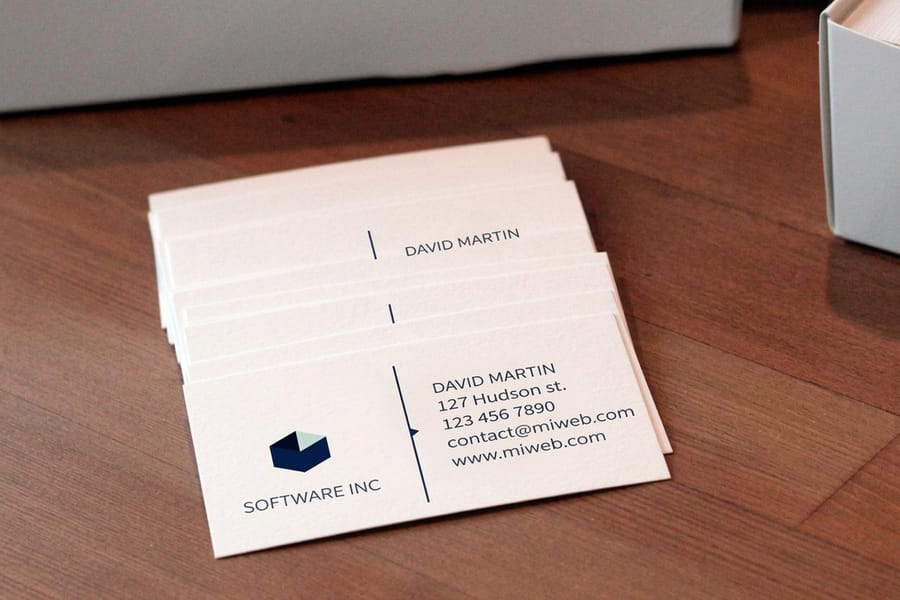
A point in cardstock is one thousandth of an inch of thickness. It is a caliper measurement taken with a micrometer, not a weight, and that single fact clears up most of the confusion in this comparison.
Line the three up edge on and the first two look like the same card. The third looks like a different object.
| Stock | Caliper | 100 cards stack | Reads as | Standard turnaround at 4OVER4.COM |
|---|---|---|---|---|
| 14pt | 0.014 in / 0.36 mm | About 1.4 in | The normal card, the one everybody has | 3 business days |
| 16pt | 0.016 in / 0.41 mm | About 1.6 in | Slightly more substantial, quietly better made | 3 business days |
| 32pt | 0.032 in / 0.81 mm | About 3.2 in | A deliberate object, thicker than a credit card | 5 business days uncoated, 15 silk laminated |
Two stocks at the same point value can still feel different, because coating, texture and fibre change what a fingertip reports. A 14pt uncoated sheet feels warmer and softer than a 14pt gloss sheet measured at the same caliper. If you want the full ladder from 10pt through 80pt, the business card thickness chart lays out every step, and business card stock explained covers what each surface does.
The 14pt to 16pt Step, and Whether Anyone Notices
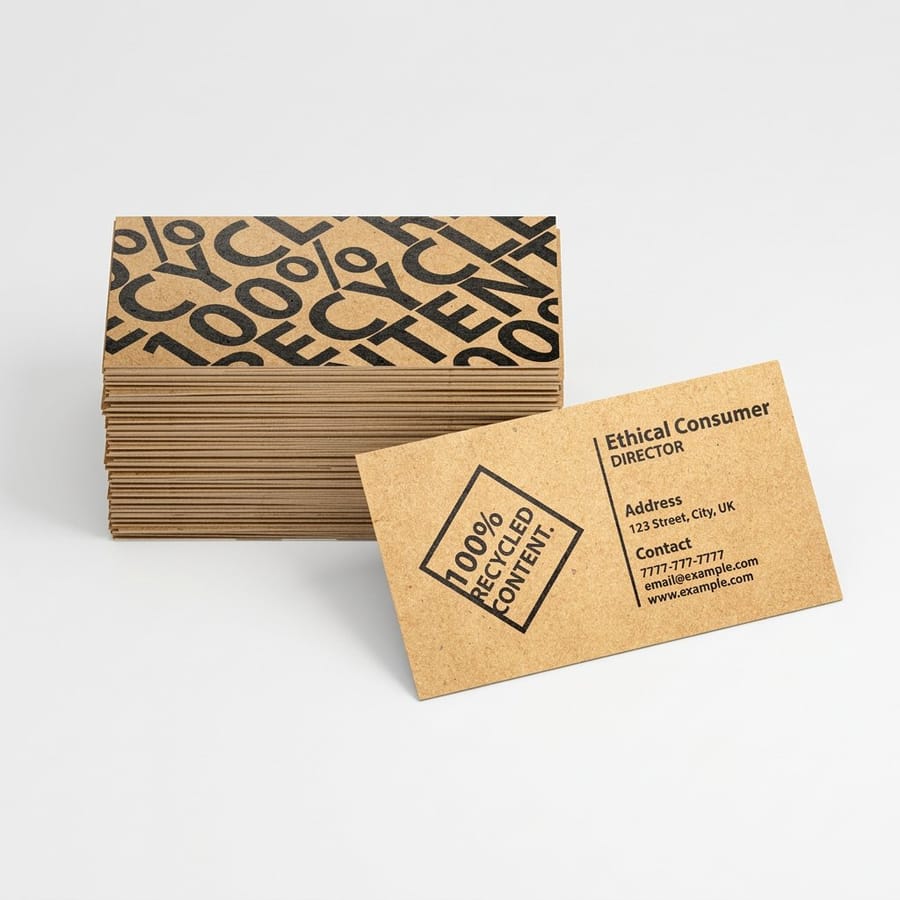
Be honest about this one. The gap is about half a sheet of ordinary copy paper, and that does not register on its own.
What they notice is what happens next. A 14pt card that lives in a back pocket for a month picks up soft corners and a slight bow. A 16pt card in the same pocket comes out flatter and squarer. Hold one card between finger and thumb and flex it: the 14pt gives, the 16pt resists.
There is a technical reason to prefer 16pt too. Soft touch laminate and spot UV both sit on the surface and reward a base that does not flex, so the raised gloss stays sharp and the velvety film reads more evenly. If you are already paying for a finish, put it on the heavier sheet. Our guide to matte, gloss and soft touch goes through how each finish behaves.
The cost step is small. Standard Business Cards and Premium Business Cards both start at $17.57 per 100 on 14pt Gloss Cover, and 16pt Gloss Cover adds 27 percent to that on the same run and the same 3 business day standard turnaround.
Both calipers sit in the same order screen. Choose the size, then color on the front only (4/0), a black back (4/1) or both sides (4/4), then add High Gloss UV coating or rounded corners at a 1/8 or 3/8 inch radius if you want them. Runs start at 100 cards and climb in steps past 10,000. Upload a file built at the trim size with bleed, or start from a blank template so the border lands even after the cut.
Where 32pt Earns Its Cost, and Where It Fails
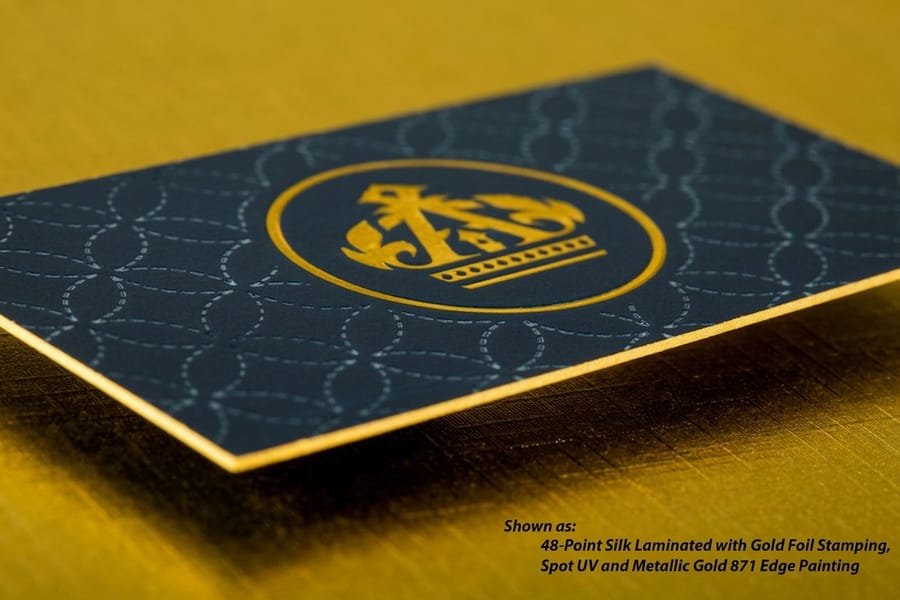
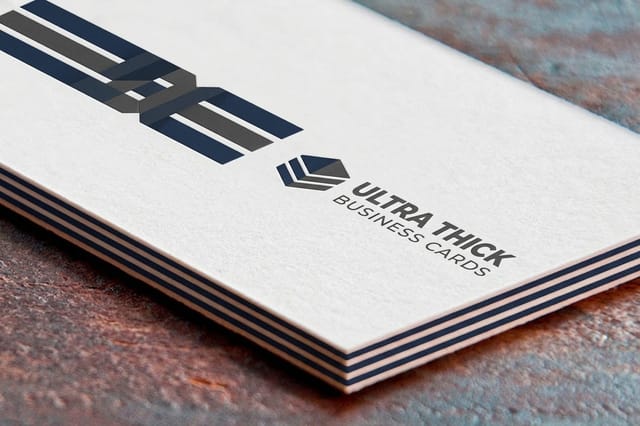
A 32pt card gets a reaction. It cannot be bent casually between two fingers. For a designer, an architect, a real estate agent or anyone pitching work where the object itself is part of the argument, that reaction is the whole point.
Thickness also buys you finishes that thin stock cannot carry. Edge painting needs an edge worth looking at, so it starts to make sense at 32pt and climbs from there. Foil and spot UV press cleanly because the card does not give under the tool. Ultra Thick Silk Laminated Business Cards combine 32pt or 48pt stock with a soft touch silk film and list foil, spot UV and edge painting as upgrades. The short ultra thick silk laminated business cards video shows that stock before you commit a run, and the full range of 32pt business cards and lighter calipers sits in one place.
Now the costs. Turnaround is the big one: the silk laminated version runs a 15 business day standard turnaround against 3 days for a normal card, which kills it as an option for a trade show three weeks out. Price scales the same way, from $251.36 per 250 on the silk laminated stock. The plain route is far gentler, with Ultra Thick Business Cards starting at $36.62 per 50 on 32pt, running up through 48pt, 64pt and 80pt uncoated plus 40pt, 56pt and 72pt gloss, on a 5 business day turnaround.
Then there is handling. A box of 100 at 32pt is about 3.2 in deep, so it takes real room in a bag and real weight in a shipment. Slim card cases sized for normal stock will not close on them. Mailing them in volume gets awkward, because thickness works against the uniform, flexible piece that automated postal equipment prefers. If cards go out with parcels or inside envelopes every week, print those at 14pt or 16pt and keep the thick stock for the meetings that matter.
Which One to Order, and What to Buy It From
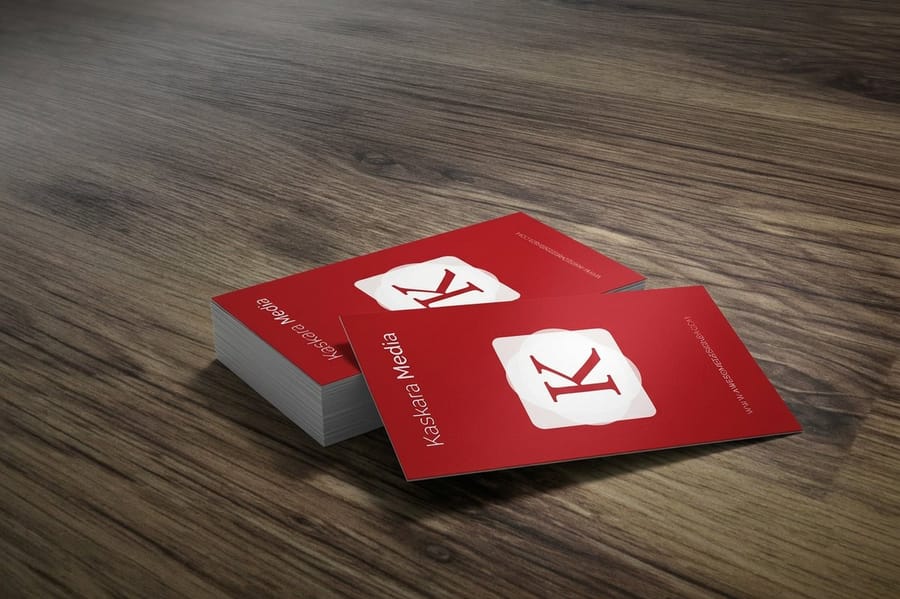
Pick by what the card has to survive, not by what sounds premium.
- High volume handouts, mailers, anything a team burns through. 14pt. It is the cheapest per card, it ships in 3 business days, and 100 of them fit in a jacket pocket.
- Your everyday card, the one you actually want to be judged on. 16pt. A firmer base under soft touch or spot UV, at the same 3 business day standard as 14pt.
- A card handed over once, where the object is part of the pitch. 32pt or heavier. Budget the turnaround before the money, especially on silk laminated stock.
Our product lines are not thickness tiers. Standard Business Cards carry 73 stocks and Premium Business Cards carry 74, and both run from 13pt up to 80pt, with soft touch, kraft, synthetic plastic, rigid PVC and indoor magnet stocks on both menus. The one difference is 26pt Metallic Pearl Ice, which only Premium lists. Ultra Thick Business Cards is the line that starts at 32pt rather than reaching it, and Silk Laminated Business Cards from $74.53 for 250 sit in between if you want the soft touch film without the 32pt caliper and the 15 day wait. For a raw brown look at the same thickness, Ultra Thick Kraft Business Cards run on 32pt to 80pt kraft made from 100% recycled fiber, and Ultra Thick Kraft Hangtags use the same kraft board with a drilled hole for retail tags.
Before you commit a run, settle the size and the bleed. Cards are trimmed after printing, so a border that looks even in the file can look uneven on a thick stock where the trim edge is more visible. Start from a correctly built file in the blank template library, check the measurements against the business card size guide, and browse the whole range on business cards printing. If the soft touch feel is what you are really chasing, what silk laminated business cards are explains where that film helps and where it does not.
Wally measures the stack
Fourteen, sixteen, thirty two, in thousandths of an inch

Wally puts the micrometer on all three. The 14pt card reads 0.014 in and flexes when he squeezes it. The 16pt reads 0.016 in, only two thousandths more, and it stays square after a month in his pocket. The 32pt reads 0.032 in and beats the credit card next to it. He can only fit a third as many in the same box, and the silk laminated version takes 15 business days to make. Thickness is a trade, never a free upgrade.
Compare every business card stock →%22%2F%3E%3Ccircle%20cx%3D%2240%22%20cy%3D%2249%22%20r%3D%2225%22%20fill%3D%22%232dd4bf%22%20opacity%3D%220.15%22%2F%3E%3Ccircle%20cx%3D%2278%22%20cy%3D%2258%22%20r%3D%2214%22%20fill%3D%22%232dd4bf%22%20opacity%3D%220.1%22%2F%3E%3Crect%20x%3D%2270%22%20y%3D%2228%22%20width%3D%2225%22%20height%3D%2234%22%20rx%3D%224%22%20fill%3D%22%232dd4bf%22%20opacity%3D%220.08%22%20transform%3D%22rotate(35%2080%2030)%22%2F%3E%3C%2Fsvg%3E)
Specs and pricing
The three lines side by side, with live prices
Standard and Premium start at 100 cards. Ultra Thick Silk Laminated comes only in 32pt or 48pt, in runs of 250, 500, 1,000 or 2,000. Configure each one and watch the price move with the stock, the quantity and the turnaround.

Print it
Order the thickness that suits the job
Standard and Premium Business Cards share the 14pt and 16pt stocks, with Premium adding a 26pt Metallic Pearl Ice sheet, and Ultra Thick Business Cards start at 32pt and climb to 80pt.
%22%2F%3E%3Ccircle%20cx%3D%2241%22%20cy%3D%2245%22%20r%3D%2226%22%20fill%3D%22%2314b8a6%22%20opacity%3D%220.15%22%2F%3E%3Ccircle%20cx%3D%2280%22%20cy%3D%2262%22%20r%3D%2226%22%20fill%3D%22%2314b8a6%22%20opacity%3D%220.1%22%2F%3E%3Crect%20x%3D%2271%22%20y%3D%2221%22%20width%3D%2226%22%20height%3D%2232%22%20rx%3D%224%22%20fill%3D%22%2314b8a6%22%20opacity%3D%220.08%22%20transform%3D%22rotate(6%2080%2030)%22%2F%3E%3C%2Fsvg%3E)
Explore more
Where to go next
Six next reads: the full business card thickness chart, what each card surface does, matte against gloss against soft touch, what cards cost as the stock gets heavier, the whole business card range, and the 32pt and 48pt silk laminated card.




By the numbers
From 14pt gloss to 48pt silk
Common Questions
Your card thickness questions, answered
Is 16pt worth paying more for than 14pt?
Usually yes, though not because of how it feels in one hand. The 0.002 in difference is not something a recipient consciously registers when a single card lands in their hand. What it changes is durability and finish behavior: a 16pt card holds its corners better in a wallet, resists the soft curl that a 14pt card picks up in humidity, and gives a soft touch laminate or spot UV a firmer base to sit on. At 4OVER4.COM, 16pt Gloss Cover adds 27 percent to the 14pt Gloss Cover price on the same run, a small step rather than a hard price wall.
How thick is a 32pt business card compared to a credit card?
Slightly thicker. A payment card is 0.030 in, or 30 mil, and a 32pt card is 0.032 in, about 0.81 mm. That is the practical reason a 32pt card gets a reaction across a table, and also the reason it does not behave like a normal card afterward. A stack of 100 at 32pt is about 3.2 in deep against 1.4 in at 14pt, so a box takes more room in a bag and more weight in a shipment.
Will a 32pt card fit in a wallet or a card holder?
A wallet, yes, one or two at a time. A slim metal card case sized for 14pt or 16pt stock, often not, and a business card sleeve in a binder will fight it. If your cards are meant to be carried in bulk by a sales team, or filed by a client, stay at 14pt or 16pt and spend the money on the finish instead. If the card is handed over once, at an event or a pitch, the thickness does the work.
Can I mail 32pt business cards?
You can, inside an envelope, but check the piece before you commit to a run. Thick cards push a mailer past the thickness that automated postal equipment likes, and machinable rates depend on the whole assembled piece staying uniform and flexible. Cards that travel by mail in volume are better printed at 14pt or 16pt. Save the thick stock for what you hand over in person.
Which thickness do I need for edge painting, foil or spot UV?
Edge painting needs a visible edge to paint, so it wants 32pt and up. Foil and spot UV work on 14pt and 16pt, and they look sharper on the heavier stock because the card does not flex under the pressure. Our Ultra Thick Silk Laminated Business Cards list foil, spot UV and edge painting as optional upgrades on 32pt and 48pt silk laminated stock.
Does a thicker card cost more to ship?
Yes, and it is easy to forget when comparing print prices. Thickness is volume and weight, so 2,000 cards at 32pt fills roughly the space of 4,500 at 14pt. On a single box it is small. On a launch where a card goes into every one of a few thousand outgoing parcels, the stock choice is a freight decision, not just a print decision.
Why do 14pt and 16pt cards sometimes feel different at the same thickness?
Because caliper and surface are separate things. A 14pt uncoated stock has a softer, more open surface and feels warmer than a 14pt gloss coated sheet of the same measured thickness. Linen and metallic pearl stocks add texture that the fingertip reads before the thickness does. If you are choosing by feel rather than by number, order samples and compare the actual sheets.
Get Started
Not sure how a stock feels? Hold it first.
Pick the caliper, pick the finish, and print a card that survives the pocket it is going into. If you want to compare 14pt against 16pt in your own hand before committing to a run, start with samples.
Legal Disclaimer
Gold Standard guarantees apply to all standard orders placed through 4over4.com. Price match requires verifiable proof of a competitor's published price for an equivalent product with matching specifications and turnaround time. Satisfaction guarantee covers manufacturing defects and print quality issues. Contact support with order number and documentation.
