
The Science Behind Direct Mail’s Effectiveness


Nadia is our customer education voice, built from the knowledge of our production team, with over 20 years in printing.
Why a Printed Mailer Lands Differently Than an Ad
Direct mail works because of how attention works, and it keeps outperforming its reputation for that reason far more than for nostalgia. A mailer is a physical object that arrives in a channel a household checks once a day, on purpose, standing at the box. Nothing else is competing for that moment. Compare that to an ad unit fighting a feed, a notification, and a half-finished task on the same screen. Five hundred 8.5 by 11 inch direct mail flyers cost $238.73 to print, under 48 cents a piece, for that one uncontested moment at each box.
Researchers who study physical versus digital media keep landing on the same three effects: physical pieces take longer to process, they are handled rather than skipped, and they leave a stronger memory trace. None of that requires a clever headline. It is a property of the medium itself, and it is the reason a modest mailer can outpull a much larger digital budget aimed at the same list.
That advantage is real, but it is not automatic. The same medium punishes sloppy execution harder than digital does, because every wasted piece costs paper and postage instead of a fraction of a cent. Understanding the mechanism tells you exactly where to spend the effort. For the full campaign mechanics behind the theory, read how direct mail marketing works.
Physical mail occupies space, and space buys time
A postcard on the kitchen counter is a standing reminder. It gets seen again at breakfast, moved, seen again, and either acted on or thrown out days later. Digital impressions have no equivalent. Once the scroll passes, the ad is gone. Dwell time is not something you win with mail, it is something the format gives you for free.
Touch adds a second channel to the memory
Weight, coating, and texture are information. A heavy uncoated stock reads as considered and serious, a glossy card reads as retail and urgent. Because the reader holds the piece, that judgment happens before a single word is processed, and it colors everything after it. This is why stock choice is a strategy decision, not a finishing detail.
One message at a time
A screen shows your offer surrounded by everyone else’s. A mailer shows your offer alone, held at reading distance, with the reader in control of the pace. That isolation is the closest thing advertising has to undivided attention, and it explains why a single clear offer beats a piece crammed with five.
Start here
How direct mail marketing works
The whole campaign process, from list build to drop date, in one walkthrough.
Recall and Trust Are Where Mail Quietly Wins
Ask someone to name a banner ad they saw yesterday and you get silence. Ask about the dentist postcard on the fridge and you get the offer, the color, and roughly where it came from. Recall is the metric mail dominates, and recall is what makes the eventual purchase happen weeks after the drop, long after a digital click would have expired. Stock helps the piece stay in view: a mailer on 100# gloss cover is stiff enough to hold its shape under a fridge magnet, where a sheet of 70# uncoated text gets folded into a drawer.
Trust follows a similar pattern. Mail carries a cost signal that digital cannot fake. The reader knows someone paid to print and post this, which reads as commitment rather than spray. That signal is fragile, though. A misspelled name, a wrong address, or a coupon that expired last month destroys it faster than any design flourish can rebuild it.
The practical takeaway is to stop treating mail as a cheaper billboard and start treating it as the format that earns memory and credibility. Pair it with your digital retargeting instead of choosing between them, an approach covered in direct mail and online ads for small business.
Print picks
Three direct mail formats worth a look
Live prices, ready to configure with your list and your offer.
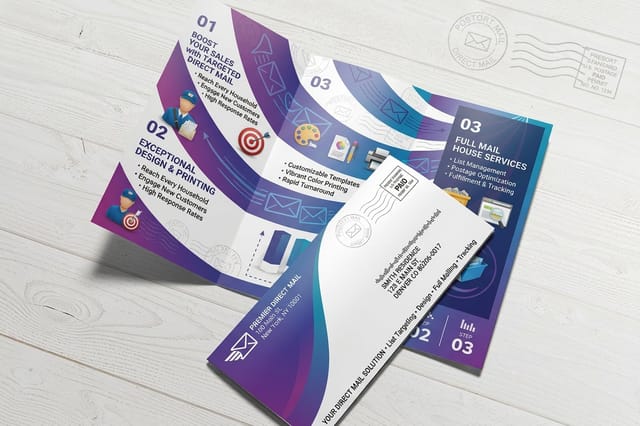
 Direct Mail Brochures 500 for $238.73 Room for the full story when the offer needs proof, photos, and detail.
  Direct Mail Flyers 500 for $238.73 One loud message read in seconds, ideal for a dated offer or a grand opening.
 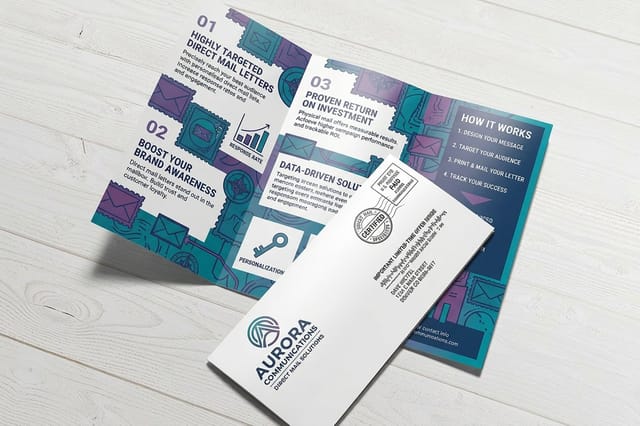 Direct Mail Letters 500 for $238.73 The personal format that reads like correspondence instead of advertising.
 The List Decides More Than the Design Ever Will
If direct mail underperforms, the list is the first suspect, not the artwork. A perfect piece mailed to people with no reason to buy is a rounding error dressed up in ink. A plain piece mailed to recent customers, quote requests, or a tight radius around a new location can carry a campaign on its own. The print bill does not care which list you chose: 1,000 direct mail brochures cost $276.63 either way, so each stale address throws away about 28 cents of printing before a cent of postage.
Three list problems account for most disappointing results. Stale addresses waste postage on people who moved. Untargeted rented lists put a niche offer in front of a general audience. And missing suppression rules mail the same household three times in a month, which turns interest into irritation.
Fix the list before you touch the layout. Deduplicate, verify addresses, segment by recency and value, then write a different offer for each segment. Two smaller, sharper drops almost always beat one large generic one, and they give you a clean read on which audience is worth mailing again. The data behind those patterns is collected in our direct mail effectiveness data and facts.
Segments worth mailing separately
- Recent buyers. The warmest list you own, and the cheapest response you will ever buy.
- Lapsed customers. They already trust you, so the piece only has to give a reason to come back.
- Quote and sample requests. Proven intent that never closed, worth a dedicated offer.
- Geographic radius. The right play for a location, a route, or a service area with drive-time limits.
Quantity and price
Direct mail brochure pricing and specs
Real configurator numbers. The larger the run, the lower the cost per piece.
| Quantity | Price Per Unit | Total |
|---|---|---|
| 500 | 47.7¢ | $238.73 |
| 600 | 41.1¢ | $246.31 |
| 700 | 36.3¢ | $253.88 |
| 800 | 32.7¢ | $261.47 |
| 900 | 29.9¢ | $269.05 |
| 1,000 | 27.7¢ | $276.63 |

Format Mistakes That Quietly Sink Response

Every physical advantage described above can be thrown away at the design stage. The most common failure is treating the mailer as a poster: a headline, a logo, and no reason to act. The reader gives the piece a couple of seconds at the mailbox, and if it does not answer who this is for and what they get, it goes in the bin with the rest.
The second failure is format mismatch. A dense letter is the wrong vehicle for a weekend sale, and a bright flyer is the wrong vehicle for a professional service that sells on credibility. Match the format to the job before you match the color to the brand. Our breakdown of the most effective direct mail formats lays out which shape fits which goal.
The mistakes that cost the most response
- No single offer. Five equally sized messages read as none. Pick one and make it impossible to miss.
- Buried response path. Phone, URL, and QR code belong where the thumb already rests, not in six point type at the base.
- No deadline. Without a date, the piece gets set aside, and set aside becomes never.
- Weak trim and bleed setup. Text crowding the cut line looks amateur and undoes the quality signal the paper just made.
- Address block fighting the design. Ignore mail panel clearance and the piece gets reworked or surcharged.
None of these are exotic. They are the difference between a campaign that pays and one that gets blamed on the channel. The formats themselves are catalogued in the definitive guide to direct mail advertising types.
What the Piece Should Actually Say
Copy for mail works differently than copy for a screen because there is no second click. Everything the reader needs to decide has to be on the paper. Lead with the outcome, not the company. Name the audience in the first line so the right person keeps reading and the wrong person stops without guilt.
Then give one reason to act now and one path to do it. A dated offer, a promo code that ties response back to the drop, and a phone number large enough to read without glasses. Everything else is support material, and support material belongs below the fold of the piece, not above it.
Finish is part of the message. A flyer that has to survive a mailbox and a car seat needs a coating that resists scuffing, while a letter that should read as personal correspondence needs a stock that feels like paper rather than packaging. Print the same words on the wrong surface and the tone flips.
Fast and loud
Direct mail flyers
One message, read in seconds, at the lowest cost per piece in the lineup.

Timing, Frequency, and the Follow Up
A single drop tells you almost nothing. Recognition builds over repeated exposure, and the second and third touches routinely outperform the first because the recipient has already seen the name. Plan mail in sequences, not one-off events, and give each touch a distinct job instead of resending the same artwork.
Timing matters just as much. Mail that lands on a Tuesday competes with less volume than mail landing beside the weekend circular pile. Offers tied to a season, a renewal date, or a local event give the reader a reason to act inside a window instead of someday.
Then close the loop online. Recipients who received the piece and later see a matching ad convert at a better rate than either channel working alone, because the mailer supplies the memory and the ad supplies the immediate path. Same message, same offer, two surfaces.
The personal touch
Direct mail letters
The format that reads like correspondence, built for offers that sell on trust rather than volume.
Measuring Direct Mail Without Guesswork
The old complaint about mail was that you cannot track it. That has not been true for years, provided you build tracking into the piece before it prints. Unique promo codes per segment, a dedicated landing URL, a call tracking number, and a QR code that carries campaign parameters will attribute nearly every response you get.
Measure by segment, not by campaign average. An average hides the one list that paid for the whole drop and the one that should never be mailed again. Track cost per response and cost per acquisition rather than raw response rate, because a low response rate on high value customers can still be your best channel.
Hold the control steady. Change one variable per drop, offer or format or list, and you will know within two cycles which lever actually moves your numbers. Change everything at once and you learn nothing expensive lessons cannot teach you twice.
Compare formats
Popular direct mail products, side by side
Direct mail brochures, flyers and letters all run 500 for $238.73 in 6 business days.
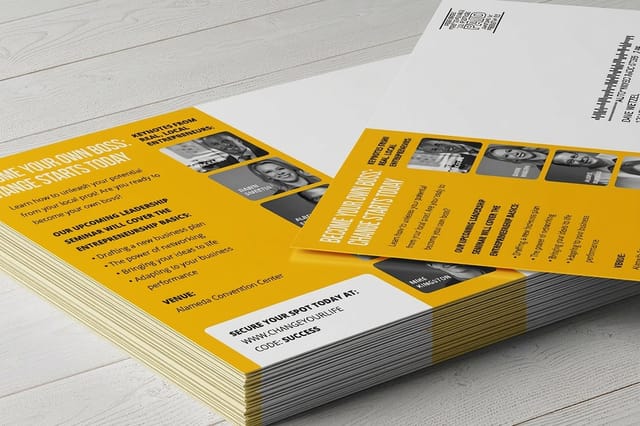 Direct Mail Postcards | Direct Mail Brochures | Direct Mail Letters | Direct Mail Flyers | |
|---|---|---|---|---|
| Min price | $89.68 | $238.73 | $238.73 | $238.73 |
| Paper / stock | 14pt Gloss Cover | 100# Gloss Text | 100# Gloss Text | 100# Gloss Text |
| Finish | - | Standard Finish | Standard Finish | Standard Finish |
| Size | 4" x 6" | 8.5" x 11" | 8.5" x 11" | 8.5" x 11" |
| Default qty | 500 | 500 | 500 | 500 |
| Turnaround | 4 business days | 6 business days | 6 business days | 6 business days |
| Rating | ||||
| View & customize | View & customize | View & customize | View & customize |
Printing a Mailer That Earns Its Postage
Once the list is clean and the offer is sharp, production is the last place results leak. Build the file at the exact trim size with correct bleed, keep live text clear of the cut, and leave the mail panel free of art so nothing has to be redesigned after the fact. Getting that right the first time protects both the schedule and the budget.
Start from a print-ready layout, drop in your artwork, and proof at full size before you commit the run. Reading a proof on paper catches the errors a screen hides, especially in address blocks and phone numbers where a single transposed digit costs you the entire drop.
Match the format to the job
- Detailed offers. Brochures carry proof, photos, and pricing without feeling crowded.
- Time sensitive promotions. Flyers deliver one message fast and cost less per piece.
- High value or professional services. Letters read as personal and earn a slower, closer read.
- Repeat contact. Rotate formats across the sequence so the third touch still feels new.
Start fast
Mailer templates and print-ready blanks
Free layouts plus exact-size blanks so trim, bleed, and the mail panel are right the first time.
Wally explains why the mailbox still wins
Clean list, one offer, the right format, then print it properly
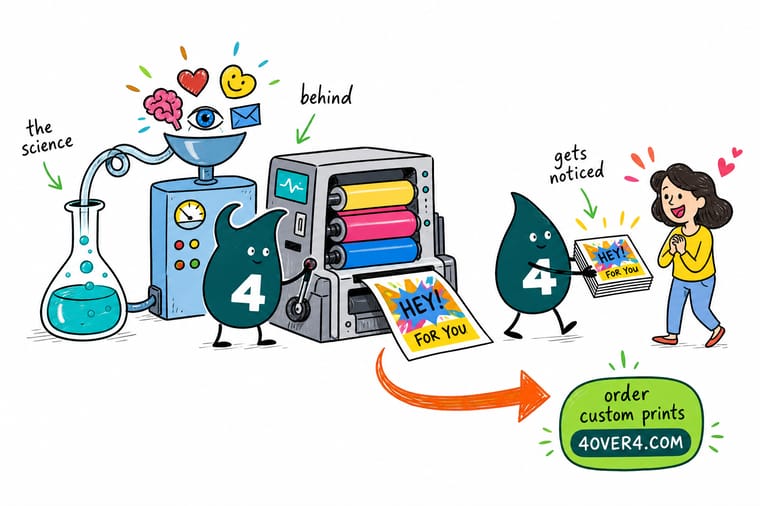
Mail works because it arrives alone, gets held, and stays in the room long after a scroll would have buried it. That advantage disappears the moment the list is stale or the piece carries five competing messages. Clean the addresses, segment by recency, write one offer with a real deadline, then pick the format that matches the job. Brochures for detail, flyers for speed, letters for trust.
Design your direct mail brochures →Turning the Science Into a Campaign That Pays
The evidence points one way. Mail earns attention the medium gives it, then loses that advantage to preventable mistakes in the list, the offer, and the print file. A sound first drop is 500 pieces at $238.73 to one clean segment, with one dated offer, a free online proof, and 6 business days of production counted back from the mail date. Here is what to carry into your next drop.
Keep reading
Direct mail guides and data
The process, the formats, and the numbers behind the channel.
Guide How Direct Mail Marketing Works The full campaign process, from list build to drop date. Guide Types of Direct Mail Advertising Every format explained, with the job each one does best. Guide Direct Mail Effectiveness Data The response and recall numbers behind the channel. Guide Most Effective Mail Formats Eight formats that consistently earn their postage. Explore more
More direct mail reading and products
Related pages across 4OVER4.COM, one card per type.
Product Direct Mail Brochures Room for proof, photos, and pricing in one mailed piece.  Product Direct Mail Flyers One loud message, read in seconds at the mailbox. Product Direct Mail Letters The personal format for high value and professional offers.
  Guide How Direct Mail Works List, offer, drop, and follow up in one walkthrough.
  Guide Direct Mail Advertising Types Which format fits which goal, format by format.
  Statistics Direct Mail Effectiveness Data Response, recall, and cost figures for the channel.
 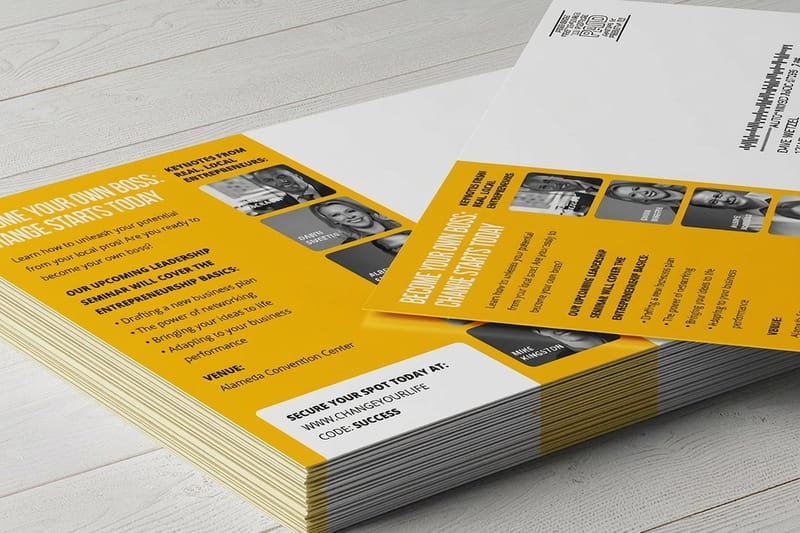 Article 338 Direct Mail Statistics A reference library of numbers for planning a drop. Article Effective Mail Formats Eight shapes that keep pulling response.
  Article Mail Plus Online Ads Running both channels on one message and one offer.
  Alternative 4OVER4 vs PostcardMania How the two compare for direct mail printing.
 Ready to put a real mailer in front of the right list?
Pick the format that matches your offer, configure size, stock, and quantity, and see your live price before you commit to the run.
Direct Mail Effectiveness FAQs
What hurts the effectiveness of direct mail advertising?
Three things do most of the damage, and none of them are the design. A stale or untargeted list wastes postage on people with no reason to buy. A piece with five competing messages and no deadline gives the reader nothing to act on. And a single unrepeated drop never builds the recognition that makes mail work. Fix the list first, cut to one offer with a date, then plan a sequence rather than a one-off. The channel rarely fails on its own.
How do I choose the right direct mail format?
Match the format to the job the piece has to do. Brochures suit detailed offers that need photos, proof, and pricing in one place. Flyers suit a single time sensitive message read in seconds. Letters suit high value or professional services that sell on credibility and deserve a slower read. If you are running a sequence, rotate formats so the third touch still feels new. The definitive guide to direct mail types walks through each one.
What does a mail drop cost per piece?
Direct Mail Brochures, Direct Mail Flyers, and Direct Mail Letters at 4OVER4.COM all start at $238.73, and the configurator prices your exact job live. Quantity is the biggest lever, since unit cost drops steadily as the run grows. Size, paper stock, coating, folding, and turnaround adjust the total from there, and postage depends on the mail class and piece dimensions you choose. Build the real spec on the product page and the price updates as you go.
What sizes, stocks, and finishes are available for direct mail?
Direct mail pieces print across standard mailing sizes on many paper weights, from lighter text stocks for letters and flyers to heavier cover stocks that hold up in transit. Coating options run from uncoated, which takes a pen and reads as personal, to gloss and matte finishes that protect color and resist scuffing. Brochures add folding options. Pick the combination on the product page and every choice reprices the run instantly.
How long does direct mail printing and delivery take?
Turnaround depends on the product, the quantity, and the options you select, and the configurator shows the production time before you pay so you can plan the drop date backwards from your deadline. Add transit time on top, plus delivery time for the mail class you use. For dated offers, build in a buffer of several days so the piece lands inside the window rather than after it has closed. Our guide to print delivery turnaround shows how production days and shipping days add up.
