
Countertop Marketing Strategies That Drive Sales


Marcus is our print marketing voice, built from the knowledge of our production team, with over 20 years in printing.
What Countertop Marketing Really Does at the Register
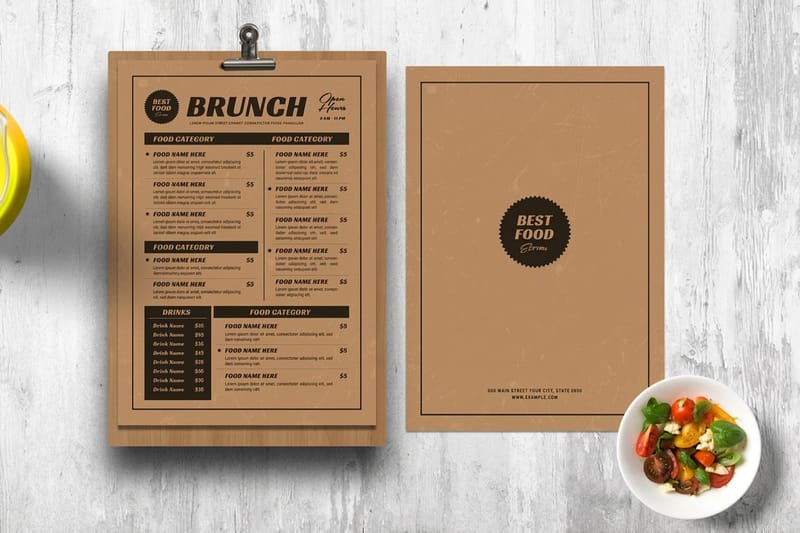
Countertop marketing, also called countertop advertising, is the print you put in the last three feet of a sale: the register ledge, the pickup station, the host stand, the service desk. The strategies that work there are one offer per piece, a spot in the waiting eye line and stock sturdy enough to stay upright. Your customer is already standing still with a card or a phone in hand, and the hard part of the sale, getting them into the store and up to the counter, is finished. A small printed piece in that spot does not have to win attention from nothing. It only has to hand them a reason to say yes to one more thing.
That is why a counter card outperforms the same message in a window. At the window a person is walking, filtering, and heading somewhere else. At the counter they are waiting for a card to clear or for a drink to come up, and they will read whatever is in front of them. Print placed in that pause earns more per square inch than almost anything else in the room.
The mechanics are simple and repeatable. Choose one product or one offer per piece, write it so it lands in under three seconds, and print it on stock that matches the price you are asking for. Thin paper on a counter reads as a leftover flyer, curls within a week, and often gets moved behind the register by your own staff. Sturdy stock with a clean finish stays upright and keeps selling for months without anyone touching it.
Start from the decision you want to trigger
Before you design anything, finish this sentence: at the counter, I want the customer to add ____. A gift card, a warranty, a second pastry, a loyalty signup, a catalog request. The piece exists to serve that one decision, and every word on it either moves the decision forward or gets cut.
Write for a three second read
A headline of five to seven words, one line of proof or detail, one instruction. That is the whole piece. If a staff member cannot read it out loud from across the counter in a single breath, the customer will not read it silently either.
Match the stock to the price you are asking
A ten dollar add-on can live on plain uncoated stock. A five hundred dollar service package cannot. People price your offer partly by how the paper feels, so premium asks need weight, coating, or a metallic finish behind them to stay believable.
Give every piece a permanent address
Counter print drifts. Tape the holder down, mark its spot, and make one person responsible for it at open and close. A display that gets shoved aside during a rush and never returned is a campaign that quietly stopped running.
Closest match
Kraft sales sheets for the counter
The everyday counter piece, warm uncoated stock that reads as local rather than corporate.

Countertop Marketing Strategies by the Numbers
Countertop advertising comes down to a few measurable choices: the size of the piece, the stock it stands on, how many you print and how long it stays up. These are the numbers to plan a counter campaign against.
- One offer, a three second read. A five to seven word headline, one line of detail and one instruction, set in the top third so it clears the holder lip.
- Kraft for everyday add-ons. Kraft sales sheets print on 18pt kraft uncoated cover at 8 x 10, 8.5 x 11, 9 x 12 or 11 x 17 in, 100 for $166.04 in 5 business days.
- Coated sheets for detail at the pickup counter. Sales sheets run 8.5 x 11 in on 100# gloss text or 14pt cover, 50 for $75.80 in 3 business days.
- Metallic for the premium ask. Metallic sales sheets carry a foil accent on 16pt gloss cover from 4 x 6 to 8.5 x 11 in, 500 for $317.44 in 7 business days.
- A standing tent for the host stand. Table tents fold to 4 x 6 in on 14pt gloss cover with high gloss UV, 250 for $554.39 in 5 business days.
- Two pieces per station, rotated on a schedule. Monthly for retail and every two weeks for food service, with a QR code at least one inch square.
Where to Place Counter Displays So People Actually See Them
Placement decides most of the result before the copy gets a vote. The working zone is the arc between where the customer stands and where they look while they wait, roughly the width of the register and about a foot back from the edge. Anything outside that arc is decoration. Anything that blocks the transaction gets moved by staff within a day, no matter how good the design is.
The same logic travels to any table you own. If you also work markets and trade floors, the placement rules in these vendor table display ideas apply directly, and a folded piece that stands on its own is covered in table tent marketing strategies that sell.
- The waiting eye line. Just left or right of the payment terminal, angled toward the customer, not the cashier. This is the single best spot in the store.
- The pickup counter. People wait longer here than at checkout, so this is where a longer piece such as a sales sheet or a menu of services can actually be read.
- The bag drop. A short card next to where you hand over the bag catches the customer in the moment they are already saying thank you and are most open to a suggestion.
- The host stand or reception desk. Front of house is the only place a first time visitor stands still before they know anything about you, so put your strongest single offer there.
- The staff side. A small reference card facing your team, not the customer, keeps the pitch and the price consistent across every shift.
Two rules keep placement honest. First, never run more than two counter pieces at one station, because a third turns the counter into visual noise and all three lose. Second, rotate the offer on a schedule you actually keep, monthly for retail, every two weeks for food service. Regulars stop seeing a piece that has been in the same spot since spring, and a stale display trains your own staff to ignore it too.
Print picks
Three counter formats worth a look
Live prices, ready to customize with your offer and your code.
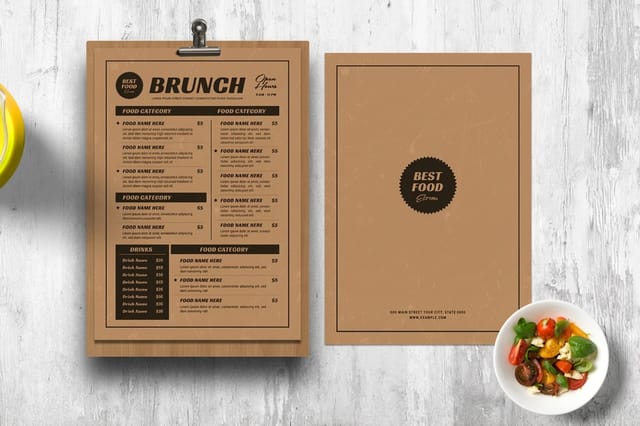 Kraft Sales Sheets 100 for $166.04 Uncoated kraft stock for counter offers that should feel local and handmade.
 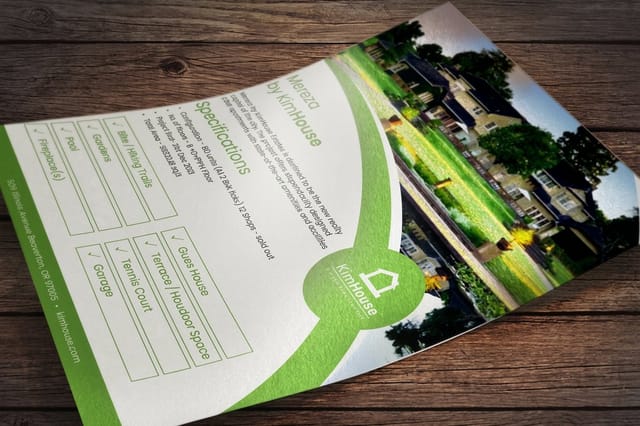 Metallic Sales Sheets 500 for $317.44 A shimmer finish that catches the register light and reads as premium.
 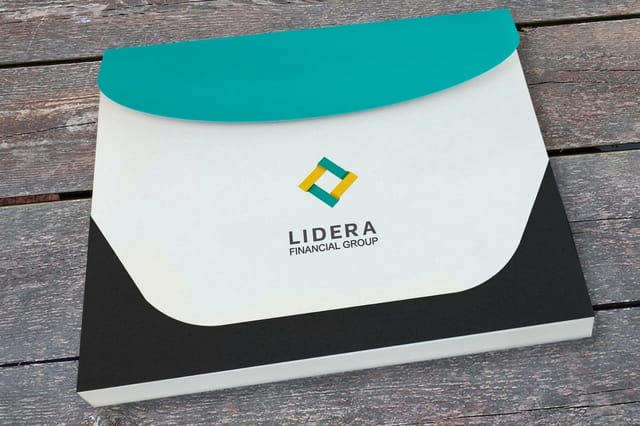 Sales Presentation Boxes 250 for $1207.12 A closed kit for wholesale counters, buyer visits, and trade tables.
 Counter Offers That Convert While Someone Is Already Paying
The offer at the counter is a different animal from the offer in an email. There is no consideration window and no comparison shopping. Whatever you put there has to be understood, judged, and accepted in the length of a card transaction, which means small commitments beat big ones every time and a clear number beats a clever line.
Build the offer before you build the artwork. If you want a structure to work from, the walkthrough on how to create a marketing offer that creates new sales and rewards loyal customers covers how to price an add-on so it lifts the ticket without eating the margin you were protecting.
- The paired add-on. Name the product they are already buying and the one thing that goes with it. Specific pairs convert, generic discounts do not.
- The threshold nudge. Spend a set amount and something small comes free. It works because the customer can see how close they already are while they stand there.
- The next visit hook. A dated card that only pays off on a return trip turns one transaction into two, and it is the cheapest piece on this list to print.
- The bundle preview. Show the package price against the sum of the parts. At the counter the arithmetic has to be done for the customer, not by them.
- The membership ask. Loyalty signups convert best at the register because the customer is already handing over a payment method and a name.
Whichever you run, put an end date on it. An offer with no deadline is a permanent price change that your regulars will learn to wait for, and it removes the only urgency a counter piece has. Print the date rather than writing it in marker, because a handwritten deadline signals that the offer is improvised and the price is negotiable.
QR Displays That Earn the Scan Instead of Asking for It
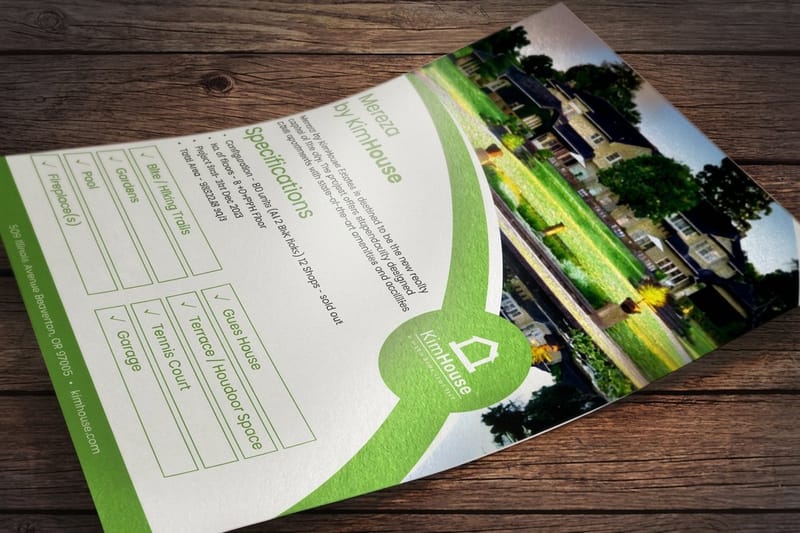
A QR code on a counter piece is a bridge, not an offer. Nobody scans a square because it exists. They scan when the printed line above it promises something they want in the next ten seconds, and when the phone is already in their hand, which at a register it almost always is.
Treat the code as a physical component with real requirements. It needs size, contrast, quiet space around it, and a landing page that respects the promise. Send a scan to your homepage and you have spent the customer’s goodwill on a menu they did not ask for.
- Print it at least one inch square. Smaller codes fail at counter distance under warm restaurant lighting, and a failed scan almost never gets a second try.
- Keep the contrast high. Dark code on a light field. Metallic and heavily textured stocks look beautiful but need a clean, flat panel reserved for the code itself.
- Write the payoff above the code. Join the list and get the next order discount, see today’s specials, book a fitting. The line does the selling, the square only opens the door.
- Land the scan on a single purpose page. One action, no navigation, and a layout that fits a phone screen without pinching.
- Use a unique code per placement. A different link for the register, the pickup counter, and the trade table tells you which surface is actually producing scans.
Check your codes on the floor, not on a monitor. Print a proof, put it in the holder, stand where the customer stands, and scan it with an average phone at the light level you actually run. Codes fail for boring physical reasons, glare from a pendant light, a holder edge cropping the corner, a lamination sheen, and every one of those is invisible in a design file.
Counter Cards That Move Add-On Products in Retail
Retail counters sell small, fast, and repeatedly, which makes them the best place in the store to test a printed offer. Print 100 kraft sales sheets for $166.04, put one in a holder at every register, leave them up for a month, and compare attach rates against the month before. The piece pays for itself the moment it lifts a handful of transactions, and the numbers below make that easy to plan against.
Sales sheets do the most work here because one sheet can play two roles. Standing in a counter holder it is a display, and handed across with the bag it is a leave-behind the customer reads at home.
- Run one product per sheet. A sheet covering six items is a catalog, and catalogs do not get read at a register.
- Print quantity in one order. Per piece cost drops sharply with volume, so a single run for the whole year beats four reactive reorders.
- Keep a blank corner. Space for a price sticker or a dated stamp lets one printed run survive several promotions.
- Order a spare set. Counter print gets splashed, folded, and lost. A backup box means a damaged piece is replaced the same shift instead of the same quarter.
Quantity and price
Kraft sales sheet pricing and specs
Real configurator numbers. The more you print in one run, the less each counter piece costs.
| Quantity | Price Per Unit | Total |
|---|---|---|
| 100 | $1.66 | $166.04 |
| 250 | $1.07 | $267.48 |
| 500 | 88.8¢ | $443.93 |
| 1,000 | 83.3¢ | $832.97 |
Premium Finishes for High Ticket Counters
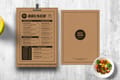
When the thing you sell at the counter costs real money, jewelry, treatments, custom work, service contracts, the paper has to carry the same signal as the price. A metallic finish does that work quietly. It catches the light every time someone shifts their weight at the register, which gives the piece a second chance at being noticed without any extra words.
Use the premium stock where the premium ask lives, and keep the everyday offers on plain paper. When every piece on the counter shouts, the finish stops meaning anything at all.
- Reserve it for one offer. A single metallic piece among matte ones reads as the featured item, which is exactly the hierarchy you want.
- Design with restraint. Metallic stock rewards white space and one accent. Heavy ink coverage flattens the effect you paid for.
- Watch the code panel. If the piece carries a QR code, keep a flat matte area behind it so the shimmer never interferes with a scan.
- Pair it with a script. Premium print starts a conversation, and your team needs one prepared sentence to finish it.
Premium finish
Metallic sales sheets
A reflective stock that catches the register light and holds up the higher ticket offer.

Sales Kits for Wholesale Counters and Buyer Meetings
Not every counter is a retail register. Showrooms, distributor desks, and buyer meetings all have a surface where a decision gets made, and there the printed piece has to survive being carried away, filed, and looked at again next week. That is a different job from a card that lives on a coffee shop counter for a month.
A presentation box does that job. It holds the sheets, the samples, and the pricing in one closed object, which means your material arrives on the buyer’s desk intact rather than as loose pages that get separated from each other in the first hour.
- Lead with the one page. The top sheet inside the box should answer what it is, what it costs, and why now, before the buyer opens anything else.
- Include a physical sample. A box with something to touch gets kept, and a kept kit gets reopened when the decision actually happens.
- Date the pricing. A printed valid-through line protects your margin and gives the buyer a reason to move.
- Number the kits. Knowing which box went to which account turns a print run into a trackable pipeline instead of a giveaway.
Carry it away
Sales presentation boxes
A closed kit that keeps sheets, samples, and pricing together on a buyer’s desk long after the meeting ends.
Comparing Counter Print Formats Side by Side
Most counter campaigns use two or three formats at once, and the choice is usually a trade between how long the piece has to last and how much it has to say. A standing card wins on visibility, a sheet wins on detail, and a kit wins on being carried away and remembered.
Set the format from the length of the wait at that station. A thirty second checkout supports a headline and a price. A five minute pickup queue supports a full sheet with specifications, and a scheduled buyer meeting supports the whole kit.
- Short wait, single ask. A small standing card with one offer and one code.
- Longer wait, more detail. A full sheet with a short specification block the customer can actually finish reading.
- Take-home value. A sheet sturdy enough to survive a bag, because the second read at home is where bigger purchases get decided.
- Scheduled meeting. A boxed kit that keeps every page together after you leave the room.
Compare formats
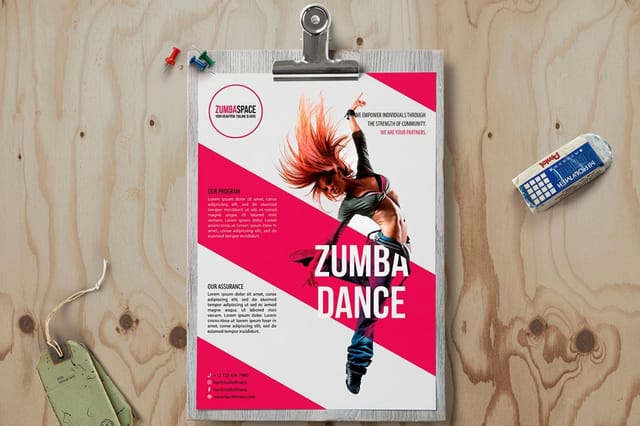
Popular sales sheets, side by side
Sales sheets run 50 for $75.80 in 3 business days and kraft 100 for $166.04 in 5.
 Sales Sheets | 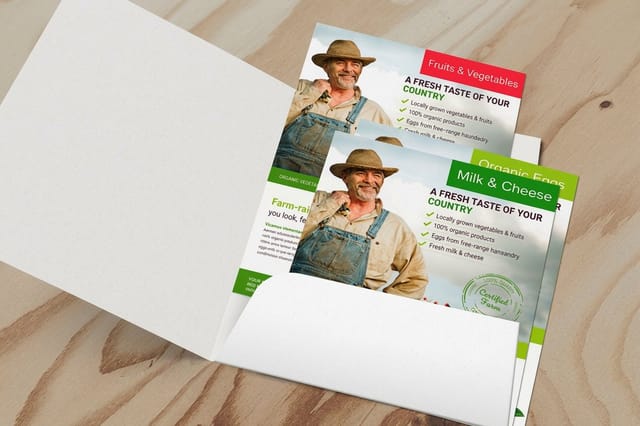 Staggered Cut Sales Sheets | Metallic Sales Sheets | Kraft Sales Sheets | |
|---|---|---|---|---|
| Min price | $75.80 | $218.59 | $317.44 | $166.04 |
| Paper / stock | 100# Gloss Text | 100# Gloss Text | 16pt Gloss Cover | 18pt Kraft Uncoated Cover (100% PCW) |
| Finish | Standard Finish | Standard Finish | - | - |
| Size | 8.5" x 11" | 8.5" x 11" | 4" x 6" | 8" x 10" |
| Default qty | 50 | 50 | 500 | 100 |
| Turnaround | 3 business days | 5 business days | 7 business days | 5 business days |
| Rating | ||||
| View & customize | View & customize | View & customize | View & customize |
Design and Order the Pieces for Your Counter
Getting from plan to printed piece is the part most counter campaigns stall on. Keep it mechanical. Decide the offer, pick the format, set the quantity for a full year rather than a month, and build the artwork at the exact trim size with a proper bleed so nothing important sits near the cut line.
Build every counter piece around a clear top third, because that is the only part visible above the lip of most holders. Set your headline and your price there, and treat the lower two thirds as support. If you plan to run the same campaign by mail later, the formats in these direct mail marketing examples reuse the same artwork with almost no rework.
A short pre-order checklist
- Proof at size. Print one at home, put it in the holder, and stand where the customer stands before you approve anything.
- Check the top third. Headline, price, and deadline all have to clear the holder lip.
- Test the code. Scan the proof under your real lighting with an ordinary phone.
- Order the spares. Add a replacement set to the same run so a coffee ring never costs you a week of display time.
Start fast
Counter templates and print-ready blanks
Free layouts plus exact-size blanks so your offer sits inside the trim and clears the holder lip.

Wally sets up your counter in five minutes
One offer, the right spot, and stock that matches the price
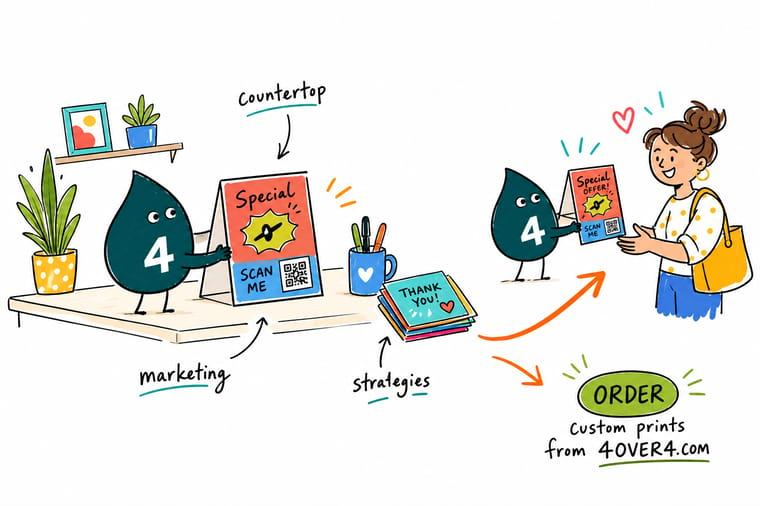
Pick the single thing you want added to the sale, write it in five to seven words, and put it beside the payment terminal angled toward the customer. Small everyday add-ons live happily on uncoated kraft. Premium asks need a metallic finish to stay believable. Add a code only when the line above it promises something worth ten seconds, then print the whole year in one run so a coffee ring never costs you display time.
Design your counter sales sheets →Making the Counter Work Without Adding a Word to the Pitch
Keep reading
Guides that pair with a counter campaign
How to price a counter add-on, how table tents stand on a counter, and how the vendor table and mailbox reuse the same offer.
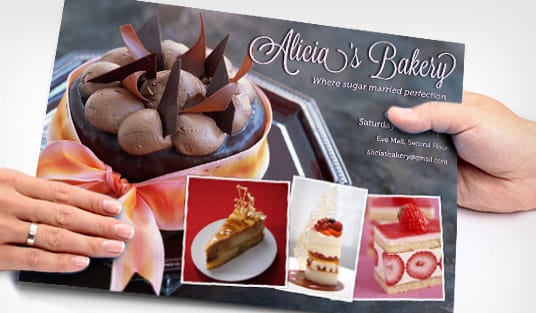 Guide How to Create a Marketing Offer Structure an offer that lifts the ticket and keeps your margin.
 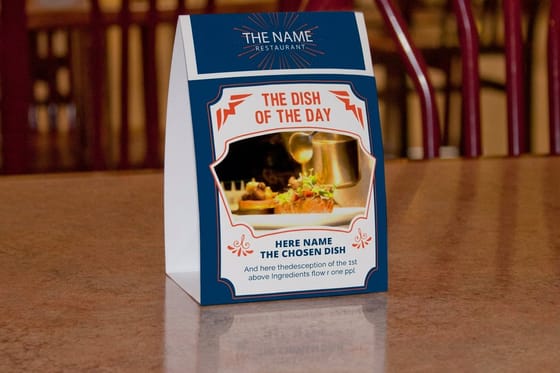 Guide Table Tent Marketing That Sells The standing format that works tables and counters alike.
  Guide Vendor Table Display Ideas Take the same placement rules to markets and trade floors.
  Guide Direct Mail Marketing Examples Reuse the counter offer in the mailbox with the same artwork.
 Explore more
More ways to sell at the point of sale
Seasonal counter offers for Easter, Labor Day and Thanksgiving, plus the kraft, metallic and boxed formats that carry them.
Article Table Tent Marketing That Sells Standing print for counters, tables, and host stands. Article Vendor Table Display Ideas Build a table that stops traffic at a market or trade show. Guide Create a Marketing Offer Win new sales and reward the regulars in one offer. Article Direct Mail Marketing Examples Campaigns worth copying when the counter offer goes out by post.  Articles Marketing and Promotion Articles The full library of promotion tactics backed by print.
  Article Thanksgiving Marketing Ideas Seasonal offers for the busiest counter weeks of the year.
  Article Easter Marketing Ideas Spring promotions that suit food service and gift retail.
  Article Labor Day Marketing Ideas Holiday weekend offers for counters and mailboxes. Product Kraft Sales Sheets Uncoated kraft stock for warm, handmade counter offers. Product Metallic Sales Sheets A shimmer finish for the premium ask on your counter.
 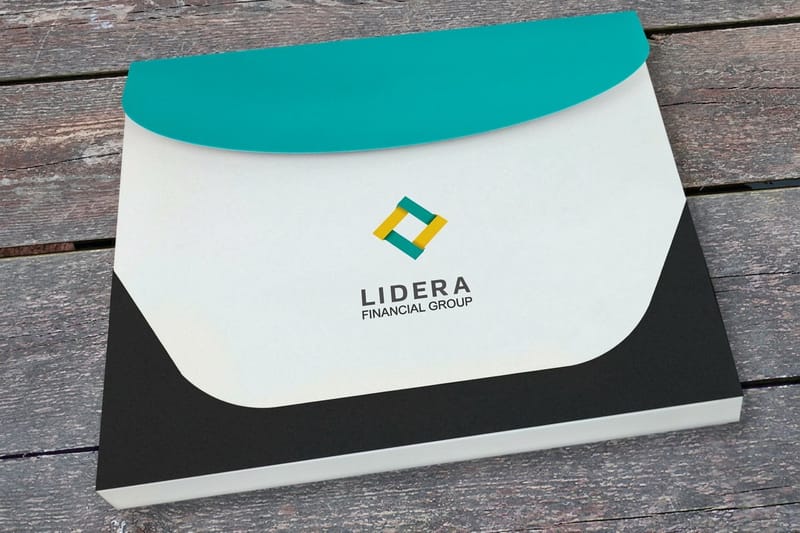 Product Sales Presentation Boxes Boxed kits that keep every page together after the meeting.
 Ready to turn your counter into your best selling spot?
Choose one offer, print it on stock that matches the price, and set it beside the register this week. Live pricing and every size, stock, and finish are one click away.
Countertop Marketing Questions, Answered
What is countertop marketing?
Countertop marketing is printed promotion placed at the point of sale, on a checkout counter, pickup station, host stand, or service desk, aimed at a customer who has already decided to buy. Because the shopper is standing still and paying attention, the piece only needs to present one clear add-on, upgrade, or signup rather than build interest from scratch. It is the cheapest form of in-store advertising per sale, and it overlaps heavily with the standing formats covered in table tent marketing strategies that sell.
How do I choose the right countertop marketing piece?
Start from how long the customer waits at that station. A thirty second checkout supports a small standing card with one headline, one price, and one code. A longer pickup queue supports a full sales sheet with a short specification block. A scheduled buyer meeting supports a boxed kit that gets carried away and reopened later. After the wait time, match the stock to the price you are asking, because a premium offer on thin paper undercuts itself before anyone reads a word.
What does a counter piece cost to print?
Price is driven by quantity, size, stock, and finish, and the per piece cost drops sharply as the run grows, which is why a single annual run beats several reactive reorders. At 4OVER4.COM, Kraft Sales Sheets start at $166.04, Metallic Sales Sheets start at $317.44, and Sales Presentation Boxes start at $1,207.12. Live pricing for every quantity and option appears in the configurator on each product page, so you can compare a one month run against a full year before you commit.
What sizes, stocks, and finishes are available for countertop marketing?
Counter pieces print across many sheet sizes, weights, and coatings. Uncoated kraft suits cafes, bakeries, and craft retail where the offer should feel local and handmade. Coated stocks hold saturated color and stand up to spills at busy registers. Metallic stock adds a reflective shimmer that catches the register light and supports higher ticket offers. Full size, stock, and finish options for each format are listed on the product page, along with the exact trim and bleed you need to design against.
How long does countertop marketing take to print and ship?
Turnaround depends on the product, the finish, and the quantity, and each product page shows the available production speeds next to live pricing when you configure your order. Simple uncoated sheets move fastest, while metallic finishes and boxed presentation kits need additional production time. Plan backward from the date the campaign starts on the counter, add shipping transit, and give yourself a few extra days to proof the piece in its holder under your real lighting before the full run goes to press.
