
12 Bakery Business Card Ideas That Make Your Brand Pop


Emma is our prepress and print production voice, built from the knowledge of our production team, with over 20 years in printing.
Bakery business card ideas, examples and bakery card ideas all come back to two things: the card feels like what you bake, and it answers the two questions customers always ask, which are your hours and how much notice you need for a custom order. Kraft suits bread and farm style brands, soft touch or foil suits patisserie and cake studios, and a coated gloss is the only finish that keeps glaze and crumb looking wet in a photograph. Every option below prints at 3.5" x 2", from 100 cards (soft touch from 50), in 3 to 5 business days, from a print-ready file with 0.125 inch bleed on every side. Watch the short bakery business cards video for a closer look.
Bakery card stocks compared
| Stock or finish | Price | How it feels | Best for | The limit |
|---|---|---|---|---|
| Standard 16pt gloss | From $17.57 | Rigid, shiny, wipes clean | Cake and pastry photography, glaze, crumb | Fingerprints show; no writing on the back |
| Kraft, uncoated | From $24.75 | Fibrous brown board, matte | Sourdough, farm and wholegrain brands | No white ink; colors print muted and darker |
| Die-cut shape | From $26.37 | Cut to your outline | A signature loaf, croissant or cake silhouette | Loses the wallet fit a rectangle gives you |
| Soft touch laminate | From $40.28 | Velvet, slightly grippy | Patisserie, wedding cake, chocolate work | Scuffs read as a shiny line; colors sit flatter |
| Raised foil | From $86.78 | Metal you can feel with a thumb | A logo or one word, nothing more | A heavy foil block can print through to the reverse |
Prices are the live starting price for the smallest run on each product: 100 cards for standard, kraft and die-cut, 50 for soft touch. The last column lists what bakeries find out after they order, such as a laminate that will not take a loyalty stamp, so read it before you pick a finish. You can configure kraft business cards and see the exact quantity pricing in the configurator.
What makes a bakery business card work
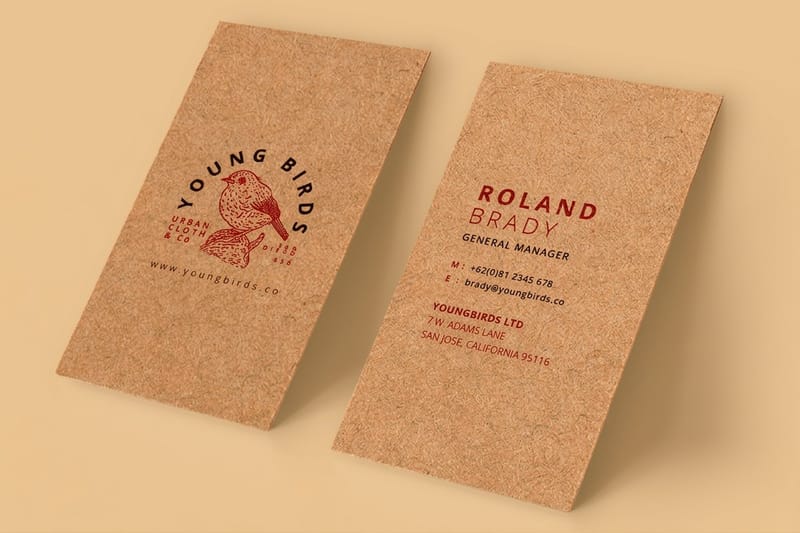
A bakery card has one advantage almost no other trade gets: your customer is already holding something you made. The card only has to finish the thought. That means it should look and feel like the product, not like a generic contact card with a cupcake clipart dropped in the corner.
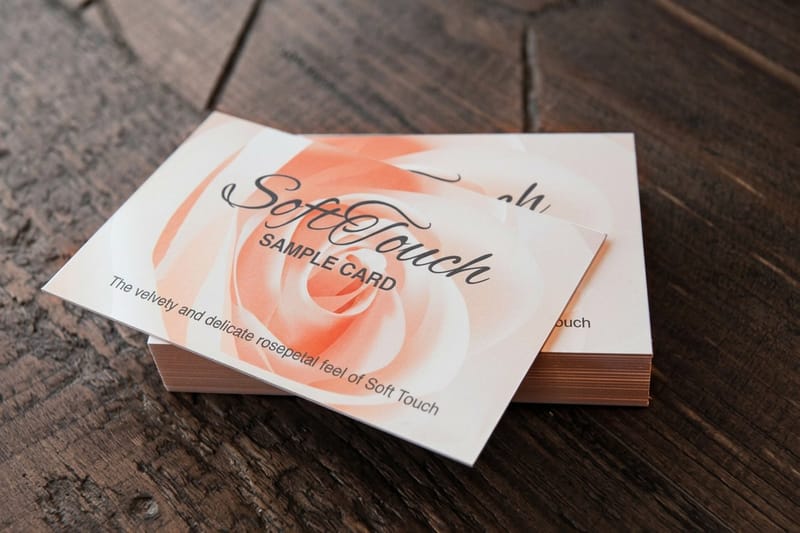
Feel does most of that work. An uncoated kraft card in a hand reads the same way a paper bag with a warm loaf in it reads, and a soft touch laminate reads the way a chocolate box reads. Neither costs much. Kraft business cards start at $24.75 and soft touch business cards at $40.28, which is a rounding error against a single wedding cake order. Read soft touch laminated cards for feel, finish and function before you choose between the two.
The rest is discipline. One item, one typeface for the name, hours where a customer can find them, and a number somebody answers. Our business card stock guide covers the weights and coatings behind those choices if you want the full picture before you order.
The card has to survive an apron pocket
Bakery cards do not live in a card holder. They go in an apron, a flour-dusted till drawer, a delivery box, or a customer’s coat with a receipt and a set of keys. Thin stock curls and the corners fray within a week of that treatment.
16pt is the practical floor. It is noticeably more rigid than 14pt in the hand, and the difference shows up most on a card that gets carried loose. Rounded corners help too, because a square corner is what starts the fraying. If you want a real comparison of the weights, the thickness chart lays them out side by side.
Hours and lead time beat a tagline
Bakeries are hours businesses. Most of the questions you field are some version of "are you open" and "how much notice do you need". Printing both on the back removes more friction than any slogan you could write.
Be concrete. "Tue to Sun, 7am to 3pm" and "48 hours notice on custom cakes" answer the question. "Freshly baked daily with love" answers nothing, and it takes up the space where the answer should have been.
12 bakery business card ideas worth printing
These are twelve directions that work for bakeries, each paired with the stock that suits it. The first six are front-of-card ideas, the last six use the back or the shape, which is where most bakery cards leave value on the table.
They are all cheap to test. A run of standard business cards starts at $17.57, so you can print two versions and let the counter tell you which one people keep. The stocks behind the examples differ more than the names suggest: kraft is an 18pt uncoated board, soft touch runs from 32pt to 80pt, and the die-cut shapes include a leaf, an oval and a 2 inch or 2.5 inch circle.
Ideas one to six: the front of the card
1. One item, shot on your own counter. Photograph the thing you are known for, in the light of your own shop, on the surface it actually sits on. Stock photography of a generic layer cake tells a customer you did not have anything worth showing.
2. Kraft with a single ink color and a line drawing. A wheat sheaf or a loaf outline in one dark ink on kraft is the cheapest way to look like a bakery rather than a business. Line art also dodges kraft’s biggest weakness, which is that photographs go muddy on it.
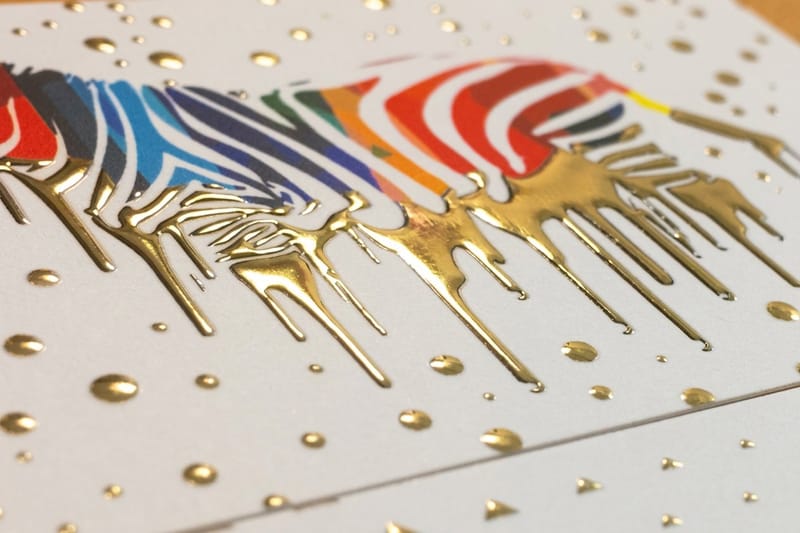
3. Gold foil on kraft. Metallic ink sinks into uncoated fibre and dulls. Foil sits on top of it and stays bright, which makes raised foil on a brown stock one of the few clean routes to real metal on an uncoated card. Keep it to the name.
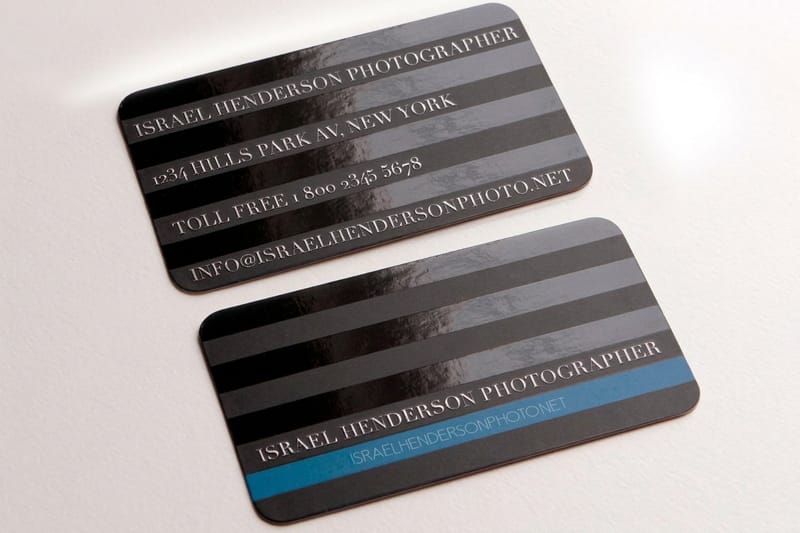
4. Spot UV used as a glaze. Print a donut or a glazed bun matte, then run gloss spot UV over the glaze only. The wet look is physical, not printed, and people turn the card in the light to work out what they are looking at. The spot UV guide explains how the second plate is set up.
5. A color per counter. One layout, one accent color for bread, another for cake, another for pastry. Staff hand out the one that matches what the customer just bought, and the range still reads as one brand.
6. Matte black with a small foil name. For a patisserie or a chocolate room, a soft touch black card with the name in foil does the same job the box does. Restraint is the whole effect; a second foil element halves it.
Ideas seven to twelve: the back and the shape
7. A loyalty punch grid. Six circles and "7th loaf free" turns a card into a reason to come back. It only works on an uncoated or kraft stock, because a laminate will not take a stamp or a pen.
8. The lead time as a headline, not fine print. Set "48 hours notice on custom cakes" at a size somebody can read across a counter. It is the single most useful sentence a bakery can print.
9. Your simplest recipe on the back. A three ingredient glaze or a shortbread ratio. A card with a recipe on it goes on a fridge door instead of in a bin, and a fridge door is better placement than a wallet.
10. Die-cut to your signature item. A die-cut card shaped like a croissant, a bundt or a slice stops being a card and starts being an object. It costs more per piece and it will not sit flat in a wallet, which is a fair trade for something people keep.
11. Rounded corners for the apron. A small change with a real effect on how the card looks after a fortnight in a pocket. Read the rounded corner comparison before you commit, because the die adds a step to the run.
12. A card that doubles as a box tag. Punch it, string it, and the same print run seals a pastry box and travels home on the kitchen table. One artwork, two jobs, no second order.
Colors, fonts and imagery for bakeries
Bakery palettes drift towards cream, butter, warm brown and a single sweet accent. That works on a coated white stock. It falls apart on kraft, and the reason catches people out every time.
Photography is the other decision. Gloss makes glaze, sugar and crumb look wet and edible, which is exactly what you want on a cake photograph. Matte and soft touch flatten that same photograph and make it look like a memory of a cake. Choose the finish for the image you are printing, not for the mood board.
If you are picking an accent from scratch, our business card color breakdown is a faster route than guessing, and the matte, gloss or soft touch comparison settles the finish question.
The kraft color trap
Kraft is unbleached brown board printed with CMYK ink, and CMYK has no white. Every pale color on a kraft card is really the brown paper showing through less ink, so a cream goes tan, a pastel pink goes dusty and a white logo simply disappears. Designers hand over artwork with white type on it and are surprised when the proof comes back with nothing where the type was.
You have two ways round it. Reverse the logic and print the background dark so the kraft shows through as your light color, or pay for a white ink layer or a foil where you need genuine white. On a bakery card the first option is usually better and always cheaper. The kraft versus standard comparison shows how far the colors shift.
Type that still reads at 8pt
Use the script for the bakery name and nothing else. Phone numbers, hours and addresses go in a plain sans at 8pt or larger. Below about 7pt on an uncoated stock the ink spreads into the fibre and closes up the counters in letters like a, e and 6, which is how a phone number becomes unreadable.
Two typefaces is the ceiling. Set the address and the hours in the same face at different weights rather than reaching for a third, and keep everything 0.125 inch clear of the trim so a normal cut drift never clips a digit.
Premium finishes and what they cost
Finish is where a bakery card stops looking printed and starts looking made. Kraft, soft touch and foil each change the price in a different way, and the numbers below come from the live configurator so you can size the decision before you order.
Quantity and price
Kraft business card pricing and specs
Real configurator numbers on uncoated kraft stock, where the per card cost drops as the run grows.
| Quantity | Price Per Unit | Total |
|---|---|---|
| 100 | 24.8¢ | $24.75 |
| 250 | 14.2¢ | $35.57 |
| 500 | 13.1¢ | $65.60 |
| 1,000 | 13.3¢ | $132.55 |
Foil is the one that surprises people. Raised foil is a separate pass on the press, so it is priced as a premium product rather than an add-on, which is why it starts at $86.78 while a standard card starts at $17.57. Used on a name and nothing else it is worth it; used as a border and a logo and a phone icon it is money spent canceling itself out. The foil stamping versus raised foil comparison explains how the two processes differ and why one costs more to set up. You can also earn coins on every order and put them against the next reprint.
What to put on a bakery business card
What belongs on the card depends on which kind of bakery is handing it over, because a market stall and a wedding cake studio are answering different questions.
- Retail bakery. Kraft or standard 16pt, hours on the back, a punch grid if the stock is uncoated. Volume matters more than finish here, because the card goes in every bag.
- Custom cake studio. Soft touch or raised foil, one photograph of your best tier, and the lead time set large. This card is doing the job of a portfolio in a wallet.
- Home and cottage baker. Kraft with one ink and a die-cut shape for markets. Order small, reprint often, and keep a version with your market schedule on the back.
- Cafe with a bake counter. A color per counter on one layout, printed as one run. Staff hand out the one matching whatever the customer just ordered.
- Wholesale and wedding. Standard 16pt gloss so the cake photography stays wet-looking, and a clean back with your account contact rather than retail hours.
Print it
Kraft cards, ready to hand over
Uncoated brown board at 16pt, the stock that takes a stamp and matches a bakery bag.
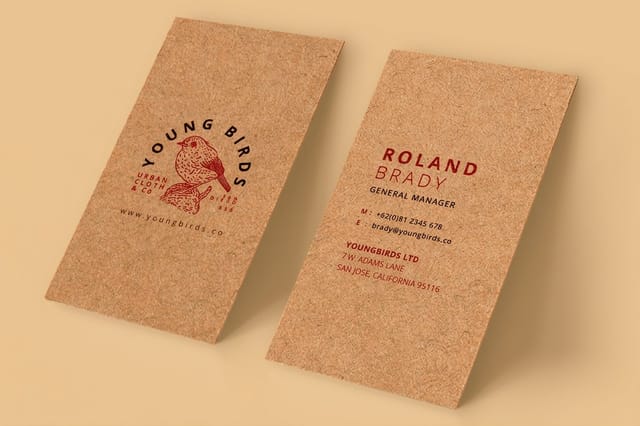
One more thing worth printing: the pickup rule. If cakes have to be collected by a certain hour, or if you hold an order for 24 hours and no longer, say so on the card. It sounds unglamorous and it prevents the single most common argument a bakery has with a customer. For the pieces that go alongside the card, the bakery and cafe print set covers boxes, labels and menu pieces in one place, and the wider bakery printing collection has the rest.
Bakery card blanks at the exact trim size
If you are not starting from a blank artboard, templates save the fiddly part. 4OVER4.COM sizes its blanks to exact product specs, so the bleed and the trim are already marked and your hours line never lands where the cut goes. Grab one from the blank template library, or design in the browser with our free online designer.
Start fast
Bakery card blanks at the exact trim size
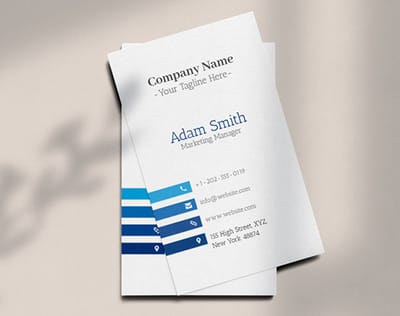
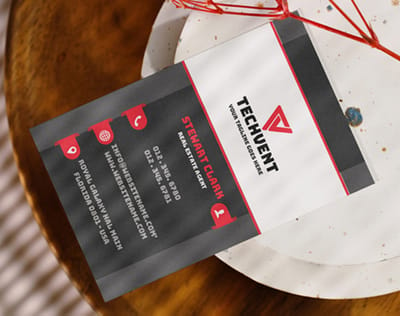
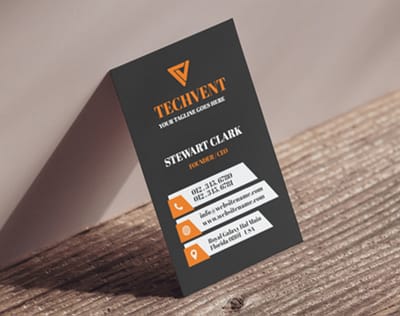
Card blanks at 3.5 x 2 inches with the bleed and the safety margin already drawn.




Wally picks the bakery card stock
Match the stock to what you bake, then print the back properly
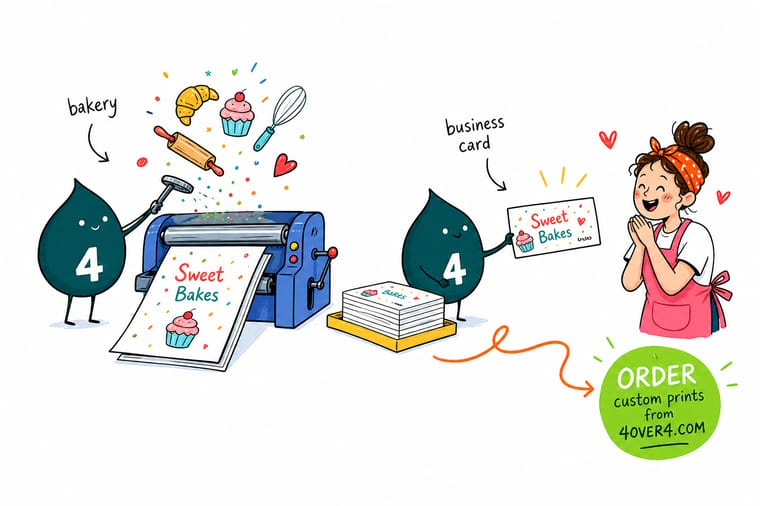
Bread and farm brands go on uncoated kraft at 16pt, which takes a loyalty stamp. Cake photography goes on coated gloss so the glaze still looks wet. Patisserie goes on soft touch or foil. Trim is 3.5 by 2 inches, add 0.125 inch bleed on every side, keep your hours and phone number inside the safety margin, and remember kraft carries no white ink.
Order kraft business cards →What holds up behind the counter
Design tips that hold up at the counter
- Print one and pocket it. Order the smallest run, carry a card in an apron for a week, then look at it. Curl, fraying and scuffing all show up in the pocket and never on screen.
- Design the back first. The back is where the hours, the lead time and the order link go. Lay that out before you fall in love with a front, or the useful information ends up as fine print.
- Test the photograph in CMYK. A rich brown or a deep red that glows on screen in RGB can go muddy in CMYK. Convert before you approve, and ask for a proof on the actual stock.
- One foil element, not two. Foil reads as expensive because it is rare on the card. A foil logo and a foil border cancel each other out and cost you twice.
- Keep 0.125 inch of air. Trim drifts slightly on every press. Anything you need to read stays inside the safety margin, and anything touching an edge runs out to the bleed.
Explore more
More ways to print and promote your bakery
Kraft cards run 100 for $24.75 on 18pt kraft uncoated and die-cut 100 for $26.37, out in 5 and 3 business days.
Product Kraft Business Cards Uncoated brown board that reads like a bakery bag. Product Soft Touch Business Cards Velvet laminate for patisserie and cake studios. Product Raised Foil Business Cards Metal you can feel, best kept to the bakery name. 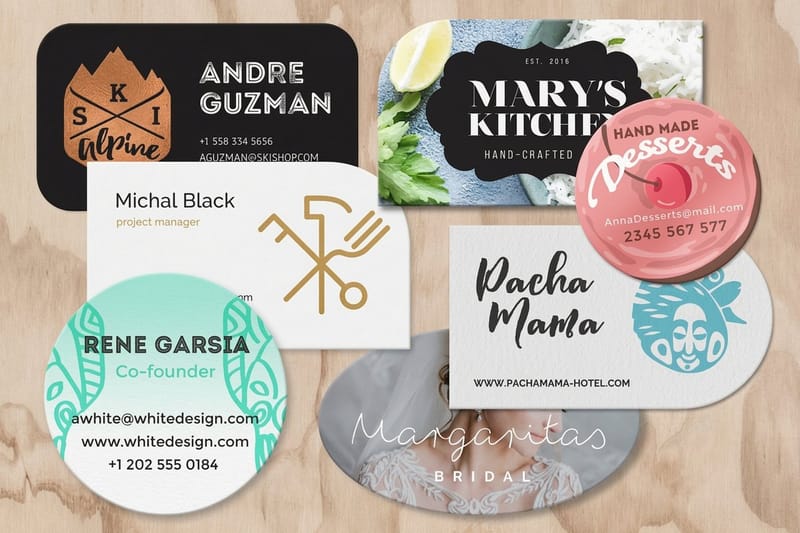 Product Die-Cut Business Cards Cut to a loaf, a croissant or a slice.
  Product Spot UV Business Cards Gloss over matte, used as a printed glaze.
  Category Business Card Printing Every stock, weight and finish in one place.
 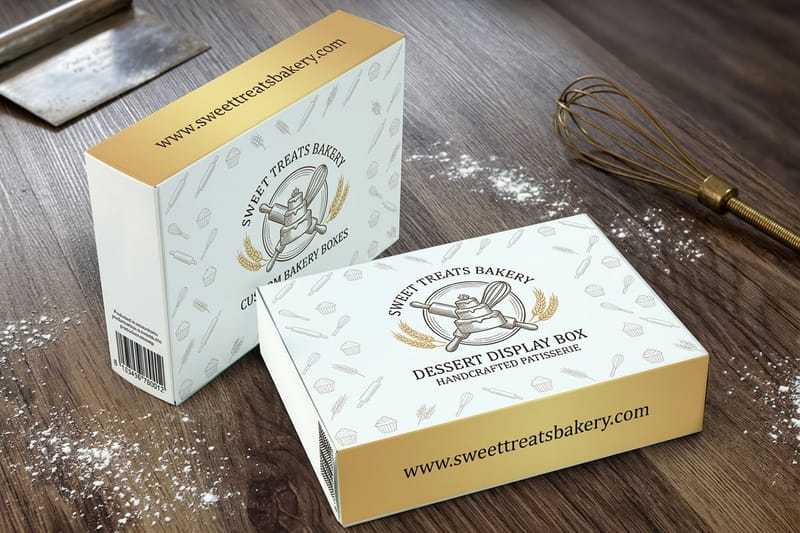 Category Bakery Printing Boxes, labels, menus and signage for bakeries.
 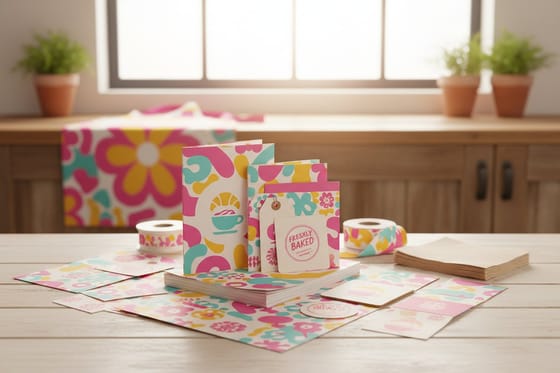 Kit Bakery Branding Print Set The print pieces a new bakery needs on day one.
 Working through the rest of the card design? The business card size guide covers the dimensions, what to put on the back covers the reverse, and boutique card ideas is a useful second read if you sell in a retail space.
Ready to print your bakery cards?
Pick your stock, drop in your design or start from a free template, and 4OVER4.COM prints it sharp on kraft, soft touch or foil, as fast as your opening date needs.
Common questions about bakery business cards
What paper stock is best for a bakery business card?
It depends on whether the card carries a photograph. For cake and pastry photography, a coated 16pt gloss keeps glaze and crumb looking wet, and standard business cards at 4OVER4.COM start at $17.57. For bread, sourdough and farm style brands, uncoated kraft at $24.75 matches the product and takes a stamp or a pen, which a laminate will not. For patisserie and wedding work, soft touch at $40.28 gives the card the same feel as a chocolate box. Whatever you pick, stay at 16pt or heavier, because a bakery card lives in an apron pocket rather than a card holder.
Can I print full color cake photos on kraft business cards?
You can, but you should not expect the photograph to look the way it does on screen. Kraft is unbleached brown board and it is printed with CMYK ink, which contains no white, so every light tone in the image is really brown paper showing through less ink. Highlights on frosting go tan, pastels go dusty, and anything you drew in pure white prints as bare kraft. Line art, single color illustrations and heavy dark type all work beautifully on kraft. If the photograph is the point of the card, print it on a coated stock and use kraft for a second design instead.
Should a bakery business card be a standard size?
Start with the standard 3.5 by 2 inch card, because it fits a wallet, a till drawer and every card holder your wholesale contacts use. A die-cut shape is worth the extra cost when you want the card kept rather than filed, and for a retail bakery that is a reasonable bet, since most of these cards end up on a fridge or a corkboard rather than in a wallet. Die-cut business cards start at $26.37. The practical answer for most bakeries is both: a standard run for volume and a short die-cut run for markets and events.
What should go on the back of a bakery business card?
Opening hours, the notice you need for custom orders, a phone number somebody answers, and one link. Those four answer the questions you actually get asked. After that, a loyalty punch grid is the highest value use of the space, because it gives a customer a reason to keep the card and come back. A grid needs an uncoated or kraft stock so it can be stamped. If your back is laminated, put a short recipe there instead, which does a similar job by making the card worth keeping.
How many bakery business cards should I order at once?
Order to the number you will hand out before something on the card changes. Hours change, phone numbers change, and a new bakery reworks its logo more often than it expects. A first run in the low hundreds lets you carry one in an apron for a week, see how the stock holds up, and fix the layout before you commit. Once the design has stopped moving, larger quantities bring the per card cost down sharply, and that is the point to print a year of stock rather than a month of it.
