
The Wedding Planner Print Toolkit: 3 Picks That Win Bookings
Planning a wedding is a long conversation about taste, and paper is where that conversation gets decided. These three pieces cover the moments that matter most to a planner: the referral handed across a venue lobby, the sample that settles the design, and the invitation that finally goes in the mail.
The wedding planner toolkit is three print pieces that carry a booking from first handshake to mailbox. Wedding planner business cards turn referrals into consultations. Embossed wedding invitations give you a premium sample couples can feel, which is what settles the design decision. Flat wedding invitations handle the real guest count at a price the stationery budget can absorb. Order all three from one printer and every piece matches.

The picks
Cards and two invitation tiers, from $17.57 for 100 cards
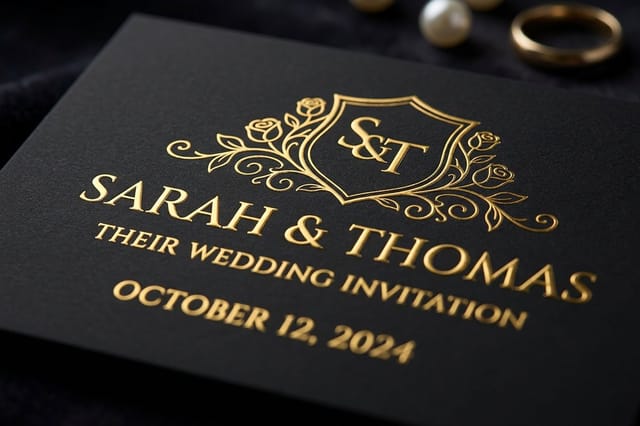
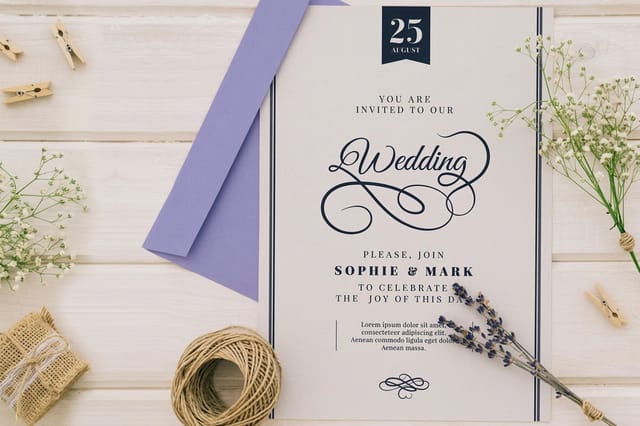
Start here. These are the three products behind the toolkit. Embossed invitations take 10 business days against three for the flat tier, so build the embossed sample first, then quote the client.

Design and print help
Keep the toolkit looking like one studio
Your card and your client samples get seen together, often on the same table. These four tools keep the typeface, the color and the paper weight consistent across everything you hand a couple.
How they work together
Print in the order a wedding books
Each piece owns a stage of the client relationship, and printing them out of order is how planners end up with boxes of invitations for a date that moved.
Referrals arrive by phone and by hand. The card in a venue coordinator pocket is what turns a passing recommendation into a booked discovery call.
One embossed sample decides the whole paper suite. Let the couple hold it, choose a monogram, and the rest of the stationery follows that decision.
Counts change until they do not. Flat invitations keep the per-piece cost sane at 150 or 250 pieces so the budget stays where the couple wants it.
1. Wedding planner business cards: the referral that arrives by hand
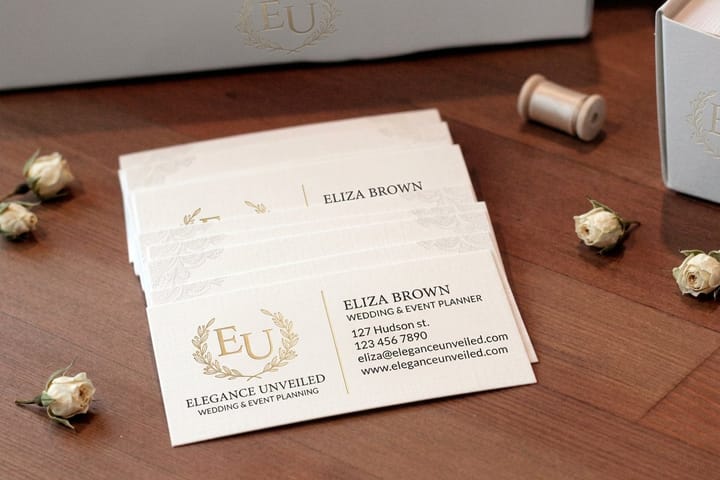
Almost no wedding planner wins a client from a cold search. The work comes from venue coordinators, florists, photographers and the couple whose wedding you ran last October. Every one of those introductions ends the same way, with someone reaching for a card. If the card feels thin, the introduction quietly loses a little of its weight before you ever pick up the phone.
Give the card room to do two jobs. On the front, your name and the phrase a couple would actually say out loud, wedding planner, not a title only you understand. On the back, the one thing that starts a conversation: your city, your booking window, or a short line about the kind of wedding you plan. Heavier stock and a soft matte finish both signal restraint, which is the trait couples want in the person handling their timeline. If you want a paper reference before you commit, best paper for flyers explains how weight and coating change the way printed pieces feel in hand.
Print a working quantity, not a lifetime supply. Two hundred cards in the bag, a stack at each venue you partner with, and a fresh run whenever your service list changes.
2. Embossed wedding invitations: the sample that closes the design conversation
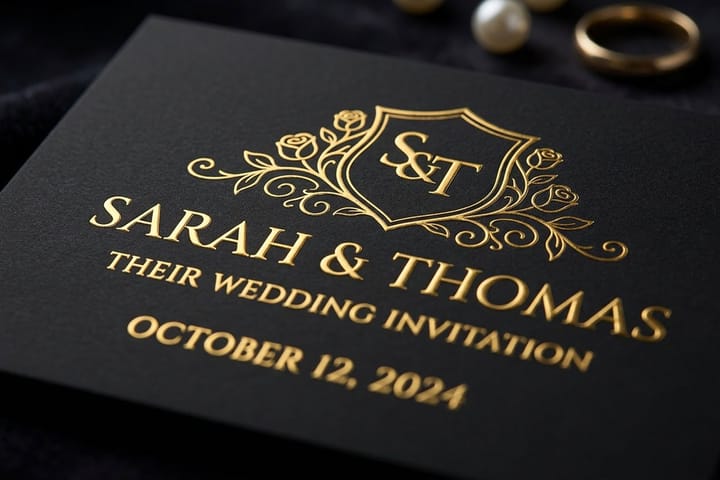
This is the piece you put in a couple hands and then stop talking. Embossing raises the monogram, the initials or the date off the surface, and the eye reads that texture as expense and care long before anyone checks the price. It is the single fastest way to move a client from browsing the internet to trusting your taste, because a screen cannot reproduce what a thumb feels.
Use it deliberately. One embossed element carries the whole card, so pick the couple monogram or the first letter of the surname and let everything else sit flat and quiet. Deep uncoated stock holds the emboss best, and a single ink color keeps the raised area readable instead of muddy. Couples who came in comparing big-box options tend to settle here once they compare the real thing, which is the same reason planners look at a MOO wedding invitations alternative when the finish matters more than the checkout speed.
Order the embossed tier as your presentation set even when the couple ends up choosing flat. A sample kit you can hand across a table pays for itself on the first booking it wins.
3. Flat wedding invitations: the volume tier that keeps the budget honest

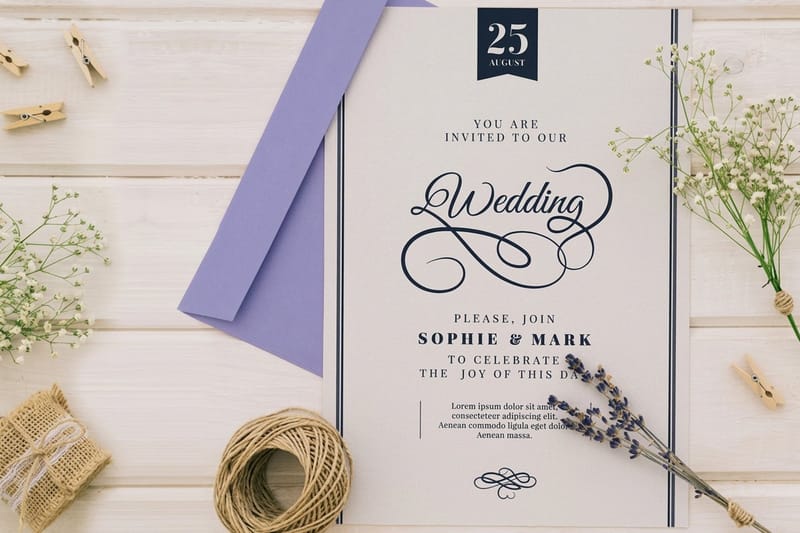
Most weddings mail more invitations than anyone planned for. Two hundred is common, the plus ones are real, and the parents each have a list. Flat wedding invitations are the tier that absorbs that reality without wrecking the stationery budget, printed full color on heavy stock with the whole design living on the surface rather than in a finish.
Flat does not mean plain. Full-bleed color, foil-look metallic inks in the artwork, a deckle-inspired border and a strong typeface do a great deal of work at this price. Keep the type hierarchy strict, names first, then date and time, then venue, then the response instruction, and leave real white space so the card looks composed rather than crowded. Planners who want the whole paper suite from one shop usually compare a Vistaprint wedding printing alternative for exactly this reason, and matching custom welcome and ceremony signs extend the same design from the mailbox to the aisle.
Order about ten percent over the final count. Addressing mistakes happen, an envelope gets damaged in the mail, and a reprint of twenty pieces costs far more per card than printing them the first time.
Specs and pricing
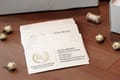
Planner card specs on 14pt gloss cover and the price ladder
The business card sets the stock and finish vocabulary you will repeat on every client sample, so start with its specs and work the invitations around what you choose here.
| Quantity | Price Per Unit | Total |
|---|---|---|
| 100 | 17.6¢ | $17.57 |
| 200 | 11.5¢ | $23.07 |
| 300 | 9.15¢ | $27.46 |
| 400 | 7.96¢ | $31.86 |
| 500 | 7.25¢ | $36.26 |
| 600 | 6.77¢ | $40.64 |
| 700 | 6.43¢ | $45.04 |
| 800 | 6.18¢ | $49.43 |
Wally explains the toolkit
Three pieces, one studio look, printed to book weddings
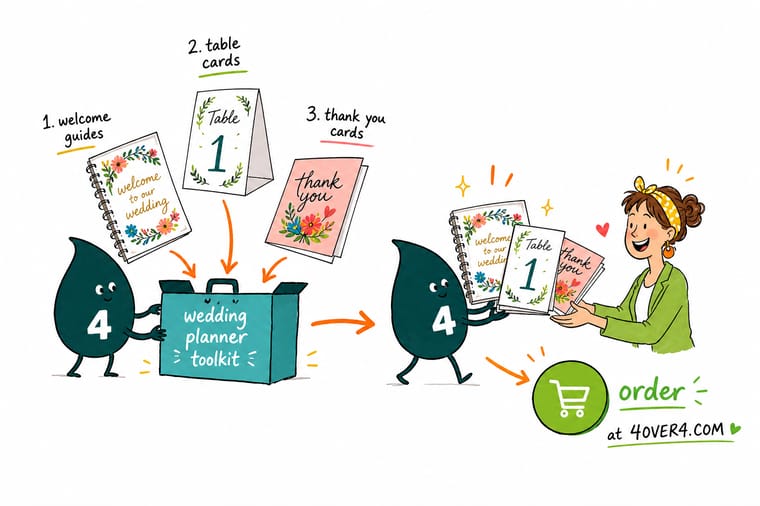
Wally thinks of a wedding planner toolkit the way a couple experiences it. First they meet you, and the card in their hand is the whole first impression. Then they sit down and touch an embossed sample, which is where taste becomes a decision. Then the flat invitations go out to everyone they love. Three pieces, one look, no loose ends.
Shop the wedding collection →See it in use
Wedding stationery planners have ordered
Explore more
Where to go next
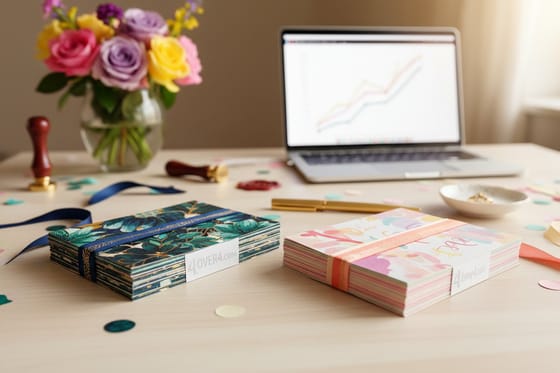
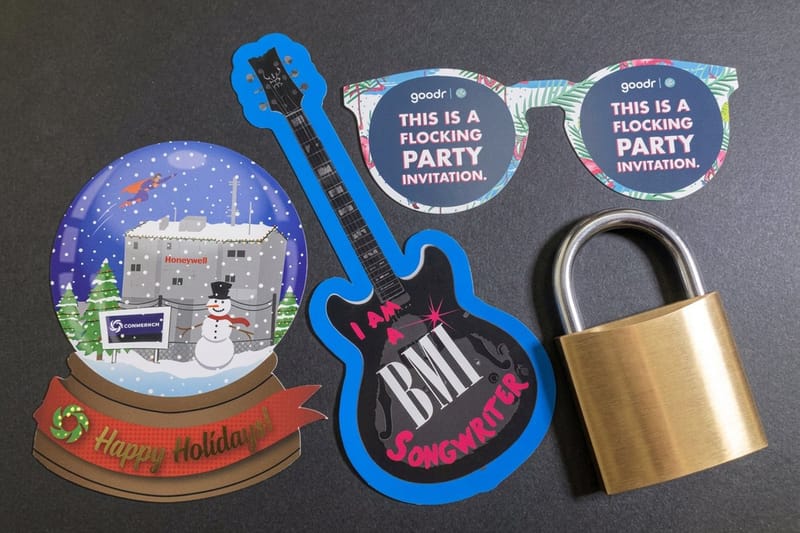
By the numbers
One toolkit, printed to win the booking
Common Questions
Common questions about the wedding planner toolkit
What is in the wedding planner toolkit?
Three print pieces that cover the way a planner actually works: wedding planner business cards for referrals and consultations, embossed wedding invitations as the premium sample you show at the design table, and flat wedding invitations as the volume tier you order once the guest list is final. Every piece is quoted on its own product page.
Why does a wedding planner need two invitation tiers?
Because couples do not shop one price. If you only carry a premium option, budget-conscious clients feel pushed and start browsing on their own. If you only carry a flat option, you leave money and taste on the table. Showing an embossed sample next to a flat one turns the conversation into a choice between two things you control.
Should I order invitations for clients or have them order?
Most planners order on behalf of the couple and fold it into the stationery line of the budget. That keeps proofing, addressing and delivery dates under your control, which is exactly what the couple hired you for. If a client insists on ordering directly, send them the product page with the stock and size already decided so nothing drifts.
How far ahead should wedding invitations be printed and mailed?
Plan to have printed invitations in hand about ten to twelve weeks before the wedding, so they mail six to eight weeks out and destination weddings mail earlier. Work backwards from that: allow time for the couple to approve a proof, time for addressing and assembly, and a buffer for the guest count that always changes once.
What paper should wedding invitations be printed on?
Heavier than you think. A wedding invitation should feel substantial the moment it leaves the envelope, so heavy uncoated or cotton stock reads as formal and takes embossing cleanly. Gloss and coated stocks belong on save the dates and inserts, not the main card. Order free samples and decide with your hands rather than a screen.
How much does the wedding planner toolkit cost to print?
Each piece prices live on its own product page and the total depends on quantity, size, stock and finish. Wedding planner business cards start at $17.57, flat wedding invitations start at $19.77, and embossed wedding invitations start at $220.20 because the emboss die and the heavier stock are part of the job. Configure a quantity to see your real number.
Can I add more pieces as my planning business grows?
Yes. The toolkit is a starting set, not a ceiling. Planners commonly add save the dates, ceremony programs, place cards, welcome signage and menus once a client roster is steady. Build them on the same stock family and typefaces so every wedding you deliver looks unmistakably like your work.
Get Started
Order 100 wedding planner business cards from $17.57
Order the full planner toolkit from one printer, so your card, your embossed samples and your flat invitations all share the same color and paper feel.
Legal Disclaimer
Gold Standard guarantees apply to all standard orders placed through 4over4.com. Price match requires verifiable proof of a competitor's published price for an equivalent product with matching specifications and turnaround time. Satisfaction guarantee covers manufacturing defects and print quality issues. Contact support with order number and documentation. On-time delivery rate based on tracked orders 1999 to 2026. Individual results may vary based on shipping carrier performance.
