What You Need to Know About Poster Sizes in Inches
Standard poster sizes fall into three main categories: small (11"x17"), medium (18"x24"), and large (24"x36"). Movie posters use a special 27"x40" format called the "One Sheet." Picking the right dimensions affects visibility, print cost, and how your design connects with viewers. 4OVER4.COM offers 1,000+ products across its catalog, including poster printing on 60+ paper types, so you'll find the exact match for your project below.
Why Poster Dimensions Matter More Than You Think
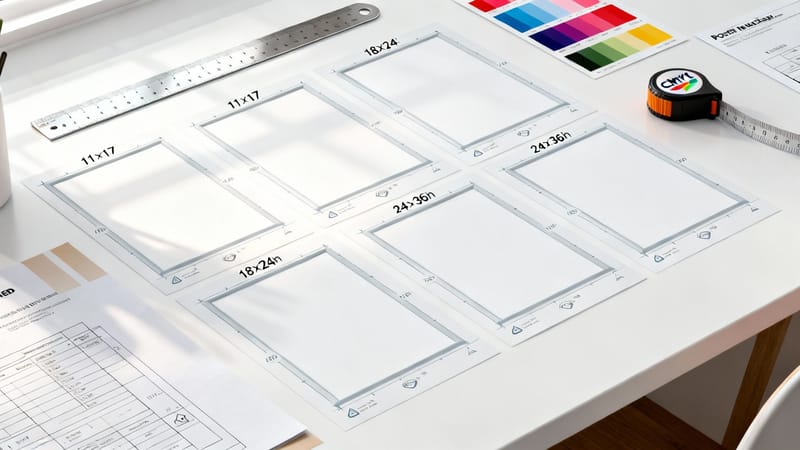
Poster sizes in inches aren't just numbers on a spec sheet. They determine whether your design grabs attention from across a trade show floor or gets ignored on a crowded bulletin board. Choose too small, and your message disappears. Go too large, and it overwhelms a tight hallway. Getting the size right is the first real design decision you'll make.
This guide walks you through every standard poster dimension, what each size is called in the print world, and where it works best. Whether you're printing event promos, art reproductions, or retail signage, you'll know exactly which dimensions to pick. 4OVER4.COM backs every print order with 5 Gold Guarantees, so your posters arrive looking sharp every time.
Need to tackle other print projects while you're here? Check out our Design Templates for ready-to-customize layouts. And if you're into hands-on crafting, our guide on How To Clean Rubber Stamps is worth a read too.
Every Standard Poster Size Explained - From Small Prints to Large Format
The Three Core Poster Sizes
The printing industry has settled on three go-to poster dimensions that cover about 90% of all use cases. These aren't arbitrary numbers. They evolved from standard paper sheet sizes and frame availability, which means you'll always find affordable frames and display options for them.
Small: 11" x 17" - Also called a "tabloid" or "ledger" size. This is the workhorse for indoor promotions. Think community event flyers on a coffee shop wall, band gig posters stapled to a telephone pole, or informational sheets in a school hallway. At roughly twice the size of a standard letter page, it's big enough to read from a few feet away but small enough to print on most office printers. If you're working on print materials for events, our guide on How To Make Flyers pairs perfectly with this size.
Medium: 18" x 24" - The sweet spot for most poster projects. This size dominates retail displays, conference signage, and art prints. It's large enough to be seen from across a room but won't take over an entire wall. Restaurants use this size for menu boards. Real estate agents use it for property feature sheets. Artists love it because frames in this dimension are easy to find and affordable.
Large: 24" x 36" - When you need presence. This is the standard for architectural prints, large-format advertising, trade show graphics, and gallery-quality art reproductions. A 24"x36" poster commands attention from 15 to 20 feet away. It's the most popular size for dorm room posters and retail window displays. You'll see this dimension everywhere from music festivals to museum gift shops.
Movie Poster Size - The Famous "One Sheet"
Hollywood has its own standard: 27" x 40". Called the "One Sheet," this format has been the industry default since the 1980s. Every poster you've seen in a theater lobby or framed in a movie buff's living room uses these dimensions. The slightly odd measurements come from the display cases built into theater walls, which were standardized decades ago.
If you're printing movie-themed decor, fan art, or promotional materials for a film screening, stick with 27"x40" for that authentic cinema feel. For something truly eye-catching, 4OVER4.COM's 3D Lenticular Posters add a motion effect that makes movie artwork pop off the wall.
Less Common But Still Useful Poster Sizes
Beyond the big three (and the One Sheet), several other poster dimensions serve specific purposes:
- 8.5" x 11" (Letter) - Technically a flyer, but many people call small promotional prints "posters." Perfect for handouts, table tents, and binder inserts.
- 12" x 18" - A popular choice for concert and gig posters. Fits nicely in standard frames and works well for screen-printed limited editions.
- 16" x 20" - Common for photographic prints and portrait-oriented artwork. Matches widely available mat and frame sizes.
- 20" x 30" - Sits between medium and large. Great for trade show displays where 24"x36" feels too dominant but 18"x24" isn't quite enough.
- 27" x 41" - The vintage movie poster format, one inch taller than the modern One Sheet. Collectors and vintage film fans look for this specific size.
- 36" x 48" - Extra-large format for outdoor advertising, building signage, and massive event banners. You'll need a professional large-format printer for this one.
For a deeper look at all the print projects you can tackle, browse our Faq Hub for step-by-step guides on everything from brochures to magnets.
How to Choose the Right Poster Size for Your Project
Size selection comes down to three factors: viewing distance, display location, and budget. Here's how to think through each one.
Viewing distance. How far away will people be when they see your poster? For a hallway or small retail space, 11"x17" or 18"x24" works great. People are within 3 to 8 feet. For a convention hall, outdoor event, or large retail window, go 24"x36" or bigger. Your text and graphics need to be readable from 15+ feet.
Display location. Measure the wall, window, or display area before you order. A 24"x36" poster looks incredible above a couch but cramped on a tiny apartment wall next to a bookshelf. Match the poster to the space. If you're creating coordinated mailings alongside your posters, check out How To Make Envelopes for branded packaging ideas.
Budget. Larger posters cost more to print, ship, and frame. If you're ordering in bulk for a campus event or product launch, 11"x17" or 18"x24" keeps costs manageable while still delivering visual impact. For a one-off art print or premium display piece, investing in 24"x36" or larger makes sense.
Setting Up Your Poster File for Print
Getting your dimensions right in the design file is just as important as choosing the right poster size. Here's what matters:
Resolution. Set your file to 300 DPI (dots per inch) at the final print size. A 24"x36" poster at 300 DPI means your file will be 7,200 x 10,800 pixels. That's a big file, but it's what you need for crisp, sharp output. Drop below 150 DPI and you'll see visible pixelation, especially in text and fine details.
Bleed area. Add 0.125" (1/8 inch) of bleed on all four sides. Bleed is the extra image area that extends beyond the trim line. It gets cut off during finishing, but without it, you risk thin white edges where the cut wasn't perfectly aligned. So a 24"x36" poster with bleed should be set up as 24.25"x36.25".
Safe zone. Keep all important text and logos at least 0.25" (1/4 inch) inside the trim line. This "safe zone" protects your content from getting clipped during cutting. Nothing ruins a poster faster than a headline that's half chopped off.
Color mode. Design in CMYK, not RGB. Your screen displays RGB, but commercial printers use CMYK ink. Colors will shift if you don't convert before sending your file. Blues tend to look duller, and bright greens can appear muddy. Convert early and adjust as needed.
Want to see how your design translates to other formats? Our guide on How To Fold A Brochure covers layout principles that apply to poster design too. And if you're exploring creative promotional items, learn Custom Magnets Faq for complementary marketing materials.
Paper Stock and Finish Considerations by Size
Your poster size influences which paper stock and finish will look and perform best. Here's the breakdown:
Small posters (11"x17" and 12"x18") work well on heavier stocks like 100lb gloss text or 80lb cover. The extra weight gives a small poster a premium feel when someone picks it up. Matte finishes reduce glare under fluorescent lighting, making them ideal for indoor bulletin boards and office spaces.
Medium posters (18"x24") are versatile. Gloss finishes make colors pop for retail and event graphics. Satin or semi-gloss offers a middle ground - vivid color without harsh reflections. If you're framing the poster behind glass, go matte to eliminate double-glare.
Large posters (24"x36" and up) benefit from heavier stocks that resist curling and warping. For outdoor or high-traffic use, consider lamination or UV coating for durability. Gallery-quality art prints often use archival matte paper for a fine-art look and long-term color stability.
Not sure which paper is right? 4OVER4.COM lets you order Free Samples so you can feel the stock and see the finish before committing to a full run.
Poster Sizes for Specific Industries
Restaurants and bars - 18"x24" is the go-to for menu boards, daily specials, and event promotions. It fits standard poster frames behind the bar or near the entrance. For table-side promos, drop down to 11"x17".
Real estate - Property feature sheets at 18"x24" work in office windows. Open house directional signs at 24"x36" grab attention from the street. Agents often print both sizes from the same design file, just scaled.
Education - Schools and universities use 11"x17" for hallway announcements and 24"x36" for campus event advertising. Budget matters here, so the smaller size gets the most use.
Retail - Window displays demand 24"x36" or larger. In-store promotions near checkout work at 18"x24". Seasonal sales graphics often rotate through both sizes depending on placement.
Art and photography - Limited edition prints sell best at 18"x24" and 24"x36". These match the most commonly available frames, which matters when buyers want to display your work immediately.
Here are some ready-to-use design templates to get your poster project started fast:
Blank Templates
Sizing Mistakes That Ruin Poster Prints
Even experienced designers trip up on poster dimensions. Here are the most common errors to avoid when working with poster sizes in inches:
- Designing at screen resolution. A file that looks great at 72 DPI on your monitor will print as a blurry mess. Always start at 300 DPI at full print size. No exceptions.
- Forgetting bleed. Skipping that 0.125" bleed means you'll get white edges or cropped content. It takes 30 seconds to add. Don't skip it.
- Mixing up orientation. An 18"x24" poster is portrait. A 24"x18" poster is landscape. Double-check your layout matches your intended orientation before uploading.
- Scaling without checking proportions. Resizing a 24"x36" design to fit 18"x24" changes the aspect ratio. You'll get distorted images or awkward cropping. Redesign for each size instead.
- Ignoring the safe zone. Text too close to the edge gets trimmed. Keep everything important at least 0.25" from the trim line.
4OVER4.COM catches many of these issues during the file review process, but building your file correctly from the start saves time and reprints.
Poster Products Worth Printing at 4OVER4.COM
Now that you've got a solid handle on poster sizes in inches, it's time to pick the right product for your project. 4OVER4.COM prints posters on a wide range of paper stocks and finishes, from glossy photo paper to thick matte cardstock. If sustainability matters to your brand, explore our Green Printing options for eco-conscious poster materials.
Below you'll find detailed specs, size options, and customer reviews to help you compare and choose:
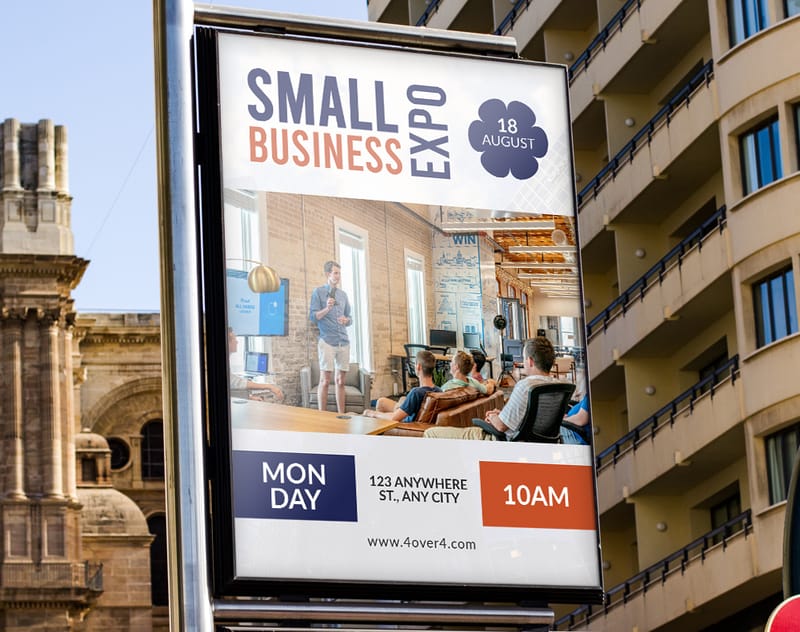
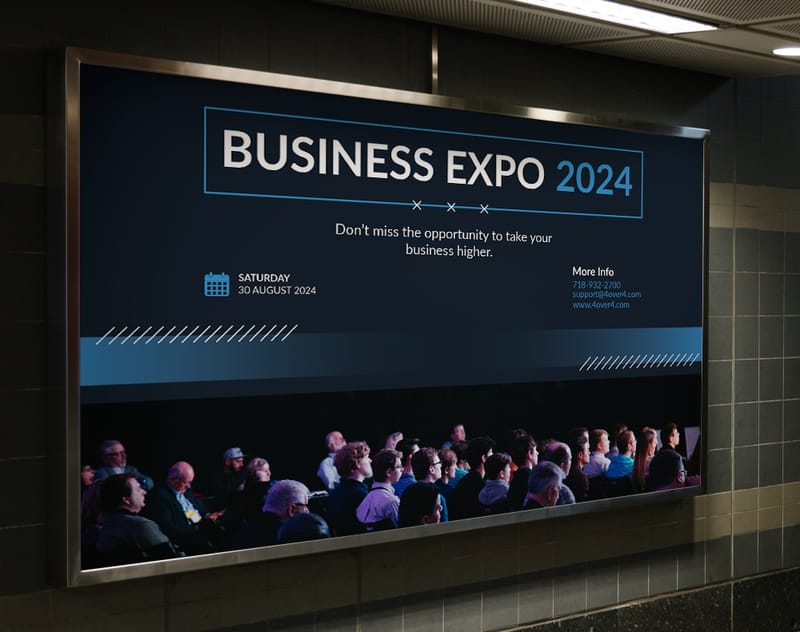
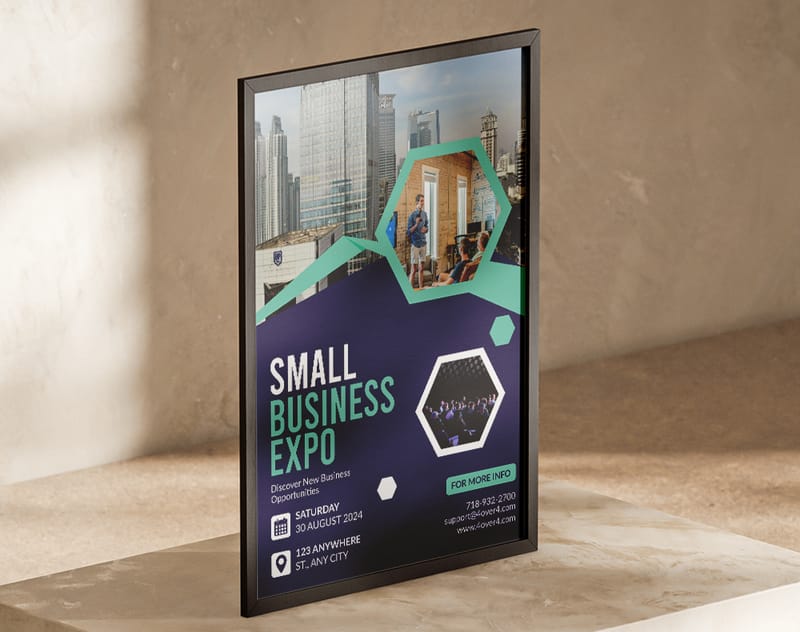
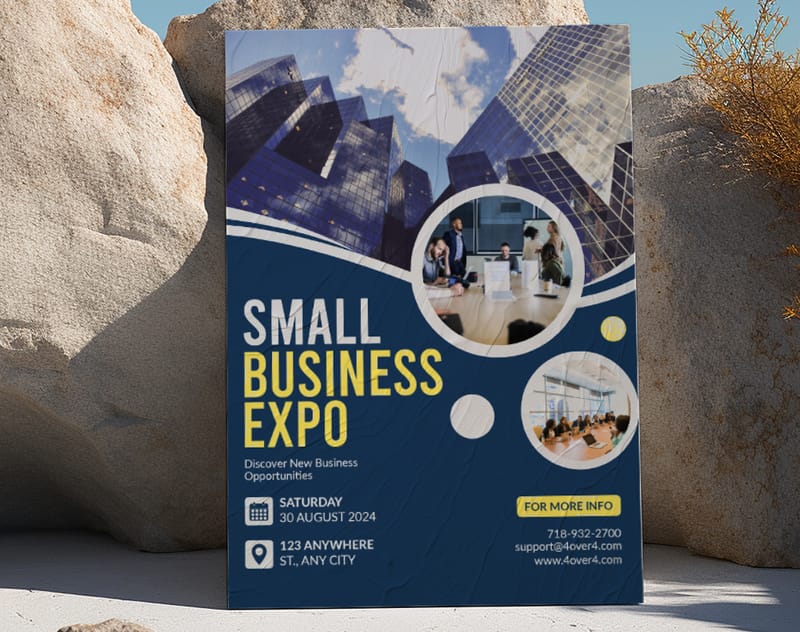
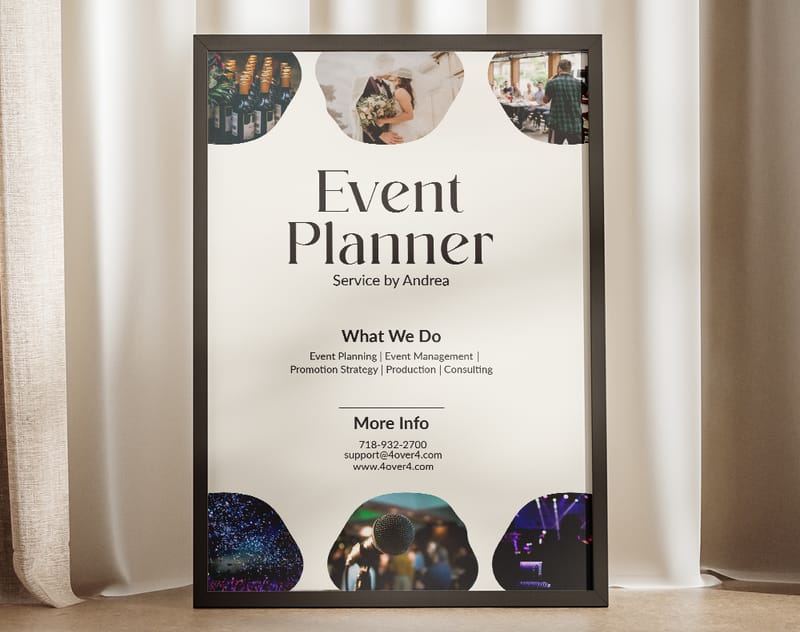
Free Poster Sizes In Inches Templates

| Size in Inches (W x H) | Common Name | Size in Millimeters (W x H) | Best For |
|---|---|---|---|
| 11" x 17" | Ledger / Tabloid | 279 x 432 mm | Flyers, bulletin boards, small window ads |
| 18" x 24" | Medium Poster | 457 x 610 mm | Event promotion, in-store displays, art prints |
| 24" x 36" | Large Poster | 610 x 914 mm | Trade shows, storefronts, decorative wall art |
| 27" x 40" | One Sheet | 686 x 1016 mm | Official movie theater displays, collector prints |
| Format Name | Typical Size in Inches (W x H) | Region/Primary Use | Historical Notes |
|---|---|---|---|
| One Sheet | 27" x 40" (modern) | USA (Film) | The primary US movie poster format, originally 27"x41". |
| Half Sheet | 22" x 28" | USA (Film) | Horizontal format used in lobbies for different artwork. |
| Insert | 14" x 36" | USA (Film) | Tall, narrow format for tight spaces, often featuring star portraits. |
| Lobby Card | 11" x 14" | USA (Film) | Part of a set of 8-10 cards showing scenes from the film. |
| Double Crown | 20" x 30" | UK | A foundational British size for ads and official notices. |
| Quad | 40" x 30" | UK (Film) | The standard horizontal British movie poster, equivalent to two Double Crowns. |
| UK 4 Sheet | 40" x 60" | UK (Advertising) | Large format for public displays, equal to four Double Crowns. |
- Community Boards: Perfect for announcing local events, classes, or services in cafes, libraries, and neighborhood hubs.
- Retail Aisles: Use them to spotlight special offers, new products, or sale items right where customers are making decisions.
- Event Handouts: Great for giving attendees schedules, maps, or promotional info to take with them at concerts and trade shows.
- Informational Signage: Display instructions, menus, or safety notices in lobbies, waiting rooms, and other business interiors.
- Event Backdrops: Create a stunning visual anchor for photo ops or stage presentations.
- Storefront Window Displays: Announce a major launch or seasonal sale with a graphic that’s impossible for passersby to ignore.
- Exhibition Halls: Stand out from the sea of competitors with a poster that clearly defines your booth’s space and message.
- Half Sheet (22"x28"): This horizontal poster was a common sight on countertops or in smaller lobby spaces. Its landscape orientation allowed for totally different artwork compositions compared to the vertical One Sheet.
- Insert (14"x36"): A tall, skinny format that was perfect for slotting into tight vertical spots between doorways or next to other displays. Inserts often featured striking, portrait-style artwork of the film's stars.
- Lobby Cards (11"x14"): Usually sold in sets of eight, these small posters showcased individual scenes from the movie. They were displayed in glass cases inside the theater to give moviegoers a sneak peek.
- Close-Up Detail: An 11"x17" poster on an easel right next to a product display can effectively communicate key features to a shopper who’s already engaged and interested.
- Mid-Range Engagement: An 18"x24" poster is a great fit for an office lobby or a hallway. It’s where people might pause for a moment to read about a company event or a new initiative.
- Long-Distance Impact: A big 24"x36" poster in a storefront window is all about grabbing the attention of pedestrians and drivers from the street. Here, you need a single, powerful image and very little text to make an instant impression.
- RGB (Red, Green, Blue): This is the color model for digital screens. Your monitor, phone, and TV create colors by mixing red, green, and blue light. It's an additive model.
- CMYK (Cyan, Magenta, Yellow, Key/Black): This is the color model for printing. It works by layering inks on paper to absorb (or subtract) light, creating the colors you see.
- Safety Margin: This is your safe zone. All your vital text, logos, and graphics should stay at least 0.125 inches inside the final trim line. This guarantees they won't get nicked by the cutting blade.
- Trim Line: This is the exact edge where the poster will be cut to its final size.
- Bleed Area: This is an extra 0.125-inch border of your background image or color that extends beyond the trim line. This gives the printer a small margin for error during cutting, ensuring your design goes right to the very edge without any white gaps.
Common Questions About Poster Sizes and Printing
What is the most common poster size in inches?
The most popular poster size is 24" x 36", often called "large format." It's the standard for dorm room posters, retail displays, and art prints. For smaller indoor use, 18"x24" is the second most common. Both sizes have widely available frames, which makes them practical choices for most projects.
What size is a movie poster in inches?
Standard movie posters measure 27" x 40", known in the film industry as a "One Sheet." This size has been the Hollywood standard since the 1980s. Vintage movie posters from earlier decades may measure 27"x41". If you're framing a movie poster, make sure to verify which version you have before ordering a frame.
What resolution should I use for poster printing?
Set your design file to 300 DPI at the final print size. For a 24"x36" poster, that means a file of 7,200 x 10,800 pixels. If file size becomes unmanageable, 200 DPI is acceptable for large-format posters viewed from a distance, but never go below 150 DPI or you'll see visible pixelation.
How much bleed do I need for a poster?
Add 0.125 inches (1/8 inch) of bleed on all four sides of your poster file. This extra area gets trimmed during production and prevents white edges. A 24"x36" poster with proper bleed should be set up as 24.25"x36.25" in your design software.
Can I print a custom poster size that isn't standard?
Yes. While standard sizes like 18"x24" and 24"x36" are the most cost-effective because they match common paper sheet sizes, 4OVER4.COM can print custom dimensions. Keep in mind that non-standard sizes may cost more and finding frames can be trickier. Contact our Help Center to discuss custom sizing for your project.
What's the best poster size for a trade show booth?
For trade show displays, 24"x36" is the minimum recommended size. Attendees view booth graphics from 10 to 20 feet away, so your text and images need to be large enough to read at that distance. For backdrop walls, consider 36"x48" or larger. Use bold headlines and high-contrast colors for maximum visibility in busy convention halls.
Should I choose glossy or matte finish for my poster?
It depends on where the poster will be displayed. Glossy finishes make colors more vivid and saturated, perfect for retail and event posters. Matte finishes reduce glare, which works better under fluorescent lights or behind glass frames. For fine art reproductions, matte or satin gives a gallery-quality look that feels more refined.