Table of Contents
- Home
- content hub
- What Is Commercial Printing Your Complete 2026 Guide
 Share and earn
What Is Commercial Printing Your Complete 2026 Guide

Mar 6, 202619 views
Mar 6, 202619 views
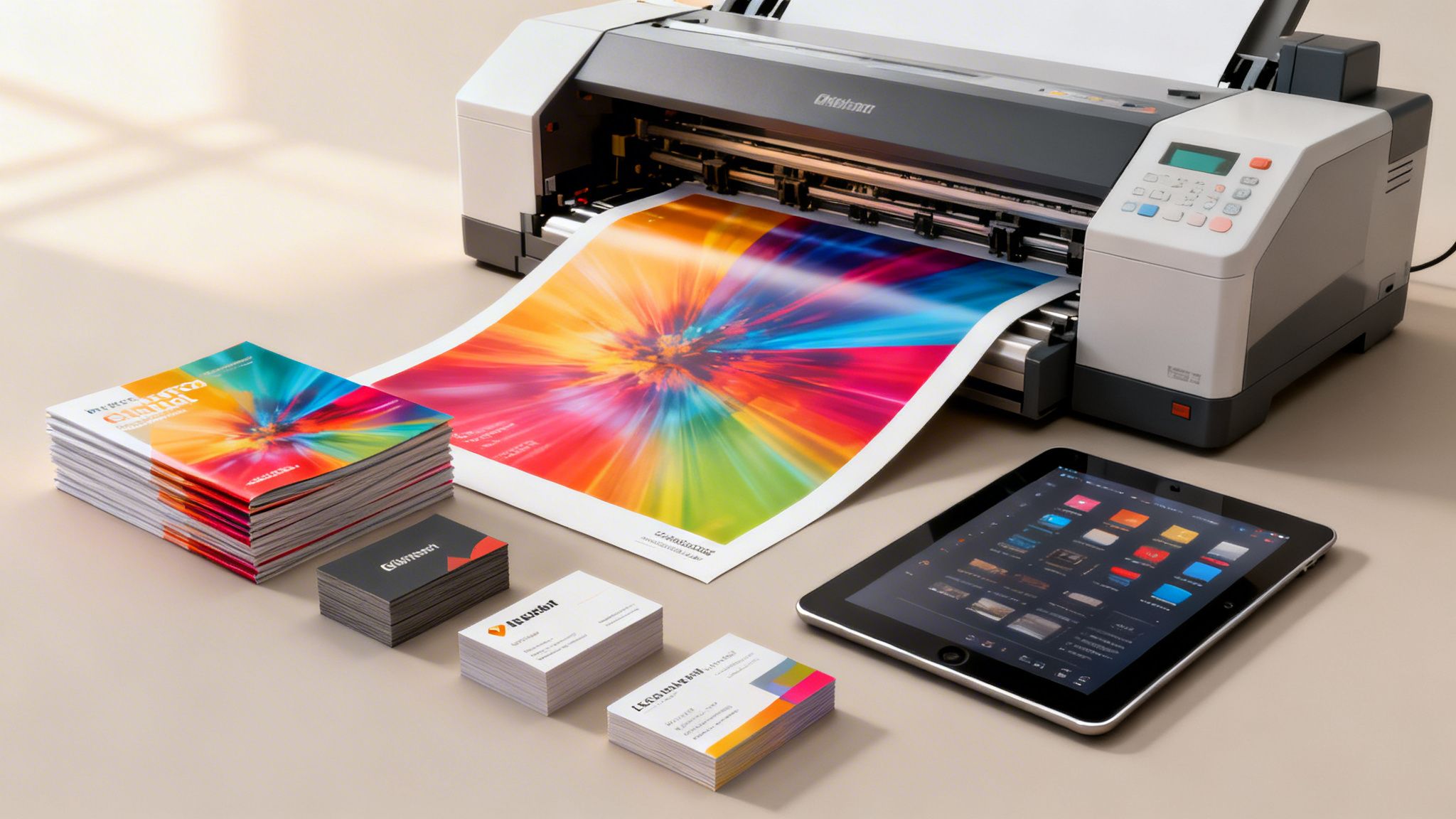
Ever tried to print a hundred high-quality flyers on your home office printer? You probably ran out of ink, dealt with paper jams, and ended up with colors that looked nothing like your design. That’s where commercial printing comes in. It’s the world of professional, high-volume printing that businesses rely on for everything from business cards and brochures to massive banners. It’s about taking a digital idea and turning it into a tangible, professional-grade asset that you can put in your customers’ hands.
The Foundation of Professional Branding

Think of it like this: your desktop printer is your kitchen oven, perfect for baking a dozen cookies. A commercial printer is a massive, industrial bakery that can produce thousands of identical pastries flawlessly, day in and day out. While that office printer is great for internal memos, it just can't handle the consistency, speed, and material options required for professional marketing.
This isn't just about printing more stuff; it's about printing better. For any business trying to make a real-world impact, the distinction is everything.
Beyond The Desktop Printer
One of the biggest advantages of commercial printing is its power to handle huge volumes while maintaining perfect quality. Imagine trying to print 5,000 brochures with a full-color, edge-to-edge design. An office printer would inevitably show color shifts, streaks, and other issues.
Commercial presses, on the other hand, are engineered for exactly this kind of work. They guarantee that the five-thousandth print looks just as crisp and vibrant as the first. This is the kind of reliability businesses need for major marketing campaigns, product packaging, and event signage—precision at a scale that’s impossible with consumer-level gear.
Commercial printing isn't just a service; it's a strategic partner. It bridges the gap between a digital concept and a physical product that shapes customer perceptions and fuels real business growth.
A World of Materials and Finishes
Another area where commercial printing blows desktop options out of the water is the sheer variety it offers. You’re no longer stuck with standard letter paper. Suddenly, a whole world of sensory options opens up, allowing you to create marketing materials that people will want to touch and hold onto.
Some of the key differences include:
- Substrate Variety: You can print on almost anything. Think thick, premium cardstocks, textured linen papers, durable vinyl, sleek plastic, fabric, and even metal.
- Specialty Finishes: Add a touch of class with shimmering foil stamping, create a unique tactile feel with embossing (raised) or debossing (indented) designs, or apply a smooth, velvety soft-touch coating.
- Custom Sizes and Shapes: Forget standard rectangles. With custom die-cutting, you can create marketing pieces in any shape you can imagine, making your brand instantly stand out.
These options are what turn a simple flyer or card into a memorable brand experience that cuts through the noise.
Exploring The Core Printing Methods
To really get what commercial printing is all about, you have to look under the hood at the technology that makes it all happen. While there are a ton of specialized methods out there, the industry really revolves around two main players: offset printing and digital printing. Picking the right one comes down to what you need to print, how much of it you need, and how fast you need it.
Think of it like this: are you building a single, custom piece of furniture or are you setting up a factory to produce thousands of identical chairs? Both create great products, but they’re built for completely different scales and purposes.
Offset Lithography: The Workhorse of Commercial Printing
When you need to print a lot of something, offset lithography is the undisputed champion. It’s a mechanical process that has been refined over decades. It works by creating custom metal plates of your design—one for each of the four main ink colors (Cyan, Magenta, Yellow, and Black). These plates transfer the ink onto a rubber "blanket," which then rolls the design onto the paper.
This setup process is what makes offset so powerful. It takes time and a bit of upfront cost to create the plates and get the massive press running perfectly. But once it’s going? It can churn out thousands upon thousands of prints with incredible speed and absolutely perfect color consistency from the first piece to the last.
Key Takeaway: Offset printing is like an assembly line. It has a setup phase, but once it's running, the cost per item drops dramatically. This makes it the only real choice for massive projects where consistency and budget are everything.
This is where you see incredible economies of scale. The more you print, the lower your price-per-piece gets, because that initial setup cost is spread thin across a huge volume. That's why it's perfect for jobs like:
- Mass-market brochures and flyers for a national campaign.
- Magazines and catalogs with large subscription numbers.
- Product packaging where your brand’s color has to be perfect every time.
- Direct mail campaigns hitting thousands of mailboxes with the exact same offer.
If your business is gearing up for a big promotional push, it’s worth learning more about how offset printing can make your budget go a lot further.
Digital Printing: Speed and Personalization
If offset is the factory, then digital printing is the modern, high-tech workshop. It does away with plates and rubber blankets entirely. Instead, digital presses take your file and print it directly onto the paper using either liquid ink or powdered toner—kind of like your office printer, but on a massive, industrial scale.
By skipping the whole plate-making step, you cut out a huge chunk of setup time. The first print can be in your hands in minutes, not hours. This makes digital the king of speed and flexibility, especially when you only need a small or medium quantity of prints.
This method also opens the door to a game-changing marketing tactic: Variable Data Printing (VDP). Because each piece is printed directly from a digital file, you can change elements on every single print without stopping the press. It could be something simple, like printing a unique name and address on a postcard, or something more advanced, like swapping out images and offers based on a customer's past purchases.
Now that we've covered the two main players, let's put it all together in a quick-reference table to help you see which method fits your needs.
Choosing The Right Printing Method At a Glance
This table compares the most common commercial printing methods based on ideal use cases, volume, cost-effectiveness, and quality characteristics to help businesses make informed decisions.
| Printing Method | Best For | Ideal Volume | Cost Profile | Key Feature |
|---|---|---|---|---|
| Offset | Brochures, catalogs, packaging | 500+ | Low cost-per-piece at high volume | Unmatched color consistency |
| Digital | Postcards, business cards, flyers | 1 - 500 | Cost-effective for short runs | Speed & variable data (VDP) |
| Large-Format | Banners, signs, vehicle wraps | Any | Varies by size/material | Huge scale, durable output |
| Screen | T-shirts, tote bags, posters | 100+ | Moderate | Vibrant, thick ink layers |
| Flexography | Labels, flexible packaging | 10,000+ | Very low cost at extreme volume | Prints on non-porous surfaces |
This table should give you a solid starting point for your next project. Remember to think about not just what you're printing today, but what your needs might look like down the road.
Other Essential Printing Technologies
While digital and offset get most of the attention, a few other methods are critical for specific jobs.
- Large-Format Printing: This is how you go big. Think massive trade show banners, vibrant wall murals, custom vehicle wraps, and giant billboards. These specialized inkjet printers create durable, eye-catching graphics that are meant to be seen from a distance.
- Flexography: You probably interact with flexography every day without realizing it. It uses flexible plates and quick-drying inks, making it perfect for printing on non-paper surfaces like plastic, foil, and film. It’s the go-to for most food packaging, labels, and shopping bags.
- Screen Printing: A classic for a reason. This method pushes ink through a stenciled mesh screen directly onto a surface. It lays down a thick, incredibly durable layer of ink, which is why it’s the top choice for printing on apparel like t-shirts and hoodies, tote bags, and other promotional swag with bold, simple designs.
These different technologies really show you just how broad the world of commercial printing is. Even as new methods emerge, the traditional ones remain powerful. For example, market analysis shows offset lithography still holds a massive 38.62% market share projected for 2025, proving it's still the most efficient way to handle runs over 10,000 pieces. At the same time, digital printing is growing fast, with a projected 4.11% CAGR, all thanks to the endless demand for personalization and quick turnarounds.
From Your Design To The Final Product
Ever wonder what happens after you hit "order" on a print job? Turning a design on your screen into a stack of polished, professional materials isn't magic, though it can feel like it. It's actually a carefully choreographed process, with each step designed to catch problems, ensure consistency, and bring your vision to life exactly as you imagined.
Let's pull back the curtain and walk through the journey your project takes, from a simple digital file to a finished product. This workflow is how commercial printers create everything from business cards to specialized packaging like stand up pouches.
Phase 1: Design And Prepress
This is the foundation. Before a single drop of ink hits the paper, your design file goes through a rigorous technical checkup by prepress specialists. This isn't about second-guessing your design choices; it's about making sure the file is technically perfect for printing.
Think of the prepress team as the ultimate quality control gatekeepers. Their job is to spot and fix potential issues that could derail the entire project, saving you time and money down the road.
Here’s what they’re looking for:
- Color Check: Your screen displays colors in RGB (Red, Green, Blue), but printers work in CMYK (Cyan, Magenta, Yellow, Black). The prepress team ensures your files are converted correctly so your brand’s vibrant red doesn't turn into a dull maroon.
- Bleed & Trim Setup: They verify your design has a "bleed"—a small safety margin of artwork that extends past the final cut line. This is crucial for preventing any ugly white slivers on the edges after the paper is trimmed.
- Image Resolution: All your images get checked to make sure they’re at least 300 DPI (dots per inch). This ensures your photos print crisp and clear, not blurry or pixelated.
- Fonts & Links: The team also confirms all fonts are properly embedded and any linked graphics are included. It’s a final check to make sure nothing goes missing or gets substituted unexpectedly.
Phase 2: Plating And Printing
Once your file gets the thumbs-up from prepress, it heads to the production floor. This is where things get real, and the path splits depending on the printing method.
For offset printing, your design is laser-etched onto thin metal plates—one plate for each of the four CMYK colors. These plates are then loaded onto a massive offset press. If your job is going digital, the process is much more direct. The file is sent straight to the press, kind of like printing a document in your office, but on a much more sophisticated and industrial scale.
This is the moment your project comes to life. Whether it’s through carefully made plates or a direct digital transfer, your design finally makes its mark on paper, transforming an idea into something you can hold.
This diagram gives you a simple overview of how the printing and finishing processes work together.

As you can see, projects either follow the high-volume offset path or the flexible digital one before moving into the all-important finishing stage, where the real magic happens.
Phase 3: Finishing And Binding
A stack of raw printed sheets isn't a finished product. The finishing department is where your project gets its personality and professional polish. This stage covers a huge range of processes that give your print materials their final shape and function.
Some of the most common finishing steps include:
- Cutting: Huge printed sheets are precision-cut down to their final size.
- Folding: Automated machines create perfectly crisp folds for brochures, mailers, and greeting cards.
- Coating: A protective or decorative layer is applied, like a shiny UV gloss or a smooth, soft-touch matte finish.
- Binding: For things like booklets and catalogs, the pages are bound together using methods like saddle-stitching or perfect binding.
This is also where specialty finishes like foil stamping, embossing, or custom shapes are added. If you really want to stand out, exploring what’s possible with custom die-cutting services can open up a world of creative ideas.
Phase 4: Quality Control And Shipping
The final hurdle is a meticulous quality control inspection. Our technicians give the finished products one last look-over, checking for color accuracy, print clarity, and perfect alignment. Anything that doesn't meet our high standards gets pulled.
Only after passing this final check are your products carefully packed up and shipped out. This obsession with quality is what makes commercial printing such a vital part of the business world. In fact, the global commercial printing market was valued at USD 531.51 billion in 2025 and is projected to hit an incredible USD 886.61 billion by 2035, with packaging driving much of that growth.
Essential Materials and Finishes That Elevate Your Brand
 While the printing method is the technical engine, the materials and finishes are where your brand’s personality truly comes to life. This is the point where you go beyond a simple visual design and start creating a tangible, memorable experience for your customers. The right choices can make your marketing materials feel substantial, luxurious, and worth keeping.
Think of it like cooking a great meal. The printing method is your grill, but the specific cut of meat and the final seasoning are what make it unforgettable. In commercial printing, paper stock and special finishes are your prime ingredients.
Choosing The Right Paper Stock
Paper isn’t just paper. Its weight, texture, and coating all send a powerful, non-verbal message about your brand. A thicker paper stock naturally feels more premium and significant, making it an excellent choice for items where you want to project confidence and quality.
Paper Weight (Points/Pounds): This measures the thickness and sturdiness of the paper. A lightweight 80lb text paper works perfectly for magazine pages, while a hefty 16pt cardstock gives business cards a solid, professional feel that won't easily bend or crease.
Paper Coating: This detail affects both the look and feel of your finished piece. Glossy coatings make colors pop and are great for eye-catching flyers. A matte finish, on the other hand, provides a smooth, non-reflective surface that feels sophisticated and modern. An uncoated stock has a natural, slightly textured feel that communicates authenticity and an earthy vibe.
When you’re looking at materials, especially for large format projects like event displays, the options can get even more complex. To see a detailed comparison for something like a trade show backdrop, check out this great resource on SEG Graphics vs. Hard Panel Graphics.
Adding The "Wow" Factor With Finishes
Specialty finishes are that final touch that can turn a standard print job into something exceptional. They add texture, shine, and dimension, catching the eye and inviting people to interact with your brand on a tactile level. These are the details that separate professional commercial printing from basic desktop output.
Finishing isn't just a decorative afterthought; it's a strategic tool. A well-chosen finish can reinforce your brand's identity—be it luxurious, modern, or playful—and make your marketing materials significantly more memorable.
Imagine handing someone a business card that not only looks incredible but feels amazing in their hand. That’s the power of a great finish.
Popular Finishes and Their Impact
Here are a few popular options and how they can be used to make your brand stand out:
Foil Stamping: This process applies a thin layer of metallic or pigmented foil to your design, creating a brilliant, reflective effect. It’s perfect for highlighting a logo on a presentation folder or adding a touch of elegance to invitations. If you want to add some serious shine, you can learn more about how to use foil stamping to make your designs pop.
Embossing & Debossing: Embossing creates a raised, 3D effect on the paper, while debossing creates an indented one. Both add a sophisticated texture that people can’t help but run their fingers over, making them ideal for logos on high-end business cards or book covers.
Spot UV: This technique applies a high-gloss coating to specific areas of your design, creating a stunning contrast against a matte background. It’s a fantastic way to draw attention to a logo, a specific image, or a powerful headline.
Soft-Touch Laminate: This finish gives paper a smooth, velvety texture that feels incredibly luxurious. It adds a subtle richness that works beautifully on product packaging, booklet covers, and any premium material where you want to leave a lasting tactile impression.
How Businesses Leverage Commercial Printing For Growth
Now that we’ve walked through the different methods and materials, let’s see how it all comes together in the real world. Smart businesses don't treat printing as just another expense. They see it for what it is: a powerful investment in growth. A tangible piece of marketing builds trust and creates a memorable brand experience in a way that digital ads often can't match.
Whether you're a local shop or a global e-commerce brand, printed materials are a vital part of the marketing mix. They add a physical touchpoint that solidifies your brand identity and makes your company feel more established and credible.
Creating Tangible Customer Connections
Think about a local restaurant trying to bring in more customers. They can use commercial printing to create vibrant, sturdy menus that hold up to daily wear and tear. At the same time, they might launch a direct mail campaign, sending high-quality flyers with a special offer to people in nearby neighborhoods.
The feel of that flyer and the professional look of the menu work together. They build a perception of quality before a customer ever takes a bite.
This strategy combines two classic commercial printing applications:
- Durable Menus: Printed on thick, coated cardstock to handle spills and constant use, keeping them looking sharp.
- Direct Mail Flyers: Often produced with offset printing for cost-effective runs at high volume, with consistent, eye-catching color that stands out in the mailbox.
This one-two punch is a textbook example of using print to drive local sales and build a community presence. It's a direct, measurable approach that really works.
Building An Unforgettable Unboxing Experience
In the crowded world of e-commerce, the first physical interaction a customer has with your brand is when the package arrives. That "unboxing experience" is a golden opportunity to make a lasting impression, and commercial printing is what makes it happen.
An online apparel brand, for instance, can turn a simple delivery into a curated brand moment. It’s about more than just the product inside. They can design a whole package of materials that tells their story.
A thoughtfully designed package turns a transaction into a relationship. It's the moment your online brand becomes real, creating a memorable experience that encourages social sharing and repeat business.
Imagine opening a box that contains:
- Custom-Printed Shipping Boxes: The moment it lands on the doorstep, your brand's logo and colors create instant recognition.
- Branded Tissue Paper: Wrapping the product adds a touch of class and builds anticipation.
- A Personalized Thank-You Card: A small but incredibly powerful touch, printed on high-quality cardstock, maybe with a note from the founder.
This kind of curated experience elevates a brand far above its competition. You can discover a wide variety of these essential marketing materials that help create such powerful brand moments.
Establishing Professional Credibility Instantly
For service-based businesses—think consultants, architects, or financial advisors—credibility is everything. A cohesive set of professional printed materials is like a visual handshake, communicating expertise and attention to detail before you even say a word.
A consultant heading to a high-stakes meeting won't just show up with a laptop. They'll arrive with a complete branding kit that reinforces their professionalism at every turn. This might include a premium business card with a unique finish, a custom presentation folder, and official letterhead for proposals and contracts. Each piece works together to build a strong, unified brand image.
This is where the speed and quality of modern printing really shine. The digital printing market is booming, with its global value hitting USD 33.5 billion in 2024 and projected to reach USD 57.08 billion by 2033. This growth means businesses can now order short runs of customized, high-end materials like foil-stamped folders or lenticular cards, making top-tier branding accessible for everyone.
You can dive deeper into these trends and discover more insights about digital printing's growth on The Cannata Report. These advancements are what allow businesses of any size to compete on a truly professional level.
Choosing The Right Commercial Printing Partner
Picking a commercial printer isn't like buying office supplies—it’s more like hiring a key team member. The goal isn't just to find the lowest price, but to find a true partner who can help your brand grow.
The wrong choice will cost you more than money. It means missed deadlines, wildly inconsistent quality, and a whole lot of stress. But the right one? They become an extension of your team, bringing your vision to life, project after project.
Before you even start looking, think bigger than your immediate need. Sure, you need business cards today, but what about next quarter? Will you need trade show banners, custom packaging, or maybe even a targeted direct mail campaign?
Evaluate Their Range Of Services
A genuinely valuable printing partner can do it all under one roof. This saves you from the nightmare of coordinating with three or four different vendors just to get one campaign out the door. When a printer can handle everything from a simple postcard run to a complex marketing kit, you get a level of convenience and brand consistency that’s priceless.
Before you get too far down the road with anyone, ask yourself a few questions:
- Product Diversity: Can they print more than just paper? Think marketing materials, signage, and even specialty products.
- Technological Capabilities: Do they offer both digital and offset printing? This flexibility is key to matching the right process to your project's size and budget.
- Finishing Options: Do they have a great menu of finishes like foil stamping, die-cutting, or embossing that will make your brand pop?
For instance, working with a partner who gets the big picture is a game-changer. If you’re planning a campaign, knowing you can run your direct mail services with the same company printing your brochures creates a perfectly smooth workflow.
Assess Quality and Consistency
Never, ever take quality for granted. Your printed materials are a physical representation of your brand, and shoddy work will tarnish your reputation faster than you can say "misaligned." The best way to know what you're getting is to see it with your own eyes.
Ask for a sample kit. This is your chance to physically handle the paper stocks, feel the different finishes, and check the color vibrancy for yourself. A 16pt cardstock with a soft-touch finish should feel every bit as premium as it sounds.
A printer's sample kit is their resume. It’s a tangible promise of the quality and precision they will bring to your projects. If the samples don't impress you, their final product probably won't either.
Beyond the samples, look at what their actual customers are saying. Dig into reviews and testimonials, and keep an eye out for comments about consistency. A good printer delivers the same high-quality result every single time.
Check Turnaround Times and Support
In the business world, timing is everything. A beautifully designed brochure is worthless if it shows up a week after your big event. Look for printers who are upfront about their production times and offer rush options for when you're in a bind. Many online printers now offer same-day turnarounds on a surprising number of products.
Finally, think about the user experience and the support behind it. Is their website easy to navigate? Can you get an instant quote without playing phone tag with a sales rep? And most importantly, if something goes wrong, can you get a real, knowledgeable human on the line to help you sort it out? A partner like 4OVER4, which combines a simple online platform with accessible expert support, makes sure you get the help you need, right when you need it.
Common Questions About Commercial Printing
Even after you get the hang of the basics, diving into your first big print project can feel a little daunting. A few questions always seem to pop up. Getting straight answers from the start helps you sidestep common mistakes and order with confidence. Let's walk through some of the most frequent questions we hear from businesses.
When Is My Office Printer Not Enough?
Your trusty office printer is great for day-to-day needs, like internal memos or a handful of meeting handouts. But the second your materials are meant for a customer, or you need more than 100-200 copies, it's time to call in the pros. Commercial printing is the only way to get that polished, edge-to-edge color, use heavier specialty papers, or add premium touches that make your brand look its best.
What Is The Difference Between RGB And CMYK?
This one is crucial for making sure your prints look the way you expect. RGB (Red, Green, Blue) is the color model used by digital screens—think of your monitor or phone. It creates color with light. In contrast, printers use CMYK (Cyan, Magenta, Yellow, Black) to mix physical inks on paper.
To ensure the vibrant colors you designed on-screen translate accurately to the final printed piece, your files must be in CMYK format before you send them to your printer. This simple step prevents unexpected and disappointing color shifts.
How Is Commercial Printing Priced?
A few key variables determine the cost of any commercial print job. The good news is that online printers make this super transparent, giving you an instant quote as you build your order.
The five main cost drivers are:
- Quantity: The price-per-piece almost always drops as your order volume goes up.
- Printing Method: Offset is more cost-effective for huge runs, while digital is perfect for smaller quantities.
- Paper Type: Thicker, coated, or textured stocks will cost more than your standard, run-of-the-mill paper.
- Size: It makes sense—larger dimensions require more materials and press time.
- Finishes: Special touches like foil stamping, embossing, or spot UV will add to the final price.
What Are Bleed And Trim In Print Design?
You'll hear these terms all the time, and they're fundamental to getting a professional result. The trim is the final, finished size of your product after it's been cut. The bleed is a small safety margin, usually 1/8th of an inch, that extends your design beyond the trim line. That little extra border ensures that when the final piece is cut, your design goes right to the very edge without any slivers of unprinted white paper showing.
Ready to turn your ideas into high-quality printed materials that build your brand? 4OVER4 offers a massive selection of products, instant online pricing, and expert support to make your project a success. Explore our printing services and get started today!
More from

24
So, what exactly is typography in graphic design? Put simply, it’s the art of arranging letters and text in a way that is clear, legible, an
 Emma Davis
Mar 5, 2026

175
The fundamental difference between traditional and digital marketing really boils down to one thing: traditional marketing casts a wid
Emma Davis
Mar 4, 2026

39
Business loyalty cards are a classic for a reason. They're more than just a marketing gimmick; they're a powerful way to reward repeat
Emma Davis
Mar 3, 2026

257
The best business cards for a construction company nail three things: they feel durable, just like your work; they’re
Emma Davis
Mar 2, 2026

95
Placing bulk sticker orders is one of the smartest investments a growing business can make. It’s a move that dramatically c
Emma Davis
Mar 1, 2026

45
Your car wash business cards aren't just little rectangles with your phone number on them. Think of them as a physical ha
Emma Davis
Feb 28, 2026

217
Let's get straight to it. The standard A7 envelope comes in at 5.25 x 7.25 inches, which translates to 133.35 x 1
Emma Davis
Feb 27, 2026

92
When you're trying to figure out the right door hanger size, the classic 4.25" x 11" is pretty
Emma Davis
Feb 25, 2026