Table of Contents
- Home
- content hub
- 45+ Creative Ideas for the Back of a Business Card
 Share and earn
45+ Creative Ideas for the Back of a Business Card

Jan 25, 2026611 views
Jan 25, 2026611 views
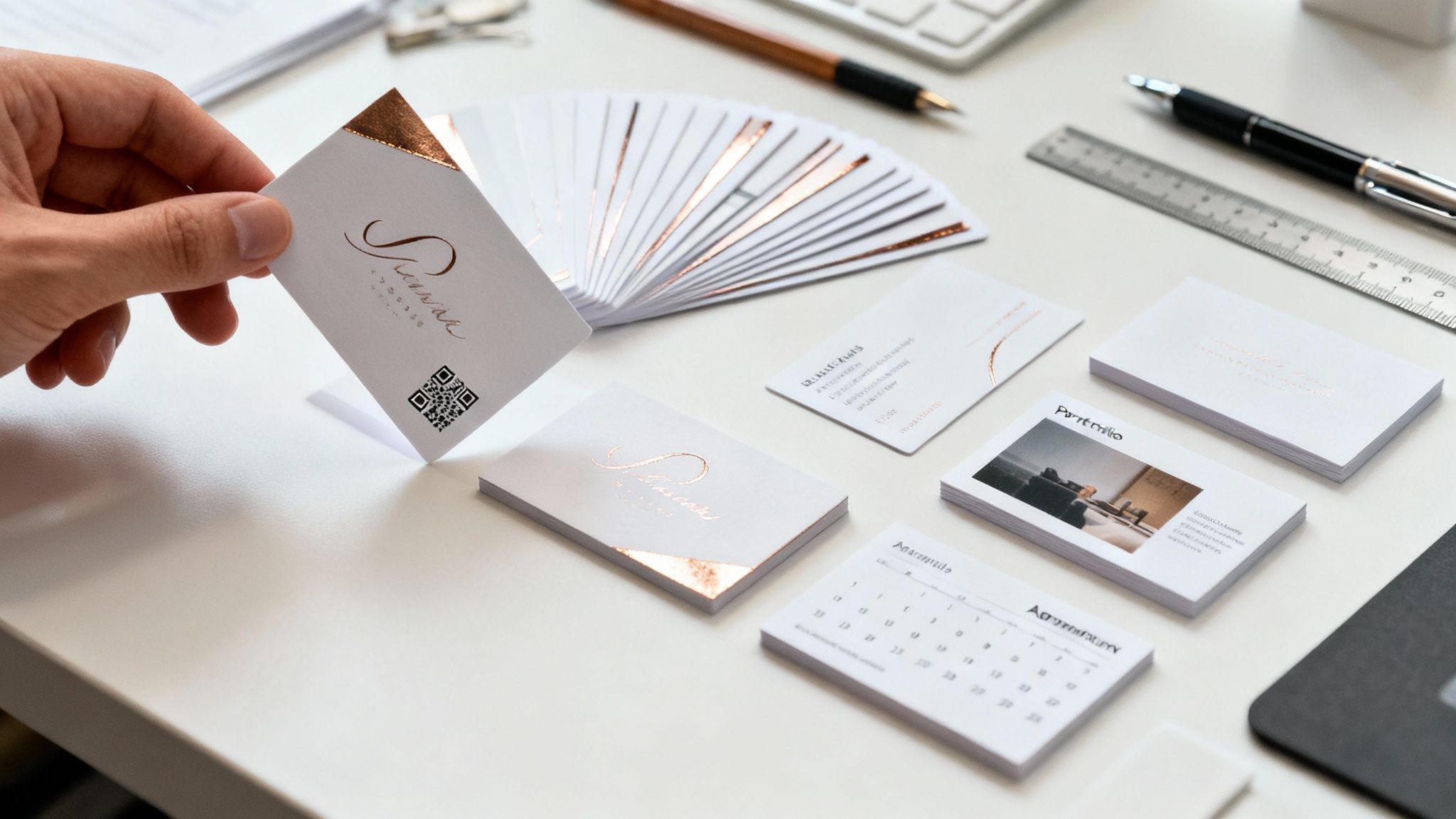
Picture this: you're at a networking event, and someone hands you their business card. You do the usual glance—name, title, company—and then, out of habit, you flip it over. But instead of finding a blank white space, you see a compelling offer, a stunning photo, or even a direct link to book a meeting.
That's the hidden superpower of your business card. It's the moment a simple piece of contact info transforms into a memorable brand experience.
Why the Back of Your Business Card Matters
All too often, the back of a business card is just... empty. It’s a huge missed opportunity to stand out, forge a real connection, or prompt someone to take action. In a world where first impressions are everything, that little patch of real estate can be your most effective networking tool.
Don't think of it as just the other side of a card. Think of it as your second chance to tell your story, prove your value, and make sure you’re remembered long after the handshake is over.
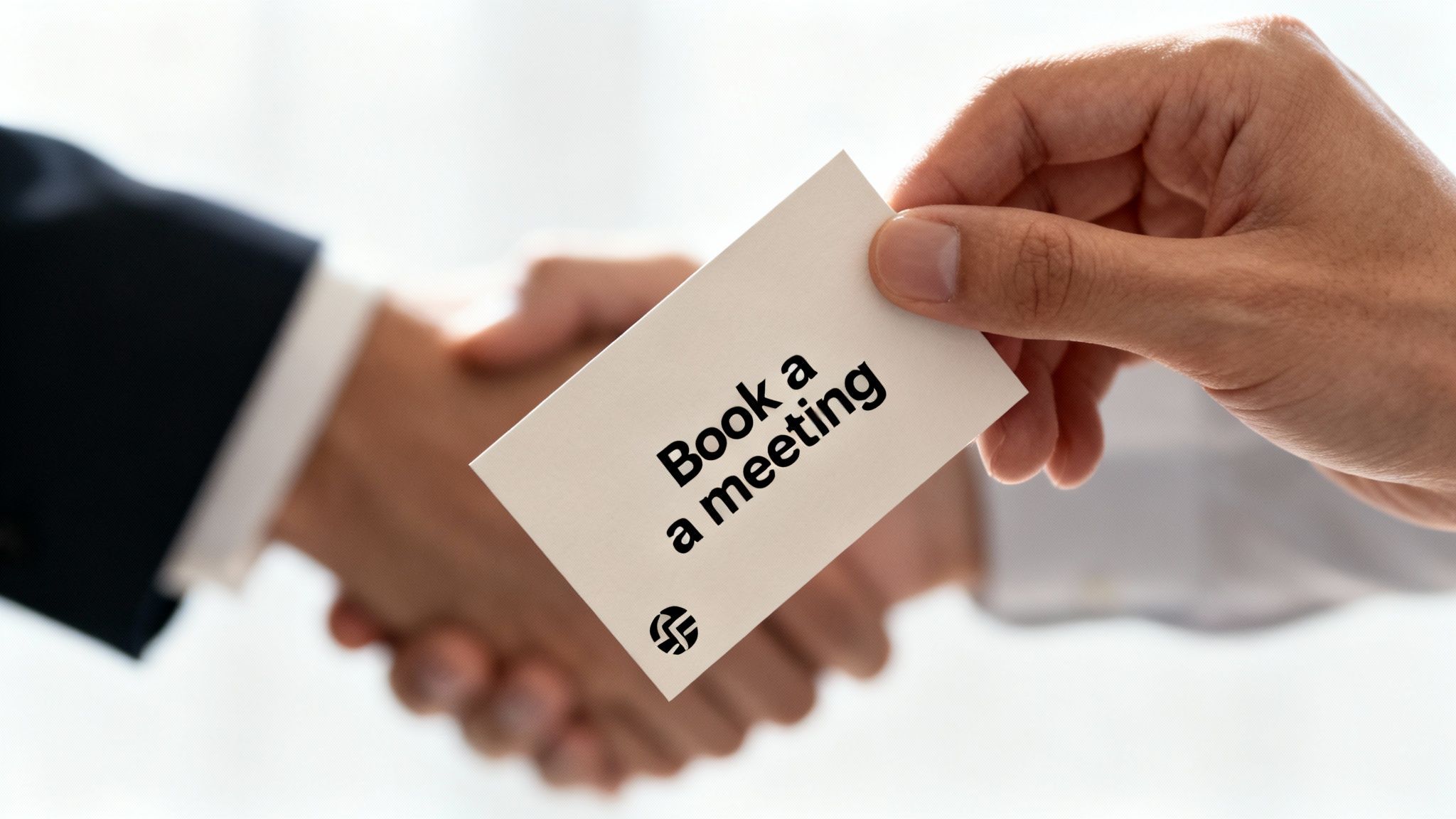
This guide is all about turning that blank canvas into a strategic asset. We’re going to dig into practical, creative, and tactical ideas for the back of a business card designed to hit specific goals. Whether you want to strengthen your brand, capture new leads, or just show off what you can do, the right design can turn a disposable item into a genuine conversation starter.
Bridging Physical and Digital Worlds
Today's business card should act as a physical key to your digital world. With nearly 93% of organizations now running on a digital-first strategy, connecting your printed materials to your online presence isn't just a good idea—it's essential.
This is especially true when you realize that a staggering 88% of paper business cards are tossed out within a week. A thoughtfully designed back, especially one with a QR code, turns your card into a durable gateway, boosting both retention and lead generation.
A business card is more than just contact information; it's a physical representation of your brand's attention to detail and creativity. Leaving the back blank is like ending a great story halfway through.
We're going to cover everything you need, including:
- Creative branding and storytelling ideas
- Action-oriented strategies to capture leads
- Functional designs that add real-world value
By the end, you’ll have a clear roadmap to create a card that doesn’t just share your contact details but actually makes a lasting impact. A great place to begin is with our guide on QR code business cards.
Strengthen Your Brand Identity and Story
Think of the back of your business card as a pocket-sized billboard. It’s the perfect spot to tell a bigger story, transforming a simple piece of cardstock into a powerful statement about who you are and what you stand for. This is your chance to move beyond just a logo and forge a real, memorable connection.
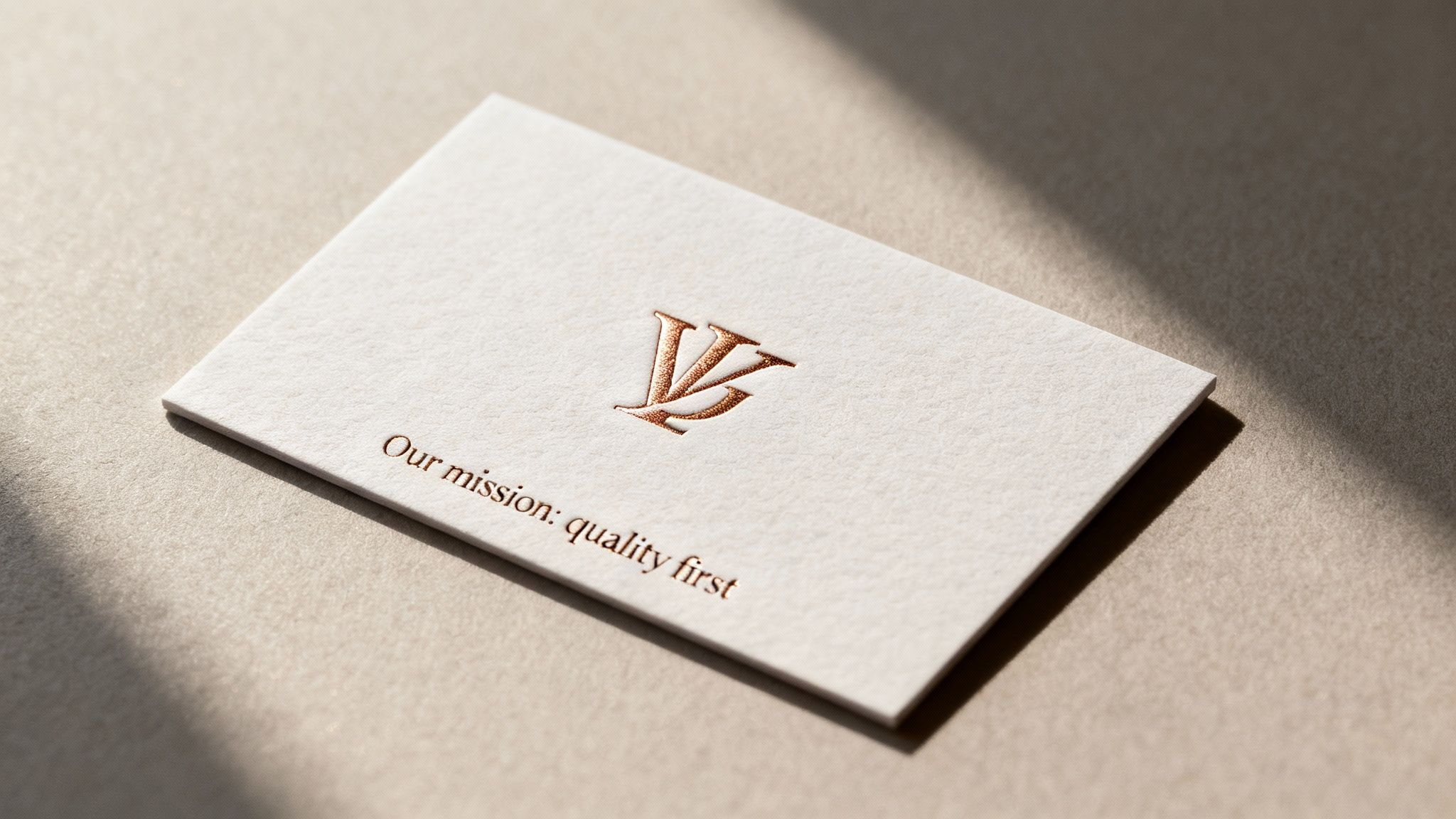
This is where you can bring your brand’s core to life. You could feature a concise, powerful mission statement that gets right to the heart of your values. Or, a strong customer testimonial can do wonders, building instant trust and social proof before someone even thinks about visiting your website.
Translate Your Brand Visually
For visual-heavy brands—think photographers, designers, or artisans—nothing beats a full-bleed, high-quality image. Show off a signature product or a photo that perfectly captures your brand’s unique feel. It’s a classic case of showing, not just telling, what you’re all about.
And don't forget the power of touch. The physical texture of your card can say a lot about your brand. A luxurious foil stamp or an elegant debossed finish from 4OVER4 makes the concept of "premium" a tangible feeling. That tactile experience turns a simple card into a memorable brand moment. To really nail this down, check out this comprehensive guide to brand identity design.
Consistency across all your visual and tactile identity is everything. When you use these branding elements across all your materials, including your business cards, you can boost brand recognition by up to 80%. We take a much deeper look into this topic in our article on creating a brand identity.
Use Key Data to Tell Your Story
Here’s another powerful idea: feature a single, impactful statistic that proves your value. The right number can instantly communicate your effectiveness and set you light-years apart from the competition.
For example:
- An marketing agency might state: "We help clients achieve a 35% average increase in organic traffic."
- A financial advisor could highlight: "Guiding clients toward 20% portfolio growth, year over year."
This strategy isn't just about showing off numbers; it’s about building rock-solid credibility. In fact, firms that display key metrics on their marketing materials often see 15-20% higher conversion rates globally. It makes every inch of your card work that much harder for you.
To give you a quick summary of these brand-focused ideas, we've put together a simple table.
Brand-Building Ideas at a Glance
| Idea | Best For | Pro Tip from 4OVER4 |
|---|---|---|
| Mission Statement | Purpose-driven brands, consultants | Keep it short and impactful—one powerful sentence is all you need. |
| Customer Testimonial | Service-based businesses, freelancers | Choose a quote that highlights a key benefit or solves a common pain point. |
| Full-Bleed Image | Photographers, artists, designers | Use a high-resolution photo that captures your brand's unique aesthetic. |
| Powerful Statistic | Agencies, financial advisors, tech | Pick a single, impressive number that demonstrates clear value and results. |
Each of these approaches helps turn a simple introduction into a lasting impression.
By dedicating the back of your card to your brand's narrative—whether through words, images, or data—you create a piece that people feel connected to, making it far less likely to be forgotten. It’s your story, make it count.
Generate Leads and Drive Direct Action
While great branding helps people remember you, a direct call to action (CTA) turns your business card into a tool that actively works for you. Instead of just sitting there with your contact info, the back of your card can spark a specific, valuable response. The goal is to make it almost impossible for someone not to take that next step.
The absolute best way to do this? The QR code. Think of it as a magic portal, instantly connecting your physical card to your digital world. With one quick scan, a potential client lands exactly where you want them, skipping the hassle of typing in a website address.
Turn a Handshake into a Conversion
Your CTA needs to be crystal clear, simple, and offer something genuinely useful. Piling on multiple requests just creates confusion. Instead, zero in on the one single thing you want that person to do right after meeting you.
Here are a few powerful ideas for the back of your business card that get people to act:
- Book a Consultation: Link a QR code straight to your Calendly or another booking page. A simple line like, "Scan to schedule your free 15-minute strategy session" is all you need.
- Download a Resource: Offer up a free ebook, a handy checklist, or an insightful white paper. The QR code can lead to a landing page where they pop in their email for the download, which is a fantastic way to add them to your newsletter.
- Claim an Exclusive Offer: This is a classic for retail or service businesses. "Bring this card for 10% off your first purchase" or "Scan for a secret discount code" creates a sense of urgency and can drive immediate foot traffic or clicks.
- Subscribe to a Newsletter: A friendly "Scan to join our community" can be a surprisingly effective way to build your email list with people who are already interested in what you do.
By locking in on a single, compelling CTA, you transform a polite exchange into a measurable business opportunity. While QR codes are perfect for digital actions, you can find more tips on connecting to your social profiles in our guide on adding social media icons to business cards.
Crafting an Irresistible Offer
The secret to a card that drives action is making the offer too good to pass up. It needs to solve a problem, provide immediate value, or give someone an exclusive perk they can't get anywhere else. The easier you make it for them, the more likely they are to follow through.
Think of your business card's call to action like a direct invitation. It's not just saying 'here's my information'; it's saying 'here's what we can do together, right now.'
For instance, a marketing consultant could offer a "Free Website Audit" through a QR code. That's way more compelling than just listing "Web Design Services" on the back. One is a passive statement; the other is an active invitation to get something valuable. This approach makes sure your card doesn't just get stashed in a wallet—it gets used.
Showcase Your Expertise and Portfolio
For any creative, consultant, or skilled professional, a business card is so much more than a slip of paper with your contact info—it's the movie trailer for your talent. The back of your card is the perfect spot to give a tangible preview of what you do, turning a simple handshake into a real demonstration of your skills. It's all about giving potential clients a reason to believe in you before they even click over to your website.
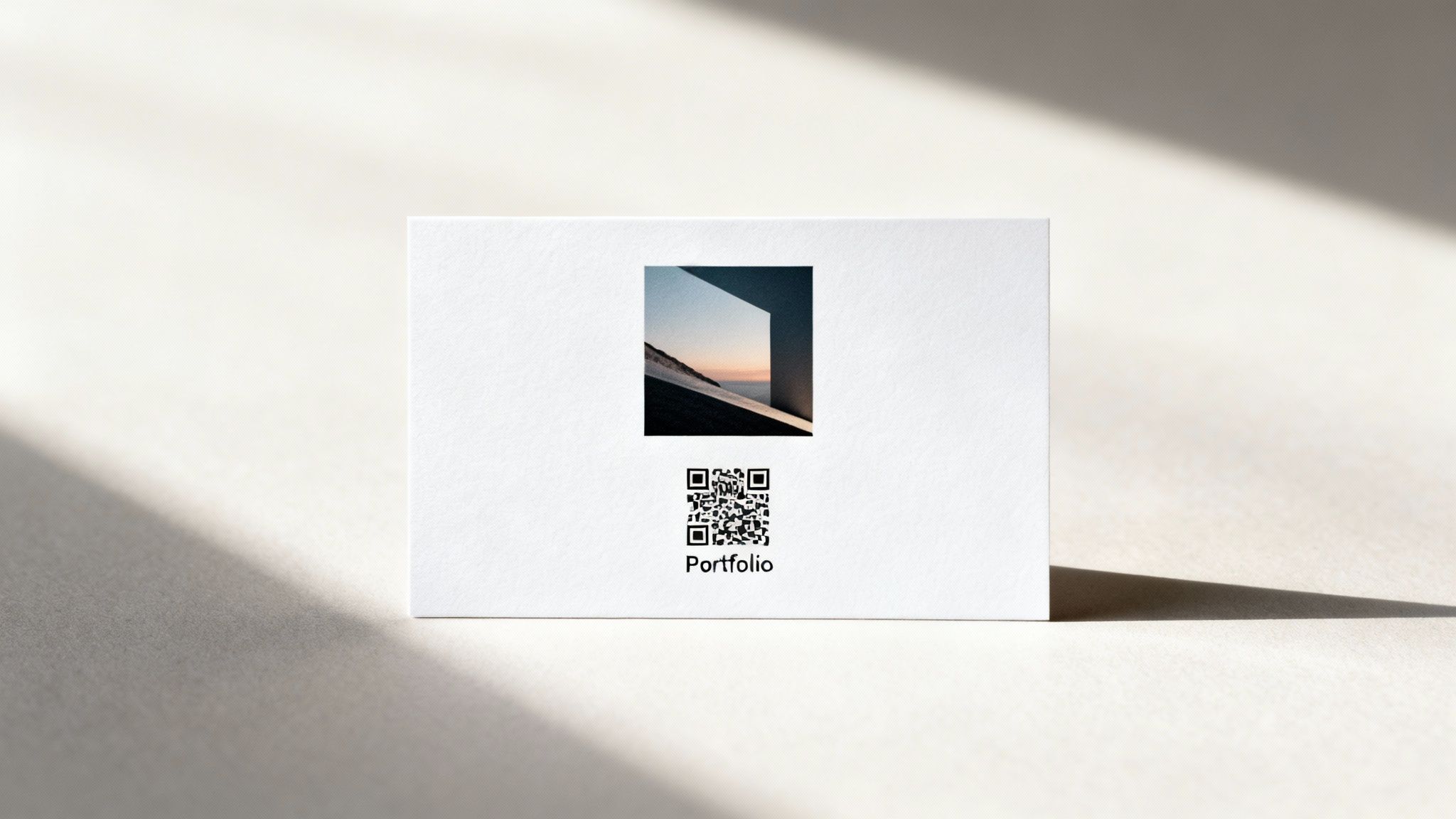
Think of it as your pocket-sized portfolio. A graphic designer might feature a small but striking logo they’re proud of. A photographer could use a stunning, high-contrast shot that perfectly captures their signature style. This kind of immediate visual proof is one of the most powerful ideas for the back of a business card because it changes the conversation from what you claim you can do to what you’ve actually done.
Bridge to Your Full Body of Work
While a single image is great, you can also use that space to guide people straight to your complete collection of projects. A clean, well-placed QR code is the perfect tool for this, creating an effortless link between your physical card and your digital world.
Here are a few smart destinations for your QR code:
- Your Full Online Portfolio: Send them right to your Behance, Dribbble, or personal portfolio site.
- A Curated Project Gallery: Link to a page showing off your best and most recent work.
- A GitHub Repository: For developers, this gives them instant access to your code and contributions.
- Case Studies: Take them to a page that breaks down your process and the killer results you’ve delivered for past clients.
This approach offers instant, undeniable proof of your abilities, giving potential clients a compelling reason to dig deeper and learn more about you.
The back of your card should answer the unspoken question in every potential client's mind: "Are you actually good at what you do?" A mini-portfolio or a direct link to your work answers that with a confident "yes."
Use Social Proof to Build Trust
Your expertise isn't just shown through visuals; it’s also validated by what others have to say. A short, punchy client quote can speak volumes and build trust in seconds. Pick a testimonial that highlights a specific, impressive result or one of your key strengths. For instance, a copywriter could feature a quote like, "Her copy boosted our conversions by 30%."
This strategy brilliantly combines proof of your skills with powerful social proof, building credibility on the spot. You're giving them just enough to be impressed and curious, nudging them to take that all-important next step.
Create Functional and Interactive Designs
So, how do you design a business card that someone actually keeps? The secret is to give it a second job. This strategy is all about adding practical, real-world value to the back of your card, which skyrockets its chances of sticking around and keeping your brand visible day after day.
When your card does more than just list your contact info, it earns a spot on a desk or in a wallet. It becomes a tool. The goal here is pure utility—transforming a simple piece of paper into something genuinely useful.
Make Your Card Indispensable
This approach is a game-changer, especially for service-based or retail businesses. A little bit of creativity can turn your card into a recurring touchpoint with your customers, encouraging them to come back and building a loyal following.
Think about these functional design ideas:
- Appointment Reminder: This one’s a classic for a reason. If you run a salon, clinic, or consulting business, the back of your card can have simple fields for "Date" and "Time." Instantly, it’s an appointment keeper.
- Loyalty Punch Card: Cafes, boutiques, and local shops can easily add a grid for stamps or punches. It gamifies the customer experience and rewards them for sticking with you.
- Mini-Ruler or Conversion Chart: Are you a designer, architect, or engineer? Turn the edge of your card into a handy mini-ruler. A baker could add a kitchen conversion chart that saves someone a quick Google search.
Add a Layer of Interactivity
Beyond just physical usefulness, you can make your card interactive. This is where you connect your physical card to your digital world, creating a smooth, modern experience for potential clients.
The most effective functional designs solve a small, everyday problem for the recipient. When your card becomes helpful, your brand becomes memorable.
To turn your business card into a dynamic and functional tool, think about how to embed interactivity right onto it. For example, you can explore these actionable QR code marketing ideas to link people to exclusive content, tutorials, or online tools. This not only adds a ton of value but also lets you track who’s engaging with your card. If you're thinking about more complex designs that need unique shapes or folds, check out our guide on folding business cards to see how you can pack even more utility into that small space. By making your card genuinely helpful, you leave a positive impression that lasts.
Choose the Right Design and Finish
A brilliant idea for the back of your business card is only half the battle. How you bring that idea to life—the design, the paper, the finish—is what turns a good concept into an unforgettable first impression. This is where you match the physical object to your strategic goal, ensuring your card feels as professional and intentional as it looks.
Think of it like this: your card's design sets the stage for your message. A few fundamentals are non-negotiable. Legible fonts are a must, obviously. You also need plenty of white space to prevent a cluttered, overwhelming look; it lets your key message breathe. And of course, strong color contrast makes everything pop.
These aren’t just fussy design rules. They directly impact how easily and positively someone receives your message. A clean, professional layout is priority number one for any card that gets results.
Matching The Finish To Your Function
The material and finish of your card speak volumes before a single word is even read. It’s a subtle yet powerful piece of your brand's story. Choosing the right finish from 4OVER4 can seriously amplify the impact of whatever idea you’ve landed on for the back.
Here are a few popular choices and how they sync up with different goals:
- Glossy Finish: That high-shine coating makes colors incredibly vibrant and images razor-sharp. It’s the perfect pick for photographers or designers using the back as a mini-portfolio. The gloss makes visuals truly leap off the card.
- Matte Finish: A smooth, non-reflective surface immediately gives off a modern, sophisticated vibe. This finish is ideal for corporate brands, consultants, or anyone aiming for an understated, elegant feel. It’s all class.
- Raised Spot UV: This is where things get interesting. This technique adds a clear, raised gloss to specific parts of your card. It’s fantastic for adding a tactile element that begs to be touched, whether it's on your logo, a call-to-action button, or making a QR code pop.
To get a better sense of how your goal can guide your card’s function, check out this simple decision tree.
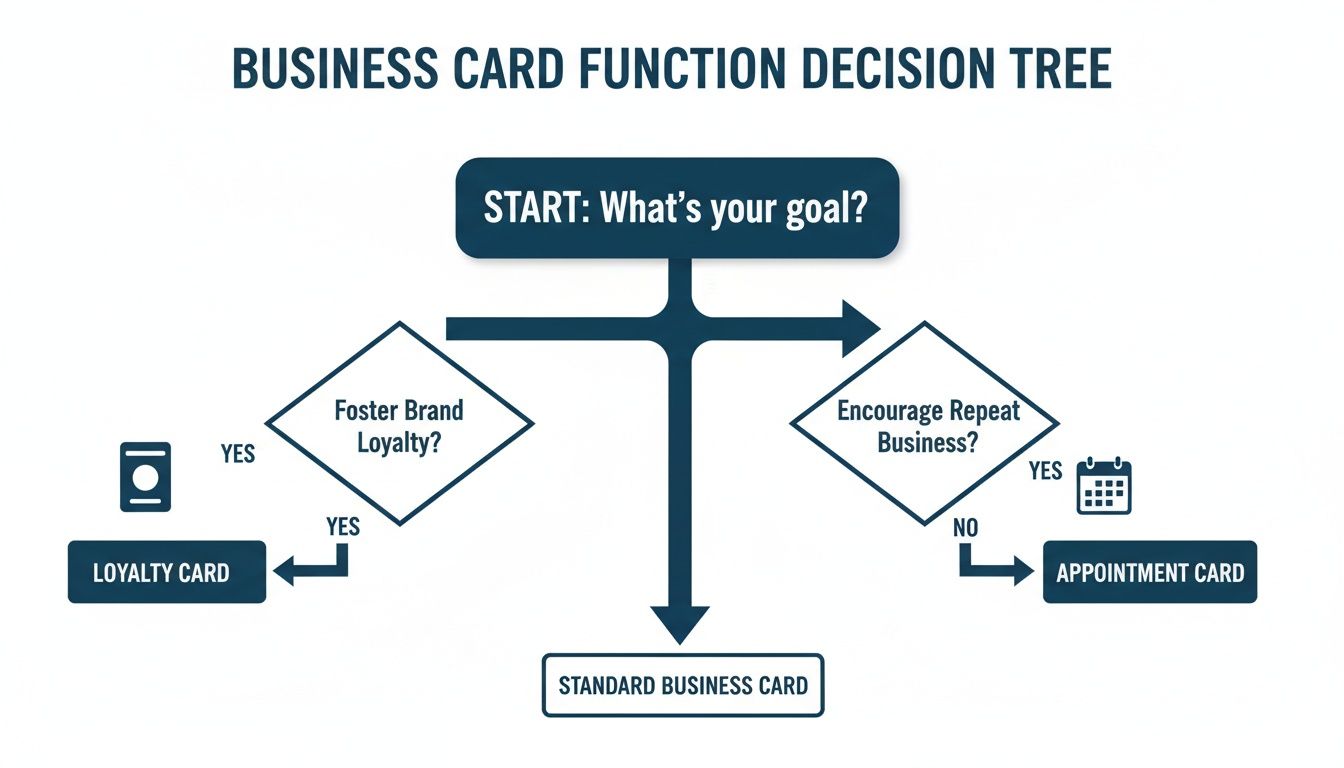
As the graphic shows, if your main objective is to encourage brand loyalty, that naturally leads you to a functional design like a punch card. The goal dictates the execution.
Here's a quick cheat sheet to connect your goal with the perfect finish.
Matching Card Finish to Your Goal
| Finish Type (e.g., Glossy, Matte, Foil) | Best For This Goal | Why It Works |
|---|---|---|
| Glossy | Showcasing visuals, mini-portfolio | Makes colors and photos pop with a vibrant, high-energy feel. |
| Matte | Professional, elegant branding | Offers a sophisticated, non-reflective surface that feels modern and clean. |
| Uncoated | Writable surfaces (appointments, notes) | The natural paper texture is easy to write on with any pen, perfect for loyalty cards. |
| Raised Spot UV | Highlighting a CTA or logo | Adds a tactile, raised element that draws attention and invites touch. |
| Foil Stamping | Luxury branding, premium feel | The metallic shine conveys exclusivity and high-end quality. |
Ultimately, the best ideas for the back of a business card are the ones where concept, design, and physical finish all work together in perfect harmony.
To really dive deep into the world of textures and coatings, you can learn more about the various types of print finishes available and find the perfect match for your brand. This cohesive approach ensures your card doesn't just share information—it creates a memorable experience.
Frequently Asked Questions
Got questions about designing the back of your business card? You're not the only one. Let's walk through some of the most common ones to help you nail down the perfect design.
What Is the Most Important Information To Put on the Back?
Honestly, this completely depends on what you want the card to do. There's no single right answer.
If your main goal is lead generation, nothing beats a QR code with a clear, direct call to action like "Scan to Book a Meeting." But if you're trying to build your brand, a short, punchy mission statement or a glowing customer testimonial can create an immediate connection.
Trying to show off your work? A stunning portfolio image or a direct link to your gallery is the way to go. The trick is to pick the one action or feeling you want someone to walk away with and focus entirely on that.
Should the Back of My Business Card Match the Front?
Yes, absolutely. Brand consistency is key to looking professional and put-together. While the actual content on the back will obviously be different, the core design elements need to feel like part of the same family.
That means using the same color palette, fonts, and general visual vibe. This cohesion is what makes your card feel polished and intentional, rather than like two separate ideas glued together. A unified design tells people you care about the details.
A great business card feels like a single, cohesive brand experience from front to back. The back should complement the front, not compete with it. A focused design with plenty of white space is always more effective than a cluttered one.
Is It Unprofessional to Have a Busy Design?
A busy design can definitely come across as unprofessional if you're not careful. The biggest mistake people make is trying to cram too much onto that small space.
Don't try to include a testimonial, a QR code, and a list of your services all at once. It just creates noise.
Instead, pick one primary purpose and dedicate the entire back to making it shine. A minimalist approach almost always wins because it’s clear and confident. Using negative space (or "white space") effectively makes your chosen element pop and ensures your card is clean, modern, and easy to understand in a quick glance.
Ready to bring your ideas for the back of a business card to life? At 4OVER4, we offer a huge range of high-quality papers, unique finishes, and easy-to-use design templates to create a card that truly stands out. Start designing your perfect business card today!
More from

13
Tear-off flyers are a classic for a reason. They’re a tangible marketing tool, designed with perforated, removable tabs at the bottom. Each
 Emma Davis
Mar 11, 2026

49
Printing stickers at home is a seriously fun and rewarding project. It boils down to four main parts: designing your image, picking the right
Emma Davis
Mar 10, 2026

56
Ever seen a logo that seems to float right on the glass of a jar or bottle? That’s the work of transparent label stickers.
Emma Davis
Mar 9, 2026

49
Picture this: your product’s beautiful label gets smudged and runny during shipping, or a gorgeous event banner fades to nothing after just
Emma Davis
Mar 8, 2026

52
In a sea of options, your product's packaging and labeling are its first, and often only, chance to make a real connectio
Emma Davis
Mar 7, 2026

82
Ever tried to print a hundred high-quality flyers on your home office printer? You probably ran out of ink, dealt with paper jams, and ended u
Emma Davis
Mar 6, 2026

72
So, what exactly is typography in graphic design? Put simply, it’s the art of arranging letters and text in a way that is clear, legible, an
Emma Davis
Mar 5, 2026

764
The fundamental difference between traditional and digital marketing really boils down to one thing: traditional marketing casts a wid
Emma Davis
Mar 4, 2026