Table of Contents
- Home
- content hub
- Folding Business Cards That Make an Unforgettable Impact
 Share and earn
Folding Business Cards That Make an Unforgettable Impact

Jul 2, 20251294 views
Jul 2, 20251294 views
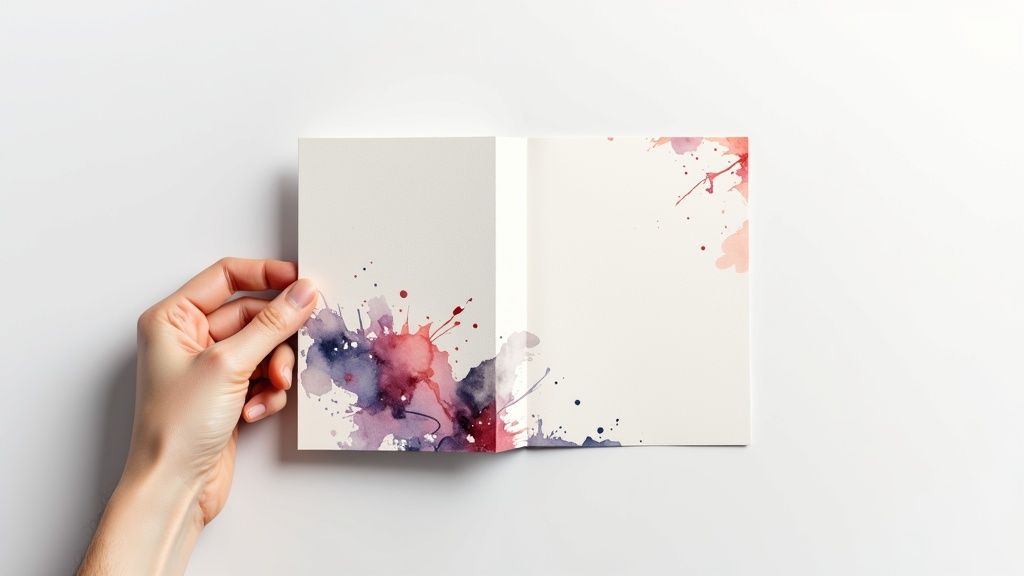
A folding business card does more than just give out your contact details; it creates a memorable, physical experience that makes you stand out. Think of a standard card as a quick headline. A folding business card, on the other hand, is the full story, giving you twice the real estate to show off your brand, services, or even a mini-portfolio. This extra space helps make sure your card is kept and valued, not just tossed aside.
Why Folding Business Cards Make a Stronger First Impression
In a world filled with digital pings and fleeting online connections, a tangible business card is still a surprisingly powerful networking tool. But let's be honest—the standard little rectangle is so common it rarely leaves a mark.
A folding business card instantly shatters that expectation. The simple act of unfolding it creates a small interactive moment. It engages the person you’ve just met, encouraging them to spend a few extra seconds with your brand.
That extra moment of engagement isn't just a novelty; it can lead to real results. Studies show that for every 2,000 cards handed out, companies see a 2.5% bump in sales. And when those cards are premium, like many folded options, they have a 25% higher retention rate. Why? Because people see them as more valuable and higher quality.
To give you a clearer picture, let's break down how these two card types stack up.
Standard vs Folding Business Cards at a Glance
Sometimes seeing the differences side-by-side makes the choice obvious. Here’s a quick comparison of what each type of card brings to the table.
| Feature | Standard Business Card | Folding Business Card |
|---|---|---|
| Space | Limited to basic contact information and a logo. | Double the space for detailed information, images, or special offers. |
| First Impression | Can be easily overlooked in a stack of other cards. | Creates an interactive and memorable "unboxing" experience. |
| Functionality | Primarily informational. | Can serve as a mini-portfolio, appointment card, or loyalty card. |
| Perceived Value | Often seen as a standard, disposable networking tool. | Perceived as higher quality, more professional, and valuable. |
| Retention Rate | Lower; easily misplaced or discarded. | Higher; people are more likely to keep a unique and useful card. |
| Brand Storytelling | Minimal; relies on a single tagline or logo. | Ample room to tell your brand story, list services, or add a call to action. |
As you can see, the folding business card isn't just a different shape—it's a fundamentally more versatile and impactful marketing tool.
More Than a Card, It's a Pocket Portfolio
A standard business card has one job: give someone your contact info. A folded card is a multi-tasker, transforming from a simple card into a compact and powerful marketing piece. The multi-panel format lets you get strategic.
- Tell a Deeper Story: Use the cover for your name and logo, and open it up to reveal your mission, list key services, or share a glowing customer testimonial.
- Showcase Your Work: Are you a photographer, artist, or designer? The inner panels are the perfect spot for a mini-portfolio to display high-quality images of your best work.
- Provide Real Value: A restaurant could turn its card into a loyalty stamp card. A consultant might include a valuable industry tip or a helpful checklist.
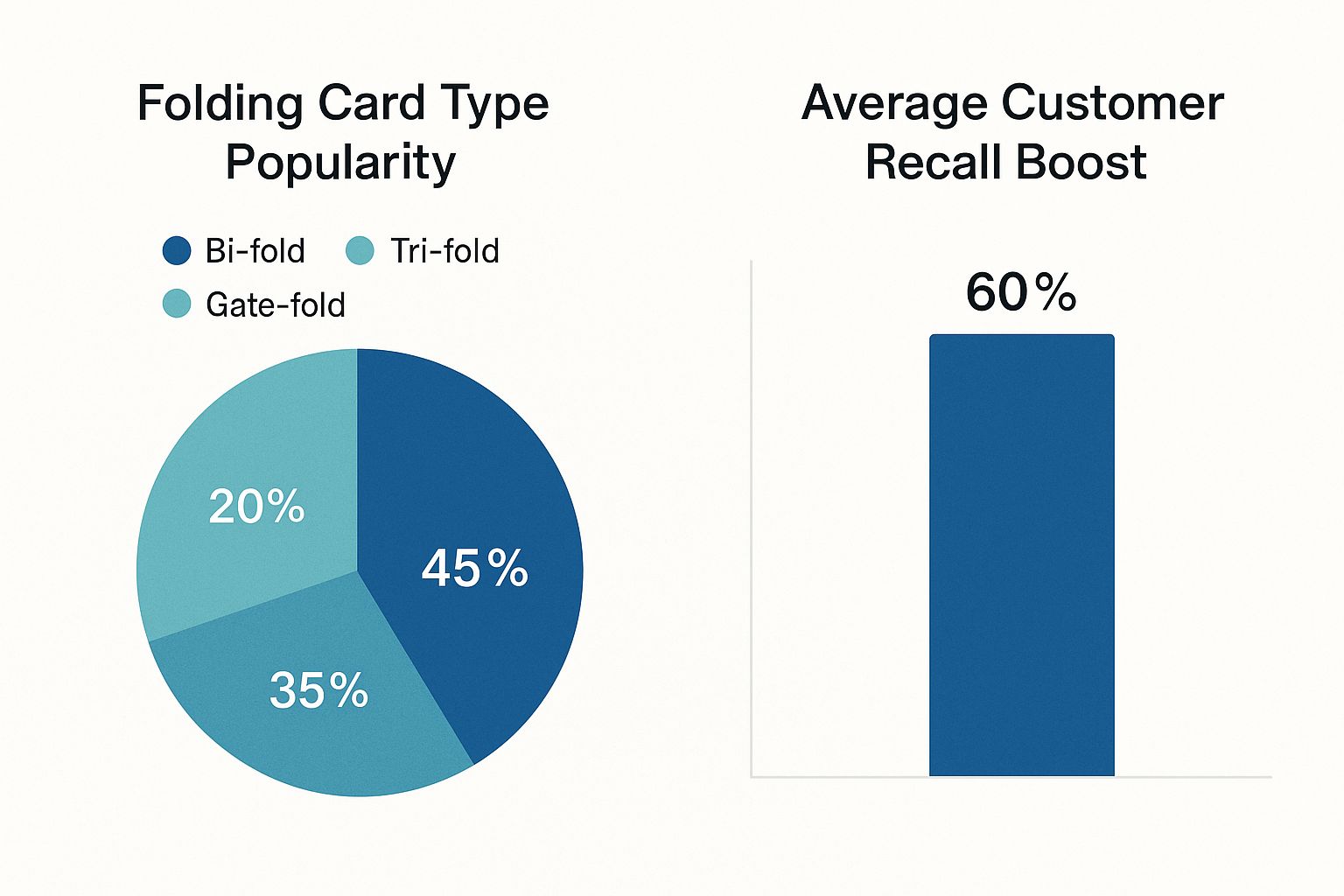
The data here is pretty clear: while bi-folds are the most popular choice, any folded format delivers a massive 60% boost in brand recall. That makes your first impression far more likely to stick.
By offering more space and a unique tactile experience, a folding business card communicates professionalism and signals that you invest in quality. It’s an immediate differentiator that helps you stand out in a stack of ordinary cards.
Ultimately, choosing a folding format is a strategic move to elevate your brand. As you think about these dynamic options, you can also explore our complete guide on custom business cards printing to find the perfect match for your professional needs.
How to Use the Extra Space Strategically

The real magic of a folding business card isn't just the extra space—it's how you use it. Think of your card as a tiny storybook. The cover grabs their attention, but opening it up is where you pull them in. That little "reveal" moment is your secret weapon for guiding a prospect's focus and making an impression that sticks.
Instead of just jamming every last detail onto a single surface, you get to dedicate each panel to a specific job. This simple, structured approach transforms your card from a basic contact slip into a genuinely useful, multi-purpose tool. The trick is to create a flow that feels logical and intuitive to whoever is holding it.
For instance, you could keep the front clean with just your logo and name, building a little intrigue. Then, when they open it, one panel details your core services while the other shows off a killer testimonial. You’re taking them on a mini-journey that’s both engaging and easy to digest.
Dedicate Panels for Specific Functions
One of the most common mistakes I see is people treating the extra space like a blank wall they have to fill at random. A much better approach is to think like an architect designing a tiny, efficient room. Every single inch needs a purpose.
When you assign a clear role to each panel, you make the information so much easier to understand. This segmentation keeps the design from looking cluttered and helps your audience actually absorb what you're trying to tell them without feeling overwhelmed. Let's break down a few practical ways to divide and conquer your card's real estate.
Here are a few proven strategies for assigning jobs to each panel:
- The Mini-Portfolio: This is a no-brainer for photographers, designers, architects, and artists. Use the inner panels to showcase a few high-resolution images of your best work.
- The Service Menu: Perfect for consultants, freelancers, and service-based businesses. List your key services inside with short, benefit-focused descriptions.
- The Appointment Reminder: Turn one panel into a fillable appointment card with fields for the date and time. It’s a super practical choice for salons, clinics, and personal trainers.
- The Loyalty Program: Transform your card into a punch card to drive repeat business. This is a fantastic move for coffee shops, small retail stores, and local service providers.
A well-structured folding business card becomes a useful tool in the recipient’s hands. By providing tangible value—whether it’s a map, a discount, or a portfolio—you dramatically increase the chances that your card will be kept and referenced later.
Create a Narrative Journey
Beyond pure functionality, that fold gives you a chance to tell a story. The physical act of opening the card actually builds a little suspense and guides the reader through a sequence you've planned out. This turns a simple exchange into a much more memorable interaction.
Think about the path you want someone's eyes to take. What's the most important thing you need them to know? The order of your panels should lead them straight to that key takeaway.
A Sample Narrative Flow:
- Front Panel (The Hook): This is where you put your name, title, and a striking logo. Its only job is to spark curiosity and get them to open the card.
- Left Inner Panel (The Problem/Need): Briefly touch on a common pain point your ideal client faces. This immediately shows that you get it—you understand their world.
- Right Inner Panel (The Solution): Now it's your time to shine. This is where you explain how your services or products solve the very problem you just mentioned.
- Back Panel (The Call to Action): You have to end with clear, actionable next steps. This could be a QR code to your portfolio, your website URL, or your social media handles.
This structured approach is a lot like how effective marketing materials like brochures are designed. In fact, if you need to tell an even bigger story, you can apply these same principles to other print materials that complement your networking. When you think strategically about each panel, your folding business cards become powerful conversation starters that keep working for you long after the handshake.
Designing a Folded Card That Captures Attention
A great design for a folding business card is about so much more than just looking good. It’s about creating clarity and making a real impact. Your goal is to guide the recipient’s eye and tell a cohesive story across multiple panels. That "reveal" you get when someone opens the fold? That's your chance to build curiosity and deliver your message with confidence.
Think of each panel as a chapter in a very short book. The cover has to be compelling enough to make someone want to open it, and the inside needs to deliver on that promise. This approach keeps you from creating a cluttered, overwhelming mess, which is a common pitfall when trying to cram too much information into a small space. A well-planned layout makes your card professional and surprisingly functional.
Planning Your Content Across Panels
First things first: you need a map. Before you even touch colors or fonts, figure out the purpose of each surface on your card. This strategic thinking is the bedrock of an effective design. A simple narrative structure is usually the most effective way to go.
- Front Panel: This is your hook. Keep it clean and powerful with your logo, name, and maybe a single, strong tagline. Its only job is to pique interest.
- Inside Panels: Here’s where you deliver the goods. You could dedicate one side to your core services and the other to a killer testimonial or a mini-portfolio of your work.
- Back Panel: Save this space for clear, actionable information. It’s the perfect home for all your contact details, social media handles, and a QR code that sends people straight to your website or portfolio.
By giving each panel a specific job, you create an intuitive flow that guides the person holding it. This structured journey makes your information easy to digest and your brand story more memorable, turning a simple card into a powerful piece of communication.
This methodical approach guarantees every element is there for a reason, all working together to create a final product that’s both beautiful and strategically sharp.
Choosing the Right Fold and Layout
The type of fold you pick directly shapes how your story unfolds. While there are tons of creative options out there, two folds have become popular for being both practical and impactful.
Popular Fold Types
- Bi-fold (or Tent Fold): This is the classic choice, folding in half like a tiny book or a greeting card. It's straightforward, familiar, and gives you a clean break between the cover and your internal content. It just feels substantial and professional.
- Z-fold: This fold creates three equal panels that accordion out, kind of like a brochure. It's fantastic for revealing information step-by-step, creating a narrative that can be really engaging for the recipient.
Once you've settled on a fold, it’s all about creating a balanced layout. Use a grid to align your text and images—it instantly brings a sense of order and professionalism. Most importantly, embrace white space. That’s the empty area around your design elements. It isn't wasted space; it's a critical design tool that prevents a cluttered look and makes everything more readable.
For those who really want to make a statement, thinking beyond standard folds can be a game-changer. Custom shapes and cuts can turn your card into a memorable object. If you're considering unconventional shapes, it's worth learning about what's possible with professional die-cutting services to see just how far you can push the envelope.
Integrating Visuals and Typography
Your choice of images, graphics, and fonts is what will ultimately bring your brand to life on the card. Always use high-resolution images—300 DPI is the standard for print—to make sure they look crisp and professional, not blurry or pixelated. Your visuals should feel like they belong to your brand.
Typography is just as important, as it really sets the tone for the entire card. Stick to two, or at most three, complementary fonts: one for your headlines and another for the main text. This creates a clear visual hierarchy that makes the card easy to scan. Beyond the layout and colors, if you want to truly capture attention, you'll need to master design in typography, which is a crucial skill for creating stunning visuals on your card.
In the end, every single design choice—from the fold to the font—should work together to communicate your message with confidence and style.
Choosing the Right Paper and Finishes
Long before anyone even reads your name, your folding business card has already made an impression. The moment it’s handed over, its weight, texture, and sheen create a powerful, subconscious signal about your brand. It’s the physical equivalent of a handshake—is it flimsy and forgettable, or firm and confident?
Think about it this way: a thin, flimsy card feels temporary, almost disposable. A thick, substantial card, on the other hand, feels important and valuable. This is where you get to translate your brand's personality into a tangible object. Choosing the right paper and finish is a crucial step that takes your design from just looking good to feeling premium.
Understanding Paper Weight and Its Impact
Paper weight, also known as stock, is measured in points (pt). The higher the number, the thicker and more rigid the card. This isn’t just some technical jargon; it directly shapes how people perceive your brand. A heavier stock instantly communicates durability, quality, and a sense of permanence.
- 14pt Stock: This is a fantastic, industry-standard choice. It feels professional and solid without being overly bulky, offering a clear step up from the flimsy cards most people are used to. It's a great starting point for any folding business card.
- 16pt Stock: With a little more heft, 16pt stock gives off a more premium vibe. That extra thickness makes the card feel more durable and adds a sense of quality that people can literally feel between their fingers.
- 32pt Stock (and above): Welcome to the luxury tier. Ultra-thick cards, often made by bonding multiple sheets together, are simply impossible to ignore. They make a bold statement about quality and investment, perfect for high-end brands that want to leave a lasting impression.
We're seeing a clear trend toward more substantial, high-quality cards. The global business card market is projected to grow at a rate of around 8.81% between 2025 and 2033. This growth is also fueled by a demand for sustainable options, as 54% of clients now prefer cards made from recycled materials, which are also kept 25% longer by recipients.
Selecting the Perfect Finish for Your Brand
Once you’ve nailed down the paper weight, the finish is the next layer of personality you add. A finish is a protective coating that impacts both the look and feel of the card, and each one sends a distinct message.
The right finish does more than just protect the ink; it completes your brand's story. A glossy finish might shout excitement and modernity, while a matte finish whispers elegance and sophistication.
Common Finish Options
- Glossy: This high-shine finish makes colors absolutely pop. It's vibrant, energetic, and fantastic for designs that feature bold colors or photography. Just be aware it can show fingerprints and create glare.
- Matte: A matte finish has a smooth, non-reflective surface that feels sophisticated and modern. It’s perfect for minimalist designs, lending an elegant, understated appeal to your card.
- Uncoated: With a natural, textured paper feel, uncoated stock is all about an organic or rustic vibe. It's also easy to write on, making it a super practical choice for appointment cards or anything you want to feel more handcrafted.
Adding a Premium Touch with Specialty Finishes
If you want your folding business card to be truly unforgettable, consider a specialty finish. These premium touches use texture and light to highlight specific parts of your design, like your logo or company name. They add a "wow" factor that practically begs people to take a closer look and run their fingers over it.
Exploring these options is easier than ever, and any great printer will have a variety to choose from. If you need some inspiration, checking out a specialty printing collection can show you what's possible and spark some ideas for your own design.
Premium Options to Consider:
- Spot UV: Imagine a high-gloss coating applied to just a few select areas of your card. It creates a stunning contrast against a matte background, making certain elements leap off the page.
- Foil Stamping: This process stamps metallic foil (think gold, silver, rose gold, or even holographic) onto your card, adding a brilliant, eye-catching shimmer that screams luxury.
- Embossing/Debossing: This technique physically raises (embosses) or indents (debosses) parts of your design, adding real depth and a unique tactile quality that people can't help but touch.
By carefully choosing your paper and finishes, you take full control of the first impression your brand makes. This powerful combination of weight, texture, and shine is what transforms a simple piece of paper into a persuasive marketing tool.
Creative Folding Card Ideas for Your Profession
The real magic of a folding business card happens when you design it for a specific job. When you move past just listing your contact info, your card stops being a simple networking handout and becomes a genuinely useful tool—one that clients and partners will actually hang onto.
Let’s put that idea into practice. By seeing how different pros can adapt this format, you can get some great ideas for your own design. The aim is to make your card so useful or impressive that tossing it feels like a waste.
For Photographers and Visual Artists
If you're a creative professional, a standard business card is a prison for your work. It's just too small to do your art justice. A folding card, on the other hand, is a pocket-sized gallery.
Picture this: the front has your name and a clean, elegant logo. When someone opens it, they're greeted by a stunning mini-portfolio spread across the inside panels. You can feature 3-4 high-resolution images of your best work, giving them an instant taste of your skill and style. It’s no longer just an introduction; it’s a powerful visual pitch.
For Real Estate Agents
In the cutthroat world of real estate, giving clients something of tangible value makes all the difference. Your folding card can be a tiny, hyper-local resource guide for potential buyers.
Think about dedicating the inner panels to a simple, clean map of a key neighborhood, pointing out local gems like parks, schools, and the best coffee shops. On the other side, you could include a quick mortgage calculator chart or a list of "Top 5 Things to Look for in a New Home." This instantly positions you as more than just an agent—you're the local expert they need.
A purpose-driven folding card becomes an indispensable tool. When you offer something genuinely useful—a map, a checklist, a loyalty tracker—you create a reason for your card to be kept, referenced, and remembered.
For Restaurant and Cafe Owners
For any business that thrives on repeat customers, a folding card is a brilliant way to build loyalty. Forget those separate punch cards that always get lost. Integrate one right into your business card.
A simple bi-fold design works perfectly. The front has your restaurant’s branding and location, while the inside features 10 stamp circles for a "buy 10 coffees, get one free" deal. This simple trick encourages customers to keep your card in their wallet, making sure your brand and contact info are right there every time they reach for a stamp.
For Consultants and Freelancers
As a consultant, you're selling your expertise. Your business card should immediately communicate the value you bring to the table, and the extra real estate on a folding card is perfect for that.
Use the inside panels to list your core services or, even better, outline your signature process in three simple steps. For example, a marketing consultant could have panels for "Discovery," "Strategy," and "Execution." This approach immediately clarifies what you do and shows you have a structured, professional methodology, building confidence from the first handshake. When you pair this with other high-quality marketing materials, you create a brand image that feels cohesive and authoritative.
For Tradespeople and Service Providers
If you’re an electrician, plumber, or HVAC tech, a card that offers practical help builds incredible trust. Try turning your folding business card into a mini-reference guide for homeowners.
One inner panel could list common troubleshooting tips, like "What to do if your AC stops working." The other panel could be a simple service log where you can jot down the date of the last maintenance check. This is unbelievably helpful for the client and all but guarantees they'll call you first for the next job.
Connecting Your Physical Card to Your Digital World
Your business card should do more than just hand out your contact info—it needs to be a direct bridge to your online world. A folding business card is perfect for this job. It gives you all the room you need to forge a solid link between the physical and digital, turning a simple handshake into a real connection.
Think of your card as a physical launchpad. With those extra panels, you have plenty of space to add tech like QR codes without cramping your design. This hybrid approach gives you the best of both worlds: the memorable, tactile feeling of a great print piece and the rich, interactive experience of your online platforms.
And it’s an incredibly effective blend. While the average website conversion rate is around 2.35%, a good old-fashioned business card can hit a conversion rate of 12%. On top of that, the use of digital business cards, which are often linked from physical cards via QR codes, is growing fast—projected to grow between 10% and 12% annually from 2021 to 2027. You can check out more on these trends and discover more insights about digital business card statistics on QRcodeChimp.com.
Making QR Codes Work for You
A QR code is the most direct path you can create from your card to your digital presence. But just linking to your website’s homepage? That's a missed opportunity. The extra real estate on a folding card means you can get much more creative and targeted with where you send people.
Imagine dedicating an entire inner panel to a clean, well-designed QR code. This keeps your front cover looking sharp and adds a little moment of discovery when someone opens it.
Strategic QR Code Destinations:
- Direct to Your Portfolio: If you're a creative, send them right to a gallery of your best work. No extra clicks needed.
- Download Your VCard: Let them save your contact details directly to their phone. It’s effortless for them and a huge win for you.
- Exclusive Landing Page: Create a page just for new contacts. You could have a welcome video, a special offer, or a downloadable resource waiting for them.
- Schedule a Meeting: Link straight to your Calendly or another scheduling tool to turn a new connection into a booked appointment.
A QR code on a folding card isn't just a tech gimmick; it's a powerful call to action. It transforms your card from a static object into an interactive tool that drives traffic, captures leads, and provides trackable engagement data.
Creating a Cohesive Brand Journey
When you successfully guide someone from your physical card to your online profiles, that journey has to feel seamless. The brand they see on their screen should be an instant, recognizable extension of the one they just held in their hand. Consistency is what builds trust and solidifies your professional image.
A strong, consistent digital identity is paramount when guiding contacts from your folding business card to your online presence; check out this Social Media Branding Guide to make sure your social profiles properly reinforce your professional image. This helps create a unified brand experience that feels intentional and expertly managed.
Ultimately, by weaving in smart technology, you make your folding business cards work that much harder for you. They stop being just a first impression and become dynamic tools that actively build your digital ecosystem, one scan at a time.
Common Questions About Folding Business Cards
Even with all the benefits laid out, it’s completely normal to have some practical questions before you go all-in on folding business cards. Investing in your brand’s first impression is a big deal, and you want to be sure you’re getting it right. Let's tackle some of the most common worries so you can move forward with total confidence.
Most people’s minds jump straight to cost and convenience. After all, if a card is too expensive or won’t even fit in a wallet, what's the point? These are fair questions, but the answers might just surprise you.
What Is the Standard Size for a Folding Business Card?
There's a popular myth that folded cards are bulky and awkwardly sized, but the truth is they’re designed for pure convenience.
The most common folded size for these cards is 3.5" x 2"—the exact same as a standard business card. This means it unfolds to 3.5" x 4", giving you double the space while still fitting perfectly into any wallet or cardholder.
It's a clever design that gives you all that extra real estate for your message without sacrificing an ounce of portability. It really is the best of both worlds.
How Much More Do Folding Cards Cost?
Okay, let's talk budget. It's true that folding business cards cost more than their standard, single-panel cousins. The price bump comes from a few things: you're using more paper, the printing has to cover multiple panels, and there's an extra production step for scoring the card to get that crisp, clean fold.
The price increase usually lands somewhere between 50% and 100% more, depending on a few key factors like:
- The thickness of the paper stock you choose.
- Any premium finishes you add, like foil or Spot UV.
- The total quantity of your order.
That said, many businesses find the enhanced impact and much higher retention rate deliver a fantastic return on that initial investment.
Are They Too Bulky for a Wallet?
This is probably the biggest myth of them all, and the answer is a resounding no. While a folded card is naturally thicker because of the extra panel, it’s far from cumbersome. Printers use sturdy but thoughtfully selected paper stocks that feel substantial and premium without becoming too thick to handle.
In fact, that added weight is a key part of their appeal. It gives the card a confident, high-quality feel that flimsy, standard cards just can't compete with, all while sliding comfortably into a wallet slot.
Ready to create a folding business card that gets you noticed? At 4OVER4, we offer a wide range of premium paper stocks, finishes, and custom options to bring your vision to life. Explore our collection and start designing today!
More from

22
Printing on ribbon is the art of transferring your custom design, logo, or text onto a roll of fabric. It’s what transforms a simple decorat
 Emma Davis
Mar 19, 2026

91
If you've ever wondered about the standard gift card dimensions, there’s one number you need to know: CR80
Emma Davis
Mar 17, 2026

48
When you’re launching a product, your bottle label is often the first thing a customer sees. Think of it as your silent salesperson
Emma Davis
Mar 16, 2026

133
When you're brainstorming ideas for landscaping business cards, it helps to think beyond just contact information. Your c
Emma Davis
Mar 15, 2026

246
When you think of a yard sign, the classic 18"x24" is probably what comes to mind. It’s the industry workhorse fo
Emma Davis
Mar 14, 2026

158
When you’re ready to invest in an A-frame sign, the first question you'll ask is, "What size do I need?" It usually comes down
Emma Davis
Mar 13, 2026

1669
The real secret to mastering your direct mail budget isn't complicated. It comes down to one simple fact: a standard 4" x 6&q
Emma Davis
Mar 12, 2026

177
Tear-off flyers are a classic for a reason. They’re a tangible marketing tool, designed with perforated, removable tabs at the bottom. Each
Emma Davis
Mar 11, 2026