
Standard Brochure Sizes and Pamphlet Dimensions


Every brochure starts with a size. Below are the standard brochure and pamphlet dimensions, the folds that reshape them in the hand, and how to pick one, with live printing prices.
The most common standard brochure size is 8.5 by 11 inches (US Letter) flat, which folds down to a 3.67 by 8.5 inch trifold or a 5.5 by 8.5 inch half-fold. Other standard flat sizes are 8.5 by 14 inches (Legal), 11 by 17 inches (Tabloid), 9 by 12 inches, and 5.5 by 8.5 inches. Pamphlet sizes and brochure sizes mean the same thing. Pick the flat size for how much you need to say, then choose a fold that matches how the reader will hold it.
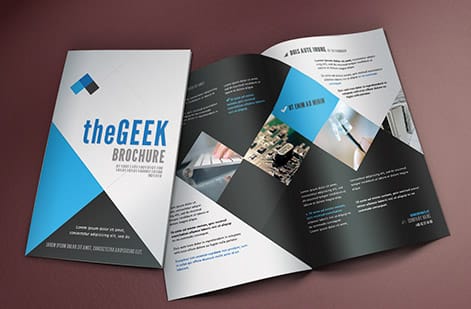
Start here
Sizes and folds, condensed
A brochure size is two numbers: the flat sheet before folding and the finished panel after. The most common standard flat size is 8.5 by 11 inches (US Letter), joined by 8.5 by 14 inches (Legal), 11 by 17 inches (Tabloid), 9 by 12 inches, and 5.5 by 8.5 inches. Choose the flat size for how much you have to say, then a fold, trifold, half-fold, z-fold, or gate-fold, for how the reader will open it. The infographic further down sums every size up at a glance.
Why brochure size is the first decision you make

Before you choose a headline, a photo, or a paper stock, you choose a size. Brochure size sets the grid every other decision has to live inside, so getting it right first saves you from redesigning the whole layout later when the panels do not line up.
Size also decides how the piece feels in someone's hand and where it can go. A pocket-friendly rack brochure slips into a display stand or a #10 envelope, while an 11 by 17 inch spread wants a coffee table or a trade-show counter. Pick the format for the moment of reading, not just the amount of copy.
This guide walks through every standard brochure and pamphlet size, the folds that change those dimensions in the hand, and how to choose between them. When you are ready to print, our brochure printing and the full Standard collection put every size in front of you with live pricing.
What are the standard brochure sizes?
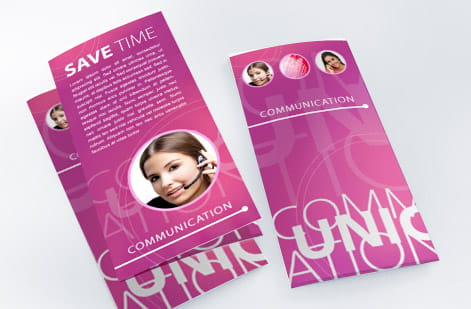
A brochure, sometimes called a pamphlet, is a folded printed sheet, and its size is really two numbers: the flat size of the sheet before folding and the finished size after. The most common standard flat size is 8.5 by 11 inches (US Letter), which folds down to a 3.67 by 8.5 inch trifold or a 5.5 by 8.5 inch half-fold. Pamphlet sizes and brochure sizes describe the same thing.
The other standard flat sizes you will see are 8.5 by 14 inches (Legal), 11 by 17 inches (Tabloid), 9 by 12 inches, and 5.5 by 8.5 inches. Each one gives you more or less room and a different finished shape once it is folded. There is no single correct size, only the one that fits your content and where it will be read.
If you would rather not measure panels by hand, our online designer and ready-made brochure templates come pre-set to these standard dimensions with the fold lines already in place, so your text and images land inside the safe area every time.
The most common standard brochure sizes
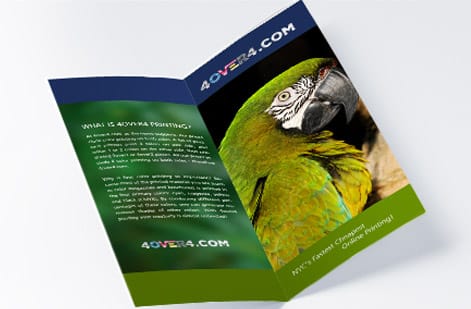
Start with the flat sheet. 8.5 by 11 inches (Letter) is the default for good reason: it is economical to print, fits standard displays, and folds cleanly into a trifold, half-fold, or z-fold. It is the size most people picture when they think brochure, and it suits everything from a product brochure to a service sheet.
Size up when you have more to say. 8.5 by 14 inches (Legal) adds a fourth trifold panel for extra detail, 11 by 17 inches (Tabloid) folds to a roomy 8.5 by 11 inch half-fold that works well for restaurant menus and catalogs, and 9 by 12 inches reads as a premium oversized piece. For a bound, multi-page feel, a booklet or catalog takes over where a single folded sheet runs out of room.
Size down for portability. 5.5 by 8.5 inches (half-letter) is a compact, budget-friendly handout, and a slim 4 by 9 inch panel matches a rack-card slot and slides into a standard #10 envelope for mailing. For the full breakdown with layouts, our companion guides on standard brochure size dimensions and layouts and common brochure sizes and fold options go deeper on each one.
How folds change the size in your hand
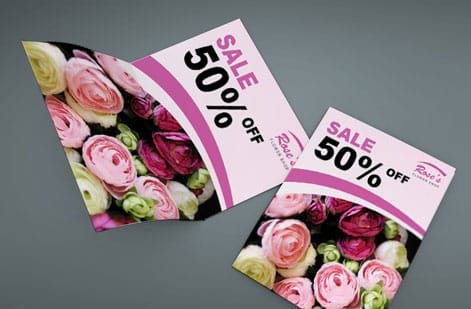
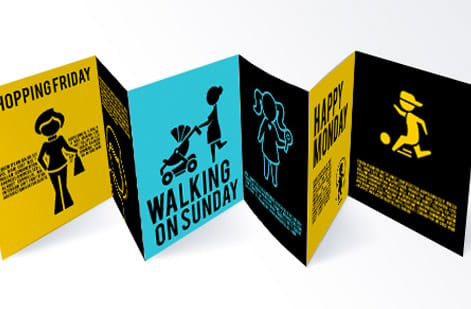
The flat size is only half the story. A fold turns one sheet into several panels, and the fold you choose changes both the finished dimensions and how the content unfolds for the reader. The same 8.5 by 11 inch sheet can become a three-panel trifold, a two-panel half-fold, an accordion z-fold, or a gate-fold, each with a different rhythm.
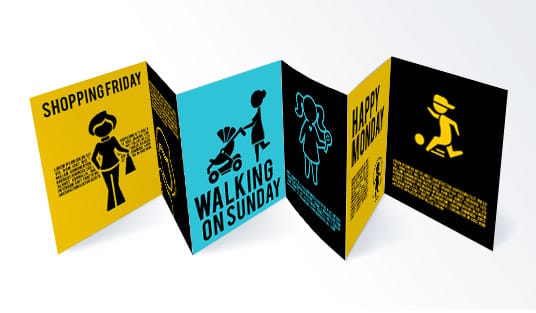
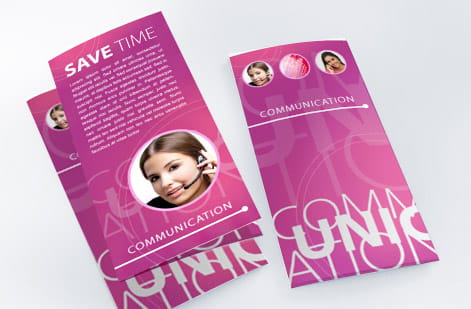
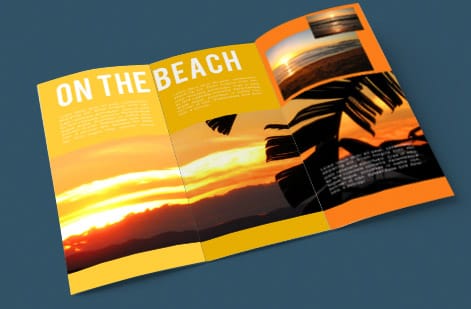
A trifold gives you six small panels and a natural front, inside, and back. A half-fold gives you four larger panels, better for bigger images. A z-fold reveals its panels one at a time, and a gate-fold opens from the center for a dramatic inside spread. Match the fold to the story you want to tell, then check how each one splits your sheet.
Because every fold shifts your safe margins and panel widths, plan the fold before you design, not after. Our guide on how to fold a brochure shows all eight popular fold styles with dimensions, and standard brochure sizes and folds pairs every size with the folds that suit it.
Choosing the right size for your brochure
Start with your content and your reader. Count how many distinct points you need to make: a single offer or event fits a half-fold, a product line with several features wants a trifold, and a full catalog of options belongs in a larger sheet or a booklet. Let the amount you have to say pick the panel count first.
Then think about distribution. Mailing it? Stay within sizes that fit a standard envelope and USPS rules. Handing it out at an event? A compact 5.5 by 8.5 inch piece is easy to carry. Displaying it in a rack? A slim 4 by 9 inch panel or a folded letter brochure sits neatly in the slot. The reading environment usually settles the size faster than anything else.
Finally, weigh cost and paper. Larger sheets and heavier stocks cost more per piece but feel more premium, and the right finish changes how the size reads in the hand. Our guides on picking the best size and paper and matte versus glossy finishes help you balance the trade-offs, and free paper samples let you feel the stock before you commit.
Brochure printing at 4OVER4
Once the size and fold are set, printing is where the choices become physical. At 4OVER4.COM you configure the flat size, fold style, paper stock, and coating in one place, and the price updates live as you go, so there are no surprises at checkout. Standard brochures start at $57.11, and the per-unit price drops as your quantity climbs.
You can print on stocks from everyday text weight to heavier premium cover, with finishes from soft matte to high gloss, plus folding and scoring done for you so the panels line up cleanly. The whole Standard collection shares the same easy configurator, whether you are printing brochures, flyers, or menus.
For a file that prints sharp, pair your order with our brochure production notes. The ultimate brochure paper guide explains the stock terms, and if you are building your artwork from scratch, how to create a brochure in Photoshop and brochure design in MS Word walk through the setup.
When to size up to a booklet

A folded brochure has a natural ceiling. Once you pass roughly six to eight panels of content, folds get bulky and hard to read, and that is the moment to move to a bound format. A booklet gives you as many pages as you need, held together with saddle stitching or another binding, in tidy multiples of four.
Booklets and catalogs use the same familiar page sizes as brochures, most often finishing at 8.5 by 11 inches or 5.5 by 8.5 inches, so the jump feels natural. They suit product catalogs, program guides, lookbooks, and anything with more than a handful of sections. Newsletters sit in the same family for regular, multi-page updates.
The rule of thumb: if the reader needs to flip rather than unfold, print a booklet. If a single sheet still tells the whole story, a brochure is lighter and cheaper. Our guide on the elements of brochure design helps you judge when your content has outgrown a fold.
Sizing brochures for direct mail
Mailing changes the size math, because now your brochure has to satisfy the USPS as well as the reader. Self-mailer brochures need to fold flat, stay sealed, and fall within postal size and thickness limits, so the finished dimensions matter as much as the design.
The safest mailers are compact: a folded letter brochure, a 5.5 by 8.5 inch half-fold, or a slim 4 by 9 inch panel that fits a standard #10 envelope. For high-volume neighborhood campaigns, rack-style and postcard formats often mail more cheaply. Our guide on rack cards and the EDDM postcard sizes reference cover the mail-ready options in detail.
If your campaign leans on inserts rather than folds, buckslips and letterheads round out a mailing without adding much postage weight. Match the piece to the envelope first, then design inside those limits.
What brochure printing costs and how to order
Brochure pricing moves on four levers: quantity, size, paper stock, and finish. Larger sheets and heavier coated stocks cost more per piece, while higher quantities lower the unit price sharply, so a short run and a bulk run can carry very different per-unit costs. Standard brochures start at $57.11 and the price per piece falls as the quantity climbs.
The easiest way to see real numbers is to configure the job. Set your size, fold, stock, and quantity on the brochure product page and the total updates live, so you can compare a matte trifold against a glossy half-fold in seconds. The specs and pricing panel below shows those options straight from the configurator.
When you are ready, order free paper samples to feel the stock, then print your run from the Standard collection. Design it well, size it for where it will be read, and a simple folded sheet does the work of a much bigger campaign.
Wally explains brochure sizes
Pick the sheet, then pick the fold
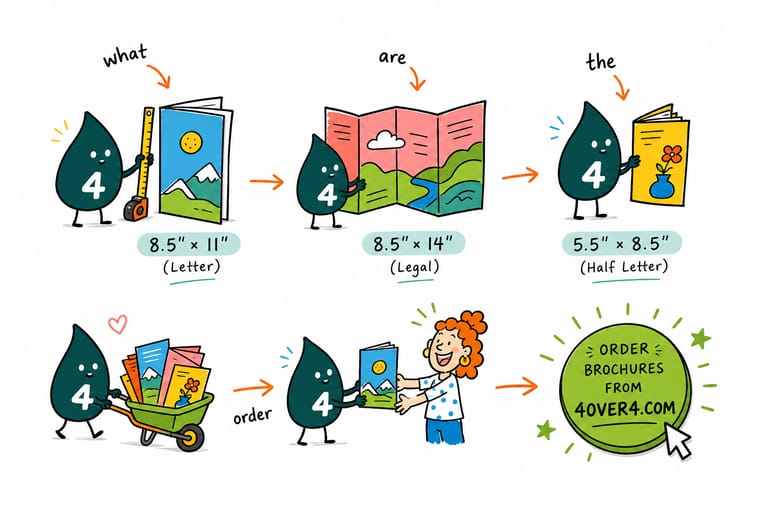
Wally keeps it simple: choose the flat size for how much you have to say, then choose a fold for how the reader will open it. An 8.5 by 11 inch sheet handles most jobs, sizes up for catalogs, and folds down to slip into a rack or a #10 envelope. Get the size right first and every other choice, stock, finish, and margins, falls into place. Then let 4OVER4 print it crisp, folded, and ready to hand out.
Configure your brochures →Infographic
Standard brochure sizes at a glance
Seven standard sizes in one frame. Save it, share it, and use it as a checklist the next time you lay out a brochure, pamphlet, or menu.
Every size on this chart is a flat sheet. Fold it, and the finished piece shrinks to a panel: an 8.5 by 11 inch sheet becomes a 3.67 by 8.5 inch trifold or a 5.5 by 8.5 inch half-fold.
Specs and pricing
Brochure specs and live pricing
When the size and fold are set, the printing decisions come down to stock and finish. Standard brochures start at 50 for $57.11, which is $1.14 each.

| Quantity | Price Per Unit | Total |
|---|---|---|
| 50 | $1.14 | $57.11 |
| 100 | 82.4¢ | $82.38 |
| 200 | 53.3¢ | $106.55 |
| 300 | 41.0¢ | $123.02 |
| 400 | 34.9¢ | $139.49 |
| 500 | 31.2¢ | $155.97 |
| 600 | 26.7¢ | $160.36 |
| 700 | 23.5¢ | $164.75 |
Print it
Print your brochure and its multi-page cousins
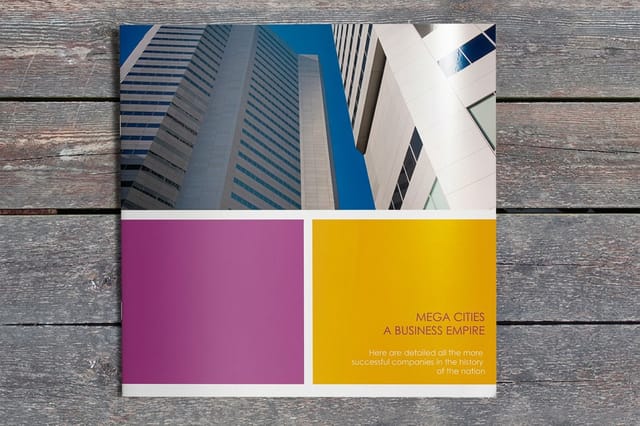
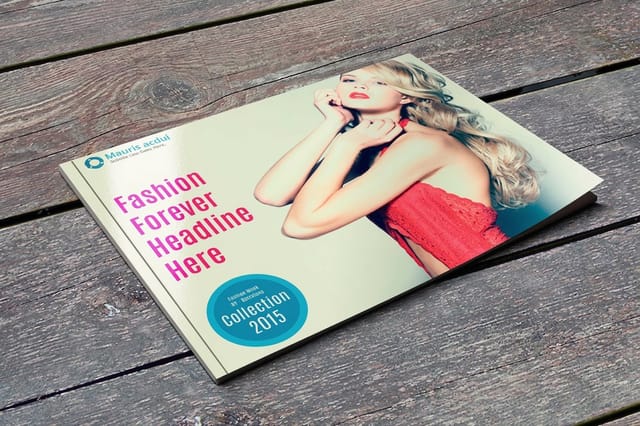
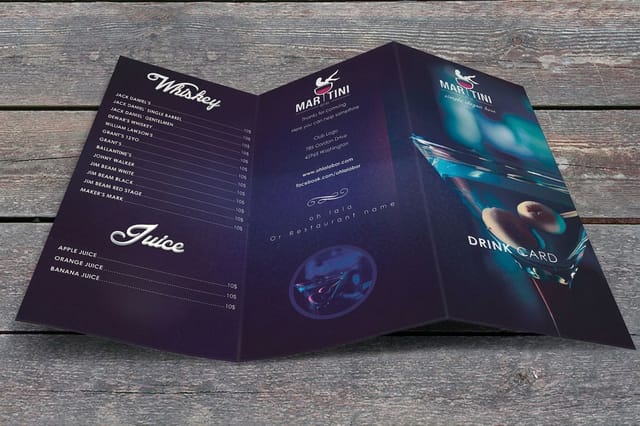
See it in use
Real brochure printing, done in-house


Explore more
Where to go next
By the numbers
Where your brochure gets printed and folded
Common Questions
Common questions about brochure sizes
What are the most common standard brochure sizes?
The most common standard brochure sizes are 8.5 by 11 inches (US Letter), 8.5 by 14 inches (Legal), 11 by 17 inches (Tabloid), 9 by 12 inches, and 5.5 by 8.5 inches. US Letter is the default because it prints economically and folds cleanly into a trifold, half-fold, or z-fold. Each flat size gives you a different finished shape once it is folded, so the right one depends on how much you need to say and where the piece will be read.
What is the standard brochure or pamphlet size?
The standard brochure size, also called the standard pamphlet size, is 8.5 by 11 inches flat. Folded as a trifold, that sheet finishes at roughly 3.67 by 8.5 inches. Folded in half, it finishes at 5.5 by 8.5 inches. Brochure sizes and pamphlet sizes describe the same thing, since a pamphlet is simply a folded printed sheet.
What is the difference between a brochure and a pamphlet?
There is no real difference in size. Pamphlet is the older, more general word for a short folded or stapled publication, and brochure is the marketing term for the same format. They use the same standard dimensions, so a pamphlet-size chart and a brochure-size chart are identical. Choose whichever word fits your audience. The printing specs do not change.
What is the finished size of a trifold brochure?
A standard trifold starts from an 8.5 by 11 inch flat sheet and folds into three panels, so each panel finishes at about 3.67 by 8.5 inches. Because the panel that tucks inside is trimmed slightly narrower than the others, plan your margins for that panel a little tighter. An 8.5 by 14 inch sheet trifolds into wider 4.67 by 8.5 inch panels when you need more room.
How do I choose the right brochure size?
Work in three steps. First, count how many distinct points you need to make: an offer or event fits a half-fold, a product line fits a trifold, and a full catalog belongs in a larger sheet or a booklet. Second, think about delivery: mailing, handing out, or displaying in a rack each favors a different size. Third, weigh cost and paper, since larger sheets and heavier stocks cost more per piece. Standard brochures start at $57.11 for 50 on 100# gloss text.
What does brochure printing cost and how is it priced?
Brochure printing cost scales with four levers: quantity, size, paper stock, and finish. Higher quantities lower the unit price sharply, while larger sheets and heavier coated stocks raise it. At 4OVER4.COM, standard brochures start at $57.11 and the price per piece drops as the quantity climbs. You set each option in the configurator and the total updates live as you go.
What sizes, stocks, and finishes are available for brochures at 4OVER4?
Brochures come in the standard flat sizes with a full range of fold styles, on stocks from everyday text weight to heavier premium cover, and with coatings from soft matte to high gloss. Each choice changes how the design reads in the hand. Use the specs and pricing panel on this page to see the exact combinations, or order free paper samples first so you can feel the stock before you commit.
Get Started
Print 50 brochures from $57.11
Bring your design to 4OVER4.COM and print it on the size, fold, stock, and finish that fits. Brochures run 3 business days in production.
Legal Disclaimer
Gold Standard guarantees apply to all standard orders placed through 4over4.com. Price match requires verifiable proof of a competitor's published price for an equivalent product with matching specifications and turnaround time. Satisfaction guarantee covers manufacturing defects and print quality issues. Contact support with order number and documentation. On-time delivery rate based on tracked orders 1999 to 2026. Individual results may vary based on shipping carrier performance.
