
Quick Guide to Standard Greeting Card Sizes


The standard greeting card is 5 x 7 inches folded, but that is only half the story. Here are the sizes that actually matter, in inches, plus the flat sheet each one prints on and the envelope it belongs in.
The standard greeting card size in inches is 5 x 7 (folded from a flat 10 x 7 sheet), the most common size in the US. The other everyday standard is 4.25 x 5.5 (the A2 size, folded from 8.5 x 5.5), and square cards finish at 6 x 6. Whichever you choose, set up your print file at the flat size with 0.125 inch of bleed, and match the card to its envelope: A7 for 5 x 7, A2 for 4.25 x 5.5. Start from a blank greeting card template that already has the flat size and bleed set.
Quick tips
Quick tips for picking a greeting card size
Default to 5 x 7 inches for birthdays, holidays, and photo cards, and drop to 4.25 x 5.5 for thank-you notes and enclosures. Measure the flat sheet, not the folded face, when you build your file, and add 0.125 inch of bleed on every edge. Match the card to its envelope before you print, and remember that square cards mail at a postage surcharge. 4OVER4.COM prints all of these standard sizes, and its full catalog runs to 60-plus paper stocks.
Watch it printed
See wedding greeting cards on the press, in 132 seconds
The card in the video comes in the two standard folded sizes on this page, 4.25 x 5.5 in and 5 x 7 in, on stocks from 14pt gloss to 18pt cream uncoated cover. A run of 50 starts at $56.02 with a 5 business day standard turnaround, shipped flat and scored or folded to size.
Size chart
Standard greeting card sizes chart
Folded size is what you hold. Flat size is what you build the file at. Millimeters are the folded face, and the envelope column is the one you buy before you print.
| Card name | Folded size (in) | Flat size (in) | Millimeters (folded) | Matching envelope | Best for |
|---|---|---|---|---|---|
| A1 | 3.5 x 4.875 | 7 x 4.875 | 89 x 124 mm | A1, 3.625 x 5.125 in | RSVP cards, place cards, gift enclosures |
| A2 | 4.25 x 5.5 | 8.5 x 5.5 | 108 x 140 mm | A2, 4.375 x 5.75 in | Thank-you notes and enclosure cards, the everyday small size for 4.25x5.5 greeting card printing |
| A6 | 4.5 x 6.25 | 9 x 6.25 | 114 x 159 mm | A6, 4.75 x 6.5 in | Invitations and save-the-dates that want more height than an A2 |
| A7 | 5 x 7 | 10 x 7 | 127 x 178 mm | A7, 5.25 x 7.25 in | The default: birthdays, holidays, photo cards, and 5x7 greeting card printing |
| A9 | 5.5 x 8.5 | 11 x 8.5 | 140 x 216 mm | A9, 5.75 x 8.75 in | Photo cards and long holiday notes with room to write |
| Square | 6 x 6 | 12 x 6 | 152 x 152 mm | Square, 6.5 x 6.5 in | Weddings and product inserts. Square mail pays a non-machinable surcharge |
| Half letter, folded | 8.5 x 5.5 | 11 x 8.5 | 216 x 140 mm | A9, 5.75 x 8.75 in, fed in on the long edge | The same letter sheet folded the wide way, for corporate holiday cards |
| Postcard | No fold | 4 x 6 | 102 x 152 mm | None, mails bare | Announcements and reminders at the lower rate, see 4x6 postcard printing |
Every row still needs 0.125 inch of bleed on all four edges, and envelopes run about 0.25 inch larger than the card on both dimensions so it slides in without scuffing. Want trim, bleed and safe margins for other formats too? The standard print sizes chart lays them out side by side.
Folded vs. flat greeting cards
Before you can talk about size, you have to settle one thing: is the card flat or folded? A flat card is a single panel, printed on the front and often the back, closer to a heavy postcard. A folded card is a larger sheet that is scored down the middle and folded, which gives you a cover, an inside spread, and a back to work with.
That difference matters because the size people say out loud is almost always the finished folded face. When someone asks for a "5 by 7 card," they mean the folded result, and that card was printed on a flat 10 by 7 sheet before it was folded. Quote the wrong one to your printer and your artwork ends up half the size it should be. If you are laying a card out from scratch, our walkthrough on how to make greeting cards shows where the fold and panels fall.
Both formats have their place. Reach for flat when you want a quick, single-message card or a photo you can mail without an envelope, which is where flat notecards and postcards shine. Reach for folded when you want room for a longer note and a cover that opens like a proper greeting card.
Standard greeting card sizes and their common uses
There are really only a handful of sizes you need to know, and each one has a job it does best. Here they are, drawn to scale so you can see how the everyday folded faces stack up against one another.
Finished folded faces, drawn to scale. Each one prints from a flat sheet twice as wide.
The 5 x 7 inch (A7) card is the default for birthdays, holidays, and announcements. The 4.25 x 5.5 inch (A2) card is the compact standard for thank-you notes and enclosures. A 6 x 6 inch square reads modern and premium. And when you want the most writing room, a flat 5.5 x 8.5 inch half-letter card gives you a full panel to fill. People still buy and send a huge number of these every year, as the greeting card industry data makes clear.
Every size on this page is a real, printable format at 4OVER4.COM greeting card printing, on 60-plus paper stocks. The sections below break down each one, what it is good for, and the flat sheet you actually set your file up on.
Greeting card sizes in millimeters, centimeters and pixels
Inches are how the sizes are sold. Millimeters are what an overseas envelope supplier quotes, and pixels are what a screen based design tool asks for. Here are the everyday sizes converted, with the pixel figures at 300 DPI and every measurement taken on the folded face.
- 5 x 7 in (A7). 127 x 178 mm, 12.7 x 17.8 cm, 1500 x 2100 px. The flat 10 x 7 sheet it prints on is 254 x 178 mm, or 3000 x 2100 px.
- 4.25 x 5.5 in (A2). 108 x 140 mm, 10.8 x 14 cm, 1275 x 1650 px. The flat 8.5 x 5.5 sheet is 216 x 140 mm, or 2550 x 1650 px.
- 6 x 6 in square. 152 x 152 mm, 15.2 x 15.2 cm, 1800 x 1800 px. The flat 12 x 6 sheet is 305 x 152 mm, or 3600 x 1800 px.
- 5.5 x 8.5 in flat half letter. 140 x 216 mm, 14 x 21.6 cm, 1650 x 2550 px.
- 4 x 6 in postcard. 102 x 152 mm, 10.2 x 15.2 cm, 1200 x 1800 px.
Add 0.125 inch of bleed on every edge, which is 3 mm or 38 px, before you export. And keep the ISO trap in mind: an A6 sheet on the metric paper series is 105 x 148 mm, which is not the US A6 card at 4.5 x 6.25 inches.
The 5 x 7 card (A7): the everyday standard
If you only remember one size, remember this one. The 5 x 7 inch folded card, printed from a flat 10 x 7 inch sheet, is the size most people picture when they think "greeting card." It is big enough to carry a photo and a real message, small enough to mail affordably, and it drops straight into a widely stocked A7 envelope.
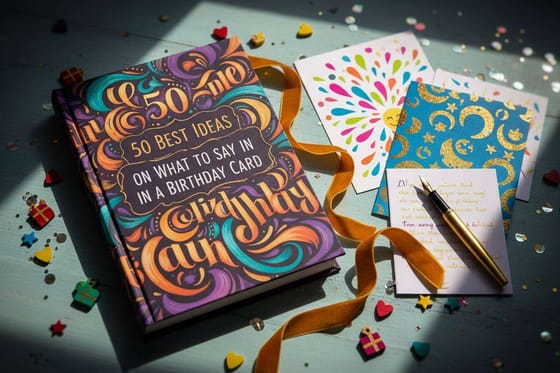
This is the size to use for birthday cards, holiday cards, graduation and thank-you cards, and photo announcements. It is also the safest choice when you are printing in volume and want envelopes you can source anywhere. When the words matter as much as the size, our roundup of what to write in a birthday card is a good place to steal a line or two.
At 4OVER4.COM you can print this size in everything from clean matte to holiday-ready looks. Browse the full range at greeting card printing and set your document to 10 x 7 inches with bleed before you fold it to 5 x 7.
The 4.25 x 5.5 card (A2): compact and classic
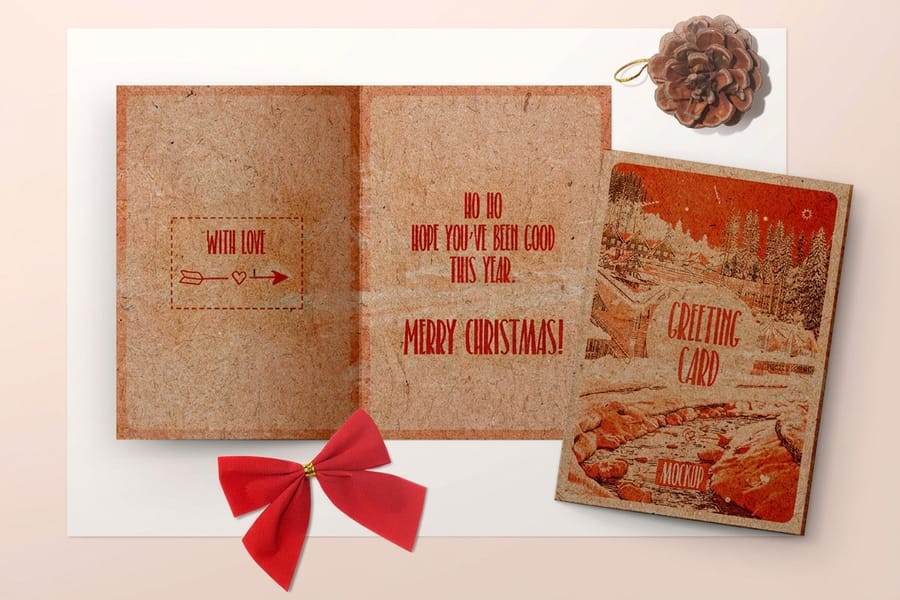
The 4.25 x 5.5 inch (A2) card is the quiet workhorse of the stationery drawer. It is exactly a folded quarter of a letter sheet: print at 8.5 x 5.5 inches, fold once, and you have a tidy card that fits an A2 envelope. It costs less to print and mail than a 5 x 7, which is why it is the go-to for thank-you notes, RSVP and enclosure cards, and short personal notes.
Because it is small, it rewards a simple, confident layout. A single line on the cover, a short note inside, and you are done. It also pairs beautifully with textured and uncoated stocks, like the recycled feel of kraft greeting cards, where the paper does as much talking as the ink.
One thing worth planning for at this size: the envelope. A2 envelopes are common, but confirm yours before you print, and if you are addressing and mailing by hand, our guide on how to make envelopes covers the sizing and setup.
The 6 x 6 square card: modern, with a postage catch
A 6 x 6 inch square card, folded from a flat 12 x 6 sheet, is the size to choose when you want the card itself to feel like part of the gift. It photographs well, it stands out in a stack of rectangles, and it suits weddings, milestone announcements, and premium product inserts.
There is one practical catch, and it is worth knowing before you fall in love with the format. The US Postal Service treats square envelopes as non-machinable and charges extra postage per piece to hand-sort them. On a small run that is a rounding error. On a few hundred mailed pieces it adds up. If most of your cards will travel by mail, price the postage first.
For invitations and save-the-dates where the square shape is part of the statement, the surcharge is usually worth it. You can pair a square card with matching square-format pieces from invitation printing, and if timing is on your mind, see when to send wedding invitations so the whole suite lands on schedule.
Flat card sizes: half-letter, square, and postcard formats
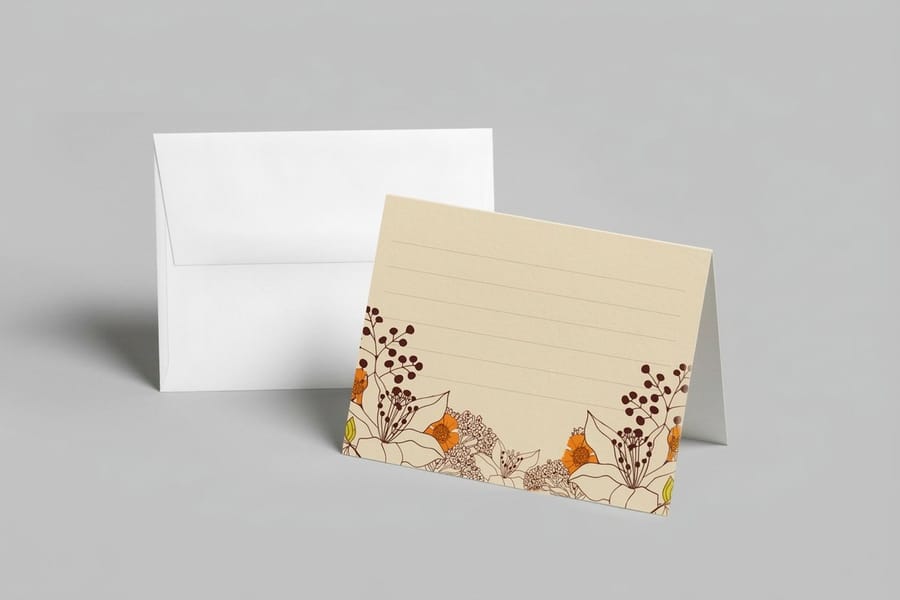
Not every card folds. Flat cards are printed on a single panel and are the right pick when you want to mail without an envelope or keep the whole message on one face.
- Flat 5.5 x 8.5 inch (half-letter): the most writing room of any standard card, great for photo cards, newsletters, and long holiday notes.
- Flat 6 x 6 inch square: the modern look of a square without the fold, good for enclosure cards and product thank-yous.
- Postcard 4 x 6 and 5 x 7 inch: mail directly with no envelope at the lower postcard postage rate, ideal for announcements and reminders.
Flat formats keep production simple and shipping light. If you want the exact trim, bleed, and safe-margin numbers for these and other formats side by side, our standard print sizes chart lays them out, and postcard printing covers the mail-direct options.
Greeting card envelope pairings
Envelopes are cut roughly 0.25 inch larger than the card on both dimensions. That clearance is what lets a printed, folded card slide in without scuffing its edges or bowing the fold, so pick the envelope first and let it choose the card.
- A1 card, 3.5 x 4.875 in: A1 envelope, 3.625 x 5.125 in. RSVP cards, place cards, gift enclosures.
- A2 card, 4.25 x 5.5 in: A2 envelope, 4.375 x 5.75 in. The thank-you note standard, and the easiest envelope to buy in bulk.
- A6 card, 4.5 x 6.25 in: A6 envelope, 4.75 x 6.5 in. Invitations and save-the-dates that want height without going to 5 x 7.
- A7 card, 5 x 7 in: A7 envelope, 5.25 x 7.25 in. Stocked in every stationery aisle, which is half the reason 5 x 7 is the default.
- A9 card, 5.5 x 8.5 in: A9 envelope, 5.75 x 8.75 in. The same envelope takes the 8.5 x 5.5 folded card, fed in on its long edge.
- 6 x 6 in square card: square envelope, 6.5 x 6.5 in. It looks the part, and the post office charges non-machinable postage for it.
Two habits keep the pairing honest. Add up thickness before you commit, because a heavy cover stock plus a photo insert can fight a snug envelope. And order envelopes alongside the card run if you are hand-addressing, so the paper white matches instead of clashing. Postcards skip the whole question: a 4 x 6 or 5 x 7 piece mails bare through postcard printing.
The 8.5 x 5.5 folded card (from a letter sheet)
When 5 x 7 is not quite enough, step up to the 8.5 x 5.5 inch folded card, printed from a flat 11 x 8.5 letter sheet folded in half. It is the roomiest of the common folded cards, with a generous cover and a full inside spread. Photo cards, corporate holiday greetings, and any card that needs to hold a lot of copy all live here.
The extra real estate is a gift for design. You can run a full-bleed image across the front, add a spot finish for contrast, and still leave a clean, readable message inside. It is a natural fit for celebration and seasonal pieces across event printing.
Because the sheet is letter-sized before folding, it is also easy to proof and source envelopes for. Set your file to 11 x 8.5 inches with bleed, fold to 8.5 x 5.5, and you have a card with presence. See the finishes available on comparable formats like wedding greeting cards, or tap through the wedding greeting cards story for the ways to build one.
How to choose the right greeting card size
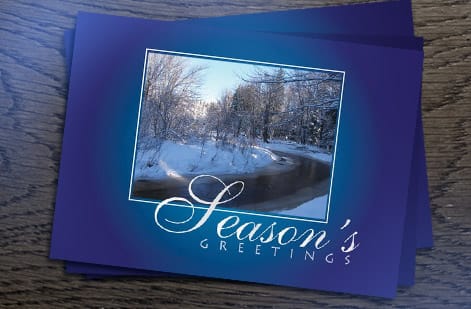
With the sizes on the table, the choice comes down to four quick questions.
- What envelope will it go in? If you already have envelopes, match the card to them. A7 wants 5 x 7, A2 wants 4.25 x 5.5. This single question settles most decisions.
- How much do you need to say? A short note fits a 4.25 x 5.5. A photo and a paragraph want a 5 x 7 or larger.
- Are you mailing or handing it over? Mailing rewards standard rectangles and lower postage. Hand-delivered cards can be square or oversized without a postage worry.
- What is the budget per piece? Smaller cards and lighter stocks cost less. Square and oversized cards cost more to print and mail.
After size, the two levers that most change the feel of a card are paper weight and finish. A heavier stock feels like an occasion, and a matte or gloss coat changes how color reads. Our guides on paper weight and matte vs. gloss finishes walk through both. If a term trips you up along the way, the printing terms glossary has plain-English definitions.
Setting up your file and what it costs
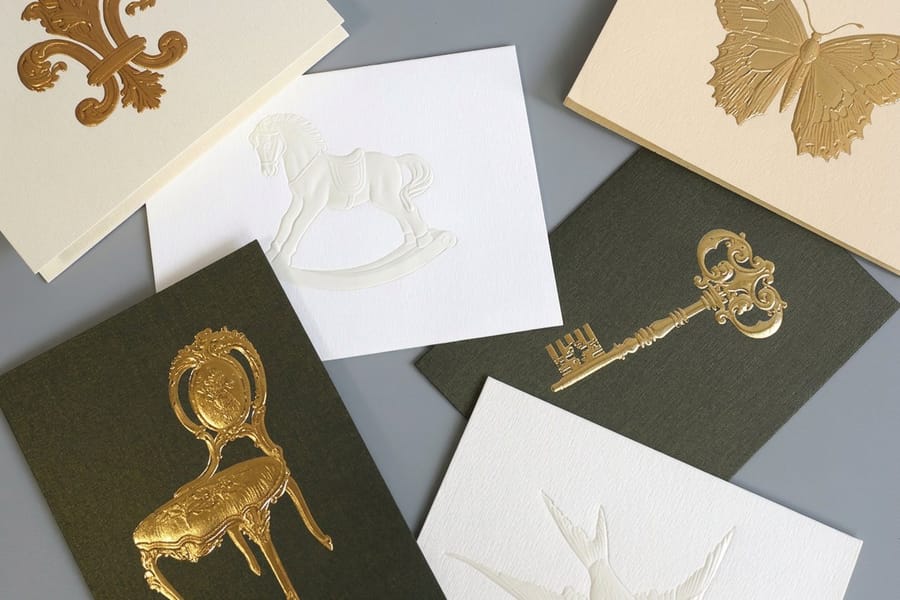
Here is the part that saves reprints. Always build your file at the flat, unfolded size, never the folded face. A 5 x 7 card is a 10 x 7 document. A 4.25 x 5.5 card is an 8.5 x 5.5 document. Add 0.125 inch of bleed on all four sides for anything that touches the edge, and keep important text at least 0.125 to 0.25 inch inside the trim so nothing gets cut. Note where the fold falls so the inside panels sit right-side up.
If you would rather not wrangle a template, the 4OVER4.COM online designer sets the correct flat dimensions for you, and there is a library of ready layouts at design templates to start from.
On price, custom greeting cards at 4OVER4.COM start at $56.02 for 50, and the cost per card falls as the quantity rises. What moves the number is quantity, paper stock, ink coverage, finish, whether the card ships folded or scored-flat, and whether you add matching blank envelopes. The live specs and price table further down pull from the configurator in real time. Want to feel the stock first? Order free paper samples before you commit, or configure a run of greeting cards now.
Wally explains card sizing
Measure the flat sheet, not the folded face
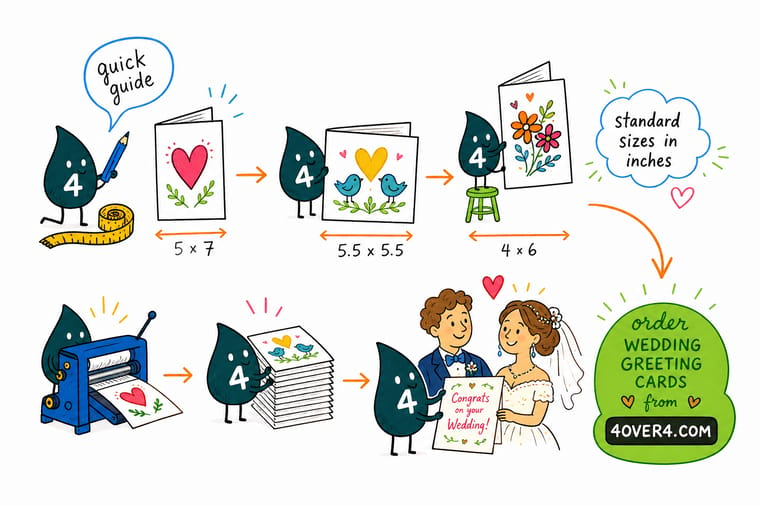
Wally's rule of thumb: the size you say is the folded face, but the size you set up your file at is the flat sheet, twice as wide. A 5 by 7 card is really a 10 by 7 document folded once. Pick the size that fits your envelope, add a sliver of bleed on every edge, and the card comes back crisp and trimmed right. When you are ready, 4OVER4 prints every standard size on 60-plus stocks.
Order greeting cards →
Specs and pricing
Greeting card specs and live pricing
Once you have picked a size, here is what a folded greeting card gives you at 4OVER4.COM, with live specs and price-per-unit pulled straight from the configurator.
| Quantity | Price Per Unit | Total |
|---|---|---|
| 50 | $1.12 | $56.02 |
| 100 | 78.0¢ | $77.99 |
| 200 | 50.0¢ | $99.95 |
| 300 | 40.6¢ | $121.92 |
| 400 | 36.0¢ | $143.89 |
| 500 | 33.2¢ | $165.86 |
| 600 | 31.9¢ | $191.12 |
| 700 | 30.9¢ | $216.38 |
Print it
Order greeting cards and notecards at 4OVER4
See it in use
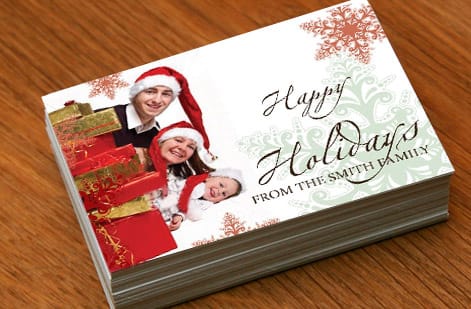
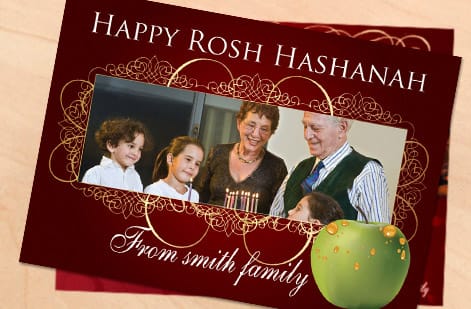
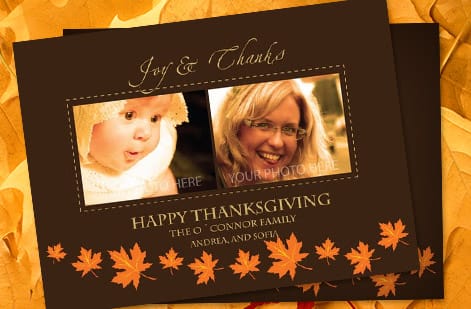
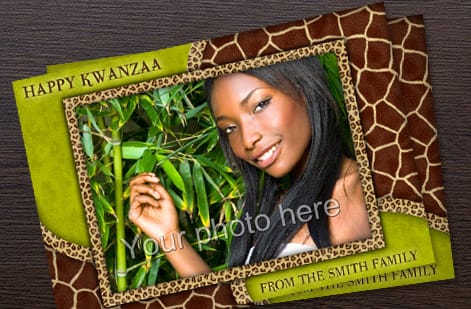
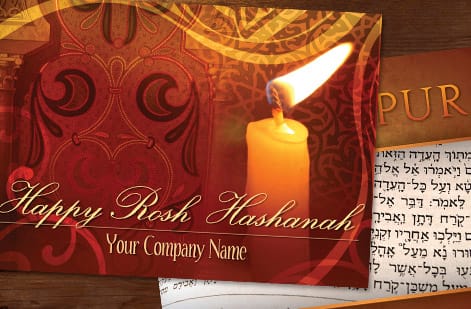
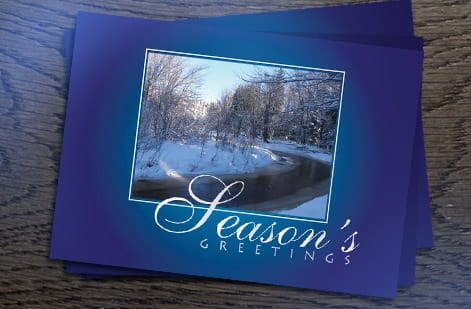
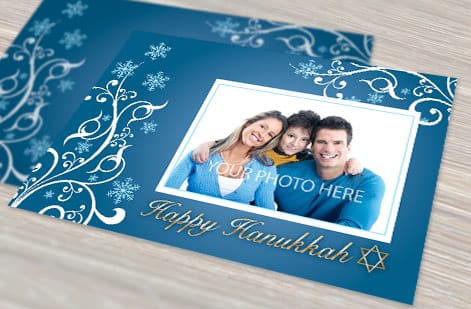
Greeting card jobs off our press

Explore more
Where to go next

By the numbers
Sixty plus papers a card can print on
Common Questions
Common questions about greeting card sizes
Is a 5 x 7 a standard greeting card size?
Yes, it is the standard. A 5 x 7 inch folded card, the A7 size, is what most birthday, holiday and thank-you cards in the US are printed at, which is why every stationery aisle stocks the 5.25 x 7.25 inch A7 envelope that fits it. It prints on a flat 10 x 7 inch sheet and folds once. The same 5 x 7 face also exists as a flat card and as a postcard, so confirm folded or flat before you order envelopes.
What size is a greeting card in pixels?
At 300 DPI, the print resolution, a folded 5 x 7 card is 1500 x 2100 pixels per face and 3000 x 2100 pixels for the flat 10 x 7 sheet you actually build. A 4.25 x 5.5 card is 1275 x 1650 pixels folded and 2550 x 1650 flat, and a 6 x 6 square is 1800 x 1800 folded and 3600 x 1800 flat. Add 38 pixels of bleed on every edge. Multiply inches by 300 to convert any other size.
What is the standard size of a Christmas card?
The same as any other greeting card: 5 x 7 inches folded, printed on a 10 x 7 inch sheet and mailed in an A7 envelope. Photo holiday cards often go flat at 5 x 7 so the picture fills the face, and a 4.25 x 5.5 inch folded card suits a short seasonal note with lower postage. 4OVER4 prints holiday cards in both sizes on 60-plus paper stocks, and greeting cards start at $56.02 for 50.
What is the standard greeting card size in inches?
The most common standard greeting card size in the US is 5 x 7 inches, folded from a flat 10 x 7 inch sheet. This is the A7 size, and it fits birthday, holiday, thank-you, and everyday cards. The other everyday standard is 4.25 x 5.5 inches (the A2 size), folded from an 8.5 x 5.5 inch sheet. Square cards finish at 6 x 6 inches. Whichever you pick, set up your print file at the flat size before the fold.
What is the standard greeting card size in inches and millimeters?
The US standard is 5 x 7 inches, or 127 x 178 mm, folded from a flat 10 x 7 inch sheet (254 x 178 mm). The smaller everyday standard is 4.25 x 5.5 inches, or 108 x 140 mm, folded from 8.5 x 5.5 inches (216 x 140 mm). A 6 x 6 inch square card is 152 x 152 mm, and a 4 x 6 postcard is 102 x 152 mm. One trap to watch on international jobs: the ISO A6 sheet is 105 x 148 mm, which is not the same thing as the US A6 card at 4.5 x 6.25 inches, so confirm the envelope before you print.
What size is a standard Hallmark card?
Rack cards are not one single size, but the two you meet most often are the 5 x 7 inch (A7) card and the 4.25 x 5.5 inch (A2) card, which is exactly why A7 and A2 envelopes are stocked everywhere. Square 6 x 6 inch cards and tall slim cards fill out the rest of the rack. If you are matching a card you already own, measure the folded face and the envelope it came in, then order the closest standard: 5 x 7 folds from a flat 10 x 7 sheet, 4.25 x 5.5 folds from 8.5 x 5.5.
What is the difference between folded and flat greeting cards?
A flat card is a single panel printed on one or both sides, like a heavy postcard. A folded card is a larger sheet that is scored and folded in half, giving you a front, an inside spread, and a back to print on. The size people quote, such as 5 x 7, is the finished folded face. That card started life as a 10 x 7 flat sheet, so always confirm whether a size refers to the flat sheet or the folded result before you build the file.
What are the most common greeting card sizes and their uses?
The 5 x 7 (A7) card is the workhorse for birthdays, holidays, and announcements. The 4.25 x 5.5 (A2) card suits thank-you notes, RSVPs, and enclosure cards. A 6 x 6 square reads modern and premium for weddings and product inserts. A flat 5.5 x 8.5 half-letter card gives you the most room for photos and long messages, and 4 x 6 or 5 x 7 postcards work when you want to skip the envelope and mail directly.
How do I choose the right greeting card size?
Start with the envelope you have or can buy, then weigh how much you want to write, whether you are mailing or hand-delivering, and your postage budget. A 5 x 7 card is the safe default because envelopes are everywhere and it holds a photo comfortably. Go smaller with a 4.25 x 5.5 card for quick notes and lower cost, or larger and square when you want the card itself to feel like part of the gift.
What size should I set up my file for a folded greeting card?
Build the file at the flat, unfolded size. For a finished 5 x 7 card, your document is 10 x 7 inches. For a 4.25 x 5.5 card, it is 8.5 x 5.5 inches. Add 0.125 inch of bleed on all four edges for any artwork that runs to the trim, and keep important text at least 0.125 to 0.25 inch inside the trim line. Mark or note the fold so the inside and outside panels land right-side up.
How much do custom greeting cards cost and how is pricing set?
At 4OVER4.COM, custom greeting cards start at $56.02 for a run of 50. Price scales with quantity, paper stock, ink coverage, finish, whether the card is folded or shipped scored-flat, and whether you add matching blank envelopes. The live price table on this page pulls straight from the configurator, so you can watch the per-card cost drop as the quantity climbs.
What envelope fits a 5 x 7 greeting card?
A 5 x 7 card fits an A7 envelope, which measures about 5.25 x 7.25 inches to leave room for the card to slide in. A 4.25 x 5.5 card pairs with an A2 envelope, and a 6 x 6 square card needs a 6.5 x 6.5 square envelope. 4OVER4.COM offers matching blank envelopes as an add-on so the card and envelope are sized to work together out of the box.
Get Started
Ready to print your greeting cards?
Pick your size, drop in your artwork at the flat dimensions, and we print crisp, cleanly folded cards that fit their envelopes every time.
Legal Disclaimer
Gold Standard guarantees apply to all standard orders placed through 4over4.com. Price match requires verifiable proof of a competitor's published price for an equivalent product with matching specifications and turnaround time. Satisfaction guarantee covers manufacturing defects and print quality issues. Contact support with order number and documentation.
