Table of Contents
- Home
- content hub
- A Complete Guide to Every Type of Paper for Printing
 Share and earn
A Complete Guide to Every Type of Paper for Printing

Mar 31, 202613 views
Mar 31, 202613 views
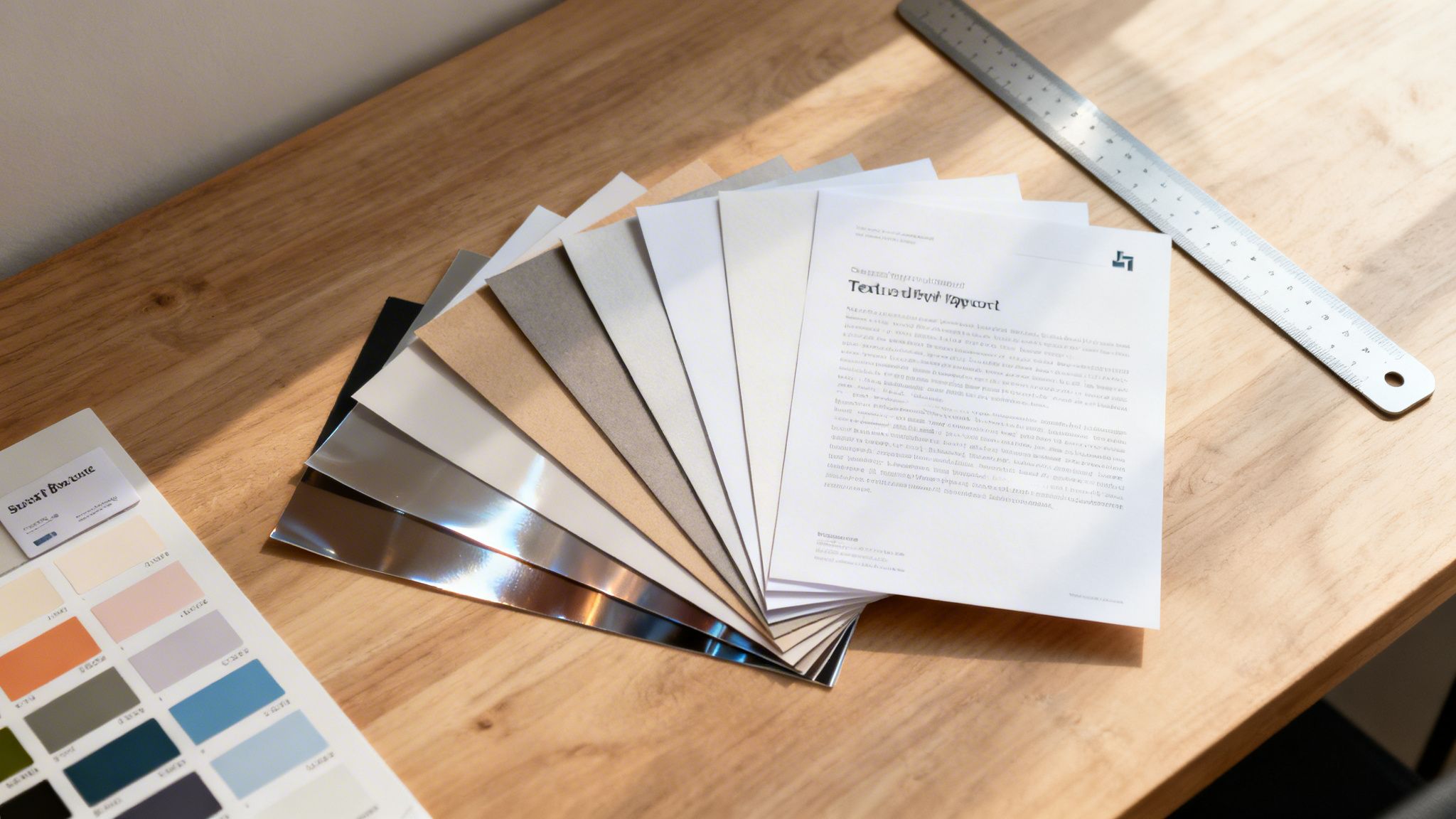
Picking the right type of paper can feel like a secret language, full of strange terms like GSM, cover, and coated. It's a lot like choosing fabric: a business card needs the durable feel of denim, while a handout flyer can be light and breezy like cotton. Getting this one choice right is the first step to a print project that truly stands out.
The Foundation of Every Great Print Project
Every great print job—from a simple postcard to a high-end catalog—starts with the paper. This decision shapes not just how your design looks, but how it feels in a customer's hands. Think about it: a flimsy business card sends a very different message than a thick, sturdy one. In the same way, a brochure with vibrant, glossy photos creates a completely different experience than one printed on a soft, natural-feeling stock.
When you understand the basics of paper, you can stop guessing and start making confident choices. You don't need to get lost in the jargon. The two most important things to get a handle on are paper weight and paper finish. These two factors directly control your final product's durability, feel, and visual pop.
Why Paper Weight and Finish Matter
Paper weight is just what it sounds like—its heft and sturdiness. Heavier paper feels more premium and holds up better, which is why it's a go-to for things that need to last, like business cards and invitations. Lighter paper, on the other hand, is more flexible and budget-friendly, making it perfect for internal memos or massive direct mail campaigns.
Paper finish is all about the surface texture and how ink sits on it. A finish can make your colors leap off the page with eye-catching vibrancy or give them a subtle, elegant softness. Your choice here will completely change the personality of your printed piece.
Getting these two elements right is the key to creating marketing materials that look and feel professional. In this guide, we'll break down everything you need to know to make the perfect call every time. We'll walk through:
- Core Concepts: Simple explanations of paper weight (GSM/lbs) and finish (coated vs. uncoated).
- Common Paper Types: A look at bond, text, cover, and specialty stocks.
- Project-Specific Recommendations: Matching the ideal paper to your marketing essentials.
By the time you're done, you’ll be able to choose paper with confidence, making sure every print project you tackle makes a real, lasting impact. When you're ready to see what's possible for your next campaign, you can explore a wide range of marketing essentials available for printing.
Decoding Paper Weight and Finish

When you're choosing paper, you'll hear two words pop up again and again: weight and finish. Getting a handle on these two things is the secret to making smart choices that will make your print project look and feel exactly how you imagined it. They really do define everything, from the first impression to how the final piece holds up.
Paper weight is just what it sounds like—it’s a measure of the paper's sturdiness and thickness. It’s all about the "heft" in your hand. This is measured in Pounds (lbs or #) or Grams per Square Meter (GSM). While the systems are different, the idea is the same: the higher the number, the thicker and more substantial the paper.
Unpacking Paper Weight: Text vs. Cover
Paper weights are usually sorted into two big families: Text Weight and Cover Weight. Think of it like you're building a house. Text weight paper is the drywall inside—it's essential, but it’s not holding the structure up. It’s lighter, more flexible, and perfect for the inner pages of a catalog, a folded brochure, or a high-quality flyer.
Cover weight, on the other hand, is the foundation and frame of that house. It's thick, rigid, and built to last. Often called cardstock, this is what you reach for when your project needs to stand on its own and make a solid statement. We’re talking about business cards, postcards, invitations, and booklet covers. Just be aware that a 100lb Text paper is much lighter than a 100lb Cover paper, even though the number is the same.
While we live in a digital world, the feel of a printed piece is more important than ever for making an impact. The industry has noticed. In Europe, graphic paper production has fallen from 80 million metric tons to 45 million in just the last 15 years. Here in the U.S., printing-writing paper capacity dropped by 6.9% in 2024 alone. This shows just how crucial a premium feel is for standing out from the crowd.
Exploring Paper Finishes: Coated vs. Uncoated
After you've picked a weight, your next move is choosing a finish. This decision controls the paper's surface texture and how ink behaves on it, which completely changes the final look. The two main players here are Coated and Uncoated.
A coated paper has a sealant applied to it, which creates a smooth, non-porous surface. This coating keeps ink from soaking into the paper fibers, so it sits right on top. The result?
- Vibrant Colors: Your images and graphics will look incredibly sharp and brilliant.
- Added Durability: The coating acts as a shield against dirt, smudges, and moisture.
- Finish Options: Coated papers come in different sheens, like gloss (shiny and reflective), matte (smooth and non-reflective), or silk (a nice in-between).
In contrast, uncoated paper has no sealant at all, leaving its natural, porous texture exposed. Ink soaks right into this kind of paper, giving it a much softer and warmer appearance. It has an organic, tactile feel that’s perfect when you want to convey authenticity or elegance. It’s also the only real choice for anything that needs to be written on, like letterheads, notepads, or the back of a postcard. You can explore the various papers and coatings available to get a better sense of their tactile properties.
Key Takeaway: Go for coated paper when you need your images to pop with color and want extra durability. Pick uncoated paper for a natural, elegant texture or for any project that needs a writable surface.
The way ink, paper, and finish work together is a real art. Adding a final protective layer can take it even further. For a deep dive into how these layers work, check out our https://www.4over4.com/printing/category/laminating.
To make it even easier, here's a quick cheat sheet to help you decide.
Paper Weight and Finish At a Glance
This table breaks down the key differences between the most common paper weights and finishes, so you can quickly find the right fit for your project.
| Attribute | Text Weight | Cover Weight (Cardstock) | Coated Finish | Uncoated Finish |
|---|---|---|---|---|
| Feel | Flexible and light | Stiff and durable | Smooth and slick | Natural and textured |
| Best For | Brochure pages, flyers, catalogs | Business cards, postcards, covers | Photo-heavy designs, marketing | Letterheads, notepads, invitations |
| Ink Interaction | Absorbs ink moderately | Absorbs ink well | Ink sits on the surface | Ink soaks into the fibers |
| Impression | Informational, accessible | Premium, professional | Modern, vibrant, sharp | Classic, organic, elegant |
Hopefully, this table gives you a clear snapshot of your options. Choosing the right paper is one of the most important decisions in printing, and now you have the knowledge to do it with confidence.
A Look at the Most Common Types of Paper
 Now that you've got a handle on weight and finish, let's talk about the actual paper stocks you'll be choosing from. It’s best to think of these as different families of paper, each with its own look, feel, and job to do. Picking the right one is all about matching the paper’s personality to your project’s needs.
First up is a name you probably already know: Bond Paper. This is the workhorse of any office. It’s lightweight but strong, usually uncoated, and perfect for running through a standard printer or jotting notes on. Its crisp feel makes it the default for letterheads, internal reports, and business forms.
The Professional Standard: Text Paper
A step up from bond, you’ll find Text Paper. This is a higher-quality stock that’s the go-to for most professional marketing materials. It’s noticeably smoother and more opaque than bond paper, and it’s available in a huge variety of weights and finishes, both coated and uncoated.
Think about a high-end real estate brochure or a glossy fashion catalog. The pages feel substantial but are still flexible and easy to flip through. That's the magic of text paper.
- For Brochures and Catalogs: A 100lb gloss text paper will make your images pop with incredible vibrancy, grabbing your customer's attention.
- For Newsletters and Booklets: A lighter 80lb text paper with a matte or silk finish gives off a more sophisticated, understated vibe that's much easier on the eyes for longer reads.
Text paper hits that sweet spot between the everyday utility of bond and the heavy-duty feel of cardstock. It’s versatile enough to make rich colors and detailed photos shine while still feeling premium to the touch.
Visualizing the Difference: Imagine a photo of a brilliant sunset. Printed on a coated gloss text stock, the colors would look almost wet, with fiery oranges and deep reds that reflect the light. On an uncoated text stock, that same photo would feel softer and more artistic, with a warm, muted quality.
The Durable Workhorse: Cover Paper
When your project absolutely needs to feel sturdy and make a strong first impression, you’ll want Cover Paper, which most people simply call Cardstock. This is the heavyweight of the paper world. It’s thick, rigid, and designed to hold up to a lot of handling.
Cardstock is what gives a business card its firm, confident feel. It’s what helps a postcard survive its journey through the mail, and what gives a wedding invitation its sense of importance. It’s all about creating an impression of substance and quality.
You'll see it used for:
- Business Cards and Postcards: A heavy 14pt or 16pt cardstock is the industry standard for a solid, professional feel.
- Book Covers and Folders: Its durability is perfect for protecting the pages inside from wear and tear.
- Invitations and Greeting Cards: The weight alone tells the recipient that this isn't just another piece of mail.
While cardstock is a star in the commercial print world, another paper product quietly dominates global consumption. Containerboard—the stuff used for shipping boxes—is by far the most-used paper product. In 2023, global demand reached 185 million tons, and with e-commerce booming, it’s projected to top 220 million tons by 2030. You can explore more of these fascinating global paper demand statistics on Statista.
Specialty Stocks for Unique Projects
Outside of the big three, there’s a whole universe of specialty papers designed for projects that need something extra. These materials solve very specific problems or add a unique aesthetic that makes your print job stand out.
One of the most practical is Synthetic Paper. Typically made from polypropylene, this stock is 100% tear-proof and waterproof. It’s the perfect solution for restaurant menus that get wiped down constantly or for outdoor banners that need to survive whatever the weather throws at them.
Another vital category is Label Stocks. This isn't just one type of paper but a whole system combining a face stock (the part you print on) with an adhesive backing. The options are endless, from simple paper labels for indoor products to weatherproof vinyl or BOPP (biaxially-oriented polypropylene) labels for items that will face moisture, like beer bottles or refrigerated foods.
Finally, you have countless Specialty Papers chosen purely for their look and feel. These include stocks with interesting textures like linen or felt, papers with a subtle pearlescent shimmer, and a growing range of eco-friendly options. For instance, our Kraft Collection offers a rustic, organic feel that’s perfect for brands wanting to project a natural, down-to-earth image. Choosing one of these papers can turn a simple design into something truly memorable.
Matching the Right Paper to Your Print Project

Knowing the difference between text and cover stock is one thing. But how does that knowledge actually help you when it's time to order your next batch of business cards or brochures? That's where the real magic happens.
Let's put the technical specs aside for a moment and focus on the project itself. This is about connecting your creative vision to a tangible product that looks and feels exactly right.
We'll go through the most common print jobs and pair them with the paper stocks that deliver professional, head-turning results.
For Business Cards That Make an Impression
Your business card is more than just contact info; it’s a handshake in paper form. A flimsy card feels cheap and forgettable, and that’s the last impression you want to make.
To communicate quality and confidence, you need a paper with some real substance. For that, a heavy cardstock is the only way to go.
- Recommended Weight: A 14pt or 16pt cover stock is the gold standard. It has the heft and rigidity that feels premium in someone's hand.
- Recommended Finish: A matte or soft-touch finish lends a modern, sophisticated feel. These surfaces don't just feel great; they also resist fingerprints and glare, keeping your design crisp and professional.
Getting the paper right is the first step toward creating a card that people actually want to keep. If you're ready to dive deeper, you can explore our complete guide on how to design and print business cards.
For Brochures and Flyers That Grab Attention
When you're designing a brochure or flyer, the goal is to make a visual splash. You need your images to be vibrant, your graphics sharp, and your message clear. The paper you choose has to support that mission, making colors leap off the page.
A lighter text-weight paper works well here, but the finish is what really brings a design to life.
A 100lb gloss text stock is an industry favorite for good reason. The glossy coating acts like a seal, forcing ink to sit right on top of the surface. The result? Exceptionally sharp details and brilliant, saturated colors that make photos look almost real. It's perfect for product catalogs, real estate flyers, or travel brochures.
If your design is more about the words or you want a more understated, elegant vibe, an 80lb matte text is a fantastic choice. It cuts down on glare, offering a softer look that's much easier on the eyes for reading dense blocks of text.
For Postcards and Mailers Built to Last
Postcards and other direct mailers have a tough journey. They need to survive the sorting machines, mail carriers, and whatever else the postal system throws at them, all while looking great when they finally land in the mailbox.
This calls for a smart combination of durability and printability. Your best bet is a thick cardstock with a dual-finish approach.
- Paper Choice: A 14pt cardstock gives you the perfect amount of stiffness to resist bending and creasing in transit.
- Smart Finish: Go for a UV coating on the front of your postcard. This high-gloss, protective layer makes your images pop while shielding the card from scuffs, dirt, and moisture. Just as important, leave the back uncoated. This allows for easy addressing and stamping without any smudging.
For Labels and Stickers That Stick
Choosing the right material for labels and stickers comes down to one simple question: where will it end up? Will your label face moisture, friction, or extreme temperatures? The answer dictates everything.
- For Dry, Indoor Use: A standard uncoated paper label is a great, cost-effective choice. It’s perfect for address labels, simple product branding, or anything else that will be kept high and dry.
- For Waterproof Needs: When your product might get wet, refrigerated, or handled a lot—think beer bottles, shampoo, or outdoor gear—you need something tougher. White vinyl or BOPP (biaxially-oriented polypropylene) are your best friends here. These synthetic stocks are waterproof, oil-resistant, and tear-proof, ensuring your brand looks great no matter what.
Considering Sustainability in Your Paper Choices
Choosing the right paper today is about so much more than just weight and finish. Your paper choice is a powerful statement about your company’s values, and as more and more customers flock to environmentally responsible brands, it’s a statement you can’t afford to ignore.
Making the switch to sustainable paper isn't just about ethics—it’s a smart business move that builds your brand image and connects with the modern customer on a deeper level.
Forget the old myth that "green" paper means dull colors and poor print quality. That’s ancient history. Today’s recycled and certified papers offer incredible brightness, smooth textures, and fantastic printability that can easily rival, and sometimes even surpass, traditional virgin stocks.
Understanding Sustainable Paper Terms
Diving into the world of eco-friendly paper is simple once you get the lingo down. These key terms will help you make informed choices that perfectly align with your brand's green goals.
- Recycled Content: This tells you the paper is made with a certain percentage of recycled materials instead of 100% new wood pulp. The higher the percentage, the bigger the positive environmental impact.
- Post-Consumer Waste (PCW): This is where you can make the biggest difference. PCW is paper that has been used by consumers, tossed in a recycling bin, and then given a new life as fresh paper, effectively closing the recycling loop.
- FSC-Certified: The Forest Stewardship Council (FSC) is a global non-profit that ensures forests are managed responsibly. An FSC seal guarantees the paper’s virgin pulp comes from sources that protect biodiversity, uphold indigenous rights, and promote sustainable forestry.
When you select products with these labels, you're actively supporting a more responsible and circular supply chain. You can check out a huge variety of top-notch, sustainable stocks right here in our green printing options.
The Business Case for Going Green
Choosing sustainable paper is a tangible way to broadcast your commitment to corporate responsibility. This isn't just a niche trend; it's part of a massive global move toward circular economies.
Driven by the boom in e-commerce and a collective push away from plastics, the entire pulp and paper market is set to grow from USD 484.84 billion in 2025 to USD 574.41 billion by 2032. Recycled grades are a huge part of that story. You can read the full research on the growing pulp and paper market to see just how much this is reshaping entire industries.
When you align your business with these modern consumer values, you're not just "being green." You're showing the world that your brand is forward-thinking, responsible, and in tune with what truly matters to your customers. Your paper choice becomes a quiet but powerful marketing tool, reflecting a commitment to both quality and sustainability that people absolutely notice and appreciate.
Making the Final Decision for Your Project
Alright, we've covered a lot of ground—from paper weights to coated versus uncoated finishes. Now comes the moment of truth: pulling it all together to choose the perfect paper for your project. With so many options, this can feel daunting, but it doesn't have to be.
Think of it as a funnel. We start with two broad questions to narrow the field: What are you actually making, and what feeling do you want it to evoke? The answers immediately point you in the right direction. A business card needs that substantial, premium feel of a heavy cardstock, whereas a big catalog has to be a lighter text weight to keep it from feeling like a brick.
Key Questions to Ask Yourself
Once you’ve got a general category in mind, it’s time to drill down into the practical details. Running through this simple checklist will help you zero in on the exact stock that hits the sweet spot for your budget, design, and purpose.
- Does it need to be written on? If the answer is yes, you need an uncoated stock. Period. Trying to write on a coated paper with a pen is a recipe for smudges and frustration, making it a poor choice for appointment cards, notepads, or feedback forms.
- Will it face the elements or heavy handling? Think restaurant menus, outdoor signage, or rugged ID cards. For anything that needs to stand up to moisture, grease, or tearing, synthetic paper is your champion. Its waterproof and tear-proof nature makes it incredibly resilient.
- Is brilliant, eye-popping color your main goal? For designs where photos and vibrant graphics are the star of the show, a coated gloss or silk paper is the way to go. The coating creates a super smooth surface that keeps ink from soaking in, resulting in crisp details and stunningly rich colors.
The real win is finding a paper that doesn’t just look great but also does the job you hired it for. Thinking through these practical needs upfront is the best way to avoid a costly reprint and ensure your finished piece works exactly as you imagined.
Making a Sustainable Choice
This decision tree gives you a straightforward visual guide for picking an eco-friendly option.

As the chart shows, you can start with your project's needs and then layer in your preferences for recycled content and official certifications like FSC to make a responsible choice.
By now, you've turned a really complex decision into a series of simple, manageable steps. But I’ll let you in on a little secret: there’s no substitute for getting your hands on the paper itself. The final, most important step is to get a sample pack. Feeling the difference between a 100lb gloss text and a 16pt matte cover closes the gap between knowing about paper and truly understanding it. It’s what gives you total confidence before you hit "print."
Your Top Paper Questions, Answered
Okay, we've covered a lot of ground. But even with all that info, a few common questions always seem to pop up right when you're about to make a decision. Let's tackle those head-on to clear up any confusion and help you finalize your project with complete confidence.
What’s the Real Difference Between GSM and Lbs for Paper Weight?
You’ve probably seen paper weight listed in pounds (lbs or #) and grams per square meter (GSM), and it's easy to get them mixed up. Think of it like miles versus kilometers—they measure the same thing (paper density), but on totally different scales.
GSM (Grams per Square Meter) is the most straightforward system. It’s the literal weight of a single sheet of paper measuring one meter by one meter. A higher GSM number always means a heavier, thicker paper, which makes it a fantastic tool for comparing different stocks directly.
Pounds (lbs or #) gets a little quirky. This number comes from the weight of a 500-sheet stack (a ream) in its original, uncut "basis" size. The problem? The basis size isn't the same for all paper categories. This is why an 80lb Text paper is surprisingly thin and flimsy, while an 80lb Cover paper is a sturdy, respectable cardstock.
Pro Tip: When you're trying to compare two different paper types, always look at the GSM. It's the universal standard that cuts through the confusion and gives you a true, apples-to-apples sense of thickness and heft.
Can I Really Use Thick Cardstock in My Home Printer?
It’s tempting to try, but the answer is almost always no. The average desktop printer you have at home or in the office is built for standard, lightweight paper, like 20-28lb Bond. They just aren't designed to handle the thickness and rigidity of heavy cardstock, which usually starts around 80lb cover (216 GSM).
Trying to force thick paper through a machine that isn’t built for it is a recipe for disaster. You’ll likely end up with frustrating paper jams, ugly ink smudges, or even a broken printer. For a professional look on heavy stocks, your best move is always to work with a commercial printer.
What Is the Best Paper for Printing Photographs?
If you want your photos to look sharp, vibrant, and true-to-life, you absolutely want a coated paper. The coating acts as a barrier, keeping the ink from sinking into the paper fibers. This lets the ink sit right on the surface, resulting in much sharper details and richer, more brilliant colors.
You have a few great choices, depending on the final look you're after:
- Gloss Finish: This is your go-to for maximum impact. The reflective shine makes colors pop and gives your images a classic, high-energy feel.
- Matte Finish: Perfect for a more sophisticated, artistic vibe. Its smooth, non-reflective surface minimizes glare and fingerprints.
- Luster Finish: A fantastic middle ground between glossy and matte. It gives you great color saturation with just a hint of a subtle sheen, making it a favorite for professional photo prints.
How Much Does Paper Choice Affect My Final Print Cost?
Your paper selection is one of the biggest drivers of your project's final price. Standard, lightweight stocks will always be the most budget-friendly. As you start exploring heavier weights, premium finishes like soft-touch, or unique materials like synthetic or textured papers, the cost will naturally go up.
But it's important to see this as an investment. The right paper can completely transform a project from something forgettable into a piece that feels substantial and high-end, creating a much more memorable impact. That small extra cost often pays for itself in the impression it leaves.
Ready to feel the difference for yourself and bring your next project to life? At 4OVER4, we offer a massive selection of paper types, from standard stocks to premium options, all designed to deliver incredible quality. Explore our printing services today!
More from

29
A printing cost calculator is an online tool that gives you instant, real-time price quotes for custom print jobs. It takes all the guesswork
 Emma Davis
Mar 30, 2026

56
Getting your flyer design from a digital concept into a customer's hands involves a few key stages. You’ll need to nail the design with
Emma Davis
Mar 29, 2026

43
A quick free label template download is often the single fastest way to get professional-looking packaging without needing to
Emma Davis
Mar 28, 2026

63
Eco-friendly packaging isn't some fringe trend anymore. It’s a core part of how smart businesses build their brand and earn customer loy
Emma Davis
Mar 27, 2026

52
So you need a custom banner printed. The first question that pops into your head is probably, "Where do I even go for this?" You’v
Emma Davis
Mar 26, 2026

123
Ever wondered what are carbonless forms and how they create perfect copies without that messy blue paper? Think of them as th
Emma Davis
Mar 25, 2026

104
To design your own flyers effectively, you need to focus on a few key things: a strong visual hierarchy, a call-to-action that people can'
Emma Davis
Mar 24, 2026

184
Let’s get one thing straight about CMYK and RGB: one is for screens, the other is for print. Your monitor mixes red, green,
Emma Davis
Mar 23, 2026