Table of Contents
- Home
- content hub
- A Complete Guide to Effective For Sale Signs
 Share and earn
A Complete Guide to Effective For Sale Signs

Apr 3, 202611 views
Apr 3, 202611 views
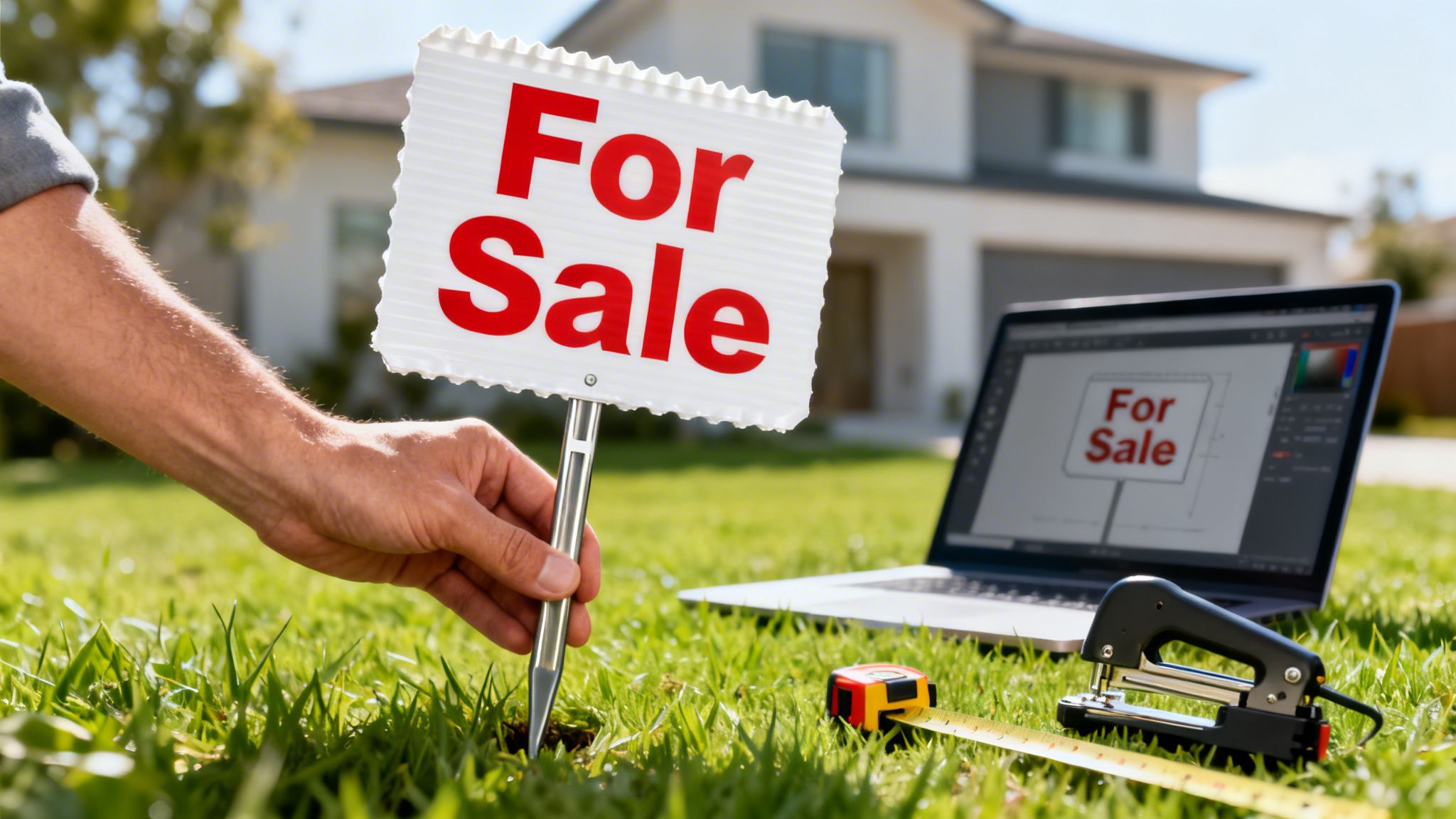
In a world buzzing with digital property listings and endless social media ads, it’s easy to think the classic 'For sale' sign has gone the way of the dinosaur. But nothing could be further from the truth. A professionally designed and placed sign is still one of the most powerful tools in your marketing arsenal—your silent, 24/7 salesperson working tirelessly on the front line.
It’s the first thing people see, the final nudge that turns a casual drive-by into a serious inquiry.
The Unseen Power of 'For Sale' Signs in 2026

Think about the real-world buyer journey for a moment. Someone is driving through a neighborhood they already know and love. They see your sign. That’s an immediate, physical connection that a dozen online photos just can't match. They aren't just scrolling; they're there, imagining their life on that street.
This simple sign does more than just announce availability. It creates local buzz, gets neighbors talking, and taps into the most powerful marketing of all: word-of-mouth. It’s the perfect bridge between your digital marketing efforts and the physical property itself.
The Hyper-Local Advantage
Don't just take my word for it. The numbers are staggering. A recent industry report found that 63% of U.S. home buyers said they drove by a home they were interested in specifically because they saw the 'For Sale' sign.
These aren't passive scrollers. These are high-intent buyers actively exploring the exact areas they want to live in. They might filter past your online listing, but they won’t miss a crisp, professional sign on a corner lot. This same principle applies whether you're selling a car, announcing a garage sale, or leasing commercial space. It grabs the audience that is right there, right now.
Your marketing should always blend proven, timeless methods with modern, high-quality execution. A professionally printed sign instantly communicates credibility and tells potential buyers this isn't an amateur operation.
Modern Signs for a Demanding Market
Let’s be clear: a piece of plywood with "For Sale" scrawled on it won't cut it. Today's market demands professionalism. Modern signs are crafted from durable, weather-resistant materials and printed with vibrant, UV-cured inks that command attention from a distance and don’t fade after a week in the sun.
Speaking of materials, you have more choices than ever. To help you pick the right one, here’s a quick breakdown of the most common options.
Sign Material Durability and Use Case Comparison
This table gives a snapshot of popular materials, helping you match your sign to your specific needs and budget, whether it's for a short-term sale or a long-term commercial lease.
| Material | Best For | Weather Resistance | Lifespan |
|---|---|---|---|
| Coroplast | Short-term yard signs, open houses, directional signs | Good (Waterproof) | 3-12 months |
| PVC | Indoor displays, outdoor signs in sheltered areas | Moderate | 1-3 years |
| Aluminum | Long-term real estate, commercial properties, permanent notices | Excellent (Rust-proof) | 5+ years |
| Alumalite/Dibond | Premium listings, durable post-and-panel signs | Excellent (Waterproof, rigid) | 5-10 years |
Choosing the right material ensures your sign looks as good on day 30 as it did on day one. Coroplast is a fantastic, budget-friendly choice for quick sales, while a sleek aluminum sign signals a high-end property.
While local signage is key, it’s also helpful to understand the broader market. Seeing how properties for sale in Europe are marketed puts into perspective how vital a strong, local physical presence is in any competitive environment.
This is where a true printing partner makes all the difference. At 4OVER4, we’ve spent decades perfecting the craft, using top-tier technology to produce signs that look professional and last. For real estate professionals, exploring a dedicated real estate printing collection can unlock options specifically designed to make your listings stand out.
Ready to create a sign that does more than just inform—one that actively sells? Let's walk through every step.
Strategic Planning Before You Print
It’s tempting to jump right into designing your ‘For Sale’ sign. You’re excited, you want to get the property listed, and you have a vision in your head. But hold on. Diving into colors and fonts without a solid plan is one of the most common pitfalls I see, and it can land you with a useless sign and a fine from the city.
The best signs—the ones that actually drive calls and sell properties—are born from a little bit of upfront thinking. This isn't about bureaucracy; it's about making sure your sign works for you, not against you. Think of it as a quick but essential checklist before you hit "print."
Getting the sign right is just one piece of the puzzle. A good preparing your house for sale checklist will walk you through everything else you need to do, making sure your entire sales effort is on the right track from day one.
First, What’s Your Goal?
Before you do anything else, get crystal clear on what you're actually trying to achieve. The sign for a residential home sale has a totally different job than one for a commercial lease or a weekend garage sale.
Are you trying to generate immediate buzz for an open house this Saturday? Or is this a long-term listing for a commercial space that needs to look professional for months? The answer changes everything. A quick event might only need a simple, temporary sign, while a luxury property demands something far more substantial.
A sign's purpose dictates its entire design. A flashy sign for a classic car on a busy highway needs a completely different approach than a small yard sign for a community bake sale. Getting this right from the start saves you from a world of headaches and costly reprints.
For example, a real estate agent will likely need a heavy-duty aluminum sign with slots for riders like "Under Contract" or "Sale Pending." But if you're just selling a boat at the local marina for a few weeks, a weatherproof Coroplast sign is probably all you need. This single decision impacts every choice you make from here on out.
Know The Rules: Check Local Regulations
This is the step everyone wants to skip, and it's the one that causes the most problems. I can't tell you how many times people order a beautiful sign, stick it in the ground, and get a friendly (or not-so-friendly) notice from the city or their Homeowners' Association (HOA) to take it down.
Almost every town, city, and HOA has rules about signs. Ignoring them is just asking for trouble.
Common Regulations to Look For:
- Size Limits: Many HOAs have strict rules, often capping signs at a maximum of 18" x 24".
- Placement Rules: You’ll likely find regulations on how far a sign must be from the curb or if it can be in a public right-of-way (the strip of grass between the sidewalk and the street).
- Time Restrictions: Some communities only let you display signs for a specific number of days.
- Quantity Allowed: You might be limited to just one sign per property.
- Banned Sign Types: Things like flashing lights, animated signs, or certain types of A-frames are often a big no-no.
Your first move should be a quick online search for "[Your City/Town Name] sign ordinance" or "[Your Neighborhood] HOA bylaws." Finding these documents upfront will save you from a major compliance headache. If you're a real estate pro, knowing the rules for different neighborhoods is simply part of the job.
Set a Realistic Budget
Finally, you need to figure out what you're willing to spend. The cost isn't just the sign itself; there are a few other things to factor in to get a true picture of your total investment.
Your Budget Checklist:
- The Sign Itself: The price will swing based on the material, size, and how many you order.
- Mounting Hardware: Do you need simple H-stakes, a more professional metal frame, grommets for hanging, or a full post-and-panel system?
- Riders & Add-ons: Don't forget the cost of smaller signs for things like "Open House," "By Appointment Only," or a strip with your phone number.
- Production & Shipping: Need it fast? Expedited production and overnight shipping will add to your total cost.
With a clear budget, you can make smarter decisions. You'll know whether it makes sense to invest in a premium aluminum sign that will last for years or if a budget-friendly Coroplast sign is the right call for a one-off event. When you're weighing your options, browsing a complete catalog of signs and banners can help you see what's possible at every price point.
Designing a Sign That Demands Attention

Alright, you've got the logistics sorted. Now comes the fun part: designing a 'For Sale' sign that actually turns heads for the right reasons. A great sign isn't just a slab of plastic with some words on it; it’s one of your hardest-working marketing tools. The whole point is to create something a potential buyer can read and absorb in the few seconds they have while driving past.
Effective sign design is a game of subtraction, not addition. It's about delivering a clear, powerful message instantly. The best signs I've ever seen all nail this with a smart layout, bold colors, and text you can read from a block away.
Getting Visual Hierarchy and Readability Right
If you take away only one thing from this guide, let it be visual hierarchy. It's the art of arranging your sign’s elements so the viewer’s eye naturally goes to the most important info first. Just think about what someone absolutely has to know from a distance.
For most 'For Sale' signs, the hierarchy is pretty straightforward:
- The Big Message: This is your "For Sale," "For Lease," or "Open House." It needs to be the biggest, boldest thing on the sign. No question.
- The Hook: What’s the next most important detail? It could be the property type ("3 Bedroom Home"), a killer feature ("Pool"), or the price. This should be the second-largest element.
- The Next Step: Your contact info—a phone number or website—is essential, but it can be a bit smaller. If someone’s interested, they'll slow down or get closer to grab it.
A potential buyer should be able to read and understand the main point of your sign in under five seconds. If they have to squint, hit the brakes, or pull over just to figure out what you're selling, you’ve probably already lost them.
This "five-second rule" is a fantastic filter. It forces you to be ruthless about what stays and what goes. And remember, white space—the empty area around your text and images—is your best friend. It gives the crucial stuff room to breathe and makes a world of difference for readability.
Choosing Colors That Pop
Your color choices can make or break your sign. The mission is simple: maximum contrast. You need that sign to be just as visible in the blinding midday sun as it is on a gloomy, overcast evening.
There’s a reason the classics are classics. These high-contrast combos just work.
- Black text on a white or yellow background. You can't go wrong here. It’s the king of high-contrast visibility.
- White text on a rich red or blue background. This combo feels bold and authoritative, and it grabs attention from far away.
- Dark blue or green text on a white background. This gives off a clean, professional vibe that’s popular in corporate and high-end real estate.
Steer clear of low-contrast pairings like light gray on white or yellow on orange. They might look slick on your monitor, but they’ll turn into an unreadable mess from 50 feet away. If you need your sign to work around the clock, especially in poorly lit areas, it's worth checking out our reflective sign options to make sure your message shines 24/7.
Writing Copy That’s Short, Sweet, and Sells
With such limited real estate, every single word on your sign has to pull its weight. Your language needs to be direct, persuasive, and crystal clear.
Your headline is the star of the show. Use strong, active words. Instead of a bland "House for Sale," try something with a little more flavor like "Charming 4-Bedroom For Sale," if you have the space.
For the details, stick to what a buyer actually cares about.
- Be Specific: "Pool & Spa" is a lot more compelling than "Great Backyard."
- Create Urgency: A phrase like "Open House Sunday 1-4 PM" gives people a reason to act now.
- Clear Call to Action: Make sure your phone number is big and legible. Use a clean format like 555-123-4567 instead of (555) 123-4567—those extra parentheses and dashes just add visual clutter.
If you have a website with a gallery or virtual tour, a simple URL or a QR code is a great way to connect your physical sign to your online presence.
Choosing the Right Materials and Production Options
Okay, you've got a great design. Now comes the fun part: turning that idea into a physical sign that gets your property noticed. This is where you’ll make some key decisions on materials and production that directly affect your sign's durability, look, and of course, the final cost.
Think about it this way: the material you choose tells a story. A flimsy, sun-faded sign can make a property feel neglected. On the other hand, a sturdy, professional-looking one broadcasts credibility and value before a potential buyer even gets out of their car. It’s a small detail that makes a big difference.
Decoding Common Sign Materials
Let’s get into the most popular choices for 'For Sale' signs. Each material has a job it’s best suited for, and knowing the difference ensures you’re not overpaying for a short-term sign or getting something that won't last the season.
Coroplast: This is your go-to for temporary, budget-friendly signs. It's a lightweight corrugated plastic that's waterproof and surprisingly tough for its low cost. It’s perfect for open house announcements, directional arrows, and short-term listings that you expect to move fast.
PVC: A solid step up in rigidity, PVC (polyvinyl chloride) gives you a smooth, professional finish that works well indoors or out. It's definitely more durable than Coroplast but can get brittle in extreme cold. This makes it a great pick for signs in more sheltered spots or for sales that might take a few months.
Aluminum: When you need something that lasts and looks top-tier, aluminum is the industry standard. It's completely rust-proof, incredibly durable, and can handle harsh weather for years. This is what professional real estate agents and commercial leasing managers rely on for long-term listings.
To make the choice crystal clear, here’s a quick-glance comparison of these workhorse materials.
| Material | Best For | Typical Lifespan | Key Advantage |
|---|---|---|---|
| Coroplast | Open Houses, Events, Short-Term Sales | 3-12 Months | Most Cost-Effective |
| PVC | Mid-Term Listings, Indoor Displays | 1-3 Years | Smooth, Professional Finish |
| Aluminum | Long-Term Listings, Premium Properties | 5+ Years | Maximum Durability & Weatherproof |
Fine-Tuning Your Production Choices
Beyond the material itself, a few production details will put the finishing touches on your sign. These are simple selections you’ll make when ordering, but they have a huge impact on performance.
First up is single vs. double-sided printing. If your sign is going on a corner lot or anywhere traffic flows from both directions, going double-sided is a no-brainer. You instantly double your sign’s visibility for a very small increase in cost. If it's going flat against a building, single-sided is all you need.
Next, and this is a big one, always choose UV-resistant inks. Standard inks can start looking washed-out in just a few weeks of direct sun. UV-cured inks are specifically made to fight off sun damage, keeping your colors bright and your message legible for the entire sale.
A sign that fades is a sign that fails. Investing in UV-resistant inks is one of the smartest, simplest ways to protect your investment and maintain a professional image throughout your entire sales cycle.
Finally, consider your timeline. At 4OVER4, we know that great opportunities don’t always follow a neat schedule. That’s why we offer a range of turnaround times, including rush production and even same-day shipping on many of our signs. This flexibility means you can get a high-quality sign in hand exactly when you need it.
Selecting the Right Hardware for a Secure Install
A sign is only as effective as its installation. One that’s constantly toppling over or blowing away in the wind looks unprofessional and won't be generating any calls. Luckily, picking the right hardware is straightforward.
H-Stakes: These are the classic wire stakes that pair with Coroplast signs. They’re a breeze to push into the ground and are ideal for temporary yard signs. For anyone looking for durable and affordable options, you can explore our complete Coroplast sign collection and see the hardware it pairs with.
Metal Frames: For a more polished presentation with Coroplast or aluminum signs, slide-in metal frames provide better stability and a clean, professional look. Many even have a spot for a smaller "rider" sign below for details like "Open House" or "Sale Pending."
Grommets: If you plan on hanging your sign—from a fence, a wall, or between two posts—make sure to order it with grommets. These small, reinforced metal rings prevent your zip ties or rope from tearing right through the sign material.
Putting Your Sign to Work: Installation and Upkeep
Your shiny new 'For Sale' sign has arrived, and it looks great. But a sign sitting in your garage isn't going to sell your property. Getting it installed correctly and keeping it looking sharp is what turns a piece of plastic or metal into a 24/7 lead-generating tool. A poorly placed or grimy sign can actually do more harm than good, so let's make sure you get it right.
Location is everything. Don't just plop it in the middle of the lawn and call it a day. You have to think like a potential buyer. Take a walk down to the corner or across the street and look back at your property. Are there bushes, parked cars, or low-hanging tree branches in the way?
The sweet spot is wherever your sign has the longest, clearest view for approaching traffic from every direction.
The Right Spot and a Secure Setup
Before you even think about swinging a hammer, get your gear together. Having the right tools on hand makes the job go smoothly and keeps you from damaging your new sign (or yourself). For most yard signs, a small toolkit is all you'll need.
Your Go-To Installation Kit:
- A small sledgehammer or rubber mallet: Essential for driving stakes into the ground without denting the frame.
- A level: A crooked sign just looks sloppy. A level ensures it stands tall and professional.
- Heavy-duty zip ties: Perfect for attaching signs or riders to fences. Stick with black or white to keep things looking clean.
- A step stool: For that extra reach when hanging a banner or working with a taller post.
When picking your spot, think about lighting. A sign placed under a porch light or a nearby streetlight gets you visibility long after the sun goes down. If you're on a high-traffic street, you might even consider a small secondary sign, like one of our sidewalk signs, to grab the attention of people on foot.
Always call 811 before you dig! It's a free, non-negotiable step. This service marks all the underground utility lines so you don’t accidentally hit a water pipe or electrical line when hammering in your stakes. It’s a simple call that can save you a world of trouble.
Wind is your enemy. If you're in an area that gets a lot of gusts, upgrading from a simple H-stake to a sturdier metal frame is a wise investment. For bigger signs, use two stakes—one on each side—for much better stability. This will keep your sign from spinning around or getting knocked over in the first storm.
Keeping Your Signs Looking Crisp
Over the weeks and months your property is on the market, your signs are going to get hit with rain, dirt, pollen, and whatever else nature throws at them. A dirty sign is tough to read and sends the wrong message. Luckily, a little maintenance goes a long way.
This chart can help you see how different materials stand up to the elements and how that might affect your upkeep routine.

As you can see, a short-term Coroplast sign is great for the budget, while a long-term Aluminum sign is built to last through multiple seasons or listings.
Cleaning is easy, but the method changes a bit with the material:
- Coroplast & PVC: Just use a soft cloth with some mild soap and water. Never use abrasive scrubbers or harsh chemicals, as they can scratch the surface and fade the print.
- Aluminum: These signs are built tough. Soap and water work great, but they can also handle most standard household cleaners without a problem. A quick wipe-down every couple of weeks will keep them looking like new.
Once the deal is done, be a good neighbor and take your sign down promptly. Many towns have rules about how long a "Sold" sign can stay up, and leaving it out for weeks just looks tacky. Taking it down right away is the final, professional touch on a successful sale.
Frequently Asked Questions About For Sale Signs
Even with the best plan in hand, a few questions always seem to pop up right when you’re about to order your 'For Sale' signs. That’s perfectly normal—you want to get every detail right.
We get questions like these all the time, from homeowners selling their own property to seasoned real estate pros. Drawing on all that experience, we’ve put together answers to some of the most common ones we hear. Let's clear up those lingering doubts so you can get your sign printed with confidence.
What Is the Best Material for an Outdoor For Sale Sign?
The right material really comes down to two things: how long you need the sign to last and your budget. For virtually any outdoor situation, the choice almost always boils down to two top contenders.
Coroplast: This is your go-to for short-term, budget-friendly signs. It’s a lightweight, corrugated plastic that’s waterproof and tough enough for most uses. Think weekend open house signs, directional arrows, or for properties you expect to sell in a few months.
Aluminum: When you need something that will last for years, nothing beats aluminum. It’s completely rust-proof, rigid, and won't back down from sun, wind, or rain. This is the material of choice for real estate agents who reuse their signs across multiple listings.
Think of it this way: a simple Coroplast sign is perfect for a quick sale, but a sturdy aluminum sign tells potential buyers you’re a serious professional.
Can I Design My Own Sign Without a Graphic Designer?
Absolutely. The days of needing a design degree—or a designer on retainer—to create a professional-looking 'For Sale' sign are long gone. Modern online tools are built for everyone, regardless of their design background.
Here at 4OVER4, for example, we provide a huge library with over 10,000 templates and a simple online design tool. You can pick a layout you like, swap out the text, pop in your logo, and tweak the colors to fit your brand perfectly. It gives you total creative freedom while making sure the final result is polished and print-ready.
The whole point of a good template isn't to box you in—it's to give you a strong, professionally designed foundation to build on. It saves you time and helps you sidestep common mistakes like awkward text placement or clashing colors.
This approach lets you whip up a custom sign in a matter of minutes, not days, putting pro-level design within easy reach.
How Can I Make Sure My Sign Is Compliant with Local Rules?
This is a big one. Ignoring local sign ordinances or Homeowners' Association (HOA) rules is one of the most common—and avoidable—mistakes people make. A little bit of research upfront can save you a lot of headaches and potential fines.
Start by searching online for "[Your City Name] sign ordinance" or "[Your HOA Name] sign rules." These documents usually spell out the specifics for residential or commercial signs, including details like:
- Maximum allowed size (e.g., no bigger than 18" x 24")
- Placement rules (e.g., must be 5 feet back from the curb)
- Time limits (e.g., must be removed within 7 days of a sale)
If your online search comes up empty, just pick up the phone. A quick call to your city’s planning department or your HOA management office is the next best thing. It’s a five-minute conversation that can prevent you from getting a fine or being forced to take your sign down. Getting this sorted out before you order means your investment won't go to waste.
Ready to create a sign that grabs attention and gets results? At 4OVER4, we make it easy to design and print high-quality, custom for sale signs that fit your needs exactly. Explore our options and start designing your sign today.
More from

29
Picture this: you need a massive, eye-catching banner for your grand opening next week. Not too long ago, that meant several trips to a local
 Emma Davis
Apr 2, 2026

39
At its core, 10 pt cardstock is a versatile, lightweight paper perfect for a huge range of professional printing projects. Th
Emma Davis
Apr 1, 2026

65
Picking the right type of paper can feel like a secret language, full of strange terms like GSM, cover, and coated. It's
Emma Davis
Mar 31, 2026

105
A printing cost calculator is an online tool that gives you instant, real-time price quotes for custom print jobs. It takes all the guesswork
Emma Davis
Mar 30, 2026

333
Getting your flyer design from a digital concept into a customer's hands involves a few key stages. You’ll need to nail the design with
Emma Davis
Mar 29, 2026

78
A quick free label template download is often the single fastest way to get professional-looking packaging without needing to
Emma Davis
Mar 28, 2026

81
Eco-friendly packaging isn't some fringe trend anymore. It’s a core part of how smart businesses build their brand and earn customer loy
Emma Davis
Mar 27, 2026

75
So you need a custom banner printed. The first question that pops into your head is probably, "Where do I even go for this?" You’v
Emma Davis
Mar 26, 2026