Table of Contents
- Home
- content hub
- What Is Multi Channel Marketing? A Practical Guide
 Share and earn
What Is Multi Channel Marketing? A Practical Guide

Oct 20, 2025442 views
Oct 20, 2025442 views
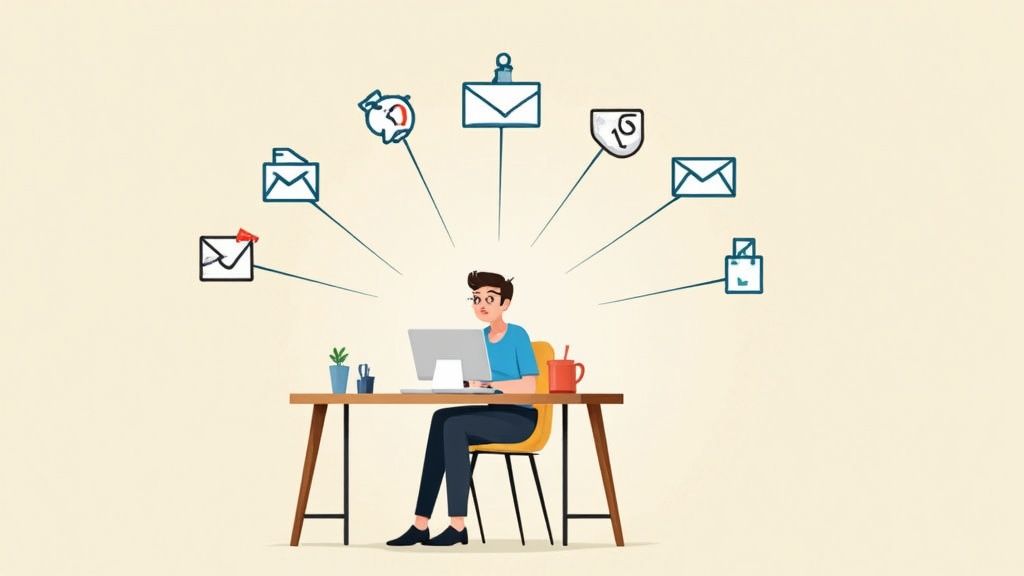
So, what exactly is multi-channel marketing? At its simplest, it’s the strategy of using several different, independent channels to connect with your customers. Think of it like setting up multiple storefronts—you might have one on social media, another in your customers' email inboxes, and maybe even a third through a physical flyer. Each one operates on its own to reach a broader audience.
Unpacking Multi-Channel Marketing
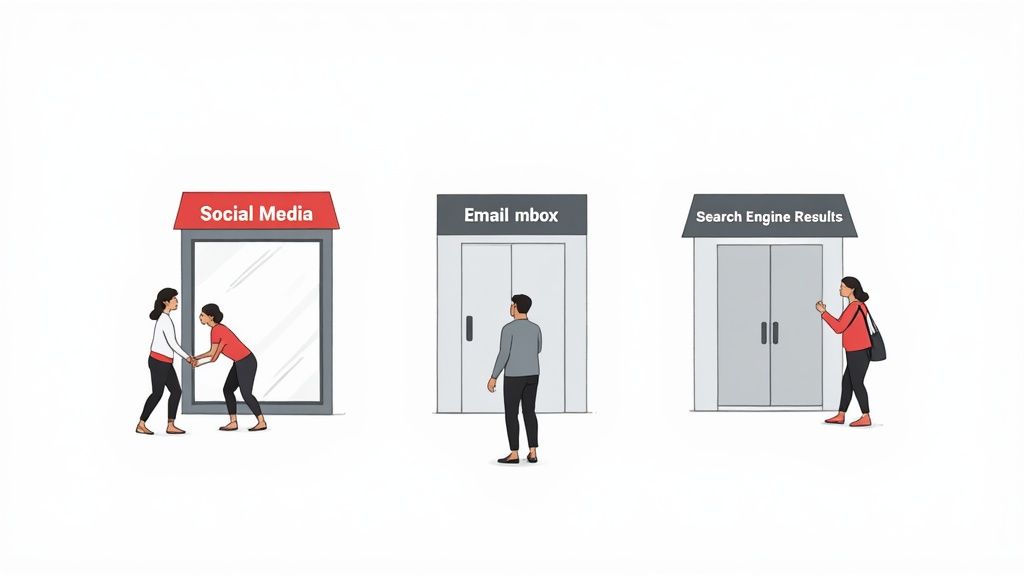
At its heart, a multi-channel strategy is all about maximizing your brand's presence. The whole idea is to show up on the platforms your customers already hang out on, giving them the freedom to engage with you on their own terms. It’s not about forcing everyone through one door; it's about creating as many doorways into your business as possible.
Every channel you use—your website, a paid search ad, a social media profile, or even direct mail—acts as its own distinct touchpoint. While you’ll want to keep your messaging consistent to maintain a strong brand identity, the channels themselves aren't really talking to each other. A customer's interaction on your Facebook page won't directly change the next email they get from you. This siloed approach is perfect for running targeted, channel-specific campaigns.
The Core Goal: Maximizing Reach
The primary mission here is to cast a wide net. By being active across different platforms, you dramatically increase the chances that potential customers will stumble upon your brand. It's a very product-centric approach; the main goal is to put what you offer in front of as many eyes as possible, using every relevant avenue you can.
For example, a local retail shop might use:
- Email Marketing: To send out special promotions directly to their subscribers.
- Social Media Ads: To grab the attention of new audiences based on their interests and behaviors.
- Print Materials: To connect with the local community through tangible ads and flyers.
Each of these efforts works on its own to drive traffic and boost sales. It’s a fantastic strategy for businesses that need to be where their customers are, without getting bogged down by the technical headache of integrating every single interaction.
To help clarify these concepts, let's break down the foundational ideas behind this strategy.
Core Principles of Multi Channel Marketing at a Glance
This table breaks down the foundational concepts of a multi channel strategy, highlighting its core purpose and how it functions.
| Principle | Description | Example |
|---|---|---|
| Channel Choice | The customer is in control. They choose which channel they prefer to use to interact with your brand. | A customer sees a Facebook ad but decides to visit your website directly to make a purchase later. |
| Brand Presence | Be everywhere your customers are. The goal is to maximize visibility across multiple relevant platforms. | A clothing brand maintains an active presence on Instagram, TikTok, email, and through in-store events. |
| Independent Operation | Each channel works as a separate entity. The customer's journey on one platform doesn't affect another. | A user clicks on a Google Ad but their next email from you is part of a general newsletter, not a follow-up. |
Understanding these principles makes it clear why this approach is so practical, especially for growing businesses.
Why This Approach Works
This strategy is so effective because it mirrors how people actually behave today. We don't just stick to one platform; we bounce between our email, social media feeds, and search engines all day long. A multi-channel presence makes sure you stay visible and accessible as your customers move through their digital (and physical) worlds.
The real power of multi-channel marketing lies in its flexibility. It allows a business to prioritize its best-performing channels, focusing resources where they will generate the highest return without needing a complex, fully integrated system from day one.
From social media chatter to tangible print pieces, a solid strategy pulls from a variety of marketing essentials to make those connections. This also gives you the perfect testing ground to try out different messages and offers on each platform, helping you figure out what truly clicks with specific audience segments and gathering valuable data for your next big campaign.
Why a Multi Channel Approach Is No Longer Optional
Relying on a single marketing channel today is like a fisherman casting only one line into a vast ocean. It just doesn't work anymore. Your customers aren't sitting in one predictable spot; they're constantly moving between their email inbox, social media feeds, search engines, and even physical stores throughout their day. If you stick to just one platform, you're flat-out missing huge chunks of your audience.
This massive shift in how people shop and interact with brands is exactly why what is multi channel marketing has gone from a "nice-to-have" strategy to an absolute necessity. People expect choice. They want the freedom to discover a product on Instagram, do a little digging on your website, and maybe ask a question through a chatbot—all on their own terms. A multi channel approach simply meets them where they already are, instead of trying to force them down a single, rigid path.
Meeting Modern Customer Expectations
Today’s buyers are smart. They have more information at their fingertips than ever before, and their expectations are sky-high. They research, they compare, and they hunt for social proof before pulling out their wallets. Being present across multiple channels lets you give them the information they need at every step, building trust and credibility as you go.
Think about a typical customer journey:
- A person sees a targeted ad for a new pair of shoes on their Facebook feed.
- Later that day, they search Google for reviews of that specific shoe brand.
- Finally, they head to your website and sign up for your email list to snag a discount before they buy.
If your brand is a ghost at any of these touchpoints, you’re basically handing that sale over to a competitor who shows up. This consistent presence is what builds strong brand awareness and turns one-time buyers into loyal fans.
A multi channel strategy isn't just about being everywhere at once. It's about creating consistent, easy-to-find pathways for customers to connect with your brand, whenever and wherever they feel like it. This customer-first availability is what keeps you in the game.
The Data-Backed Case for Diversification
The push toward a multi channel approach isn't just a gut feeling; the numbers back it up. When businesses connect with customers across several platforms, the results consistently blow single-channel efforts out of the water. This makes perfect sense—more touchpoints create more opportunities to build relationships and guide people toward a purchase.
Marketers everywhere are seeing this trend. In fact, about 86% of marketers agree that a multi channel strategy is getting more effective every single year, a shift driven by our multi-device, multi-platform lives. You can see more data on the rise of multi channel effectiveness on amraandelma.com. This growing consensus highlights a critical reality: if your competitors are using multiple channels and you aren't, you're not just standing still, you're actively falling behind. Embracing this approach is essential for staying competitive and growing your business in today's market.
Choosing the Right Tools for Your Marketing Mix

A great multi-channel strategy isn't about being everywhere at once. It's about being in the right places—the channels where your audience actually spends their time. This means you have to get selective and think strategically about the strengths of each platform.
Think of it like building a band. You wouldn't throw a cello, a banjo, and a set of steel drums together and expect a hit song. Each instrument has its own sound and purpose. Your job is to pick the ones that work together to create something your audience wants to hear.
Let's look at some of the most reliable instruments in your marketing toolkit and how to make them play in harmony.
Email Marketing: The Relationship Builder
In a world of fleeting trends and algorithm changes, email marketing is your direct line to your customers. It's still one of the most powerful ways to build real, lasting relationships because it’s a personal conversation happening in a space your customer controls—their inbox.
Unlike a public social media feed, email allows for much more personalized and segmented communication. It’s the perfect channel for:
- Lead Nurturing: Gently guiding prospects from "just curious" to "ready to buy" with targeted content and helpful information.
- Customer Retention: Keeping your brand top-of-mind with loyal customers through exclusive updates, rewards, and special offers.
- Driving Repeat Sales: Suggesting new products or add-ons based on a customer's past purchases, showing you understand their needs.
Best of all, you own your email list. It’s a stable asset that isn't at the mercy of some tech giant's latest update, making it a non-negotiable cornerstone for any serious marketing strategy.
Social Media: The Awareness Engine
If email is the private conversation, social media is the town square. It’s where trends catch fire, communities are built, and people discover new brands every day. Its main job is to get your name out there and build awareness at the very top of your marketing funnel.
The beauty of social media is its diversity. Instagram and TikTok are visual playgrounds perfect for lifestyle brands, while LinkedIn is the undisputed king of B2B networking and professional content. The key is to use these platforms to show your brand's human side, share content from your customers, and run targeted ads to find more people just like them.
The goal on social media isn't always an immediate sale. It’s about building a community, fostering brand personality, and staying relevant in your customers' daily lives. Consistency and authenticity are your keys to success here.
SEO and PPC: The Demand Capturers
When someone has a problem they need to solve, where do they go first? A search engine. Search Engine Optimization (SEO) and Pay-Per-Click (PPC) are the two essential tools for being the answer they find.
- SEO is the long game. It’s about creating genuinely helpful content that earns you a top spot in organic search results over time. Think of it as building a strong foundation for your digital home—it takes effort, but it pays off with consistent, "free" traffic for years to come.
- PPC, using platforms like Google Ads, is the fast track. You can place ads at the very top of the search results instantly for specific keywords. It's perfect for jumping on a trend, promoting a sale, or getting immediate feedback on new messaging.
Using both together is the real power move. SEO builds sustainable trust and authority, while PPC delivers immediate traffic and provides incredibly valuable data you can feed right back into your SEO strategy.
Direct Mail and Promotional Products: The Tangible Connection
In a digital-first world, something you can actually hold in your hand makes a huge impact. Direct mail and physical marketing materials cut through the noise in a way that an email or a social post simply can't. A beautifully designed postcard or a useful branded item feels personal and memorable.
This channel is fantastic for making a splash with high-value clients, winning back customers who have gone quiet, or making a name for yourself in a local market. It might feel a bit old-school, but that’s exactly what makes it so effective today. Plus, well-chosen promotional products can keep your brand literally at your customer's fingertips for months. The trick is to be creative and offer real value, turning what could be "junk mail" into a welcome surprise.
Before we move on, let's take a quick look at how these popular channels stack up against each other.
Comparing Popular Marketing Channels
The table below offers a snapshot of the primary strengths of each channel we've discussed, along with the key metrics you'll want to watch to measure your success.
| Channel | Primary Strength | Key KPIs |
|---|---|---|
| Email Marketing | Nurturing relationships, driving repeat sales | Open Rate, Click-Through Rate (CTR), Conversion Rate, Unsubscribe Rate |
| Social Media | Brand awareness, community building | Engagement Rate, Reach, Follower Growth, Website Clicks |
| SEO | Capturing organic demand, building long-term authority | Organic Traffic, Keyword Rankings, Bounce Rate, Time on Page |
| PPC Advertising | Driving immediate, targeted traffic and leads | Cost Per Click (CPC), Click-Through Rate (CTR), Conversion Rate, Return on Ad Spend (ROAS) |
| Direct Mail | Creating a memorable, tangible brand experience | Response Rate, Conversion Rate, Customer Lifetime Value (for targeted campaigns) |
Remember, no single channel is a silver bullet. The magic happens when you choose the right combination for your specific audience and business goals, creating a cohesive experience that meets your customers wherever they are.
Building Your First Multi Channel Marketing Strategy
Jumping into multi-channel marketing can feel like a massive project, but it really doesn't have to be that complicated. The trick is to start with a clear, focused plan instead of trying to be everywhere all at once. A solid strategy is built one step at a time, starting with the most important piece of the puzzle: your customers.
To really nail a multi-channel approach, you first need to know how to build a winning digital strategy that ties all your efforts together. This core knowledge will help you create one cohesive plan, not just a bunch of separate marketing activities.
Define Your Audience with Precision
Before you even think about picking a channel, you have to know exactly who you're talking to. Generic messages get ignored because they don't resonate with anyone in particular. This is where buyer personas become your secret weapon.
A buyer persona is essentially a detailed, semi-fictional profile of your perfect customer. It goes way beyond basic info like age and location. It dives deep into their goals, what keeps them up at night, their motivations, and what they do every day.
To create personas that actually work, ask yourself some tough questions:
- What are their biggest struggles, professionally or personally?
- Where do they hang out online when they're researching something to buy?
- Which social media apps are they scrolling through daily?
- What kind of content grabs their attention—slick videos, in-depth articles, or quick-hit social posts?
The answers you find will shape every single decision you make, from the channels you use to the very words you choose.
Set Clear and Measurable Goals
Without concrete goals, you're just making noise. Every single thing you do in your strategy should be directly linked to a specific business objective. Vague ambitions like "increase brand awareness" just won't cut it; you need numbers.
A much better way to think about it is the SMART framework: Specific, Measurable, Achievable, Relevant, and Time-bound.
- Weak Goal: "Get more followers on social media."
- SMART Goal: "Increase our Instagram follower count by 15% over the next quarter by posting three high-engagement Reels per week."
See the difference? That level of clarity lets you track your progress accurately and prove that your marketing dollars are actually working. It transforms your strategy from a bunch of hopeful guesses into a results-driven machine.
This infographic shows you the core flow, from getting to know your audience to putting your money where it matters.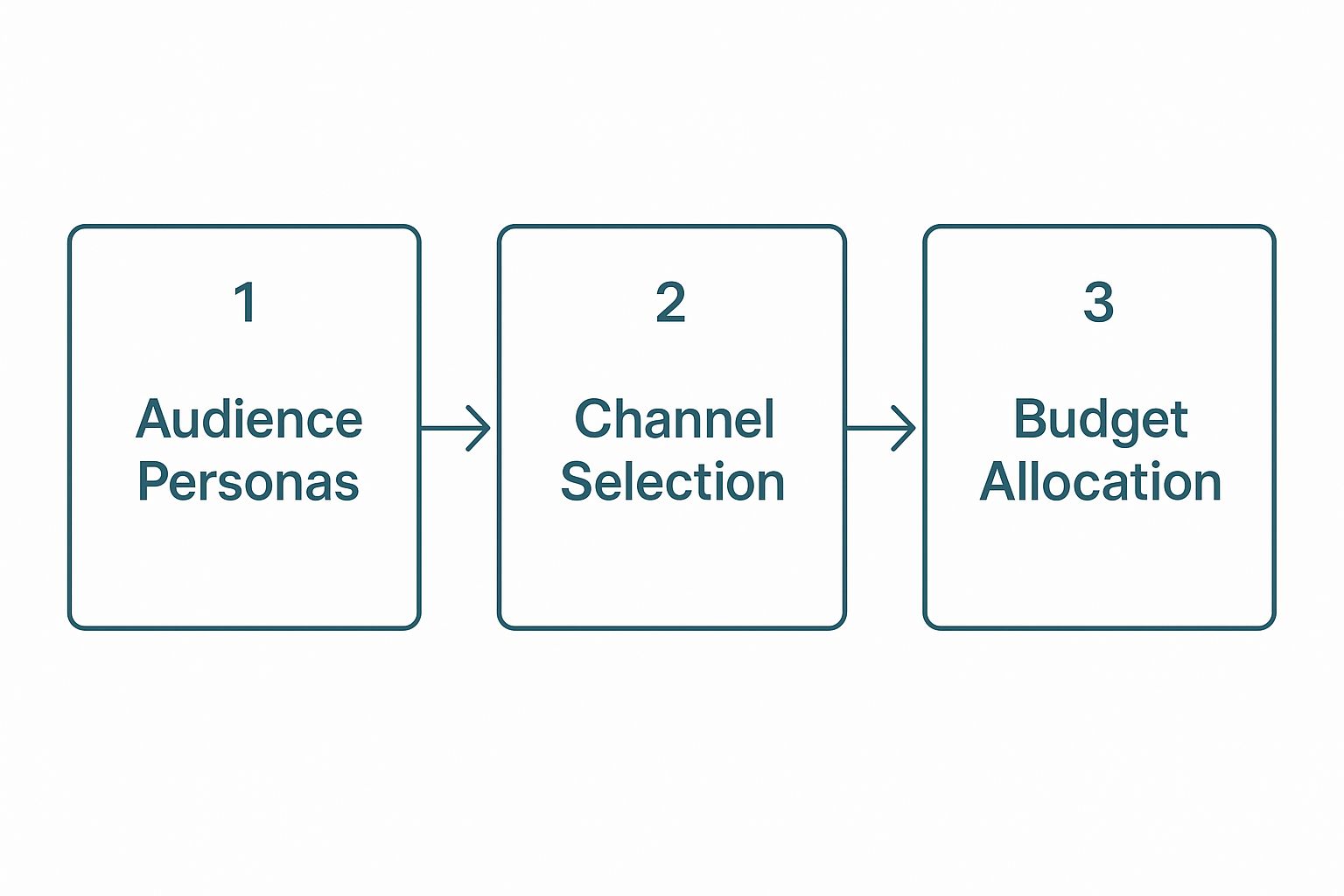
This visual really drives home how each step builds on the last, making sure your channel choices and budget are informed by real customer insights.
Select Your Channels Strategically
Okay, so now you know who you're talking to and what you're trying to achieve. Now you can finally pick your channels. The golden rule here is simple: go where your audience is. Don't burn through your budget on a platform just because it's trendy. Zero in on the channels your ideal customers actually use.
If your buyer persona research reveals your audience is all over LinkedIn and loves industry blogs, that's where you need to be. Your energy should go into creating professional content and running targeted ads there—not trying to make a viral TikTok. Start small. Pick two or three core channels where you know you can make a real dent.
A classic rookie mistake is spreading yourself too thin across too many platforms. It's way more effective to dominate a few key channels than to have a weak, forgettable presence on a dozen of them.
Once your channels are locked in, make sure your brand's voice and visuals are consistent everywhere. This doesn't mean copy-pasting the same message on every platform. It means adapting your core message to fit the unique format and vibe of each one, all while staying true to your brand's personality.
Allocate Your Budget and Resources
The last piece of the puzzle is figuring out where to spend your time and money. A well-planned budget is what keeps your multi-channel strategy from going off the rails and prevents you from overspending.
Your budget should be a direct reflection of your goals and channel priorities. If your main goal is getting new leads and you've identified PPC ads as a top channel, then a good chunk of your budget should be earmarked for that.
When you're mapping out your budget, think about:
- Ad Spend: The cash you'll need for paid ads on platforms like Google, Facebook, or LinkedIn.
- Content Creation: The resources required to write blog posts, shoot videos, or design graphics.
- Tools and Technology: The cost of your email marketing software, analytics tools, or social media schedulers.
- Physical Materials: For things like direct mail or trade shows, don't forget printing and distribution costs. Looking into options for event marketing materials can help you budget for those important physical touchpoints.
Kick things off with a test budget to see which channels give you the best return on investment (ROI). Once the data starts rolling in, you can confidently shift funds to your top performers and keep fine-tuning your strategy for the biggest possible impact.
How to Measure and Optimize Your Campaign Success
Launching a multi-channel marketing strategy is just the start. The real magic—and the real growth—happens when you start listening to what the data is telling you and use those insights to sharpen your approach. A great strategy is only as good as its results, so tracking performance is what separates a good campaign from a truly great one.
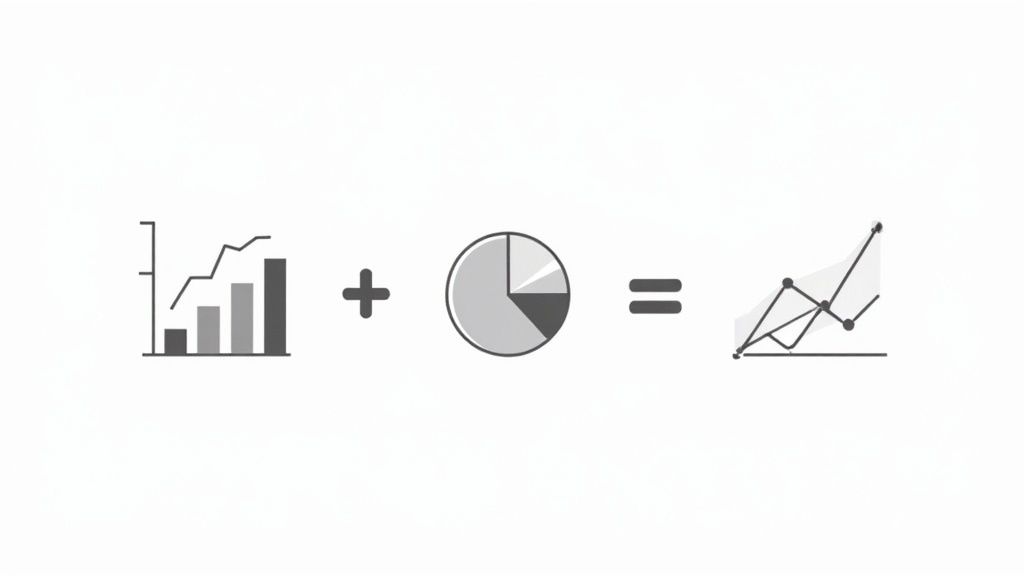
This isn't about finding a single "vanity metric" that looks impressive on a report. It’s about understanding the complete story of how your channels are working together—or failing to—to push your business forward. By focusing on the right numbers, you can turn a flood of raw data into real, actionable intelligence.
Identifying Your Most Important Metrics
To avoid getting completely lost in a sea of data, it’s best to zero in on a few key performance indicators (KPIs) that directly reflect the health of your multi-channel efforts. These metrics will help you see both how individual channels are doing and the overall impact of your strategy.
Start by tracking these essentials:
- Customer Acquisition Cost (CAC) per Channel: This is simply the total cost of your marketing on a specific channel divided by the number of new customers you won from it. A low CAC on your email campaigns but a sky-high CAC on paid social ads tells you exactly where your budget is working hardest.
- Conversion Rate by Channel: This shows you the percentage of people who take the action you want (like a purchase or a sign-up) on each channel. It’s perfect for spotting which platforms are actually effective at turning prospects into customers.
- Overall Return on Investment (ROI): This is the ultimate measure of success. ROI tells you how much revenue you’re generating for every single dollar you spend on marketing. Calculating this across your entire strategy gives you a crystal-clear picture of its profitability.
By keeping a close eye on these figures, you can spot trends, pinpoint your top-performing channels, and make much smarter decisions about where to put your time and money. For any business focused on growth, tracking these numbers is a non-negotiable part of effective lead generation.
Leveraging the Right Tools for Analysis
Trying to track performance across a dozen different platforms by hand is a recipe for headaches and mistakes. Luckily, there are plenty of tools out there that can simplify this, from free analytics platforms to more advanced marketing hubs that pull all your data into one neat dashboard.
Google Analytics is an indispensable—and free—tool for tracking website traffic, user behavior, and where your conversions are coming from. It can show you which channels are driving the most visitors and which ones are leading to the most sales, giving you a solid foundation for understanding your digital performance.
As your strategy gets more complex, specialized multi-channel marketing hubs become invaluable. These platforms connect the dots between your email, social media, PPC, and more, giving you a unified view of your customer's journey. The market for these tools is booming, recently surpassing USD 6 billion globally and still growing.
The goal of any measurement tool is to provide clarity. It should help you answer one simple question: "What's working, what isn't, and what should we do next?"
Turning Insights Into Actionable Optimizations
Gathering data is pointless if you don't actually use it to make things better. The final, and most important, step is to translate what you've learned into concrete actions that make your campaigns more effective. This is where you continuously refine your messaging, adjust your budget, and tweak your channel mix.
For instance, if your data shows that your email channel has a stellar conversion rate but not much traffic, your action plan might be to run a social media campaign specifically to grow your email list. If a particular PPC ad campaign has a dismal ROI, you could pause it and shift that budget to a channel that’s pulling its weight.
To truly understand which touchpoints are making the biggest difference, it's helpful to explore what marketing attribution is and how it can bring clarity to the customer journey. This constant loop of measuring, analyzing, and optimizing is the engine that drives long-term success in multi-channel marketing.
Got Questions About Multi-Channel Marketing? We’ve Got Answers.
When businesses start digging into multi-channel marketing, the same few questions always seem to pop up. Getting straight, practical answers is the key to building a strategy that actually works without feeling overwhelming.
Let's clear up some of the most common points of confusion so you can move forward with confidence.
Multi-Channel vs. Omnichannel: What's the Real Difference?
This is, hands down, the most common question we hear. The answer boils down to one powerful concept: integration.
Imagine your marketing is a house with several rooms. A multi-channel approach means you have conversations happening in separate, disconnected rooms. You might be chatting with customers in the living room (social media), the kitchen (email), and on the front porch (your website). Each conversation is valuable, but they exist on their own.
Omnichannel, on the other hand, connects all those rooms. It adds hallways and open doorways, so the conversation flows seamlessly from one space to the next. What a customer does in one channel directly shapes their experience in another, creating one unified journey.
The core difference is focus. A multi-channel strategy is channel-centric, aiming to be present where customers are. An omnichannel strategy is customer-centric, aiming to make that presence feel like one single, connected experience.
Ultimately, multi-channel is about giving customers more options to engage. Omnichannel is about making those options feel like one cohesive conversation. Most businesses start with a multi-channel setup and gradually evolve toward omnichannel as they nail down their processes.
How Do I Choose the Right Channels for My Business?
The urge to be everywhere at once is real, but it's a fast track to a drained budget and disappointing results. A smarter approach is to be selective and strategic. And that always, always starts with your audience.
You have to figure out where your ideal customers actually spend their time online. Don't guess—use the data you already have.
- Dig Into Your Analytics: Your website analytics, social media insights, and customer surveys are goldmines. They'll tell you exactly where your traffic comes from and which platforms your current audience loves.
- Spy on Your Competitors: Take a look at what your successful competitors are doing. Which channels are they most active on? This is a huge clue about where your target market is hanging out.
- Match Channels to Your Goals: What are you trying to achieve? If you want to build brand awareness, visual platforms like Instagram or a high-quality blog are fantastic. If you need to drive direct sales, focus on high-intent channels like email marketing and targeted PPC ads.
Start small. It’s way more effective to dominate two or three core channels where you know your audience is active than to spread yourself thin across ten. Once you get the hang of those and start seeing results, you can begin to branch out.
Is Multi-Channel Marketing Too Expensive for a Small Business?
Not at all. In fact, one of the best things about a multi-channel strategy is how scalable it is. You don't need a massive budget to get going; you just need to be smart about where you invest your resources—which for many small businesses, means investing more time than money.
Plenty of the most effective marketing channels are low-cost or even free to start.
- Organic Channels: Things like SEO, blogging, and organic social media posting are primarily an investment of your time and creativity. By consistently creating valuable content that solves your audience's problems, you can build a reliable source of traffic without spending a dime on ads.
- Pay-to-Play on Your Terms: With paid platforms like Google Ads or social media advertising, you are in the driver's seat. You can start with a small daily budget to test the waters, see what messages resonate, and only scale up when you've found what works.
The key for a small business is focus. Don't try to copy what a massive corporation is doing. Instead, zero in on the handful of channels that offer the biggest bang for your buck (and your time) for your specific audience. Then, measure everything so you know that every dollar and every hour is pushing your business forward.
More from

13
When you’re ready to invest in an A-frame sign, the first question you'll ask is, "What size do I need?" It usually comes down
 Emma Davis
Mar 13, 2026

113
The real secret to mastering your direct mail budget isn't complicated. It comes down to one simple fact: a standard 4" x 6&q
Emma Davis
Mar 12, 2026

63
Tear-off flyers are a classic for a reason. They’re a tangible marketing tool, designed with perforated, removable tabs at the bottom. Each
Emma Davis
Mar 11, 2026

112
Printing stickers at home is a seriously fun and rewarding project. It boils down to four main parts: designing your image, picking the right
Emma Davis
Mar 10, 2026

103
Ever seen a logo that seems to float right on the glass of a jar or bottle? That’s the work of transparent label stickers.
Emma Davis
Mar 9, 2026

59
Picture this: your product’s beautiful label gets smudged and runny during shipping, or a gorgeous event banner fades to nothing after just
Emma Davis
Mar 8, 2026

58
In a sea of options, your product's packaging and labeling are its first, and often only, chance to make a real connectio
Emma Davis
Mar 7, 2026

89
Ever tried to print a hundred high-quality flyers on your home office printer? You probably ran out of ink, dealt with paper jams, and ended u
Emma Davis
Mar 6, 2026