Table of Contents
- Home
- content hub
- What Is Corporate Branding and Why It Matters
 Share and earn
What Is Corporate Branding and Why It Matters

Oct 28, 2025340 views
Oct 28, 2025340 views
So, what exactly is corporate branding, anyway?
Think of it as your company's entire personality. It’s the cohesive story you tell the world about who you are, what you believe in, and the promise you make to every single customer. It’s not just a slick logo or a snappy tagline; it’s the sum total of every single interaction someone has with your business, from your mission statement all the way down to your customer service.
Understanding Your Brand Beyond a Logo
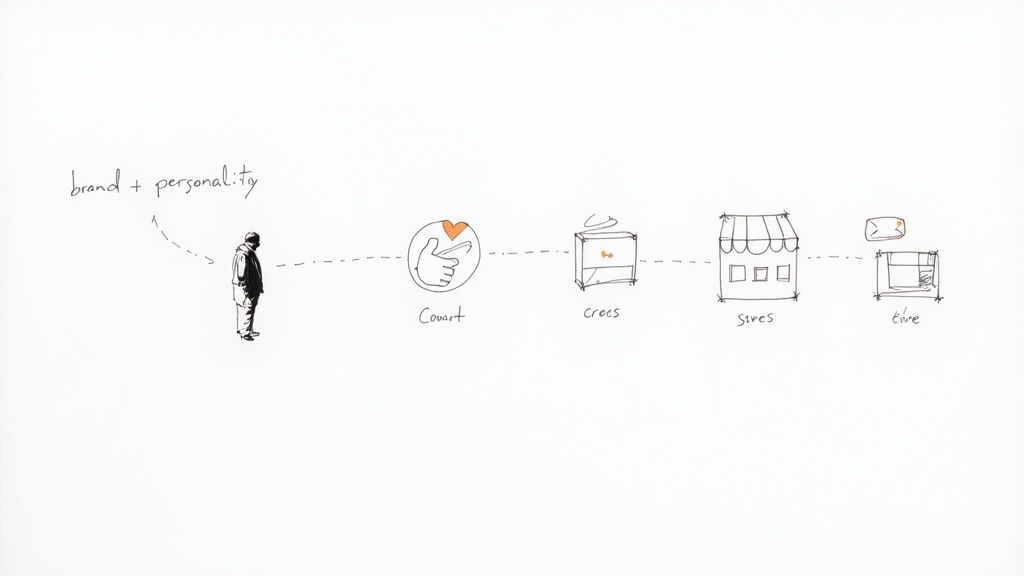
A powerful corporate brand shapes how people feel about your company. It’s what builds trust and forges an emotional connection that runs much deeper than any single product or service you offer.
When done right, your corporate brand ensures every touchpoint feels consistent, whether someone is visiting your website, seeing a social media post, or unboxing a product. It's the art and science of managing your company's reputation, making sure you stand out from the competition in a way that truly matters.
Distinguishing the Brand From Its Parts
It's easy to get the lines blurred between the big-picture corporate brand and the individual products it sells. While they are definitely connected, they play very different roles. Think of the corporate brand as the "parent" that provides the credibility and core values, while its "children" are the products that live under that trusted family name.
“An effective brand resonates with consumers. It powers their purchasing decisions and reflects who they are and what they stand for. Yet, competing for consumers’ attention and actually capturing it and retaining it has never been more difficult.”
This parent-child relationship is crucial. Apple is the corporate brand, globally recognized for innovation, simplicity, and premium design. The iPhone is a product brand that benefits enormously from that built-in reputation. People line up for the new iPhone not just for its features, but because they trust the Apple name behind it.
Even the smallest details are part of this ecosystem. The quality and design of your professional business cards printing materials, for instance, are tiny ambassadors for your corporate brand, reinforcing its values with every handshake.
To really nail down the differences, it helps to see them side-by-side.
Corporate Branding vs Product Branding vs Logo
Here’s a quick comparison to clarify how these three distinct concepts work together.
| Concept | Scope | Primary Goal |
|---|---|---|
| Corporate Branding | Encompasses the entire organization, its mission, values, and culture. | To build a strong, positive reputation and foster stakeholder trust. |
| Product Branding | Focuses on a specific product or service offered by the company. | To differentiate a product from competitors and drive sales. |
| Logo | A single visual symbol representing the company or product. | To provide instant visual recognition and act as a brand identifier. |
As you can see, the logo is a symbol, product branding creates desire for an item, and corporate branding builds the foundational trust that supports everything else.
Tracing the Roots of Modern Branding
It’s easy to think of corporate branding as a recent invention, something dreamed up in a Madison Avenue boardroom during the golden age of advertising. But the truth is, its roots run much deeper and are far more primal. The practice didn't start with a sleek logo or a catchy jingle; it began in open fields with a simple, powerful need: to show ownership.
This idea goes back thousands of years. The word “brand” itself comes from the Old Norse term "brandr," which means “to burn.” It’s a direct reference to the ancient practice of burning a unique mark onto livestock. This wasn't just about preventing theft; it was a public declaration. That simple mark was a guarantee of origin, a signal of quality, and the very first version of a corporate promise. You can dig deeper into the fascinating history of branding on vistaprint.com.
From those agricultural beginnings, the concept evolved. Fast forward to the Industrial Revolution, when factories started churning out mass-produced goods. All of a sudden, store shelves were packed, and shoppers were faced with a dizzying number of nearly identical products. Companies desperately needed a way to make their goods stand out.
From Simple Marks to Emotional Connections
This is where the real shift happened. Pioneers in the late 19th and early 20th centuries, like the folks at Coca-Cola, had a profound realization. They weren’t just selling a fizzy, sweet drink; they were selling a feeling. An experience. Their efforts moved beyond just slapping a name on a bottle and started to build an entire emotional world around their product.
This was a game-changer. Branding was no longer just about helping a customer pick your soap off a crowded shelf. It became about crafting a consistent, desirable identity that people could connect with on a human level. The goal was to build more than just a customer base; it was to cultivate a tribe of loyal fans who trusted the name behind the product.
A brand became a story, a promise of quality, and a signal of belonging. It was a strategic asset that could foster trust and command loyalty in an increasingly competitive marketplace.
The Evolution into Modern Strategy
As the 20th century roared on, this evolution kicked into high gear. The rise of mass media—first radio, then television, and eventually the internet—gave companies powerful new platforms to tell their brand stories to millions. Corporate branding morphed into a complex, strategic discipline that touched every single part of a business.
A few key milestones mark this journey:
- The Trademark Era: Legal protections for names and logos became critical, cementing a brand’s unique identity in the marketplace.
- The Advertising Boom: Companies mastered the art of storytelling, using aspirational ads to link their products to desirable lifestyles.
- The Digital Age: Websites and social media opened the door for direct, two-way conversations between brands and the people who loved them.
Today, you can't really understand corporate branding without appreciating this long history. It shows us that a brand isn't just a marketing tactic. It's a fundamental business concept, refined over centuries, that’s all about building trust, creating meaning, and forging real, lasting connections with people.
The Building Blocks of a Strong Corporate Brand
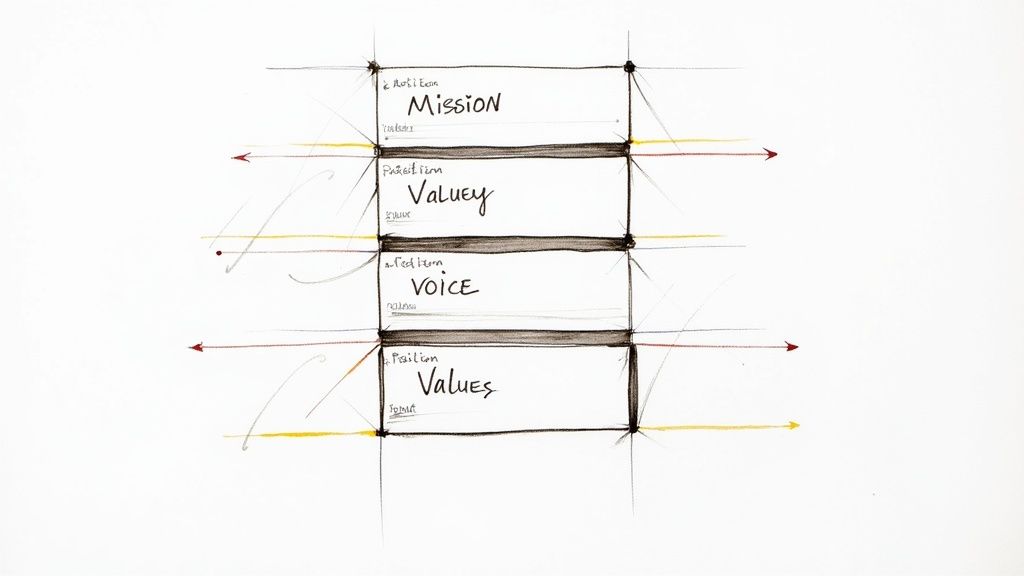
A powerful corporate brand doesn't just show up one day. It’s built, piece by piece, from a set of essential components. Think of it like building a house—you can’t put up walls without a solid foundation, and you can’t add a roof without a sturdy frame. Each part has to support the others to create something stable and impressive.
These building blocks ensure that every part of your business, from internal culture to external marketing, tells the same story. When these elements click, they form a cohesive brand identity that’s both authentic and impossible to forget. Let's break down these foundational pillars one by one.
Mission and Vision: The Why and Where
Your mission is your brand’s "why." It’s a straightforward statement explaining your purpose—what you do, who you serve, and the impact you want to make right now. It's your reason for being, beyond just turning a profit.
Your vision, on the other hand, is your "where." It’s the big, ambitious declaration of where your company is headed. This is the ultimate goal you’re striving for, inspiring both your team and your customers to come along for the ride.
Core Values: The How
If the mission is your destination, then your core values are the compass that guides you. These are the non-negotiable principles that shape your company's behavior and decisions. In short, your values are your brand’s moral code in action.
They touch everything, from who you hire and how you handle customer service to product development and partnerships. It's not just talk, either—one study found that 80% of young Americans are likely to buy from a brand based on its mission or purpose. Authentic values have never been more critical.
A brand’s values must be more than just words on a website; they need to be lived and demonstrated every single day. This authenticity builds trust and forms the bedrock of customer loyalty.
Brand Voice and Visual Identity: The Look and Sound
Once the internal foundation is set, it's time to decide how your brand shows up in the world. This comes down to two key pieces:
- Brand Voice: This is your brand's distinct personality. Are you witty and informal like Wendy's, or are you more authoritative and professional like IBM? Your voice needs to be consistent everywhere, from a social media caption to a formal email newsletter.
- Visual Identity: This is the aesthetic of your brand. It includes your logo, color palette, typography, and imagery. These visual cues create instant recognition and communicate a specific feeling about your company. A well-designed visual system brings all your marketing materials to life cohesively.
Positioning: The Where You Fit
Finally, brand positioning defines your unique spot in the market. It answers the question, "Why should a customer pick you over the competition?" This involves a deep understanding of your target audience, a sharp analysis of your competitors, and a clear idea of what makes you different.
A huge part of establishing a strong corporate brand involves carving out this unique place in the market. Getting a handle on what is brand positioning is absolutely essential for this. It’s the strategic story that shapes how people see you and secures your own space in the minds of consumers.
Why Investing in Branding Drives Real Growth
Let's get one thing straight: a strong corporate brand is far more than a slick logo or a clever tagline. It’s the engine of your business. When you invest in building a cohesive and authentic brand, you're not just playing with aesthetics. You're building a strategic asset that delivers tangible financial returns and cements your place in the market for the long haul.
This is an investment that pays dividends across the board. A well-defined brand forges deep, emotional connections with customers, turning one-time buyers into loyal advocates. That loyalty translates directly into repeat business and a much more stable revenue stream, making your company less vulnerable to market swings and competitor price wars.
Fueling Financial Performance and Loyalty
The numbers don't lie. Corporate branding has a massive impact on a company's valuation and how consumers behave. Interbrand's 2023 Best Global Brands report, for instance, found that the top 100 global brands hold a combined valuation north of $4.1 trillion USD.
On top of that, keeping your branding consistent across all platforms can boost revenue by up to 23% on average. Why? Because brands that present a unified identity naturally build more consumer trust and loyalty. A solid brand also gives you the power to command premium pricing. When you learn how to build brand equity, you're creating an asset that makes customers willing to pay more for the quality and reliability your name represents.
Attracting Top Talent and Building Credibility
The perks of a strong corporate brand don't stop with customers. In today's competitive job market, your brand is a magnet for attracting and keeping top-tier talent. A company with a clear mission, a positive reputation, and strong values is simply a more attractive place to work for skilled professionals who want to be part of something they believe in.
Your corporate brand acts as an internal compass, guiding your company culture and ensuring that every employee is aligned with the same core principles and goals. This alignment fosters a more engaged and motivated workforce.
Finally, a powerful brand establishes serious market credibility. It’s a signal to partners, investors, and customers that your business is stable, professional, and trustworthy. This credibility is the bedrock for everything else, from securing funding to forging strategic alliances. By investing in your brand, you’re investing in a future where your business doesn’t just compete—it leads. Building strong brand awareness is the first step in creating this powerful, lasting credibility.
Learning from Corporate Branding Masters
Theory is one thing, but seeing corporate branding executed in the wild? That’s where the real lessons are. The best brands don’t just have a mission statement; they live and breathe it until their values and their products become one and the same. By looking at how these masters pull it off, we can get a practical playbook for building a brand people actually care about.
Let's look at two companies that absolutely nail this, though in very different ways: Apple and Patagonia. They both prove that when a brand’s identity is authentic, it becomes its most powerful asset.
Apple: The Embodiment of Simplicity
Apple's entire brand is built on three pillars: simplicity, innovation, and elegant design. This isn't just marketing fluff—it's a philosophy that touches every single part of their business.
Think about it. From the clean, minimalist look of their retail stores to the intuitive feel of their software, Apple’s obsession with simplicity is everywhere. Even their product packaging is an experience, designed to be clean and satisfying. Their ads famously skip the technical specs, focusing instead on what you can do and how it will make you feel.
Apple’s brand is a promise: that technology can be powerful without being complicated. This unwavering consistency across every touchpoint has built a level of trust and loyalty that few companies ever achieve, allowing them to command premium prices and create unparalleled anticipation for new products.
Patagonia: A Brand Built on Activism
Patagonia’s brand is completely intertwined with environmental activism and sustainability. Their mission—"We're in business to save our home planet"—isn’t just a nice tagline. It’s the engine driving every single decision they make.
You can see this in their actions, not just their words:
- Product Design: They make gear that’s built to last, fighting back against throwaway consumer culture. They even have a Worn Wear program to help you repair your old stuff.
- Marketing Campaigns: Who can forget their "Don't Buy This Jacket" ad? It was a radical move that urged people to think before they buy, cementing their anti-consumerist stance.
- Corporate Structure: In a game-changing move, the founder gave the company away. Ownership was transferred to a trust and a nonprofit that fights the climate crisis, ensuring all future profits go directly to the cause.
The result? Patagonia attracts customers who share its deep-seated values. People aren't just buying a jacket; they're buying into a movement. This powerful connection turns customers into some of the most passionate advocates you'll ever see. It also shows how a brand's visual identity can extend into its physical spaces, where custom wall graphics can bring a company's mission to life right inside its own offices.
Corporate Branding Case Study Breakdown
Analyzing how leading companies align their core branding components to create a powerful and cohesive identity.
To really see how Apple and Patagonia make their magic happen, let's put their strategies side-by-side. It lays bare the framework they use to create such a cohesive and compelling identity.
| Company | Core Brand Mission | Key Brand Values | Demonstrated In Action |
|---|---|---|---|
| Apple | To create products that enrich people's lives through technology. | Simplicity, innovation, design excellence, privacy. | Intuitive product UI, minimalist store design, "Shot on iPhone" campaigns, clean packaging. |
| Patagonia | To save our home planet. | Quality, environmentalism, activism, non-consumerism. | Worn Wear repair program, 1% for the Planet pledge, durable product materials, political advocacy. |
Looking at these masters, one thing becomes crystal clear: a powerful corporate brand comes from aligning what you say with what you do, every single time, without compromise.
Building Your Corporate Brand Strategy
Turning an abstract idea into a real-world asset is all about having a clear, actionable plan. That's what a corporate brand strategy is: a roadmap that steers every single decision you make. It ensures everything you do is consistent, authentic, and makes an impact. Think of it less as a one-off project and more as a continuous cycle of defining who you are, putting it into practice, and tweaking things along the way.
The whole process starts by looking inward. Before you can build anything, you have to know what you're working with. This is where a comprehensive brand audit comes in. It’s a crucial first step where you take a hard, honest look at your current market position, what customers really think of you, and what your competitors are up to. This assessment will show you your strengths, weaknesses, and the opportunities just waiting for you to grab them. It lays a foundation that’s both ambitious and firmly planted in reality.
This infographic breaks down the core flow, from nailing down your mission to putting your values into practice every day.
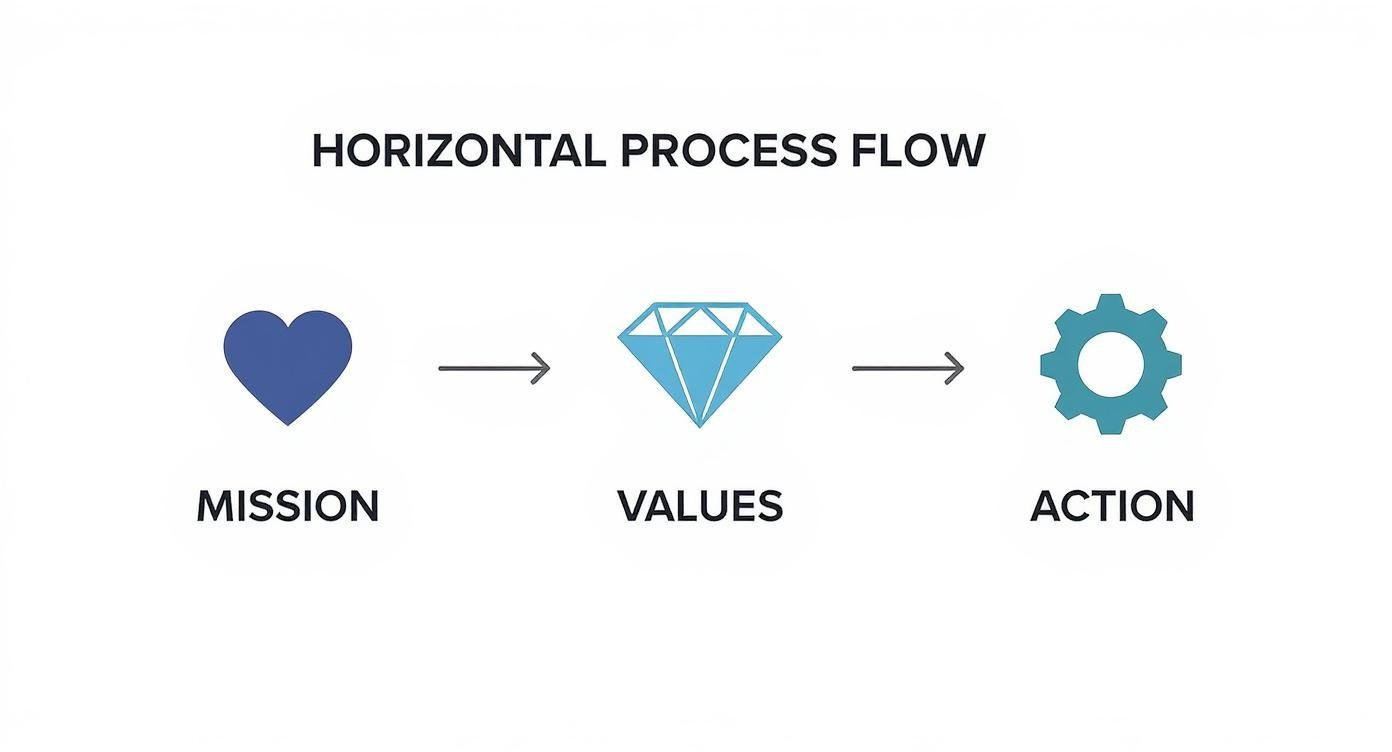
As you can see, a solid brand strategy isn't just a to-do list. It’s a connected system where your purpose fuels your principles, and those principles guide how you operate.
From Core Principles to Public Persona
Once you have a clear picture of your starting point, it's time to solidify your brand’s core. This means clearly articulating your mission and values—the "why" behind your business and the principles that guide every action. These become your internal compass, shaping not just your company culture but every single piece of external communication.
From there, you can start to build your brand’s public-facing personality. This includes:
- Brand Voice: How does your brand talk? Is it an authoritative expert, a witty friend, or a nurturing guide? Whatever you choose, that voice has to stay consistent everywhere, from your website to your social media.
- Visual Identity: This is the whole suite of visual elements—your logo, color palette, and typography—that make your brand instantly recognizable on a crowded street.
If you look at the history of corporate branding, this has always been a key differentiator. The shift from basic logos to fully integrated strategies in the 20th century really underscores this point. Brands like Coca-Cola went way beyond a simple trademark to create an entire lifestyle association.
Documenting and Launching Your Brand
After defining all these components, you have to document them in a brand guidelines document. This is an absolutely essential resource. It becomes the single source of truth for your entire organization, making sure everyone from marketing to sales is using the brand elements correctly and consistently. It’s the playbook that protects your brand’s integrity as your company grows.
A brand strategy is only as powerful as its execution. Consistency is the mechanism that builds trust, and trust is the foundation of loyalty. Without a clear plan for implementation, even the best brand identity will fail to connect with its audience.
The final steps are all about launching and managing the brand. This involves a strategic rollout plan to introduce (or reintroduce) your brand to the market. A launch isn't just about showing off a new logo; it's about telling your story and communicating your promise. Physical items, like custom promotional products, can be a huge help here, making your new brand memorable and tangible in your audience's world.
From there, it's about long-term management—continuously monitoring how your brand is perceived and making adjustments to stay relevant while remaining true to your core principles.
Common Questions About Corporate Branding
Even with a solid plan, a few practical questions always pop up when it's time to put a corporate brand into action. Getting these common sticking points cleared up makes the path forward much easier, especially if you're just starting to think strategically about your company's identity. Let's tackle a few of the big ones.
What Is the Difference Between Branding and Marketing?
This is a classic, and the distinction is so important. Think of it like this: branding is the foundation of your house, and marketing is all the different ways you invite people over to see it.
- Branding is the long game. It’s the deep work of defining who you are as a company—your mission, your core values, how you sound, and what you look like. It’s all about shaping perception and building a reputation that sticks.
- Marketing is tactical. It’s the stuff you do to get the word out, like running ads, posting on social media, or writing a blog post. These actions are often short-term and designed to promote the brand you’ve already built.
Simply put, branding is your identity—the who and the why. Marketing is how you broadcast that identity to the world. One builds character; the other tells the story.
Can Small Businesses Afford Corporate Branding?
Absolutely. And they can't afford not to. Powerful corporate branding isn't about having a Super Bowl-sized budget; it’s about being crystal clear and incredibly consistent. A small business can build an unforgettable brand simply by leaning into what makes it unique.
Forget the multi-million dollar ad spend for a moment. Start with the basics: get your mission down on paper, create a clean and professional logo, and make sure you sound like the same company everywhere, from your website to your email signature. Authenticity costs absolutely nothing, and it's one of the most potent branding tools you have.
For a small business, great branding is about being memorable and reliable. A consistent, authentic identity builds trust way more effectively than a huge marketing budget with no real brand behind it.
How Can You Measure Branding ROI?
Measuring the return on investment (ROI) for branding can feel a bit like trying to nail Jell-O to a wall. It’s not always a straight line to a sale, but you can absolutely track its impact using a mix of different numbers.
Here’s how you can start connecting the dots:
- Brand Awareness: Keep an eye on your website traffic, mentions on social media, and how many people are searching for your company's name online. Are these numbers going up?
- Customer Loyalty: Use tools like customer satisfaction surveys or a Net Promoter Score (NPS) to get a real pulse on how people feel about you. Happy, loyal customers are a direct result of strong branding.
- Market Position: Here’s a big one—can you charge a little more than your competitors without everyone running for the hills? If the answer is yes, that's a sign of powerful brand equity at work.
When you pull these data points together, you start to see a much clearer picture of how your branding efforts are strengthening your business and fueling real, sustainable growth.
Ready to bring your brand to life with stunning, consistent materials? At 4OVER4, we provide high-quality printing solutions to help your corporate brand make a lasting impression. From business cards to promotional products, let us help you build the brand you envision. Explore our printing services today!
More from

13
When you’re ready to invest in an A-frame sign, the first question you'll ask is, "What size do I need?" It usually comes down
 Emma Davis
Mar 13, 2026

113
The real secret to mastering your direct mail budget isn't complicated. It comes down to one simple fact: a standard 4" x 6&q
Emma Davis
Mar 12, 2026

64
Tear-off flyers are a classic for a reason. They’re a tangible marketing tool, designed with perforated, removable tabs at the bottom. Each
Emma Davis
Mar 11, 2026

112
Printing stickers at home is a seriously fun and rewarding project. It boils down to four main parts: designing your image, picking the right
Emma Davis
Mar 10, 2026

103
Ever seen a logo that seems to float right on the glass of a jar or bottle? That’s the work of transparent label stickers.
Emma Davis
Mar 9, 2026

60
Picture this: your product’s beautiful label gets smudged and runny during shipping, or a gorgeous event banner fades to nothing after just
Emma Davis
Mar 8, 2026

58
In a sea of options, your product's packaging and labeling are its first, and often only, chance to make a real connectio
Emma Davis
Mar 7, 2026

89
Ever tried to print a hundred high-quality flyers on your home office printer? You probably ran out of ink, dealt with paper jams, and ended u
Emma Davis
Mar 6, 2026