
all

    10 Game-Changing Trade Show Marketing Strategies for 2025

    user icon

    Emma Davis

    Content Writer

    Dec 30, 202549 views

    Dec 30, 202549 views

    10 Game-Changing Trade Show Marketing Strategies for 2025

    Trade shows are no longer just about having a booth; they're about creating a multi-faceted brand experience that drives measurable ROI. Standing out in a crowded exhibition hall requires more than a simple banner and a bowl of candy. It demands a strategic, integrated approach that engages attendees before they arrive, captivates them on the floor, and nurtures them long after the event ends. For small and medium-sized businesses, mastering this lifecycle is the key to transforming a significant event expenditure into tangible business growth.

    This guide moves beyond generic advice to provide a comprehensive blueprint of 10 actionable trade show marketing strategies. We will explore how to fuse high-impact printed materials with smart digital tactics to create a seamless and memorable attendee journey. Each strategy is designed to be practical, scalable, and focused on delivering results, from pre-show mailers that build anticipation to post-show follow-ups that convert hot leads. To ensure your trade show presence generates significant buzz and achieves its objectives, explore these effective event marketing strategies.

    You will learn how to:

    • Design an immersive booth experience with custom printed backdrops, banners, and signage.
    • Implement targeted direct mail campaigns to draw high-value prospects to your booth.
    • Leverage QR codes on everything from business cards to product labels for instant digital engagement.
    • Create must-have leave-behind materials and training collateral that empowers your sales team.

    We'll provide actionable steps for each point, including design guidance using 4OVER4's services, helping you build a plan that guarantees you won't just participate at your next event, you'll dominate.

    1. Customized Booth Design with Branded Printed Materials

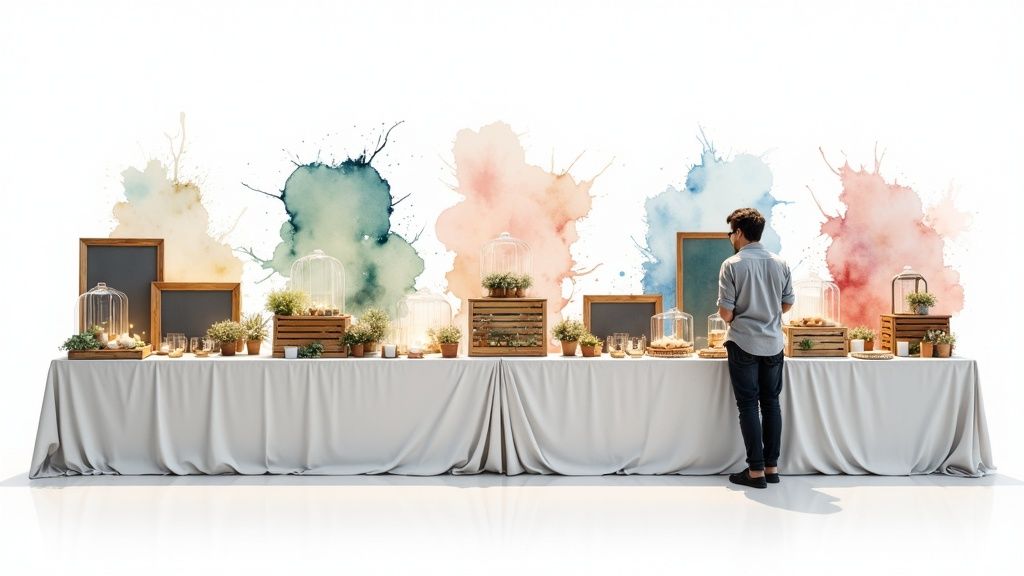
    Your trade show booth is more than just a physical space; it’s a temporary storefront and the primary embodiment of your brand. An effective booth design uses strategically printed materials to create a cohesive, immersive experience that stops attendees in their tracks. This trade show marketing strategy moves beyond a simple banner and table, turning your plot of floor space into a powerful brand statement.

    The core idea is to use high-quality, consistently branded printed assets to tell a visual story. This includes everything from large-format tension fabric backdrops and retractable banners to smaller details like branded table throws, podium graphics, and even custom floor decals. When executed well, these elements work together to communicate your value proposition instantly, making your booth inviting and easy to understand from a distance.

    Actionable Implementation and Tips

    To transform your booth from a generic display to a magnetic brand hub, focus on integration and quality. A well-designed booth not only attracts visitors but also guides them through a planned experience.

    • Plan for Impact: Begin the design process 6-8 weeks before your event. This provides ample time for concept development, revisions, and production. Coordinate with your print provider to ensure all materials, from banners to brochures, share the same color profiles and design language.
    • Material and Finish Matter: The quality of your materials reflects the quality of your brand. Opt for weather-resistant vinyl banners for outdoor or high-traffic events. For indoor displays, consider premium finishes like matte or velvet lamination on signage to create a sophisticated, tactile experience that encourages interaction.
    • Integrate Modern Printing Tech: For innovative branding on both your booth and promotional items, explore powerful new printing methods. The versatility of UV DTF transfers allows for durable, vibrant designs on a wide array of surfaces, from hard-shelled equipment to unique swag items.
    • Maximize Every Surface: Treat every visible part of your booth as a marketing opportunity. Ensure key messaging, a clear call-to-action (like "Scan for a Demo"), and your website or social media handles are visible on backdrops, podiums, and even the edge of your table cover.

    By investing in a thoughtful and professionally produced environment, you create a memorable destination that facilitates meaningful conversations. You can explore a wide range of options for your display with professionally curated trade show booth kits.

    2. Pre-Show Direct Mail and Collateral Campaigns

    Long before the event floor opens, the most effective trade show marketing strategies are already at work. A pre-show direct mail campaign is a powerful way to cut through the digital noise and place your brand directly in the hands of key decision-makers. This strategy involves sending targeted printed materials like postcards, personalized mailers, or product sneak-peeks to a curated list of potential attendees, warming them up to your brand and giving them a compelling reason to seek you out.

    This tactile approach builds anticipation and establishes a connection weeks before your competitors even have a chance. The goal is to make your booth a planned destination rather than an accidental discovery. By combining a physical mailpiece with a clear call-to-action, such as an invitation to a private demo or an exclusive giveaway, you transform a cold prospect into an engaged lead who arrives at your booth with intent.

    A detailed sketch showing event invitations, a calendar with circled dates, and QR codes for marketing.

    Actionable Implementation and Tips

    To execute a successful pre-show campaign, your approach must be timely, targeted, and integrated with your digital efforts. The physical mailer acts as the hook, while digital touchpoints reel in the engagement.

    • Timeline is Everything: Begin your campaign 6-8 weeks before the trade show. Send your initial mailer so it arrives approximately 4-5 weeks out, with a follow-up piece landing 1-2 weeks before the event. This timing keeps your brand top-of-mind as attendees finalize their schedules.
    • Leverage Personalization: Use variable data printing to customize each mailpiece with the recipient's name, company, or even a personalized message related to their industry. A mailer addressed directly to "Maria, Creative Director" is far more impactful than a generic one.
    • Create a Compelling Offer: Your mailer must include a strong incentive to visit your booth. This could be an exclusive "show-only" discount, a high-value giveaway item reserved for mailer recipients, or a VIP invitation to a happy hour event you're hosting.
    • Integrate a Digital Bridge: Embed a unique QR code on every postcard or mailer. This code should link to a personalized landing page where attendees can book a meeting with your team, watch a product demo, or pre-register for your giveaway.

    By creating a multi-channel pre-show buzz, you ensure a steady stream of qualified traffic to your booth. To get started with a targeted and effective campaign, you can explore professional direct mail printing services.

    3. Leave-Behind Promotional Materials, Branded Giveaways, and Packaging/Unboxing Experience

    Your interaction with an attendee shouldn't end when they walk away from your booth. A powerful trade show marketing strategy involves creating a tangible brand touchpoint that travels with them, extending your influence long after the event concludes. This is achieved through thoughtfully designed promotional items, useful branded giveaways, and a memorable packaging or "unboxing" experience.

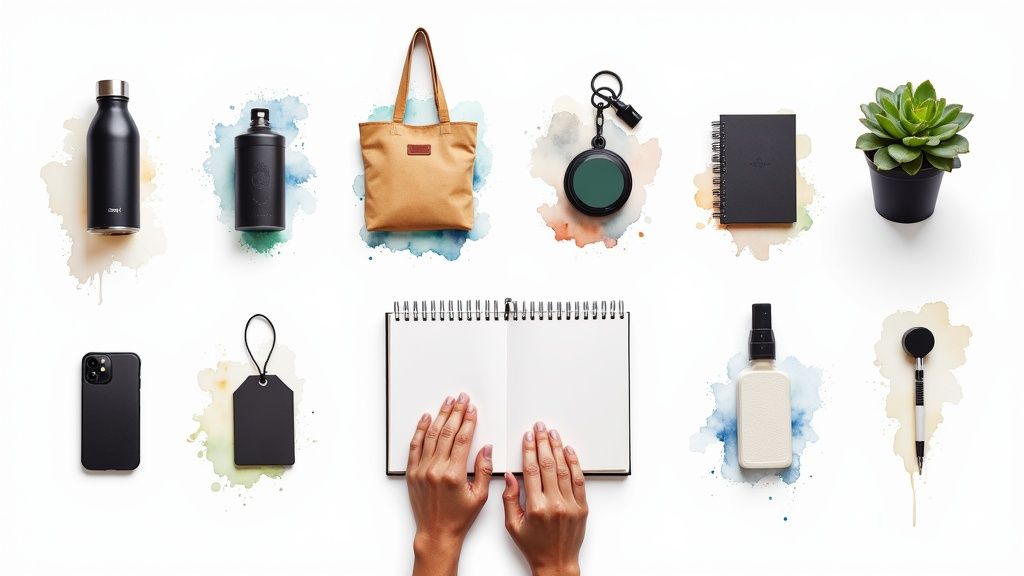
    The core idea is to provide value beyond a simple sales pitch, offering items that are both desirable and functional. Instead of a generic pen, consider a tech company offering a beautifully packaged screen-cleaning cloth with a QR code to their latest software demo. This approach transforms a simple giveaway into a lasting impression, reinforcing brand quality and ensuring your contact information remains top-of-mind.

    Actionable Implementation and Tips

    To elevate your giveaways from forgotten trinkets to effective marketing tools, focus on perceived value, utility, and presentation. The goal is to create an item that attendees are genuinely happy to receive and use.

    • Choose Utility Over Novelty: Select items that solve a common problem for your target audience. Branded notebooks, high-quality stickers for laptops, or portable power banks are far more likely to be used and seen than a disposable novelty item. Ensure every item prominently displays your logo and website.
    • Invest in Premium Finishes: The quality of your giveaway reflects your brand's standards. Use premium finishes like embossing on business cards or metallic foil on product sample boxes to create a perception of high value. A well-packaged sample feels like a gift, not just a handout.
    • Create a Memorable Unboxing Experience: For high-value prospects, design a complete unboxing experience. Use custom-printed boxes, branded tissue paper, and a personalized insert to make the interaction feel exclusive. This attention to detail is often shared on social media, generating organic buzz.
    • Plan Your Quantities and Timeline: Order your promotional items 2-3 months in advance to allow for design, proofing, and production without rush fees. Plan for 20-30% more items than your expected number of qualified leads to account for high-volume foot traffic and unexpected opportunities.

    By investing in high-quality leave-behinds, you give attendees a physical reminder of your brand's value proposition. You can explore a vast selection of customizable items to find the perfect fit for your audience in a professionally curated collection of promotional products.

    4. Interactive Digital Integration with Printed QR Code Strategy

    Connecting your physical booth with your digital ecosystem is a crucial trade show marketing strategy for modern exhibitors. This approach uses printed materials embedded with QR codes or NFC tags to serve as direct gateways to online experiences, effectively bridging the gap between in-person interaction and digital engagement. It transforms static collateral like banners, brochures, and business cards into interactive lead-capture and content-delivery tools.

    The core idea is to make engagement seamless for attendees. A visitor can scan a QR code on a product display to watch a demo video, access a detailed case study, or sign up for a free trial directly from their smartphone. This not only enriches their booth experience but also provides you with a measurable way to track interest and capture qualified leads without manual data entry.

    Illustration of scanning a QR code with a smartphone to access online demo content and analytics.

    Actionable Implementation and Tips

    To successfully integrate this digital bridge, your strategy must be intentional, user-friendly, and trackable. The goal is to lower the barrier to engagement and create a frictionless path from physical curiosity to digital conversion.

    • Segment and Track Your Codes: Create unique QR codes for different printed materials (e.g., one for your main backdrop, another for your takeaway flyers, and a third for business cards). This allows you to track which assets are driving the most scans, giving you clear insight into what captures attendee attention.
    • Optimize the Destination: Ensure every QR code links to a mobile-optimized landing page, not your desktop website homepage. The page should load quickly and have a single, clear call-to-action, such as "Book a Demo" or "Download the Whitepaper," to maximize conversions.
    • Provide Clear Incentives and Instructions: Don't just place a QR code and hope for the best. Add a clear, compelling instruction next to it, like "Scan to Enter Our Giveaway!" or "Scan for an Exclusive 20% Discount." This provides the necessary motivation for attendees to pull out their phones.
    • Ensure High-Quality Printing: A blurry or poorly printed QR code is useless. Use high-resolution printing to ensure your codes are sharp and scannable from a distance. You can enhance the visual appeal and durability of these interactive touchpoints with professionally produced finishing options for printed materials.

    5. Targeted Attendee List Marketing with Segmented Messaging

    One of the most powerful pre-show trade show marketing strategies involves moving beyond generic outreach and engaging in precision targeting. This approach uses the official attendee list, often available for purchase from event organizers, to segment your audience based on specific criteria. By dividing prospects into meaningful groups, you can deliver personalized printed and digital messaging that speaks directly to their unique challenges and goals.

    The core idea is to treat different attendee personas as distinct audiences. For instance, a B2B software company might segment its list by company size, sending one message about scalability to enterprise-level VPs and another about ease of implementation to small business owners. This data-driven strategy ensures your marketing efforts are highly relevant, dramatically increasing the likelihood of securing valuable booth appointments and converting leads.

    Actionable Implementation and Tips

    To execute a successful segmented outreach campaign, you need to combine data analysis with creative, personalized communication. This transforms your pre-show marketing from a broad announcement into a series of strategic, one-to-one conversations.

    • Acquire and Segment Early: Purchase the attendee list 8-10 weeks before the event. This gives you enough time to analyze the data and segment it into 3-5 key personas, such as "Decision-Makers," "Technical Implementers," and "Industry Influencers."
    • Craft Persona-Specific Messaging: Develop distinct value propositions and offers for each segment. A plant manager might receive a postcard highlighting efficiency gains, while a procurement officer gets a message focused on ROI and cost savings. This targeted messaging makes your brand feel more relevant.
    • Leverage Variable Data Printing: Use technology to personalize your direct mail at scale. With variable data printing, you can customize elements like names, company names, and even specific images on each postcard or mailer, creating a truly bespoke piece of communication for every segment.
    • Integrate and Track: Coordinate your direct mail campaign with targeted emails for a multi-touchpoint approach. Use unique promo codes or QR codes for each segment to track which groups respond most effectively, allowing you to analyze ROI by audience type and refine future trade show marketing strategies.

    6. Booth Staff Training Materials and Sales Collateral

    Your booth staff are the most critical asset on the trade show floor, but even the best team needs the right tools to succeed. Empowering them with comprehensive printed training materials and sales collateral is a powerful internal-facing trade show marketing strategy. This approach ensures every team member can communicate value, handle objections, and qualify leads with consistent, professional messaging.

    The core idea is to equip your staff with well-designed, easy-to-reference documents that reinforce their training and support live conversations. These are not customer-facing handouts but rather internal cheat sheets, guides, and comparison charts. This preparation transforms your booth from a collection of individual reps into a unified, knowledgeable sales force ready to engage prospects effectively.

    Actionable Implementation and Tips

    To arm your team for success, create materials that are functional, durable, and designed for quick access in a busy environment. Well-prepared staff are confident staff, and that confidence translates directly to more productive conversations.

    • Design for Quick Reference: Create pocket-sized, laminated cards or small booklets instead of bulky binders. Use clear headings, icons, and 3-5 bullet points per topic to make information easily scannable during a conversation.
    • Segment Your Content: If you have multiple products or target audiences, color-code your materials by segment. For instance, a software company could use blue cards for enterprise features and green cards for small business benefits, allowing staff to quickly grab the right talking points.
    • Focus on Differentiation: One of the most common questions is "How are you different from [Competitor]?" Prepare your team with laminated comparison charts that clearly outline your unique advantages, pricing, and key features side-by-side.
    • Include Practical Details: Don't forget to include key operational information. A simple card with the WiFi password, lead scanner instructions, key contacts, and the day's schedule can prevent confusion and keep the team running smoothly.

    By investing in clear and concise support documents, you ensure your brand message is delivered accurately and persuasively every time. You can create a full suite of durable, professionally printed materials by exploring custom training material options.

    7. Post-Show Follow-Up Mailers and Nurture Sequences

    The conversations you have at the trade show are just the beginning; the real work starts once the event ends. A systematic follow-up strategy is what separates a successful event from a wasted investment. This approach uses a blend of timely digital and high-impact print communications to nurture leads, maintain momentum, and guide promising prospects through your sales funnel.

    The core idea is to create a multi-touchpoint campaign that extends the positive interaction from the booth into the prospect's daily workflow. Instead of a single generic email, a powerful nurture sequence combines personalized digital messages with tangible, memorable printed pieces. This integrated approach ensures your brand stays top-of-mind long after the show floor has been cleared, demonstrating a level of professionalism and dedication that builds trust.

    Actionable Implementation and Tips

    To convert booth visitors into loyal customers, you must deploy a consistent and well-timed follow-up plan. This thoughtful combination of print and digital marketing transforms a fleeting encounter into a lasting business relationship.

    • Act with Urgency and Personalization: Send an initial follow-up within 24-48 hours. A personalized thank you email paired with a high-quality, handwritten note or a small branded postcard makes a powerful first impression. Mention a specific point from your conversation to show you were actively listening.
    • Leverage Variable Data Printing: Create highly customized follow-up materials at scale. Use a service like 4OVER4’s variable data printing to automatically insert a prospect's name, company, or even a specific ROI projection relevant to their industry onto your printed mailers, making each piece feel uniquely tailored.
    • Coordinate a Multi-Channel Cadence: Plan your follow-up touches to work in harmony. For example, send an email with a case study, then have a printed version of that case study or a relevant testimonial postcard arrive a few days later. Space these interactions 2-3 weeks apart to maintain engagement without overwhelming your prospect.
    • Provide Continuous Value: Each touchpoint should offer something new. Your first mailer might be a simple thank you, the second could be a detailed brochure about the product they showed interest in, and a third could include a printed postcard with an exclusive limited-time offer or a QR code to schedule a personalized demo. This is one of the most critical trade show marketing strategies for maximizing ROI.

    8. Photo Opportunity and Social Media Activation Backdrops

    Transform your booth from a static display into a dynamic content-creation hub. A social media activation backdrop is a purpose-built, visually engaging space designed to encourage attendees to take photos and share them online. This trade show marketing strategy extends your brand’s reach far beyond the event floor by turning visitors into digital brand ambassadors who generate authentic, user-generated content.

    The goal is to create an "Instagram-worthy" moment that is too good not to capture and share. This involves more than just a logo; it means designing a stunning visual experience with bold graphics, interactive elements, or unique props. When attendees post their photos, your brand, booth, and event-specific hashtag are broadcast to their entire network, creating organic reach and social proof that you can’t buy.

    Sketch of a person holding a phone in front of a wall with colorful geometric shapes and brand hashtags.

    Actionable Implementation and Tips

    To create a photo opportunity that drives social engagement, focus on design, promotion, and tracking. Your backdrop should be an irresistible focal point that naturally draws people in and makes sharing easy and fun.

    • Design for the Share: Use bold colors, interesting textures, and 3D elements that stand out in photos. Ensure your backdrop is large enough for group shots and includes a clear, unique, and easy-to-read hashtag like #[YourBrand][EventYear].
    • Prioritize Print Quality and Lighting: A photo's quality is everything on social media. Use premium large-format printing with vibrant, anti-glare finishes to ensure your backdrop looks professional on camera. Good lighting is equally crucial; use ring lights or small spotlights to eliminate shadows and create flattering photos.
    • Incentivize Participation: Encourage sharing with a clear call-to-action. Run a contest or giveaway where attendees who post a photo with your hashtag are entered to win a prize. This simple incentive can dramatically increase participation rates.
    • Monitor and Engage: Actively monitor your event hashtag on social platforms during the trade show. Like, comment on, and reshare user-generated content in real-time to amplify its reach and show appreciation for attendees who are promoting your brand.

    9. Educational Content and Thought Leadership Printed Packages

    Move beyond simple sales brochures by positioning your brand as an industry authority. This trade show marketing strategy involves creating and distributing high-value printed educational content, such as whitepapers, industry reports, or detailed buyer's guides. Instead of just selling, you are providing genuine insights that help attendees solve their biggest challenges, building immediate credibility and trust.

    The core idea is to shift the booth interaction from a pitch to a consultation. By offering a professionally printed, data-rich report or a comprehensive "how-to" guide, you provide a tangible asset that attendees will want to keep and reference. This positions your company not just as a vendor, but as an indispensable resource, making your booth a destination for serious, well-qualified prospects seeking expertise.

    Actionable Implementation and Tips

    To execute this strategy effectively, your printed materials must look and feel as credible as the information they contain. This means investing in professional design, writing, and high-quality production to create a premium resource.

    • Plan for Substance: Begin content development 4-6 months before the event to allow for thorough research, writing, and professional design. Focus on a key topic that directly addresses a major pain point or question for your target audience.
    • Invest in a Premium Feel: The physical quality of your report reflects your brand's credibility. Use professional finishing options to create a polished final product. Consider perfect binding for thick reports or saddle-stitching for shorter guides, paired with a heavy, laminated cover to make it feel substantial and authoritative.
    • Gate for Lead Generation: Use the printed content as a powerful lead magnet. Require a business card scan or email signup to receive a copy, ensuring you capture contact information from genuinely interested prospects. This also increases the perceived value and exclusivity of the material.
    • Bridge Physical and Digital: Include a QR code inside the printed report that links to a digital version or related online resources. This allows attendees to easily share the content with their teams and provides you with another touchpoint for tracking engagement.
    • Coach Your Booth Staff: Train your team to use the content as a conversation starter. Instead of asking, "Can I help you?" they can ask, "Are you interested in our latest report on [Industry Trend]?" This frames the interaction around providing value from the start.

    10. Printed Event Badges, Lanyards, and Badge Holders with Sponsorship Visibility

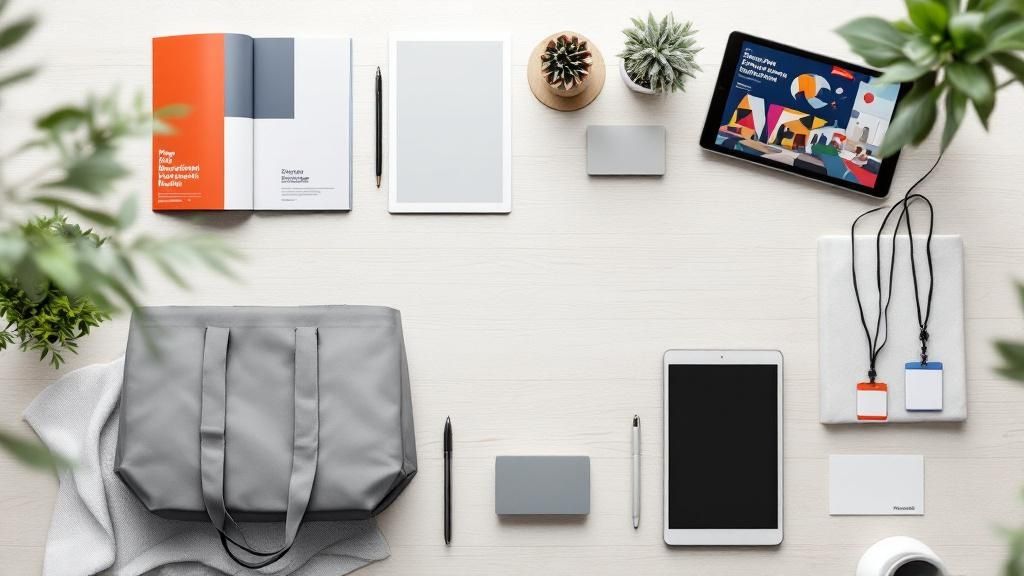
    One of the most effective yet often overlooked trade show marketing strategies involves turning essential attendee identification into a mobile branding tool. By designing custom event badges, lanyards, and badge holders, you create a powerful medium for brand visibility. This strategy capitalizes on the fact that every attendee wears their credentials, transforming them into walking advertisements for your company or your event's sponsors.

    The core idea is to move beyond generic, supplied identification and produce high-quality, branded materials that serve dual purposes. For event organizers, this creates a valuable sponsorship asset. For exhibitors sponsoring these items, it guarantees constant brand exposure that follows attendees everywhere, from the show floor to networking events. This turns a functional necessity into a prominent marketing placement.

    Actionable Implementation and Tips

    To successfully leverage this strategy, focus on quality, early planning, and cohesive design. A well-executed lanyard or badge becomes a desirable keepsake rather than a disposable item, extending your brand's reach even after the event concludes.

    • Secure Sponsorship Early: If you are an exhibitor, negotiate badge or lanyard sponsorship opportunities with event organizers at least six months in advance. This gives you ample time to influence the design and ensure production deadlines are met.
    • Prioritize Professional Design: Your brand is on display, so the quality must be impeccable. Use premium materials for lanyards and consider special finishes like spot UV or foil stamping on VIP badges to create a sense of exclusivity and importance.
    • Integrate a Digital Call-to-Action: Don't just display a logo. Include a QR code on the lanyard or badge holder that directs attendees to a landing page, a special offer, or your booth location on the event map.
    • Leverage Variable Data Printing: Personalization makes a significant impact. Use variable data printing to add each attendee's name, company, and even a custom welcome message directly onto their badge, creating a more professional and engaging experience. For organizers, offering tiered designs for different attendee levels (e.g., VIP, Speaker, Exhibitor) adds organizational clarity and perceived value.

    By investing in custom-printed credentials, you ensure your brand is not just seen at your booth but is a constant, visible presence throughout the entire event. You can create a fully customized look for your event with professional badge holder printing.

    10-Point Trade Show Marketing Comparison

    Item 🔄 Implementation Complexity ⚡ Resource & Timing Requirements ⭐ / 📊 Expected Effectiveness & Impact Ideal Use Cases 💡 Key Advantage / Quick Tip
    Customized Booth Design with Branded Printed Materials High — complex design, production, logistics High cost & lead time (6–8+ weeks), storage/transport needs ⭐ Strong brand recall; 📊 High foot-traffic and photo-worthiness Major trade shows, brand launches, visual differentiation Use modular components; test mock-ups; invest in premium finishes
    Pre-Show Direct Mail and Collateral Campaigns Medium — list coordination and mailing logistics Moderate cost; start ~6 weeks prior; needs accurate attendee lists ⭐ Higher engagement vs digital alone; 📊 Drives pre-qualified booth visits B2B events targeting high-value prospects Personalize with variable data; include tracked QR codes and follow-up email
    Leave-Behind Promotional Materials & Packaging/Unboxing Medium — design, inventory and packaging logistics Medium–high per-unit cost; order 2–3 months ahead; storage required ⭐ High perceived value; 📊 Extends brand exposure post-event Premium brands, creative agencies, VIP prospecting Choose useful items; use specialty finishes; consider sustainability
    Interactive Digital Integration with Printed QR Strategy Medium — printing + backend/analytics setup Low–medium print cost; requires landing pages & analytics; test scans ⭐ Enables instant lead capture & attribution; 📊 Measurable engagement Tech/SaaS booths, demo-driven activations Use unique codes per asset; link to mobile-optimized pages; test QR readability
    Targeted Attendee List Marketing with Segmented Messaging High — data management, segmentation, privacy compliance Medium–high (list purchase, CRM work); start 8–10 weeks prior ⭐ High relevance & conversion; 📊 Better budget efficiency and lead quality Enterprise B2B, high-deal-value events Segment into 3–5 personas; use variable data printing; track segment performance
    Booth Staff Training Materials and Sales Collateral Low–Medium — content creation and updates Low print cost; need subject-matter input; durable stock recommended ⭐ Improves messaging consistency; 📊 Faster qualification and professional interactions Complex products, large or rotating booth teams Design pocket-sized reference cards; laminate for durability; keep 3–5 key bullets
    Post-Show Follow-Up Mailers and Nurture Sequences Medium — CRM integration and sequencing Ongoing printing/mailing costs; time-sensitive (start within 48 hrs) ⭐ Differentiates follow-up; 📊 Improves conversion across long sales cycles Long B2B sales cycles, high-value leads Send personalized note within 48 hrs; use variable data and staggered touches
    Photo Opportunity & Social Media Activation Backdrops Low–Medium — visual design and staging Medium large-format print cost; invest in lighting/props ⭐ High social amplification via UGC; 📊 Boosts booth traffic and reach Consumer brands, influencer-heavy events, lifestyle sectors Make hashtags visible; use vibrant prints; incentivize tagging/sharing
    Educational Content & Thought Leadership Printed Packages High — research, writing, design, production High time and cost; plan 4–6+ months ahead; binding/finishing needs ⭐ Positions as expert; 📊 Attracts highly qualified, research-driven leads Consulting, financial, healthcare, enterprise tech Focus on 1–2 high-value topics; offer gated or selective distribution; include digital access
    Printed Event Badges, Lanyards & Badge Holders Medium — coordination with organizers, variable data Medium cost; negotiate 6+ months ahead; production scale needs ⭐ Continuous brand visibility; 📊 Sponsorship revenue and high exposure Event organizers, sponsors seeking omnipresent branding Secure sponsorship early; use premium materials; add QR for tracking

    From Strategy to Success: Your Next Move

    The journey through the ten comprehensive trade show marketing strategies we've explored reveals a powerful, unifying theme: success is not accidental. It is the direct result of a meticulously planned, multi-stage approach that transforms your booth from a simple space on the show floor into a magnetic brand experience. The most effective exhibitors understand that the event doesn't begin when the doors open or end when they close. Instead, it’s a continuous cycle of engagement, connection, and follow-through.

    By weaving together the tangible impact of high-quality printed materials with the trackable precision of digital tools, you create a powerful, cohesive experience that resonates with attendees and delivers measurable results. Each of these ten strategies offers a unique lever to pull, from generating pre-show buzz with personalized direct mail campaigns to extending conversations post-event with thoughtful follow-up mailers. The key is to build a comprehensive plan that covers every stage of the attendee journey.

    Key Takeaways for Maximum Impact

    Let's distill the core principles that will elevate your next event from an expense to a high-return investment:

    • Integration is Non-Negotiable: The most potent strategies are integrated. A QR code on a business card (Strategy 4) should lead to the educational content you’ve printed (Strategy 9). Your pre-show mailer (Strategy 2) should tease the interactive photo opportunity at your booth (Strategy 8). This creates a seamless, memorable brand narrative.
    • Tangibility Creates Memory: In a digitally saturated world, a high-quality, well-designed leave-behind (Strategy 3) or a thoughtfully packaged giveaway has a profound impact. Physical collateral occupies space in a prospect's office and mind long after the digital noise of the trade show has faded.
    • The Follow-Up is Half the Battle: The connections made on the show floor are fragile. A robust post-show follow-up plan (Strategy 7), combining both digital nurture sequences and personalized printed mailers, is essential for converting warm leads into loyal customers. Neglecting this step is one of the most common and costly mistakes exhibitors make.

    Your Actionable Blueprint for Success

    Mastering these concepts is no longer a "nice-to-have" it's a competitive necessity. Your competitors are vying for the same attention, and a well-executed strategy is your ultimate differentiator. By investing in a holistic approach, you’re not just generating leads; you're building brand authority, fostering genuine relationships, and creating a pipeline of qualified prospects that will fuel your growth for months to come.

    Your next move is to transition from learning to doing. Review the ten strategies and identify the three to five that most directly align with your specific goals and budget for your next event. Is your primary goal brand awareness? Focus on a stunning booth design and social media activation. Is it lead generation? Prioritize targeted attendee marketing and a flawless follow-up system.

    With a partner like 4OVER4, you have access to the printing expertise and vast product range needed to bring every one of these ideas to life, ensuring every banner, business card, and backdrop reflects the premium quality of your brand. Now is the time to start planning. Your next trade show can be more than just an appearance; it can be a pivotal, record-breaking moment for your business.


    Ready to transform your trade show marketing strategies from theory into reality? Bring your vision to life with premium, professionally crafted print materials from 4OVER4, your reliable partner for everything from custom banners and backdrops to business cards and promotional giveaways. Explore our extensive collection of trade show essentials and start building your success story today at 4OVER4.

    More from trade show marketing strategies

    Finding the Ideal Size of a Poster in Pixels
    story
    Finding the Ideal Size of a Poster in Pixels

    9

    If you're designing a standard 18x24 inch poster, you’ll want a file that’s 5400 x 7200 pixels to ge

    author avatarEmma Davis

    Jan 11, 2026

    Create Outlines in Illustrator A Guide to Flawless Print-Ready Files
    story
    Create Outlines in Illustrator A Guide to Flawless Print-Ready Files

    48

    When you hear a designer talk about "creating outlines in Illustrator," they're referring to one of two things: converting live

    author avatarEmma Davis

    Jan 10, 2026

    The Difference Between Matte and Glossy Print Finishes
    story
    The Difference Between Matte and Glossy Print Finishes

    27

    The real difference between matte and glossy boils down to a single element: light. How does the paper's surface interact

    author avatarEmma Davis

    Jan 9, 2026

    Screen Print Vs Vinyl A Guide to the Best Printing Method
    story
    Screen Print Vs Vinyl A Guide to the Best Printing Method

    23

    When you're trying to decide between screen printing and vinyl, the choice really boils down to two things: volume and design. If you'

    author avatarEmma Davis

    Jan 8, 2026

    How to Print Business Cards That Actually Get Noticed
    story
    How to Print Business Cards That Actually Get Noticed

    42

    Printing a business card might seem straightforward, but a handful of small details are what separate a truly memorable card from one that get

    author avatarEmma Davis

    Jan 7, 2026

    Finding the Best Font for Flyers to Elevate Your Design
    story
    Finding the Best Font for Flyers to Elevate Your Design

    47

    When you need to make an impact fast, your font choice is everything. For flyers, you can't go wrong with timeless, readable options like

    author avatarEmma Davis

    Jan 6, 2026

    A Practical Guide to Business Card Design Online
    story
    A Practical Guide to Business Card Design Online

    51

    In a world drowning in digital pings and overflowing inboxes, the humble business card is more powerful than ever. It's a real handshake,

    author avatarEmma Davis

    Jan 5, 2026

    Your Ultimate Guide to Typical Banner Sizes
    story
    Your Ultimate Guide to Typical Banner Sizes

    45

    It's a classic question we get all the time: "What's a typical banner size?" The honest answer? There really isn't one u

    author avatarEmma Davis

    Jan 4, 2026

    Home
    Products
    Favorites
    Cart
    Account