Table of Contents
- Home
- content hub
- Trade Show Marketing Materials That Actually Convert
 Share and earn
Trade Show Marketing Materials That Actually Convert

Oct 27, 2025477 views
Oct 27, 2025477 views
Trade show marketing materials are all the physical and digital tools you bring to the fight—from towering banners and slick brochures to handy QR codes and can’t-miss swag. These assets are your frontline soldiers, tasked with grabbing attention, sparking conversations, and making sure your brand sticks in people's minds long after they've left the building.
Why Your Booth Is Incomplete Without Strategic Materials
Picture your trade show booth as a stage. You can score the best spot on the floor and bring your most charismatic team, but without the right props and script—your marketing materials—the whole performance just falls flat. These items are the crucial bridge that turns a casual passerby into a genuine lead, transforming fleeting glances into real business discussions.
It's time to move past the old idea of just "handing out stuff." A better way to think about these materials is as a complete, strategic communication system. Every single piece, from a pen to a pop-up display, has a specific job to do.
Creating a Cohesive Brand Experience
Everything should work together. The massive backdrop that tells your brand’s story in three seconds, the brochure that keeps the conversation going days later, and the branded tote bag they carry it all in—it’s all part of the same narrative. A cohesive set of trade show marketing materials creates an immersive brand experience that slices through the noise of a packed exhibition hall. The mission is to build a story that’s consistent, memorable, and ultimately, persuasive.
Remember, these assets are a core part of a bigger modern trade show marketing strategy designed to win.
Your materials do the talking before your team even says hello. They have to be compelling enough to make an attendee stop, look, and listen in an environment overflowing with distractions.
Capturing High-Value Attention
The competition on the show floor is absolutely fierce, but the rewards are massive. The quality of attendees has never been higher, with a staggering 81% of participants holding direct buying authority. With more and more companies exhibiting, standing out is no longer a luxury—it's a necessity. Powerful materials are your best bet for capturing the attention of these key decision-makers.
A well-designed collection of physical and digital assets ensures you capitalize on every single interaction. Whether it’s a beautifully designed business card or an engaging digital display, each piece adds to your overall success. By investing in a well-planned set of trade show products, you give your team the tools they need to not just participate, but to truly own the event floor and walk away with a powerful return on your investment.
Your Essential Pre-Show and At-Show Collateral
When you think about trade show marketing, it’s easy to picture the big, flashy booth and stacks of brochures. But the real pros know that a winning strategy starts long before the event doors ever open.
Success isn't about what you bring on the day; it's about a smart, two-phase approach: the pre-show hype and the at-show execution. Each stage has its own goals, and you’ll need a different set of tools for each one.
Building Pre-Show Momentum
The weeks leading up to a trade show are your golden opportunity to build some serious buzz. Your goal is to turn your booth into a must-see destination, not just another stop on a long walk through the convention center. This is where digital materials are your best friend.
- Targeted Email Campaigns: Don't just send a generic blast. Personalize your invitations to existing contacts who might be there. Tease what’s new, offer a sneak peek, or give them a compelling reason to book a meeting with your team right then and there.
- Social Media Graphics: Create a sharp, consistent set of visuals for platforms like LinkedIn and X (formerly Twitter). Jump on the event-specific hashtags and share posts that clearly show your booth number and what makes you special.
- Dedicated Landing Pages: A simple, focused webpage for the event works wonders. It should be incredibly easy for visitors to see your show-specific offers and book a demo or meeting directly on your team's calendar.
Think of these pre-show efforts as a powerful magnet. You're pulling the most qualified, interested attendees straight to your booth before the chaos of the show floor even begins.
Mastering Your At-Show Arsenal
Once the event kicks off, your physical trade show materials get their time to shine. These aren’t just random handouts; they need to work together as a cohesive system to grab attention, educate visitors, and ultimately, convert them into leads.
This infographic breaks down how different materials should work together to create a full brand experience, tell a compelling story, and spark genuine conversations.
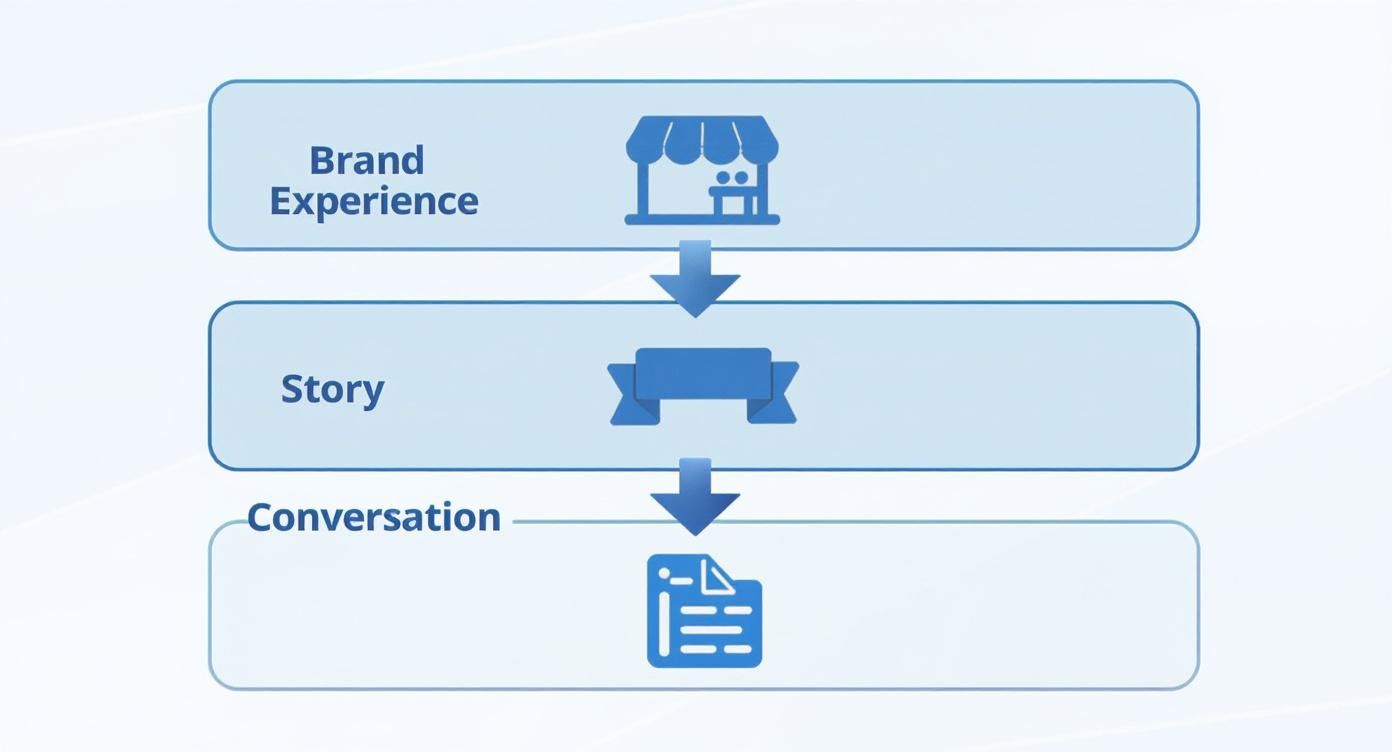
As you can see, there's a clear hierarchy. Your booth design creates the overall vibe, big banners tell your story from a distance, and smaller items like brochures and sell sheets facilitate the one-on-one conversations.
To make sure you have all your bases covered, here’s a handy checklist organizing the must-have physical materials by their job on the show floor.
Essential At-Show Marketing Materials Checklist
| Material Category | Specific Items | Primary Purpose |
|---|---|---|
| Booth Structure & Signage | Pop-Up Banners, Backdrops, Hanging Signs | Attract attention from a distance and communicate your core value proposition in seconds. |
| Brand Reinforcement | Branded Table Covers, Podium Wraps | Add a professional touch and reinforce your brand identity for visitors approaching the booth. |
| Informational Takeaways | Brochures, One-Page Sell Sheets, Catalogs | Provide detailed information that visitors can take with them to review later. |
| Lead Capture & Follow-Up | Business Cards, Lead Capture Forms/Apps | Exchange contact information and ensure you have a reliable way to continue the conversation post-show. |
This checklist helps ensure that every piece of collateral has a purpose, from the largest banner down to the smallest business card.
For that crucial post-show follow-up, you can get creative. Instead of just another email, consider sending custom-printed postcards with a personalized thank-you note to make a memorable impression.
Every single item at your booth, from the massive backdrop to the business card you hand out, must have a clear job. If it doesn't help attract, inform, or convert, it's just clutter.
Designing Materials That Command Attention
On a chaotic trade show floor, you have about three seconds to make an impression before a potential customer walks right by. Your trade show marketing materials don’t just need to look good; they have to act like a powerful beacon, pulling people in from the crowded aisle. This is where you move beyond just pretty pictures and start thinking about strategic design.
Think of your design as your silent salesperson. It needs to communicate your core message in the blink of an eye. This all starts with understanding how attendees visually scan a busy environment and then designing your assets to meet them where their eyes naturally go.
The single biggest mistake I see exhibitors make? Information overload. When you try to cram every feature and benefit onto a banner or flyer, you just create visual noise that people are trained to ignore. Your real goal is to create clarity and spark curiosity—not to deliver your entire sales pitch on paper.
Create a Clear Visual Hierarchy
Visual hierarchy is simply the art of arranging things to guide the viewer’s eye. At a trade show, this isn't some fancy design-school concept; it’s a survival tool. A strong hierarchy makes sure your most important information gets seen first, fast.
To build a hierarchy that actually works on the floor, focus on these three things:
- A Bold Headline: This is your hook. It should be the biggest piece of text, shouting a powerful benefit or asking a question that stops your ideal customer in their tracks.
- High-Impact Imagery: One big, high-quality photo or graphic is worth a dozen small ones. Your image should tell a story, show your product in action, or just create a feeling that connects with your brand.
- A Clear Call-to-Action (CTA): What do you want them to do next? Whether it’s “Scan for a Demo” or “Enter to Win,” your CTA needs to be distinct and easy to spot from a few feet away.
This simple, structured approach cuts through the clutter and gets your message across with maximum impact, even from a distance.
Leverage Color and Typography
Color is a powerful psychological tool. You already know this. Bright, bold colors like red or orange are fantastic for grabbing attention, while cooler tones like blue and green can project a sense of trust and professionalism. Your color palette should absolutely be consistent with your brand, but you also need to pick colors that will pop in the specific lighting and environment of the show.
Typography is the voice of your written message. On the trade show floor, that voice needs to be loud and clear—literally.
Your font choice is just as critical. For big displays like banners, stick with bold, sans-serif fonts that are easy to read from 10-15 feet away. When it comes to smaller, handheld materials like brochures, just make sure the body text is legible and has enough breathing room.
Well-designed banners are often the very first handshake you have with an attendee. For a deeper dive, check out these best practices for designing and printing vinyl banners. At the end of the day, every single design choice you make should serve one primary goal: making an instant connection that pulls people into your booth for a real conversation.
Choosing Giveaways People Actually Want to Keep
Let’s be honest: most trade show swag ends up in the hotel trash can. It’s not just a waste of money—it’s a huge missed opportunity to make a lasting impression and build some real brand loyalty. The secret is to pick promotional items that actually solve a problem or offer genuine value. That's how you stay on their desk, not in the bin.
Forget the cheap pens and flimsy keychains. Your goal is to find giveaways that connect with your brand and meet the real-world needs of your audience. A great piece of swag acts as a constant, useful reminder of your company, not just another piece of junk to clutter up a drawer.
Companies are pouring serious cash into events these days. In a recent year, the average company's annual spending on trade shows hit a staggering $1.4 million—a 70% jump from the year before. With events eating up 12.7% of total marketing budgets, it’s critical to make every dollar spent on giveaways an investment, not an expense.
A Tiered Approach to Swag
Instead of handing the same thing to everyone who walks by, try a more strategic, tiered approach. This lets you match the value of the swag to the level of engagement, stretching your budget and making a bigger impact where it counts.
Tier 1: The Universal Handout
This is for anyone who stops by your booth. Think low-cost but high-utility. Things like branded microfiber cloths for cleaning screens, simple phone stands, or a really good lip balm. These are items people will genuinely use and appreciate.Tier 2: The Qualified Lead Gift
Save something a little nicer for prospects who sit through a demo or have a meaningful conversation with your team. This could be a sturdy water bottle, a portable power bank, or a quality notebook and pen set. It’s a small gesture that acknowledges their time and interest.Tier 3: The Premium Item
Keep your best stuff for high-value prospects or those scheduled meetings with key decision-makers. We’re talking premium items like a Bluetooth speaker, a high-end travel mug, or maybe even a gift card. This shows you’re serious about building a partnership and truly value their time.
By matching the value of the giveaway to the value of the interaction, you create a more memorable and impactful experience for everyone who visits your booth.
This tiered system ensures your budget for customizable promotional products is used wisely, rewarding genuine interest and turning your swag into a powerful tool for building real business relationships.
Integrating Digital Tools for a Modern Booth Experience
In the fast-paced world of trade shows, the sharpest marketing materials are no longer just physical—they’re a smart mix of tangible presence and digital savvy. A modern booth is more than just a product display; it’s an interactive journey for attendees, woven together with tech that makes the experience stick and your follow-up seamless.
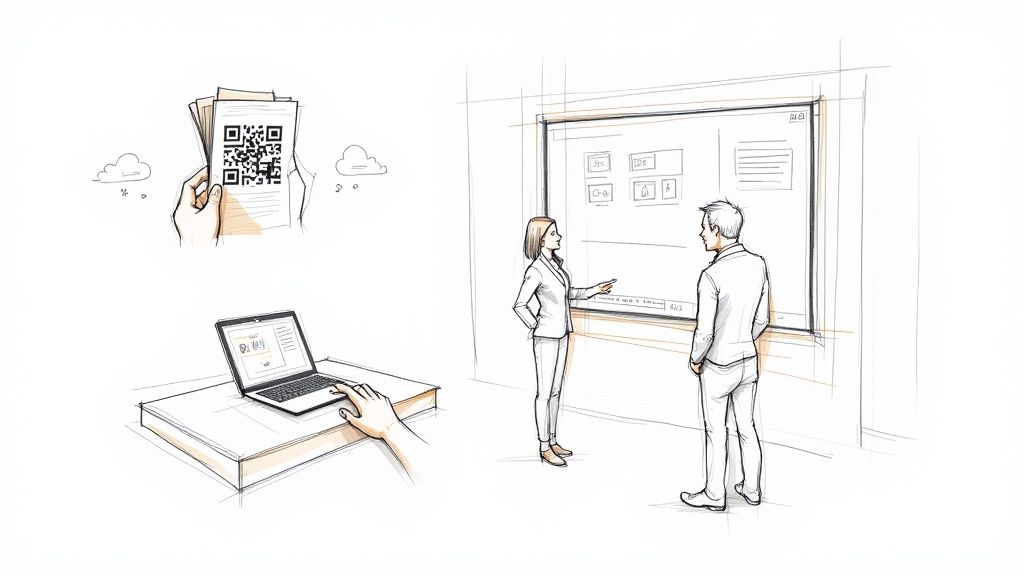
This isn't just a hunch; it reflects a massive shift in the event industry. Virtual and hybrid events are booming, with virtual-only events accounting for about 21% of all trade shows globally in a recent year. And with the global virtual events market hitting a $236.7 billion valuation, it’s crystal clear: attendees now expect digital interaction even when they're standing right in front of you. You can discover more about these evolving event trends and what they mean for your next show.
Bridging Print and Pixels
The easiest place to start is by making your printed materials pull double duty. Don't think of a QR code as a tired gimmick; see it as a direct bridge from a physical brochure to a rich digital experience. A single, well-placed code can instantly whisk a curious visitor to a destination you've designed just for them.
- On Business Cards: Link straight to your personal LinkedIn profile or an online meeting scheduler. No more fumbling for details.
- On Banners: Drive foot traffic to a dedicated landing page with a show-exclusive discount or resource.
- On Sell Sheets: Connect them to powerful video testimonials or in-depth case studies that make your claims undeniable.
This strategy gives people immediate access to more information without cluttering up your designs. It respects their time while snagging their interest.
Creating an Interactive In-Booth Journey
Static displays just don't hold attention anymore. Ditch the stacks of pamphlets and bring in a few tablets. This simple switch allows for dynamic, personalized presentations. Your team can walk prospects through interactive demos, capture their contact info directly into your CRM, and email them relevant follow-up materials on the spot.
Your booth should be more than a static display; it should be an experience. By integrating digital tools, you empower attendees to engage with your brand on their own terms, leading to more qualified and memorable interactions.
Large screens are another game-changer. Instead of a looping PowerPoint, use them to showcase eye-catching product animations, customer success stories, or even a live social media feed featuring your event hashtag. This creates a buzz and energy that pulls people in from the aisle, turning passive observers into active participants.
It’s this fusion of tangible trade show marketing materials and smart digital tools that creates a memorable, data-rich experience—one that pays dividends long after the convention center doors have closed.
Turning Event Leads into Customers After the Show
The banners are packed away and the trade show floor is empty, but don't be mistaken—the most important part of your event has just begun. All those conversations you started and leads you gathered are just potential until you act on them with a swift, strategic follow-up plan. This is where your post-show trade show marketing materials really start to shine.
Those first 48 hours after the event are absolutely critical. Your brand is still fresh in everyone's mind, so you can't afford to wait. The real key here is to move beyond a generic, one-size-fits-all "thanks for stopping by" email. You need to segment your leads based on how interested they were and what you actually talked about.
Tailoring Your Follow-Up Strategy
Let's be honest: not all leads are created equal. Taking a moment to segment them ensures your message actually connects and doesn't just get buried in a crowded inbox.
- Hot Leads: These are the people who scheduled demos or got deep into the weeds with you about their specific problems. You need to send them a highly personalized email within 24 hours. Reference your conversation directly and attach that case study or sell sheet they asked for. Make it feel like a seamless continuation of your chat.
- Warm Leads: This group showed real interest but wasn't quite ready to pull the trigger. Add them to a nurturing email sequence that offers value over time. Think a well-researched white paper or an invitation to your next webinar. Keep the relationship warm without being pushy.
- General Booth Visitors: For everyone who just dropped a business card in a fishbowl for a prize, a general thank-you email is fine. A link to a "show highlights" blog post works great here. It's low-pressure and keeps you on their radar.
The whole point of post-show follow-up is to continue the conversation you started, not just to hard-sell. When you provide immediate, relevant value, you build trust and keep your brand top-of-mind.
This focused approach is a core part of any successful lead generation process. By getting the right content to the right person at the right time, you guide them naturally from a simple trade show connection to a paying customer. To really squeeze every drop of ROI from your trade show budget, it's also worth looking into broader general conversion rate optimization strategies to polish up your entire sales funnel.
Finally, don't let the momentum die on social media. Share a highlight reel or a photo gallery from the event, and be sure to tag any partners or key visitors you connected with. This extends the life of the show and reinforces that positive experience for everyone who stopped by your booth. You can dive deeper into turning these interactions into real business in our guide to improving your lead generation.
Frequently Asked Questions
When it comes to trade show marketing materials, a few common questions always seem to pop up. Let's tackle some of the details that exhibitors often puzzle over when gearing up for an event.
How Far in Advance Should I Prepare My Trade Show Materials?
You'll want to get the ball rolling 3-4 months before the event, especially if it's a big one. This timeline gives you plenty of breathing room for hashing out your strategy, going through design mockups, and getting everything printed and shipped without paying a fortune in rush fees.
Your big-ticket items—like large banners, booth backdrops, and any custom promotional goodies—usually take the longest to produce. Get those sorted out first. Trust me, having a well-planned timeline is the best way to avoid those expensive, last-minute panics.
What Is the Biggest Mistake to Avoid with Booth Materials?
Hands down, the most common and damaging mistake is visual clutter. So many exhibitors fall into the trap of trying to cram every last detail about their company onto a banner or flyer. The result? A mess that just overwhelms attendees and makes their eyes glaze over.
The primary goal of your trade show marketing materials is not to tell your entire company story, but to start a conversation.
Think of it this way: your materials are the hook. All you need is one killer headline, a powerful image, and a crystal-clear call-to-action. Let your materials grab their attention, and then let your expert booth staff use them as a springboard to dive into the details.
How Can I Measure the ROI of My Marketing Materials?
Measuring the return on investment (ROI) from your materials all comes down to tracking. If you can't trace a lead back to a specific piece of collateral, you're just guessing.
The trick is to embed tracking right into your materials. Use unique QR codes on different assets that lead to event-specific landing pages. Or, you could offer a show-only discount code printed right on your flyers.
After the show, it's just a matter of connecting the dots. See how many of those specific leads turned into actual customers. Compare the revenue they brought in against what you spent on the materials, and you’ll have a clear picture of your true ROI.
Ready to create marketing materials that stop people in their tracks and get you real results? From stunning banners to giveaways people actually want to keep, 4OVER4 has everything you need to make your next trade show a massive success. Start designing your winning trade show materials today!
More from

15
When you think of a yard sign, the classic 18"x24" is probably what comes to mind. It’s the industry workhorse fo
 Emma Davis
Mar 14, 2026

28
When you’re ready to invest in an A-frame sign, the first question you'll ask is, "What size do I need?" It usually comes down
Emma Davis
Mar 13, 2026

255
The real secret to mastering your direct mail budget isn't complicated. It comes down to one simple fact: a standard 4" x 6&q
Emma Davis
Mar 12, 2026

73
Tear-off flyers are a classic for a reason. They’re a tangible marketing tool, designed with perforated, removable tabs at the bottom. Each
Emma Davis
Mar 11, 2026

125
Printing stickers at home is a seriously fun and rewarding project. It boils down to four main parts: designing your image, picking the right
Emma Davis
Mar 10, 2026

114
Ever seen a logo that seems to float right on the glass of a jar or bottle? That’s the work of transparent label stickers.
Emma Davis
Mar 9, 2026

74
Picture this: your product’s beautiful label gets smudged and runny during shipping, or a gorgeous event banner fades to nothing after just
Emma Davis
Mar 8, 2026

66
In a sea of options, your product's packaging and labeling are its first, and often only, chance to make a real connectio
Emma Davis
Mar 7, 2026