


all

    Choosing the Right Table Tent Dimensions

    user icon

    Emma Davis

    Content Writer

    Nov 12, 2025156 views

    Nov 12, 2025156 views

    Choosing the Right Table Tent Dimensions

    Walk into almost any restaurant or browse a trade show, and you'll see them: little cardboard sentinels sitting on every table. The most common table tent dimensions you'll find are 4"x6" and 5"x7" per folded panel. They've become the industry standard for a simple reason—they hit the sweet spot between being noticeable and not hogging precious table space.

    Think of them as tiny, effective billboards right where your customers are looking.

    Decoding Standard Table Tent Sizes

    Picking the right size for your table tent is the first real decision you'll make, and it matters more than you might think. While you can always go custom, the classic 4"x6" and 5"x7" options dominate the scene because they’re perfectly scaled for most dining tables, checkout counters, and reception desks.

    In fact, the 5"x7" size is the undisputed champion, making up about 65% of all table tent orders. Its slightly larger canvas gives you more room to play with, perfect for displaying a detailed dessert menu or a visually rich promotion without overwhelming the setting. The more compact 4"x6" size is a close second, accounting for roughly 25% of orders. It’s the ideal choice when you need something for a simple promotion, like a QR code, or when tables are already crowded.

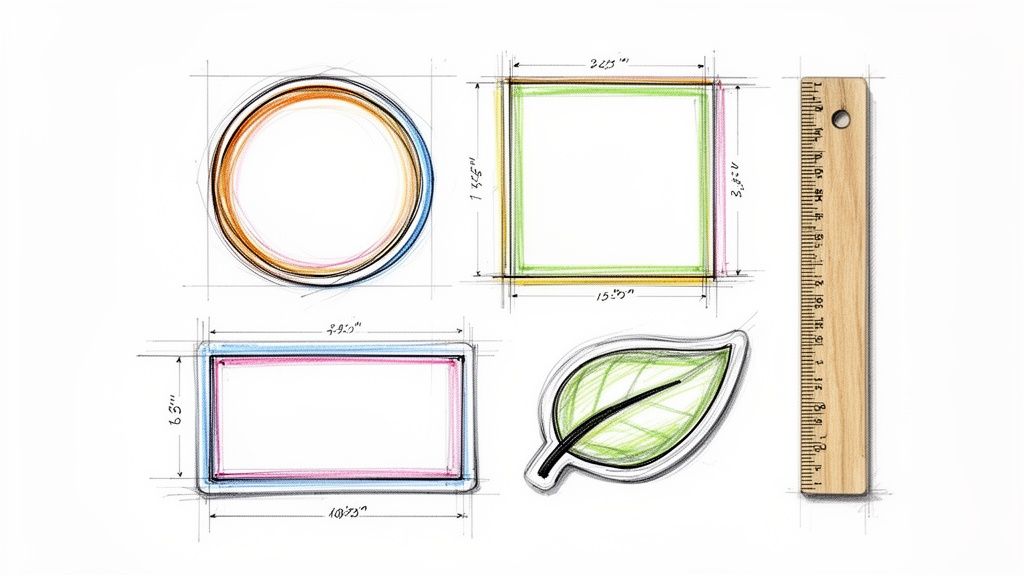
    This infographic gives you a quick visual breakdown of the two most popular sizes.

    Infographic about table tent dimensions

    As you can see, the choice often boils down to how much you need to say. For a completely cohesive look, think about pairing your table tents with custom-printed promotional table covers to tie your entire space together.

    To make things even easier, here’s a quick reference table to help you match the right dimensions to your specific needs.

    Standard Table Tent Dimensions and Their Best Uses

    Dimension (Per Panel) Total Flat Size Primary Use Case
    4" x 6" 4" x 16.5" Great for drink specials, QR codes, and simple announcements.
    5" x 7" 5" x 21" Ideal for dessert menus, event promotions, and more detailed info.

    Ultimately, choosing between these two depends on your message and your environment. A simple, punchy call-to-action fits perfectly on a 4"x6", while a more detailed story or menu feels right at home on a 5"x7".

    Exploring Different Table Tent Styles

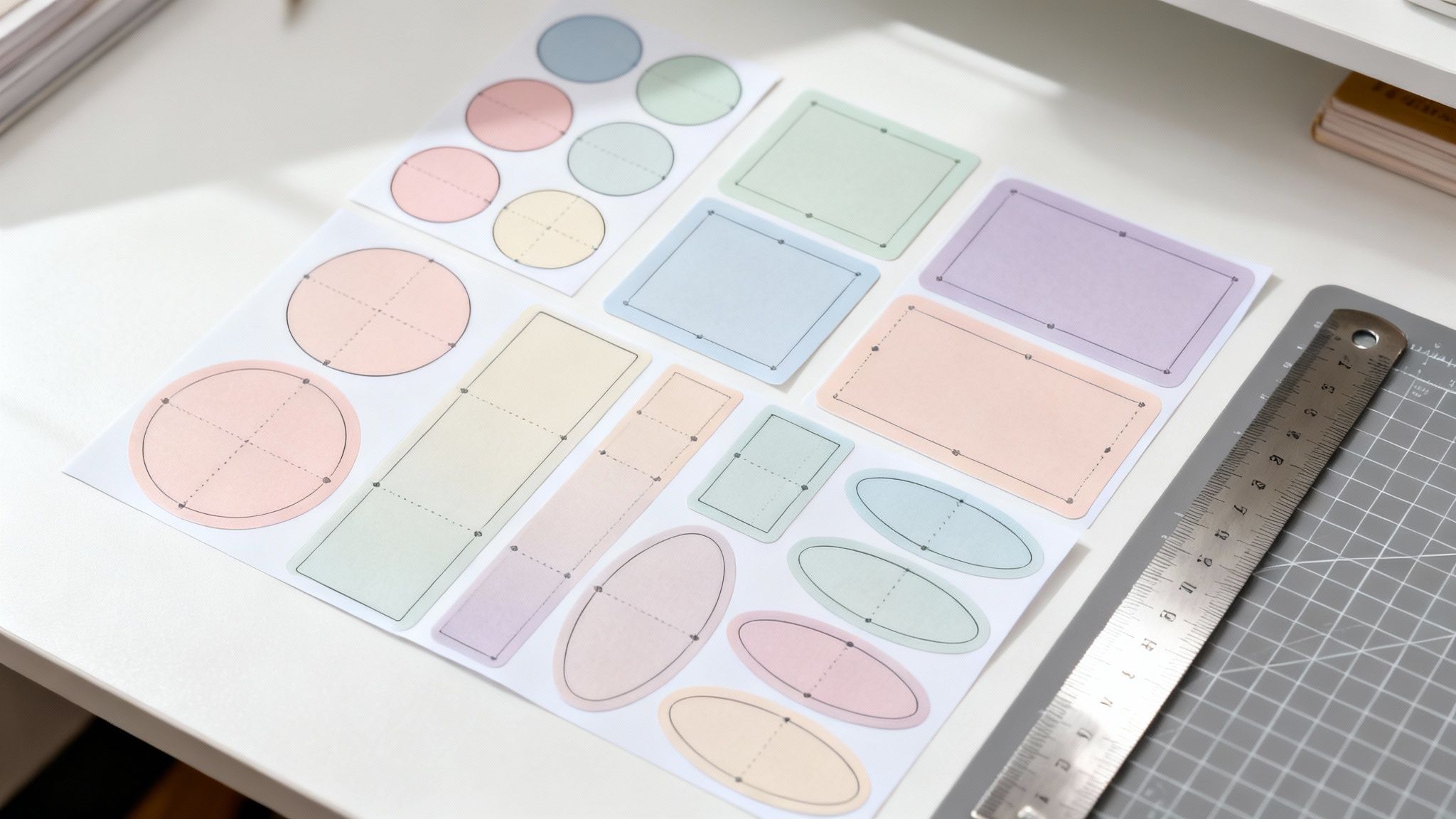
    A variety of table tent styles displayed on a wooden surface

    While getting the size right is a good start, the actual shape—or style—of your table tent is what truly affects how people engage with it. The structure you pick can either elevate your message or let it fall flat. Honestly, this decision is just as critical as the dimensions.

    A-Frames and Pyramids

    The most familiar style you'll see is the classic A-Frame. Picture a simple book standing on its own, and you've got it. This design gives you two clean panels, which is perfect for hitting customers with a main message on one side and a secondary one, like a happy hour special, on the other. It's direct, effective, and gets the job done.

    Then there’s the three-sided Pyramid. This one is a bit more dynamic, showing off information from multiple angles like a cut gem. It’s a fantastic choice for round tables or busy central displays where people are coming from all directions. You could use each of the three panels to feature different parts of a meal—appetizers, entrees, and desserts.

    Four-Sided Towers and Beyond

    For maximum real estate, the four-sided Tower acts like a mini information kiosk right on the table. This style is your best bet when you have more to say but want to avoid a cluttered design. You can dedicate each side to a different event, service, or product line, encouraging customers to pick it up and explore.

    By selecting a shape that aligns with your content and environment, you turn a simple paper advertisement into an interactive and effective marketing tool. The right style invites engagement and makes your message more memorable.

    As you're thinking about these styles, it’s a good idea to consult a comprehensive restaurant furniture guide to make sure your choice fits your overall vibe. And if a full 3D tent feels like too much, you can still make a strong statement with well-designed custom counter cards, which offer a simpler, single-panel display. Every style has its own strategic advantage, turning its shape into a functional part of your marketing.

    How to Select the Perfect Table Tent Dimensions

    A person's hands placing a well-designed table tent on a restaurant table

    Choosing the right size for your table tent isn’t just a random guess—it’s a strategic move. The perfect dimensions strike a delicate balance between your environment, your message, and your brand's unique personality.

    Think of it as managing prime real estate on a tabletop. Your promotion has to grab attention without getting in the way of plates, drinks, and conversation. The goal is to enhance the customer experience, not clutter it up.

    For example, a minimalist coffee shop with small bistro tables would be the perfect home for a compact 4x6 inch tent. It delivers a quick message without overwhelming the space. On the other hand, a steakhouse detailing its extensive wine list needs the larger canvas of a 5x7 inch tent to present that information clearly and elegantly.

    Assess Your Environment and Content

    Before you commit to a size, take a moment to consider these critical factors. Your physical space and the complexity of your message will point you toward the ideal table tent dimensions.

    • Table Size and Clutter: How much room do you actually have to work with? A sprawling table in a fine dining setting can easily accommodate a bigger tent, while a small, busy cafe counter demands a more modest footprint.
    • Message Complexity: Are you just displaying a simple QR code, or are you listing a detailed menu of seasonal cocktails? Simple, bold messages shine on smaller tents, but more complex content needs the readability that only a larger format can provide.
    • Viewing Distance: Where will your customers be when they see the tent? A tent on a cozy two-person table is viewed up close, but one placed on a large communal table needs to be legible from much farther away.

    The right size ensures your message is not just seen but also absorbed. It respects the customer's space while effectively communicating your offer, turning a simple piece of paper into a powerful sales tool.

    While standard sizes are always popular, we're seeing a growing trend toward unique, custom dimensions. In fact, custom sizes now make up nearly 30% of all table tent orders worldwide, showing just how much brands want to tailor their marketing materials. This is especially true for promotional campaigns, where custom sizes drive over 40% of sales in major urban markets.

    When you're thinking about how table tents fit into your bigger marketing strategy, exploring effective brand activation ideas can spark some real inspiration. Your table tent is often just one piece of a much larger puzzle, and it should work seamlessly with your other point-of-sale displays to create a consistent and powerful brand message.

    Getting Your Design Ready for Print

    Taking a design from your screen to a physical, printed product involves a few technical—but totally crucial—steps. Getting these print specs right is the key to making sure your table tents look polished and professional, avoiding common headaches like blurry images or text that gets awkwardly chopped off.

    Think of your design file like a piece of art you're putting into a picture frame. The safe zone is the very center of that art, where all your most important stuff—like your logo, main text, and QR codes—needs to live. Keeping everything here guarantees it won't get accidentally trimmed off during production.

    The trim line is the edge of the frame itself. This is where the final cut will happen to create the exact table tent size you ordered.

    Bleed, Trim, and Safe Zones Explained

    So what happens right at that edge? That's where the bleed comes in. The bleed is the part of your design that stretches a little bit past the trim line, usually by 0.125 inches on all sides. This extra sliver of color or imagery acts as a safety buffer, making sure no weird, unprinted white edges show up on your final product after it's cut.

    A design without a proper bleed is one of the most common reasons people have to reprint their orders. It's a tiny detail that makes a massive difference in getting that clean, finished look.

    Beyond these layout rules, two other settings are non-negotiable for top-notch printing. Always set your design file to 300 DPI (dots per inch) for sharp, crystal-clear graphics, and use the CMYK color mode, which is the universal standard for physical printing. Following these guidelines will save you from the frustration (and cost) of a reprint.

    And if you're looking to create a table tent that's more than just a simple rectangle, you can always explore custom die-cutting services to craft a truly unique shape that will definitely get noticed.

    Choosing the Right Material and Orientation

    The physical presence of your table tent—its feel and form—delivers a powerful message about your brand before anyone reads a single word. Getting the material and orientation right isn't just a detail; it’s a critical step that defines the entire impact of your design.

    Think of the paper stock as your brand's handshake. A standard 100 lb. cover is a reliable and budget-friendly choice, perfect for short-term promos. But if you're aiming for a more lasting impression that screams quality, upgrading to a thicker 16 pt. cardstock provides a sturdy, premium feel that stands up much better to being passed around the table.

    Vertical vs Horizontal Layouts

    How you orient your table tent directly influences how your message is seen and understood. Each layout has its own strategic advantages.

    • Vertical (Portrait): This is the classic, space-saving orientation. Its tall, narrow format is perfect for lists, like drink specials or event schedules, because it guides the eye downward in a natural reading motion.
    • Horizontal (Landscape): A more modern and stable choice, the horizontal layout gives you a wider canvas to play with. It’s ideal for showcasing impactful graphics, wide-format photos, or promotions that need a bit more room to breathe.

    The decision between vertical and horizontal isn't just about looks; it’s functional. A vertical tent conserves precious table space, while a horizontal one offers a stable, eye-catching base for compelling visuals.

    Durability and Industry Standards

    In busy restaurants, bars, or event spaces, durability is everything. Industry standards are shifting to emphasize both visibility and stability, especially in these high-traffic venues. Many displays now aim for a height of around 30 inches to ensure they’re seen without blocking sightlines, and stability is often beefed up with reinforced bases. You can learn more about how industry standards for tent cards are evolving for these demanding settings.

    To get more mileage out of your investment, consider adding a protective finish. A quick look at our guide on professional laminating options shows how a gloss or matte coating can guard against spills and smudges, extending the life of your table tents and keeping them looking sharp.

    When you nail the material and orientation, you ensure your message doesn't just get seen—it makes a statement about quality.

    To help you decide, let's break down the common materials and what they bring to the table.

    Comparing Table Tent Materials and Finishes

    Material Type Typical Weight (GSM/pt) Best For Pros & Cons
    Standard Cover Stock 270 GSM / 100 lb. Short-term promotions, budget-friendly campaigns, single-use menus. Pros: Cost-effective, lightweight.
    Cons: Less durable, can crease or bend easily.
    Heavy Cardstock 350 GSM / 16 pt. Long-term displays, premium branding, QR code menus, high-traffic areas. Pros: Very durable, premium feel, resists wear and tear.
    Cons: Higher cost, bulkier.
    Gloss Coated Varies Vibrant, photo-heavy designs, eye-catching promotions. Pros: Enhances color, shiny finish, some spill resistance.
    Cons: Can show fingerprints, glare can make it hard to read.
    Matte Coated Varies Elegant and sophisticated designs, text-heavy content, menus. Pros: No glare, smooth texture, professional look.
    Cons: Colors may appear slightly muted.
    Laminated Stock Varies Maximum durability, outdoor use, frequently handled items like drink menus. Pros: Waterproof, tear-proof, easy to clean.
    Cons: Highest cost, adds thickness and rigidity.

    Ultimately, choosing the right material is a balance between your budget, your brand's image, and how long you need your table tents to last. A well-chosen material ensures your message not only gets seen but also makes a quality statement.

    Common Questions About Table Tent Dimensions

    A person reviewing a printed table tent design at a desk with a computer and coffee.

    Even with a solid plan, a few questions always seem to pop up right when you’re about to finalize your table tent design. We get it. This section is all about giving you direct answers to those nagging last-minute queries so you can send your project to print with total confidence.

    What Is the Most Popular Table Tent Size for Restaurants?

    The hands-down winner here is the 5x7 inch size for each panel. It's the industry go-to for a reason.

    This size hits the sweet spot—it’s large enough for eye-catching graphics and text that’s easy to read, but it won’t clutter up the table. It’s perfect for everything from drink menus and dessert specials to event promotions, making it a super reliable standard.

    Should I Use a Vertical or Horizontal Table Tent?

    This decision should really come down to your content and brand vibe. Each orientation has its own strategic advantages.

    • Vertical (Portrait): This is the classic, space-saving choice. It’s ideal for lists, like happy hour specials or a featured wine list, because it naturally guides the eye down the page.
    • Horizontal (Landscape): This format gives you a wider canvas, which is perfect for big, impactful images. It feels a bit more modern and, thanks to its lower center of gravity, it’s also more stable—a nice bonus in a busy restaurant.

    If your design is heavy on text, stick with vertical. But if it’s driven by bold graphics or photos, a horizontal layout will probably serve you better.

    The right orientation isn’t just an aesthetic choice; it’s a functional one. It determines how easily customers can absorb your message and how well the tent fits into its physical environment.

    What Paper Thickness Is Best for Table Tents?

    For a table tent that can handle a few spills and constant handling, you absolutely need a sturdy paper stock. Flimsy paper that creases or falls over is a non-starter.

    The best practice is to use a thick cardstock of at least 100 lb. cover, which is about 12 pt. or 270 GSM. This gives it a professional feel and the rigidity it needs to stand up straight.

    If you’re placing these in high-traffic areas like bars, bustling cafes, or family restaurants, it’s a smart move to upgrade to an even heavier 14 pt. or 16 pt. stock. Adding a protective coating, like a matte or gloss laminate, is another great way to boost its longevity and protect it from wear and tear.


    Ready to create table tents that perfectly capture your brand’s message? At 4OVER4, we offer a wide range of sizes, materials, and finishes to bring your vision to life. Start designing your custom table tents today!

    More from table tent dimensions

    Finding the Ideal Size of a Poster in Pixels
    story
    Finding the Ideal Size of a Poster in Pixels

    9

    If you're designing a standard 18x24 inch poster, you’ll want a file that’s 5400 x 7200 pixels to ge

    author avatarEmma Davis

    Jan 11, 2026

    Create Outlines in Illustrator A Guide to Flawless Print-Ready Files
    story
    Create Outlines in Illustrator A Guide to Flawless Print-Ready Files

    48

    When you hear a designer talk about "creating outlines in Illustrator," they're referring to one of two things: converting live

    author avatarEmma Davis

    Jan 10, 2026

    The Difference Between Matte and Glossy Print Finishes
    story
    The Difference Between Matte and Glossy Print Finishes

    27

    The real difference between matte and glossy boils down to a single element: light. How does the paper's surface interact

    author avatarEmma Davis

    Jan 9, 2026

    Screen Print Vs Vinyl A Guide to the Best Printing Method
    story
    Screen Print Vs Vinyl A Guide to the Best Printing Method

    22

    When you're trying to decide between screen printing and vinyl, the choice really boils down to two things: volume and design. If you'

    author avatarEmma Davis

    Jan 8, 2026

    How to Print Business Cards That Actually Get Noticed
    story
    How to Print Business Cards That Actually Get Noticed

    42

    Printing a business card might seem straightforward, but a handful of small details are what separate a truly memorable card from one that get

    author avatarEmma Davis

    Jan 7, 2026

    Finding the Best Font for Flyers to Elevate Your Design
    story
    Finding the Best Font for Flyers to Elevate Your Design

    47

    When you need to make an impact fast, your font choice is everything. For flyers, you can't go wrong with timeless, readable options like

    author avatarEmma Davis

    Jan 6, 2026

    A Practical Guide to Business Card Design Online
    story
    A Practical Guide to Business Card Design Online

    51

    In a world drowning in digital pings and overflowing inboxes, the humble business card is more powerful than ever. It's a real handshake,

    author avatarEmma Davis

    Jan 5, 2026

    Your Ultimate Guide to Typical Banner Sizes
    story
    Your Ultimate Guide to Typical Banner Sizes

    45

    It's a classic question we get all the time: "What's a typical banner size?" The honest answer? There really isn't one u

    author avatarEmma Davis

    Jan 4, 2026

    Home
    Products
    Favorites
    Cart
    Account