Essential Marketing Materials for Trade Shows

    user icon

    Emma Davis

    Content Writer

    Sep 24, 2025326 views

    Sep 24, 2025326 views

    Essential Marketing Materials for Trade Shows

    When you think about marketing materials for trade shows, what comes to mind? We're talking about the whole toolkit—the eye-catching banners, the informative brochures, and those memorable giveaways that get people talking. These aren't just accessories; they're your strategic tools for attracting attendees, sparking conversations, and turning booth visitors into real, qualified leads.

    Think of them as your silent sales team. They're out there on the floor, working 24/7 to make a powerful first impression and forge a connection that lasts long after the event wraps up.

    Why Your Trade Show Marketing Materials Matter

    Image

    In a jam-packed expo hall, your brand has just a few seconds to grab someone's attention. Your marketing materials are the crucial bridge between a passing glance and a meaningful conversation. They do so much more than just fill an empty booth; they spell out your value, build instant credibility, and give attendees a tangible piece of your brand to take home.

    A stunning backdrop can be a visual magnet, pulling people in from across the room. A well-designed brochure acts as a personal guide, answering questions and backing up your sales pitch. Every single element needs to work together to create a brand experience that's both cohesive and impossible to ignore.

    The Power of Tangible Connections

    Even though digital marketing gets all the headlines, the face-to-face nature of trade shows gives you a unique edge. Physical materials create a sensory experience that a screen just can't match. When you hand a prospect a high-quality sell sheet or a genuinely useful branded item, you create a memorable interaction that cuts through the noise of their overflowing inbox.

    This tangible connection is more important now than ever. The data is clear: trade shows are making a huge comeback. In just nine months of 2023, US events drew in about 12.7 million attendees. Here's the kicker: roughly 81% of those attendees had buying authority, making them the exact decision-makers you're there to meet. If you want more stats like that, giantprinting.com has some great insights.

    Your materials are your brand's ambassadors. Before your team even says a word, they're communicating professionalism, attention to detail, and a deep understanding of what your audience actually needs.

    Setting the Stage for Success

    A well-thought-out strategy for your materials is the absolute foundation of a successful trade show. It ensures every touchpoint is consistent, professional, and directly supports your goals for being there.

    Whether you're trying to generate leads, boost brand awareness, or launch a new product, your materials are the primary vehicles for that message. From the massive banners down to the pocket-sized business cards, a strategic approach is what turns your booth from a simple space into a lead-generating machine.

    Ready to see what's possible? Check out our guide on essential marketing materials to explore a huge variety of high-quality printing options. A cohesive suite of professionally printed items is the key to making a lasting impact and hitting your event goals.

    Your Essential Physical Materials Checklist

    Turning an empty 10x10 space into a brand destination that people actually want to visit comes down to your physical marketing materials. Think of it as building your brand's temporary home; every piece, from the walls to the welcome mat, needs to have a purpose. These items are your tangible brand ambassadors, and they all have to work together to grab attention, share your story, and spark conversations.

    This checklist breaks down the must-have physical items, starting with the big, bold pieces that pull people in from across the aisle and moving down to the handheld details that seal the deal.

    Large Format Graphics: The Attention Grabbers

    First impressions are everything on a crowded expo floor, and your large-format graphics do the heavy lifting. These are the visual anchors that draw eyeballs from a distance and scream, "We're here, and you need to see what we're about!"

    Your booth’s backdrop is without a doubt the most important element here. It sets the entire mood and has to communicate your core message in the few seconds you have to catch someone's eye.

    Retractable or pop-up banners are the perfect sidekicks to your backdrop. Use them to spotlight specific products, flash a show-only promotion, or break down your key value propositions. They add depth to your booth design and can guide a visitor's journey through your space. To keep everything looking sharp and cohesive, it's worth exploring integrated trade show booth kit printing options that ensure all your large-scale graphics are visually in sync.

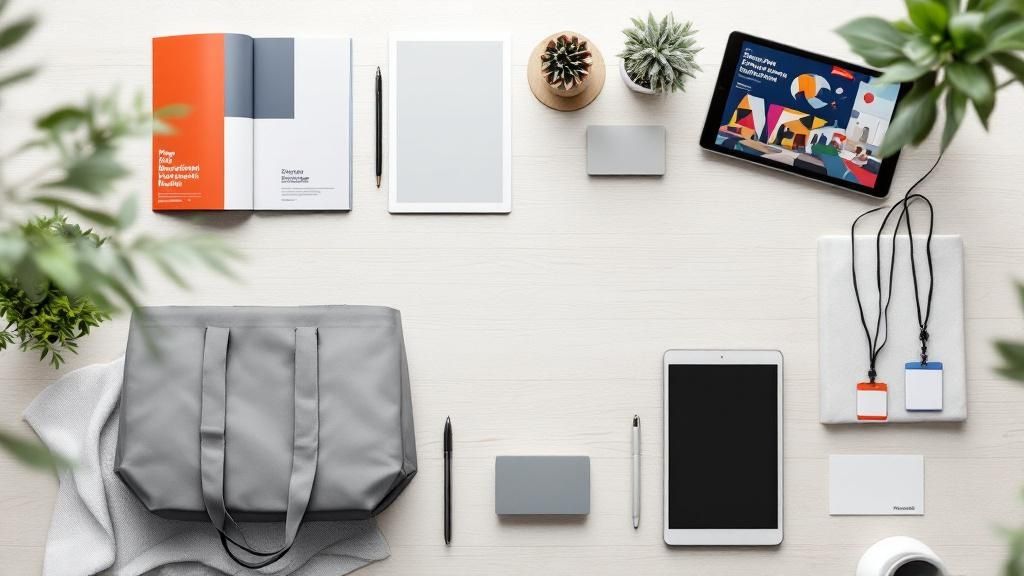
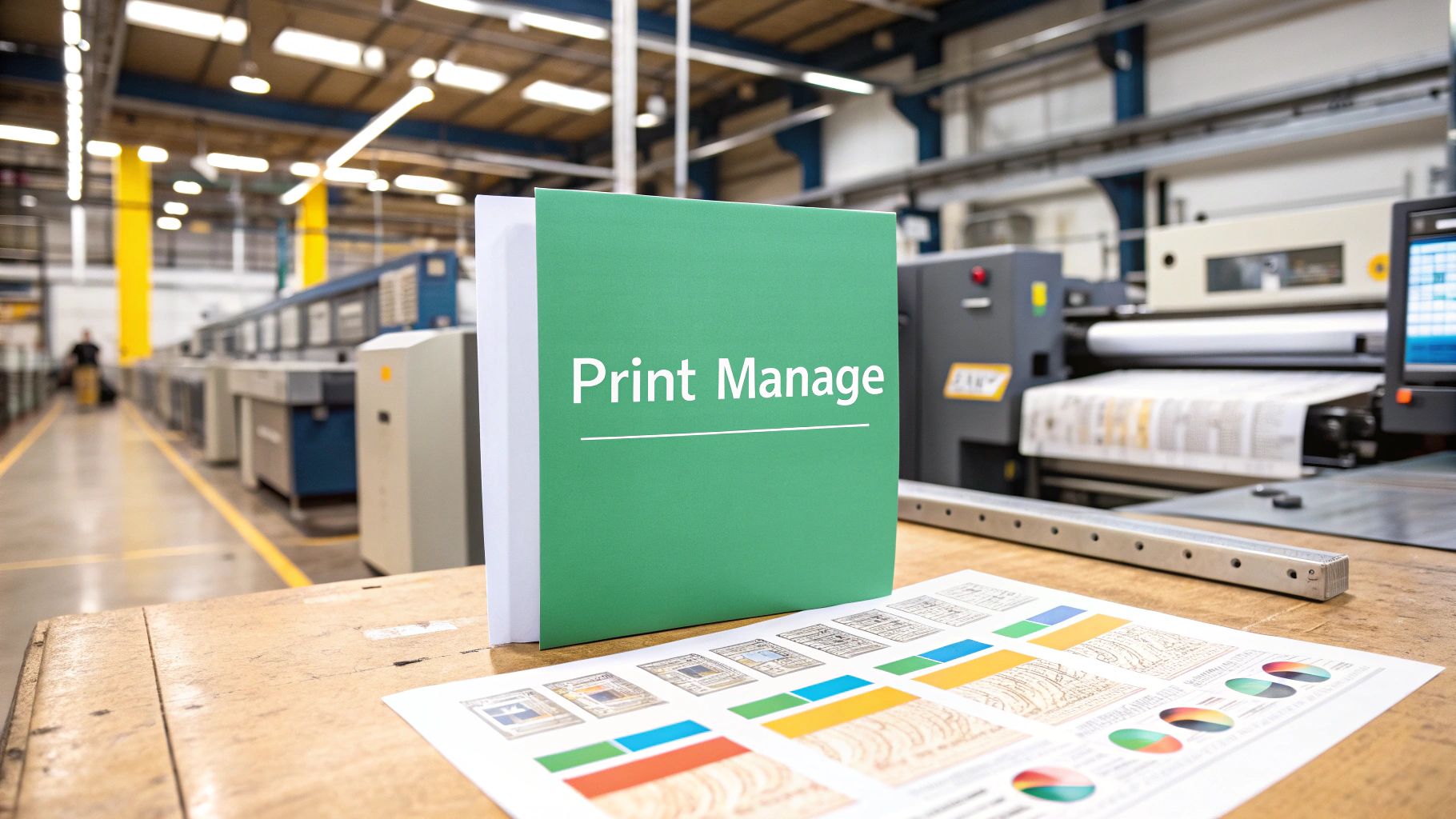
    This infographic shows how all the essential marketing materials stack up, from the foundational print collateral to the fun promotional swag that people love.

    Image

    It’s a great way to visualize how these different pieces come together to create a complete and effective trade show strategy.

    Before we dive deeper, here’s a quick overview of the key materials and their roles.

    Essential Physical Trade Show Materials At a Glance

    This table breaks down the most common physical assets, what they're for, and how to get the most out of them.

    Material Type Primary Purpose Pro Tip
    Backdrops & Banners Attract attendees from a distance and establish brand presence. Use a single, powerful image and a concise headline. Less is more.
    Brochures & Flyers Provide detailed information for interested prospects to take with them. Design it to be scannable, with clear headings and bullet points.
    Sell Sheets Offer a quick, spec-heavy overview of a specific product or service. Perfect for technical buyers. Include key features and benefits on one page.
    Business Cards Facilitate personal connections and easy follow-up after the show. Add a QR code linking to your LinkedIn or a product demo video.
    Promotional Giveaways Create brand recall and provide a tangible reminder of your company. Choose something useful your target audience will actually keep and use.

    Each of these items plays a distinct role in your booth's ecosystem, moving a prospect from curious onlooker to engaged lead.

    Handheld Materials: The Conversation Starters

    Once your big graphics have lured someone in, you need tangible pieces to continue the conversation and arm them with more detail. These are the takeaways that will be sitting on their desk or in their bag, reminding them of your brand long after the show buzz has faded.

    • Brochures and Flyers: These are classics for a reason. A well-designed brochure can walk someone through your brand story, product features, and contact info. Flyers are perfect for zeroing in on a specific show special, a demo schedule, or an event-exclusive deal.
    • Sell Sheets and Case Studies: Got a prospect who's getting serious? One-page sell sheets give them a quick, digestible rundown of a product's benefits and specs. Printed case studies are even better, offering powerful social proof by showcasing real-world success stories.
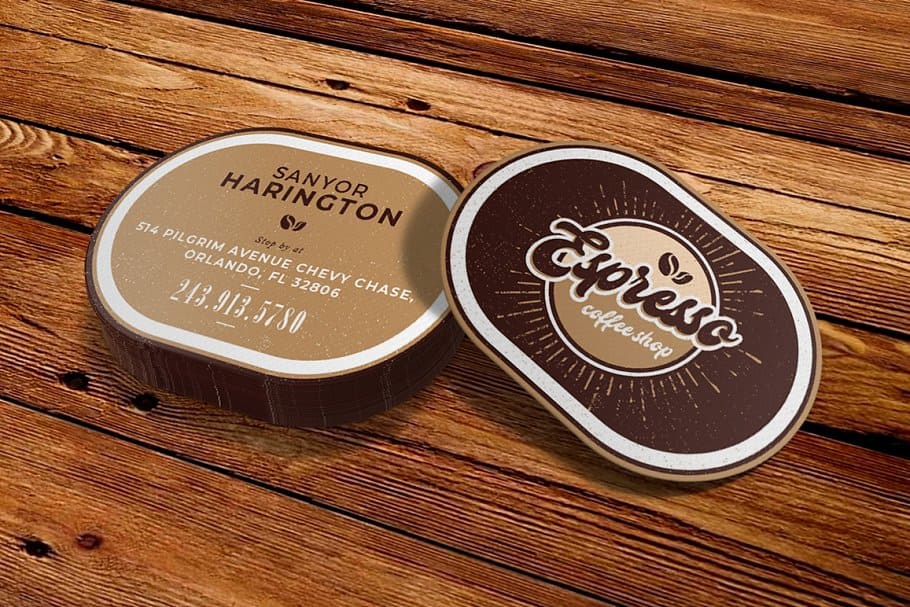
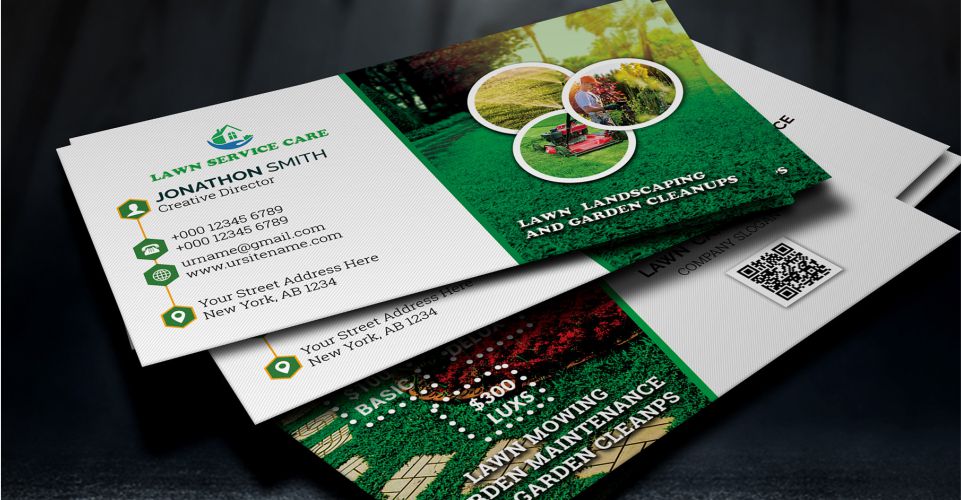
    • Business Cards: Don't sleep on the power of a great business card. Make it memorable with unique paper stock or a clean, bold design. A QR code linking to your LinkedIn profile or a product demo is a modern touch that makes connecting effortless.

    Remember, the goal of handheld materials is to support your sales team, not replace them. They should be clear, concise, and designed to make a follow-up conversation happen. When someone takes a brochure, they're giving you permission to connect later.

    Promotional Items and Giveaways: The Brand Reminders

    Strategic giveaways—or swag, as we all know it—are so much more than just free stuff. They are a potent tool for brand recall. The secret is choosing items that are genuinely useful and relevant to your audience. A flimsy pen is destined for the trash can, but a high-quality portable charger or a sturdy tote bag will get used over and over, keeping your logo in sight.

    For a more interactive approach, consider setting up a photo booth. Some creative and cost-effective DIY photo booth backdrop ideas can draw a huge crowd and generate a ton of social media buzz. Pairing a fun activity with a memorable giveaway creates a powerful brand experience.

    The best promotional items do three things: they attract people to your booth, they provide real value, and they serve as a lasting reminder of your company. Choose wisely, and your investment will pay dividends long after the convention center doors have closed.

    Designing Materials That Command Attention

    Image

    Having the right marketing materials for trade shows is one thing, but making them actually work for you is another challenge entirely. To stand out, your materials have to slice through the visual chaos of a packed expo hall. Your designs need to be strategic, punchy, and so clear they can stop a distracted attendee right in their tracks.

    Ever heard of the "five-second rule" for marketing? You have about that much time to make an impression before someone wanders past your booth, lost to you forever. Can they glance at your main banner and instantly get who you are, what you do, and why it matters to them? If you can't give a resounding "yes," your design isn't pulling its weight.

    Mastering the Art of Visual Hierarchy

    Visual hierarchy is the secret weapon of great trade show design. It’s all about arranging your design elements to guide a person's eye from the most important message down to the smaller details. In an environment as hectic as a trade show, this isn't just nice to have—it's essential.

    Your headline needs to be the hero of the story. Think big, bold, and focused on a benefit. It should be the first thing someone reads from twenty feet away. After that, supporting info like key features or your website should be smaller, arranged in a way that makes sense to follow.

    A great design isn't just about looking good; it's about communicating with intention. It tells the viewer's brain, "Start here, look at this next, and then do this." This clarity is what turns a passive glance into active engagement.

    This rule applies to everything you create, from a massive backdrop to a tiny flyer. For instance, when you're getting your large-format graphics ready, you have to nail the fundamentals of designing and printing vinyl banners to guarantee your message stays crisp and readable from any distance.

    The Psychology of Color and Typography

    Color does more than just decorate your booth; it creates a feeling. The right color palette can instantly signal your brand's personality and pull in your ideal customer. In fact, research shows that using the right colors can boost brand recognition by up to 80%.

    • Bold & Energetic: Reds and oranges are fantastic for creating a sense of urgency and excitement. They're perfect for a big product launch or a special show-only offer.
    • Trustworthy & Professional: Blues and greens communicate stability, trust, and growth, making them a go-to for finance or technology companies.
    • Modern & Sleek: A clean black-and-white look with a single pop of color can feel incredibly sophisticated and high-end.

    Typography is just as important. Your fonts have to be readable from across the aisle. Steer clear of overly fancy or thin fonts that will get washed out by the bright convention center lights. A clean, bold sans-serif is your best friend for headlines, paired with a simple, legible font for any smaller text.

    Writing Copy That Connects Instantly

    On the trade show floor, attention spans are practically non-existent. Your copy needs to be direct, short, and focused squarely on what the attendee needs. Forget long paragraphs and stuffy industry jargon. Your best tools are bullet points, short sentences, and strong verbs.

    Try this simple formula for writing copy that hits the mark:

    1. Lead with the Pain Point: Kick things off with the problem your audience is desperately trying to solve.
    2. Present Your Solution: Clearly and simply state how your product or service is the answer.
    3. Provide Proof: Back it up with a quick statistic, a customer logo, or a short testimonial.
    4. Include a Clear Call to Action (CTA): Tell them exactly what to do next. Something like "Scan to Book a Demo" or "Visit Us at Booth 502" is direct and gets results.

    Finally, make sure your brand is consistent across every single piece of material. Your colors, logo, fonts, and messaging must be identical on your banners, brochures, and giveaways. This consistency builds trust and makes your brand instantly recognizable, creating a polished, professional presence that truly commands attention.

    Weaving Digital Tools into Your Booth Experience

    In the controlled chaos of an expo hall, your physical marketing materials for trade shows are your front line. But the real magic happens when you weave the physical and digital worlds together. A modern booth doesn't just sit there handing out brochures; it creates an interactive, seamless experience that grabs attendees and makes lead capture a breeze.

    Think of digital tools as the nervous system connecting your physical booth to your bigger marketing world. A simple QR code on a banner is no longer just a link—it's a portal. It can instantly whisk a curious visitor to a dynamic product demo, an exclusive landing page with a show-only discount, or an appointment scheduler to book a follow-up call right then and there.

    Fusing print and tech like this turns static materials into active engagement points. It respects an attendee's time while giving you a powerful, frictionless way to gather data and keep the conversation going long after they’ve left the floor.

    Create an Interactive Hub with Displays

    Static posters are fine, but interactive screens are showstoppers. Bringing tablets or touch-screen monitors into your booth can crank up engagement like nothing else. Instead of just telling attendees about your product, you can actually show them.

    These displays are perfect for a few things:

    • Self-Guided Demos: Let visitors explore product features at their own pace. This frees up your reps from having to walk every single person through the basics.
    • Video Testimonials: Nothing sells like social proof. A looping video of happy customers sharing their success stories is incredibly powerful.
    • Interactive Quizzes or Polls: Engage visitors with a fun little activity that, behind the scenes, helps you qualify them as a lead based on their answers.

    Best of all, these tools are lead-capture machines. A simple form on a tablet is worlds more efficient and accurate than a clipboard with a paper sign-up sheet. That data can be piped directly into your CRM, making your follow-up process faster and way more organized.

    Look Beyond Your Booth's Four Corners

    Your digital game shouldn't be trapped in your 10x10 space. Use digital tools to broadcast what you're doing to a much wider audience, including people who couldn't make it to the show in person. This "hybrid" approach is no longer a nice-to-have; it's essential.

    The boom in virtual events taught us a lot about the power of digital reach. The virtual events market is on track to hit $340 billion by 2025, and 87% of large organizers are already using virtual event tech. Why? Attendees are drawn to unique content (67%) and love the flexibility of on-demand sessions. You can borrow that same mindset to amplify your physical presence. Dreamcast.in has more stats on the impact of virtual trade shows.

    Live-streaming a product demo on social media or posting real-time updates with an event-specific hashtag extends your booth's influence far beyond the convention center walls.

    This tactic not only engages your online followers but also creates a healthy dose of FOMO (fear of missing out), which can drive even more foot traffic to your booth from attendees who see the buzz online. The goal is to blend your physical and digital efforts into one cohesive campaign. For more ideas on creating compelling interactive content, check out the possibilities of high-quality digital printing, which can make your QR codes and graphics leap off the page. When you integrate these tools, you're no longer just manning a booth—you're running a dynamic, lead-generating experience that delivers real results.

    Budgeting and Planning for Your Materials

    Image

    A great trade show presence never just happens. It’s born from a smart, realistic financial game plan. Trying to pull off an event without a budget for your marketing materials for trade shows is like building a house without a blueprint—costs spiral, things get missed, and you end up with a mess.

    This is your financial and logistical playbook. We’ll walk through the real costs, how to spend your money where it counts, and how to manage everything from the first design sketch to the final delivery. Let’s get your materials to the show floor on time and on budget.

    Deconstructing Your Trade Show Budget

    First things first: you need to know where the money is actually going. The expenses go way beyond just getting some brochures printed. You have to account for the entire journey, from the initial creative spark in a designer’s mind to the moment that box lands in your booth.

    And the investment is nothing to sneeze at. The average company’s annual trade show spending hit $1.4 million in 2023, a massive 70% jump from the year before. While booth space (35%) and exhibit services (19%) take the biggest bites, don’t overlook the other costs. Shipping and drayage together eat up 10% of the budget, and those drayage fees alone can run $75 to $150 per hundred pounds.

    When planning your materials budget, be sure to factor in these four key areas:

    • Graphic Design: The creative horsepower behind your banners, backdrops, flyers, and digital assets.
    • Printing and Production: The actual cost to create your physical banners, brochures, sell sheets, and swag.
    • Shipping: The logistics of getting your finished materials from the printer to the venue.
    • Drayage (Material Handling): The non-negotiable fee the venue charges to move your stuff from the loading dock to your specific booth space.

    To give you a clearer picture, here's how a typical budget might break down based on industry averages.

    Sample Trade Show Budget Allocation

    Expense Category Average Percentage of Budget
    Booth Space Rental 35%
    Exhibit Design & Build 19%
    Shipping & Drayage 10%
    Show Services (Utilities, etc.) 9%
    Marketing & Promotion 9%
    Staff Travel & Expenses 8%
    Promotional Items/Giveaways 6%
    Other/Miscellaneous 4%

    This breakdown shows that even seemingly small items like shipping and giveaways are significant pieces of the financial puzzle. Planning for them upfront prevents nasty surprises later on.

    Allocating Funds for Maximum Impact

    Not all materials are created equal, and they don't all deliver the same bang for your buck. With a solid budget in hand, you can put your money where it will make the biggest splash. If you’re on a tight budget, nail your high-impact visual anchor first.

    Your large-format backdrop is your single most important investment. It sets the tone for your entire booth and is the primary tool for attracting attendees from a distance. Allocate a healthy portion of your budget here to ensure it's professional and compelling.

    Once that’s covered, you can tier the rest of your spending. Handheld materials like sell sheets and brochures are crucial for one-on-one sales conversations. Promotional giveaways can be scaled up or down depending on what’s left in the pot. This kind of thoughtful allocation ensures your core message is powerful, even if you have to be frugal with the freebies. To see what’s possible, check out the huge variety of trade show products available to fit any budget.

    Creating a Production Timeline

    Timing is everything. A detailed production timeline is your secret weapon against rush fees and that awful last-minute panic. The trick is to work backward from the "must-arrive-by" date from the show organizers, adding buffer room at every single step.

    Here’s a sample timeline you can adapt:

    1. 8-12 Weeks Out: Lock in your strategy and core messaging. Start the design process for your big-ticket items, especially the backdrop.
    2. 6-8 Weeks Out: Get final approval on designs and send them off to your printer. This is also the time to order custom promotional items, as they often have the longest lead times.
    3. 4-5 Weeks Out: Place the print orders for your smaller collateral—think brochures, flyers, and business cards.
    4. 2-3 Weeks Out: Your materials should be printed, packed, and ready to go. Arrange shipping to the advance warehouse. This almost always saves you money and headaches.
    5. 1 Week Out: Circle back and confirm with the warehouse that your shipment has arrived safely and is queued up for drayage to your booth.

    Following a structured timeline like this takes the guesswork out of the process, prevents expensive mistakes, and guarantees all your amazing marketing materials arrive ready to wow the crowd.

    Common Material Mistakes That Can Sink Your Booth

    Even the most brilliant strategy for your trade show marketing materials can be completely torpedoed by a few simple, avoidable slip-ups. It’s a gut punch to invest all that time and money just to see your efforts fall flat because of a preventable error. Knowing the common pitfalls ahead of time is the best way to make sure your materials work for you, not against you.

    One of the most common—and cringeworthy—mistakes is using low-resolution images. When that logo or product photo looks pixelated and blurry on a massive banner, it just screams amateur. It instantly kills your credibility before you even get a chance to say hello. Always, always use high-resolution vector files for logos and crisp, professional photos for anything you print.

    Another classic blunder is a cluttered, overwhelming design. So many exhibitors try to cram every single company fact and product feature onto one flyer or banner. The result is a wall of visual noise that attendees can't possibly process. Stick to the five-second rule: if someone can't figure out what you do at a quick glance, they're already walking away.

    Forgetting the Most Important Thing

    You can get almost everything else right, but if you miss this, it's all for nothing. The most critical mistake is forgetting a clear call to action (CTA). Your gorgeous brochure or slick sell sheet is just a piece of paper if it doesn't tell people what to do next. You have to guide them.

    Without that CTA, you’ve created a dead end. Here are a few dead-simple, effective CTAs that work:

    • "Scan to Book a Demo": A QR code is your best friend here—it’s immediate and easy.
    • "Visit Booth #412 for an Exclusive Gift": This is perfect for driving foot traffic right to your doorstep.
    • "Download Our Free Guide at YourWebsite.com/Show": An easy way to capture their info for follow-up long after the show ends.

    Your call to action needs to be specific, compelling, and incredibly easy to follow. It’s the bridge that turns a casual browser into a qualified lead.

    Overlooking Logistics and Brand Consistency

    Don't let logistical hiccups derail your show. Miscalculating shipping times and getting slammed with crazy rush fees is a nightmare. Even worse? Having your materials show up after the event starts. Always build a buffer into your production schedule and ship to the advance warehouse if you can. It's the best way to avoid chaos at the loading dock.

    A brand that looks different on its banner, brochure, and business cards creates confusion. This inconsistency signals a lack of attention to detail and weakens brand recognition, making your company less memorable.

    Finally, a lack of brand consistency across all your marketing materials for trade shows is the silent killer of credibility. When your colors, fonts, and logo change from one piece to the next, it gives off a disjointed, unprofessional vibe. Every single item, from your biggest backdrop to the smallest pen you give away, needs to feel like it came from the same cohesive, buttoned-up brand. Nail these details, and your investment will pay off with a polished, effective presence on the show floor.

    A Few Common Questions, Answered

    Jumping into the world of trade shows can feel like a whirlwind, especially when you start thinking about all the marketing materials you need to pull together. Getting these details right is the difference between making a splash and just getting lost in the crowd. Let's tackle some of the most common questions exhibitors have.

    How Far in Advance Should I Start Prepping My Materials?

    The honest answer? Sooner than you think. For most marketing materials for trade shows, you'll want to kick things off at least 3 to 4 months before the event. This gives you a comfortable cushion for everything—from nailing down the design and getting approvals to printing and shipping—without paying a fortune for rush fees.

    If you’re planning something more ambitious, like a custom-built booth or an interactive display, do yourself a favor and push that timeline back to 6 months. Trust me, you'll thank yourself later.

    I'm on a Tight Budget. What's the One Thing I Must Have?

    If you can only invest in one major piece, make it a high-impact visual anchor. Think of a professionally designed retractable banner or a sharp-looking fabric backdrop. This one item does the heavy lifting, establishing your brand’s presence and making your booth look legitimate from clear across the convention hall.

    This piece is the visual heart of your booth. You can easily support it with more affordable items like clean, simple flyers or business cards to round out your setup without draining your budget.

    How Do I Pick Giveaways People Won't Immediately Trash?

    The secret to swag that sticks is simple: be genuinely useful. The best giveaways solve a real problem for your audience, either right there on the show floor or back in their office.

    • Portable Phone Chargers: An absolute lifesaver during a long day of networking and draining batteries.
    • High-Quality Pens: It sounds simple, but a good pen is always appreciated and gets used constantly.
    • Reusable Water Bottles: An eco-friendly choice that keeps your brand visible with every sip.

    Just make sure the item makes sense for your brand and your logo is tasteful, not obnoxious. A useful item gets kept, and a kept item keeps your brand top of mind.

    What’s the Smartest Way to Capture Leads at a Busy Booth?

    Step away from the clipboard and paper forms. The most efficient way to grab leads is with a tablet running a lead capture app or even just a simple QR code that links straight to a mobile-friendly sign-up form.

    Going digital is faster, gets rid of sloppy handwriting errors, and lets you sync new contacts directly into your CRM for immediate follow-up. You can even sweeten the deal by offering a small incentive—like an entry into a raffle—for anyone who signs up.


    Ready to create marketing materials that stop people in their tracks at your next event? From stunning backdrops to giveaways people will actually want, 4OVER4 has the high-quality printing solutions to make your booth the one everyone is talking about. Start designing your professional trade show materials today at 4over4.com.

    More from marketing materials for trade shows

    How to Stick a Poster on a Wall Without Any Damage
    story
    How to Stick a Poster on a Wall Without Any Damage

    11

    Want to know the real secret to getting a poster to stick to a wall without it peeling off in the middle of the night? It's all about what

    author avatarEmma Davis

    Jan 28, 2026

    The Definitive Guide to Table Tent Specs for Perfect Printing
    story
    The Definitive Guide to Table Tent Specs for Perfect Printing

    22

    When you hear "table tent specs," what we're really talking about are the foundational details for printing them correctly: the

    author avatarEmma Davis

    Jan 27, 2026

    Your Ultimate Guide to poster sizes inches: Standard Poster Sizes Explained
    story
    Your Ultimate Guide to poster sizes inches: Standard Poster Sizes Explained

    88

    When you're ready to print a poster, one of the first questions you'll face is, "What size should it be?" The industry has a

    author avatarEmma Davis

    Jan 26, 2026

    45+ Creative Ideas for the Back of a Business Card
    story
    45+ Creative Ideas for the Back of a Business Card

    99

    Picture this: you're at a networking event, and someone hands you their business card. You do the usual glance—name, title, company—an

    author avatarEmma Davis

    Jan 25, 2026

    How to Make a Card in Word for Pro Results
    story
    How to Make a Card in Word for Pro Results

    123

    Believe it or not, figuring out how to make a card in Word is surprisingly easy. You can knock out everything from slick, professional busines

    author avatarEmma Davis

    Jan 24, 2026

    Your Guide to Printing on Packaging That Captivates Customers
    story
    Your Guide to Printing on Packaging That Captivates Customers

    111

    Printing on packaging takes a simple container and turns it into one of your most powerful marketing tools. It’s the very first physical int

    author avatarEmma Davis

    Jan 23, 2026

    A Complete Guide to Flyer Size Dimensions for Perfect Printing
    story
    A Complete Guide to Flyer Size Dimensions for Perfect Printing

    380

    When you're getting ready to print a flyer, one of the first questions you'll face is, "What size should it be?" The most co

    author avatarEmma Davis

    Jan 22, 2026

    How Free Business Cards Actually Work (Updated for 2026)
    story
    How Free Business Cards Actually Work (Updated for 2026)

    341

    How Our Free Business Cards Program Works (Quick Overview) Free business cards are available through two different

    author avatarEmma Davis

    Jan 22, 2026

    Home
    Products
    Cart
    Account