Table of Contents
- Home
- content hub
- How to Improve Customer Engagement: Proven Strategies to Boost Loyalty
 Share and earn
How to Improve Customer Engagement: Proven Strategies to Boost Loyalty

Oct 12, 2025340 views
Oct 12, 2025340 views

Improving your customer engagement isn't some fluffy, feel-good goal. It's a direct line to a healthier bottom line and a brand that can weather any storm. The real trick is to first get a handle on the actual costs of letting customers drift away—we're talking lost revenue and a tarnished reputation—and then get proactive about building relationships that make people feel seen and heard.
The Hidden Costs of Disengaged Customers
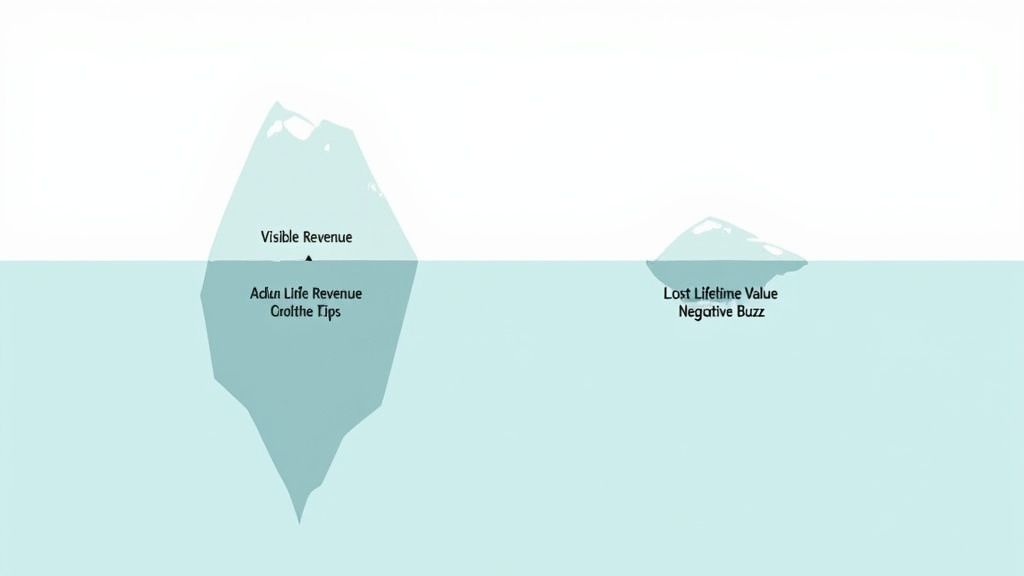
Before we jump into new strategies, let’s get one thing straight: customer engagement is absolutely non-negotiable in today's world. Too many businesses get laser-focused on acquiring new customers and treat engagement as an afterthought. Frankly, ignoring the people who already buy from you is one of the most expensive mistakes you can possibly make.
Disengaged customers don't just quietly disappear. They actively chip away at your business. Their silence often hides a growing frustration that, sooner or later, leads to churn. And when they leave, you lose a lot more than just their future purchases. You lose their potential to become advocates—one of the most powerful (and free) marketing assets you could ever have.
The Financial Drain of Apathy
The financial hit from poor engagement is staggering. It kicks off a domino effect that can start with one sour experience and end up wrecking your entire revenue stream.
Think about the tangible damage:
- Shrinking Customer Lifetime Value (CLV): An unengaged customer isn't sticking around to make repeat purchases, try out your new product line, or upgrade their subscription. Every single one represents a massive loss in potential long-term revenue.
- Skyrocketing Acquisition Costs: You've probably heard it before, but it's true: it costs five times more to attract a new customer than to keep an existing one. When your churn rate is high because people feel ignored, you're stuck on a treadmill, constantly pouring money into marketing just to tread water.
- Negative Social Proof: Unhappy customers don't keep it to themselves. In the age of instant online reviews, one person's bad story can scare off hundreds of potential new buyers before they even visit your website.
A disengaged customer isn't just a lost sale; they are a walking, talking advertisement for your competitors. Their departure creates a vacuum that is expensive to fill and can poison the well for future prospects.
When Indifference Becomes a Liability
Let's be real: modern consumers have zero patience for being ignored. The cost of a bad customer experience is both immediate and severe.
It's pretty shocking, but 70% of customers will ditch a brand after just two poor experiences. Another 72% will switch after three or fewer negative run-ins.
We're not even talking about major disasters here. Simple frustrations—like being stuck on hold forever or having to repeat your problem to five different people—are enough to drive more than half of your customers straight to a competitor.
This data tells a crucial story about how to improve customer engagement: it all starts with removing friction and showing basic respect for your customer's time. You can explore more statistics on customer experience trends if you need more convincing. Ultimately, treating engagement as a "nice-to-have" is a surefire way to lose market share and weaken your brand.
Go Beyond Names with Scalable Personalization
Let's be honest: dropping a first name into an email subject line isn't real personalization. That’s a tactic from a decade ago. True personalization is about making your customer feel seen and understood on an individual level. It’s the kind of connection that builds real, lasting loyalty.
To pull this off, you have to dig deeper than surface-level data. The real magic happens when you can build a single, dynamic view of each customer by connecting the dots from every single touchpoint—website clicks, purchase history, support chats, you name it. This is how you start to understand the why behind their actions.
This unified view lets you segment your audience based on what they actually do, not just who they are demographically. You can create meaningful groups of customers who’ve shown interest in a specific product, used a key feature, or even contacted support with the same question.
From Data to Delight
Once you have these behavioral segments, you can start crafting messages with surgical precision. The difference between a generic blast and a truly personal touch is night and day.
Take a travel company, for example. Instead of a bland "Summer Deals!" email to their entire list, they could get specific:
- Segment by Past Destinations: Send a curated guide on "hidden gems in Italy" to customers who have previously booked trips to Rome or Florence.
- Segment by Search Behavior: If someone spent time browsing family-friendly resorts in Mexico, hit them with a targeted offer for an all-inclusive package that specifically mentions the kids' club activities.
This isn't just for travel. A SaaS business can send custom onboarding tips based on the very first features a new user clicks on, guiding them toward the tools that will immediately solve their problems. You’re essentially turning mass communication into a series of helpful, one-on-one conversations.
The impact of this shift is massive. Just look at how personalization moves the needle on all the metrics that matter.
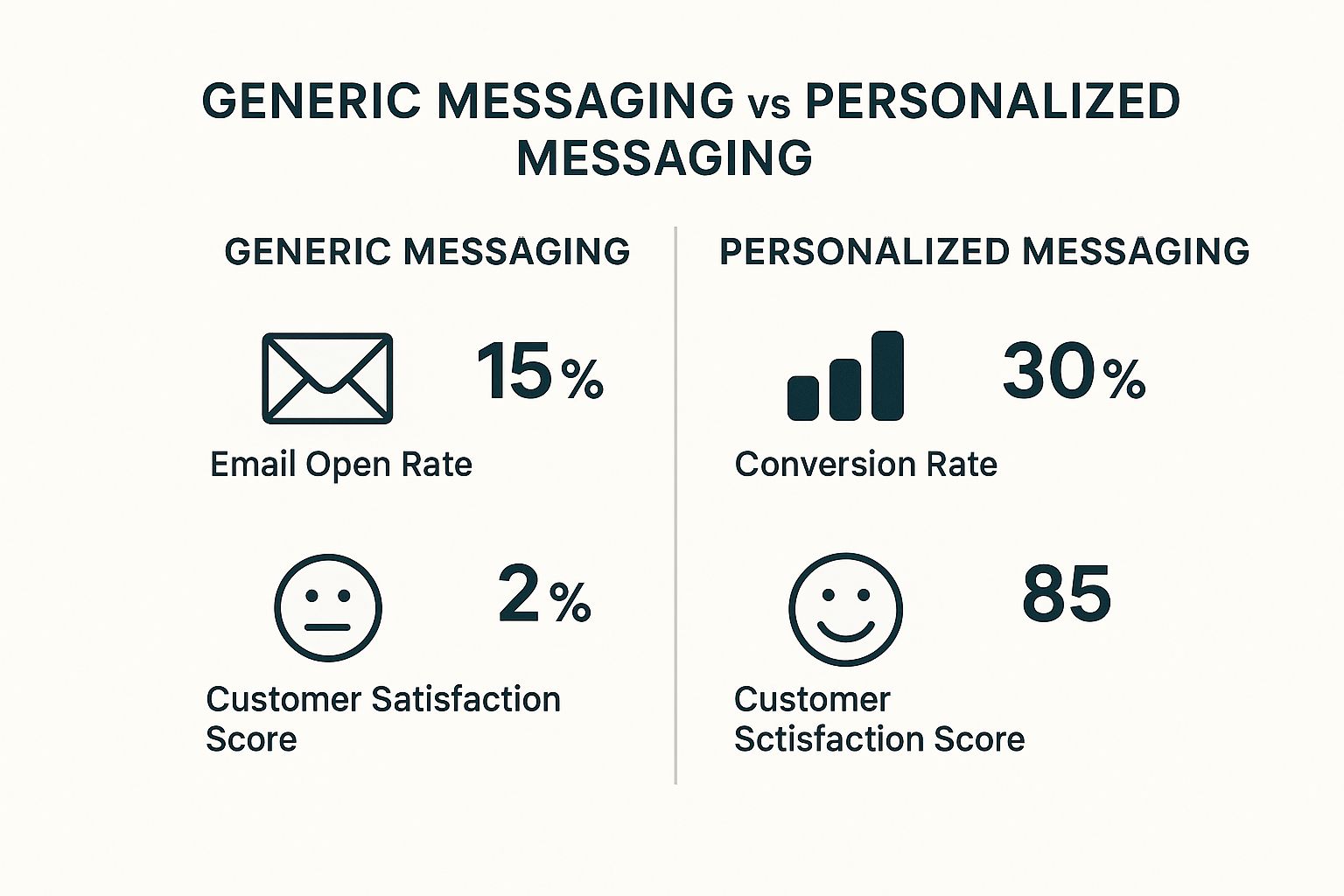
As you can see, personalized efforts crush generic ones at every stage, from getting someone's attention to closing the deal.
Unifying Customer Data for Impact
The biggest roadblock to doing this well? Siloed data. Your marketing, sales, and support teams are all sitting on valuable pieces of the customer puzzle, but they rarely talk to each other. This is where a Customer Data Platform (CDP) comes in.
A CDP acts as the central brain for your customer data. It collects information from all your different tools and systems, cleans it up, and builds a single, unified profile for each customer that any team can access.
This unified profile is the engine that powers personalization at scale. When all your systems are in sync, you can automate incredibly relevant experiences that make every customer feel like they’re your only customer—and that’s a surefire way to boost engagement.
Using AI to Enhance Human Connection
Let's be real—we've all battled a clunky, unhelpful chatbot that made a simple problem a thousand times more frustrating. It's no wonder AI in customer service has a bit of a reputation.
But the conversation is changing. Smart businesses are realizing AI isn't about replacing their team. It's about giving them superpowers.
The goal isn't to remove people from the equation. It's about using AI to handle the predictable, mind-numbing queries that eat up your team's day. This frees up your human experts to focus on what they do best: solving complex problems that require empathy, creative thinking, and a personal touch.
Automate The Simple Stuff First
The quickest win is to go after the low-hanging fruit. Think about it: what are the top three to five questions your support team answers over and over again? Those are your prime candidates for AI.
You know the ones:
- "Where's my order?"
- "What's your return policy?"
- "How do I reset my password?"
When you deploy a well-trained AI to give instant, accurate answers to these queries, you deliver immediate value. The customer gets an answer in seconds, and your agent avoids answering the same question for the tenth time that day. Everybody wins.
From Frustration To Smooth Resolutions
Modern AI is a world away from the rigid, script-based bots of the past. Those early chatbots failed because they couldn't understand nuance or context. Today's AI can actually anticipate customer needs and adapt in real-time.
Imagine a fintech company using an AI assistant to guide a new user through account setup. The AI can answer common questions, point out key features, and troubleshoot basic issues on the spot. But the moment the user gets stuck or asks a complex question, the AI seamlessly hands the conversation—along with the full context—to a human expert. No more starting from scratch. That's a smooth, supportive experience from day one.
The key is to see AI as the first line of defense, not the only line. It should efficiently resolve what it can and intelligently escalate what it cannot, making the entire support system faster and more human-centric.
Choosing The Right AI Engagement Tool
Not all AI tools are created equal. The right choice depends entirely on what you're trying to achieve and how much complexity you're ready to handle. Here’s a quick breakdown to help you navigate the options.
| Tool Type | Best For | Key Feature | Implementation Complexity |
|---|---|---|---|
| Simple Chatbots | Answering FAQs, basic lead capture, and routing inquiries. | Rule-based conversation flows. | Low |
| AI-Powered Assistants | Personalized onboarding, proactive support, and handling multi-step queries. | Natural Language Processing (NLP) and context awareness. | Medium |
| Predictive Analytics | Identifying at-risk customers and personalizing marketing offers. | Machine learning algorithms that analyze user behavior. | High |
| Sentiment Analysis | Gauging customer mood and prioritizing urgent support tickets. | Identifies emotion and tone in text or voice communications. | Medium-High |
Picking the right tool starts with a clear goal. Are you just trying to cut down on repetitive questions, or are you aiming for a deeply personalized, predictive customer journey? Your answer will point you in the right direction.
For a broader look at how different technologies can help your whole company, check out these 12 AI Tools for Business Growth.
Ultimately, using AI this way makes every interaction more efficient. Customers get fast answers to simple questions, and your team gets to spend their brainpower on the challenging, relationship-building conversations that truly drive loyalty.
Build a Proactive Customer Feedback Loop
If you’re waiting for customers to complain, you’re already behind. A reactive approach means you only ever hear from the loudest, most frustrated people. That leaves a huge, silent majority whose insights you’re completely missing out on. The brands that really get it right build systems to actively pull feedback from customers before small frustrations boil over.
This is about more than just an annual survey that gets ignored. It's about creating timely, in-the-moment opportunities for people to share their thoughts. When you do this, feedback stops being a complaint channel and becomes a powerful way to build trust and create products with your customers, not just for them.
Go Where Your Customers Are
The best, most honest feedback doesn't come from a formal, multi-page survey. It comes from meeting customers right where they are, in the context of how they're actually using your product.
Instead of interrupting their flow, weave feedback opportunities seamlessly into their experience.
Here are a few ways I’ve seen this work brilliantly:
- Targeted In-App Polls: The moment a user tries a new feature, hit them with a quick, one-question poll. "What do you think of the new dashboard?" This gives you an immediate gut reaction, which is often the most valuable.
- Casual Social Media Questions: Jump on Instagram Stories and ask something simple. "What's one thing you wish our app could do?" It’s a low-effort way for your community to toss out ideas, and you’d be surprised by the gems you’ll find.
- Post-Interaction Surveys: As soon as a support chat ends, pop up a one-click survey. "Did we solve your problem today?" You get a real-time pulse on the effectiveness of your customer service.
The whole point is to make giving feedback so easy it's almost an impulse. When it's that simple, you get a much more accurate and representative sample of how people really feel.
The Power of Closing the Loop
Okay, so you're collecting feedback. That's step one. The real magic, though, happens when you close the loop. This means proving to customers that you’re not just listening, but that you're actually acting on what they say. This is how you create die-hard fans.
When a customer gives you feedback and then sees you implement it, they stop being just a buyer. They become a partner in your brand's journey. Acknowledging their contribution makes them feel seen, valued, and personally invested.
Let’s walk through a real-world scenario. An e-commerce brand gets a handful of messages about a checkout button being confusing. It’s not a flood of complaints, just a trickle. The team could easily ignore it, but instead, they dig in and find a small bug that’s tripping up a small percentage of users.
Here’s how they close the loop like pros:
- Acknowledge: They don't just log the ticket. They personally reach out to the few customers who reported it and thank them for the heads-up.
- Act: The dev team prioritizes the issue and pushes a fix live within a couple of days.
- Follow-Up: This is the critical part. The support team sends another personalized email to those same customers. The message is simple: "Hey, remember that bug you told us about? We fixed it—because you pointed it out." They even toss in a small discount code as a thank you.
With that one move, they turned a negative experience into a massive win. They didn't just fix a bug; they showed that a customer's voice can directly change the business. That’s how you build a rock-solid, engaged community that will stick with you for the long haul.
Making Customer Engagement Everyone's Job
Let's get one thing straight: exceptional customer engagement is never the job of a single department. If you've siloed it within your support team, you're missing the entire point.
When a customer feels truly seen and cared for, it’s because that commitment is baked into the company’s DNA. It has to flow from the CEO all the way to the newest intern. True customer obsession happens when every single employee feels empowered and equipped to make the customer’s experience better.
This cultural shift transforms your business from a bunch of separate teams into a unified force, all rallied around one shared mission: making the customer successful. When that clicks, amazing engagement becomes the default, not the exception.
Fostering a Customer-First Culture
To make engagement a company-wide mission, leaders have to champion it relentlessly. It all starts with making customer stories a central part of your internal conversations.
Carve out time in every all-hands meeting to share real feedback—both the glowing praise and the tough critiques. It’s one thing to look at a bug report; it’s another for an engineer to hear firsthand how the bug they fixed saved a customer’s massive project.
That simple act of storytelling connects an employee's daily grind directly to a customer's reality. It builds a powerful sense of shared ownership.
This culture is also built on empowerment. Give every employee the authority to solve customer problems on the spot, without jumping through hoops for approval. Imagine a billing specialist who can instantly apply a credit for a confused customer, turning a moment of friction into one of delight.
A customer-centric culture isn't built on policies; it's built on trust. When you trust your team to do right by the customer, they will consistently rise to the occasion, creating memorable experiences that build lasting loyalty.
Cross-Functional Collaboration Drives Innovation
Some of the most powerful breakthroughs happen when you demolish departmental walls. You need to actively encourage people from different teams to experience what it's like on the front lines.
For instance, have your product managers shadow support calls for a few hours each month. Listening to a customer struggle with a feature they designed provides a level of raw insight no spreadsheet ever could. It’s in those unscripted moments that an engineer might have a "eureka!" moment that leads to a game-changing product improvement—one that came directly from a customer's pain point.
This cross-pollination of perspectives is invaluable. To make it happen, you could:
- Launch a shared Slack channel where anyone can drop customer feedback or ideas.
- Form a "Voice of the Customer" council with members from every department.
- Train all teams in active listening to better understand what customers really need, not just what they say.
This kind of internal synergy is becoming even more critical. Projections show that AI will soon power 95% of all customer interactions, and business leaders are already increasing their investments in these tools. To see where things are headed, you can review key customer engagement statistics and see how AI is shaping the future.
By embedding a customer-first mindset everywhere, you ensure that every team—from product to finance—is aligned on creating a seamless and supportive journey for every single customer.
Answering Your Top Customer Engagement Questions
Even with the best game plan, you're going to have questions as you work on improving customer engagement. It's totally normal to wonder if you're tracking the right things or spending money in the right places. Let's clear up some of the most common sticking points.
What Are the Best Metrics to Track Engagement?
Look, every business is unique, but you can’t go wrong by focusing on metrics that tell you a story about customer behavior and happiness. Steer clear of vanity metrics and hone in on the data that shows whether people are genuinely getting value from you and deciding to stick around.
A few numbers I always keep an eye on are:
- Customer Lifetime Value (CLV): This is the big one. It tells you the total revenue you can realistically expect from a single customer over their entire relationship with you. When your CLV is climbing, it's a huge sign that your engagement efforts are working.
- Net Promoter Score (NPS): You've probably heard of this one. It’s based on that simple question: "How likely are you to recommend our brand?" It’s an incredibly powerful way to gauge customer satisfaction and predict future growth.
- Active User Rate: If you're in the SaaS or app world, this is non-negotiable. It measures how many customers are regularly logging in and using your product. That's the ultimate vote of confidence.
- Customer Churn Rate: This is the percentage of customers who walk away over a specific period. Getting this number down is a direct result of solid, effective engagement.
These aren't just numbers on a spreadsheet; they're the bridge connecting your daily engagement activities to real business results.
How Much Should We Invest in Engagement Tools?
The answer here isn't a dollar figure—it's about your approach. Before you even think about shopping for software, identify your single biggest engagement bottleneck. Are your support replies painfully slow? Is your personalization basically non-existent? Find the most significant point of friction your customers are experiencing right now.
Once you've nailed down that core problem, go find a tool that solves that specific issue and does it really, really well. It's so tempting to get suckered in by an all-in-one platform that promises the moon but is just mediocre at everything. Don't fall for it.
The right investment is one that delivers a clear, measurable return by solving a real customer problem. A simple chatbot that resolves 30% of routine queries might be a better investment than a complex analytics suite you don’t have the resources to manage.
Think of it as building blocks. Solve one problem, measure the impact, and then reinvest what you've gained into tackling the next challenge on your list.
Can a Small Business Really Compete on Engagement?
Absolutely. In fact, small businesses often have the upper hand here. You're closer to your customers. You can offer a level of personal attention that massive corporations can only dream of. You don't need a giant budget—you need creativity and a genuine desire to make your customers' day.
A local boutique, for example, can remember a regular's favorite styles and send a personal text when a new collection drops. A small software company can have its founder personally reply to feedback emails. These are the kinds of authentic, human gestures that build incredible loyalty.
Ultimately, strong engagement is what keeps a business thriving for the long haul. For a deeper dive into creating those lasting relationships, you should explore these proven strategies for building customer loyalty.
Remember, engagement isn't about outspending your competitors; it's about out-caring them. Use your size as an advantage by being nimble, personal, and genuinely responsive to the people who keep your business alive.
Ready to make your brand unforgettable? With 4OVER4, you can create stunning, high-quality printed materials that capture attention and leave a lasting impression. From business cards to custom banners, we provide the tools you need to engage your customers offline. Explore our printing solutions at https://4over4.com and bring your brand to life.
More from

10
When you think of a yard sign, the classic 18"x24" is probably what comes to mind. It’s the industry workhorse fo
 Emma Davis
Mar 14, 2026

16
When you’re ready to invest in an A-frame sign, the first question you'll ask is, "What size do I need?" It usually comes down
Emma Davis
Mar 13, 2026

173
The real secret to mastering your direct mail budget isn't complicated. It comes down to one simple fact: a standard 4" x 6&q
Emma Davis
Mar 12, 2026

70
Tear-off flyers are a classic for a reason. They’re a tangible marketing tool, designed with perforated, removable tabs at the bottom. Each
Emma Davis
Mar 11, 2026

122
Printing stickers at home is a seriously fun and rewarding project. It boils down to four main parts: designing your image, picking the right
Emma Davis
Mar 10, 2026

109
Ever seen a logo that seems to float right on the glass of a jar or bottle? That’s the work of transparent label stickers.
Emma Davis
Mar 9, 2026

63
Picture this: your product’s beautiful label gets smudged and runny during shipping, or a gorgeous event banner fades to nothing after just
Emma Davis
Mar 8, 2026

61
In a sea of options, your product's packaging and labeling are its first, and often only, chance to make a real connectio
Emma Davis
Mar 7, 2026