Table of Contents
- Home
- content hub
- A Business Guide to Eco-Friendly Packaging Materials
 Share and earn
A Business Guide to Eco-Friendly Packaging Materials

Mar 27, 202610 views
Mar 27, 202610 views
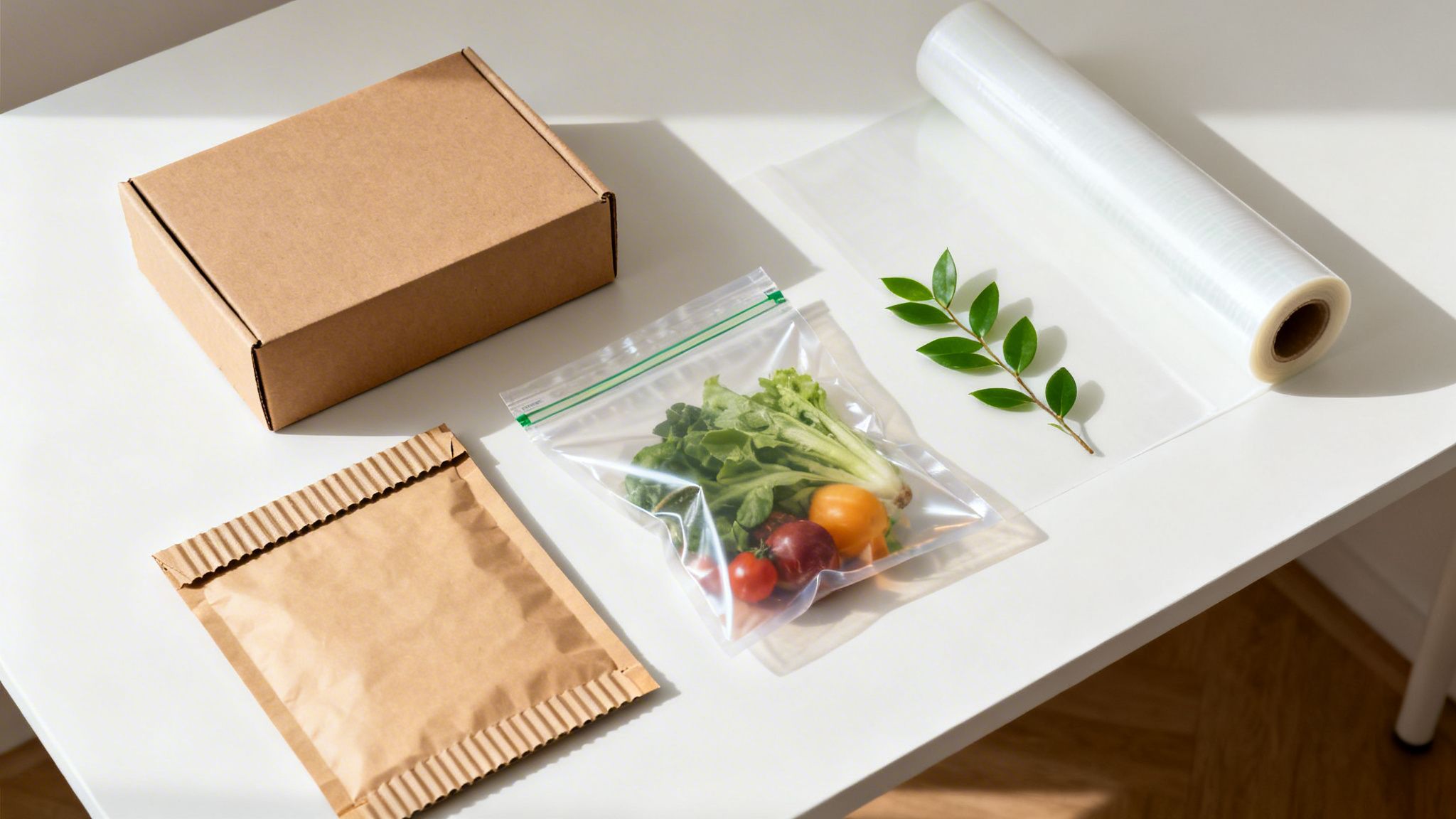
Eco-friendly packaging isn't some fringe trend anymore. It’s a core part of how smart businesses build their brand and earn customer loyalty. By embracing materials like recycled paper, bioplastics, and compostable films, companies are not just meeting consumer demand; they're actively reducing their environmental footprint. This shift is becoming absolutely essential for staying profitable and relevant.
Why Sustainable Packaging Is a Business Imperative
In today’s market, choosing sustainable packaging is less of an option and more of a necessity for survival. Think of it like the early days of e-commerce—the businesses that adapted first grabbed a huge competitive edge, while those who hesitated got left behind. Making the switch to eco-friendly materials is a powerful move that sets your brand up for long-term success.
This isn't just about feeling good, either. This transition is a direct response to some very real market forces. We're talking about soaring consumer demand, tightening government rules, and explosive market growth all pushing businesses to rethink their packaging.
The Driving Forces Behind the Shift
Three key factors are turning sustainable packaging into a must-do for any business:
- Soaring Consumer Demand: Modern shoppers vote with their wallets, and they’re increasingly picking brands that reflect their own values. When your packaging is thoughtful and sustainable, it shows a commitment that clicks with your audience, building genuine trust and loyalty.
- Growing Regulatory Pressure: Governments all over the world are getting tougher on waste, especially single-use plastics. By getting ahead of the curve and adopting eco-friendly alternatives now, your business can sidestep compliance headaches and avoid potential fines down the road.
- Significant Market Growth: The financial incentive is impossible to ignore. The global sustainable packaging market was valued at around $256.64 billion in 2025 and is projected to hit $276.57 billion in 2026. Experts even see it expanding to $375.84 billion by 2030, which tells you exactly where the industry is heading.
Adopting sustainable practices isn't about a single initiative. It's about developing a comprehensive business sustainability strategy that weaves these values into everything you do, not just your packaging.
More Than Just a Box
Ultimately, your packaging is often the very first physical thing a customer touches from your brand. It’s a real, tangible piece of your company's identity.
Shifting to eco-friendly materials does more than cut down on waste; it turns your packaging into a powerful marketing tool. It tells a story of responsibility, care, and forward-thinking—the kinds of qualities that build a brand that lasts.
By embracing options like those in our green printing collection, you’re making a choice that helps your bottom line and the planet. This guide will be your roadmap to navigating this shift and securing your spot in the future of commerce.
Choosing Your Eco-Friendly Packaging Materials
Diving into the world of sustainable materials can feel like a huge task, but it’s the first real step toward making a powerful change. Choosing the right eco-friendly packaging isn't just about ticking a "green" box. It's about finding a solution that actually protects your product, shows off your brand’s values, and gives your customers an experience they’ll remember.
The decision to go sustainable isn't just a feel-good move; it's a smart business one. As you can see below, it has a direct line to strengthening your brand, building rock-solid customer loyalty, and even boosting your bottom line.

When you get it right, your packaging stops being a cost and starts becoming a strategic asset that drives real growth.
Comparing Popular Eco-Friendly Packaging Materials
To help you get a quick sense of your options, we've put together a simple table. This is designed to give you a quick-glance comparison of the most common materials so you can start matching your needs to the right solution.
| Material Type | Source | Best For | End-of-Life |
|---|---|---|---|
| Recycled Cardboard | Post-consumer & post-industrial waste | Shipping boxes, product inserts | Widely Recyclable |
| Kraft Paper | Virgin or recycled wood pulp | Wrapping, void fill, mailers | Recyclable |
| Corrugated | Wood pulp, often with recycled content | Primary packaging, retail displays | Widely Recyclable |
| Bioplastics (PLA) | Cornstarch, sugarcane, etc. | Food containers, clear films, 3D printing | Compostable |
| Compostable Films | Cellulose, PLA | Food wraps, apparel bags | Compostable |
| Mushroom Packaging | Mycelium (mushroom roots) | Protective inserts for fragile goods | Home Compostable |
| Cornstarch Peanuts | Cornstarch | Void fill, cushioning | Biodegradable |
| Sustainable Inks | Soy, water, or other plant-based sources | All printed packaging | Recyclable |
This table gives you a great starting point, but remember that the best choice often comes down to the specifics of your product and how your customers will handle the packaging once they're done with it.
Paper-Based Solutions: The Circular Economy Champions
Paper and cardboard are the real workhorses in the sustainable packaging world, and for good reason. They're widely recyclable, often made from recycled content themselves, and are super familiar to consumers.
- Recycled Cardboard: The undisputed king of shipping boxes. It’s tough, protective, and its fibers can be recycled 7-10 times. It's a fantastic example of a circular material in action.
- Kraft Paper: Made from wood pulp, kraft has that natural, earthy vibe that so many brands love. Its production is cleaner than standard paper because the process reuses most of its chemical inputs. It's perfect for wrapping delicate items or as a lightweight mailer. Feel free to explore our custom kraft printing collection to see the possibilities.
- Corrugated Packaging: Think of corrugated as cardboard that's been engineered for strength. That wavy, fluted layer on the inside provides incredible cushioning and rigidity, making it a go-to for everything from primary product boxes to heavy-duty shipping.
Of course, paper isn't the only recyclable hero. Depending on the product, some companies find other materials work even better. For example, some food brands choose cans as packaging material because of their unique preservation qualities and high recycling rates.
Bioplastics: Nature's Answer to Plastic
Bioplastics are a fascinating group of materials made from renewable, plant-based sources like corn, sugarcane, or even algae. Think of them as "nature's plastics," designed to give you the function of traditional plastic without the fossil-fuel baggage.
These materials aren't just a niche product anymore; they are a huge part of where the industry is heading. While starting from a smaller base, bio-based plastics are the fastest-growing segment in sustainable packaging.
This category includes materials like PLA (polylactic acid) and PHA (polyhydroxyalkanoates), and the market is booming. It's projected to grow from $111.71 million in 2025 to $178.79 million by 2034, all driven by a massive spike in consumer demand and a wave of innovation.
Innovative and Plant-Derived Materials
Beyond paper and bioplastics, there's a whole world of other plant-based materials that offer unique benefits for specific needs. These are the options that are really pushing the boundaries of what sustainable packaging can do.
Here’s a look at some of the most promising alternatives:
- Compostable Films: Usually made from PLA or cellulose, these clear films are perfect for creating product windows or wrapping food. They give you great visibility while being designed to break down in a commercial composting facility.
- Cellulose Packaging: This material comes from natural sources like wood and cotton, making it both biodegradable and compostable. It's naturally moisture-resistant, which has made it a favorite for food brands.
- Mushroom Packaging: Yes, you read that right. This material is made from mycelium (the root structure of mushrooms) and is literally grown into custom shapes. It’s a direct, home-compostable replacement for Styrofoam.
- Cornstarch Packaging: Another brilliant Styrofoam alternative, these packing peanuts are made from cornstarch. They dissolve completely in water and are fully biodegradable, making cleanup a breeze for your customers.
- Sustainable Inks: The box itself is only part of the story. Using soy-based or water-based inks instead of old-school petroleum ones reduces harmful VOCs (volatile organic compounds) and makes the entire package much easier to recycle.
Recyclable Versus Compostable: What Is the Difference?
When you’re exploring eco-friendly packaging, you’ll constantly run into two words: recyclable and compostable. While both sound great and are certainly better than sending waste to a landfill, they describe two completely different end-of-life journeys.
Getting this distinction right is one of the most important things you can do—not just for your brand, but for your customers and the planet.
Think of it this way:
Recyclable materials are like aluminum cans. They’re meant to be collected, broken down, and remade into new products in a continuous, circular loop. Compostable materials are like banana peels; they’re designed to break down and return to the earth as nutrient-rich soil.
Each one needs its own unique disposal system. Mixing them up can cause massive problems for waste management facilities, and it’s a surprisingly common mistake.

What Makes Something Recyclable?
A recyclable package is anything that can be collected, processed, and turned back into a raw material to create something new. This is what people mean by a "circular economy"—it keeps valuable resources like paper fibers, metals, and certain plastics in use and out of the ground.
But here’s the catch: for recycling to actually work, the infrastructure has to be there to handle it. This is why materials like cardboard, glass, and aluminum are so widely recycled. Most communities have well-established systems in place.
When you choose materials for products like custom shipping boxes, you’re plugging directly into this system and helping keep that loop going.
The World of Compostable Materials
Compostable packaging is made from organic stuff—like cornstarch (PLA) or sugarcane—that can decompose into a natural, soil-like substance called humus. This process is amazing because it returns nutrients to the earth. But it only works under very specific conditions.
This leads to a crucial distinction between two types of composting:
Commercial Composting: This is the heavy-duty version. It happens in large industrial facilities that can maintain incredibly high temperatures (140-160°F), manage moisture levels, and ensure proper airflow. Most certified compostable packaging, especially bioplastics, needs these intense conditions to break down within the 90-180 days required by certifications.
Home Composting: Your average backyard compost pile is a much cooler, less controlled environment. It works great for things like untreated paper and kitchen scraps, but most "compostable" packaging won't break down here. Only items specifically certified for home composting will decompose effectively.
If you see a package labeled "compostable," it almost always means it needs a commercial facility. If your customers don't have access to one, that well-intentioned package is probably headed for a landfill.
The Critical Problem of Contamination
This is where the confusion creates a real-world mess. When a compostable cup gets tossed into the recycling bin, it becomes a contaminant. It’s not designed to be melted down and remolded like other plastics, so it can ruin an entire batch of recycled material, forcing the whole lot to be sent to a landfill.
The reverse is just as bad. Tossing a recyclable plastic bottle into a compost bin introduces a foreign object that will never break down. It just pollutes the final compost, rendering it useless. This "contamination problem" is a massive headache for waste management and a huge barrier to a truly circular economy.
So, your choice between recyclable and compostable packaging really boils down to one question: what disposal systems do your customers actually have? Simply picking a "green" material isn’t enough. Clear, simple instructions on your packaging are essential to make sure it completes its journey and lives up to its eco-friendly promise.
Decoding Sustainability Certifications and Labels
When you start looking into eco-friendly packaging, you’ll quickly run into a whole alphabet soup of acronyms and symbols. These labels aren't just there for decoration; they’re your guide to knowing if a material is genuinely as green as it claims to be.
Think of them as a third-party seal of approval. Understanding these certifications helps you sidestep greenwashing, build trust with your customers, and feel confident about the sustainable choices you’re making. When you see a specific label, it’s a guarantee that the material has passed strict tests for either responsible sourcing or how it breaks down at the end of its life.
Verifying Responsible Sourcing with FSC
If you’re working with paper or wood-based packaging, the FSC (Forest Stewardship Council) certification is what you want to see. It's one of the most recognized and trusted labels on the planet, and for very good reason.
- What It Guarantees: An FSC label means the paper or wood in your packaging comes from a forest that’s managed responsibly. This covers everything from protecting biodiversity to upholding the rights of Indigenous Peoples and ensuring the forest remains economically healthy for the long run.
- Why It Matters for Your Brand: Putting the FSC logo on your recycled or kraft paper packaging is a powerful, visual way to show customers you’re serious about fighting deforestation. It’s an instant signal of ethical sourcing that builds credibility.
Understanding Compostability Standards
For compostable packaging, certifications aren't optional—they're essential. They prove that a material will actually break down like it's supposed to, but only under very specific conditions. The two big ones to know are ASTM D6400 and EN 13432.
These standards are like scientific recipes for decomposition. They set the exact time, temperature, and environmental conditions required for a material to transform back into the earth, ensuring it doesn't just become another piece of trash.
The Biodegradable Products Institute (BPI) then takes these standards and applies them specifically to the North American market. If a product has the BPI Certified logo, it’s been independently tested and proven to break down in a commercial composting facility.
Here's what these key certifications mean:
| Certification | Region | What It Guarantees |
|---|---|---|
| ASTM D6400 | North America | The material will disintegrate and biodegrade successfully in a commercial or municipal composting facility. |
| EN 13432 | Europe | The European equivalent of ASTM D6400, setting the standard for industrial compostability across the EU. |
| BPI Certified | North America | A product has been tested by a third party and meets ASTM D6400 standards, making it safe for commercial composting. |
The demand for these certified materials is exploding, especially as paper-based packaging grows in popularity. Projections show that by 2026, the paper segment will make up 37.1% of the sustainable packaging market. North America is leading the way, holding 37.2% of the global market share.
Choosing BPI-certified materials is a great first step, but you also have to guide your customers. Clearly explaining how to dispose of the packaging correctly on your labels is a powerful way to make sure your sustainable investment actually completes its environmental journey. Learning more about creating effective packaging and label printing can help you nail this messaging.
Budgeting for Your Sustainable Packaging Transition
Making the switch to eco-friendly packaging is a fantastic goal, but it’s one that needs a real-world budget. Let’s be honest: some sustainable options can come with a higher initial price tag than their traditional plastic counterparts. This doesn’t mean sustainability is out of reach; it just means you need a smarter financial strategy.
The key is to look beyond the simple per-unit cost and see the total value. This includes things like lower shipping fees, stronger brand loyalty, and the ability to attract customers who are actively looking for responsible businesses. In fact, roughly 50% of U.S. consumers say they are willing to pay more for products with sustainable packaging, turning a potential expense into a serious market advantage.
Smart Strategies to Manage Costs
A higher sticker price on a compostable mailer or recycled box doesn’t have to sink your budget. With a few smart adjustments, you can often offset—or even wipe out—the added expense. It’s all about working smarter, not just spending more.
Here are three effective ways to keep your costs in check during the transition:
- Right-Size Your Packaging: This is your easiest win. Shipping a small item in a big box is a double-whammy: it wastes material and inflates shipping costs because of dimensional weight pricing. Take the time to audit your product line and create packaging that fits snugly. You’ll use less material, shrink your carbon footprint, and cut down on pricey void fill.
- Order in Bulk: Like any other business expense, volume is your friend. Once you’ve tested and settled on your new eco-friendly materials, placing larger orders can dramatically drop your per-unit cost. Many businesses discover that bundling different packaging products into a single order unlocks even bigger savings. If you're looking for ways to combine purchases, exploring options for product bundling can bring significant cost benefits.
- Communicate Value to Customers: Don’t keep your sustainable choice a secret! Use your website, social media, and even on-pack messaging to tell customers why you chose eco-friendly packaging. When they understand the positive impact, the packaging itself becomes part of your product's value, justifying a small price increase if you need one.
Navigating Supply Chain and Design Realities
Cost isn't the only practical thing to think about. You also need to consider the reliability of your supply and how these new materials will look with your branding. A sudden stockout of your custom-sized boxes or a design that doesn't print well can throw a wrench in your whole operation.
A successful transition depends on finding a supplier who can deliver both quality and consistency. Vet potential partners by asking about their inventory management, lead times, and quality control processes for eco-friendly materials.
Finally, think about the design and printing implications. The natural textures of kraft paper or the unique surface of a compostable film can change how colors look. Can you still get that vibrant brand color on a brown kraft box? Of course, but it might require a different approach.
- Color on Kraft: Darker, earthy tones look fantastic on kraft paper. For brighter colors, a great trick is to print a white ink base layer first to really make them pop.
- Ink on Compostable Films: Most compostable films hold ink beautifully, but you should always ask for a printed sample. Just be sure to use certified compostable inks so the entire package can break down as intended.
The goal isn't to sacrifice your brand's look but to adapt it. A thoughtful design on a beautiful, sustainable material often tells a more compelling story than a glossy finish on single-use plastic ever could.
Your Step-by-Step Sustainable Implementation Plan

It’s one thing to understand the world of eco-friendly packaging materials, but putting that knowledge into practice is where the real change happens. This final section is your practical roadmap, guiding you from learning to doing. Think of this transition as a project—and every good project needs a solid plan.
By following these steps, you can build a structured, manageable process for shrinking your company’s environmental footprint, one package at a time. This isn’t about some massive, overnight overhaul. It’s about making a series of smart, deliberate moves that add up to a significant, lasting impact. Let's get started.
1. Audit Your Current Packaging
Before you can build something better, you have to know what you’re working with. A full packaging audit is your non-negotiable first step. This is where you’ll spot waste, inefficiencies, and hidden opportunities.
Gather up every single piece of packaging you use. We’re talking shipping boxes, mailers, product wraps, tape, and even the void fill. Lay it all out and start asking the tough questions:
- What are these materials actually made of? (e.g., virgin plastic, 100% recycled cardboard)
- Is this box way bigger than it needs to be?
- Do we really need all this filler?
- Which of these components are impossible to recycle or compost?
This audit gives you a clear baseline and shows you exactly where you can make the biggest improvements right away.
2. Define Clear Sustainability Goals
With your audit done, it's time to set specific, measurable goals. Vague ambitions like “go greener” just won’t cut it. You need concrete targets that will guide your decisions and let you actually track your progress.
Your goals should be realistic but ambitious. Think of them as your company's sustainability mission statement, turning abstract values into actionable objectives that your team and customers can rally behind.
For instance, your goals could be:
- Reduce virgin plastic use by 50% within 12 months. This forces you to find specific alternatives for things like bubble wrap or poly mailers.
- Ensure 90% of our packaging is curbside recyclable by next year. This focuses your efforts on consumer convenience and real-world recovery.
- Source all paper-based products from FSC-certified suppliers. This goal targets responsible forestry and builds an ethical supply chain.
3. Vet Suppliers and Integrate New Materials
Once you know what you want to achieve, you need to find the right partners to help you get there. When vetting suppliers of eco-friendly materials, dig into the details. Ask for proof of certifications like FSC or BPI, and get clear answers on lead times and minimum order quantities (MOQs). Always request samples to test how the new materials hold up with your products and how your branding looks on them.
Next, you have to plan the integration into your day-to-day workflow. Will the new boxes require a different folding technique? Does that water-activated tape need a special dispenser? A small-scale trial run with your fulfillment team can iron out these wrinkles before you commit to a full switch, ensuring the transition is smooth for everyone.
Finally, tell your story. Use your website, social media, and even on-pack messaging to let customers know about your new-and-improved packaging. Explain why you made the change. This kind of transparency doesn't just build brand loyalty—it turns your sustainable packaging into a powerful marketing tool.
Frequently Asked Questions About Eco-Friendly Packaging
Switching to eco-friendly packaging is a great move for any brand, but it often comes with a lot of questions. We get it. Let's clear up some of the most common points of confusion so you can feel confident in your choices.
What Actually Makes Packaging Sustainable?
Sustainable packaging isn’t just about using recycled paper. It’s about looking at the entire lifecycle of the package, from where the materials are sourced to what your customer does with it after opening.
Truly sustainable packaging should check a few key boxes:
- It uses renewable or recycled materials as its foundation.
- The design is efficient, cutting down on unnecessary waste.
- It has a clear and simple end-of-life plan, whether that’s being easy to recycle or compost.
- Its production process minimizes energy and water use.
Is Sustainable Packaging More Expensive?
While some eco-friendly materials might have a higher per-unit cost, the total investment is often much more manageable than you'd expect. Smart moves like "right-sizing" your boxes can dramatically cut material and shipping costs, easily offsetting the initial price.
Plus, with about 50% of U.S. shoppers saying they’d pay more for sustainable products, this "expense" quickly turns into a powerful marketing tool. It’s a direct investment in your brand’s value and reputation.
Think of it this way: the long-term gains from building brand trust, boosting customer loyalty, and reducing waste almost always outweigh the upfront material cost.
How Do I Know if Packaging Is Genuinely Eco-Friendly?
The best way to cut through the greenwashing is to look for reputable third-party certifications. These labels are your guarantee that a material has been independently tested and meets real-world sustainability standards.
Here are the key ones to watch for:
- FSC (Forest Stewardship Council): This certification ensures that any paper or wood-based materials come from forests managed in a responsible, sustainable way.
- BPI Certified: This confirms that a product is compostable in a commercial facility, meeting strict ASTM standards.
- PCR Content: Look for packaging that proudly states its percentage of Post-Consumer Recycled content. The higher, the better.
What Is the Difference Between Biodegradable and Compostable?
This is probably the most common mix-up we see, and the distinction is critical. While all compostable materials are biodegradable, the reverse is definitely not true.
Biodegradable is a vague term. It just means a material will eventually break down into smaller pieces over an unknown period. A plastic bag is technically biodegradable, but it might take centuries.
Compostable, on the other hand, is a specific, regulated term. It means the material will break down into nutrient-rich organic matter (humus) within a set timeframe, usually 90-180 days, under specific conditions. For most packaging, this requires an industrial composting facility.
Ready to make a change? 4OVER4 offers a wide range of customizable and eco-friendly printing solutions to help your brand shine. Explore our sustainable options and start your journey today.
More from

14
So you need a custom banner printed. The first question that pops into your head is probably, "Where do I even go for this?" You’v
 Emma Davis
Mar 26, 2026

30
Ever wondered what are carbonless forms and how they create perfect copies without that messy blue paper? Think of them as th
Emma Davis
Mar 25, 2026

47
To design your own flyers effectively, you need to focus on a few key things: a strong visual hierarchy, a call-to-action that people can'
Emma Davis
Mar 24, 2026

126
Let’s get one thing straight about CMYK and RGB: one is for screens, the other is for print. Your monitor mixes red, green,
Emma Davis
Mar 23, 2026

46
Printing a high-quality business envelope is simpler than you might think. It all starts with a solid design file using CMYK color settings, y
Emma Davis
Mar 22, 2026

133
You might think sending an email or a text is all that matters these days, but don't underestimate the power of physical mail. It carries
Emma Davis
Mar 21, 2026

110
Picture this: your business has a silent, tireless salesperson working for you 24/7 on the busiest street in town. That’s t
Emma Davis
Mar 20, 2026

75
Printing on ribbon is the art of transferring your custom design, logo, or text onto a roll of fabric. It’s what transforms a simple decorat
Emma Davis
Mar 19, 2026