What You Need to Know About EDDM Postcard Sizes
Every Door Direct Mail postcard sizes must meet strict USPS requirements to qualify for discounted postage rates. Your mailpiece needs to be taller than 6.125 inches or longer than 10.5 inches, but can't exceed 12 x 15 inches. 4OVER4 has printed over 10 billion cards and serves 150,000+ businesses - so you're in good hands when choosing the right EDDM dimensions for your campaign.
Picking the Right Size for Your EDDM Campaign
Choosing every door direct mail postcard sizes isn't just about aesthetics. It's a compliance issue. The USPS won't give you those discounted rates if your postcard falls outside their approved dimensions. And that defeats the whole purpose of EDDM in the first place.
This guide breaks down each approved size, explains when to use it, and helps you match dimensions to your marketing goals. Whether you're a restaurant pushing a grand opening or a dental office targeting new patients, the right size makes the difference between a mailer that gets noticed and one that hits the recycling bin. Check out our Showcase to see real EDDM postcards from 4OVER4 customers. And if you're exploring other print projects, our guide on How To Clean Rubber Stamps is worth a read too.
"Postcards /5"
| Quantity | Price Per Unit |
|---|---|
| 50 | $0.33 |
| 4,000 | $0.03 |
| 35,000 | $0.02 |
| 100,000 | $0.02 |
Ink Color
Finish
Scoring
Rounded Corners
Variable Data (Codes, Names, Etc.)
Total Sets
Proof Options
Here's a look at the postcard products that work perfectly for EDDM campaigns:
"Direct Mail Postcards /5Paper Type14pt Gloss Cover14pt Matte/Silk Cover14pt High Gloss UV Front; Coated BackInk Color4/0 : 4 Color Front; Blank Back4/1 : 4 Color Front; Black Ink Back4/4 : 4 Color Bot"
"3D Postcards /5"
Ink Color
Effect
Number of Flips
Effect Direction
Rounded Corners
Proof Options
USPS Size Requirements for Every Door Direct Mail
EDDM postcards aren't like regular mail. The USPS created a specific set of dimensional rules that your mailpiece must meet. Break those rules and you lose access to the program's flat-rate postage - currently around $0.21 per piece. That's a big deal when you're mailing to hundreds or thousands of addresses.
The baseline rule is simple. Your postcard must be either taller than 6.125 inches or longer than 10.5 inches. It also can't exceed 12 inches by 15 inches. And the thickness? It needs to be between 0.007 and 0.25 inches. Most standard postcard stocks fall within that range, but it's worth double-checking with your printer.
4OVER4 makes this easy. Every EDDM postcard template is pre-built to meet these USPS specifications. You don't have to guess or measure - just pick a size and start designing.
Free Design Templates:
The 6.25 x 9 Inch Postcard - The Go-To Standard
This is the most popular EDDM postcard size, and for good reason. At 6.25 x 9 inches, it's the smallest option that still qualifies for EDDM rates. It gives you enough room for a headline, a strong image, your offer, and contact details without overwhelming the recipient.
Restaurants, salons, and service businesses love this size. It's cost-effective to print in bulk and fits neatly into a mailbox. Think of it as the sweet spot between budget and impact. If you're running your first EDDM campaign, start here. For inspiration on other print marketing formats, check out our guide on How To Make Flyers.
"We ordered 5,000 of the 6.25 x 9 EDDM postcards on 14pt glossy stock for our pizza shop's grand opening. Got a 3% response rate on the first drop - that's about 150 new customers in one week."
The 6.5 x 9 Inch Postcard - A Slight Step Up
Just a quarter-inch wider than the standard, the 6.5 x 9 inch size gives you a touch more breathing room in your design. That extra space might not sound like much, but designers appreciate it. It allows for slightly larger margins, which makes your layout look cleaner and more professional.
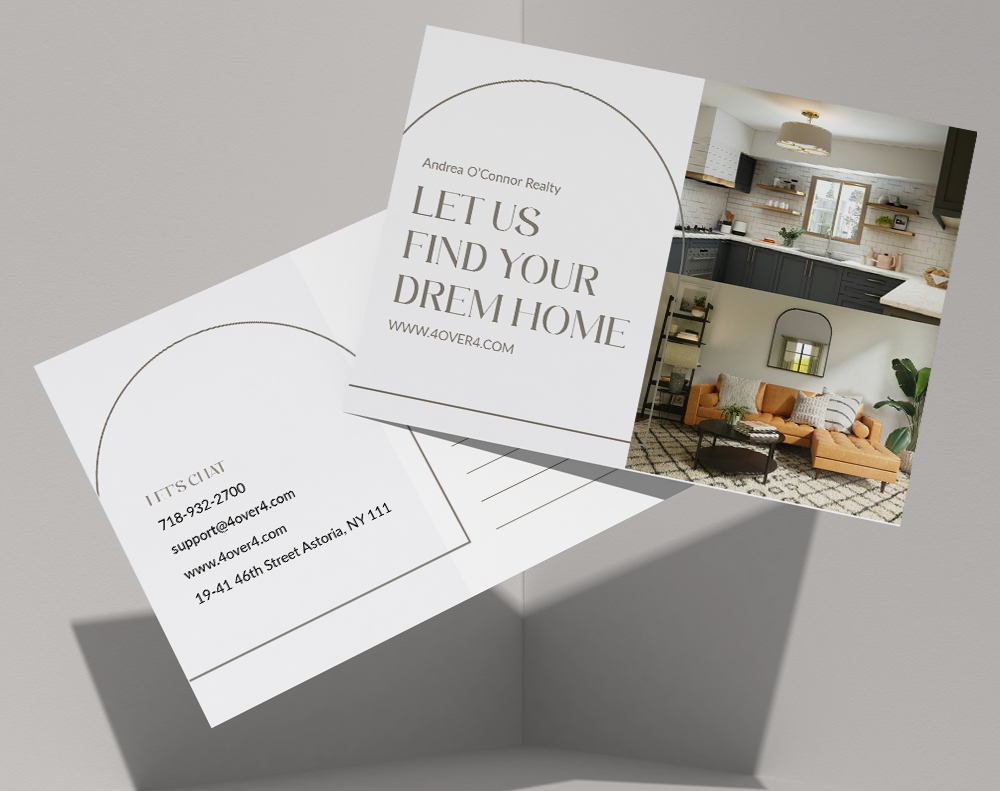
This size works well for real estate agents showcasing property photos or healthcare providers listing multiple services. The cost difference from the 6.25 x 9 is minimal, so it's an easy upgrade if your design feels cramped.
The 6.5 x 12 Inch Postcard - The Panoramic Option
Now we're getting into territory that really stands out in a mailbox. The 6.5 x 12 inch format is long and narrow, which naturally draws the eye. It feels different in the hand. People notice it because it doesn't look like everything else in the stack.
This size is a favorite for automotive dealerships, home improvement companies, and fitness studios. You get a wide canvas for before-and-after photos, panoramic images, or side-by-side comparisons. If your message needs visual storytelling, this is your format. For complementary marketing materials, learn How To Make Envelopes for follow-up mailers.
The 8.5 x 11 Inch Postcard - Letter-Sized Impact
This is the big one. An 8.5 x 11 inch EDDM postcard is the same size as a standard sheet of paper. It's impossible to miss. When someone pulls this out of their mailbox, it dominates their attention.
The trade-off? Higher printing costs per piece. But the response rates tend to justify it. According to the Data & Marketing Association, direct mail achieves a 4.4% response rate for prospect lists - and oversized formats push that number even higher. If you're promoting a major event, a seasonal sale, or a new location opening, this size delivers.
Dental offices, law firms, and home services companies use this format to establish authority. There's enough room for testimonials, service lists, maps, and a strong call to action - all on one side.
The 8.5 x 7 Inch Postcard - The Compact Powerhouse
Sitting right between the standard and the letter-sized options, the 8.5 x 7 inch postcard offers a nice balance. It's wider than the 6.25 x 9 but more manageable than the full 8.5 x 11. This size gives you a landscape orientation that works beautifully for coupon-style mailers and menu highlights.
It's also easier to handle during the EDDM bundling process. If you're doing your own mail prep, smaller pieces are faster to sort and band. Browse our Faq Hub for more tips on getting your campaigns ready.
Choosing the Right Size for Your Business Type
Your industry should guide your size selection. Here's how different businesses typically approach it:
- Restaurants and cafes - 6.25 x 9 inches works great for menu highlights, coupons, and grand opening announcements. Keep it simple and appetizing.
- Real estate agents - 6.5 x 12 or 8.5 x 11 inches for property showcases. You need room for high-quality photos and neighborhood stats.
- Home services (HVAC, plumbing, roofing) - 8.5 x 11 inches lets you list all your services with seasonal offers. Homeowners keep these on the fridge.
- Fitness studios and gyms - 6.5 x 9 inches with a bold offer like "First Month Free" drives trial memberships.
- Dental and medical offices - 8.5 x 7 inches balances professionalism with enough space for insurance info and new patient offers.
Want something that really pops? 4OVER4 offers 3D Postcards that add a lenticular effect to your EDDM campaign. It's a guaranteed attention-grabber.

Free Design Templates:
"I switched from the 6.25 x 9 to the 8.5 x 11 for my landscaping business. The larger postcards cost more to print, but my phone started ringing twice as much. Totally worth it."
Paper Stock and Finish Considerations for EDDM
Size is only half the equation. The paper stock you choose affects how your postcard feels, how durable it is during mail processing, and how recipients perceive your brand. A flimsy postcard on thin stock says "cheap." A sturdy 16pt card with a UV coating says "we mean business."
Most EDDM postcards are printed on 14pt or 16pt cardstock. The 14pt option is about the thickness of a standard business card - solid and professional. The 16pt is closer to a credit card's thickness, which gives it a premium feel that people are less likely to toss.
For finishes, you've got options. Glossy coatings make colors pop and photos look sharp. Matte finishes feel sophisticated and are easier to write on if you're adding a handwritten note or personalization. Soft-touch lamination? That's the velvety finish that makes people rub the card between their fingers. It's a tactile experience that builds a connection with your brand.
4OVER4 offers 60+ paper types across its product line. For EDDM specifically, the most popular choices are 14pt gloss, 14pt matte, and 16pt with UV coating. Each meets USPS thickness requirements while giving your campaign a professional edge. For creative ideas beyond postcards, our guide on How To Fold A Brochure covers another high-impact direct mail format.
Design Tips That Maximize Your Chosen Size
Once you've locked in your EDDM postcard size, your design needs to work within those dimensions. Don't cram every inch with text. White space is your friend. It directs the reader's eye to what matters - your offer, your phone number, your website.
Keep your headline to seven words or fewer. Use one dominant image, not five small ones. And make your call to action impossible to miss. "Call Today for 20% Off" in bold type beats a paragraph of copy every time.
Bleed is another thing to watch. Always extend your background colors and images 0.125 inches past the trim line. This prevents white edges after cutting. 4OVER4's templates have bleed guides built in, so you won't accidentally lose important content near the edges.
If you're looking for unique promotional ideas to pair with your EDDM campaign, check out Custom Magnets Faq for items recipients will actually keep. And visit our Showcase gallery for real design examples from 4OVER4 customers.
Blank Templates
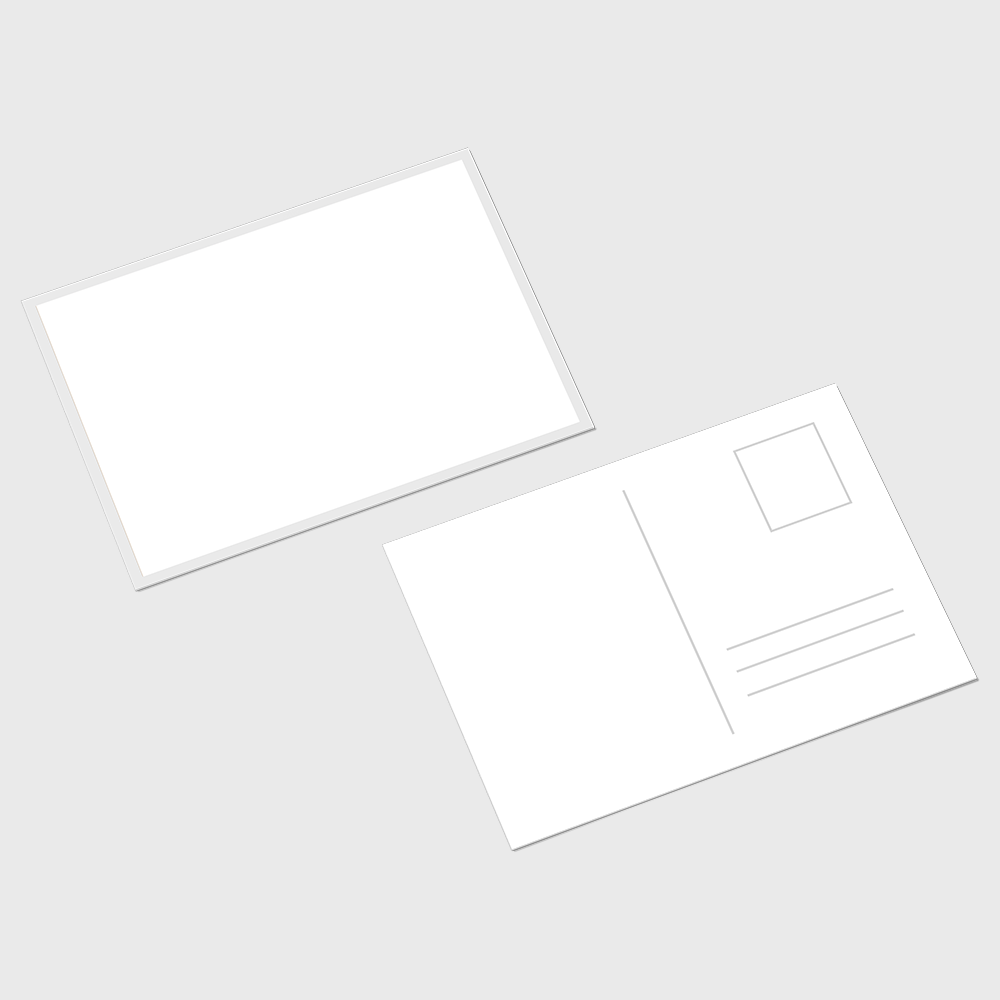
Here are some ready-to-use templates and design inspiration for your EDDM postcards:
Costly EDDM Postcard Sizing Errors to Avoid
The most common mistake with every door direct mail postcard sizes? Designing at a non-compliant dimension. If your postcard is 6 x 9 inches instead of 6.25 x 9, it doesn't qualify for EDDM. That missing quarter-inch means you'll pay standard postage rates - and your entire budget projection falls apart.
Another frequent error is ignoring the maximum weight limit of 3.3 ounces. Heavier paper stocks on larger formats can push you over. Always confirm your finished weight before printing thousands of pieces.
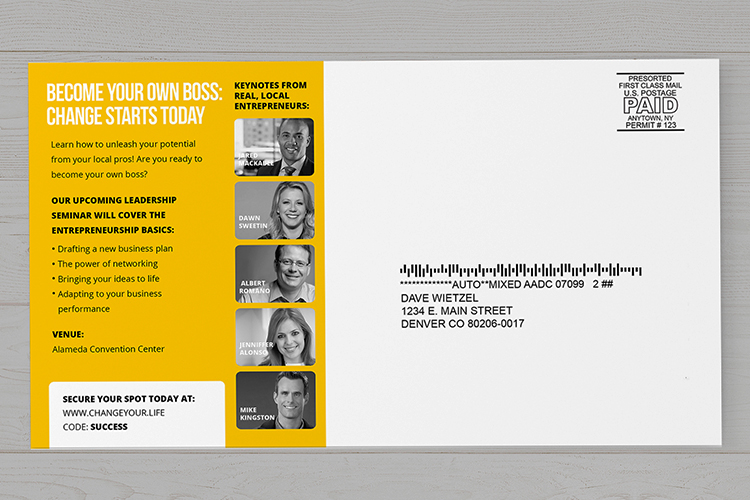
Don't forget the indicia. EDDM postcards require a specific "ECRWSS" marking and postage indicia in the address area. Skip this and the post office will reject your entire mailing. 4OVER4 includes proper indicia placement in all EDDM templates, so you don't have to worry about formatting it yourself.
Finally, avoid designing without bleed. A postcard trimmed without bleed shows ugly white borders. That's an amateur look that hurts your brand's credibility before anyone reads a word of your offer.
Best Postcard Products for Your EDDM Campaign
4OVER4 offers several postcard products that are perfect for Every Door Direct Mail campaigns. Whether you need a standard 6.25 x 9 on glossy 14pt stock or a premium 8.5 x 11 on thick matte cardstock, there's an option that fits your budget and goals. Interested in sustainable options? Explore Green Printing for eco-friendly paper stocks that still deliver bold, vivid color.
Here's a detailed look at the available specifications, pricing, and customer feedback for EDDM-compatible postcards:
Free Design Templates
| Postcard Size | Best For | Key Feature |
|---|---|---|
| 6.25" x 9" | Restaurants, real estate, retail | The "go-to" size. Offers a great balance of design space and cost-effectiveness. |
| 6.5" x 12" | Auto dealers, landscapers | Perfect for showcasing larger images, like a car or a beautiful lawn. |
| 8.5" x 11" | Menus, service lists, detailed promos | Essentially a flyer, it provides maximum space for text and complex offers. |
| 4.5" x 12" | Coupons, event announcements | A unique panoramic shape that stands out from standard letter-sized mail. |
| Design Element | Key Consideration | Compliance Note |
|---|---|---|
| Headline | Is it bold, clear, and positioned to be seen first? | Keep it away from the indicia and address areas. |
| Visuals | Does the main image support the message and fit the layout (Z-pattern or vertical)? | Ensure images don't have text that looks like an address. |
| Offer/Body | Is the core offer easy to understand in a quick scan? | Use bullet points or short sentences for readability. |
| Call-to-Action | Is it obvious what you want the reader to do next? | Make it stand out with color, a box, or bold text. |
| Address Block | Is the "Postal Customer" information in the correct spot? | Must follow USPS placement rules for automated sorting. |
| Indicia | Is the EDDM Retail Indicia in the top right corner? | Must be the correct size and format per USPS specs. |
| White Space | Is there enough breathing room, or is the design cluttered? | Good spacing improves readability and visual appeal. |
- Design Space: A bigger postcard is a bigger canvas. You get more room for eye-catching visuals, compelling copy, and your branding.
- Campaign Budget: While the postage is a flat rate per piece, the printing costs will obviously change with the size.
- Customer Impact: Let's be honest, a larger mailer is just plain harder to ignore when someone is sorting through their mail.
Thickness: Your mailer needs to be at least 0.007 inches thick but can't be more than 0.75 inches thick. This is a pretty generous range, covering everything from standard cardstock to much thicker, folded pieces. Anything too flimsy will jam up the sorting equipment.
Weight: Each individual postcard has to weigh less than 3.3 ounces. This limit is surprisingly high, giving you the freedom to use high-quality, heavy paper stocks or even multi-page flyers without worrying about hitting the ceiling.
Flexibility: The postcard needs to be flexible enough to bend through the postal machinery but not so stiff that it could break something. It's all about finding that sweet spot between durability and machine-friendliness.
EDDM Retail: This is perfect for small businesses sending out fewer than 5,000 mailpieces a day. You just bundle up your postcards, drop them off at your local post office, and pay the straightforward retail rate. Simple and easy.
Business Mail Entry Unit (BMEU): If you're running a larger campaign, using a BMEU can unlock some serious postage savings. It requires getting a mailing permit and prepping your mail to stricter USPS standards, but for high-volume mailings, the lower rates are well worth the extra effort.
- For Brand Awareness: Go big. Sizes like 8.5" x 11" are basically mini-billboards for the mailbox. They give you all the room you need for bold branding and eye-catching images that build that crucial name recognition.
- For Lead Generation: Mid-range sizes like 6.25" x 9" hit the sweet spot. You get plenty of space for a killer offer and a clear call-to-action without overwhelming the person holding it.
- For Direct Sales: Smaller, unique formats are perfect for highlighting a big coupon or a QR code. They scream "scan me now" and encourage immediate action, driving customers straight to your website or storefront.
- How it works: People instinctively look from the top-left (where your logo and headline should be) across to the top-right. Then, their eyes drift diagonally down to the bottom-left before shooting across to the bottom-right—the perfect spot for your call-to-action.
- Pro Tip: Stick your most eye-catching photo or graphic right in the middle of that diagonal path. It’ll grab their attention as their eyes travel down the card.
- How it works: The narrow shape practically forces a top-to-bottom reading path. Use this to your advantage by stacking your information logically.
- Pro Tip: Start with a bold, can't-miss headline at the top, flow into your main points (bullet points work great here), and anchor it all with your call-to-action at the very bottom. If you really want to get creative, explore how die-cutting services can give your postcard a unique shape that truly pops.
- Taller than 6.125 inches
- Longer than 10.5 inches
"Ordered every door direct mail postcard sizes from 4OVER4 and the quality blew me away. Sharp colors, premium feel, arrived 2 days early."
"Been using 4OVER4 for every door direct mail postcard sizes for a year. Consistent quality every time. The online designer made it easy."
"Switched to 4OVER4 and saved 40% on every door direct mail postcard sizes. Better quality than my old printer. 60+ paper options."
"4OVER4's every door direct mail postcard sizes helped us look more professional. Clients notice the difference."
Common Questions About EDDM Postcard Dimensions and Rules
What is the minimum size for an EDDM postcard?
Your postcard must be taller than 6.125 inches or longer than 10.5 inches to qualify for USPS Every Door Direct Mail rates. The most common minimum-qualifying size is 6.25 x 9 inches. Anything smaller gets classified as regular mail and won't receive the discounted EDDM postage rate.
What is the maximum size allowed for EDDM postcards?
The USPS caps every door direct mail postcard sizes at 12 x 15 inches. Your mailpiece also can't weigh more than 3.3 ounces or be thicker than 0.25 inches. Most standard postcard stocks on sizes up to 8.5 x 11 inches fall well within these limits.
Which EDDM postcard size gets the best response rate?
Larger formats like 8.5 x 11 inches tend to generate higher response rates because they're harder to ignore in a mailbox. However, the 6.25 x 9 inch size offers the best balance of cost and performance for most small businesses running their first EDDM campaign.
Can I use a square postcard for EDDM?
Yes, as long as it meets the minimum dimension requirement - taller than 6.125 inches or longer than 10.5 inches. A 7 x 7 inch square postcard would qualify. Just keep in mind that unusual shapes may cost more to print and can sometimes cause issues during automated mail processing.
What paper thickness works best for EDDM postcards?
Most businesses choose 14pt or 16pt cardstock. The 14pt feels like a standard business card - sturdy and professional. The 16pt is closer to credit card thickness and gives a premium impression. Both meet the USPS minimum thickness requirement of 0.007 inches. 4OVER4 offers both options with multiple finish choices.
How much does EDDM postage cost per piece?
USPS EDDM postage runs approximately $0.21 per piece as of 2025. This flat rate applies regardless of your postcard size, as long as it meets all dimensional and weight requirements. You'll pay this on top of your printing costs, which vary by size, quantity, and paper stock.
"I was nervous about getting the sizing wrong for my first EDDM drop, but 4OVER4's templates made it foolproof. Ordered 2,500 postcards on 16pt matte at 6.5 x 9 for my yoga studio. Every single one went through the post office without a problem."