Table of Contents
- Home
- content hub
- Your Ultimate Corporate Event Planning Checklist (10 Steps)
 Share and earn
Your Ultimate Corporate Event Planning Checklist (10 Steps)

Aug 13, 20252727 views
Aug 13, 20252727 views
Planning a corporate event can feel like conducting an orchestra, where every instrument must play in perfect harmony. From securing the right venue to managing last-minute changes, the details are endless. A single misstep can compromise the entire experience, turning a potential triumph into a logistical headache. This is where a methodical, comprehensive strategy becomes your most valuable asset.
Our definitive corporate event planning checklist is designed to be that strategy, a step-by-step guide to navigate the complexities of event management with confidence. We'll break down the entire process into 10 manageable, actionable stages, ensuring no detail is overlooked. The discipline required is similar to other large-scale operational projects; for a comparable comprehensive approach to launching a new venture, you might find valuable insights in an opening a restaurant checklist.
By following this blueprint, you'll transform potential chaos into a seamlessly executed event that not only meets but exceeds stakeholder expectations. This structured framework will help you coordinate vendors, manage timelines, and address risks, leaving a lasting, positive impact on your attendees and achieving your core business objectives.
1. Define Event Objectives and Scope
Before a single venue is scouted or invitation designed, the foundational step in any successful corporate event planning checklist is to define your objectives and scope. This crucial first phase acts as your North Star, guiding every subsequent decision and ensuring the event delivers tangible business value. It involves pinpointing the core purpose of your gathering and establishing firm boundaries for its execution.
Why This is Your Starting Point
Without clear goals, your event becomes a collection of activities rather than a strategic tool. Defining objectives transforms your event from an expense into an investment. This step ensures that every dollar spent and every hour worked is directly aligned with achieving a specific, measurable outcome for your organization. It’s the difference between hosting a party and executing a strategic initiative.
How to Implement This Step
Begin by asking foundational questions with key stakeholders. What is the primary purpose? Are you aiming to generate leads, launch a new product, foster team morale, or educate customers? Your answers will dictate the event’s format, tone, and content.
Document these goals in a formal event charter or brief. This document should clearly outline:
- Primary and Secondary Objectives: What are the non-negotiable outcomes?
- Success Metrics (KPIs): How will you measure success? (e.g., number of qualified leads, media mentions, employee satisfaction scores).
- Target Audience: Who are you trying to reach?
- Preliminary Budget: What are the financial parameters?
- Event Scope: Define what the event is and, just as importantly, what it is not.
Pro Tip: Revisit your objectives document before every major decision. When selecting a vendor or approving a design, ask, "Does this directly support our core goals?" This simple check keeps your planning focused and effective.
2. Establish Budget and Financial Framework
With your objectives defined, the next critical element in your corporate event planning checklist is to establish a comprehensive budget and financial framework. This step moves your event from an idea to a viable project. It involves more than just listing costs; it’s about creating a detailed financial plan that governs spending, ensures profitability or ROI, and prevents costly surprises down the line.
Why This is Your Financial Blueprint
An event without a budget is a financial liability waiting to happen. A well-structured budget serves as a realistic guide for every decision, from venue selection to catering choices. It forces you to prioritize spending based on your core objectives and provides the necessary controls to keep your project on track. This financial discipline is what separates a smoothly executed event from a chaotic, over-budget scramble.
How to Implement This Step
Start by creating a detailed spreadsheet that categorizes all potential expenses. Research industry benchmarks and gather preliminary quotes to make your estimates as accurate as possible. Events like Google I/O often allocate a significant portion (e.g., 40%) to venue and technology, so understanding these major cost centers is crucial.
Your financial framework should include:
- Detailed Cost Categories: Itemize everything from venue rental and A/V to marketing, speaker fees, and staffing.
- Contingency Fund: Set aside 10-15% of the total budget for unexpected costs. For first-time events, a 20% buffer is safer.
- Approval Process: Define who has the authority to approve expenses and what the spending limits are.
- Tracking System: Use event management software or a shared spreadsheet to track expenses in real-time against your budget.
Pro Tip: When negotiating with vendors, focus on value, not just the lowest price. Ask about package deals, non-profit discounts, or flexible payment terms that can align with your organization’s cash flow. Always get at least three quotes for major expenses.
3. Select and Secure Venue
With your objectives and budget solidified, the next critical step in your corporate event planning checklist is selecting and securing the right venue. The physical space is the container for your entire event experience; it directly impacts attendee perception, logistical feasibility, and the overall atmosphere. This stage involves moving from a list of potential locations to a confirmed, contracted space that aligns perfectly with your goals.

Why This is a Critical Milestone
Your venue choice is more than just a backdrop; it’s a strategic decision that sets the tone for the entire event. An ill-fitting venue can create logistical nightmares, undermine your brand message, and detract from the attendee experience. Securing the right location early is paramount, as popular venues are often booked 6-12 months in advance, and this decision unlocks the ability to finalize catering, AV, and other key vendor contracts.
How to Implement This Step
Begin by shortlisting venues that match your capacity, budget, and brand aesthetic. For a high-tech product launch, a modern space like Apple's Steve Jobs Theater works well, while a large-scale trade show like CES requires massive convention centers. For an exclusive executive retreat, a luxury resort offers the right mix of business facilities and amenities.
Once you have a shortlist, follow a structured evaluation process:
- Conduct Site Visits: Always visit your top choices in person, preferably when a similar event is happening to assess traffic flow, noise levels, and real-world conditions.
- Negotiate Contracts: Scrutinize every detail of the contract. Focus on securing flexible cancellation terms, clarifying all included costs, and understanding any restrictions.
- Verify Technical & Accessibility Specs: Confirm that the venue has robust Wi-Fi, adequate power for AV equipment, and backup generators. Ensure it is fully compliant with accessibility standards.
Pro Tip: Don't just look at the main event space. Inspect the breakout rooms, restrooms, parking availability, and loading docks. These "secondary" areas are crucial for a smooth event flow and can make or break the logistical success of your day.
4. Develop Comprehensive Timeline and Project Plan
With your objectives defined and budget set, the next critical element in your corporate event planning checklist is creating a master timeline. This isn't just a simple calendar; it's a detailed project plan that maps out every task, dependency, and deadline from the initial concept to post-event analysis. This plan serves as your operational roadmap, ensuring every component comes together seamlessly and on schedule.
Why This is Your Starting Point
A detailed timeline provides clarity, assigns ownership, and prevents last-minute chaos. It transforms an overwhelming list of tasks into a manageable, sequential process. By mapping out dependencies, you can see how a delay in one area, like securing a venue, impacts subsequent steps, like marketing or catering. This foresight allows for proactive problem-solving and keeps the entire team aligned and accountable.
How to Implement This Step
Begin by working backward from your event date. Use a project management tool like Asana or Trello to list every conceivable task. Major events often require long lead times; for instance, a Fortune 500 shareholder meeting can have an 18-month planning cycle, while a major product launch may need a six-month intensive plan.
Break your timeline into distinct phases and assign specific owners:
- Pre-Event: Venue sourcing, vendor contracts, speaker booking, marketing, registration setup, and creating presentation materials.
- Day-Of: On-site logistics, run-of-show schedule, staff briefings, and technology checks.
- Post-Event: Attendee feedback surveys, lead follow-up, final budget reconciliation, and performance analysis.
The following infographic illustrates key milestones within a typical six-month event planning timeline.
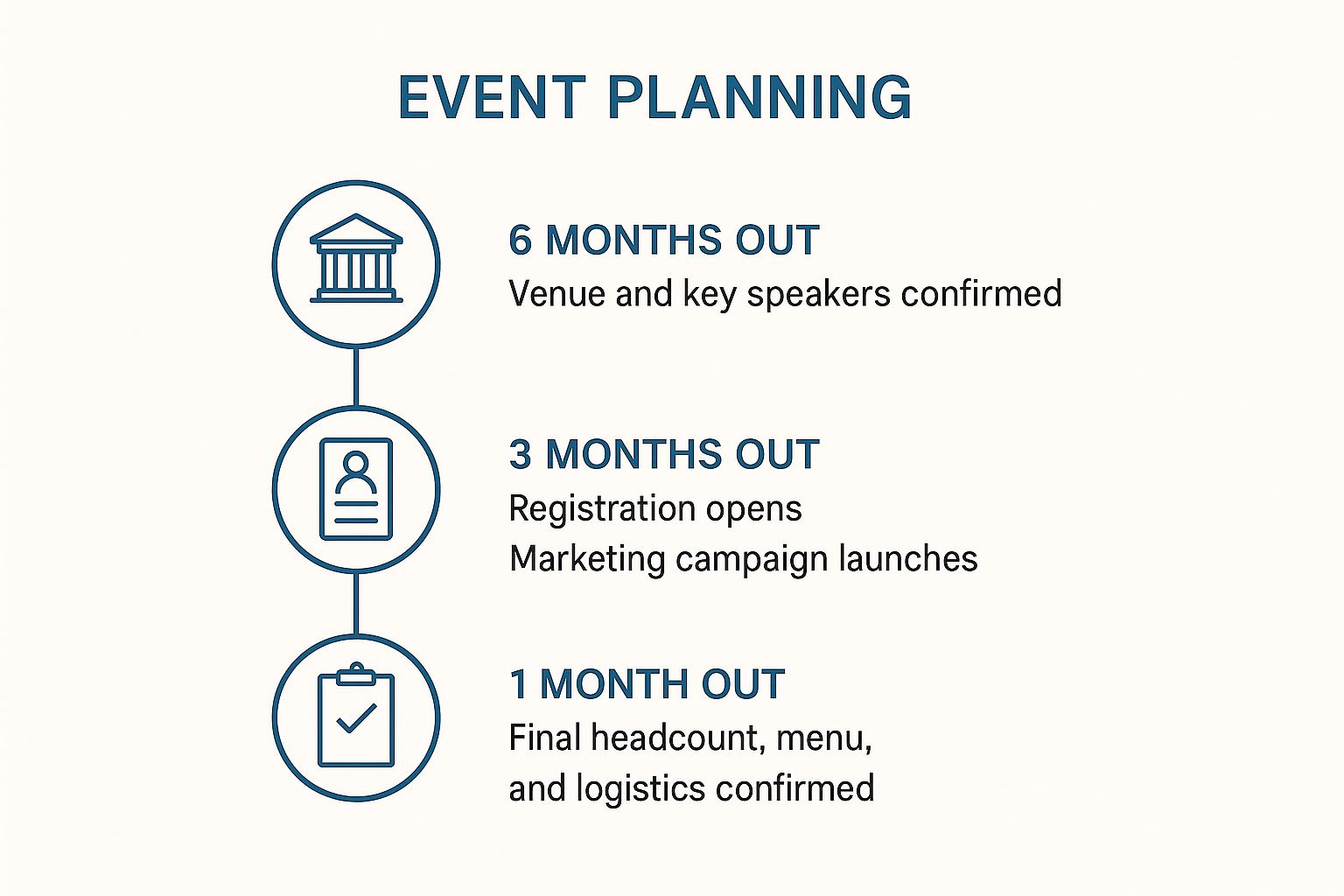
This visual progression shows how foundational decisions made six months out directly enable marketing and logistical finalization closer to the event date.
Pro Tip: Build a 15-20% buffer into your timeline for critical tasks. This contingency time is invaluable for managing unexpected vendor delays or changes in scope, ensuring a single setback doesn't derail your entire project.
5. Design Registration and Guest Management System
With your core strategy in place, the next critical element in your corporate event planning checklist is designing a seamless registration and guest management system. This system is your first direct touchpoint with attendees and sets the tone for their entire experience. It encompasses everything from the initial invitation and data capture to on-site check-in and post-event communication.
Why This is Your Starting Point
An inefficient or confusing registration process can deter potential attendees and create a poor first impression. A well-designed system, however, not only simplifies guest management but also acts as a powerful data collection tool. It provides crucial insights into your audience, helps you personalize their experience, and ensures you have accurate numbers for logistics planning, from catering to seating arrangements.
How to Implement This Step
Choose a robust event management platform like Cvent, Eventbrite, or a customizable solution like RegFox. These tools centralize registration, ticketing, and communication, streamlining your workflow. When building your system, focus on user experience and data integrity.
Your registration setup should include:
- A Clear Registration Page: Design a branded, mobile-friendly landing page with all essential event details.
- Customizable Forms: Collect only necessary information. Consider asking questions that help you tailor content, like dietary restrictions or session interests.
- Integrated Payment Processing: If it’s a paid event, ensure the payment gateway is secure and easy to use.
- Automated Communications: Set up instant confirmation emails and scheduled reminders to keep attendees engaged and informed. While digital is key, you can find more information about how professionally printed materials can complement your strategy for a premium feel when you explore high-quality invitation printing.
Pro Tip: Thoroughly test the entire registration flow from a user's perspective before going live. Complete a test registration on both desktop and mobile devices to identify any friction points, broken links, or confusing instructions. A smooth process builds confidence from the start.
6. Coordinate Catering and Food Service
Beyond basic sustenance, food and beverage service is a powerful tool for shaping the attendee experience. Coordinating catering is a critical component of any corporate event planning checklist, as it directly impacts guest comfort, energy levels, and overall satisfaction. This step involves carefully selecting menus, service styles, and timing to complement your event's theme and schedule.

Why This is Your Starting Point
Thoughtful catering demonstrates care for your attendees and can elevate the perception of your entire event. A well-timed coffee break can re-energize a conference audience, while an impressive menu at a gala can leave a lasting impression. Conversely, poor food quality, long lines, or a failure to accommodate dietary needs can quickly become a distracting and negative focal point.
How to Implement This Step
Begin by aligning your catering choices with your event's objectives and audience. A formal awards gala demands a different approach than a casual team-building retreat. Once the style is determined, work closely with your chosen caterer to plan the specifics.
Your detailed catering plan should include:
- Menu Selection: Choose options that fit the event's tone. Consider local or seasonal ingredients to enhance freshness and support the community.
- Service Style: Decide between a plated dinner, buffet, food stations, or passed hors d'oeuvres based on your event flow and networking goals.
- Dietary Accommodations: Proactively survey attendees for dietary restrictions and allergies during the registration process.
- Scheduling: Time meals and breaks strategically to maintain energy and flow. For example, schedule coffee after a long session, not before.
Pro Tip: Always plan for a 5-10% buffer on food and beverage quantities to accommodate unexpected guests or heartier appetites. Clearly label all food items, especially for common allergens like nuts, gluten, and dairy, to ensure guest safety and comfort.
7. Secure Audio-Visual and Technology Infrastructure
Once your venue is booked and speakers are confirmed, the next critical element in your corporate event planning checklist is securing the right audio-visual (AV) and technology infrastructure. This step involves designing and implementing the technical systems that support presentations, engage the audience, and ensure a seamless experience. It covers everything from microphones and projectors to Wi-Fi capacity and live-streaming platforms.

Why This is Your Starting Point
In today's digitally driven world, technology is no longer an afterthought; it is central to the event experience. A single technical failure, like a faulty microphone or a lagging video feed, can derail a keynote, frustrate attendees, and undermine your event's credibility. Investing in a robust tech plan, much like Apple does for its flawless keynotes, guarantees a professional, high-impact delivery that meets modern audience expectations.
How to Implement This Step
Start by creating a detailed technical rider that outlines all AV and technology requirements for each session and event space. This document should be shared with your venue's in-house team or a third-party AV provider like Encore or PSAV to get an accurate quote and plan.
Your technical plan should specify:
- Equipment Needs: List all required gear, including projectors, screens, microphones (lapel, handheld), speakers, lighting, and cameras.
- Connectivity: Define requirements for internet bandwidth, Wi-Fi access points, and any hardwired connections, especially for hybrid or virtual components.
- Technical Support: Detail the need for on-site technicians, including their roles and placement during the event.
- Branding Elements: Even tech setups offer branding opportunities. You can elevate your event's professionalism with custom-printed table covers for your registration and tech support desks.
Pro Tip: Always conduct a full technical rehearsal with all key presenters the day before the event. This allows you to test every piece of equipment, check presentation files, and run through cues, ensuring everyone is comfortable and prepared for a flawless execution.
8. Plan Transportation and Logistics
After securing your venue and agenda, the next critical layer of your corporate event planning checklist is coordinating transportation and logistics. This step involves managing the movement of people and materials seamlessly, ensuring everyone and everything arrives on time and without stress. It covers everything from VIP airport transfers and attendee shuttles to equipment delivery and on-site parking management.
Why This is Your Starting Point
Neglecting logistics can undermine an otherwise perfectly planned event. A frustrating travel experience, long waits for shuttles, or confusing parking instructions can create a negative first impression before your event even begins. Smooth, well-organized transportation reflects professionalism and shows you value your attendees' time and comfort, setting a positive tone from the moment they start their journey.
How to Implement This Step
Begin by creating a master logistics plan that details every moving part. Analyze your attendee list to determine their origins and needs. For executive-level events or to ensure high-value speakers arrive in style and on schedule, consider a dedicated service. For corporate events requiring professional and high-standard transportation, consider utilizing luxury business chauffeur hire services to provide a premium experience.
Your logistics plan should include:
- Arrival & Departure Manifests: Track flight details for all key personnel and speakers.
- Shuttle Schedules: Plan routes and timings between hotels, airports, and the venue, accounting for local traffic patterns.
- Parking & Signage: Coordinate with the venue on parking availability and create clear directional signage.
- Contingency Plans: What is your backup plan for traffic jams, flight delays, or vehicle breakdowns?
Pro Tip: Clearly communicate all transportation details to attendees at least one week before the event. Include maps, schedules, shuttle tracking links, and a dedicated contact number for any day-of transportation issues. This proactive communication minimizes confusion and reduces day-of inquiries.
9. Execute Marketing and Communications Strategy
With your event's core components in place, it's time to build excitement and drive attendance. Executing a comprehensive marketing and communications strategy is how you transform a well-planned event into a well-attended one. This step involves creating and deploying a multi-channel plan to promote the event, engage your target audience, and maintain momentum from the initial announcement through post-event follow-up.
Why This is Your Starting Point
An event without attendees is just an empty room. Strategic marketing is the engine that fills that room with the right people. It ensures your message reaches your target audience, communicates the event's value proposition, and compels them to register. A strong communications plan not only boosts ticket sales but also establishes the event's brand and credibility long before the doors open.
How to Implement This Step
Begin your marketing efforts 3-6 months in advance, building a timeline that maps out key promotional activities. This plan should integrate various channels to create a cohesive and powerful narrative around your event.
Your strategy should include:
- A Content Calendar: Schedule blog posts, social media updates, and email newsletters. Use teaser content, speaker spotlights, and behind-the-scenes glimpses to build anticipation.
- Digital Marketing: Launch targeted ad campaigns on platforms like LinkedIn or Google. Use retargeting to re-engage website visitors who haven't registered yet.
- Cross-Promotion: Coordinate with speakers, sponsors, and partners to leverage their networks. Provide them with a pre-made promotional kit including graphics, copy, and a unique registration link.
- On-Site Branding: Plan for physical marketing materials that enhance the attendee experience. Professional, high-quality signage, such as those available in custom vinyl banner printing, can guide attendees and reinforce your brand message.
Pro Tip: Create an event-specific hashtag and encourage everyone involved, from staff to attendees, to use it. Monitor the hashtag in real-time during the event to engage with your audience, answer questions, and share user-generated content, turning attendees into active promoters.
10. Establish Risk Management and Contingency Planning
While you plan for success, it is equally critical to prepare for the unexpected. A robust risk management and contingency plan is the safety net that protects your event, your guests, and your company's reputation from potential disruptions. This step involves identifying potential risks and developing proactive solutions to mitigate their impact, ensuring your event runs smoothly even when faced with challenges.
Why This is Your Starting Point
Ignoring potential risks is not a strategy; it’s a gamble. From technical glitches and vendor no-shows to medical emergencies or severe weather, a single unforeseen issue can derail an otherwise perfectly planned event. A comprehensive contingency plan in your corporate event planning checklist demonstrates professionalism and ensures you can maintain control and protect your investment, no matter what happens.
How to Implement This Step
Begin by conducting a risk assessment workshop with your core team and key stakeholders. Brainstorm everything that could possibly go wrong, categorizing risks by likelihood and potential impact. For instance, a keynote speaker canceling is a high-impact, low-likelihood risk, while a temporary Wi-Fi outage might be a low-impact, higher-likelihood risk.
Your documented plan should include:
- Identified Risks: A list of all potential issues (e.g., equipment failure, medical incident, bad weather for an outdoor event).
- Backup Plans: Specific solutions for critical components, like having a backup generator or a pre-vetted alternative speaker.
- Emergency Procedures: Clear, step-by-step instructions for handling security or medical emergencies.
- Communication Protocol: A plan for how, when, and what to communicate to attendees, staff, and stakeholders during a crisis.
- Insurance Review: Confirming that your event insurance provides adequate coverage for liability, cancellation, and other potential issues.
Pro Tip: Don't just create the plan; practice it. Run through key scenarios, like a fire drill or a medical response simulation, with your on-site team before the event. Familiarity with the plan is crucial for a calm and effective response.
Corporate Event Planning Checklist Comparison
| Item | Implementation Complexity 🔄 | Resource Requirements ⚡ | Expected Outcomes 📊 | Ideal Use Cases 💡 | Key Advantages ⭐ |
|---|---|---|---|---|---|
| Define Event Objectives and Scope | Medium 🔄 | Moderate ⚡ | Clear direction, measurable success 📊 | All corporate events needing alignment | Provides focus and accountability ⭐ |
| Establish Budget and Financial Framework | Medium-High 🔄 | High ⚡ | Financial control, informed trade-offs 📊 | Events with strict cost management | Enables cost control and compliance ⭐ |
| Select and Secure Venue | Medium 🔄 | High ⚡ | Suitable location with proper facilities 📊 | Events requiring physical space and ambience | Sets event tone and reduces vendor load ⭐ |
| Develop Comprehensive Timeline and Project Plan | High 🔄 | Moderate ⚡ | On-time delivery, clear accountability 📊 | Complex events with multiple dependencies | Prevents overlooked tasks, improves coordination ⭐ |
| Design Registration and Guest Management System | Medium 🔄 | Moderate ⚡ | Streamlined attendee management 📊 | Events with large or hybrid attendance | Improves attendee experience and data insights ⭐ |
| Coordinate Catering and Food Service | Medium 🔄 | Moderate to High ⚡ | Enhanced attendee satisfaction 📊 | Events prioritizing attendee comfort and networking | Improves experience, supports branding ⭐ |
| Secure Audio-Visual and Tech Infrastructure | High 🔄 | High ⚡ | Professional presentations and engagement 📊 | Large-scale, high-profile, or hybrid events | Creates memorable, smooth tech experiences ⭐ |
| Plan Transportation and Logistics | Medium-High 🔄 | Moderate to High ⚡ | Smooth attendee flow and reduced stress 📊 | Events with remote attendees or complex venues | Enhances professionalism and reduces delays ⭐ |
| Execute Marketing and Communications Strategy | High 🔄 | High ⚡ | Increased attendance and engagement 📊 | Events aiming for wide reach and brand building | Drives buzz, supports sponsors and growth ⭐ |
| Establish Risk Management and Contingency Planning | Medium 🔄 | Moderate ⚡ | Event continuity and safety assurance 📊 | All events with potential risks and uncertainties | Ensures preparedness and protects reputation ⭐ |
Bringing It All Together for Lasting Impact
Successfully navigating this comprehensive corporate event planning checklist transforms a daunting and complex undertaking into a structured, manageable, and ultimately rewarding process. Moving from high-level strategy to on-the-ground execution requires precision at every stage. We've explored the ten foundational pillars, from defining crystal-clear objectives and establishing a realistic budget to executing a multi-channel marketing strategy and planning for the unexpected with robust contingency plans. Each step is not merely a task to be checked off; it's an opportunity to infuse excellence and strategic thinking into your event.
Remember, the goal is not just to host an event, but to create an experience that resonates long after the final presentation. The most successful corporate events are those where meticulous planning becomes invisible, allowing the brand message, networking opportunities, and core content to shine.
Your Path from Checklist to Unforgettable Event
As you move forward, the true value of this checklist lies in its application. Don't view it as a rigid set of rules, but as a flexible framework to adapt to your unique event goals, whether you're planning a small executive retreat, a large-scale product launch, or an annual industry conference.
The most critical takeaways to carry into your next project are:
- Integration is Key: No single item on this list exists in a vacuum. Your venue choice impacts your AV needs, your budget dictates your catering options, and your event objectives drive your entire marketing campaign. Successful planners see the connections and manage these dependencies proactively.
- Contingency is Not Optional: The difference between a minor hiccup and a full-blown crisis often comes down to the quality of your risk management plan. A backup speaker, an alternative transportation route, or a plan for technical glitches provides invaluable peace of mind and professional resilience.
- The Experience is Everything: From the first save-the-date email to the post-event survey, every touchpoint contributes to the overall guest experience. Focus on making registration seamless, communication clear, and the on-site environment comfortable and engaging.
The True Measure of Success
Ultimately, the impact of a well-executed corporate event is measured in tangible outcomes. It extends far beyond the final round of applause or positive comments as guests depart. The real success is reflected in the data and the lasting impressions you create.
Key Insight: A truly successful event isn't just about flawless execution on the day. It’s about achieving the strategic business objectives you set at the very beginning, whether that’s lead generation, strengthening client relationships, boosting employee morale, or enhancing your brand's authority in the marketplace.
By meticulously following up, gathering detailed feedback, and analyzing your return on investment (ROI), you close the loop and gather invaluable intelligence. This post-event analysis is what turns a single successful event into a repeatable, scalable formula for future strategic success, solidifying your role as a capable and forward-thinking planner. This corporate event planning checklist is your roadmap to not just getting it done, but getting it right.
Ready to bring your meticulously planned event to life with professional, high-quality materials? From crisp agendas and custom name badges to stunning banners and branded takeaway folders, 4OVER4 provides the premium printing solutions that ensure every physical detail reflects the excellence of your event. Visit 4OVER4 to explore how our reliable printing services can help you make a lasting impression.
More from

14
When you’re ready to invest in an A-frame sign, the first question you'll ask is, "What size do I need?" It usually comes down
 Emma Davis
Mar 13, 2026

126
The real secret to mastering your direct mail budget isn't complicated. It comes down to one simple fact: a standard 4" x 6&q
Emma Davis
Mar 12, 2026

64
Tear-off flyers are a classic for a reason. They’re a tangible marketing tool, designed with perforated, removable tabs at the bottom. Each
Emma Davis
Mar 11, 2026

117
Printing stickers at home is a seriously fun and rewarding project. It boils down to four main parts: designing your image, picking the right
Emma Davis
Mar 10, 2026

104
Ever seen a logo that seems to float right on the glass of a jar or bottle? That’s the work of transparent label stickers.
Emma Davis
Mar 9, 2026

61
Picture this: your product’s beautiful label gets smudged and runny during shipping, or a gorgeous event banner fades to nothing after just
Emma Davis
Mar 8, 2026

58
In a sea of options, your product's packaging and labeling are its first, and often only, chance to make a real connectio
Emma Davis
Mar 7, 2026

89
Ever tried to print a hundred high-quality flyers on your home office printer? You probably ran out of ink, dealt with paper jams, and ended u
Emma Davis
Mar 6, 2026