
TABLE OF CONTENTS
- Home
- content hub
- What Is Foil Stamping and How Does It Create Luxury Branding
 Share and earn
What Is Foil Stamping and How Does It Create Luxury Branding

Dec 13, 2025327 views
Dec 13, 2025327 views
Picture this: you’re holding two business cards. One is a standard, everyday card. The other catches the light with a flash of gold, its logo slightly pressed into the paper. That’s the magic of foil stamping.
It’s a premium printing technique that applies a thin layer of metallic or pigmented foil onto paper using heat and pressure. The result is a touch of texture, shine, and pure sophistication that regular ink just can’t touch.
Unpacking the Premium Appeal of Foil Stamping
At its core, foil stamping is a specialty finishing process that adds a brilliant, tactile element to your printed materials. It’s not ink. Instead, a custom-etched metal plate, called a die, is heated up. This die then presses a sheet of foil onto the paper, permanently bonding the foil to the surface in the exact shape of your design.
This isn't just a decorative choice—it fundamentally changes how a product feels in someone's hands. It adds a tangible layer of quality that customers can see and feel, immediately signaling luxury and an obsessive attention to detail. It shares many of the elements that contribute to a premium, keepsake quality in other luxury items, creating a perception of higher value.
The real power of foil stamping is its ability to create contrast and dimension. It adds a physical texture and a metallic sheen that separates a brand from the competition, making a product feel more valuable before it’s even opened.
For a quick overview of what goes into this process, here's a simple breakdown.
Foil Stamping at a Glance
This table sums up the key players in the foil stamping process and the stunning effects they create together.
| Component | Role in the Process | Resulting Effect |
|---|---|---|
| Custom Die | An etched metal plate of your design is heated. | Creates the precise shape and a subtle debossed feel. |
| Foil Film | A thin layer of metallic or pigmented film is laid on paper. | Adds vibrant color, metallic shine, or unique texture. |
| Heat & Pressure | The heated die presses the foil firmly onto the surface. | Permanently bonds the foil to the paper. |
This combination of custom tooling, specialized materials, and precise application is what gives foil stamping its signature high-end finish.
The Science Behind the Shine
The foil stamping process, often called hot stamping, is as precise as it is effective. Its wide appeal comes from its versatility, making it a favorite for everything from elegant cosmetics boxes to high-end wine labels. That unmistakable metallic sheen can dramatically boost how much a product seems to be worth.
In fact, some consumer studies have shown that adding a premium finish like foil can increase a product's perceived value by as much as 30%. This impact makes it a powerful tool for any brand aiming to build a high-end identity.
Key Components of the Process
To really get what foil stamping is all about, it helps to know the moving parts. The entire effect hangs on three key elements working in perfect harmony:
- The Die: This is your design, custom-etched into a metal plate, usually made of brass or copper.
- The Foil: A roll of super-thin film coated with a metallic or colored pigment is positioned between the die and the paper.
- Heat and Pressure: The heated die presses down, activating an adhesive layer on the foil and transferring your design permanently onto the paper.
This trio is what creates that crisp, slightly indented, and brilliantly reflective finish that makes custom foil stamping the go-to choice for luxury branding.
Choosing Your Method: Hot vs Digital Foiling
When you decide it’s time to add that brilliant metallic shine to your project, you'll run into two main techniques: the classic hot foil stamping and its modern cousin, digital foiling. Figuring out which one is right for you boils down to understanding your specific needs, your budget, and the look you’re going for.
The Classic Touch of Hot Foil Stamping
Think of hot foil stamping as a time-honored, artisanal craft. This method uses a custom-etched metal plate, called a die, which is heated up and pressed firmly onto the paper. The heat and pressure transfer the foil and create a beautiful, slightly indented (or debossed) texture you can actually feel. It’s the gold standard for achieving a deep, tactile impression.
Because of the initial cost to create the die, this approach becomes incredibly cost-effective for large print runs. Once that die is made, the price per piece drops, making it the go-to for high-volume jobs like packaging, product labels, or thousands of event invitations.
The Modern Flexibility of Digital Foiling
On the other side of the coin is digital foiling—the nimble, contemporary alternative. This process works more like a high-end digital printer and completely skips the need for a custom die. Instead, it uses a special toner that the foil adheres to, which is then fused to the paper using heat and pressure.
This die-less process makes it perfect for short runs, personalized items (like printing different names on each invitation), and designs with incredibly fine, delicate details that might be too fragile for a traditional metal die. The setup is much faster and more flexible, giving you a ton of design freedom, especially on smaller orders.
This quick decision guide can help you visualize when to choose foil stamping over standard printing to get that high-end look.
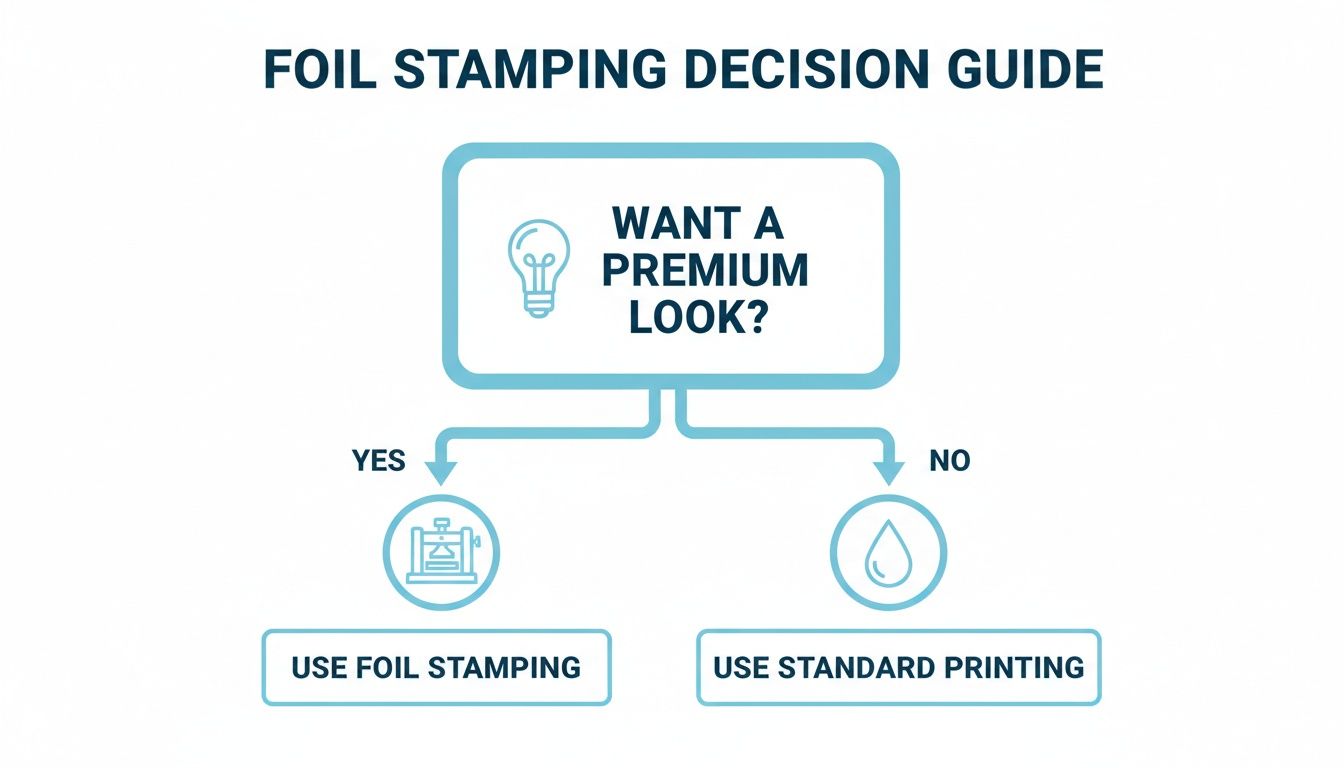
As the chart shows, if a premium look is what you're after, foil stamping is the clear winner over standard ink.
Comparing Hot Stamping vs Digital Foiling
So, how do you actually choose? It really comes down to the specifics of your project. If you're doing a big run and want that classic, debossed texture, traditional hot stamping is your workhorse. But if you need speed, intricate details, or personalization on a smaller batch, digital foiling is the way to go.
This table breaks down the main differences to help you decide.
| Feature | Hot Foil Stamping | Digital Foil Stamping |
|---|---|---|
| Process | Uses a heated custom metal die to press foil onto the surface. | Uses a special toner that attracts foil, which is then fused with heat. No die needed. |
| Best For | High-volume print runs (500+ pieces), simple to moderately complex designs. | Short runs, variable data (personalization), highly intricate or detailed designs. |
| Texture & Effect | Creates a tactile, debossed (indented) effect that you can feel. | Lays the foil flat on the surface for a smooth, purely visual effect. No debossing. |
| Setup Cost | Higher initial setup cost due to the creation of the custom die. | Very low setup cost, as no die is required. |
| Cost Per Piece | Lower cost per piece on large runs, making it very economical for volume. | Higher cost per piece, but more affordable for small quantities. |
| Turnaround Time | Longer, due to the time needed to manufacture the die. | Faster, as the process is entirely digital and requires minimal setup. |
| Material Options | Works on a very wide range of papers, including textured stocks and thicker materials. | Best suited for smooth, coated paper stocks for optimal adhesion. |
| Design Flexibility | Less ideal for extremely fine lines or variable data. | Excellent for intricate details, variable text (like names or numbers), and quick design changes. |
Ultimately, both methods deliver a stunning result, but they get there in different ways. Your choice just depends on balancing project volume, design complexity, and budget.
The market definitely reflects this split. The overall embossing and stamping market is valued at USD 5.39 billion as of 2025. While hot stamping has been a reliable staple for decades, a huge part of the industry’s future growth is coming from digital foiling, which is expanding at an impressive 8.13% CAGR.
Key Takeaway: Hot stamping is your best bet for high-volume orders where you want that classic, indented feel. Digital foiling shines when it comes to short runs, complex designs, and personalized prints where speed and flexibility are top priorities.
By exploring our diverse metallic foil printing options, you can see real-world examples of how both of these techniques bring designs to life. Each method offers a unique way to make your printed materials impossible to ignore, ensuring your brand leaves a lasting, high-quality impression.
Exploring the Creative Palette of Foils and Papers
When people hear "foil stamping," shiny gold and silver are usually the first things that pop into their head. But that's just scratching the surface. The real magic happens when you start playing with the huge variety of foils and papers available. This is where a design goes from good to genuinely unforgettable.
Your choice of foil and paper is what sets the mood and creates a specific tactile experience. Let's dive into the different types of foils out there, because each one has its own personality.
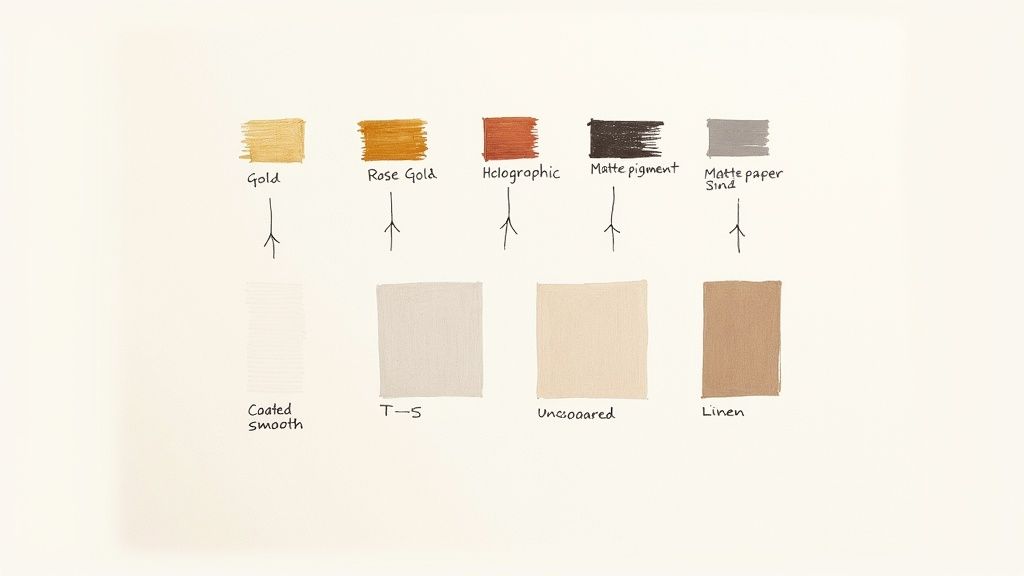
A Spectrum of Foil Finishes
Think way beyond the classics. The world of foil is a playground of creative options that can match any aesthetic you can dream up.
- Metallic Foils: This is the go-to category, but it’s so much more than gold and silver. We're talking about trendy rose gold, rich copper, and deep jewel tones like sapphire blue or emerald green. These foils give you a true metallic luster that ink just can't touch.
- Matte Pigment Foils: For a more subtle, modern vibe, matte foils are a fantastic choice. They offer a smooth, non-reflective finish in all sorts of colors, adding a touch of class without all the shine.
- Holographic Foils: Ready to make a bold statement? Holographic foils are your answer. They bend light to create a stunning rainbow effect that’s impossible to ignore. It’s a futuristic, eye-catching finish perfect for designs that need to grab attention instantly.
- Special Effect Foils: This is where things get really interesting. You can find foils that mimic textures like leather, woodgrain, or even marble. It adds a surprising and memorable tactile element to your printed pieces.
The demand for these diverse finishes is booming. In fact, the global hot stamping foils market is expected to reach USD 5.2 billion by 2035, growing at a 7.5% CAGR, driven mostly by its use in packaging and labels.
The Crucial Role of Paper Stock
The foil is only half the story. The paper you press it onto is just as important. The way foil interacts with different paper textures can create dramatically different outcomes, making your choice of stock a key part of the design process.
The right paper doesn't just hold the foil—it collaborates with it. A smooth surface creates a clean, crisp impression, while a textured surface can give the foil a more organic, artisanal quality.
Take a smooth, coated paper, for instance. It gives the foil a flawless surface to adhere to, letting it lay perfectly flat and reflect light evenly for a sharp, polished look. On the flip side, an uncoated, textured stock like linen or felt creates a more rustic feel. The foil settles into the little peaks and valleys of the paper, giving it a subtle, almost debossed character.
By understanding how these elements work together, you can make deliberate choices that perfectly align with your brand's identity. You can explore our metallic foil collection to see how different combinations can elevate your next project.
How Foil Stamping Elevates Everyday Designs
This is where the theory behind foil stamping really comes to life. Knowing how it works is one thing, but seeing it transform everyday items is what shows off its true power. From a simple business card to the most luxurious product packaging, that little touch of foil can completely redefine the experience and boost a brand's perceived value.
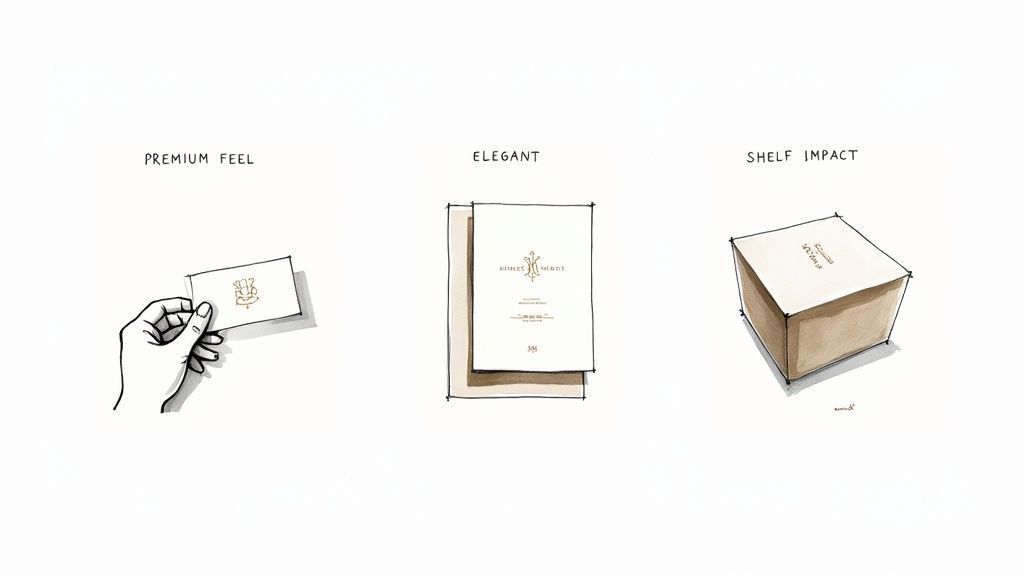
Let's dig into some real-world examples where this technique makes a tangible difference, turning ordinary print into something truly extraordinary.
Creating an Unforgettable First Impression
A business card is often the very first physical piece of your brand that a potential client touches. A standard card just passes along information. A foil-stamped card, on the other hand, tells a story—one of quality and meticulous attention to detail.
Picture a matte black card with a crisp, gold foil logo. The contrast alone is stunning, but it's the slight debossed texture of the foil that feels substantial and premium in your hand. This is no longer just a piece of paper; it’s a memorable artifact. It communicates that your brand is professional, confident, and invests in quality. That tactile feedback reinforces the visual message, making a much stronger impact than ink alone ever could. You can explore a wide range of options for foil business cards that make this kind of lasting impression.
Setting the Tone for Special Occasions
Nowhere is the emotional power of foil more obvious than with invitations. A wedding or gala invitation with shimmering foil script does more than just share the when and where—it builds anticipation and sets the stage for an elegant event.
- A Sense of Luxury: The metallic sheen is an immediate signal that this is a high-end affair.
- An Emotional Connection: It makes the event feel more significant and thoughtfully planned out.
- Keepsake Quality: Guests are far more likely to treasure an invitation that feels like a small piece of art.
The choice of a soft rose gold foil on a creamy, thick paper stock, for instance, can evoke romance and sophistication, creating excitement long before the actual day arrives.
Dominating the Retail Shelf
In a crowded store, product packaging has just seconds to grab a shopper's attention. Foil stamping is one of the most effective tools for making an item leap right off the shelf. Think of a dark chocolate bar with its name stamped in rich copper foil, or a cosmetics box with a holographic pattern that glimmers and shifts under the store lights.
Foil stamping acts as a visual cue for quality. On a busy shelf, that glimmer of light can be the deciding factor that draws a customer's eye and suggests the product inside is worth the price.
This strategic use of foil isn't just about looking pretty. It's about cutting through the visual noise and communicating premium quality at a single glance. It helps justify a higher price point and builds trust in the product before the customer even opens the box. The reflective surface naturally draws the eye, making sure your product gets noticed first.
Essential Design Tips for Flawless Foil Printing
Getting a perfect foil-stamped result isn’t just about the printing process; it all starts with smart, strategic design. Thinking ahead can save you from costly mistakes and make sure your final product looks exactly how you imagined it. A few practical rules of thumb will help your vision translate flawlessly from screen to paper.
One of the biggest things to watch is line thickness. While intricate designs are possible, especially with digital foiling, traditional hot stamping definitely has its limits. Ultra-fine lines (thinner than 0.25 pt) and tiny, delicate text can be a real problem. The heat and pressure can cause these fine details to "fill in" or bridge together, leaving you with a blurry or illegible finish. When it comes to foil stamping, bolder is often better.
Setting Up Your Artwork Correctly
Proper file setup is non-negotiable for a clean result. Your artwork should always be created in a vector format, like an AI or EPS file. Unlike pixel-based images, vectors can be scaled to any size without losing quality, which is absolutely crucial for creating a crisp metal die.
You also need to isolate the foil elements in your file. This just means the parts of your design that will be foiled must be on a completely separate layer in your design software. Be sure to label this layer clearly (e.g., "Foil Layer") and set the color to 100% black. This is the universal sign for the printer that tells them exactly where to apply the foil, leaving no room for error.
Pro Tip: Contrast is your best friend. It’s the secret to making your design truly pop. A bright gold foil on a dark, uncoated paper will create a much more dramatic impact than a silver foil on a light gray stock. Think about how the foil and paper will play off each other to create the biggest visual punch.
Combining Techniques for a Deeper Impact
Foil stamping plays beautifully with other printing techniques, letting you create a truly three-dimensional and tactile experience. A popular and powerful combination is pairing foil with embossing. By perfectly aligning the foil die with an embossing die, you can create a design that is both shiny and physically raised from the surface of the paper.
This dual technique adds a level of texture and sophistication that you just can't get with a single process. For anyone looking to create an exceptionally premium feel, exploring custom embossing services can take your project to a whole new level. By keeping these design and production considerations in mind, you'll be able to communicate clearly with your printer and guarantee your final product is nothing short of stunning.
Breaking Down the Cost and Turnaround for Foil Stamping
Let's get down to brass tacks and talk about the two biggest questions for any print project: how much will it cost, and when will I get it? Foil stamping is a premium touch, for sure, but the budget and timeline are actually pretty straightforward once you know what goes into it.
The final price tag on a foiling project really boils down to a few key variables. With traditional hot stamping, the main upfront cost is creating a custom metal die of your design. This is a one-time setup fee, which is exactly why hot stamping becomes so much more cost-effective on large print runs—that initial die cost gets spread thin across hundreds or thousands of pieces.
Key Factors Driving Your Budget
Thinking through these elements ahead of time will help you plan your project and get a much more accurate quote right from the start.
- Order Quantity: As we touched on, bigger orders dramatically lower the per-piece cost for traditional hot stamping. It’s the go-to for high-volume jobs.
- Foiled Area: This one’s simple—the more foil you use, the more it costs. A small, elegant logo is going to be less expensive than a sprawling, intricate pattern that covers half the page.
- Foil Type: Standard metallic foils like gold and silver are the most budget-friendly. But if you want to get fancy with specialty options like holographic, pigmented, or custom-colored foils, expect the price to go up a bit.
- Method Chosen: Digital foiling is the perfect answer for short runs or one-off custom pieces because it completely skips the die-making process. No setup fee makes it incredibly accessible.
The most important takeaway is this: traditional hot stamping has a higher entry cost but a lower per-piece price on large orders. On the flip side, digital foiling offers an affordable path for smaller, more flexible projects without that initial setup investment.
Factoring in Production Time
It’s also really important to remember that foil stamping is a finishing process. It happens after the initial printing is already done, which means it adds an extra step to the production schedule.
As a rule of thumb, you should plan for an additional 2-3 business days for foiling compared to a standard print job without it. This little buffer gives us the time needed for die creation (if you’re going the traditional route), machine setup, and the actual foiling application. Planning for this extra time from the get-go ensures you’ll hit your deadline without any last-minute stress.
Got Questions About Foil Stamping? We've Got Answers.
As you get closer to bringing your project to life, it’s natural for a few specific questions to pop up. When it comes to something as distinct as foil stamping, getting the details right is what separates a good design from a great one.
Let’s walk through some of the most common questions we hear from designers and business owners just like you.
Can You Print Regular Ink Over Foil Stamping?
That’s a definite no-go. Foil creates a slick, non-porous surface, which means standard printing ink has nothing to grip onto. It won't absorb or dry properly, leaving you with a smudged, messy disaster.
The professional way to handle this is by creating a "knock out" in your design files. Essentially, you're telling the press to leave a blank space in the foil layer exactly where you want the ink to go. This way, both the foil and the ink are applied directly to the paper, giving you that clean, crisp, and high-end finish you're after.
What Is the Difference Between Foil Stamping and Metallic Ink?
It’s easy to confuse them, but the final results are worlds apart. Think of metallic ink as a standard ink with tiny, glitter-like metal particles mixed in. It prints flat on the paper and gives off a subtle, muted shimmer.
Foil stamping, however, is in a league of its own. It’s a process that applies a solid, opaque layer of metallic film. The result? A true, brilliant metallic shine that ink just can't touch. You also get a slight debossed texture you can feel, adding a tactile, premium quality to the piece.
How Detailed Can My Foil Stamping Design Be?
The level of detail you can pull off really depends on the technique.
Traditional hot stamping is the heavyweight champion, perfect for bold lines and strong text. For best results, keep your lines thicker than 0.25 pt. If you go too thin, you risk the fine details getting lost or "bridging" together under the heat and pressure.
On the other hand, the more modern digital foiling can often handle more delicate, intricate patterns and hairline details with incredible precision. No matter which route you go, it's always a smart move to double-check the specific design guidelines from your print provider. This ensures your artwork is perfectly set up to produce a flawless result.
Ready to add that unforgettable shine to your next project? 4OVER4 offers a wide range of custom foil stamping options to make your brand stand out. Explore our collection and start designing today at https://4over4.com.
More from

729
Full bleed printing is a simple but game-changing technique. It's how you get your artwork—whether it’s a photo, a background color, o
 Emma Davis
Feb 3, 2026

336
Even though we live in a digital world, the humble business card is still a powerhouse networking tool. But here's something most people d
Emma Davis
Feb 2, 2026

1307
Staring at a wall of banner dimensions can feel a little overwhelming. But while there's no single "typical banner size" that wo
Emma Davis
Feb 1, 2026

397
Stretching your marketing budget doesn't mean you have to settle for flimsy, forgettable brochures. The real secret to low cost br
Emma Davis
Jan 31, 2026

387
Advertising magnets are one of those marketing tools that are so simple, you might overlook their power. They’re tangible, they last for age
Emma Davis
Jan 30, 2026

198
Tired of fighting with torn paper and sticky residue? We’ve all been there. The best way to get labels off bottles is often a simple soak in
Emma Davis
Jan 29, 2026

352
Want to know the real secret to getting a poster to stick to a wall without it peeling off in the middle of the night? It's all about what
Emma Davis
Jan 28, 2026

320
When you hear "table tent specs," what we're really talking about are the foundational details for printing them correctly: the
Emma Davis
Jan 27, 2026