
TABLE OF CONTENTS
- Home
- content hub
- Ecommerce Packaging Solutions A Modern Guide
 Share and earn
Ecommerce Packaging Solutions A Modern Guide

Nov 22, 2025308 views
Nov 22, 2025308 views
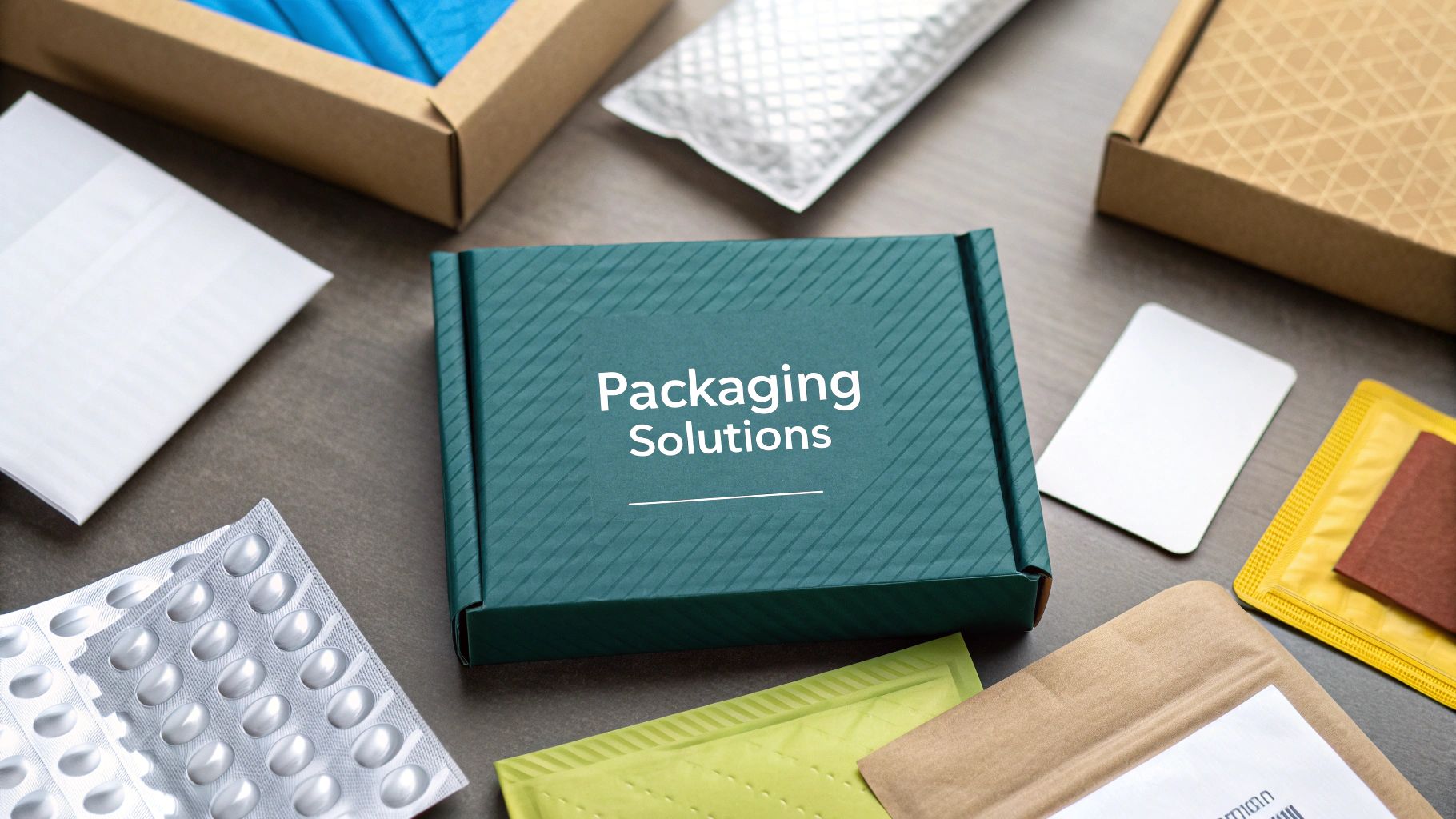
Ecommerce packaging is more than just a box. It's the entire system of containers and materials you use to get your products safely into your customers' hands. This can be anything from a simple poly mailer for a t-shirt to a custom-printed box with foam inserts for fragile electronics. Done right, it protects your products and becomes a silent ambassador for your brand.
Choosing Your Core Ecommerce Packaging
Think of your packaging strategy like building a toolkit. A good carpenter doesn't just own a hammer; they have a whole range of tools, each perfect for a specific job. Your ecommerce store is no different. You need a variety of packaging solutions on hand, ready for whatever you need to ship.
The goal is to pick the right tool for the job every time, striking that perfect balance between protection, cost, and the customer's unboxing experience. Get it wrong, and you're looking at damaged products, bloated shipping fees, and a first impression that falls flat.
This visual guide is a great starting point, showing how your product's own qualities—like whether it's fragile or durable—can point you toward the best primary packaging.
As you can see, the path to the right packaging starts with a simple question about what you're selling. From there, it branches off to the best-fit solutions, like flexible mailers for apparel or sturdy boxes for anything bulky.
Before diving deep, here’s a quick overview of the main players in the ecommerce packaging world. This table breaks down the most common options to help you quickly match your products to the right type of container.
Quick Guide to Primary Packaging Types
| Packaging Type | Best For | Pros | Cons |
|---|---|---|---|
| Poly Mailers | Apparel, accessories, and other soft, non-fragile goods. | Lightweight, weather-resistant, affordable, and take up minimal storage space. | Offers no structural protection; not suitable for fragile items. |
| Bubble Mailers | Books, cosmetics, small electronics, and semi-fragile items. | Provides a built-in layer of cushioning; lightweight and easy to use. | More expensive than poly mailers; still not enough for very delicate products. |
| Corrugated Boxes | Bulkier items, multiple-product orders, and anything needing rigid protection. | Highly durable, stackable, and available in countless sizes and strengths. | Heavier and bulkier, which can increase shipping costs; require void fill. |
| Mailer Boxes | Subscription boxes, high-end products, and curated gift sets. | Creates a premium unboxing experience; self-locking and aesthetically pleasing. | More expensive than standard boxes; can be less durable for heavy shipping. |
Now that you have the lay of the land, let's explore each of these options in more detail to figure out which one is the perfect fit for your business.
The Specialized Envelopes: Mailers
Mailers are the sleek, efficient envelopes of the ecommerce world. They're the perfect choice for items that don't need the rigid protection of a box and can help you save a ton on shipping weight.
- Poly Mailers: These are your go-to for shipping soft goods like clothing, textiles, or accessories. They're essentially durable, lightweight, and weather-resistant plastic bags. Their flexibility and feather-light weight are huge wins for keeping shipping costs down.
- Bubble Mailers: Think of these as a poly mailer with a built-in security blanket. Lined with a layer of bubble wrap, they give you that crucial bit of cushioning for semi-fragile items—things like books, cosmetics, or small electronics that just need a little extra help to survive the bumps and drops of transit.
The Versatile Workhorses: Boxes
Boxes are the undisputed foundation of the shipping world. While traditional cartons and boxes make up a whopping 62% of the ecommerce packaging market, the variety within this category is massive. Their strength and sheer adaptability make them a fit for almost any product imaginable.
The right box does more than just transport a product; it frames the entire unboxing experience. It’s the stage on which your brand makes its first physical appearance.
The two most common types you'll encounter are:
- Standard Corrugated Boxes (RSC): These are the classic brown shipping boxes everyone knows. Their strength comes from that fluted, wavy layer of paper sandwiched between two flat liners, giving them fantastic structural integrity. They're the workhorse for bulkier, heavier, or less fragile items.
- Mailer Boxes: These are the elegant, presentation-focused cousins of the standard box. With their clean folds, self-locking tabs, and premium feel, they're specifically designed to create a memorable unboxing moment. It's no surprise they're the top choice for subscription boxes, high-end gifts, and any brand looking to make a serious statement. Taking the next step with custom box printing can turn these boxes into a powerful marketing tool.
The Essential Supporting Cast
Getting your product into a mailer or box is just step one. To do it right, you need a few supporting players to ensure everything arrives safely and looks professional.
- Protective Inserts: This is the catch-all term for anything you put inside the box to stop your items from sliding, shifting, or breaking. Common options include bubble wrap, air pillows, crinkle paper, or even custom-molded inserts that hold your product perfectly in place. As more brands focus on reducing transit damage, the use of smart protective packaging is on the rise.
- Shipping Labels: This is the final, non-negotiable piece of the puzzle. A clear, scannable shipping label has all the critical information needed to get the package from your warehouse to your customer's doorstep without a hitch. It's the passport for your product's journey.
Selecting Sustainable Packaging Materials
Once you’ve figured out the right type of container for your product, the next big decision is what it’s made of. This used to be a simple choice about durability, but today, it’s a powerful statement about your brand's values. Picking sustainable packaging isn’t some niche trend anymore; it's what modern customers expect.
The environmental cost of ecommerce packaging has become a huge deal for shoppers and businesses. Brands are now actively looking for recyclable, biodegradable, and reusable materials to shrink their carbon footprint. This isn't just a feel-good move—it's driven by real customer demand. A huge chunk of online shoppers now expects brands to show they care about the planet through their packaging choices.
Moving toward greener options is about more than just looking good. It's about aligning your business with a healthier planet.
Demystifying Eco-Friendly Terms
The world of sustainable packaging is packed with terms that can get confusing pretty fast. Let’s break down the big three with some simple analogies to make them stick.
Recyclable: Think of an aluminum can. The material can be collected, broken down, and remade into something new. Corrugated cardboard is a perfect example—it’s one of the most recycled materials on earth.
Biodegradable: This means the material can be broken down over time by natural critters like bacteria. The catch? The conditions and timeline can vary wildly, and sometimes it leaves behind residue.
Compostable: This is the gold standard of green. Imagine an apple core. A compostable mailer breaks down in a proper composting environment, turning back into nutrient-rich organic matter. It leaves nothing harmful behind and truly returns to the earth.
Knowing the difference here is key to making a choice that actually helps the environment.
Exploring Innovative Green Materials
Beyond the usual paper and cardboard, a whole new generation of materials is changing the game. These alternatives work great for shipping while doing a lot less harm.
“Choosing a sustainable material is like casting a vote for the kind of world you want to live in. For brands, it’s a tangible way to show customers you’re invested in a shared future, not just a single transaction.”
Many print providers now offer a wide variety of green printing options that use these forward-thinking materials. Here are a few that are really gaining steam:
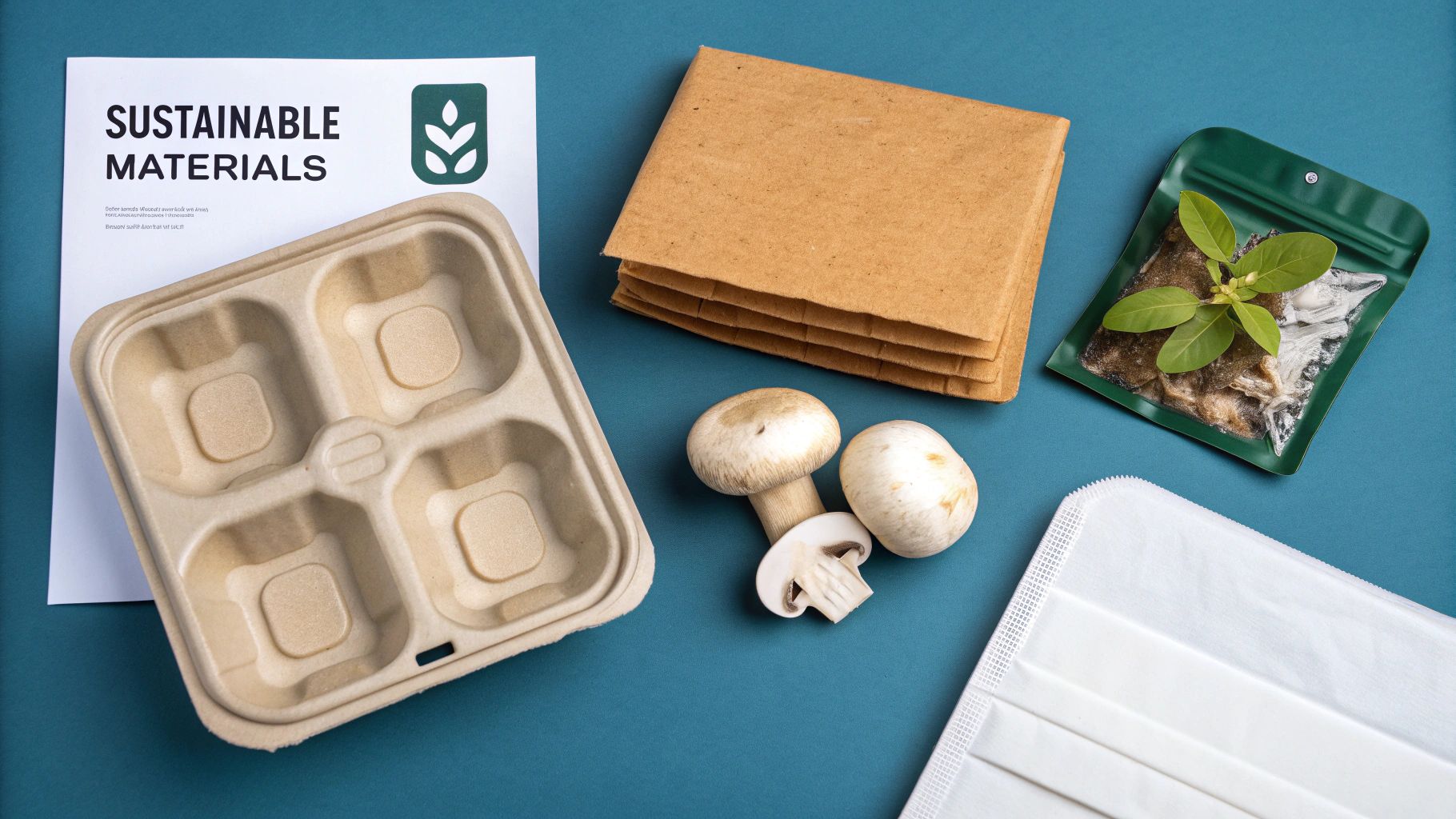
- Mushroom Packaging (Mycelium): This stuff is incredible—it’s grown, not manufactured. It uses agricultural waste and the root structure of mushrooms to create custom-molded protective inserts that are fully compostable right in your backyard.
- Cornstarch-Based Plastics (PLA): Polylactic Acid (PLA) is a bioplastic made from renewable sources like cornstarch. It looks and feels just like regular plastic but is commercially compostable, making it a fantastic substitute for things like clear product windows or packing peanuts.
- Seaweed and Algae Packaging: These fast-growing marine plants are being used to create everything from water-soluble films to sturdy boxes. They need very little land or fresh water to grow, making them a seriously sustainable option.
You can take a deeper look into the world of eco-friendly options by exploring the growing list of sustainable alternatives to plastic.
Vetting Suppliers and Avoiding Greenwashing
As sustainability gets more popular, so does "greenwashing"—when companies make misleading claims about how eco-friendly their products are. To make sure your packaging is the real deal, you have to vet your suppliers carefully.
Here’s how to do it right:
- Ask for Certifications: Look for official stamps of approval from respected organizations. For anything compostable, BPI (Biodegradable Products Institute) certification is a must. For paper, look for FSC (Forest Stewardship Council) certification, which guarantees it comes from responsibly managed forests.
- Request Material Data Sheets: A legitimate supplier will have no problem giving you the technical details about what their products are made of and how they break down.
- Start with Small Orders: Before you buy a warehouse full of mailers, order some samples. Test the quality, durability, and feel of the materials for yourself.
By taking these extra steps, you can confidently choose packaging that not only protects your products but also proves your brand’s commitment to a greener future.
Creating an Unforgettable Unboxing Experience
In ecommerce, your package is the first physical handshake between your brand and your customer. It’s so much more than just a container; it’s a powerful marketing moment that starts the second that box lands on their doorstep. This is where the unboxing experience comes into play—turning a simple delivery into a memorable brand interaction.
Think of it as setting the stage for your product. Sure, a plain brown box gets the job done, but a thoughtfully designed package tells a story. The data backs this up: 40% of consumers say they're more likely to buy again from an online merchant that uses premium packaging. It signals quality, care, and attention to detail before they’ve even seen what’s inside.
From Simple Logos to Full-Color Branding
Custom printing is your most direct route to injecting your brand's personality into your packaging. The best part? This doesn't have to be some huge, expensive undertaking. You can scale your approach based on your budget and goals, turning even the most basic packaging into a unique brand asset.
You can think of custom printing in a few different levels, each with its own impact:
- The Simple Stamp: For new businesses, the easiest and most affordable entry point is printing a one-color logo on a standard stock mailer or box. It’s clean, professional, and instantly sets your package apart from generic shipments.
- The Full-Color Mailer: As your business grows, you can graduate to fully printed mailer boxes or poly mailers. This gives you a complete 360-degree canvas to play with, opening the door for bold colors, custom patterns, and creative designs that make a serious impression.
Layering the Experience Inside the Box
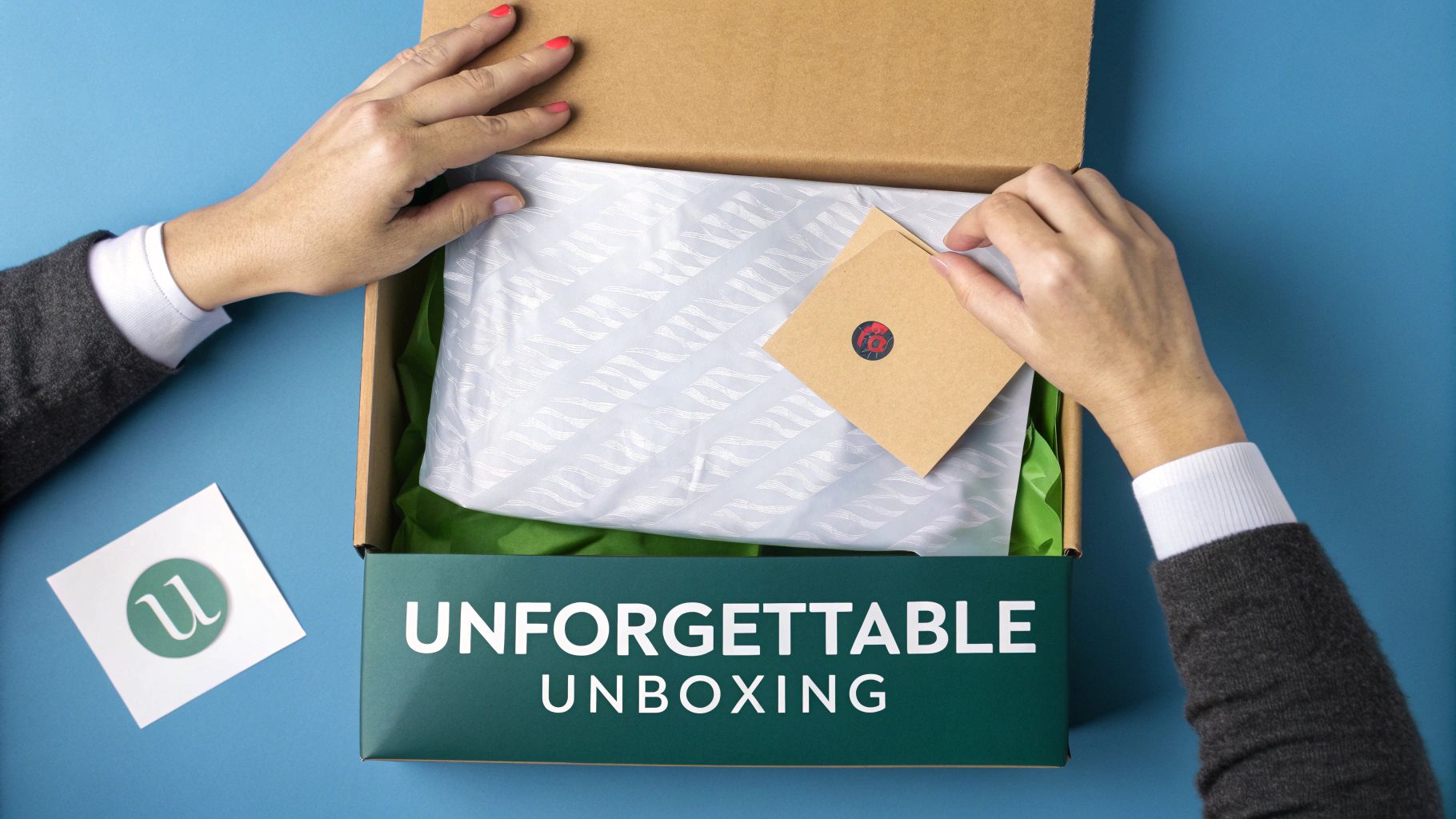
What happens after the customer opens the flap is just as crucial as the outside. A truly great unboxing is a layered discovery, revealing the product piece by piece. This builds anticipation and adds a touch of luxury, no matter your product's price point.
You can create this layered effect with a few key elements:
- Custom Tissue Paper: Wrapping your product in branded tissue paper adds an instant layer of sophistication while also providing a bit of protection. To really make this element shine, explore the possibilities of custom tissue paper printing to feature your logo or a unique brand pattern.
- Branded Stickers: A simple custom sticker is a fantastic, low-cost way to reinforce your brand. Use it to seal the tissue paper, close an interior box, or just as a decorative touch.
- Interior Prints: Surprise your customers with a message or pattern printed on the inside of the box lid. A quick "Thanks for your order!" or a vibrant brand pattern is an unexpected detail that brings a smile.
- Personalized Inserts: A thank-you card, a small flyer with a discount code, or even a handwritten note can make a customer feel genuinely valued. This is how you build a personal connection and turn a one-time buyer into a loyal fan.
The unboxing experience is your chance to control the narrative. Every fold, color, and texture is a word in your brand’s story, culminating in the reveal of the product itself.
A Mini Guide to Working with Printers
Dipping your toes into custom printing can feel a little intimidating, with its own lingo and technical terms. But getting a handle on just a few key concepts will make the process much smoother, whether you're working with a local shop or a big online provider.
- Die Lines: Think of a die line as the 2D blueprint for your 3D box. Your designer uses this template to place all the artwork correctly, ensuring logos, text, and patterns land exactly where they should when the box is folded up.
- Color Matching (Pantone vs. CMYK): For brand consistency, color is everything. CMYK (Cyan, Magenta, Yellow, Black) is the standard for full-color digital printing. The Pantone Matching System (PMS), on the other hand, uses pre-mixed inks to achieve a perfect color match every time—this is critical if you need to hit your brand’s signature shade with dead-on accuracy.
- Minimum Order Quantity (MOQ): This is simply the smallest number of units a supplier is willing to produce in a single run. MOQs for custom packaging can be anywhere from a few hundred to several thousand, so it’s vital to find a supplier whose numbers work for your business's scale.
By getting these details right, you can create ecommerce packaging that doesn't just protect your products—it builds a lasting connection with your customers from the moment their order arrives. If you really want to create a premium feel, you can even explore this detailed guide to high end gift boxes and weave those principles into your strategy.
Optimizing Packaging to Reduce Costs and Waste
Beyond the branding and the eco-friendly materials, your ecommerce packaging choices hit two of the most critical parts of your operation: your shipping costs and whether your products arrive in one piece. Every decision, from the size of a box to the type of cushioning inside, sends ripples straight to your bottom line. Nailing this balance is the secret to running a lean, profitable, and reliable shipping game.
The goal here is to stamp out waste in all its forms—wasted space, wasted materials, and the wasted money that comes from shipping replacements for damaged goods. This isn't just about saving a few bucks; it's a smarter way of doing business that shrinks your environmental footprint and, most importantly, keeps your customers happy.
Understanding the Cost of Empty Space
Ever wondered why shipping a big, fluffy pillow can cost more than a small, heavy brick? The culprit is a concept called dimensional (DIM) weight. Carriers like UPS and FedEx don't just bill you for what a package actually weighs. They also charge you for the amount of space it hogs on their truck.
They run the numbers on both the actual weight and the DIM weight, then charge you for whichever is higher. So, if you're shipping a tiny item in a massive box filled with air, you're literally paying to ship nothing. It's an incredibly common—and expensive—mistake for ecommerce brands.
The Power of Right-Sizing Your Packaging
The single most effective way to fight back against DIM weight fees is right-sizing. This is just a practical way of saying you need to match your packaging as closely as possible to the dimensions of your product, which cuts down on the need for all that extra stuffing. A perfectly sized box is lighter, uses fewer materials, and costs less to ship. Period.
Here’s a simple way to get started with right-sizing:
- Audit Your Products: Group your products into a few categories based on their general size and shape. You don't need a unique box for every single SKU.
- Find Your Core Sizes: Identify a handful of standard box or mailer sizes that can handle the vast majority of your product combinations.
- Optimize for a Snug Fit: Pick a container that leaves just enough room for a thin layer of protection, but not so much that your product is rattling around inside.
By focusing on right-sizing, businesses can slash their packaging waste by over 25% and bring down their shipping expenses in a big way. It’s the single most impactful change you can make to lower your costs.
Choosing the Right Protective Materials
Once your product is snug in its right-sized box, the next mission is to keep it safe on its journey. Bubble wrap has its place, but the world of protective materials has grown way beyond that. The trick is to find that sweet spot between maximum protection and minimum weight and material use.
Different products have different needs. Let’s break down the main types of internal packaging.
Cushioning vs. Void Fill
First, it’s important to know the difference between these two. Cushioning is all about absorbing shock and preventing damage from drops and impacts. Void fill, on the other hand, is just there to fill up empty space and stop your items from sliding around.
Here are a few popular options you’ll see:
- Air Pillows: A classic void fill. These are super lightweight and cheap, perfect for filling big gaps in a box. Just know they offer very little cushioning against a direct hit.
- Crinkle Paper: This stuff is a great two-for-one. It’s an effective void fill that also looks fantastic for unboxing, and it offers a moderate amount of cushioning. Plus, it’s often made from recycled paper.
- Molded Pulp: Made from recycled paper and water, this is a brilliant eco-friendly cushioning option. It can be molded into custom shapes to hold fragile things like glass bottles or electronics perfectly still.
- Foam Inserts: For your high-value or extremely delicate products, nothing beats custom-cut foam. It provides the ultimate level of shock absorption and protection.
Now, let's compare some of the most common options side-by-side to help you decide.
Protective Packaging Options Compared
| Material Type | Protection Level | Cost | Environmental Impact |
|---|---|---|---|
| Air Pillows | Low (Void Fill) | Low | Low (mostly air), but plastic film can be hard to recycle. |
| Bubble Wrap | Medium (Cushioning) | Low | Low-to-Medium. Plastic film is recyclable at specific drop-offs. |
| Crinkle Paper | Medium (Void Fill) | Medium | High. Often made from recycled paper and is curbside recyclable. |
| Molded Pulp | High (Cushioning) | Medium-High | High. Made from recycled materials; compostable and recyclable. |
| Foam Inserts | Very High (Cushioning) | High | Low. Typically petroleum-based and not easily recyclable. |
Choosing the right mix of packaging products for cushioning and void fill is a game-changer. When you get your box size and your internal protection right, you directly lower your shipping fees, produce less waste, and slash those costly returns from damaged goods. Every shipment becomes a little more profitable.
Sourcing Suppliers and Managing Fulfillment
Your brilliant packaging design is just an idea until you find the right partner to bring it to print and figure out how to get it to your warehouse. This is where your strategy moves from the drawing board to the real world. Nailing down reliable suppliers and smoothly integrating your packaging into your fulfillment process are the final, crucial steps.
Choosing a supplier isn't a one-size-fits-all deal; it really comes down to the scale and specific needs of your business. The ecommerce packaging world is huge, with options for everyone, from a garage startup to a massive retail operation.
And this space is only getting bigger. The global e-commerce packaging market is expected to hit around USD 272.77 billion by 2034, growing at an impressive clip of about 13% each year. This boom is fueled by the massive shift to online shopping and new tech like smart packaging. You can check out more insights on this fast-growing market over at Mordor Intelligence.
Finding the Right Supplier for Your Business
Your hunt for a supplier will likely take you down one of two main roads. Understanding the difference is key to finding a partner that fits your volume, budget, and customization needs.
- Large-Scale Manufacturers: These are the go-to partners for established businesses with high order volumes. They offer the best price per unit, but they also have high minimum order quantities (MOQs). We're often talking thousands of units at a time.
- Online Print Platforms: For startups and smaller businesses, platforms like Packlane or Arka are a perfect fit. They specialize in low MOQs, which makes getting custom-printed packaging a reality without a huge upfront investment. That flexibility is a game-changer for testing designs and managing cash flow.
Domestic vs. Overseas Sourcing
Another big decision is where your supplier is based. Sourcing domestically versus overseas is a classic trade-off between cost, speed, and quality control.
Choosing a supplier is like choosing a business partner. Communication, reliability, and a shared understanding of quality are just as important as the price per box.
Here’s a quick rundown to help guide your decision:
| Factor | Domestic Sourcing | Overseas Sourcing |
|---|---|---|
| Cost | Typically higher per-unit costs. | Often significantly lower per-unit costs. |
| Lead Time | Much faster, with shipping taking days instead of weeks or months. | Longer lead times due to production schedules and ocean freight. |
| Quality Control | Easier to verify quality, visit facilities, and resolve issues. | More challenging to oversee production and manage quality control. |
| Communication | Simpler communication with no time zone or language barriers. | Potential challenges with time zones and language differences. |
For a lot of brands, a hybrid approach works best. They might use domestic suppliers for urgent, small-batch needs and lean on overseas partners for the big, bulk orders planned far in advance.
Connecting Packaging to Warehouse Operations
Don't forget that your packaging choices have a direct, and often significant, impact on your fulfillment efficiency. A well-designed box isn't just for the customer; it should also be designed for the people packing it day in and day out. Complex, finicky packaging can seriously slow down your pick-and-pack process, driving up labor costs with every single order.
Think about these operational perks when you're finalizing your packaging:
- Ease of Assembly: Go for boxes that are intuitive and quick to fold. "Crash lock" or "auto-bottom" boxes, for example, pop into shape in seconds. That shaves valuable time off each order.
- Storage and Standardization: Standardizing your packaging into a few core sizes doesn't just make ordering easier; it streamlines your entire warehouse. Uniform boxes are a breeze to stack, store, and organize, which maximizes your space and simplifies inventory management. For smaller branding touches, you can get creative with versatile options like custom packaging and retail stickers, which add personality without complicating your box inventory.
Working with a Third-Party Logistics (3PL) Partner
If you outsource your fulfillment to a 3PL, crystal-clear communication about your packaging standards is an absolute must. Your 3PL partner becomes the final guardian of your brand experience, and they need to execute your vision flawlessly.
To keep everything consistent, give your 3PL a detailed guide—a playbook, really—that includes:
- Clear Instructions: Document which box or mailer to use for every single product or order combination.
- Visual Examples: Include photos or diagrams showing exactly how products should be arranged, wrapped, and sealed.
- Material Specifications: Get specific. Note the exact type and amount of void fill, where stickers should go, and how to include any marketing inserts.
By providing this roadmap, you're ensuring that every package leaving the warehouse meets your brand's high standards. That's how you deliver a consistent, top-notch customer experience every single time.
Answering Your Top Ecommerce Packaging Questions
Jumping into the world of ecommerce packaging can feel like a puzzle. You’re busy growing your business, and suddenly you’re faced with questions about boxes, mailers, and costs. Let's clear up some of the most common questions with straightforward answers to help you make smarter choices and build a packaging strategy that just works.
How Do I Choose Between a Box and a Mailer?
The best way to decide comes down to your product's fragility and shape. A great rule of thumb is this: if you can drop your product from waist height without it breaking, and it’s relatively flat or soft, a mailer is almost always your most cost-effective bet.
Think of it like this: a t-shirt is durable and can be folded flat, making it the perfect candidate for a lightweight poly mailer. On the other hand, a ceramic mug is rigid and fragile, and it absolutely needs the sturdy, structural protection that only a corrugated box can offer. Always put product safety first—any savings from a cheaper mailer vanish the moment you have to ship a replacement for a broken item.
What Is the Most Affordable Way to Start with Custom Packaging?
Getting started with custom packaging doesn't have to mean a massive investment in full-color, custom-printed boxes. Often, the most budget-friendly starting points are the small touches that leave the biggest impression on your customers.
Consider these low-cost, high-impact options to get going:
- Custom Stickers: Branded stickers are incredibly versatile and easy on the wallet. Use them to seal tissue paper, pop your logo onto a plain stock box, or hold a thank-you note in place. They instantly make a generic package feel special.
- Branded Packing Tape: Custom-printed tape does double duty. It secures your boxes while splashing your brand name or logo across every side of the package, getting you noticed from the warehouse to the front door.
- One-Color Logo Print: Many suppliers offer simple one-color printing on standard mailers or boxes for a very small fee. It’s a clean, professional way to get your brand out there without the expense of a complex, multi-color design.
How Much Protective Fill Should I Use?
The goal here is simple: use just enough material to keep the product from moving and give it a bit of cushion, but not so much that you're paying to ship a box full of air. The right amount of fill prevents your item from banging against the inside of the box and stops it from sliding around in transit. The best way to check? The "shake test."
Once your box is packed and sealed, give it a gentle shake. If you can hear or feel anything rattling around inside, you need a bit more void fill. If it feels solid and secure, you’ve nailed it.
This quick check helps you find that sweet spot, keeping your products safe without inflating your dimensional weight costs or wasting materials.
Is Sustainable Packaging Really More Expensive?
It’s a common myth that going green always costs more. While some brand-new, cutting-edge eco-materials might have a higher price tag, a smart sustainable packaging strategy can actually save you money. For instance, switching to right-sized boxes made from recycled cardboard not only reduces material waste but also lowers your shipping costs. It’s a win-win.
Plus, many of the go-to sustainable materials, like corrugated cardboard and kraft paper, are already very cost-competitive. The trick is to look at the total cost, which includes shipping and the massive potential for building customer loyalty. A 2021 study revealed that 73% of consumers are willing to pay more for products that arrive in sustainable packaging, turning what you thought was a cost into a serious revenue driver.
What Does MOQ Mean and Why Is It Important?
MOQ stands for Minimum Order Quantity. It's simply the smallest number of units a supplier is willing to make and sell in one go. For example, a huge manufacturer might have an MOQ of 5,000 custom boxes, whereas an online print platform could offer an MOQ as low as just 50.
Understanding a supplier's MOQ is absolutely critical for managing your budget and your storage space. A high MOQ can be a huge roadblock for a small business, tying up a lot of cash upfront and forcing you to find room for thousands of boxes. A low MOQ, however, gives you flexibility. It lets you test out new designs, manage your cash flow, and avoid getting stuck with a mountain of outdated packaging if you decide to rebrand. Always look for a supplier whose MOQ lines up with your current sales and where you plan to be in the near future.
Ready to turn your packaging from a simple container into a powerful brand statement? 4OVER4 offers a vast selection of customizable and high-quality ecommerce packaging solutions to fit any budget or business size. Explore our options and start building your unforgettable unboxing experience today at https://4over4.com.
More from

729
Full bleed printing is a simple but game-changing technique. It's how you get your artwork—whether it’s a photo, a background color, o
 Emma Davis
Feb 3, 2026

336
Even though we live in a digital world, the humble business card is still a powerhouse networking tool. But here's something most people d
Emma Davis
Feb 2, 2026

1307
Staring at a wall of banner dimensions can feel a little overwhelming. But while there's no single "typical banner size" that wo
Emma Davis
Feb 1, 2026

397
Stretching your marketing budget doesn't mean you have to settle for flimsy, forgettable brochures. The real secret to low cost br
Emma Davis
Jan 31, 2026

387
Advertising magnets are one of those marketing tools that are so simple, you might overlook their power. They’re tangible, they last for age
Emma Davis
Jan 30, 2026

198
Tired of fighting with torn paper and sticky residue? We’ve all been there. The best way to get labels off bottles is often a simple soak in
Emma Davis
Jan 29, 2026

352
Want to know the real secret to getting a poster to stick to a wall without it peeling off in the middle of the night? It's all about what
Emma Davis
Jan 28, 2026

320
When you hear "table tent specs," what we're really talking about are the foundational details for printing them correctly: the
Emma Davis
Jan 27, 2026