
TABLE OF CONTENTS
- Home
- content hub
- Discover eco friendly printing services for greener branding
 Share and earn
Discover eco friendly printing services for greener branding

Dec 4, 2025322 views
Dec 4, 2025322 views

So, what does "eco-friendly printing" actually mean? It’s not just about using recycled paper. That’s a common misconception and, honestly, just scratching the surface.
Eco-friendly printing is a full-circle commitment to minimizing environmental impact at every single stage of the process. It's about making conscious choices from the moment a tree is sourced until the final product lands on your doorstep.
What Exactly Are Eco Friendly Printing Services
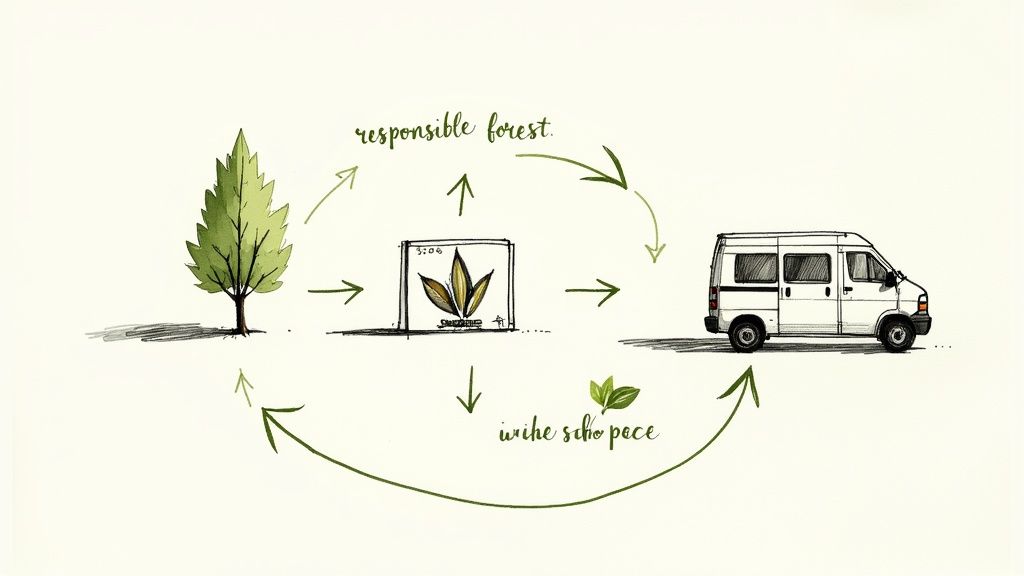
While using sustainable materials like recycled paper and non-toxic inks is a huge part of the equation, true green printing goes much, much deeper. It’s a complete philosophy that examines the entire lifecycle of a print job.
Think of it as a "forest-to-front-door" approach. It's not one single action but a whole chain of responsible decisions designed to save resources, cut down on pollution, and support a healthier planet. If you're looking to really get into the weeds, exploring various eco friendly printing solutions can shed more light on the different facets.
Beyond the Paper and Ink
A real commitment to sustainability has to go beyond the materials you can see and touch. It extends right into the print shop itself.
Eco-conscious printers are the ones investing in modern, energy-efficient equipment that uses less power and creates fewer emissions. They're also the ones using smarter techniques, like chemical-free plate making, and have solid internal recycling programs to catch any waste. It's this behind-the-scenes operational dedication that really separates the truly green printers from the rest.
The Lifecycle of a Sustainable Print Project
Let's break down what this holistic journey looks like for a printed piece:
- Responsible Sourcing: It starts with the paper. Is it from a responsibly managed forest? Does it have a high percentage of post-consumer recycled content?
- Low-Impact Production: This is where the printer's choices matter. Are they using non-toxic, vegetable-based inks? Is their machinery built for energy efficiency?
- Waste Reduction: Smart printers optimize their runs to avoid overages and make sure every scrap and byproduct gets recycled.
- Eco-Conscious Finishing: Even the final touches count. Binding and finishing options should be chosen so they don't make the final product difficult to recycle.
- Green Delivery: The last mile matters, too. Top-tier green printers will offer carbon-neutral shipping to offset the emissions from transportation.
This isn't just a niche market anymore; it's a significant shift in the industry. The global sustainable printing market, valued at USD 2.17 billion, is expected to hit USD 3.35 billion by 2030. That kind of growth tells you that both businesses and their customers are voting with their wallets for more responsible options.
For any business, choosing sustainable print options is a fantastic way to put your money where your mouth is and align your brand's values with concrete actions. When you partner with a green printer, you're making a tangible statement about your commitment to corporate responsibility. You can check out our full range of green printing products to see just how easy it is to make the switch.
The Core Materials of Sustainable Printing
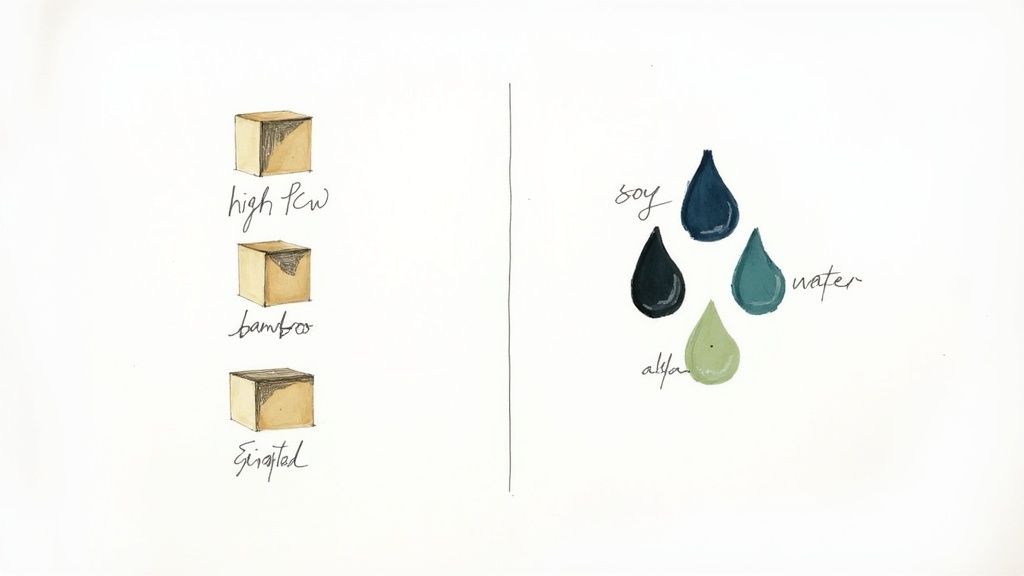
The heart of any eco-friendly printing service lies in two fundamental elements: the paper it’s printed on and the ink used to bring the design to life. Making smarter choices here can slash a project's environmental impact before it even gets near a press. Let’s look at the sustainable options that elevate a standard print job into a truly green one.
Think of these materials as the core ingredients in a recipe. A great chef wouldn't use subpar produce, right? In the same way, a truly sustainable printer carefully selects materials that are kinder to our planet. These choices go way beyond just "recycled paper" and open up a whole world of responsible innovation.
Rethinking Paper Beyond the Basics
Paper is usually the first thing that comes to mind, and for good reason. Traditional paper production is a thirsty, resource-heavy process. Thankfully, modern sustainable alternatives deliver fantastic quality without that steep environmental price tag. The main goal is to shift away from virgin fibers that come from poorly managed forests.
Your most powerful choice here is paper with a high percentage of post-consumer waste (PCW). This is just a technical term for paper made from materials you and I have already used and recycled, like old mail or office documents. By choosing high-PCW paper, you’re directly helping to keep waste out of landfills and reducing the demand for new trees.
Key Takeaway: Choosing paper with 100% PCW content is one of the single biggest moves you can make toward sustainable printing. It closes the recycling loop, saves an enormous amount of water, and cuts down on energy use.
But recycled content isn’t the only way to go. There are other fantastic, eco-conscious paper options available:
- FSC-Certified Virgin Paper: If recycled paper just won't work for your project, the next best thing is virgin paper certified by the Forest Stewardship Council (FSC). This label is a guarantee that the wood pulp comes from forests managed with the highest environmental and social standards in mind.
- Alternative Fibers: This is an exciting and growing field. We're now seeing incredible papers made from alternative, fast-growing fibers like bamboo, hemp, and even agricultural waste. These plants typically need less water and fewer pesticides to grow than trees, making them a brilliant renewable resource.
- Unbleached or Chlorine-Free Paper: The conventional bleaching process can release some nasty chemicals into the environment. Opting for unbleached stocks, like those in our rustic Kraft Collection, or papers bleached using chlorine-free methods (PCF or TCF) helps minimize that chemical footprint.
The Shift to Cleaner, Greener Inks
The second critical ingredient is the ink. For decades, the industry relied on petroleum-based inks, which release harmful Volatile Organic Compounds (VOCs) into the air as they dry. These VOCs contribute to air pollution and can be a health concern.
Fortunately, the tide is turning. The market for eco-friendly inks is booming, projected to grow from around USD 4.7 billion to an impressive USD 8.9 billion by 2035. This massive industry shift, highlighted in this detailed market analysis, shows just how serious printers are about getting cleaner.
This transition has given us several fantastic alternatives that produce rich, vibrant colors without the hazardous side effects. Better yet, these modern inks often make the final printed piece easier to de-ink and recycle, which is another win for the circular economy.
Comparing Sustainable Inks and Papers
To help you navigate the options, here's a quick look at some of the most common sustainable materials and what they bring to the table. Understanding the differences will help you pick the perfect combination for your next project.
| Material Type | Key Feature | Environmental Benefit | Best For |
|---|---|---|---|
| 100% PCW Paper | Made entirely from recycled consumer materials. | Diverts waste from landfills, saves trees, and conserves water/energy. | Business cards, flyers, brochures, and everyday marketing materials. |
| FSC-Certified Paper | Sourced from responsibly managed forests. | Protects biodiversity, supports local communities, and ensures forest health. | High-end lookbooks, catalogs, and projects where premium feel is key. |
| Soy-Based Ink | Made from a renewable resource (soybeans). | Low VOC emissions and makes paper easier to de-ink for recycling. | Vibrant, full-color printing on a wide range of paper stocks. |
| Water-Based Ink | Uses water as its main solvent. | Free of harmful petroleum solvents and much safer for the environment. | Packaging, textiles, and applications where low odor is important. |
By familiarizing yourself with these core material choices, you can have a much more productive conversation with your print partner. You'll know exactly what to ask for to ensure your project aligns perfectly with your brand's commitment to the planet.
Decoding Green Printing Certifications
Stepping into the world of eco-friendly printing can feel a bit like learning a new language. You see all these logos and acronyms—FSC, ISO, Green Seal—but what do they really mean? These aren't just fancy decorations; they're third-party certifications, the unbiased seals of approval that separate printers who are genuinely committed to the environment from those just using clever marketing, a tactic often called "greenwashing."
Think of them like the organic label on your food. Understanding these certifications helps you make truly informed choices, because they prove a printer's claims have been independently verified against tough international standards. They’re your guarantee that what you’re getting is the real deal, from the forest all the way to the finished product.
Paper Sourcing Certifications: The FSC Seal
The logo you'll see most often on sustainable paper comes from the Forest Stewardship Council (FSC). When it comes to responsible forestry, this is the gold standard.
When that FSC logo appears on a stack of paper or a finished brochure, it's certifying that the wood fibers came from forests managed to the highest environmental and social benchmarks. That’s a big deal. It means the forest is run in a way that protects biodiversity, respects the rights of local communities, and ensures the woods will be healthy for the long haul.
An FSC certification is your guarantee that the paper in your hands didn't come from deforestation or unethical logging. It’s a direct link between your print project and the well-being of the world’s forests.
You might come across a few different FSC labels:
- FSC 100%: All the wood fiber in the product is from FSC-certified forests. Simple as that.
- FSC Recycled: The product is made from 100% recycled content.
- FSC Mix: This means the product is a blend of materials from FSC-certified forests, recycled sources, or other controlled wood.
Choosing FSC-certified paper is one of the most powerful moves you can make to support responsible forestry. Any credible eco-friendly printer will have it front and center in their offerings.
Facility and Process Certifications
While responsibly sourced paper is a huge piece of the puzzle, it only tells part of the story. Truly sustainable printers go the extra mile by getting their entire operation certified. This shows a deep, company-wide commitment to shrinking their environmental footprint, looking at everything from how they handle chemicals and waste to how much energy they use.
Here are the key operational certifications to keep an eye out for:
- ISO 14001: This is a globally recognized standard for an Environmental Management System (EMS). A printer with ISO 14001 certification isn't just making promises; they've built a whole framework to measure and improve their environmental performance. This includes setting real targets for reducing waste, conserving water and energy, and staying on top of all environmental regulations.
- Green Seal: This is another highly respected non-profit certification that looks at a product or service's entire lifecycle. For a printer to earn the Green Seal, they have to meet incredibly strict criteria covering paper sourcing, ink composition, waste reduction, and energy efficiency. It’s a complete, holistic audit of a company’s green credentials.
When you team up with a printer that holds these facility-level certifications, you're not just buying eco-friendly paper. You're supporting a business that has woven sustainability into its very DNA.
This comprehensive approach is what separates the good from the great in eco-friendly printing. To see how these principles come to life in actual products, you can explore the sustainable options available for printing eco-friendly booklets and catalogs. By looking for these seals, you can confidently pick a partner whose actions truly back up their environmental promises.
How Sustainable Printers Minimize Their Footprint
Choosing sustainable materials like recycled paper is a fantastic first step, but it’s really only telling half the story. A truly committed eco-friendly printing service looks beyond just the raw ingredients. They optimize their entire operation—every single step—to shrink their environmental footprint.
This commitment to energy efficiency, water conservation, and waste reduction is what separates the good printers from the great ones. Think of it like a chef who not only sources organic vegetables but also runs a zero-waste kitchen with energy-efficient appliances. The final meal is better for you, and the whole process is better for the planet.
This is where certifications come in, ensuring that sustainability is baked into the process from the forest all the way to the finished product.
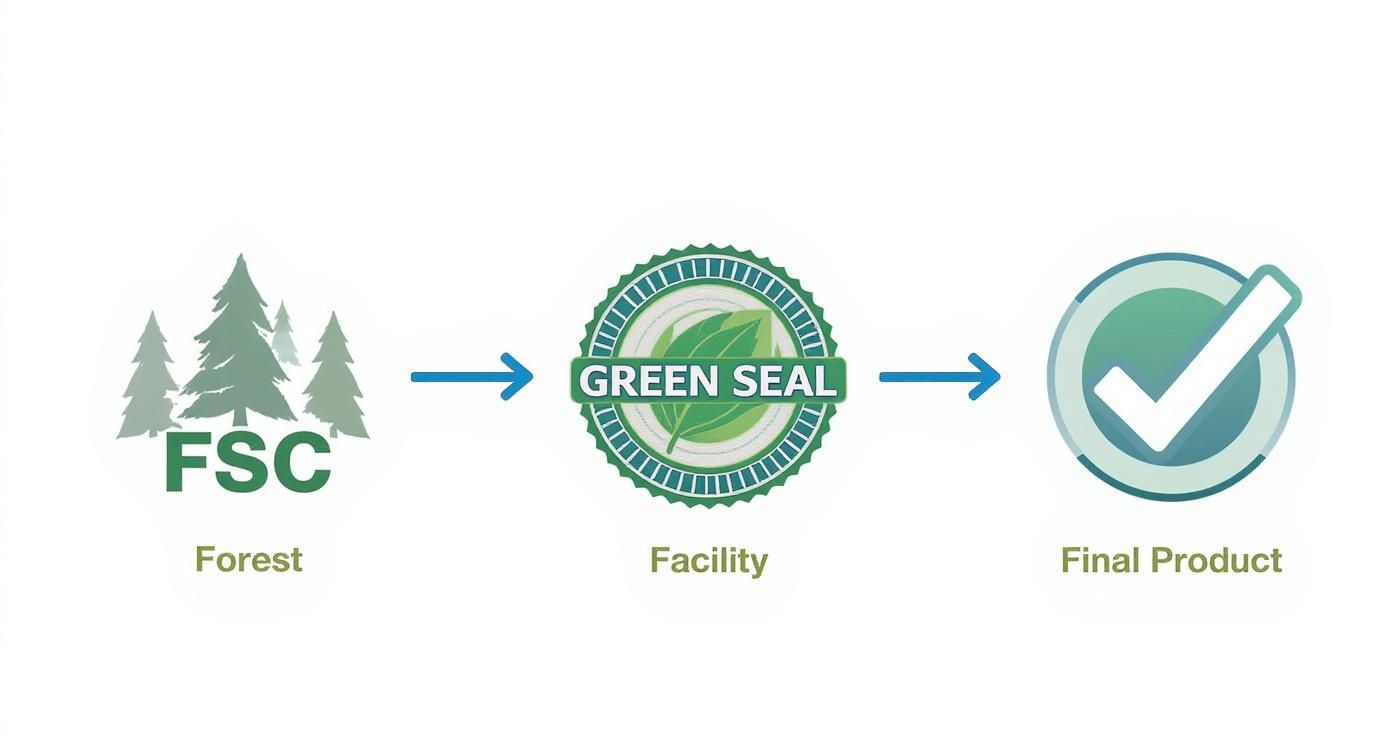
The key takeaway here? Authentic sustainability isn’t just a claim; it’s a verified journey from start to finish.
Investing in Greener Technology
Modern printing technology plays a massive role in lightening the environmental load. Forward-thinking printers invest in equipment that delivers incredible quality while sipping, not gulping, resources.
- Energy-Saving Digital Presses: For smaller print runs, digital printing is a sustainability game-changer. Unlike old-school offset printing, it needs minimal setup, which means way less paper and ink are wasted just getting a job started. Plus, modern digital presses are engineered for much lower energy consumption.
- Waterless Printing: Traditional offset printing can be a real water hog. Waterless printing technology completely eliminates this need, conserving a critical resource and stopping dampening solution chemicals from ever entering the wastewater stream.
- Chemical-Free Plate Making: Not too long ago, creating printing plates was a harsh chemical process. Newer "computer-to-plate" (CTP) systems are often completely chemical-free, which gets rid of hazardous waste and makes for a much safer work environment.
These aren't just minor tweaks. These are serious investments that show a printer's deep-seated commitment to doing things the right way—for their business and for the environment.
A Holistic View of the Product Lifecycle
A genuinely sustainable printer thinks about the entire lifecycle of a product, from the initial design concept all the way to its final disposal. It’s a holistic approach that ensures every decision is made with the planet in mind.
This kind of thinking goes way beyond a simple "produce and ship" model. It’s about taking full responsibility for a product's environmental journey, making sure it can be easily recycled or returned to the earth.
This big-picture view translates into several key practices:
- Designing for Recyclability: A green printer will actually guide you on design choices. They might advise against certain laminates or bindings that would make the final product a recycling nightmare.
- In-House Recycling Programs: The best printers have rock-solid internal recycling programs for absolutely everything—paper scraps, old ink cartridges, used printing plates, and even regular office waste.
- Carbon-Neutral Shipping: The final mile matters, too. Many eco-conscious printers offer carbon-neutral shipping options, where they purchase carbon offsets to counteract the emissions from delivering your order.
By focusing on efficient technology and managing the whole product lifecycle, sustainable printers do so much more than just use green materials. They build an entire ecosystem of responsibility, ensuring that every single print job leaves the lightest footprint possible.
So, you're up to speed on the materials, certifications, and methods that separate real eco-friendly printing from the greenwashing noise. Now it's time to put that knowledge to work. Picking the right print partner is the last—and most important—step to making sure your commitment to sustainability shines through in the final product.
This isn't just about finding another vendor. It's about finding a partner who gets it, someone who shares your environmental values. A genuinely sustainable printer will be an open book, happy to show you exactly how they operate. Your job is to ask the right questions and know what to look for to see if their claims hold up.
Start with Their Website and Materials
Your first move is a little digital detective work. A company that’s truly all-in on sustainability makes it a core part of its identity, not some buried footnote. Go to their website and look for a dedicated "Sustainability" or "Eco-Friendly" page.
You're looking for specifics, not fluff. Do they list the exact recycled papers they use, like 100% PCW stocks? Do they talk about their soy or water-based inks? Vague promises like "we care about the planet" are a huge red flag. You want to see hard facts and details about what they do day-in and day-out.
Pro Tip: If they have a sample pack, order it. This is the best way to physically see and feel the quality of their recycled paper and the punchiness of their eco-friendly inks. It's tangible proof that their quality lives up to their promises.
Essential Questions to Ask Potential Printers
Once you've got a shortlist, it's time to reach out. Any printer worth their salt will welcome your questions and be ready with answers. Use these questions to steer the conversation and get a real feel for their commitment:
Certifications: "Can you confirm your facility is ISO 14001 certified? And are your paper stocks FSC certified?" Don't be shy—ask for their certification numbers. A legitimate printer will have them handy.
Paper Options: "What percentage of your papers are recycled, and what’s the typical post-consumer waste (PCW) content?" The more high-PCW options they offer, the more serious they are.
Ink Technology: "What kind of inks are you running? Are they soy-based, water-based, or another low-VOC option?" They should be able to tell you why they chose their ink. For instance, modern eco-inks are a huge plus for advanced digital printing services, allowing for incredible color even on recycled stocks.
Waste Management: "So, what does your in-house recycling program look like?" Get them to talk about how they handle paper scraps, old ink cartridges, and used printing plates.
Shipping and Logistics: "Do you offer any carbon-neutral shipping options?" This shows they're thinking about the full lifecycle of the product, not just what happens inside their shop.
Checklist for Vetting an Eco Friendly Printer
To make things even easier, here's a quick checklist you can use to score and compare printers. It helps you cut through the marketing and make a smart decision that lines up perfectly with your brand's green goals.
| Criteria | What to Ask / Look For | Importance (High/Med/Low) |
|---|---|---|
| Certifications | Presence of FSC, ISO 14001, or Green Seal logos and verifiable numbers. | High |
| Material Transparency | Detailed information on PCW content, alternative fibers, and ink types. | High |
| Process Efficiency | Use of energy-efficient presses, waterless technology, and chemical-free CTP. | Medium |
| Waste Reduction | Clear policies on internal recycling and minimizing print run overages. | High |
| Expert Guidance | Willingness to advise on sustainable design choices (e.g., avoiding non-recyclable finishes). | Medium |
| End-of-Life Options | Offering carbon-neutral shipping and designing for easy recyclability. | Low |
By taking the time to vet printers this way, you get past the slick marketing and focus on what really matters: their actions. This due diligence ensures your partner doesn't just produce amazing print work, but does it with genuine respect for the planet. Your choice becomes a powerful statement, reinforcing your brand's commitment to a greener future with every single project.
The Business Case for Going Green
When it comes to eco-friendly printing services, the first question on every business owner’s mind is usually about the cost. There's this stubborn myth that “going green” always means spending more. Honestly, that view is incredibly shortsighted. Choosing sustainable printing is so much more than an environmental nod; it’s a sharp strategic move that can pay you back in spades.
Seeing sustainability as just another line item on the expense sheet is an outdated way of thinking. A much better way to look at it is as a direct investment in your brand’s future. We're in a market where customers are voting with their wallets, and they're actively looking for companies that show they care about more than the bottom line.
Building Brand Loyalty and Reputation
When you align your business with eco-conscious values, you're sending a powerful, positive signal to your audience. It tells them you’re thinking about the bigger picture. This kind of commitment can do wonders for your brand's reputation and build a deep, lasting loyalty with customers who put sustainability high on their own list.
Think about it: when a customer gets a beautifully printed piece on recycled paper, they don't just see a flyer. They see a brand that gets them, one that shares their values. That emotional connection is what real, long-term loyalty is built on. It’s what turns a one-time buyer into a dedicated advocate who will pick you over a competitor, every single time.
A study by Nielsen found that a whopping 66% of global consumers are willing to open their wallets a little wider for sustainable brands. That number jumps to 73% among millennials, shining a spotlight on a massive—and growing—part of the market that goes out of its way to reward eco-conscious businesses.
Gaining a Competitive Edge
In a marketplace that’s more crowded than ever, sustainability is a fantastic way to stand out. It separates you from the pack and gives you a genuine story to share. By weaving your eco-friendly choices into your marketing, you can start attracting a whole new base of value-driven customers that your competitors might be completely ignoring.
To really make these efforts count, you'll want to integrate them into a robust brand strategy framework to maximize their punch in the market. It’s not just about printing green; it’s about making that commitment a core piece of who you are as a brand. For any business ready to communicate these values loud and clear, looking into sustainable sales sheet printing is a brilliant place to start. Choosing green isn't an expense; it's a strategic investment in a stronger, more resilient brand.
Common Questions About Eco Friendly Printing
Jumping into the world of eco-friendly printing can bring up a few questions. That’s perfectly normal. Let's clear up some of the common myths and concerns so you can feel confident about making the switch to greener print.
Is Eco Friendly Printing More Expensive?
This is always the first question, and the answer isn't a simple yes or no. While some niche materials—think paper made from super-unique alternative fibers—might cost a bit more, many mainstream green options are surprisingly competitive. In fact, standard recycled paper stocks and clean soy-based inks often cost about the same as their conventional counterparts.
The trick is to think beyond the initial price tag. Any small difference in cost is almost always wiped out by the long-term ROI. A clear commitment to sustainability boosts your brand's reputation, builds incredible customer loyalty, and gives you a real edge over the competition. That kind of value is worth way more than a few cents per print.
Does Eco Quality Mean Lower Quality?
Absolutely not. This is a stubborn myth that’s a hangover from the early days of recycled paper. Today’s recycled and FSC-certified papers are engineered to incredibly high standards, delivering fantastic brightness, smoothness, and durability. They’re built to perform just as well as paper made from virgin pulp, ensuring your designs look sharp, crisp, and professional.
The same goes for the inks. Modern, sustainable inks like soy and water-based formulas pack a serious punch with outstanding color saturation and longevity. They create vibrant, rich results that are practically identical to old-school petroleum-based inks. You sacrifice nothing in quality while gaining everything in sustainability.
The Bottom Line: Modern eco-friendly materials are designed for performance. You can expect the same high-quality finish, vibrant color, and professional feel as you would from any conventional printing method, without the environmental compromise.
What Is the Most Impactful Green Choice?
Every sustainable choice you make adds up, but if you want to make the single biggest impact, it often comes down to one thing: choosing paper with a high percentage of post-consumer waste (PCW). Going for 100% PCW paper is a direct investment in the circular economy, turning what was once trash back into a valuable product.
This one simple switch dramatically cuts down the demand for new trees, which is a massive win for forest preservation. It also uses a lot less water and energy than making paper from scratch.
How Can I Verify a Printer's Claims?
With so much "greenwashing" out there, how do you know who's legit? The most reliable way is to look for official, third-party certifications. They're the unbiased proof that a printer walks the walk.
- Ask about their paper: Is it FSC certified? This is your guarantee that it comes from responsibly managed forests.
- Check their facility standards: Does the printer have an ISO 14001 certification? This shows they have a serious environmental management system in place.
- Look for transparency: A genuinely eco-friendly printer won't hide their credentials. They’ll be proud to show them off and happy to talk about their processes and supply chain.
Trustworthy partners make their eco-credentials clear, giving you the peace of mind that your investment is supporting real environmental stewardship.
Ready to make a sustainable choice without giving up an ounce of quality? 4OVER4 offers a huge range of eco-friendly printing services designed to make your brand shine responsibly. Check out our green printing options today and see just how easy it is to make a positive impact.
More from

729
Full bleed printing is a simple but game-changing technique. It's how you get your artwork—whether it’s a photo, a background color, o
 Emma Davis
Feb 3, 2026

336
Even though we live in a digital world, the humble business card is still a powerhouse networking tool. But here's something most people d
Emma Davis
Feb 2, 2026

1307
Staring at a wall of banner dimensions can feel a little overwhelming. But while there's no single "typical banner size" that wo
Emma Davis
Feb 1, 2026

397
Stretching your marketing budget doesn't mean you have to settle for flimsy, forgettable brochures. The real secret to low cost br
Emma Davis
Jan 31, 2026

387
Advertising magnets are one of those marketing tools that are so simple, you might overlook their power. They’re tangible, they last for age
Emma Davis
Jan 30, 2026

198
Tired of fighting with torn paper and sticky residue? We’ve all been there. The best way to get labels off bottles is often a simple soak in
Emma Davis
Jan 29, 2026

352
Want to know the real secret to getting a poster to stick to a wall without it peeling off in the middle of the night? It's all about what
Emma Davis
Jan 28, 2026

320
When you hear "table tent specs," what we're really talking about are the foundational details for printing them correctly: the
Emma Davis
Jan 27, 2026