Table of Contents
- Home
- content hub
- Eco Friendly Printing Tips for Sustainable Results
 Share and earn
Eco Friendly Printing Tips for Sustainable Results

Jun 12, 2025821 views
Jun 12, 2025821 views
Understanding Eco-Friendly Printing Beyond the Green Labels
This snapshot from Wikipedia's Sustainable Printing page illustrates the core areas we need to consider: materials, the printing process itself, and the inks used. It's a reminder that eco-friendly printing isn't just about using recycled paper; it's about looking at the bigger picture. True sustainability means digging deep into each step of how a printed piece comes to life.
Imagine trying to find your way through a complicated maze. That's what navigating the world of "green" products can feel like. Greenwashing, where companies make misleading claims about their environmental practices, adds another layer of complexity. It can make it tough to tell what’s truly eco-friendly. But, when done right, sustainable printing offers real, measurable benefits that extend far beyond marketing hype.
The Science of Sustainable Printing
Truly understanding eco-friendly printing means exploring every option, even things like sustainable print-on-demand options. It's about looking at the entire journey of a printed product, from the very beginning to its eventual disposal.
Let's take inks as an example. Traditional petroleum-based inks release harmful volatile organic compounds (VOCs). These VOCs pollute the air and can even create health risks. Conventional paper production also presents challenges, often contributing to deforestation and water pollution.
Luckily, we have exciting new options. Think soy-based inks or even inks derived from algae! These alternatives dramatically reduce the environmental footprint. Combine them with sustainable materials like bamboo paper or recycled paper, and we start to see a truly eco-friendly printing process emerge. Want to learn more about these greener options? Check out our helpful guide on Green Printing.
The Business Case for Eco-Friendly Choices
Eco-friendly printing isn't just good for the planet; it's good for business, too. Sustainable practices can actually lead to cost savings by reducing how much material you use and lowering energy consumption.
For instance, UV-LED curing technology uses far less energy than older drying methods. Plus, showcasing your commitment to sustainability can significantly boost your brand's image. It attracts environmentally conscious customers and investors. Making eco-friendly choices is a win-win. It helps create a healthier planet and a healthier bottom line.
The Real Environmental Cost of Traditional Printing
Traditional printing, while a familiar sight in offices and homes, comes with a hidden environmental price tag. Think of it like driving a gas-guzzler for short errands – it works, but not efficiently. These methods often depend on materials and processes that put a strain on our planet.
Conventional paper production, for example, uses a surprising amount of water and energy. Many traditional inks also contain petroleum-based solvents. These release harmful volatile organic compounds (VOCs), not just into the atmosphere, but also right there in your workspace.
VOCs contribute to air pollution and can even affect your health.
The Impact on Forests and Waterways
Traditional paper production's dependence on trees contributes to deforestation. This loss of forests disrupts delicate ecosystems and reduces biodiversity. The manufacturing process often involves chlorine bleaching as well, which releases harmful chemicals into our waterways.
These chemicals contaminate water sources and pose a threat to aquatic life. Every sheet of conventionally produced paper, then, carries a hidden environmental cost. Minimizing waste is crucial. For ideas on achieving this, take a look at some cost effective design solutions.
The Carbon Footprint of Conventional Printing
Beyond deforestation and water pollution, traditional printing adds to greenhouse gas emissions. The energy needed for paper production, the printing process itself, and even transportation all contribute to a substantial carbon footprint. This, of course, fuels climate change.
But the printing industry isn't standing still. The global sustainable printing market is seeing real growth. It was valued at USD 2.07 billion in 2023 and is expected to grow at a CAGR of 7.5% from 2024 to 2030.
This shift is happening thanks to growing environmental awareness among both consumers and businesses. You can learn more about this growing trend in the sustainable printing market. For businesses looking for greener options, digital printing offers some compelling advantages. You can explore digital printing options to see how it could work for you.
Sustainable Materials That Actually Work Better
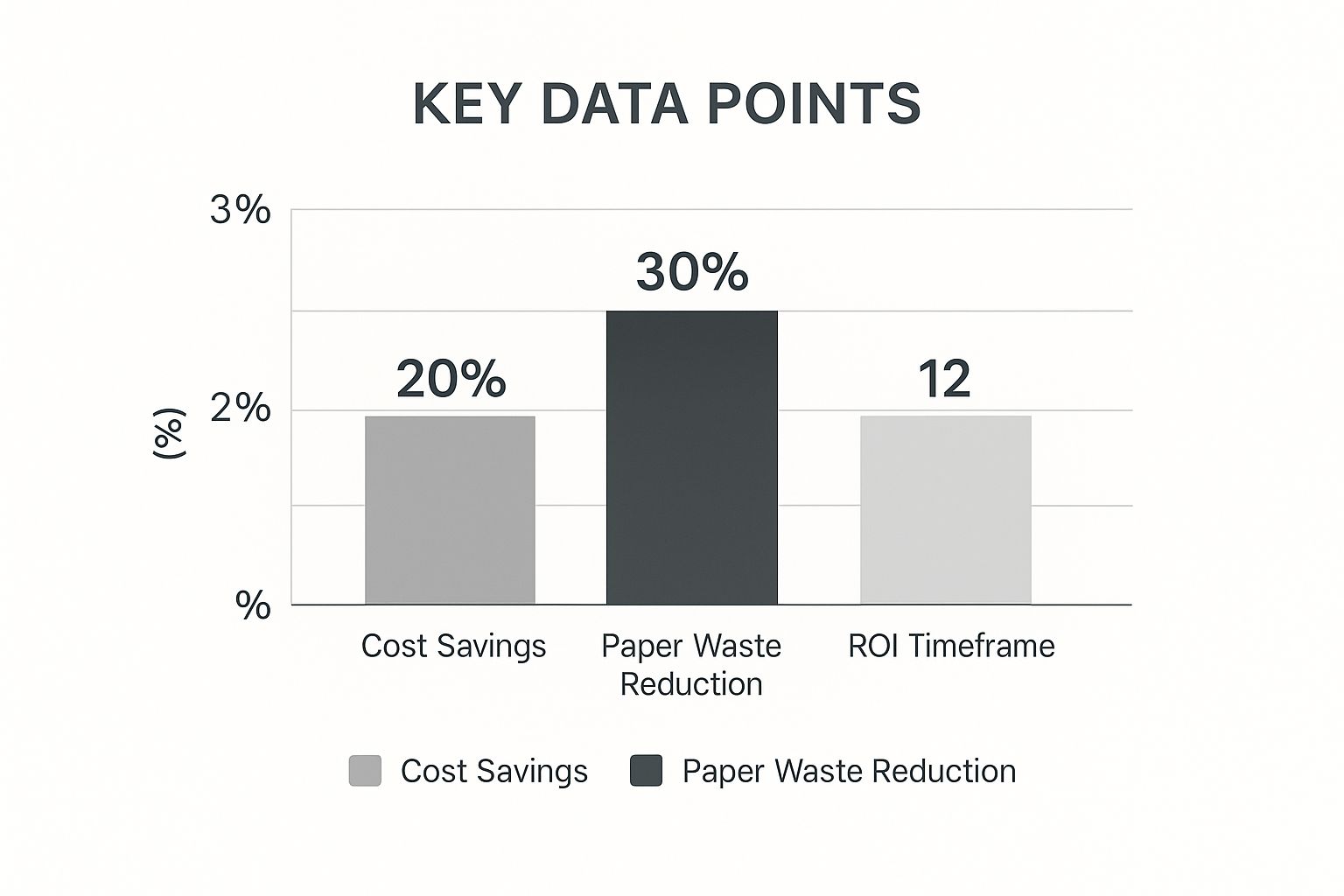
The infographic above gives you a snapshot of how eco-friendly printing can benefit your bottom line and the planet. Switching to sustainable materials can lead to a 20% cost savings, a 30% reduction in paper waste, and you could see a return on your investment within 12 months. This shows how sustainability and profitability can work together.
Thinking about going green with your printing? It's important to understand the bigger picture, like the Carbon Footprint of the materials you choose.
Eco-friendly printing isn't about sacrificing quality. It's about finding materials that are both high-performing and easier on the environment. Forget that old idea that sustainable paper is flimsy. Today's options are often stronger and more adaptable than traditional paper.
Exploring Sustainable Alternatives
So, what are these exciting alternatives? Let's dive in:
Bamboo Paper: This remarkably fast-growing grass makes a paper that's both strong and smooth. Bamboo regenerates 30 times faster than trees, making it a highly renewable choice.
Agricultural Waste Paper: Imagine turning wheat straw into beautiful, high-quality paper. This innovative approach uses materials that would normally be discarded, reducing waste and giving them a new purpose.
Stone Paper: Made from calcium carbonate, stone paper is waterproof, tear-resistant, and incredibly durable. It’s a great option for projects that need to last.
To help you compare these options, let's look at the following table:
Sustainable Paper Materials Comparison: A comprehensive comparison of different eco-friendly paper options including recycled content, cost, durability, and environmental impact scores.
| Material Type | Recycled Content % | Cost vs Traditional | Durability Rating | Carbon Footprint |
|---|---|---|---|---|
| Bamboo Paper | 0% (inherently renewable) | Slightly higher | High | Very Low |
| Agricultural Waste Paper | Variable, can be blended with recycled pulp | Comparable or slightly lower | Moderate to High | Low |
| Stone Paper | 0% (uses mineral powder) | Higher | Very High | Moderate (dependent on energy source for production) |
| Recycled Paper | Variable (e.g., 30%, 50%, 100%) | Lower to comparable | Moderate | Low |
This table highlights the key characteristics of each material, allowing you to make an informed decision based on your specific needs. While bamboo and agricultural waste papers offer excellent sustainability profiles due to their renewable sources, stone paper stands out for its exceptional durability. Recycled paper remains a cost-effective and environmentally friendly choice. The choice is yours depending on the balance of cost, durability, and environmental impact you are looking for.
The Power of FSC Certification
Look for paper with Forest Stewardship Council (FSC) certification. This certification guarantees that the paper comes from responsibly managed forests. It verifies that forests are harvested in a way that protects the environment and benefits local communities. Think of it like buying fair-trade coffee – you're supporting responsible practices.
Real-World Success Stories
Many businesses are already enjoying the advantages of eco-friendly printing. For example, one printing company switched to soy-based inks and recycled paper. This not only lessened their environmental footprint but also attracted new clients looking for sustainable solutions. It's a win-win!
Another company found that using bamboo paper for their brochures actually made them more durable. This meant less waste and, surprisingly, lower printing costs. This unexpected bonus shows how sustainable materials can sometimes outperform traditional ones in unexpected ways.
Choosing sustainable printing can give you higher quality, longer-lasting materials, and significant cost savings. Each material has its own unique benefits, so doing a little research to find the right one for your project is key.
Modern Inks That Outperform Traditional Options
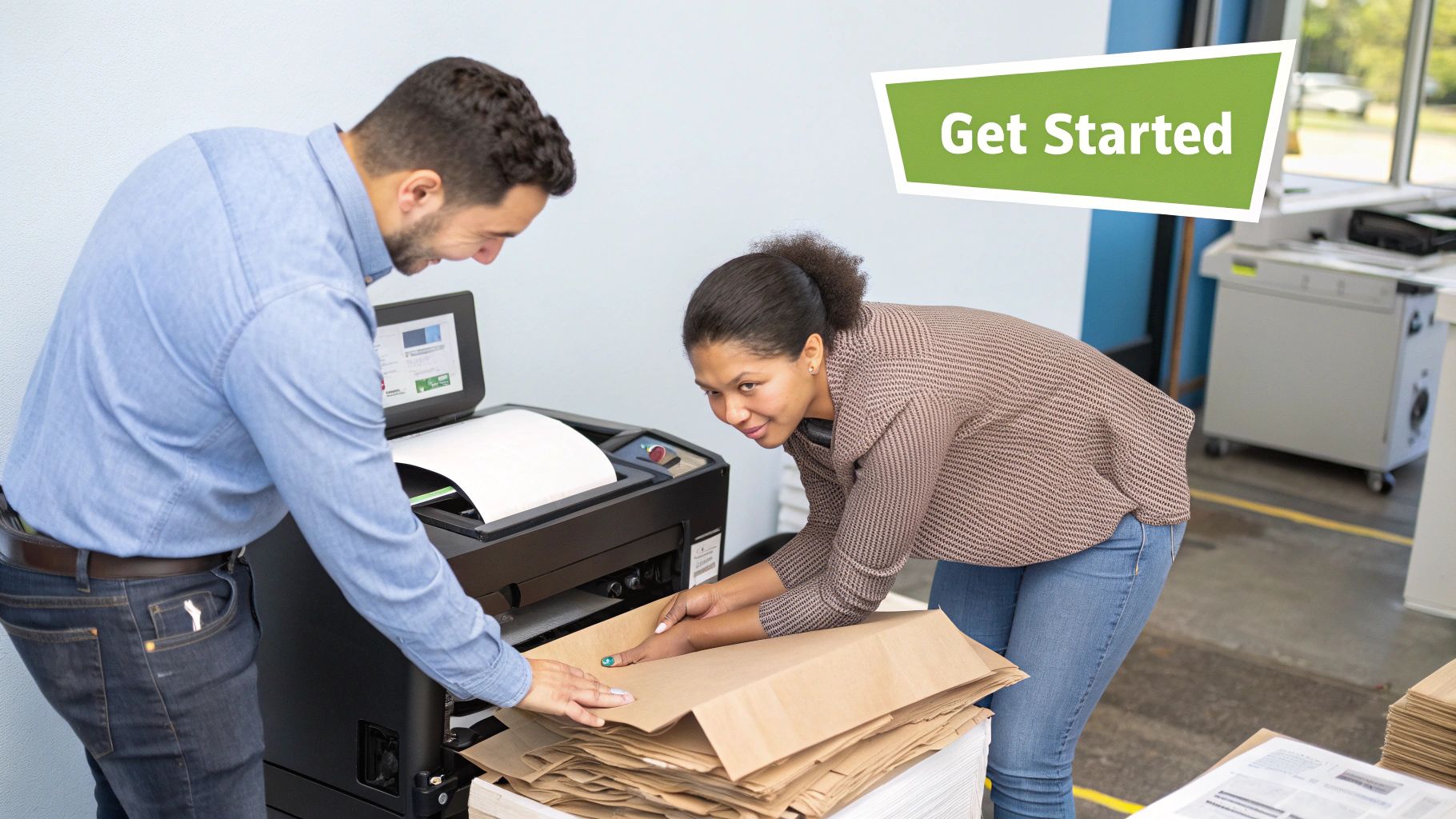
Imagine traditional petroleum-based inks as the old, bulky desktop computer of the printing world. Functional, sure, but also slow, messy, and not exactly efficient. Now picture eco-friendly inks as the sleek, powerful laptop equivalent: faster, cleaner, and surprisingly, often more effective.
Traditional inks release harmful volatile organic compounds (VOCs), impacting both the environment and the health of those working with them. They can also produce duller colors and be less durable. This makes them a less attractive option for businesses seeking high-quality, sustainable printing.
The Rise of Plant-Based Inks
Plant-based inks are at the forefront of eco-friendly printing. These inks use renewable resources, lessening their environmental impact without sacrificing performance. In fact, they frequently outshine traditional inks in key areas.
Soy-Based Inks: Soy inks offer vibrant, rich colors and excellent print quality. They're a popular choice for many applications, from brochures and business cards to product packaging.
Vegetable Oil Inks: Derived from various vegetable oils, these inks dry quickly and offer superior durability, making them ideal for products that need to withstand handling and environmental exposure.
Water-Based Inks: Water-based inks eliminate the need for harmful solvents, making them a very clean option. They're perfect for businesses looking to minimize their VOC emissions.
Want to add a luxurious feel? Consider exploring soft touch printing.
Seeing Is Believing: The Benefits of Eco-Friendly Inks
Real-world tests show eco-friendly inks often outperform traditional inks in color accuracy and durability. They produce sharper images, more vibrant colors, and are more resistant to fading. This superior performance is encouraging many printing companies to make the switch.
For example, studies have shown soy-based inks produce richer, more accurate colors than petroleum-based inks on certain paper types. Other research has demonstrated that vegetable oil inks offer increased resistance to smudging and scratching, leading to longer-lasting prints.
This isn't just about being environmentally conscious; it's about getting better results. The market reflects this growing demand. The eco-friendly inks market is expected to reach USD 5.10 billion by 2025 and nearly USD 8.98 billion by 2035, growing at a CAGR of 5.8%. This growth is driven by the increasing need for non-toxic, biodegradable, and renewable inks made from sources like soy, vegetable oils, and water. Learn more about the growing eco-friendly inks market. These advancements show that eco-friendly printing delivers tangible benefits.
Game-Changing Green Printing Technologies
The printing industry is shifting. Think of it like trading in an old gas guzzler for a sleek electric car. Eco-friendly printing isn't just a trend; it's becoming the new normal, offering both efficiency and cost-effectiveness. Traditional methods are starting to look, well, outdated.
Waterless Offset Printing: A Cleaner Approach
Imagine printing with watercolors, but with inks and a specialized press. Traditional offset printing needs what are called "fountain solutions," chemical cocktails that aren't exactly earth-friendly. Waterless offset printing, true to its name, skips these solutions entirely. The result? Sharper images and a much lighter environmental impact.
Digital On-Demand Printing: Reducing Waste
Ever printed a whole stack of documents only to realize you needed just one page? It's a common waste culprit. Digital on-demand printing stops this by printing only the exact quantity you need. This cuts down on paper waste, saving trees and shrinking your environmental footprint.
UV-LED Curing: Energy Efficiency at Its Best
UV-LED curing is like a flash-dry for your prints. It uses ultraviolet light to instantly dry the ink. Not only does this method use 80% less energy than traditional heat-based drying, but it also creates prints that are more durable and resistant to fading.
Companies like Xerox are leading the charge in sustainable printing. Their commitment to reducing their environmental impact is clear:
Xerox's focus on circularity and minimizing waste reflects a growing trend in the printing industry. More and more companies are setting ambitious sustainability goals. Want to explore more eco-friendly printing options? Check out our article about Environmental Friendliness.
Advanced Finishing Techniques
Even the finishing touches on printed materials are getting a green makeover:
Cold Foil Stamping: This technique creates those beautiful shiny metallic effects without needing heat, saving energy in the process.
Biodegradable Coatings: These coatings offer the same premium look and feel of traditional finishes, but they break down naturally, reducing their environmental impact.
Automated Waste Reduction: Some printing facilities now use automated systems to collect and process waste, turning it into reusable resources – like giving scraps a second life.
These aren't just futuristic ideas. These technologies are actively used in printing facilities worldwide. They're seeing real, measurable improvements – both environmentally and financially. By embracing these technologies, businesses can make a real difference for the planet and contribute to a more sustainable future. Each technology has its own set of costs and benefits to consider, but the overall potential for positive impact is significant. Companies that adopt these green printing methods are setting themselves up for success in a world that values sustainability.
Navigating Certifications That Actually Matter
The world of eco-friendly printing certifications can feel a bit like wandering through a dense forest. Acronyms like FSC, PEFC, GREENGUARD, and Cradle to Cradle might seem like a foreign language. But understanding these certifications is key to making smart choices about your printing. Some certifications represent a real commitment to sustainability, while others might just be clever marketing. Think of it like choosing produce at the grocery store – the label makes a difference.
Decoding the Key Certifications
Several certifications stand out as especially important for eco-friendly printing:
Forest Stewardship Council (FSC): The FSC focuses on responsible forest management. Seeing the FSC logo on paper tells you that the wood fiber comes from forests managed with the environment and social responsibility in mind. This includes protecting biodiversity, workers' rights, and indigenous communities. It's like a guarantee of your paper's ethical origins.
Programme for the Endorsement of Forest Certification (PEFC): Similar to the FSC, PEFC promotes sustainable forest management, but works at a national level, endorsing various national certification systems. Both aim for responsible forestry, but there are differences in how they operate and what they require. Understanding these nuances can help you choose the certification that best reflects your values.
GREENGUARD: This certification focuses on indoor air quality. GREENGUARD-certified printing products, like inks and cleaning solutions, meet strict limits on volatile organic compound (VOC) emissions. This means your printed materials won't release harmful chemicals into the air, protecting the health of your employees and customers. Think of it as a breath of fresh air for your workspace.
Cradle to Cradle Certified™: This certification looks at the entire life cycle of a product – from creation to disposal. It evaluates material health, material reuse, renewable energy use, water stewardship, and social fairness. Achieving Cradle to Cradle certification shows a deep commitment to sustainable practices. It's like a gold medal for environmental responsibility.
Verifying Legitimate Credentials
It's important to be able to spot the difference between real certifications and greenwashing. Look for specific certification numbers and check them on the certifying body's website. This confirms that the certification is legitimate and current. Don't hesitate to ask your printer for proof of their certifications. Transparency is essential.
The growing demand for sustainable practices is reflected in market trends. Market research suggests that the global sustainable printing market is expected to grow at a CAGR of 7.5% from 2025 to 2033, reaching USD 2.17 billion in 2025. This growth is driven by increased environmental awareness among businesses and consumers, as well as regulatory pressures. You can find more information about this growing market in this report on the sustainable printing market.
Business Benefits of Certification
Working with certified printers and using certified products offers several advantages:
Informed Purchasing Decisions: Certifications help businesses make well-informed choices about their printing materials and processes.
Credibility and Trust: Certifications build trust with environmentally conscious customers and enhance your brand's reputation.
Competitive Advantage: Showing your commitment to sustainability can set you apart from competitors.
Reduced Environmental Impact: Choosing certified products directly supports responsible environmental practices.
To help you better understand the various certifications available, we’ve compiled a helpful guide:
Green Printing Certifications Guide
Overview of major eco-friendly printing certifications, their requirements, and business benefits
| Certification | Focus Area | Key Requirements | Verification Process | Business Benefits |
|---|---|---|---|---|
| Forest Stewardship Council (FSC) | Responsible forest management | Sustainable harvesting practices, worker protections, biodiversity conservation | Third-party audits | Demonstrates commitment to responsible forestry, enhances brand image |
| Programme for the Endorsement of Forest Certification (PEFC) | Sustainable forest management | Adherence to national forest certification standards | National system endorsements | Supports sustainable forestry at a national level, provides broader sourcing options |
| GREENGUARD | Indoor air quality | Low VOC emissions from printing products | Product testing and certification | Creates healthier workspaces, minimizes exposure to harmful chemicals |
| Cradle to Cradle Certified™ | Product lifecycle sustainability | Material health, material reuse, renewable energy, water stewardship, social fairness | Comprehensive assessment and certification | Demonstrates holistic commitment to sustainability, drives innovation |
This table highlights the different focuses and benefits of each certification. Notice how some, like FSC and PEFC, concentrate on forest management, while GREENGUARD addresses air quality, and Cradle to Cradle takes a broader view of the entire product lifecycle.
By understanding and using these certifications, businesses can make real progress toward eco-friendly printing, benefiting both the environment and their bottom line. It's not just about following a trend; it's about making responsible choices.
Your Complete Implementation Roadmap
Transforming your printing practices to be more eco-friendly doesn't have to be a sudden, jarring switch. Think of it more like a home renovation. You can start with small, impactful updates and gradually work your way towards a complete green makeover. This roadmap will guide you through a strategic, phased approach, ensuring both quick wins and long-term sustainability.
Phase 1: Quick Wins – Easy Improvements
This first phase focuses on changes that are simple to put in place, require minimal investment, and still deliver noticeable results:
Print Less: The most straightforward way to lessen your environmental footprint is simply to print less. Encourage sharing documents digitally, use double-sided printing, and always proofread carefully before printing. Ask yourself – do you really need a hard copy?
Default to Duplex: Make double-sided printing the automatic setting on all office printers. This small tweak can dramatically reduce paper consumption.
Use Recycled Paper: Switch to paper with a high percentage of post-consumer recycled content. Look for the FSC certification, which ensures responsible forestry.
Choose Eco-Friendly Fonts: Believe it or not, some fonts, like Garamond and Century Gothic, use less ink than others. These small savings can add up over time.
These initial steps offer immediate environmental benefits and help raise awareness among your team, preparing everyone for bigger changes down the line.
Phase 2: Optimizing Your Printing Processes
Once you’ve tackled the quick wins, you can start optimizing your printing processes for greater efficiency and sustainability:
Conduct a Print Audit: Take a closer look at your current printing habits to find areas for improvement. Track paper usage, ink consumption, and printing costs to pinpoint where you can make the biggest difference.
Invest in Energy-Efficient Printers: Many newer printers have energy-saving features like sleep mode and automatic duplex printing. Consider upgrading to a more efficient model.
Centralize Printing Resources: Streamline your printing by using a centralized print server. This offers better control over printing volume and helps avoid buying unnecessary printers.
Phase 3: Advanced Solutions – Big Impact
This phase involves larger-scale changes that deliver maximum environmental and business advantages:
Partner with an Eco-Conscious Printer: Select a printing vendor dedicated to sustainable practices. Look for certifications like FSC, PEFC, and GREENGUARD. Ask about their use of eco-friendly inks, like soy-based or vegetable oil-based inks.
Explore Alternative Printing Technologies: Consider options like waterless offset printing or digital on-demand printing to further reduce your environmental impact.
Implement a Waste Reduction Program: Create a system for collecting and recycling paper, ink cartridges, and other printing byproducts.
By taking these steps, you can change your printing practices from an environmental concern into a symbol of your commitment to sustainability.
Making the Business Case
To get your leadership on board, you’ll need a strong business case. Emphasize the cost savings from using less paper and ink, the boost to your brand image from sustainable practices, and the positive effect on employee well-being through better air quality.
Training and Communication
For this to work, you need to educate your team about the new procedures. Provide clear instructions on printing protocols, the advantages of eco-friendly printing, and how everyone can contribute to the company’s sustainability goals.
Measuring Your Success
Track your progress by monitoring key figures like paper usage, ink consumption, and energy costs. Share these results with your team to highlight the positive impact of your efforts. Regular monitoring keeps your eco-friendly printing initiative on track and aligned with your overall sustainability goals. For businesses including printed promotional materials with their products, exploring options like product inserts can be a good strategy.
By following this roadmap, you can build a truly eco-friendly printing system that's good for the planet and good for business. Ready to improve your printing practices? Explore the range of printing solutions and sustainable options available at 4OVER4.
More from

13
When you're brainstorming ideas for landscaping business cards, it helps to think beyond just contact information. Your c
 Emma Davis
Mar 15, 2026

34
When you think of a yard sign, the classic 18"x24" is probably what comes to mind. It’s the industry workhorse fo
Emma Davis
Mar 14, 2026

42
When you’re ready to invest in an A-frame sign, the first question you'll ask is, "What size do I need?" It usually comes down
Emma Davis
Mar 13, 2026

409
The real secret to mastering your direct mail budget isn't complicated. It comes down to one simple fact: a standard 4" x 6&q
Emma Davis
Mar 12, 2026

92
Tear-off flyers are a classic for a reason. They’re a tangible marketing tool, designed with perforated, removable tabs at the bottom. Each
Emma Davis
Mar 11, 2026

143
Printing stickers at home is a seriously fun and rewarding project. It boils down to four main parts: designing your image, picking the right
Emma Davis
Mar 10, 2026

118
Ever seen a logo that seems to float right on the glass of a jar or bottle? That’s the work of transparent label stickers.
Emma Davis
Mar 9, 2026

84
Picture this: your product’s beautiful label gets smudged and runny during shipping, or a gorgeous event banner fades to nothing after just
Emma Davis
Mar 8, 2026