





- Home
- content hub
- A Modern Guide to Door Hanger Advertising
A Modern Guide to Door Hanger Advertising
Emma Davis
Content Writer
Aug 15, 20251906 views

Door hanger advertising gives you a direct, physical line to potential customers right where they live. It's a surprisingly powerful tool for local businesses. Think about it: digital ads are easy to scroll past, block, or ignore. But a hanger on a doorknob? You have to touch it. You have to look at it. That guarantees your message gets seen.
Why Door Hangers Still Win in a Digital World
In a world filled with constant pop-ups and notifications, the simple, physical nature of a door hanger is its secret weapon. Door hanger advertising cuts straight through the digital noise. It offers a personal touch that an email or a social media ad just can't match. Because it has to be physically taken off the door, it forces a moment of engagement with your brand.

This direct approach is why it remains a cornerstone of so many successful local marketing campaigns. Its biggest advantage is that it’s tangible and personal. Door hangers are delivered by hand to a person's home, making them far harder to ignore than a fleeting digital ad that gets lost in a crowded feed.
Hyper-Local Targeting and Unmatched Visibility
The real magic of door hangers is in their precision. A roofing company can blanket a neighborhood that just got hit by a hailstorm. A new pizzeria can introduce itself to the exact streets within its delivery zone. This kind of hyper-local targeting means your marketing dollars are spent reaching only the most relevant households, which maximizes both your efficiency and your impact.
This pinpoint focus gives you some serious advantages:
- Zero Ad Blockers: Your message is physically there. No software can stop it.
- Guaranteed Impressions: Every single hanger delivered is an impression made, since the resident has to interact with it.
- Minimal Competition: Unlike a cluttered inbox, a front door is usually a wide-open advertising space.
By placing your brand directly into the hands of your target audience, you create an immediate, personal connection that digital methods often struggle to achieve. It’s an old-school tactic with surprisingly modern relevance.
Door Hanger Advertising vs Digital Ads
While door hangers are fantastic, it's helpful to see how they stack up against their digital counterparts. Here’s a quick breakdown of their core strengths and challenges.
| Attribute | Door Hanger Advertising | Digital Ads (e.g., Social Media) |
|---|---|---|
| Targeting | Hyper-local (street, neighborhood) | Demographic, behavioral, interest-based |
| Visibility | Guaranteed physical interaction | Can be blocked, skipped, or scrolled past |
| Cost | Upfront cost for design, print, and distribution | Variable (Pay-per-click, impressions) |
| Tracking | Measured through coupon codes, call tracking | Detailed analytics and real-time data |
| Competition | Minimal competition on the doorknob | Extremely high in crowded digital spaces |
| Trust | Can feel more personal and trustworthy | Often met with skepticism and ad fatigue |
Both have their place, but for making a direct, unforgettable local impact, door hangers hold a unique power.
Of course, the smartest approach is often a blended one. While door hangers offer that tangible touchpoint, you can amplify your efforts by integrating them with a solid online presence. Understanding local SEO strategies for attracting customers helps you connect the dots, creating a powerful multi-channel campaign where your physical and digital marketing work together.
Designing a Door Hanger That People Actually Keep
You’ve got about three seconds. That’s it. Three seconds to catch a homeowner's eye before your door hanger gets tossed into the recycling bin with yesterday's junk mail. The design isn't just about looking pretty; it’s your one shot to communicate value and survive that initial glance.

I’ve seen thousands of door hangers over the years, and the ones that work always nail the visual hierarchy. This is just a fancy way of saying they guide the reader’s eye exactly where it needs to go, starting with the most important thing: your headline.
Your headline has one job—to offer a solution, not just state your name. "Johnson's Lawn Care" is forgettable. But "Tired of Weeds? Get a Perfect Lawn This Weekend"… now that’s a hook. It hits a pain point and promises a fast, desirable result. You want the homeowner's first thought to be, "Yes, that's exactly what I need!"
The Psychology of Color and Fonts
Don’t just pick colors and fonts because you like them. They’re strategic tools that silently broadcast your brand's personality and build trust before a single word is read. Get it wrong, and you create a jarring disconnect that kills your credibility.
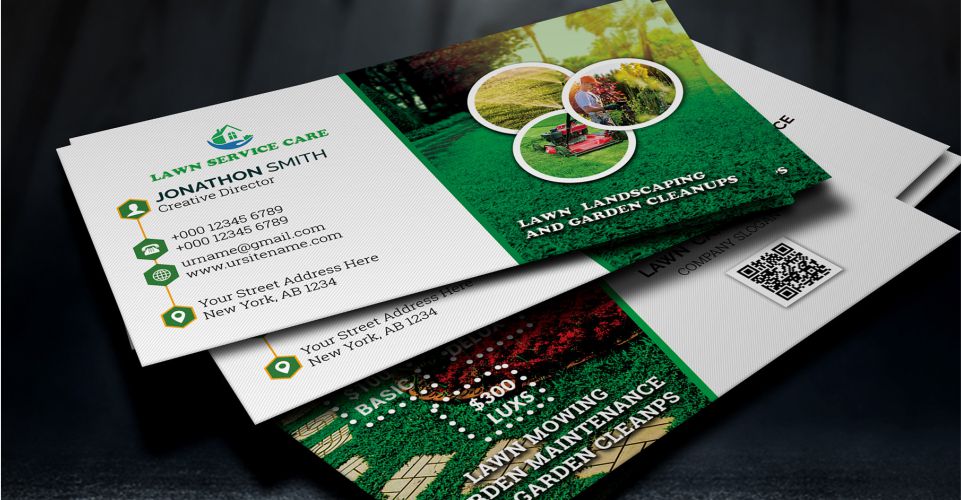
A home cleaning service, for instance, should lean into bright blues and clean whites to project freshness and professionalism. A landscaping company? Earthy greens and browns feel grounded and natural, which is exactly what you want.
Here are a few classic associations to keep in mind:
- Red: Creates a sense of urgency. Perfect for "Limited-Time Offer!" or clearance sales.
- Blue: Conveys trust and security. Think financial services or home security systems.
- Green: Suggests nature, health, and growth. A go-to for lawn care, organic products, or even financial advisors.
- Yellow: An attention-grabber that radiates optimism. Use it to make a special offer pop.
Your font choice is just as crucial. I see people fall in love with elegant, swirly script fonts that are completely unreadable from a few feet away. Big mistake. Clarity is king. A clean, bold sans-serif font like Helvetica or Open Sans is almost always a winning bet for headlines.
Prioritize a Single, Powerful Message
This is probably the most common mistake I see: trying to cram everything onto one little piece of paper. Multiple offers, long paragraphs of text, competing images… it just overwhelms people. And when people are overwhelmed, they disengage.
Your goal is to create one irresistible offer that forces the homeowner to act. Every single element—the headline, the image, the colors, the call-to-action—must work together to drive that one specific action.
If you’re offering 20% Off Your First Gutter Cleaning, that needs to be the hero of the entire design. Don't bury it under a list of ten other services you offer. Everything on that hanger should point back to that one offer. This singular focus makes your call-to-action (CTA) crystal clear, whether it’s "Scan for an Instant Quote" or "Call Now to Claim Your Discount."
Keep it simple. Keep it direct. Keep it powerful.
Crafting an Offer They Can't Refuse
Let's be blunt: The most beautiful design in the world won't save a weak offer. Your offer is the absolute heart of your door hanger campaign—it’s the engine that actually drives people to pick up the phone. A truly great offer doesn't just ask for a sale; it provides genuine, immediate value that makes a homeowner stop and think, "I'd be a fool to pass this up."

This is no time to be subtle. You need to craft a "no-brainer" deal that feels both exclusive and urgent. The goal is to light a fire under them, compelling the homeowner to act now instead of tossing your hanger in the recycling bin.
Choosing the Right Type of Offer
The kind of deal you present needs to line up perfectly with your business and what you want to achieve with the campaign. A simple percentage-off discount can work, but I've found that a more creative approach often gets much better results.
Let’s walk through a few real-world scenarios:
- For a Landscaping Business: Instead of a generic "10% Off Mowing," try something with a higher perceived value. An offer like "Free Shrub Trimming with a Seasonal Cleanup Package" is a winner because it bundles services and nudges them toward a larger initial purchase.
- For a Home Cleaning Service: A specific, high-impact deal is a great foot in the door. "Get Your First Bathroom Deep Cleaned for FREE" is far more compelling than a vague discount because it gives them a tangible, risk-free sample of your quality work.
- For a Roofing Company: Combining a freebie with a core service works wonders. Think "Free Gutter Cleaning with Any Scheduled Roof Inspection." This provides instant value, gets your team on-site to build trust, and opens the door to spotting bigger opportunities.
The most powerful offers solve a problem or fulfill a desire on the spot. They slash the friction in the decision-making process by making the value proposition simply too good to ignore.
A killer offer can completely change your campaign's performance. While industry benchmarks for door hanger response rates typically fall between 1% and 3%, I’ve seen campaigns with razor-sharp offers and tight targeting pull in response rates as high as 5%. You can dig into more data on door hanger response rates and how to boost them on ThinkFlyers.com.
Writing Copy That Converts
Okay, you’ve got your irresistible offer. Now you need punchy, persuasive copy to sell it. Ditch the corporate jargon and convoluted sentences. Your entire message has to be understood in a three-second glance. Think clear, simple, and all about the benefits.
Your headline has to grab them by the collar by speaking directly to their needs. Don't just state the offer—frame it as a solution to their problem.
- Weak Headline: "20% Off Our Services"
- Strong Headline: "Enjoy a Spotless Home for Less! Save 20% on Your First Cleaning."
The Call-to-Action (CTA) is the final, make-or-break piece. It needs to be a crystal-clear instruction telling the reader exactly what to do next. Vague CTAs like "Learn More" are useless here. You have to be direct.
- "Scan to See Lawns We Service in Your Neighborhood"
- "Call Now for a Free, No-Obligation Quote"
- "Claim Your Discount Before It Expires on Friday!"
When you combine a high-value offer with direct, benefit-focused copy, you create a door hanger that doesn't just inform—it persuades. And that's how you get results.
Choosing the Right Paper and Print Quality
The second someone grabs your door hanger, they're making a split-second judgment about your business. Think about it. A flimsy piece of paper that’s already curling in the humidity just screams "cheap." On the flip side, a thick, sturdy hanger feels professional and sends a message of quality and stability. This first touchpoint is a huge, unspoken part of your door hanger advertising strategy.
Don't skimp on the paper stock. It’s one of the most critical decisions you'll make in this whole process. I always steer my clients toward a durable cardstock, usually a 14 pt. or 16 pt. thickness. This gives the hanger enough backbone to actually hang straight on a doorknob without getting mangled by a bit of wind or rain. It just feels substantial, signaling that you're a brand that cares about the details.
Selecting the Perfect Finish
Beyond the paper's weight, the finish you choose completely changes the look and feel. Each one has a different job to do, so you need to pick the one that fits your brand’s vibe and the message you’re trying to get across.
You’ve basically got three main options here:
- Glossy UV Coating: This is your high-shine, look-at-me finish. It makes colors super vibrant and really pop off the page. It's a fantastic choice for designs with bold graphics and bright palettes—think a new pizza joint or a flyer for a kid's summer camp. Plus, that glossy coat adds a bit of weather resistance.
- Matte Finish: For a more understated, modern, and sophisticated feel, go with matte. There's no glare, which makes text easy to read, and it has a smooth, almost velvety texture. This is my go-to recommendation for high-end services like interior designers, financial advisors, or luxury real estate agents.
- Uncoated Stock: This is your classic, natural paper feel with a bit of texture. Crucially, it’s the easiest one to write on. If your door hanger has a spot for a potential customer to fill something out, like a form to request a free quote, uncoated is the only way to go.
The physical material of your door hanger isn’t just a minor detail; it’s a core part of your brand's message. A premium paper stock and the right finish can elevate a simple offer into a compelling piece of marketing that people take seriously.
Don't Overlook the Die-Cut
The die-cut is simply the hole and slit that lets you hang the piece on a doorknob. Most printers use a standard arch or a starburst shape, and those work just fine. But a custom die-cut can turn your hanger from just another ad into something truly memorable.
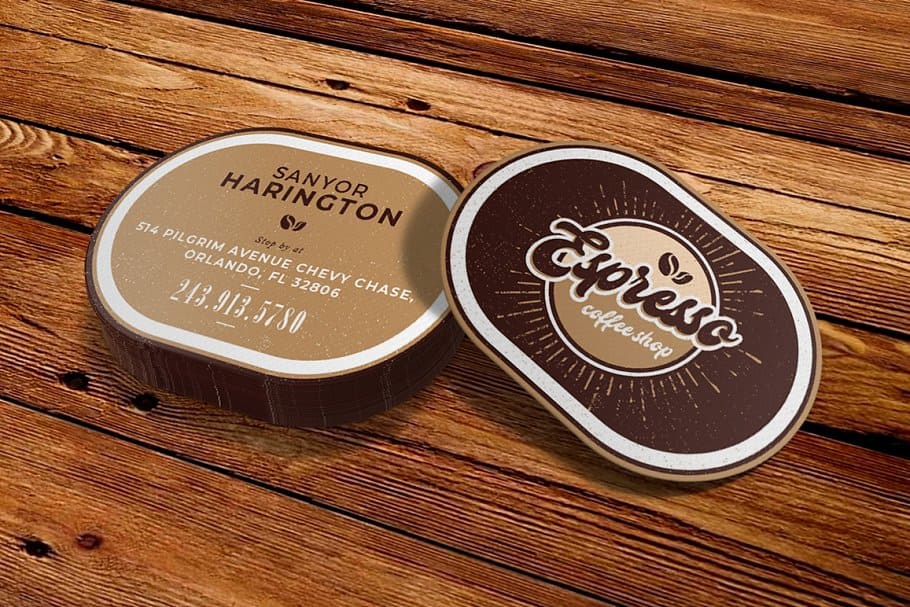
Imagine a hanger for a local coffee shop that's actually shaped like a coffee cup. Or one for a pet groomer in the shape of a dog bone. It's a small touch, but it can massively boost engagement and make your entire door hanger advertising campaign stick in someone's mind.
When you're getting quotes from printers, always ask what custom die-cut options they have. It’s often a surprisingly affordable way to stand out from the crowd. And one last pro-tip: before you sign off on the full print run, always, always insist on a physical proof. It lets you feel the paper, see the true colors, and check that the die-cut is clean. It's the one thing that can save you from a very expensive mistake.
Executing Your Distribution Strategy
You can have the most brilliant design and an offer that's impossible to refuse, but it all means nothing if those door hangers never make it to the right doorsteps. This is where the rubber meets the road. Your distribution strategy is what turns a box of printed paper into actual, tangible leads.
So, how do you get them out there? You've got a couple of main paths. You could bring in a professional distribution service. They'll get the job done efficiently, saving you a massive amount of time, but it'll cost you. The other option is to go the DIY route—rally your own staff or hire some temporary help for a weekend blitz. This gives you total control and can be easier on the wallet, but it demands some serious planning and management on your part.
Smart Targeting for Maximum Impact
Just blanketing a city with door hangers is a fast way to burn through your budget with little to show for it. The real secret is smart, focused targeting. And honestly, modern tools make this easier than ever. You can use something as simple as Google Maps to pinpoint the perfect neighborhoods for your campaign.
Think about who you're trying to reach:
- Running a landscaping business? Switch to the satellite view and look for neighborhoods with big yards, pools, and mature trees. Those are your people.
- An internet provider? Zero in on new housing developments. Every one of those new homeowners needs to pick a provider, and you can be the first one they see.
- A pest control service? You’ll want to focus on older, more established neighborhoods, especially those with dense trees and foliage. That’s where the bugs are.
This kind of precision ensures your message lands exactly where it will have the most impact. It’s a huge advantage of door hanger marketing. From a value perspective, you get nearly 100% impression rates because almost every single hanger gets seen. According to research from Power Direct Marketing, this incredible visibility is a major reason door hangers often crush the response rates of other media.
Remember, the goal isn't just to cover ground—it's to cover the right ground. A well-targeted campaign of 1,000 hangers will always outperform a poorly targeted campaign of 5,000.
This visual breaks down the numbers on a typical campaign, from printing costs all the way to expected responses.

As you can see, even a conservative 2% response rate from a 10,000-piece distribution can bring in a solid number of new leads.
Route Planning and Distribution Etiquette
Once you’ve locked in your target areas, it’s time to map out the actual routes. A little planning here goes a long way in saving time, fuel, and frustration.
A simple checklist can keep your team efficient and on track:
- Map It Out: Use a digital mapping tool to create logical routes for each person. The goal is to minimize backtracking and wasted steps.
- Set Daily Goals: Give each distributor a realistic number of homes to cover per day. This keeps momentum high and provides a clear target.
- Provide Clear Instructions: Make sure everyone knows the exact street boundaries for their zone. No guesswork.
- Track Progress: Use a shared map or a simple group chat for check-ins to see which streets have been completed.
Finally, let's talk etiquette. This is non-negotiable. How your hangers are delivered is a direct reflection on your brand. Instruct your team to always, always respect "No Soliciting" signs. Ignoring them is a surefire way to annoy potential customers.
And please, make sure each hanger is placed securely on the doorknob. Don't leave them on the ground to become litter, and never, ever stuff them in a mailbox—that's illegal. A professional, respectful delivery shows you're a professional, respectful business.
How to Measure Your Campaign's Real ROI
Once your door hangers are out in the wild, the big question hits: Did it actually work? Guessing isn't a strategy, and hoping for the best won't pay the bills. To prove your campaign was a winner, you have to connect your physical door hanger advertising to real, measurable results.
The trick is to build a clear, trackable bridge from that piece of paper on their door to a specific action they take. It's not as complex as it sounds. We're talking about simple tools like a unique QR code that zips people to a special landing page, a dedicated phone number used only for this campaign, or a discount code you haven't printed anywhere else.
When you do this, you know for a fact that every scan, call, or purchase came directly from that door hanger. No more guesswork.
Simple Tracking Methods to Implement Now
To get started, just pick one or two of these powerful tracking methods. The whole point is attribution—knowing exactly where your new leads and sales are coming from.
- Unique QR Codes: This is probably the easiest and most popular route. Just generate a unique QR code that links to a landing page built specifically for your door hanger offer. It's a direct line from their front door to your website.
- Campaign-Specific Discount Codes: This one's a classic for a reason. Create a code like "SAVE25DOOR" that's exclusively printed on the hanger. When a customer uses it, you have a direct link between that sale and your campaign.
- Dedicated Phone Numbers: Services like CallRail are perfect for this. You can set up a temporary, trackable phone number in minutes. Every call to this number gets logged, giving you a precise count of inquiries your hangers generated.
The best campaigns make it ridiculously easy for people to respond. A quick QR code scan is always going to get more traction than asking someone to manually type a long, complicated web address into their phone.
To really get a handle on how your efforts are paying off, you need solid methods for measuring marketing effectiveness that give you the full picture.
Calculating Your Return on Investment
Okay, so the responses are rolling in. Now for the fun part: calculating your Return on Investment (ROI). This simple formula is the moment of truth that tells you if your campaign was actually profitable.
ROI Formula: (Revenue Generated - Total Campaign Cost) / Total Campaign Cost
Let's walk through a quick example. Imagine you spent a total of $1,500 on everything—design, printing, and getting the hangers distributed. Thanks to your unique offer code, you can track that the campaign brought in $5,000 in new sales.
Here’s the math: ($5,000 - $1,500) / $1,500 = 2.33.
What does that number mean? For every single dollar you spent, you made $2.33 back. That's a 233% ROI.
This is the number that matters. It's the ultimate proof that your campaign worked, turning your door hanger marketing from a simple expense into a proven, revenue-driving machine.
To keep things organized, you can use a simple tracking sheet. This helps you see all your key numbers in one place, making the ROI calculation crystal clear.
Campaign ROI Tracking Template
| Metric | Example Value | Calculation/Notes |
|---|---|---|
| Total Campaign Cost | $1,500 | Design + Printing + Distribution |
| Total Responses | 125 | QR Scans + Phone Calls + Code Redemptions |
| Conversion Rate | 20% | (25 Sales / 125 Responses) * 100 |
| Total New Customers | 25 | The number of people who made a purchase |
| Average Order Value | $200 | Total Revenue / Total New Customers |
| Total Revenue | $5,000 | From sales directly attributed to the campaign |
| Cost Per Acquisition | $60 | $1,500 Total Cost / 25 New Customers |
| Campaign ROI | 233% | (($5,000 - $1,500) / $1,500) * 100 |
This kind of detailed tracking gives you undeniable proof of what's working. It also provides valuable insights you can use to make your next door hanger campaign even more successful.
Answering Your Top Questions About Door Hangers
Even if you’ve been in business for years, diving into a new marketing channel always brings up a few questions. Let’s tackle some of the most common ones I hear about door hanger campaigns so you can get started on the right foot.
What's a Realistic Budget for a Door Hanger Campaign?
This is usually the first thing people ask, and the honest answer is: it depends. There isn't a single flat rate, because the total cost is a mix of a few key decisions you'll make.
Think of it like this:
- The Design: Are you hiring a pro designer or whipping something up yourself? A professional touch costs more upfront but can seriously boost your ROI.
- The Print Run: How many doors are you hitting? Ordering 5,000 pieces will give you a much lower cost-per-hanger than ordering just 500. Volume is your friend here.
- The Feel: A thick, glossy 16 pt. cardstock feels premium in someone's hand and costs a bit more than a standard 14 pt. stock. That quality can make a difference.
- The Legwork: Are you paying a distribution service or rallying your own team to walk the neighborhoods?
A small, DIY campaign for a local pizza shop could run just a few hundred dollars. On the other hand, a professionally designed and distributed campaign across several zip codes for a regional real estate agent could easily get into the thousands. The trick is to find that sweet spot between quality and quantity that aligns with your specific goals.
Is It Actually Legal to Distribute Door Hangers?
This is a big one, and you’re right to ask. For the most part, yes, it's perfectly legal. Door hangers are considered commercial speech, and as long as you're hanging them on a door handle—not putting them inside a mailbox—you're generally in the clear.
Messing with mailboxes is a federal no-go zone. Don't do it. But beyond that, you absolutely must check your local city and county rules. Some towns or gated communities have their own regulations about solicitation. And always, always respect a "No Soliciting" sign. It's not just polite; it can save you a potential fine. A quick search on your local government's website is a non-negotiable first step.
How Often Should I Be Running These Campaigns?
Consistency is key, but you don't want to become that annoying piece of paper that gets tossed without a glance. Finding the right rhythm is a bit of an art.
For most local businesses, aiming for one solid, targeted campaign each quarter is a fantastic place to start.
This schedule gives you enough time to make an impression without creating ad fatigue. It also lets you tailor your message to the season. A landscaper could push a spring cleanup special in March, then follow up with a fall aeration offer in September. You're not just advertising; you're providing timely, relevant solutions.
Ready to create door hangers that actually get noticed and bring in customers? 4OVER4 offers premium printing options with fast turnarounds to bring your campaign to life.
Explore our high-quality door hanger printing services at https://4over4.com.
More from door hanger advertising
9
Staring at a wall of banner dimensions can feel a little overwhelming. But while there's no single "typical banner size" that wo
Emma Davis
Feb 1, 2026
18
Stretching your marketing budget doesn't mean you have to settle for flimsy, forgettable brochures. The real secret to low cost br
Emma Davis
Jan 31, 2026
34
Advertising magnets are one of those marketing tools that are so simple, you might overlook their power. They’re tangible, they last for age
Emma Davis
Jan 30, 2026
36
Tired of fighting with torn paper and sticky residue? We’ve all been there. The best way to get labels off bottles is often a simple soak in
Emma Davis
Jan 29, 2026
99
Want to know the real secret to getting a poster to stick to a wall without it peeling off in the middle of the night? It's all about what
Emma Davis
Jan 28, 2026
84
When you hear "table tent specs," what we're really talking about are the foundational details for printing them correctly: the
Emma Davis
Jan 27, 2026
284
When you're ready to print a poster, one of the first questions you'll face is, "What size should it be?" The industry has a
Emma Davis
Jan 26, 2026
192
Picture this: you're at a networking event, and someone hands you their business card. You do the usual glance—name, title, company—an
Emma Davis
Jan 25, 2026