



Emma Davis
Content Writer
Jan 9, 202625 views
Jan 9, 202625 views

The real difference between matte and glossy boils down to a single element: light. How does the paper's surface interact with it? A matte finish is like a sponge for light; it absorbs it, leaving you with a sophisticated, glare-free surface that feels incredibly smooth and refined. On the flip side, a glossy finish acts like a mirror, reflecting light to create that signature shiny, vibrant look that makes colors leap off the page.
Choosing between matte and glossy is more than just an aesthetic preference—it's a strategic decision that shapes how customers see and interact with your brand. This choice impacts everything from how easily your text can be read under bright lights to the material's durability against smudges and fingerprints. Getting a handle on these key differences is the first step toward picking the finish that truly works for your project.

When you see these two finishes side-by-side, their unique strengths become obvious. One brings a subtle, understated elegance, while the other is all about delivering a high-impact visual punch. This quick table breaks down where each one really shines.
| Attribute | Matte Finish | Glossy Finish |
|---|---|---|
| Light Reflection | Absorbs light for a flat, non-reflective surface | Reflects light, creating a shiny, vibrant look |
| Color Appearance | Colors appear more subdued and muted | Colors look deep, saturated, and high-contrast |
| Fingerprints/Smudges | Highly resistant to smudges and fingerprints | Shows smudges and fingerprints easily |
| Writability | Excellent; easy to write on with pens or pencils | Poor; most inks will smear or fail to stick |
| Tactile Feel | Smooth, velvety, and natural to the touch | Slick, smooth, and feels coated |
Each finish clearly has its own personality and purpose.
A matte surface is the go-to for a modern, professional vibe. Its glare-free nature is perfect for designs heavy on text—think brochures, catalogs, and business cards where you absolutely need readability to be top-notch. The finish feels premium in your hand and does a much better job of hiding wear from being handled.
Glossy, on the other hand, is built to grab attention. That reflective coating makes photos and bold graphics look incredibly sharp and dynamic. It’s no surprise it’s a favorite for promotional flyers, photo prints, and product labels where the visual appeal is the most important thing.
Key Takeaway: Your choice isn't just about looks—it's about function. Matte prioritizes readability and a sophisticated feel, while glossy emphasizes color vibrancy and immediate visual impact.
Ultimately, the best finish comes down to your brand identity and what you're trying to achieve. And don't forget, the world of finishes extends beyond paper. Materials like acrylic offer their own unique properties, like the beautiful Matt Acrylic finishes for house number signs. These types of finishes are often protected with extra coatings, and you can learn more about the benefits of professional laminating right here on our site.
The choice between a matte and glossy finish is one of the first, and most important, decisions you'll make. It fundamentally changes how someone sees and feels your printed material. That initial sensory reaction—the blend of sight and touch—sets the tone for their entire perception of your brand. This isn't just about looks; it's a strategic move that shapes the user experience from the very first contact.
A glossy finish is all about high-impact visuals. Its slick, reflective surface acts like a mini-amplifier for your design, making colors appear more saturated and vibrant. Light bounces off the coating, creating a sharp, high-contrast look that makes images and graphics feel dynamic and energetic. This is exactly why glossy is the go-to for promotional materials like flyers, product labels, and photo-heavy brochures where the goal is to grab attention instantly.
On the other hand, a matte finish offers a more subtle, sophisticated appeal. It absorbs light instead of reflecting it, which kills glare and creates a soft, muted effect. This non-reflective quality is a massive advantage for readability, especially for designs heavy on text, like catalogs, informational pamphlets, and premium invitations. Under direct lighting where a glossy piece would be unreadable, a matte surface stays clear and legible from any angle.

Beyond what the eye sees, the feel of a finish communicates volumes about your brand's quality and personality. This is where the distinction becomes even more pronounced.
A glossy finish feels slick and smooth. Its almost glass-like texture is modern and clean, but it can also feel a bit impersonal or commercial. That's not a bad thing; for a product label or a sales flyer, this smooth, protective feel can convey durability and professionalism. It’s built to be looked at more than held.
A matte finish, however, provides a natural, tactile sensation. It often feels velvety or silky, inviting the recipient to hold and engage with the item. This texture creates an immediate impression of quality and thoughtfulness. It feels more organic and less manufactured, making it perfect for brands aiming for an elegant, approachable, or high-end identity.
Key Insight: Glossy finishes command attention with visual loudness, creating an exciting, high-energy impression. Matte finishes invite closer inspection through understated elegance and a pleasing tactile feel, suggesting sophistication and quality.
To really get the practical difference, let's put these finishes in a couple of real-world situations where their visual and tactile qualities are put to the test.
Scenario 1: The High-End Spa Brochure
Scenario 2: The Nightclub Event Flyer
For those looking to take the tactile experience even further, exploring finishes like soft-touch printing can elevate a design to a whole new level. This finish takes the velvety feel of matte and dials it up, creating an incredibly memorable and luxurious sensation that reinforces a premium brand message. It combines the visual subtlety of matte with a texture that truly has to be felt to be believed.
Looks aren't everything. The real test of a print finish comes down to how it performs in the wild. How a piece stands up to handling, wear, and tear is just as critical as its first impression. This is where the practical differences between matte and glossy finishes can make or break your project's long-term success.
A glossy finish brings a slick, protective coating to the table, giving it a clear edge in durability against spills and moisture. Think of it as a built-in sealant. This makes it a great choice for things that need to survive a bit of a beating, like restaurant menus, heavy-duty flyers, or product packaging that might get splashed.
But that shine comes with a catch. Glossy surfaces are absolute magnets for fingerprints and smudges. Every touch leaves its mark, which can quickly turn a clean design into a messy-looking piece. This is a huge downside for anything that's meant to be passed around and handled a lot.
This is where matte finishes really shine—figuratively, of course. The non-reflective, slightly porous surface is incredibly forgiving when it comes to fingerprints. Because it doesn't catch the light, oils from skin are far less noticeable, keeping your print looking clean and professional even after it’s been handled by multiple people.
This quality makes matte the hands-down winner for:
The market backs this up. While glossy finishes still dominate the USD 15.3 billion coated paper market for vibrant ads, matte is carving out its own territory. Matte photo printing, for instance, has grown to claim about 35% of all photo print sales, largely because it’s practical, glare-free, and perfect for items that are displayed and viewed often.
One of the biggest functional deal-breakers is writability. A matte surface, being uncoated or having a porous coating, is perfect for absorbing ink from a pen or pencil without smudging. This isn't just a nice-to-have; it's an absolute must for any print piece that needs to be written on.
Think about appointment cards, postcards, or feedback forms. A matte finish gives you a smooth, effortless writing experience. Trying to write on a standard glossy surface, on the other hand, is a recipe for frustration. The ink just beads up and smears, making it completely useless for taking notes.
Crucial Detail: If your print material needs any kind of handwriting—a signature, a personal note, or filled-out information—a matte finish is the only way to go. Glossy simply won't work.
If you need serious durability but still want that eye-catching shine, consider an upgrade. Our gloss laminated printed products add an extra protective layer that boosts durability while delivering that high-impact sheen. Ultimately, the best choice aligns your finish with how the item will actually be used day-to-day, creating a product that’s not just beautiful but perfectly practical.
Moving from theory to practice is where you can really see the impact of a great finish. The difference between matte and glossy isn't just a tiny aesthetic detail—it's a strategic decision that shapes how people interact with your brand. The right choice can make your message sing, while the wrong one can create a total disconnect between your design and its purpose.
This is where your marketing goals meet a tangible product. It’s all about asking the right questions. What’s the main job of this printed piece? Who’s going to handle it, and where will they see it? Answering these questions is the key to picking the perfect finish every single time.

Your business card is often the very first piece of your brand someone physically holds. Do you want it to feel like a premium, writable surface or a bold, can't-miss-it introduction? This is the classic matte vs. glossy dilemma.
A matte finish on a business card has a certain quiet confidence. It’s sophisticated, feels great to the touch, and resists fingerprints. Best of all, it's easy to write on. This is huge for networking events, letting a new contact jot down a quick note that creates a more personal connection.
On the flip side, a glossy business card is all about making a high-impact first impression. That slick, shiny surface makes colors and logos leap off the card, grabbing attention instantly. It's a fantastic choice for photographers, artists, or any brand built on vibrant, dynamic visuals.
The job of your brochure or flyer should directly inform its finish. Are you handing out a text-heavy guide, or is it an image-rich promo piece meant to wow people? Your answer will point you straight to the right choice.
For informational flyers, spec sheets, or event programs where readability is everything, matte is the clear winner. Its non-reflective surface keeps the text legible under any light, from bright trade show floors to dim conference rooms. The focus stays squarely on the information.
But for travel brochures, real estate flyers, or product catalogs filled with stunning photography, glossy is the way to go. The high-shine coating punches up color saturation and contrast, making images look crisp, deep, and totally irresistible. The goal here is visual appeal, and a glossy finish absolutely delivers.
Situational Insight: Always think about the viewing environment. If your materials will be seen under direct, harsh lighting, a matte finish is almost always the safer and more effective bet to avoid frustrating glare.
The world of photo printing provides another perfect example of the matte vs. glossy divide. Here, the artistic style and intended use of the photograph should be your guide.
Glossy finishes are perfect for commercial photography, headshots, or any image that needs to pop with incredible sharpness and color. The reflective coating boosts color depth, making photos feel energetic and alive. It's the standard for prints designed to capture attention fast.
For fine art prints, portraits meant for framing, or moody black-and-white photography, a matte finish is usually the preferred choice. It kills distracting reflections, allowing the viewer to appreciate the texture, composition, and emotion of the image without any interference from glare. It just adds a layer of timeless sophistication.
Labels and posters have very different jobs, and their finishes should reflect that. A product label on a crowded shelf needs to shout for attention, while a decorative poster might be aiming for a more artistic, atmospheric vibe.
A glossy label helps a product stand out. The shine catches the light, drawing the eye and making the packaging look polished and professional—a huge advantage for products with colorful branding.
A matte poster, on the other hand, can create a more elegant, gallery-quality look. It's ideal for designs with subtle color palettes or detailed illustrations where glare would just obscure the finer points. Understanding visual hierarchy is key here; learning about what makes a good book cover can offer great insights into how finishes shape a design's impact.
Ultimately, your project’s intent should guide your decision. By aligning your finish with your goals, you create a far more cohesive and effective printed piece. You can explore our full range of fantastic finishes to see exactly which option will bring your vision to life.
Knowing the basic difference between matte and glossy is a great start, but the real magic happens when you start thinking about how your finish works with other production details. Moving past a simple paper choice opens up a whole world of creative options, letting you mix textures and effects for a final product that people will remember.
Honestly, the cost difference between a standard matte and a standard glossy paper stock is usually tiny—if there's any difference at all. This frees you up to make a choice based on what looks and feels right, not what your budget dictates. Things change, however, once you start adding specialty finishes to the mix.
This is where print design gets fun. Using one finish as a canvas for another can create incredible contrast and a powerful tactile experience. A matte surface, because it’s non-reflective and almost soft to the touch, makes the perfect backdrop for high-impact additions that need to pop.
One of the most effective pairings out there is a matte laminate with a spot UV coating. The matte background stays elegant and understated, while the glossy Spot UV is applied only to specific areas—maybe your logo, a headline, or a key graphic. This creates a stunning contrast between the flat, velvety feel of the matte and the slick, raised shine of the gloss.
Key Design Principle: The greater the contrast, the stronger the impact. Pairing a non-reflective matte base with a highly reflective element like Spot UV or foil creates a dynamic sensory experience that draws the eye and invites touch.
This technique is a game-changer for:
You can see how to create these stunning visual effects by exploring our complete range of Spot UV printed products, all designed to make your key design elements stand out.
While the base paper costs are pretty similar, adding specialty finishes like foil stamping, embossing, or die-cutting will definitely affect the final price. These processes require extra setup and precision, but that investment often pays for itself by creating a product that leaves a lasting impression and signals a high level of quality.
Environmental considerations are also more important than ever for many brands. The good news is that you don't have to sacrifice sustainability for your preferred finish. Eco-friendly and recycled paper options are widely available for both matte and glossy stocks. Choosing a recycled matte paper for your annual report or a sustainably sourced glossy stock for your flyers lets you align your print marketing with your company's values.
The modern printing market has evolved to support these kinds of nuanced choices. As digital and on-demand printing continue to grow, the practical differences between matte and glossy have become even more defined. The global paper printing market is projected to keep expanding, with coated stocks—including matte, satin, and glossy—expected to command 42.0% of market revenue because of how well they enhance brand impact. This continued demand really highlights how important it is to make an informed decision about your finish.
Picking between a matte and glossy finish can feel like a tough call, but it gets a whole lot simpler once you lock in on your project's main goal. To land on the right choice, it's smart to run through a few key questions that cut to the heart of how your printed piece will actually be used out in the wild. This isn't just about looks; it's about making sure the finish serves its purpose.
Answering these questions will point you toward a confident decision, ensuring your final product isn't just beautiful but perfectly suited for its job. Think of this as the final check to nail your vision.
Before you hit that order button, take a second to go through this quick checklist. Your answers should make the winner crystal clear, getting rid of any last-minute doubts about the difference between matte and glossy for your specific project.
Is readability under bright lights a top priority? If your item is going to be seen under direct sun or bright indoor lighting—think trade show booths—matte is your best bet. Its non-reflective surface cuts out glare completely, making sure your text stays crisp and easy to read from any angle.
Do your photos need to scream with color? For designs where bold, punchy images are the star of the show, glossy is the way to go. That reflective coating makes colors pop, deepens blacks, and gives your photos a sharp, high-contrast look that grabs attention instantly.
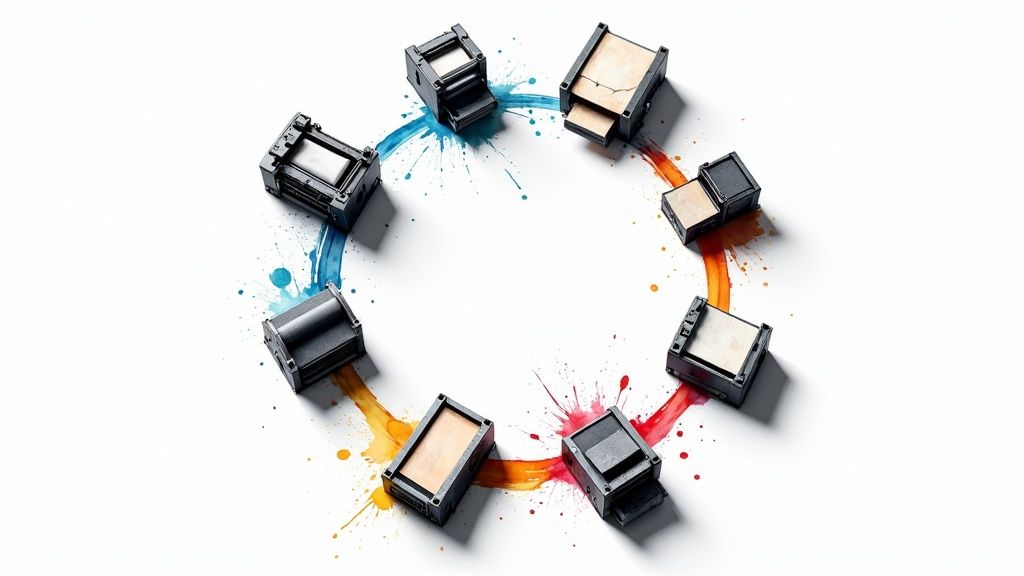
This decision tree gives you a visual path for choosing a finish based on whether you're aiming for high-impact visuals or working within a specific budget.

As you can see, the path splits based on what matters most for your project, leading you straight to the most logical finish.
Will the item be handled a lot? For things like business cards, presentation folders, or catalogs that get passed around, choose matte. It’s a champ at resisting fingerprints and smudges, keeping a clean, professional look no matter how many hands it passes through.
Do you need to be able to write on it? This one’s a deal-breaker. If you need to write on your printed piece—like for appointment cards, postcards, or forms—you have to choose matte. Ink simply won't stick to a standard glossy surface and will smear right off.
Final Takeaway: The "best" finish isn't universal—it's the one that best serves your project's function. Let practicality be your guide.
By thinking through these points, you can move from just knowing the options to making a confident decision. The next step? See and feel the difference for yourself. Take a look at our product options and think about ordering a sample pack to experience firsthand how each finish can bring your design to life.
Even after breaking down all the differences, you probably have a few specific questions bouncing around before you click "order." Let's clear those up right now so you can choose with total confidence and get a final product that looks exactly like you imagined.
I've pulled together the most common questions we get, covering everything from business cards to the nitty-gritty of special finishes.
Honestly, it all comes down to the personality of your brand and the vibe you're going for. There’s no single "best" choice.
A matte finish gives off a modern, almost understated, sophisticated feel. It’s fantastic in networking situations because it doesn't show fingerprints, and you can easily jot down a quick note on it. If you want a card that feels premium and classic, matte is an excellent way to go.
On the other hand, a glossy finish is all about being bold and grabbing attention. It makes colors practically jump off the card and gives your logo a vibrant punch. This finish is perfect for designs heavy on images or for brands with a high-energy, dynamic identity. If making a bright, high-impact first impression is your goal, glossy delivers every time.
Glossy finishes definitely amplify vibrancy, sharpness, and color depth, which is what many people associate with "high quality" in promotional or commercial photos. It creates that classic, shiny photograph look that makes images feel dynamic and full of life.
But "higher quality" can be subjective. For fine art photography, portraits, or gallery prints, a matte finish is often the preferred choice because it completely eliminates glare. This lets the viewer connect with the image's texture, composition, and emotion without any distracting reflections. Think of it this way: glossy delivers visual "pop," while matte offers a professional, glare-free experience perfect for display.
Yes, you absolutely can add specialty finishes like Spot UV or foil stamping to both matte and glossy papers. However, the visual payoff is way more dramatic on a matte surface.
There's just something powerful about the contrast you get when you add a slick, glossy Spot UV or a shimmering metallic foil onto a flat, non-reflective matte background. That play between textures makes the design element stand out in a way that people can both see and feel.
While you can technically apply these effects to an already glossy paper, the contrast is much more subtle and can get a bit lost. For maximum impact that really draws the eye, we almost always recommend using a matte base for these kinds of premium finishes.
For most of our standard print products—think flyers, business cards, and brochures—there's usually little to no price difference between our standard matte and glossy paper options. Your decision should really be driven by what works best for your design and brand, not a tiny price gap.
Of course, costs can change if you're looking at premium papers or specialty laminates. The best way to know for sure is to use the instant price calculator on any product page. It will give you accurate, real-time costs for whatever you're building.
Ready to see and feel the difference for yourself? At 4OVER4, you can explore a full range of high-quality print options and use our online designer to create the perfect materials for your brand. Start your print project today!
31
When you hear a designer talk about "creating outlines in Illustrator," they're referring to one of two things: converting live
Emma Davis
Jan 10, 2026
21
When you're trying to decide between screen printing and vinyl, the choice really boils down to two things: volume and design. If you'
Emma Davis
Jan 8, 2026
40
Printing a business card might seem straightforward, but a handful of small details are what separate a truly memorable card from one that get
Emma Davis
Jan 7, 2026
46
When you need to make an impact fast, your font choice is everything. For flyers, you can't go wrong with timeless, readable options like
Emma Davis
Jan 6, 2026
47
In a world drowning in digital pings and overflowing inboxes, the humble business card is more powerful than ever. It's a real handshake,
Emma Davis
Jan 5, 2026
43
It's a classic question we get all the time: "What's a typical banner size?" The honest answer? There really isn't one u
Emma Davis
Jan 4, 2026
156
Choosing the right size for your print poster isn't just a minor detail—it's the first real decision you make in a campaign, and it
Emma Davis
Jan 3, 2026
80
If you've ever planned a direct mail campaign, you know one of the first questions is always about size. The most common, go-to st
Emma Davis
Jan 2, 2026