
Guide to Custom Shopping Bags With Logo

    user icon

    Emma Davis

    Content Writer

    Jun 29, 20251194 views

    Jun 29, 20251194 views

    Guide to Custom Shopping Bags With Logo

    Imagine your brand walking down the street, carried proudly by your customers. That's the real magic of well-designed custom shopping bags with logo. They take a simple transaction and turn it into a fantastic marketing moment. This isn't just about putting things in a bag—it's about turning every customer into a mobile ambassador for your business.

    Why Custom Bags Are Your Best Walking Billboard

    Think of a custom bag not as an expense, but as one of the most organic and effective promotional tools you can get. Every time a customer walks out of your store, they carry a piece of your brand with them. This "walking billboard" generates impressions far beyond your front door, reaching potential new customers in parks, on subways, and in other shopping centers.

    This subtle yet constant exposure builds brand recognition in a way other ads just can't match. It’s a known fact in marketing: repeated exposure to a logo builds familiarity and trust. When people see your bag over and over, your brand becomes a familiar face, making them far more likely to choose you over a competitor they've never heard of.

    Turning Packaging Into a Brand Experience

    A thoughtfully designed bag does more than just hold merchandise; it elevates the entire customer experience. It sends a message of professionalism and attention to detail. The thinking goes, "If they care this much about their bags, they must really care about their products." This positive feeling builds loyalty and encourages repeat business. For many shoppers, a high-quality, reusable bag is a genuine value-add that makes their purchase feel a bit more special.

    The true power of a custom bag is in its reusability. A durable, attractive bag isn't just used once and tossed. It gets used for groceries, gym clothes, or daily errands, multiplying your brand's visibility with every single use—at no extra cost to you.

    A Smart and Tangible Marketing Investment

    When you stack them up against recurring digital ad spends or pricey print campaigns, custom shopping bags are a remarkably cost-effective marketing investment. They're a tangible asset that keeps delivering value long after the initial purchase. In short, these bags pull triple duty:

    • Practicality: They serve a necessary function for your customer.
    • Promotion: They act as a continuous, mobile advertisement.
    • Professionalism: They boost your brand's perceived quality and image.

    By investing in quality custom shopping bags with your logo, you're not just buying packaging. You're buying brand visibility, customer loyalty, and a marketing asset that lasts. This is just one way to make a physical impression, and exploring other promotional products can open up even more avenues for this kind of tangible marketing.

    Choosing the Right Material for Your Brand

    Picking a material for your custom bag is a lot like choosing the foundation for a house. It dictates how sturdy the bag is, what it looks like, and most importantly, how customers feel about your brand. Get it right, and a simple bag transforms into a powerful statement that reinforces your story.

    Think about it. A high-end jewelry boutique practically screams luxury with a thick, premium cotton canvas bag. On the other hand, a health food store’s commitment to sustainability is perfectly matched with a sturdy jute or recycled PET bag. The material is the very first physical handshake between your customer and your brand’s values.

    The Core Material Categories

    When it comes to custom shopping bags with logo, your options generally fall into three main camps: paper, plastic-based fabrics, and natural fibers. Each one brings its own unique blend of cost, toughness, and printability to the table. Nailing down these differences is the first step to making a smart choice.

    • Paper Bags: These are the classic, versatile workhorse. They're incredibly customizable with different finishes (like matte or gloss) and take print beautifully, making them perfect for detailed logos and eye-popping colors.
    • Non-Woven Polypropylene (NWPP): This is a budget-friendly, fabric-like material made from plastic that’s surprisingly durable. It’s lightweight, water-resistant, and a go-to choice for reusable bags that will see a lot of action.
    • Natural Fibers (Cotton, Jute, Canvas): These materials send a clear message of premium quality and eco-consciousness. They are exceptionally tough and ideal for brands that want to communicate quality, sustainability, and a high-end feel.

    The choice you make is a direct signal to your customer. A crisp paper bag suggests a classic retail experience, while a rugged canvas tote speaks to a more modern, lifestyle-focused brand.

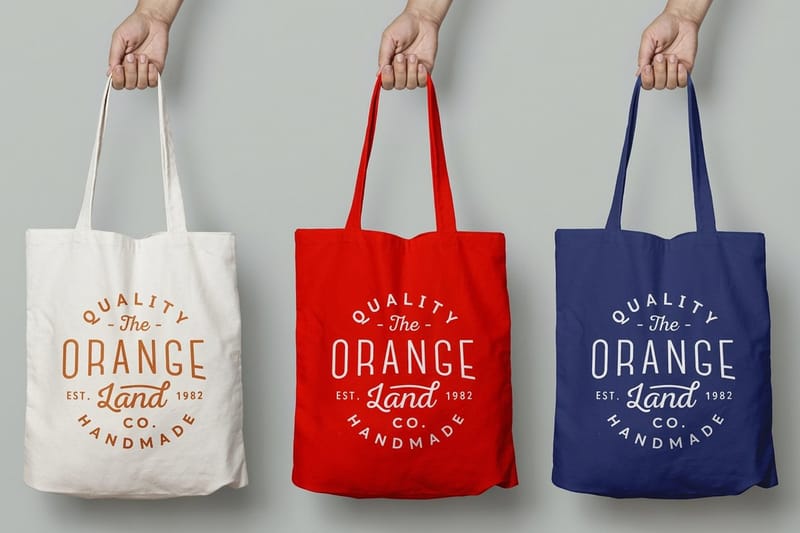
    Just look at how a simple, well-placed logo on a quality bag can create an unforgettable brand impression.

    Image

    This image makes a powerful point: you don’t always need a busy design. Strong contrast and the right material are often all it takes to make your logo truly pop.

    Matching Material to Brand Identity and Use Case

    Beyond just looking good, the bag has to be practical. Think about what your customers will actually be carrying. A bakery selling light pastries can get away with a simple paper bag, but a bookstore needs something much sturdier, like a gusseted paper bag or a canvas tote, to handle the weight of several books.

    The material's texture also plays a huge role in how your logo turns out.

    Smooth surfaces, like you’d find on coated paper or non-woven polypropylene, are fantastic for capturing tiny details and complex color gradients. Coarser textures, like jute or raw canvas, are much better suited for bold, single-color logos that work with the material's rustic feel, not against it.

    Of course, this decision hits your budget directly. Natural fibers like cotton usually have a higher price tag than standard paper or non-woven options. But their durability means they often get reused for months, or even years, giving you a much longer marketing lifespan and a better return on your investment. Checking out a variety of tote bags for printing can give you a real feel for how different materials look and perform in the wild.

    To help you sort through the options, here’s a quick-glance table comparing the most popular materials.

    Comparing Custom Bag Materials At a Glance

    Material Type Durability Eco-Friendliness Best For Print Relative Cost
    Paper Low to Medium Recyclable/Compostable Excellent for detailed graphics Low
    Non-Woven Polypropylene Medium to High Reusable/Recyclable Good for simple, bold designs Low to Medium
    Cotton/Canvas High Reusable/Biodegradable Good for bold, artistic prints Medium to High
    Jute Very High Reusable/Biodegradable Best for simple, one-color logos Medium
    Recycled PET (rPET) High Made from recyclables Good for screen printing Medium

    This table should give you a solid starting point, but remember to think about your specific brand goals and what your customers will appreciate most.

    The Growing Importance of Eco-Conscious Choices

    Sustainability isn't a niche concern anymore; it’s a huge factor in how people shop. The demand for sustainable packaging is a massive driver in the global bag market, which is expected to leap from an estimated $45.8 billion in 2025 to $63.5 billion by 2035. This isn’t just a fluke—it shows a real shift toward reusable and eco-friendly options that line up with what consumers want and what new environmental laws require.

    Choosing materials like recycled paper, organic cotton, or jute does more than just shrink your environmental footprint. It tells a powerful story about your brand's values, building trust and loyalty with an increasingly eco-aware audience. When you highlight that your bag is reusable, recyclable, or made from sustainable sources, you turn a simple transaction into a statement of shared values.

    Creating a Logo Design That Gets Noticed

    Image

    A logo on your website gets to sit still, looking sharp and clear on a screen. But a logo on a shopping bag? That’s a whole different ballgame. It lives in the real world, a moving target often spotted from across a bustling street, fighting for attention against a thousand other sights. This means the design rules have to change.

    Your number one job is to create instant recognition. Forget the intricate details and subtle color gradients that look stunning on a high-resolution monitor. On a bag that’s swinging from someone's arm, those beautiful nuances just turn into a blurry, unreadable mess. You need to embrace simplicity and boldness, crafting a design that someone can grasp and remember in just a few seconds.

    The Power of Simplicity and Contrast

    Think of your bag's surface as a miniature, walking billboard. What makes a billboard effective? Minimal text and high-contrast images that deliver a message in a flash. Your bag logo needs to follow that same playbook.

    • Go Bold or Go Home: Choose clean lines, strong shapes, and icons that are easy to identify. A complicated family crest or a logo packed with tiny elements will completely lose its punch from a distance. A single, memorable icon nearly always beats a cluttered design.

    • Contrast is King: A dark logo on a light bag (or the other way around) is an absolute must. This high contrast makes sure your logo pops, even in dim lighting or when seen from afar. A low-contrast combo, like a beige logo on a white bag, will simply vanish.

    • Scale for Readability: Any text in your logo needs to be big enough to be read from at least ten feet away. If someone has to squint to make out your business name, the design isn't working. When in doubt, make the font bigger and bolder.

    Your logo on a bag isn't there to tell your brand’s whole life story. Its job is to be a visual trigger—a quick, memorable symbol that points right back to your business. Simplicity is what makes it stick.

    Designing for the Physical Bag

    A bag isn't a flat piece of paper. It’s a three-dimensional object with folds, seams, and handles that can completely wreck a great design if you don't plan for them.

    Before you lock in your logo placement, you have to think about the bag's actual structure. Gussets—those foldable sides that give a bag its depth—can distort or even hide parts of a logo that’s printed too wide. Likewise, the handles can block the top portion of your design. Always ask your supplier for a template or "dieline" to see the exact printable area and how the bag comes together.

    A smart move is to center your design and leave plenty of "breathing room" on all sides. This creates a safe zone, ensuring your full logo stays visible and doesn't get swallowed by a fold or seam.

    The Case for a Single-Color Logo

    While a full-color logo might feel like the most premium option, a strategic single-color design is often far more effective—and much easier on the wallet. Printing with just one color slashes production costs, but more importantly, it forces you to focus on shape and form. The result is often a cleaner, more impactful, and iconic design that's instantly recognizable.

    This minimalist approach works beautifully when you pair it with other branded items. For example, you could put a bold, single-color logo on your bag and save the finer details for custom hang tags tied to the handle. This way, each piece has a clear job: the bag grabs the attention, and the tag delivers the information. By focusing on what works in the real world, you can create custom shopping bags with a logo that are true mobile marketing powerhouses.

    A Practical Guide to Bag Printing Methods

    Once you've settled on the perfect material and a striking logo, the next big step is bringing it all to life. The printing method you choose for your custom shopping bags with logo is just as crucial as the design itself; it dictates the final look, feel, texture, and of course, the cost. Getting a handle on the basics will help you have a much more productive chat with your supplier and make sure your vision translates perfectly onto the final bag.

    Think of it like painting a room. You could grab a roller for broad, even coverage (that's your screen printing) or a fine-tipped brush for intricate details (more like digital printing). Each tool is meant for a different job. Let's break down the most common techniques so you can confidently match the method to your material, design complexity, and budget.

    Screen Printing: The Bold and Versatile Workhorse

    Screen printing is a true classic and one of the most popular, cost-effective ways to print custom bags, especially when you're ordering a bunch. The process is a lot like using a stencil. A fine mesh screen is stretched over a frame, a stencil of your logo is burned into it, and ink is pushed through the open areas directly onto the bag's surface.

    This technique is loved for producing incredibly vibrant, durable, and solid colors that really stand out. It’s the ideal choice for:

    • Simple Logos: Designs with one to three solid colors are where screen printing shines.
    • Bold Graphics: It’s fantastic at creating sharp lines and clear, blocky text.
    • Porous Materials: This is the absolute go-to for canvas, cotton, and jute bags because the ink soaks right into the fibers for a finish that lasts.

    The main thing to keep in mind with screen printing is that every single color needs its own separate screen. This means the setup costs can climb with each color you add to your design, which is why it's most economical for logos with just one or two colors.

    Heat Transfer for Detailed and Colorful Graphics

    What if your logo is packed with fine details, smooth color gradients, or even photographic elements? That's where heat transfer comes in. Instead of putting ink directly on the bag, this method prints your design onto special transfer paper. This printed "decal" is then laid on the bag and applied with a combination of heat and pressure.

    Just think of it as a high-quality, permanent iron-on. The result is a crisp, photo-realistic image with a noticeably smooth finish.

    Heat transfer opens up the world of full-color, complex designs without the multiple setup fees you’d get with screen printing. It's the perfect way to turn detailed digital art into a tangible, wearable graphic on your shopping bags.

    This method works beautifully on smoother materials like non-woven polypropylene (NWPP) and some types of paper bags. It’s your best bet when your logo's complexity is a must-have and you need every last detail to look absolutely perfect.

    Digital Printing for Photorealistic Masterpieces

    Digital printing, sometimes called Direct-to-Garment (DTG) printing, is basically a high-tech inkjet printer that prints straight onto the fabric. It sprays microscopic droplets of water-based ink onto the bag, which allows for a limitless color palette and stunningly precise detail.

    This is the top choice for:

    • Photographic Images: If you want an actual photo on your bag, this is how you do it.
    • Complex Color Blending: It can reproduce subtle gradients and shading without a hitch.
    • Small Orders: Since there's no screen setup needed, it's cost-effective for small runs or even one-off samples.

    While it's incredibly versatile, digital printing often costs more per bag on large orders compared to screen printing. The inks are also a bit more transparent, which means they look their best on white or light-colored bags.

    While exploring a specialty printing collection can uncover even more unique finishes, these three core methods will cover almost any project you can dream up. Your final choice will simply come down to balancing your design's needs with your budget and material.

    Going Green: How Eco-Friendly and Reusable Bags Boost Your Brand

    In today's world, an eco-friendly bag is so much more than just a way for customers to carry their purchase home. It's a walking billboard for your brand's values. When you choose sustainable materials for your custom shopping bags with logo, you're sending a clear message: you care about more than just the bottom line. This isn't just a nice-to-have; it's a smart business move that shows you're in tune with the growing demand for corporate responsibility.

    Image

    Imagine a customer leaving your store with a bag made from organic cotton, rugged jute, or even recycled plastic bottles. They aren't just carrying a product; they're carrying a tangible piece of your commitment to the planet. This simple choice helps you forge a genuine connection with a huge and influential audience of environmentally aware shoppers, building a much deeper level of loyalty and trust.

    This isn't some fleeting trend, either. It’s a major shift in how people shop. The data is clear: a huge number of consumers are willing to pay a little extra for products from brands that are serious about sustainability. By handing them a reusable, eco-friendly bag, you're not just giving them packaging—you're offering them a durable product that adds value to their life and reflects their own principles.

    Turning Your Green Choice Into a Marketing Win

    Simply switching to eco-friendly materials is a great first step, but the real magic happens when you communicate that choice effectively. Your bag stops being just a bag and becomes a conversation starter—a symbol of your brand's modern, forward-thinking approach.

    Don't be shy about your commitment! Here’s how you can make that bag a powerful marketing tool:

    • Wear It with Pride: Add a small, tasteful icon or a simple line of text like "Made from 100% Recycled Materials" or "I'm Reusable—Bring Me Back!" This instantly tells everyone who sees the bag what you're all about.
    • Share the 'Why': Use a small tag or even a quick mention at checkout to explain why you made the switch. A simple, "We chose this bag to help reduce plastic waste," can have a massive impact.
    • Encourage Repeat Use: Offer a small discount or a loyalty point to customers who bring their branded bag back for their next shopping trip. This reinforces the bag's value and keeps them coming back to your store.

    Choosing sustainable options is a direct investment in your brand's reputation. It shows you're a responsible business that listens to its customers and cares about its impact, building goodwill that can last for years.

    The move toward reusable bags is fueling massive market growth. For instance, the global tote bag market, a huge player in the custom bag world, is expected to jump from USD 6.94 billion in 2025 to a whopping USD 9.82 billion by 2029. This explosive growth reflects a major consumer shift away from single-use plastics and toward durable, stylish bags that are both practical and a fashion statement.

    Choosing Your Eco-Friendly Material

    The material you choose says a lot about your brand. Each option has its own unique feel and environmental story, so you can tailor your bag to perfectly match your brand's identity.

    Here’s a quick rundown of popular choices:

    • Organic Cotton: Think soft, durable, and premium. It's the perfect fit for high-end retail or brands that focus on natural, high-quality products.
    • Jute: This one is rugged, earthy, and incredibly strong. It’s a fantastic choice for grocery stores, farmers markets, or any brand with a rustic, organic vibe.
    • Recycled PET (rPET): Made from recycled plastic bottles, this material is surprisingly smooth, tough, and water-resistant. It's a versatile workhorse that suits a wide range of businesses.

    By thoughtfully choosing and promoting your sustainable bags, you do more than just wrap up a sale. You elevate your brand's reputation, create a lasting bond with your customers, and turn every purchase into a positive statement for the planet. For more inspiration, check out our guide on green printing solutions.

    How to Get Your Custom Bags Ordered the Right Way

    Taking your final design from a digital file to a physical product can feel like the trickiest part of the whole custom bag process. It’s not. With a clear plan, ordering is just a series of simple, logical steps. This is your roadmap for navigating the entire workflow, from your first email to the moment the boxes arrive at your door.

    Your journey starts with finding the right partner. Let’s be clear: not all suppliers are the same. You need to do a little homework. Look for companies with a solid track record—find verifiable customer reviews, check out their portfolio of past projects, and see how responsive their customer service is. A great supplier is more than a factory; they're a partner who will guide you on materials and printing to get the best possible result for your brand.

    Your Step-by-Step Ordering Checklist

    To get an accurate price and a realistic timeline, you need to send a clear and detailed request for a quote (RFQ). Being thorough here is your best defense against misunderstandings and surprise costs down the road. Think of it as giving your supplier the complete blueprint for your project.

    Here’s what every solid quote request should include:

    1. Bag Specs: Get specific. Detail the material (e.g., 120 GSM kraft paper, 10oz cotton canvas), the bag dimensions (width x height x gusset), and the handle type (like twisted paper or cotton rope).
    2. Artwork Files: This is a big one. Attach your logo in a high-resolution vector format, like .AI, .EPS, or .PDF. This is non-negotiable for a sharp, professional print.
    3. Color Info: Provide specific Pantone (PMS) color codes for your logo. This is the universal language of color that ensures your brand looks exactly right, no matter who’s printing it.
    4. Print Method: If you have a preference—say, screen printing for a simple one-color logo or heat transfer for a complex, multi-color design—let them know.
    5. Order Quantity: State how many bags you need. Don't forget, the price per bag almost always drops as your order volume goes up.
    6. Shipping Details: Give them your delivery address so they can factor in shipping costs and give you an accurate delivery window.

    Making Sense of Pricing and Production Timelines

    When you get quotes back, you'll see they’re more than just a single price per bag. It’s important to understand all the pieces of the puzzle so you can compare offers fairly and budget correctly.

    The single most critical step in this entire process is approving the proof. This digital (or sometimes physical) mockup is your last chance to catch any errors in spelling, color, or placement before hundreds or thousands of bags go into production. A mistake caught here saves you from a massive, irreversible headache.

    Custom bag pricing usually has a few key parts. You’ll have the base price per bag, which gets cheaper with higher quantities. On top of that, expect a one-time setup fee or screen charge, which is common for methods like screen printing. This covers the cost of creating the custom screens for your specific design. Finally, always ask about shipping costs and any potential taxes.

    It’s also helpful to understand the global picture. The shopping bag market is huge and constantly growing. In 2025, the global market is valued at around USD 14.4 billion, with the Asia Pacific region holding a massive 37.9% share. This shows how manufacturing is spread across the world, which can affect your timelines and costs. You can learn more about these global trends from Cognitive Market Research.

    Finalizing Your Order and Signing Off on the Proof

    Once you’ve picked your supplier and agreed on the price, they’ll send you a proof to approve. This is your safety net. Go over every single detail with a fine-tooth comb. Check the logo placement, triple-check the spelling of any text, and confirm the PMS colors are correct. If anything looks off, don't hesitate to ask for a revision.

    After you give your final “go-ahead,” your order officially moves into production. Make sure you have a firm production timeline and an estimated delivery date. This whole workflow, from vetting suppliers to approving that final proof, is designed to eliminate surprises and put you in the driver’s seat. It’s how you get custom shopping bags with a logo that you'll be proud to put in your customers' hands.

    Of course. Here is the rewritten section, crafted to sound like an experienced human expert and match the provided examples.


    Your Custom Bag Questions, Answered

    As you get closer to placing your order for custom shopping bags with a logo, a few practical questions always seem to pop up. It's completely normal. Getting these final details sorted out is the last step before you can confidently sign off on the project.

    Let's walk through the most common questions we hear from businesses, so you can finalize your order without any second-guessing.

    What’s a Realistic Minimum Order?

    The minimum order quantity, or MOQ, really depends on who you're working with and what you're making. It’s a number that’s all about production efficiency.

    For simpler jobs—think basic paper or non-woven bags with a one-color logo—some suppliers can get started with as few as 100-250 units. This is great for small businesses, one-off events, or anyone testing the waters.

    But once you get into more complex projects, the numbers change. If you're looking at heavy-duty canvas totes or bags that need detailed, multi-color printing, the setup is much more involved. To make a production run like that worthwhile, suppliers often set the bar higher, usually starting at 500 or even 1,000 units. This is one of the first numbers you should confirm, as it directly shapes your total budget.

    How Can I Make Sure My Brand Colors Are Perfect?

    This is a big one. Nothing is more important for brand recognition than getting your colors right. The secret is to use the Pantone Matching System (PMS). Think of PMS codes as a universal recipe for color. They tell the printer the exact formula to mix, ensuring the vibrant red from your website is the exact same red that appears on your finished bag.

    Don't rely on the colors you see on your screen (RGB) or even standard print colors (CMYK). They can look wildly different from one device to another and can shift dramatically depending on the material they're printed on. It's a recipe for disappointment.

    For any decent-sized order, always ask for a digital proof to review. If you want total peace of mind—and we highly recommend it—ask for a physical sample. Seeing the real color on the real material is the only way to approve the final look before you commit to the full run.

    What Should I Expect to Budget for Custom Bags?

    Your total cost will really hinge on three things: the material you pick, how many you order, and how complex your logo is.

    On the more affordable end, a simple, one-color screen print on a budget-friendly non-woven bag could be less than a dollar per bag, especially with a larger order. It’s a straightforward and effective option.

    If you’re aiming for a more premium feel, like a bold, multi-color design printed on a high-quality, heavy cotton canvas tote, you could be looking at several dollars per bag. It's also important to ask about any one-time setup fees, which cover the cost of creating the printing screens for your design. Always get a full quote that breaks everything down, including shipping, so there are no surprises.


    Ready to create a custom bag that turns every customer into a walking advertisement? At 4OVER4, we offer a huge range of materials, styles, and printing options to bring your brand to life. Design your perfect custom shopping bags today!

    More from custom shopping bags with logo

    How to Get Labels Off Bottles Without Leaving Residue
    story
    How to Get Labels Off Bottles Without Leaving Residue

    9

    Tired of fighting with torn paper and sticky residue? We’ve all been there. The best way to get labels off bottles is often a simple soak in

    author avatarEmma Davis

    Jan 29, 2026

    How to Stick a Poster on a Wall Without Any Damage
    story
    How to Stick a Poster on a Wall Without Any Damage

    16

    Want to know the real secret to getting a poster to stick to a wall without it peeling off in the middle of the night? It's all about what

    author avatarEmma Davis

    Jan 28, 2026

    The Definitive Guide to Table Tent Specs for Perfect Printing
    story
    The Definitive Guide to Table Tent Specs for Perfect Printing

    34

    When you hear "table tent specs," what we're really talking about are the foundational details for printing them correctly: the

    author avatarEmma Davis

    Jan 27, 2026

    Your Ultimate Guide to poster sizes inches: Standard Poster Sizes Explained
    story
    Your Ultimate Guide to poster sizes inches: Standard Poster Sizes Explained

    136

    When you're ready to print a poster, one of the first questions you'll face is, "What size should it be?" The industry has a

    author avatarEmma Davis

    Jan 26, 2026

    45+ Creative Ideas for the Back of a Business Card
    story
    45+ Creative Ideas for the Back of a Business Card

    124

    Picture this: you're at a networking event, and someone hands you their business card. You do the usual glance—name, title, company—an

    author avatarEmma Davis

    Jan 25, 2026

    How to Make a Card in Word for Pro Results
    story
    How to Make a Card in Word for Pro Results

    137

    Believe it or not, figuring out how to make a card in Word is surprisingly easy. You can knock out everything from slick, professional busines

    author avatarEmma Davis

    Jan 24, 2026

    Your Guide to Printing on Packaging That Captivates Customers
    story
    Your Guide to Printing on Packaging That Captivates Customers

    122

    Printing on packaging takes a simple container and turns it into one of your most powerful marketing tools. It’s the very first physical int

    author avatarEmma Davis

    Jan 23, 2026

    A Complete Guide to Flyer Size Dimensions for Perfect Printing
    story
    A Complete Guide to Flyer Size Dimensions for Perfect Printing

    446

    When you're getting ready to print a flyer, one of the first questions you'll face is, "What size should it be?" The most co

    author avatarEmma Davis

    Jan 22, 2026

    Home
    Products
    Cart
    Account
