Table of Contents
- Home
- content hub
- Unlocking Potential with a Business Card Fold
 Share and earn
Unlocking Potential with a Business Card Fold

Jul 6, 20251325 views
Jul 6, 20251325 views
A standard, flat business card is a fantastic tool for the basics: sharing your contact details. But what if you could do more? A business card fold takes that simple rectangle and turns it into an interactive marketing piece, instantly giving you double or even triple the space to truly tell your brand's story.
Why a Simple Fold Changes Everything
Think of a traditional business card as a single-frame snapshot. It’s quick and effective for one specific purpose—delivering names, numbers, and titles. Now, imagine that snapshot unfolding into a miniature brochure. That's the power you get when you add a fold. This isn't just about cramming in more information; it's about creating a genuine experience.
The moment someone has to physically open your card, you’ve grabbed their attention in a way a flat card just can't. That tiny action builds a sense of curiosity and makes your first impression far more memorable. You can guide them through a story, reveal a special offer, or show off a stunning visual on the inside panels.
From Information to Interaction
This one simple design choice elevates your card from a passive object to an active marketing tool. Suddenly, you have the power to structure your information in a much more compelling way. For instance, you can use the front panel for a clean, powerful first look with just your logo and name, while reserving the interior for things like:
- A Mini-Portfolio: Photographers, designers, and artists can showcase small, high-impact images of their best work.
- Service or Product Lists: Consultants and small businesses can detail their offerings without making the card look cluttered.
- Maps and Directions: An absolute must-have for brick-and-mortar stores, restaurants, or event venues.
- Appointment Reminders: Healthcare professionals and service providers can add a genuinely functional element their clients will appreciate.
This approach really works. With an estimated 27 million business cards still being printed every single day, standing out is more critical than ever. In fact, market insights reveal that 65% of people remember a business better when they receive a uniquely folded card compared to a standard one. That’s a testament to its impact. If you're curious about the long history of these networking staples, you can find more on the evolution of business cards over at Sansan.com.
A folded card isn’t just about holding more text; it's about controlling the reveal. You create a beginning, a middle, and an end to your introduction, all within a pocket-sized package.
Ultimately, choosing a business card fold is a strategic move to make your brand unforgettable. When you're ready, explore our complete collection of business cards printing options to find the perfect format to tell your unique story.
From Social Cue to Modern Marketing Tool
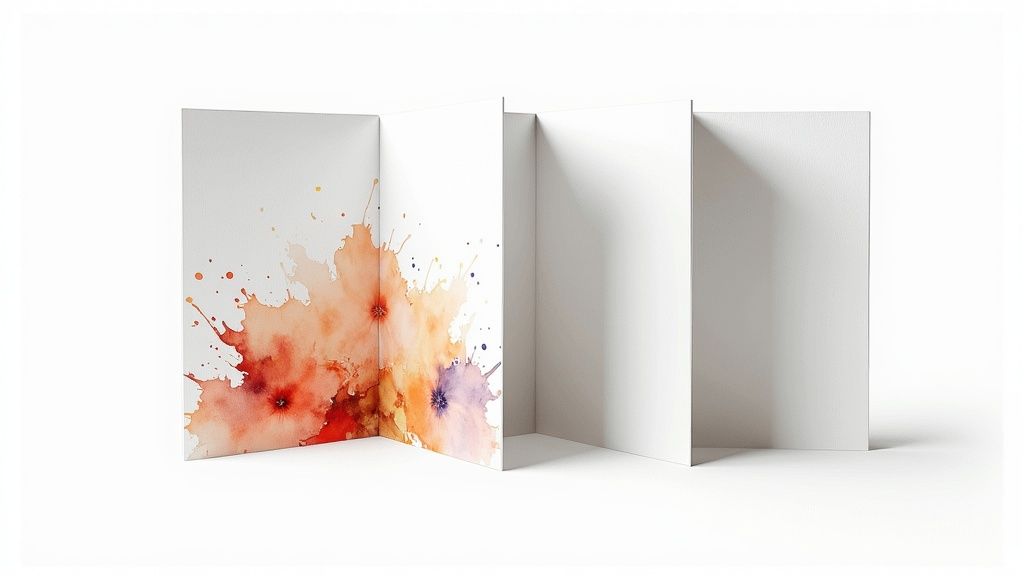 A business card fold isn’t just a clever printing trick; it’s a communication method with surprisingly deep roots. The simple act of folding a piece of paper has always been a way to add meaning, turning a flat object into a message with layers of purpose. To really get why folded cards are so effective today, it helps to look back at how they evolved from a polite social gesture into a killer branding tool.
Our story starts way back in 15th-century China, where visiting cards, or meishi, were a non-negotiable part of social etiquette. The fold was a silent language all its own. A card with a folded corner told the recipient that the visitor had shown up in person—a sign of genuine effort and respect. If the card was folded down the middle, it meant the visit was intended for the entire family, not just one person.
These historical details show us that a fold was never just for show. It was a specific, deliberate action meant to add real context and weight to an interaction.
The Rebirth of the Fold in Marketing
Flash forward to today, and that same idea is back, just playing in a different field. The fold has been reborn as a seriously effective marketing tool. While its original job was to send social signals, its new role is to craft a brand experience that people remember. It makes your card stand out from the sea of boring flat rectangles by sparking curiosity and inviting people to interact.
Think of it this way: a standard flat card just gives information. A folded card tells a story. It’s like having a miniature stage to control how someone experiences your brand. The front cover grabs their attention, the inside panels deliver your core message, and the back can seal the deal with a call to action.
By embracing a business card fold, you are using a centuries-old technique of adding value through design. You're not just handing over contact details; you're delivering a tactile experience that makes your brand stick.
This idea fits into a bigger picture. When you understand the full range of essential small business marketing materials, you see how a standout card can amplify your entire strategy. It becomes a critical piece of a much larger puzzle, connecting your brand’s physical and digital presence.
Ultimately, the journey of the folded card teaches us something important. Choosing a folded design isn't just about printing; it's a nod to a long history of using design to say more. It transforms a simple networking handout into a sophisticated tool for making an impact that lasts. When you're ready to create a first impression that truly stands out, our full suite of custom marketing materials can help bring your vision to life.
A Visual Guide to Common Fold Styles
Think of your business card's fold style like the frame on a piece of art. The right choice doesn't just hold everything together; it guides the eye, sets the tone, and completely changes how your message is received. Getting familiar with the most common folds is the first step to creating a card that does more than list your contact info—it makes a real impression.
The image below shows you exactly what I mean. It contrasts a standard, flat card with a folded one, showing how those extra panels can be used to tell a much richer story.
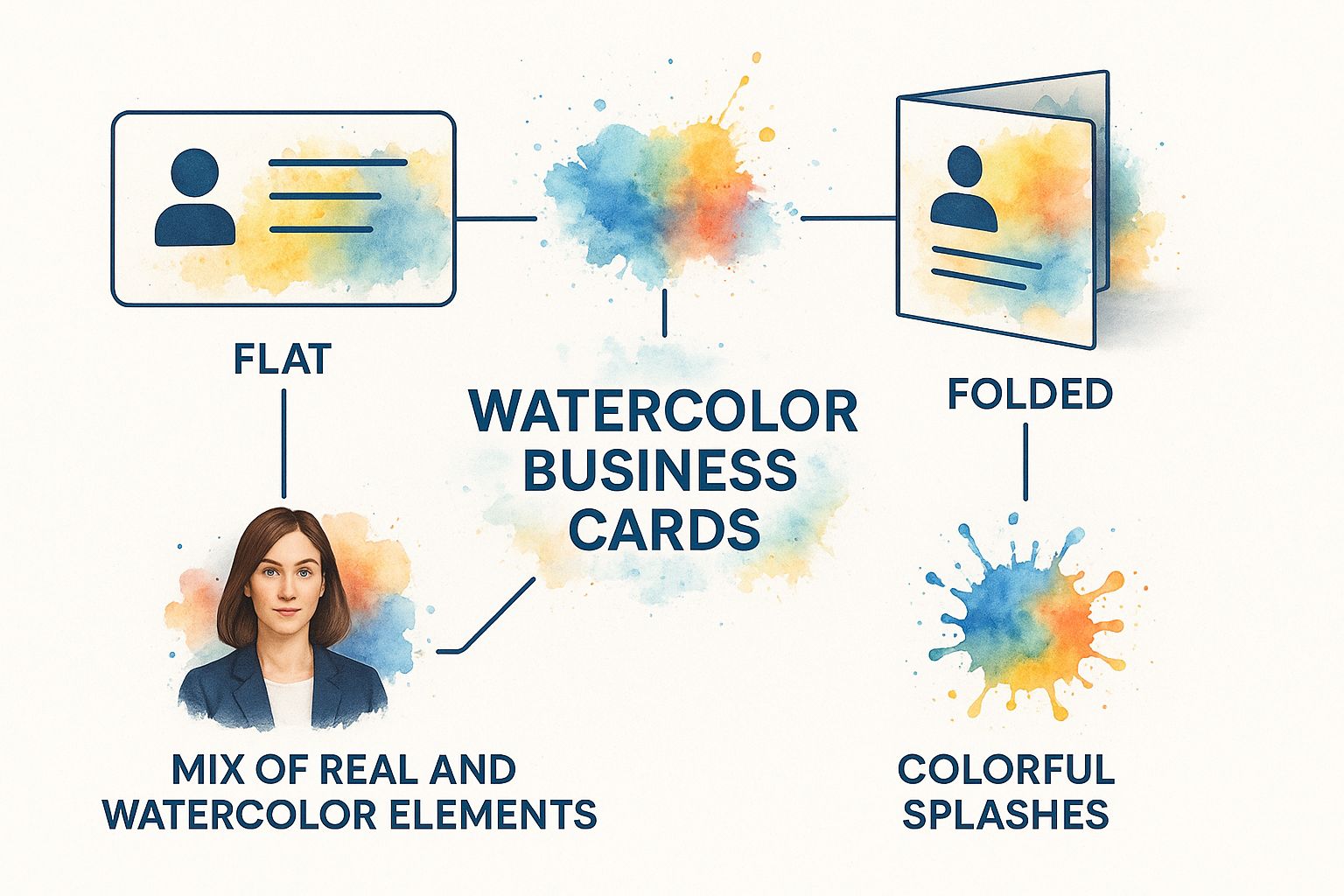
As you can see, a flat card gives the facts. A folded card, on the other hand, takes someone on a journey, creating a structured path for them to follow. Let's break down the most popular options, each with its own distinct personality.
To help you quickly compare the different styles we'll cover, here's a simple table breaking down the key features of each fold.
At-a-Glance Guide to Fold Styles
| Fold Type | Number of Panels | Best For | Key Advantage |
|---|---|---|---|
| Bi-Fold | 4 | Clean, professional presentations, appointment cards, or service menus. | Simplicity and familiarity. |
| Tri-Fold | 6 | Detailed storytelling, step-by-step guides, or product showcases. | Maximum content space. |
| Z-Fold | 6 | Panoramic images, timelines, or designs that flow across panels. | A dynamic, wide-screen reveal. |
| Gate-Fold | 4 | High-impact reveals, luxury brands, or special event invitations. | Creates anticipation and drama. |
This table is a great starting point, but the real magic is in understanding the unique personality and purpose behind each fold. Let's dive deeper into what makes each one special.
The Classic Bi-Fold
The bi-fold is the greeting card of the business card world. It’s the most straightforward and recognizable folded style, made from a single sheet scored right down the middle. This creates four distinct panels: a front cover, two inside panels, and a back cover.
It’s a masterclass in elegant simplicity. You can put your logo on the front for a clean first look, then use the spacious inside for a detailed service list, a mini-portfolio, or appointment reminders. Because everyone knows how it works, it’s instantly approachable for any audience.
The Storytelling Tri-Fold
If you have a story to tell, the tri-fold is your best friend. It’s a single sheet folded into three sections, giving you six panels of prime marketing real estate. Just imagine a tiny brochure that fits perfectly in a wallet.
This fold is perfect for brands that need to walk a client through a message, step by step. You can showcase different product lines, outline a process, or present a problem-and-solution narrative across the panels. It’s the ideal choice when you need to give a richer, more detailed introduction.
The Dynamic Z-Fold
The Z-fold is the tri-fold's more energetic cousin. It also has three sections and six panels, but it folds like an accordion in a distinct "Z" shape. When someone opens it, the panels stretch out to reveal one wide, continuous space. This makes it absolutely fantastic for big graphics, timelines, or sweeping panoramic photos.
That unique opening creates a surprising and memorable reveal. It’s perfect for things like:
- Showcasing a timeline of your company’s journey.
- Displaying a panoramic image for a photographer or real estate agent.
- Creating a flowing design that connects seamlessly from one panel to the next.
The Z-fold breaks away from the simple open-and-shut motion, which helps make it stick in people's minds.
The Theatrical Gate-Fold
Last but not least, the gate-fold delivers a touch of drama and sophistication. Here, two front panels meet in the middle, like a pair of gates, and swing open to reveal a larger central panel inside. This creates a powerful sense of anticipation and a "ta-da!" moment.
This style is built for the big reveal. Use the "gates" to spark curiosity with a simple logo or a compelling question, then hit them with your core message or a stunning visual on the impactful interior panel. It’s an exceptional choice for luxury brands, special event invitations, or anyone who wants to make a grand entrance.
If you're feeling inspired, you can explore these styles and other creative formats in this amazing folded collection of printing options.
Choosing the Right Fold for Your Brand Story
Picking a business card fold is about way more than just cramming in extra information. It's a strategic move that needs to feel like an extension of your brand’s personality and purpose. The right fold turns a simple piece of paper into a storytelling tool. The real trick is to make sure the fold’s function lines up perfectly with what you’re trying to achieve.
Are you looking to show off a gorgeous portfolio? Maybe you need to list out your services or present a can't-miss offer. Each of these goals points to a different kind of fold. You want to create an experience that feels authentic to your brand and genuinely helpful to the person holding the card. A mismatched fold can feel just as awkward as a flimsy handshake.
Matching the Fold to the Function
Think of the fold as your opening line in a conversation. What's the first thing you want to say? How do you want to lead someone through your message? Having a clear framework helps you connect your needs to the perfect fold, ensuring your card works just as hard as you do.
Let's walk through a few real-world scenarios:
The Photographer’s Mini-Portfolio: A photographer’s work should do the talking. A simple bi-fold card can act like a tiny, personal gallery. The front can be all about a clean logo, while the inside panels swing open to reveal two or three of their most powerful images, instantly showing off their skill and style.
The Restaurant’s Compact Menu: A restaurant owner can use a tri-fold to create a seriously multi-functional piece. One panel could feature a condensed menu with signature dishes, the middle panel could handle the location and hours, and the last panel? That could be a loyalty stamp card, giving customers a reason to come back again and again.
The Real Estate Agent’s Grand Reveal: An agent specializing in luxury homes can leverage a gate-fold to build anticipation. The two front "gates" could tease with a headline like, "Your Dream Home Awaits." When opened, they reveal a stunning, wide shot of a property’s interior or a breathtaking exterior view.
Choosing your fold is like storyboarding your introduction. Each panel is a scene, and the way they unfold guides your audience through the narrative you want to tell.
Thinking Beyond the Rectangle
While the standard folds will cover most situations, sometimes your brand's story demands something truly different. When your goal is to be unforgettable, custom shapes can make a massive impact. Techniques like die-cutting can transform your card into a shape that directly reflects your business—think a key for a realtor or a cupcake for a baker.
This approach pushes creativity to the next level, merging the card's function with its physical form. For anyone looking to break the mold, exploring options for custom die-cutting can unlock a whole new world of branding potential. When you align the fold and the shape with your brand's core message, you create a powerful and cohesive first impression that people won't soon forget.
Designing for the Fold to Maximize Impact
A brilliant idea for a folded business card can easily fall flat without smart design. That extra real estate is a fantastic asset, but only if you use it with a clear purpose. Designing for a fold is like choreographing a dance—every movement and reveal needs to be planned to guide your audience smoothly from one step to the next.
The goal is to create a clear information hierarchy. Think of your card's panels as rooms in a house. The front cover is the entryway; it needs to be inviting and intriguing, often with just a logo or a compelling question. Once inside, the main panels are where you share your core message, services, or portfolio. Finally, the back is the functional exit, perfect for a call to action or contact details.
Creating a Clear Visual Path
Without a logical flow, the extra panels can create confusion instead of clarity. You have to guide the recipient's eye naturally from one section to the next as they open the card. Resist the temptation to fill every inch with text and graphics. That will only overwhelm them and defeat the purpose of the fold.
A truly successful design uses the fold itself as a creative element. For example, a gate-fold style is perfect for building suspense. As the "gates" swing open, a stunning image or a key piece of information is unveiled, making the entire interaction far more memorable.
The biggest mistake I see is designers treating a folded card like a flat one with more room. Instead, you should see each panel as a distinct part of a larger, interactive story.
Common Pitfalls and How to Avoid Them
Even seasoned designers can trip up when working with folds. Just being aware of these common traps is the first step to creating a card that looks professional and works effectively.
Here are a few critical errors to steer clear of:
- Placing Text on a Crease: Never, ever run important text or key parts of an image directly over a fold line. The crease will distort the words, making them hard to read and giving your card an amateurish look.
- Ignoring Safe Zones: Just like with standard cards, keep all your critical information away from the edges and fold lines. This "safe zone" ensures nothing important gets trimmed off or lost in the crease during production.
- Inconsistent Branding: Your branding—colors, fonts, and logo—must be consistent across all panels. While the content on each panel will differ, the overall look and feel have to remain unified to project a strong, coherent brand identity.
Modern production has made creating sophisticated folded cards more accessible than ever. What was once a luxury item in the 19th century is now a practical marketing tool, thanks to digital printing and laser cutting that allow even small businesses to create intricate designs with special finishes. These cards often cost 10-30% more than flat ones, but the boost in engagement can deliver a much better return.
Ultimately, a well-designed business card fold balances creativity with clarity. By thoughtfully arranging your content and respecting the physical nature of the fold, you can turn a simple piece of paper into a powerful marketing tool. For those looking to add an extra layer of distinction, exploring a specialty printing collection can introduce unique finishes that make your folded card truly stand out.
Your Folded Card Questions, Answered
Thinking about switching to a folded business card? It’s a great idea, but it’s natural to have a few questions. People often wonder about the practical side of things—cost, size, and whether it’s genuinely a better fit than a classic flat card. Let's walk through some of the most common questions we hear so you can feel confident in your choice.
Are Folded Business Cards More Expensive?
The short answer is yes, folded business cards do cost more than standard flat cards. This comes down to a few simple reasons: they use double the paper, require printing on more than one side, and have the extra production steps of scoring and folding. All in, this can raise the price anywhere from 30% to over 100%, depending on the paper stock and any special finishes you choose.
But it helps to think of it less as an expense and more as an investment. The extra real estate and interactive feel can make a much stronger first impression, boosting brand recall and getting people more engaged with what you do. That "wow" factor often delivers a much better return.
While the upfront cost is higher, a folded card's ability to tell a richer story often justifies the price. The goal is to make a lasting impression, and a unique format is a powerful way to achieve that.
Do Folded Cards Fit in Standard Wallets?
Absolutely. This is a huge—and very valid—concern for many people, but you can put it to rest. Professional printers design folded cards so that their final, folded size is identical to a standard business card, which is typically 3.5 x 2 inches in the US. They’re specifically built to be portable.
For instance, a bi-fold card that opens up to 3.5 x 4 inches will fold down neatly into that familiar 3.5 x 2-inch rectangle. This clever design ensures they slide into a wallet, cardholder, or organizer just as easily as a traditional card. You get the extra space without sacrificing convenience.
When Is a Standard Card a Better Choice?
A folded card is a powerful tool, but it's not always the right one for the job. In some cases, a classic, flat business card is still the best way to go. If your brand is all about minimalism and simplicity, the clean, no-fuss format of a flat card is going to align perfectly with your image.
It's also the more practical choice if you're on a tight budget or if your main goal is simply a fast, efficient exchange of contact details. Some industries, like corporate finance or law, often lean toward the traditional, straightforward feel of a flat card. When you don't need the extra room for a portfolio, menu, or special offer, simplicity is your friend.
Ready to create a business card that tells your full story? 4OVER4 offers a wide range of custom folded business card options to help your brand make an unforgettable impression. Explore our collection and start designing today at https://4over4.com.
More from

25
If you've ever wondered about the standard gift card dimensions, there’s one number you need to know: CR80
 Emma Davis
Mar 17, 2026

32
When you’re launching a product, your bottle label is often the first thing a customer sees. Think of it as your silent salesperson
Emma Davis
Mar 16, 2026

78
When you're brainstorming ideas for landscaping business cards, it helps to think beyond just contact information. Your c
Emma Davis
Mar 15, 2026

202
When you think of a yard sign, the classic 18"x24" is probably what comes to mind. It’s the industry workhorse fo
Emma Davis
Mar 14, 2026

126
When you’re ready to invest in an A-frame sign, the first question you'll ask is, "What size do I need?" It usually comes down
Emma Davis
Mar 13, 2026

1190
The real secret to mastering your direct mail budget isn't complicated. It comes down to one simple fact: a standard 4" x 6&q
Emma Davis
Mar 12, 2026

156
Tear-off flyers are a classic for a reason. They’re a tangible marketing tool, designed with perforated, removable tabs at the bottom. Each
Emma Davis
Mar 11, 2026

276
Printing stickers at home is a seriously fun and rewarding project. It boils down to four main parts: designing your image, picking the right
Emma Davis
Mar 10, 2026