


Standard Postcard Sizes: A Guide to USPS-Approved Dimensions

    user icon

    Emma Davis

    Content Writer

    Dec 12, 2025471 views

    Dec 12, 2025471 views

    Standard Postcard Sizes: A Guide to USPS-Approved Dimensions

    Standard postcard sizes generally fall between 4" x 6" and 6" x 9". The most common and budget-friendly choice is the 4" x 6", which snags the best postage rates from USPS. Meanwhile, larger options like 5" x 7" and 6" x 9" give you more creative real estate for a bigger marketing punch.

    Why Standard Postcard Sizes Matter

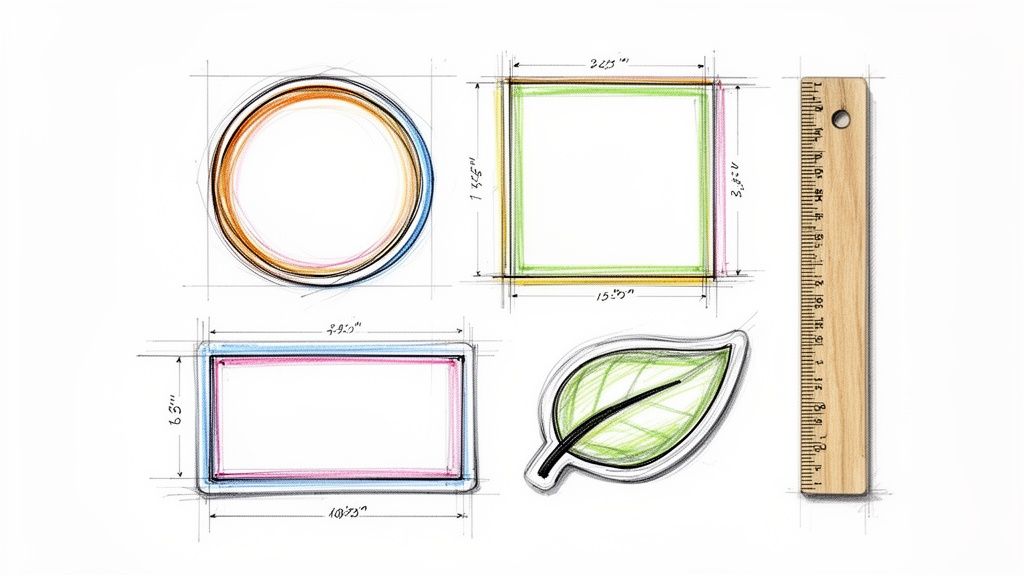
    Hand-drawn diagrams illustrate three standard postcard sizes with cutting and bleed marks.

    Picking the right postcard size is ground zero for any successful direct mail campaign. This isn't just about what looks good; it's a strategic move that directly impacts your budget, design potential, and how well your message lands. Think of it like choosing the right tool for a job—each size has a specific purpose.

    The dimensions you choose dictate how much room you have to tell your story. A smaller card is perfect for a quick, punchy announcement, but a larger one lets you show off detailed product images or a more compelling visual narrative. It's all a balancing act between grabbing attention and managing your costs.

    Balancing Cost and Impact

    The main reason we have standard postcard sizes is to keep the mailing process streamlined and predictable. The United States Postal Service (USPS) has very specific rules a mailpiece needs to follow to get the cheap First-Class Mail postcard rate. If you go outside those dimensions, even by a little bit, your postcard can get bumped into the pricier letter-rate category, which can blow up your campaign budget fast.

    The classic 4" x 6" postcard is the workhorse of direct mail for good reason—it’s cheap and efficient. On the flip side, an eye-catching 6" x 9" postcard is impossible to miss in a stack of mail, but it comes with higher postage costs.

    The size you select is a direct trade-off between visibility and affordability. Your goal is to find that sweet spot that maximizes impact without breaking the bank.

    Aligning Size with Campaign Goals

    Ultimately, the best postcard size depends on what you're trying to accomplish. Are you sending a simple appointment reminder, or are you launching a massive new product? Each goal demands a different approach.

    Here’s a look at some popular postcard sizes and what they're best for:


    Common Postcard Sizes and Their Best Use Cases

    Postcard Size (Inches) Common Name Best For
    4" x 6" Standard Mass mailings, event reminders, simple announcements. Best for maximizing reach on a tight budget.
    5" x 7" Medium Special offers, service highlights, detailed promotions. Gives you more room for text and images.
    6" x 9" Jumbo High-impact marketing, grand openings, luxury product showcases. Designed to dominate the mailbox.

    As you can see, choosing the right tool for the job makes all the difference. A 4" x 6" is great for casting a wide net with event invites or general brand awareness. A 5" x 7" gives you enough breathing room for visuals and text, making it ideal for special offers. And for those campaigns where you absolutely need to make a statement, a 6" x 9" jumbo postcard demands immediate attention.

    To see how postcard marketing fits into a bigger picture, it can be helpful to look at other effective real estate marketing strategies.

    Here at 4OVER4, we offer a huge range of customizable postcard printing options to fit any campaign you can dream up. Getting this foundation right helps you make an informed decision before we dive deeper into the nitty-gritty of specific dimensions.

    A Detailed Look at the Most Common Postcard Dimensions

    While you can print postcards in all sorts of custom dimensions, a few specific sizes have become the undeniable workhorses of direct mail marketing. Each one tells a different story and serves a unique strategic purpose. Let's move beyond a simple list and really get into the weeds of these industry mainstays to understand when and why you'd choose each one for your campaign.

    Think of it like picking a vehicle. You wouldn't use a sports car to haul furniture, and you wouldn't use a moving truck for a quick trip to the store. The same logic applies here—the size you pick needs to line up with your message, budget, and ultimate goal.

    This infographic breaks down the core factors that influence the right postcard size for your needs: cost, USPS rules, and your message.

    A concept map illustrating how postcard size is determined by cost, USPS rules, and impacts message content.

    As you can see, these elements are all connected. Every successful campaign has to find the right balance between them.

    The Standard 4" x 6" Postcard: The Budget-Friendly Workhorse

    The 4" x 6" postcard is what most people picture when they think "postcard," and for good reason. It’s the undisputed champion of cost-effectiveness, qualifying for the lowest USPS First-Class Mail postcard rate. This makes it the go-to choice for businesses aiming for mass outreach without a massive budget.

    Its compact size is perfect for getting quick, direct messages across. Think of it for:

    • Event Announcements: Quickly sharing dates, times, and locations.
    • Appointment Reminders: A simple, effective nudge for your clients.
    • Simple Sale Promotions: Announcing a storewide discount or special offer.

    Historically, the shift to this 4" x 6" size was a game-changer for modern mailing. Today, it remains the benchmark for the lowest postage rates. USPS and Canada Post cap postcard-rate mailers at a maximum of 4.25" x 6"—anything larger jumps to the letter rate, which can cost 50-100% more. It’s a classic for a reason.

    The Jumbo 5" x 7" Postcard: The Versatile Communicator

    Stepping up a bit, the 5" x 7" postcard gives you a noticeable increase in design real estate without a huge jump in cost. This dimension provides more breathing room for your visuals and text, allowing you to craft a more compelling and detailed message. It just feels more substantial in hand than its smaller cousin.

    The extra space on a 5" x 7" card allows you to move from simply announcing something to truly explaining it. It’s the perfect middle ground between budget and impact.

    This size is ideal when your message needs a bit more support. It’s a popular choice for businesses that want to showcase products or services with a little more flair. For example, a restaurant could feature a high-quality photo of a signature dish, or a real estate agent could display a property with much more visual appeal. Exploring options from a standard printing collection can help you see how different sizes accommodate various designs.

    The Large 6" x 9" Postcard: The High-Impact Head-Turner

    When your goal is to make an impression that people won't forget, the 6" x 9" postcard is your best bet. Its oversized dimensions ensure it stands out in a crowded mailbox, physically demanding attention from the recipient. This size is less of a gentle reminder and more of a bold statement.

    The generous space is perfect for high-impact graphics, detailed product showcases, or comprehensive service menus. It allows you to combine stunning visuals with in-depth descriptions, making it a powerful tool for premium brands or major announcements.

    Consider the 6" x 9" for:

    • Grand Openings: Making a big splash in a local community.
    • Luxury Product Launches: Conveying a sense of quality and exclusivity.
    • Detailed Real Estate Listings: Showcasing multiple photos and property features.

    While this size mails at the higher letter rate, that investment often pays for itself in increased engagement and response. It’s a premium choice for campaigns where grabbing attention is the number one priority.

    How to Navigate USPS Postcard Mailing Requirements

    Three paper samples: FineArt 4pt, Glossy W 18pt, and Matte 16pt, showing different finishes.

    Mailing a postcard successfully means you have to play by the rules of the United States Postal Service (USPS). Think of their regulations as your postcard's passport—get it right, and it will sail smoothly through the postal system without any surprise fees or delays.

    But if you stray from the path, you risk that cost-effective mailer getting bumped up to the much pricier letter rate. These rules aren't just for show; they're what make the massive scale of modern mail sorting possible. Sticking to the guidelines ensures your postcards are machine-readable and delivered on time and on budget.

    The Secret to the First-Class Postcard Rate

    To get the absolute cheapest postage, you need to qualify for the First-Class Mail postcard rate. This means your mailer has to meet a very specific set of criteria covering its height, length, and thickness. Get just one of these wrong, and your postcard is out.

    It's a common mistake to think any small, flat piece of cardstock is a "postcard" in the eyes of the USPS. But the term has a very precise, technical definition tied to those physical specs. This is exactly why understanding standard postcard sizes is so critical for your marketing budget.

    USPS Specifications For First-Class Postcard Rate

    So, what are the magic numbers? To lock in that coveted postcard rate, your mailer must be rectangular and fit neatly within the official USPS size and thickness requirements.

    The table below breaks down the exact minimums and maximums you need to hit.

    Attribute Minimum Requirement Maximum Requirement
    Height 3.5 inches 4.25 inches
    Length 5.0 inches 6.0 inches
    Thickness 0.007 inches 0.016 inches

    Anything smaller is considered non-mailable. Anything bigger, thicker, or even a different shape (like a square or circle) gets bumped up to the letter rate, assuming it meets those requirements. This is why the classic 4" x 6" postcard is the gold standard—it fits perfectly within these rules.

    More Than Just Size: Tips for Smooth Mailing

    Getting the dimensions right is the biggest hurdle, but a few other details can make or break your mailing campaign. Keep these pointers in mind as you design.

    • Check Your Paper Stock: That 0.007" thickness rule is no joke. Most professional printers use 14 pt. or 16 pt. cardstock, which easily clears this hurdle. Flimsy, home-printed cards, however, might be too thin and risk getting chewed up by sorting machines.

    • Keep it Rectangular: The USPS sorting equipment is designed for rectangles. While cool die-cut shapes are fun, they'll need an envelope and will be mailed at a much higher price. If you want to keep costs down, stick to the classic rectangle.

    • Address Placement is Key: The address, postage, and any mailing barcodes all have to live on the same side of the postcard. Be sure to leave a clear, uncluttered space on the bottom right for the address and postage so the automated systems can read it without a problem.

    Navigating these rules doesn't have to feel like a chore. When you partner with a professional printer, these specs are baked right into the process. And if you want someone to handle everything from printing to mailing, you can explore our full-service direct mail services to make sure every single piece is perfectly compliant.

    Designing for Print: Bleed, Safe Area, and Orientation

    A great postcard is more than just its size; it’s about a flawless, professional presentation. To get there, you need to understand three core design principles that separate polished mailers from amateur ones: the bleed, the safe area, and the orientation.

    Getting these right is the difference between a postcard that looks sharp and one that just feels… off. Think of it like framing a photograph. You wouldn’t want the most important parts of the picture cut off by the frame, and you definitely wouldn't want distracting white slivers showing at the edges. Professional printing works the same way to guarantee a perfect finish.

    Understanding Print Bleed

    Ever seen a printed flyer with a thin, ugly white line along one edge? That’s what happens when a design doesn't have a bleed. Because commercial printing presses cut huge stacks of paper at once, tiny shifts are inevitable. Bleed is your design's insurance policy against this.

    A bleed is simply extending your background colors, images, or patterns beyond the final trim line of your postcard. We require a 0.125-inch (or 1/8 inch) bleed on all four sides. This extra margin gets trimmed off, but it guarantees your design goes all the way to the very edge for a clean, borderless look.

    Imagine you're painting a wall right up to a piece of trim. You’d paint slightly onto the painter's tape to make sure there's no unpainted gap when you peel it off. Bleed works the exact same way for your postcard design.

    Respecting the Safe Area

    While the bleed extends your design outward, the safe area (or safety margin) is an inner boundary that protects your most important content. This is where all your text, logos, and critical graphic elements should live. Just as the bleed prevents ugly white edges, the safe area prevents your key message from getting sliced off during the final trim.

    As a rule of thumb, the safe area is also 0.125 inches inside the final trim line. Keeping your essential content within this "frame" guarantees it won't be accidentally clipped. Anything you place outside this zone, but still inside the trim line, is at risk.

    Let's break it down for a standard 4" x 6" postcard:

    • Final Trim Size: 4" x 6" (This is the final size of your postcard.)
    • Full Bleed Size: 4.25" x 6.25" (Your design file should be this size, adding 0.125" on every side.)
    • Safe Area: 3.75" x 5.75" (All your important text and logos must fit inside this area.)

    Choosing Your Postcard Orientation

    Finally, you need to decide between a horizontal (landscape) or vertical (portrait) orientation. This choice impacts everything from your layout and readability to whether the post office can even process it correctly.

    • Landscape Orientation: This is the classic, most common choice for a reason. The wider format is perfect for showcasing panoramic images, laying out information in columns, and most importantly, it leaves plenty of room on the right for the mailing address and postage area, which is what the USPS prefers.

    • Portrait Orientation: A vertical layout can feel more artistic and modern, making it a great fit for portrait photos, product shots, or designs that draw the eye downward. But be careful here. The address block must still be placed in a landscape orientation on the mail side to be read by USPS machines, which can create a tricky design challenge.

    Whether you're making a simple reminder card or an intricate mailer with a unique shape, mastering these fundamentals is non-negotiable. And for those looking to really break the mold, our guide on custom die-cutting services shows you how to apply these same principles to more creative designs.

    How Paper Stock and Finishes Shape Perception

    The feel of a postcard in someone's hands is just as important as the design on it. While standard postcard sizes give you the canvas to work with, the paper and finish create the tactile experience. This is your chance to turn a simple piece of mail into something memorable that screams quality.

    Think about it: a flimsy, thin postcard feels disposable, like junk mail destined for the bin. But a thick, substantial card? That feels important. It has weight. This immediate physical impression is your first opportunity to signal value before a single word is read.

    Decoding Paper Weight and Thickness

    In the printing world, we measure paper thickness in points (pt.). A single point is just one-thousandth of an inch, which sounds tiny, but the difference between paper stocks is something you can definitely feel. A higher point number means a thicker, sturdier card.

    Here’s a quick rundown of the most popular options:

    • 14 pt. Cover Stock: This is a fantastic all-rounder. It’s sturdy enough to feel professional and can easily handle the journey through the mail. It provides a solid, reliable foundation for any design.
    • 16 pt. Cover Stock: A noticeable step up, 16 pt. stock offers extra rigidity and a more premium feel. That little bit of extra thickness makes a real difference, suggesting a higher-end brand or a more significant message.

    Honestly, both are great choices. But springing for a slightly thicker stock like 16 pt. can make your postcard feel more like an exclusive invitation than just another ad. It’s a small investment that can seriously boost how people perceive your brand.

    Choosing the Right Finish for Your Message

    Once you've picked your paper weight, the final touch is the finish. This coating doesn't just protect the ink; it completely changes the look and feel of your postcard. Each one has a different job to do.

    A finish isn’t just a protective layer; it's a creative tool that shapes how customers interact with your design. It can make colors explode off the page or create an understated, elegant feel.

    Let’s break down the most common finishes:

    • Glossy UV: This high-shine finish makes colors look incredibly rich and saturated. It’s perfect for designs heavy on photography—think vibrant food shots, stunning real estate, or eye-catching product images. That reflective surface is an instant attention-grabber.
    • Matte: For a more sophisticated and modern vibe, a matte finish is the way to go. Its smooth, non-reflective surface is amazing for designs with a lot of text because it cuts down on glare, making it easier to read. Critically, its uncoated feel is perfect for writing on, which is ideal for appointment reminders or cards you want to add a personal, handwritten note to.

    Ultimately, the right combination depends on your campaign's personality. A luxury spa might choose a thick 16 pt. matte card for an elegant, tactile feel. A restaurant promoting a new dish would almost certainly go with a glossy finish to make the food photography irresistible. To get a better sense of all the possibilities, you can explore professional laminating and finishing options and see how coatings can truly transform your project.

    The History Behind Standard Postcard Sizes

    Ever wonder why that 4" x 6" postcard feels so familiar? It's no accident. The standard postcard sizes we use today weren't just picked out of a hat; they’re the product of more than a century of global problem-solving.

    Before everyone got on the same page, international mail was a total mess. Imagine trying to send a postcard when every country had its own definition of what a postcard even was. This lack of a shared system created massive headaches for postal services everywhere and made global communication a gamble.

    The Rise of a Global Standard

    The real turning point was the formation of the Universal Postal Union (UPU). This organization took on the massive job of creating a single, cohesive set of rules so that a simple card could travel seamlessly from one country to another. Their work laid the groundwork for the global mail network we still depend on today.

    This effort led to a breakthrough moment for global communication. In 1878, the UPU established the 3.5 x 5.5 inch standard postcard size, creating the uniformity needed for hassle-free international mailing. The impact was immediate and huge. After postcards were introduced in Britain in 1870, a staggering 75 million were sent in the first year alone. You can dig deeper into the historical impact of postcard standards to see just how significant this was.

    The creation of a universal standard wasn't just about making things easier—it was a true act of global innovation. It turned the postcard from a local novelty into a powerful tool for worldwide connection and business.

    That legacy is still with us. The modern USPS minimum postcard size of 3.5 x 5 inches is a direct descendant of those early international agreements.

    How Standardization Shaped Modern Mailing

    It’s hard to overstate the impact of having predictable, agreed-upon dimensions. Standardization was the key that unlocked the postcard's true potential for both personal and commercial use.

    This new, unified framework sparked several key advancements:

    • Efficient Sorting: With uniform sizes, postal services could finally develop automated sorting machines, which dramatically sped up processing times.
    • Predictable Costs: Senders could finally calculate postage with confidence, knowing their postcard wouldn't get hit with surprise fees in another country.
    • Mass Production: Printers could start producing postcards in huge quantities at a much lower cost, making them an affordable medium for everyone from tourists to marketers.

    Without these foundational agreements, the simple act of sending a postcard across an ocean would still be a shot in the dark. The standard sizes we take for granted are a quiet testament to the power of international cooperation, designed to ensure a small piece of cardstock could connect people anywhere in the world.

    Common Questions About Postcard Sizes and Mailing

    Even the best-laid plans run into practical, last-minute questions. Once you’re ready to hit "print," a few details can make or break your direct mail campaign. This is where we tackle the most common questions about standard postcard sizes and the nitty-gritty of mailing.

    Think of this as your go-to cheat sheet. From odd shapes to the right paper, we’ve got clear, straightforward answers to get you across the finish line with confidence.

    Can I Mail a Square or Custom-Shaped Postcard?

    Yes, you can absolutely mail a non-rectangular postcard, but there’s a big "but." The USPS uses automated machines to sort mail, and those machines are built for one thing: rectangles. Any custom shape—whether it’s a circle, a star, or even a simple square—gets kicked out of the postcard category.

    So, how do you mail it? You'll have to put it inside a standard rectangular envelope. This bumps it up to the First-Class Letter category, which means higher postage. A unique shape can be a fantastic way to grab attention, just make sure to factor that extra postage cost into your budget.

    What Is the Best Postcard Size for My Campaign?

    There’s no magic bullet here. The "best" size is the one that fits your campaign's goals and budget. It’s a classic trade-off between cost and impact.

    Here’s a simple breakdown:

    • For Maximum Reach on a Budget: The 4" x 6" postcard is your workhorse. It qualifies for the lowest postcard postage rate, making it perfect for mass mailings like appointment reminders or broad brand awareness pushes.
    • For a Balance of Space and Cost: Step up to a 5" x 7" postcard when you need a bit more room to breathe. It gives you more canvas for compelling images and text without a huge price jump, which is great for showing off products or detailing a special offer.
    • For the Biggest Impact: When your goal is to dominate the mailbox, the 6" x 9" postcard is the undisputed champ. Its sheer size is perfect for grand openings, luxury brand announcements, or any campaign where making a bold statement is non-negotiable.

    Your postcard size should directly support your message. A simple announcement doesn't need a huge canvas, while a detailed showcase will feel cramped on a small card.

    Can I Write on Any Postcard Finish?

    This is a super important detail, especially if you’re sending appointment reminders or anything that needs a personal touch. The finish you choose completely changes how it handles ink.

    • Best for Writing: Go with a Matte finish. It's uncoated and non-reflective, creating the perfect surface for ballpoint pens and markers. Ink soaks in without smudging, keeping any handwritten notes clean and professional.
    • Avoid Writing On: A Glossy UV finish is the enemy of handwritten notes. Its slick, shiny surface makes most inks bead up and smear instantly. If your postcard needs a signature or a quick message, always, always choose matte.

    Getting the right mix of size, shape, and finish ensures your postcard doesn't just look great—it works exactly how you need it to.


    Ready to bring your perfect postcard design to life? At 4OVER4, we offer a massive selection of sizes, paper stocks, and finishes to match any project. Create your custom postcards today at https://4over4.com and make a lasting impression.

    More from standard postcard sizes

    Your Guide to Every Typical Banner Size for Print and Web
    story
    Your Guide to Every Typical Banner Size for Print and Web

    12

    Staring at a wall of banner dimensions can feel a little overwhelming. But while there's no single "typical banner size" that wo

    author avatarEmma Davis

    Feb 1, 2026

    Low Cost Brochure Printing: low cost brochure printing that saves you money
    story
    Low Cost Brochure Printing: low cost brochure printing that saves you money

    24

    Stretching your marketing budget doesn't mean you have to settle for flimsy, forgettable brochures. The real secret to low cost br

    author avatarEmma Davis

    Jan 31, 2026

    Magnets for Advertising A Guide to Lasting Brand Impression
    story
    Magnets for Advertising A Guide to Lasting Brand Impression

    38

    Advertising magnets are one of those marketing tools that are so simple, you might overlook their power. They’re tangible, they last for age

    author avatarEmma Davis

    Jan 30, 2026

    How to Get Labels Off Bottles Without Leaving Residue
    story
    How to Get Labels Off Bottles Without Leaving Residue

    40

    Tired of fighting with torn paper and sticky residue? We’ve all been there. The best way to get labels off bottles is often a simple soak in

    author avatarEmma Davis

    Jan 29, 2026

    How to Stick a Poster on a Wall Without Any Damage
    story
    How to Stick a Poster on a Wall Without Any Damage

    111

    Want to know the real secret to getting a poster to stick to a wall without it peeling off in the middle of the night? It's all about what

    author avatarEmma Davis

    Jan 28, 2026

    The Definitive Guide to Table Tent Specs for Perfect Printing
    story
    The Definitive Guide to Table Tent Specs for Perfect Printing

    91

    When you hear "table tent specs," what we're really talking about are the foundational details for printing them correctly: the

    author avatarEmma Davis

    Jan 27, 2026

    Your Ultimate Guide to poster sizes inches: Standard Poster Sizes Explained
    story
    Your Ultimate Guide to poster sizes inches: Standard Poster Sizes Explained

    319

    When you're ready to print a poster, one of the first questions you'll face is, "What size should it be?" The industry has a

    author avatarEmma Davis

    Jan 26, 2026

    45+ Creative Ideas for the Back of a Business Card
    story
    45+ Creative Ideas for the Back of a Business Card

    202

    Picture this: you're at a networking event, and someone hands you their business card. You do the usual glance—name, title, company—an

    author avatarEmma Davis

    Jan 25, 2026

    Home
    Products
    Cart
    Account