
TABLE OF CONTENTS
- ‌
- ‌
- ‌
- ‌
- ‌
- ‌
- ‌
- ‌
- Home
- content hub
- What Is Brand Identity Design and How to Build One
What Is Brand Identity Design and How to Build One
Emma Davis
Content Writer
Feb 20, 202626 views

TABLE OF CONTENTS
- ‌
- ‌
- ‌
- ‌
- ‌
- ‌
- ‌
- ‌
Brand identity design is really about creating a complete visual language for your company. Think of it as the collection of all the tangible elements—the logo, colors, fonts, and even the feel of the paper you print on—that work together to express your brand’s personality and values. It’s a deliberate system designed to shape how people see you and build a real connection with your customers.
The Foundation of a Memorable Brand

Quick, think of your favorite brand. What pops into your head first? Is it a color, like Tiffany’s iconic blue? A unique logo, like the Nike swoosh? Or maybe just the feeling you get when you use their products? That immediate, gut reaction is what great brand identity design is all about. It’s the visual handshake your company offers, communicating who you are without saying a single word.
This system is so much more than just a slick logo. It's a carefully assembled toolkit of design elements that tell a cohesive story. Every single piece, from the font on your website to the texture of your business cards, plays a role in carving out a distinct and recognizable space for you in the market.
A strong brand identity acts as a strategic shortcut. It helps customers quickly understand what your company stands for, what to expect from it, and why they should choose you over the competition.
Why Visuals Speak Louder Than Words
In a noisy marketplace, first impressions are everything. Our brains process images way faster than text, which makes visual appeal a massive factor in grabbing someone's attention. In fact, research shows that a whopping 55% of a brand's first impression is based on visuals alone.
It's no surprise, then, that 73% of companies now actively use design to stand out from the crowd. This signals a real shift in business strategy. It’s not just about what you sell anymore; it's about the entire experience you deliver.
This visual system needs to be applied consistently everywhere to build trust and familiarity. When a customer sees your signature colors on an Instagram post, a printed flyer, and your product packaging, it reinforces their connection to your brand, making it feel dependable and professional.
For startups and small businesses, a well-defined brand identity is one of the most powerful tools for building credibility and leaving a lasting mark. If you're just starting out, check out our printing solutions tailored for startups and SMBs.
The Purpose of a Cohesive Identity
Ultimately, the goal of brand identity design is to build an emotional bridge between your company and your audience. It’s what turns casual browsers into loyal fans by making your brand feel relatable, trustworthy, and authentic.
A successful identity nails several key objectives:
- Differentiation: It clearly sets you apart from competitors in a visually crowded world.
- Recognition: It makes your brand instantly identifiable across every platform and piece of marketing material.
- Consistency: It ensures a uniform and reliable experience for every customer, every time.
- Loyalty: It builds an emotional connection that fosters trust and keeps people coming back for more.
The Building Blocks of a Powerful Brand Identity

Think of a powerful brand identity like a well-told story. It’s not just one loud statement; it’s a collection of carefully chosen words, tones, and visuals that come together to create a single, unforgettable narrative. Each piece is a building block, and when they're put together correctly, they form an unshakeable foundation for how the world sees you.
These individual pieces are the tangible assets you’ll use to communicate your brand's personality. They're the tools in your design kit, and getting a handle on how each one works is the first step toward building an identity that truly connects with people.
Let’s break down the core components that make up this powerful system.
Typography: The Voice of Your Written Word
Long before a customer reads a single word, the font you’ve chosen has already started a conversation. Typography is all about arranging text to be clear, readable, and appealing, but in brand identity, it’s much more—it’s about picking typefaces that actually sound like your brand.
Is your brand traditional and authoritative? A classic serif font like Times New Roman, with its little decorative feet, can create a sense of history and trust. Or is it modern, clean, and to the point? A sans-serif font like Helvetica or Futura feels more direct and contemporary.
Your typography is your brand’s voice in written form. It sets the tone—be it elegant, bold, playful, or professional—and ensures that your message is not just read, but also felt.
Just imagine the difference between a wedding invitation written in a flowing script and a tech startup’s website using a sharp, geometric font. The choice is intentional, and it’s powerful. A consistent typographic hierarchy—using distinct fonts for headlines, subheadings, and body text—also creates a smooth and professional reading experience everywhere your brand shows up.
Color Palette: The Emotional Trigger
Color is one of the most immediate and gut-level parts of your brand identity. It triggers emotions, sends subconscious messages, and dramatically boosts brand recognition. The right color palette can instantly communicate your brand's core values, whether it’s the calming blue of a healthcare provider or the energetic red of a fast-food chain.
This isn't just about picking pretty colors; it’s rooted in psychology. Certain colors spark specific feelings and associations. Green often suggests nature, health, and tranquility, while yellow can communicate optimism and creativity. The power of color in shaping how we perceive things is backed by some serious data.
In fact, a stunning 85% of buyers say that color is a primary reason for their purchasing decisions. That number alone shows just how critical a well-defined palette is for making your brand memorable and persuasive.
Your brand's color palette should include:
- Primary Colors: One to three main colors that will dominate your visual materials.
- Secondary Colors: A few complementary colors for accents, highlights, and calling out different information.
- Neutral Colors: Shades like white, black, or gray to provide balance and make everything easy to read.
Imagery and Photography: The Visual Story
The images you use are a direct window into your brand's world. Generic stock photos of people in suits high-fiving in a boardroom just won't cut it if you're trying to build an authentic, relatable brand. Your imagery—whether it's photography, illustration, or icons—has to line up with the story you’re telling.
A luxury brand might lean into high-contrast, artistic photography with a moody feel. A family-focused company, on the other hand, would probably use bright, warm photos filled with genuine human connection. The key is consistency in style, subject, and editing.
This visual language also extends to your icons and illustrations. Do you use clean, minimalist line icons or quirky, hand-drawn illustrations? Every choice adds another layer to your brand's personality, making it feel more distinct and cohesive. When you're pulling these elements together, getting some outside perspective on building a memorable identity, especially for a new business, can be incredibly valuable.
Packaging and Printed Materials: The Tangible Connection
While your digital presence is non-negotiable, the physical touchpoints of your brand often leave the most lasting impression. This is where your brand identity literally comes to life in your customers' hands.
Packaging is no longer just a box; it’s a central part of the customer experience. The unboxing of a product can be a memorable event that people share online, turning your customers into instant brand ambassadors. Custom-designed mailer boxes, branded tissue paper, and unique labels can transform a simple delivery into something special.
Similarly, your printed materials act as physical representatives of your brand:
- Business Cards: A high-quality, well-designed card is a powerful networking tool that speaks volumes about your professionalism.
- Brochures and Flyers: These pieces tell your story in a tactile format, providing information in a way that feels more permanent and credible.
- Letterheads and Envelopes: Consistent branding on all your correspondence builds trust and reinforces your identity with every letter you send.
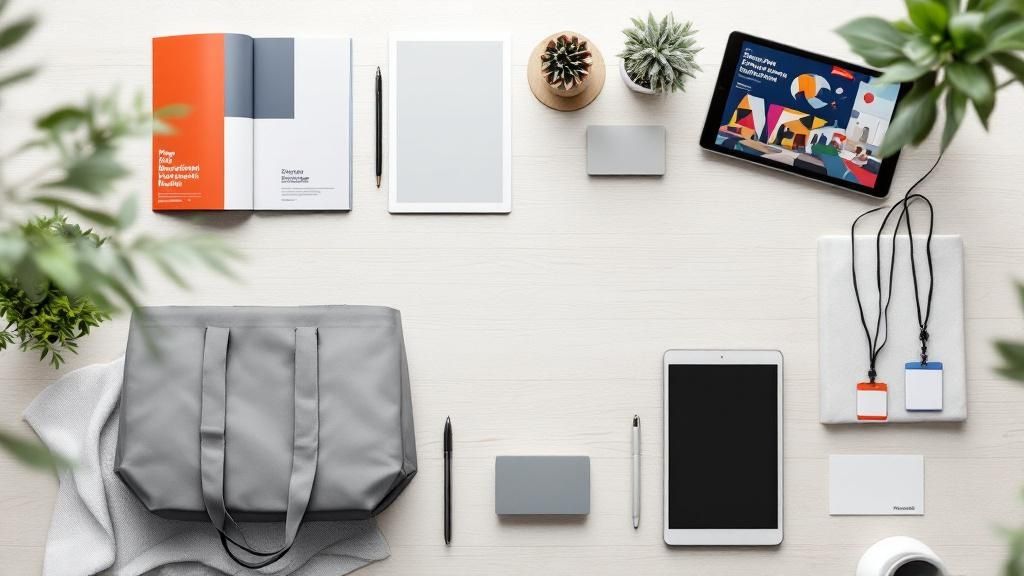
These physical items are an opportunity to engage the senses. The weight of the paper, the texture of a finish like embossing, and the vibrancy of the printed colors all contribute to the perception of quality and attention to detail. Exploring different customizable packaging products can spark new ideas for creating these unforgettable moments. Every single piece, from a simple sticker to a complex box, works together to build a powerful and unified brand story.
Decoding Branding vs Brand Identity vs Logo
It’s easy to get these three terms tangled up. People often use branding, brand identity, and logo as if they mean the same thing, but they’re actually distinct layers of how your business shows up in the world. Getting the difference isn't just about sounding smart—it's key to making better decisions for your company’s future.
Let’s try a simple analogy to clear things up: building a house.
Branding is the architect's big idea. It’s the invisible strategy, the feeling you want people to have when they step inside. It answers questions like, "How should this home make people feel? Safe? Modern? Cozy?" It’s the reputation you’re building and the promise you make to everyone who walks through the door.
The Strategic Layers Explained
So, if branding is the core feeling and vision, then brand identity is the complete set of blueprints and all the physical materials you use to actually build the house. It's how you make that vision real and tangible.
This includes the exact paint colors on the walls, the type of wood for the floors, the style of the windows, and the entire architectural design. These are the sensory details—your colors, fonts, and imagery—that people can see, touch, and recognize. Brand identity design is the process of putting this whole system together.
And the logo? That’s the front door. It’s a super important, highly recognizable entry point, and it’s often the first thing people see. A great front door is memorable and sets the tone, but it's just one piece of the whole house. It’s a symbol, not the entire structure.
Thinking your logo is your brand is like thinking the front door is the entire house. A logo is a symbol for the brand, while the brand identity is the complete sensory experience of it.
Comparing the Core Concepts
To make this crystal clear, let's break down how each concept works. They all have a specific job, and they build on each other to create a strong, unified presence. It’s also helpful to see how this internal strategy connects to your external customer outreach, which is covered perfectly in this guide to Branding vs. Marketing.
To put it all in one place, here’s a quick comparison table.
Branding vs Brand Identity vs Logo Compared
This table breaks down how these interconnected concepts work together, each with its own unique role.
| Concept | Its Role | Its Purpose |
|---|---|---|
| Branding | The overall strategy and core philosophy. | To shape perception, build a reputation, and make a promise to the customer. |
| Brand Identity | The collection of all tangible sensory elements. | To visually and physically express the brand's personality and values consistently. |
| Logo | A single, recognizable visual mark. | To identify the company quickly and act as a simple, memorable brand symbol. |
When it's all said and done, you can't have a solid house with just a blueprint, and you definitely can't have one with just a front door. Real success happens when the architect’s vision (branding) is brought to life flawlessly with the right materials (brand identity), starting with a welcoming and memorable entrance (logo).
Your Step-by-Step Brand Identity Design Process
A powerful brand identity doesn’t just happen—it’s built. Think of it as a journey from a big-picture idea to a functional, everyday design system. This roadmap will walk you through the essential stages, making sure every decision is strategic and contributes to a brand that people remember. It's a bit like constructing a building: you need solid research, a clear blueprint, and creative execution before you can finally open the doors.
This process ensures your brand is built on a solid foundation of research and strategy, not just what’s trending this week. It’s all about moving from the abstract to the concrete, starting with understanding your market and ending with a practical toolkit your team can actually use.
The diagram below breaks down how "branding" flows into the tangible "brand identity" and its most famous component, the "logo."

As you can see, brand identity is the blueprint that brings the grand branding strategy to life, with the logo often serving as the main entry point for customers.
Stage 1: Research and Discovery
Before you even think about picking a color or a font, you have to do your homework. This first stage is all about listening and learning. You need to get a feel for the market you're stepping into, size up your competition, and, most importantly, figure out who you’re trying to connect with.
This isn’t just a box to tick—it’s what stops you from making expensive mistakes down the road and ensures your brand actually means something to real people.
The discovery phase is where you trade assumptions for actual insights. It's about digging deep to find the "why" behind your brand before you start figuring out the "what" and "how."
Here’s what you should be doing in this phase:
- Audience Analysis: Who are you really talking to? What do they care about, what are their problems, and what do they want to achieve? Build out detailed customer personas to bring them to life.
- Competitor Audit: Take a hard look at your top three to five competitors. What do their visual identities say about them? What are they getting right, and where are the gaps you can swoop in and fill?
- Market Positioning: What makes you different? Nail down your unique value proposition—the one thing that makes customers choose you over everyone else.
Stage 2: Strategy and Positioning
With your research done, it's time to build your brand strategy. This is where you decide on the personality, voice, and core message that will define your brand. If research was about listening, this stage is about deciding who you are and what you stand for.
You’re essentially translating your business goals into a clear story that will guide every creative choice you make from here on out. It’s the bridge between what you learned about the market and what your brand will look and sound like.
This strategic framework should nail down your brand’s:
- Brand Archetype: Give your brand a human feel by identifying with a classic personality type, like The Hero, The Sage, or The Jester. It makes you instantly more relatable.
- Brand Voice & Tone: How does your brand talk? Are you the authoritative expert, or the friendly, approachable guide?
- Core Messaging: Get your story straight. Craft a clear mission statement, vision, and tagline that perfectly sums up what you promise to deliver.
Stage 3: Visual Design and Creation
Okay, now for the fun part. Guided by your strategy, designers start bringing the brand to life with visual concepts. This phase is a whirlwind of sketching logo ideas, playing with color palettes, and testing out font pairings. It’s a back-and-forth process of creating, refining, and getting feedback until it feels just right.
The end goal isn't just one logo; it's a flexible and cohesive visual system that works everywhere. It has to look just as good on a tiny social media icon as it does on a massive printed banner. This is where high-quality print materials, especially those with unique fantastic finishes like foil or embossing, can really make your visual elements pop.
Stage 4: Guidelines and Implementation
The final, and arguably most important, step is to get everything down on paper in a brand style guide. This document is your brand’s rulebook—the single source of truth that ensures everyone on your team presents the brand consistently. That consistency is what builds recognition and trust over time, which has a real impact on your bottom line.
Just how much of an impact? Organizations that keep their branding consistent see real growth. For instance, 35% of organizations reported a 10-20% increase in revenue, and another 32% saw revenue grow by 20% or more, all from maintaining a consistent message and look. This guide is what makes that kind of consistency possible for your whole team.
Bringing Your Brand Identity to Life with Print
A well-designed brand identity is a fantastic starting point, but it really comes alive when it jumps off the screen and into someone's hands. Print is where your brand becomes a physical experience. It’s what lets people touch, feel, and connect with your company in a way digital just can't match.
Think of it as the difference between seeing a picture of a fresh-baked cookie and actually getting to smell and taste it. This leap from digital concept to physical object is where your logo, colors, and fonts come together on materials that people actually keep, share, and remember.
The Power of a Physical First Impression
In a world drowning in digital ads that vanish in a swipe, a physical item has staying power. It commands attention. High-quality printed materials telegraph professionalism and a commitment to detail that customers absolutely notice.
Imagine being handed two business cards. One is flimsy and looks like it was printed at home. The other is on thick, premium cardstock with a slick finish. Which company do you instinctively trust more? This isn’t just a hunch; studies from Dash.app show that good design is a massive driver of trust, with 92% of people saying well-designed websites feel more credible. That same psychology applies directly to print.
When your print materials feel solid and professional, customers subconsciously transfer that feeling of quality and reliability to your entire business.
From Business Cards to Banners
Your brand identity can stretch across a huge range of printed items, with each piece playing a different role in telling your story. Every single one is a chance to reinforce who you are and leave a lasting mark.
Here are a few classic examples of print in action:
- Business Cards: A business card isn't just a slip of paper with your contact info; it’s a physical handshake. It’s often the very first tangible thing a potential client gets from you, so its quality is non-negotiable. Learn more about designing effective business cards.
- Custom Packaging: For any e-commerce business, the "unboxing" experience is now a huge marketing opportunity. Branded boxes, custom tissue paper, and a simple thank-you note can turn a routine delivery into a share-worthy event.
- Banners and Signage: If you have a physical store or attend trade shows, large-format printing is how you make a statement. Banners and signs are your brand's voice in a crowded room, grabbing attention from across the floor and announcing your presence.
Making Strategic Choices in Print
Getting your brand identity onto paper is about more than just clicking "print." Smart, strategic choices about materials and finishes can take your brand from just okay to truly unforgettable. These are the little details that make your brand’s physical presence feel deliberate and premium.
Print transforms your brand from a concept into a conversation piece. The texture of the paper, the shine of a foil stamp, and the weight of a brochure are all part of your brand's non-verbal communication.
When you're planning your print materials, think about these elements:
- Paper Stock and Weight: The paper you choose says a lot about you. An uncoated, recycled stock feels earthy and eco-conscious. A glossy, heavy-weight paper feels modern and high-end. The sheer physical weight of the paper can imply substance and quality.
- Specialty Finishes: Finishes add a tactile and visual pop that makes your materials impossible to ignore. Things like foil stamping for a metallic shine, embossing for a raised 3D texture, or a spot UV coating to make your logo glossy are what create a memorable sensory experience.
- Print Quality and Color Accuracy: Working with a professional printer is key to making sure your brand’s colors are reproduced perfectly. Washed-out or inconsistent colors can make a brand look cheap and undermine all the hard work you put into building your identity.
By investing in high-quality print, you're creating physical assets that do more than just sell—they build trust, signal quality, and create a connection that digital-only efforts simply can't replicate. This is where your brand gets real.
A Simple Checklist for a Winning Brand Identity
Building a powerful brand identity is a marathon, not a sprint. But checking if it’s actually working doesn’t have to be complicated. This checklist boils everything down to a few straightforward questions.
Use it to give your current brand a quick audit or to keep a new project on track. Think of it as your final quality check before you go live—a way to make sure every single piece is pulling its weight.
Core Foundation and Strategy
First things first, let's look at the bedrock of your brand. The slickest visuals in the world will fall flat if they aren't built on a solid strategy that truly connects with the right people.
- Audience Clarity: Does your identity speak your ideal customer's language?
- Unique Positioning: Does your visual style instantly set you apart from your top competitors?
- Core Message: Do your design choices consistently echo your brand’s mission and values?
Your brand identity is a visual promise. It needs to tell customers who you are, what you stand for, and why they should care—all in the blink of an eye. Get it right, and you’ve created a shortcut to trust.
Visual and Tangible Elements
Next up, it’s time to inspect the individual components of your design system. Each element needs to be strong on its own, but they become unstoppable when they work together. This is how you guarantee a cohesive look across everything you do.
- Logo Versatility: Is your logo simple, memorable, and just as effective on a massive billboard as it is as a tiny website favicon?
- Color Psychology: Does your color palette stir up the right emotions and match your brand's personality?
- Typography Legibility: Are your fonts easy to read on everything from a screen to a printed flyer? Do they reinforce your brand’s tone?
- Consistency Across Channels: Is the experience seamless when someone moves from your website to your tangible marketing materials?
Common Questions About Brand Identity Design
Once business owners start wrapping their heads around brand identity design, a few questions almost always pop up. Let's tackle these head-on so you can move forward with confidence and make choices that will really pay off.
Here are the quick, clear answers to the things we hear most often.
How Much Should I Budget for Brand Identity Design?
This is the big one, and the honest answer is: it depends. The cost of brand identity design can swing wildly based on how deep you need to go. Generally, you’ll find yourself looking at three main tiers.
- DIY Tools: Platforms like Canva are incredibly budget-friendly. You can whip something up using templates for next to nothing, but the trade-off is a generic look that won't make you stand out.
- Freelance Designers: A good freelancer can run anywhere from a few hundred to several thousand dollars. This gets you a professional, custom approach from someone who can really dig into what your business needs.
- Design Agencies: This is the premium, all-inclusive route. Agencies bring a full team of experts and a deep strategic process to the table. It's the most expensive option, usually starting in the tens of thousands.
When Should I Update My Brand Identity?
Knowing when to tweak your visual style is key to staying relevant. It doesn’t always mean tearing everything down and starting from scratch; sometimes, a small tune-up is all you need. The trick is understanding the difference between a refresh and a total rebrand.
A brand refresh is more of a cosmetic update. Think of it like a new coat of paint—maybe you modernize your logo a bit or update your color palette to feel more current. A full rebrand is a fundamental shift. This usually happens when your business model changes, you’re chasing a whole new audience, or your old identity just doesn't fit who you are anymore.
Keep an eye out for the signs. Are customers not engaging like they used to? Does your look feel dated next to the new kid on the block? Has your company’s mission taken a new direction? Those are your cues.
What Is a Brand Style Guide?
A brand style guide is your brand’s bible. Seriously, it's the most critical document you'll have for keeping everything looking consistent and professional. Think of it as the official rulebook for your brand's visual and verbal identity.
This guide lays out exactly how your logo, colors, fonts, and even your tone of voice should be used. It ensures that everyone—from your marketing team to outside partners like web developers and printers—is on the same page. That consistency is what builds recognition and trust, making a style guide an absolute must-have for protecting your brand.
Ready to turn your brand identity into something people can actually hold? 4OVER4 has the professional printing solutions to bring it all to life, from killer business cards to custom packaging that makes an impression. Check out everything we offer at 4over4.com and start building a brand people will remember.
More from
14
Your car wash business cards aren't just little rectangles with your phone number on them. Think of them as a physical ha
Emma Davis
Feb 28, 2026
22
Let's get straight to it. The standard A7 envelope comes in at 5.25 x 7.25 inches, which translates to 133.35 x 1
Emma Davis
Feb 27, 2026
25
When you're trying to figure out the right door hanger size, the classic 4.25" x 11" is pretty
Emma Davis
Feb 25, 2026
18
When it comes to table tents, the industry workhorses are the 4" x 6" and 5" x 7" sizes.
Emma Davis
Feb 24, 2026
32
Figuring out whether to go with vinyl or screen printing really boils down to your project's size, the complexity of your design, and what
Emma Davis
Feb 23, 2026
16
Bringing a trading card to life is a fascinating mix of creative brainstorming, smart material choices, and precision printing. The journey st
Emma Davis
Feb 22, 2026
15
Believe it or not, whipping up a professional-looking card in Microsoft Word is way easier than you might think. The whole process boils down
Emma Davis
Feb 21, 2026
15
The best packaging for t shirts strikes that perfect balance between brand identity, product protection, and cost. Your optio
Emma Davis
Feb 26, 2026