


TABLE OF CONTENTS
- ‌
- ‌
- ‌
- ‌
- ‌
- ‌
- ‌
- ‌
- Home
- content hub
- The Ultimate Guide to Packaging for T Shirts in 2026
The Ultimate Guide to Packaging for T Shirts in 2026
Emma Davis
Content Writer
Feb 26, 202615 views

TABLE OF CONTENTS
- ‌
- ‌
- ‌
- ‌
- ‌
- ‌
- ‌
- ‌
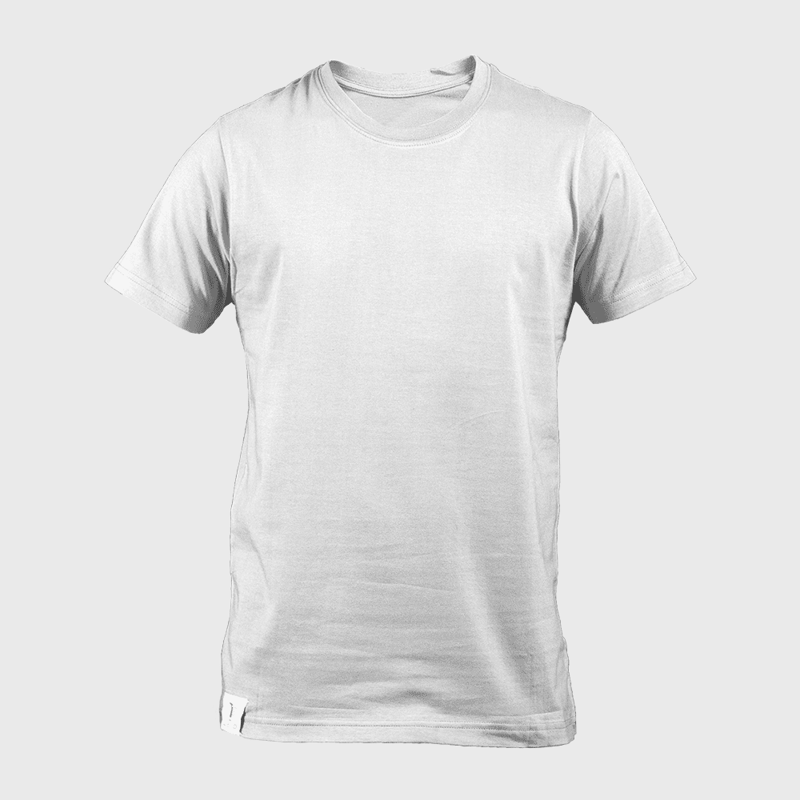
The best packaging for t shirts strikes that perfect balance between brand identity, product protection, and cost. Your options are wide-ranging, from simple poly mailers for budget-friendly shipping to custom boxes that create a premium unboxing experience. Get it right, and your packaging becomes one of your most powerful marketing tools, making that final, crucial impression on your customer.
Why Your T-Shirt Packaging Is a Critical Brand Investment
Stop thinking of your t-shirt packaging as just another expense. It’s the final chapter of your brand’s story, delivered right into your customer's hands. That moment of arrival is the very first physical interaction they have with your brand after clicking "buy," and it can turn a simple delivery into a memorable event. This single touchpoint is your chance to elevate the perceived value of your product, spark social media shares, and build real, lasting loyalty.
In a market overflowing with options, standout packaging is your silent salesperson. The custom apparel industry is absolutely booming, with projections showing the global custom t-shirt printing market will hit a massive USD 14.61 billion by 2030. At the same time, e-commerce return rates for apparel can be as high as 20-30%, often because of damage during transit. This makes sturdy, appealing packaging more critical than ever. High-quality packaging doesn't just protect your investment; it reinforces the quality of the product inside.
Core Goals of Effective T-Shirt Packaging
Great packaging does more than just hold a shirt. It’s a workhorse, juggling several key business functions all at once:
- Product Protection: First and foremost, it shields your apparel from dirt, moisture, and the bumps and bruises of shipping. Your shirt needs to arrive in perfect condition, every time.
- Brand Reinforcement: Think of it as a mobile billboard. Your packaging carries your logo, your colors, and your brand's voice all the way from the warehouse to your customer’s doorstep.
- Customer Experience: This is where the magic happens. A thoughtful unboxing can surprise and delight customers, justify a premium price tag, and make them feel genuinely valued.
The unboxing experience is your last, best chance to make a lasting impression. A generic bag says "transaction," while custom packaging says "we care about the details, and we care about you."
To build a powerful brand from the ground up, it helps to understand the bigger picture of starting a fashion business, where product presentation is a true cornerstone of success.
This guide will walk you through everything you need to know. We'll dive into the best types of packaging for different needs, from cost-effective poly mailers to luxurious custom boxes. You'll learn how to pick the right materials and sizes and use custom printing to bring your brand to life. With the right strategy, your packaging will do more than just deliver a t-shirt—it will deliver an experience. You can explore a wide range of custom packaging products to find the perfect fit for your brand's vision.
Choosing the Right T-Shirt Packaging Type
Picking the right packaging for your t-shirts goes way beyond just getting them from A to B. It’s a huge branding decision. The moment that package lands on a customer’s doorstep, it starts telling a story about your brand—from how much you care about quality to the personality behind the product.
Every option out there serves a different purpose, and it's always a balancing act between cost, protection, and that all-important wow factor.
For a lot of e-commerce brands, the starting point is the good old poly mailer. These lightweight, plastic bags are the workhorses of the apparel world for a reason. They’re cheap to buy in bulk, and their light weight helps keep shipping costs down. That's a massive win for businesses built on volume. While they might seem basic, they do a great job of protecting your shirts from dirt and moisture.
On the other end of the scale, you have custom mailer boxes. These are the heavy hitters. A rigid box offers way more protection, making sure your t-shirts show up perfectly folded and wrinkle-free. But more than that, a box turns a simple delivery into a premium experience. It’s a blank canvas for amazing branding, inside and out, that practically begs to be shared on social media. This makes them perfect for high-end apparel, subscription boxes, or special gift orders.
To help you figure out which path is right for you, check out this decision tree. It breaks down the key things to think about.

As you can see, if you’re all in on creating a memorable brand moment, a custom box is a no-brainer. But if your main focus is keeping costs low, a practical mailer is the smart move.
T-Shirt Packaging Options Compared
To make it even simpler, here's a quick side-by-side look at the most common packaging options. This should help you zero in on what works best for your brand's goals and budget.
| Packaging Type | Best For | Protection Level | Branding Potential | Cost Per Unit |
|---|---|---|---|---|
| Poly Mailers | High-volume, budget-focused e-commerce | Good (Water/Tear Resistant) | Low to Medium | $ |
| Padded Mailers | Single shirts needing extra protection | Better (Cushioning) | Medium | $$ |
| Custom Boxes | Premium brands, unboxing experience | Best (Crush Resistant) | High | $$$ |
| Tubes/Rolls | Rolled shirts, unique presentation | Good (Prevents Folds) | Medium | $$ |
Ultimately, there’s no single "best" choice—just the best choice for you. Think about your customer, your price point, and the story you want to tell.
The Finishing Touches That Elevate Your Brand
It's not just about the box or the bag. The small details are what take your package from generic to genuinely impressive. These little extras add layers to the unboxing experience and drive your brand identity home.
- Custom Tissue Paper: Wrapping a shirt in branded tissue paper adds a touch of class and anticipation. It’s a simple move that makes the whole thing feel more special.
- Hang Tags: There's a reason every retail store uses them. A well-designed hang tag gives you a spot for your logo, care instructions, and other info, making your product feel more professional and boutique-worthy.
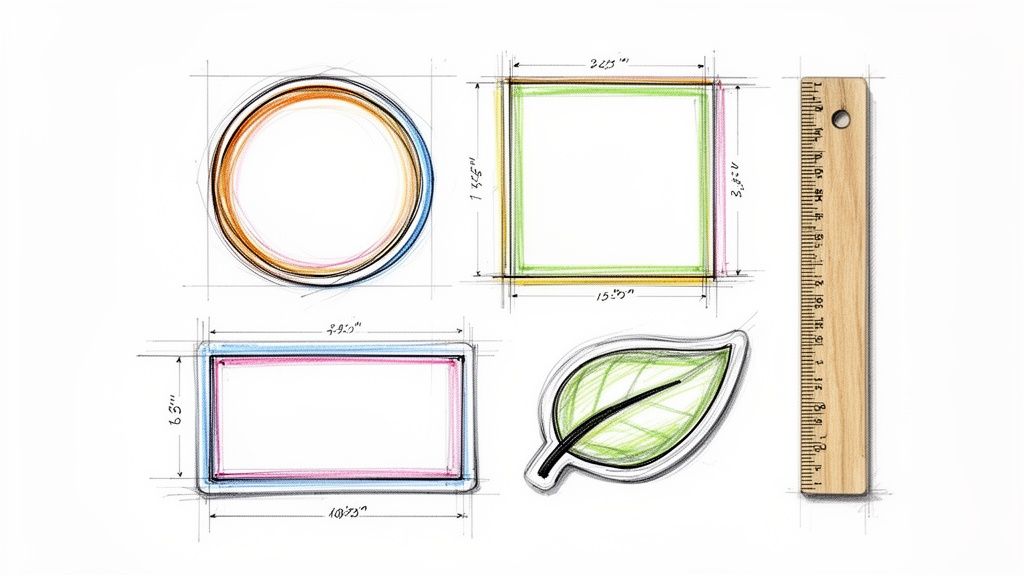
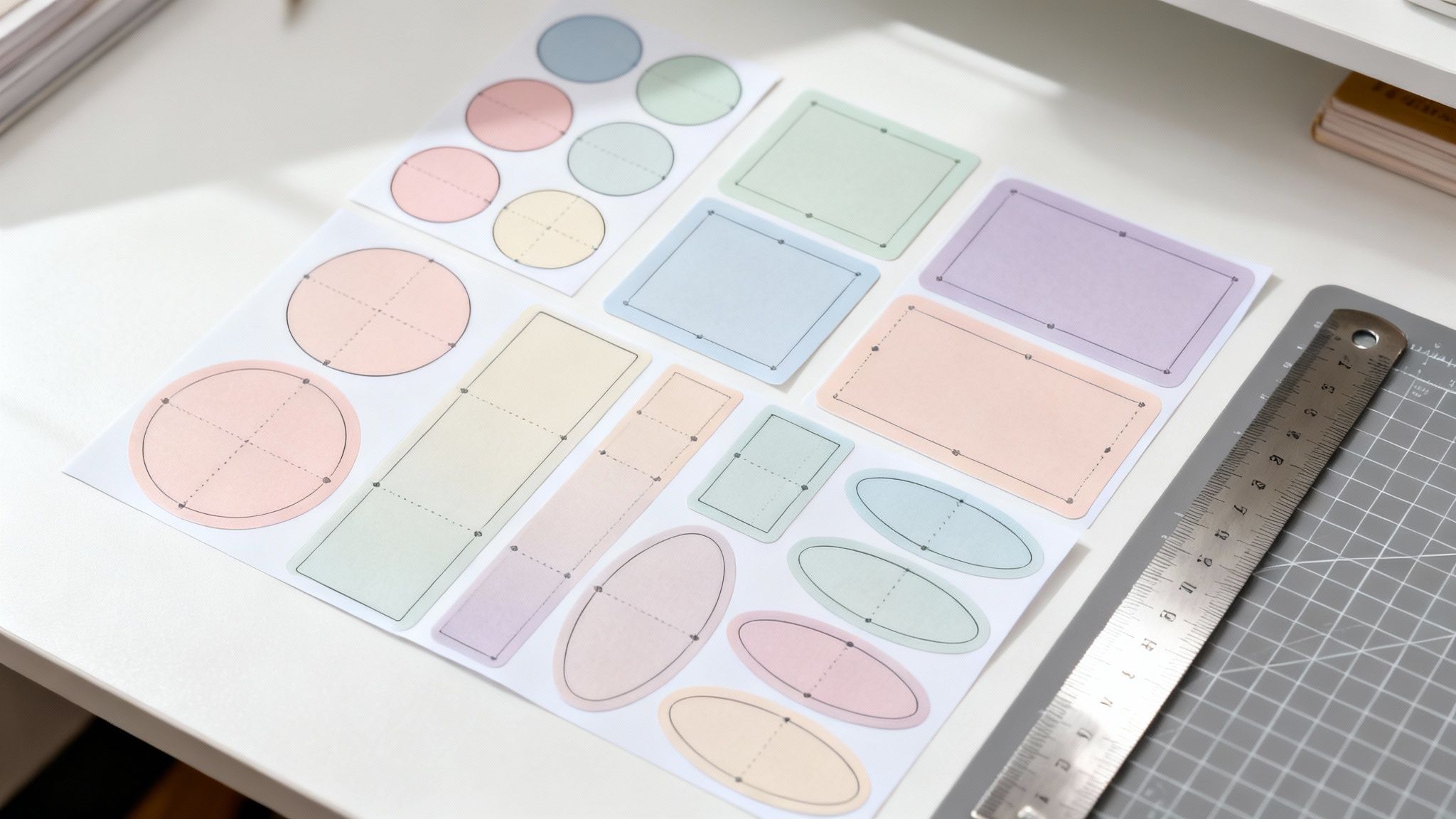
- Branded Stickers: Stickers are the Swiss Army knife of packaging. Use them to seal tissue paper, close a box, or just add a little pop of branding to an otherwise plain mailer. They're a super affordable way to customize anything.
Think of your packaging components like a well-coordinated outfit. The mailer is the jacket, the tissue paper is the shirt, and the hang tag is the perfect accessory. Each piece has a role, but together they create a complete, impactful look.
Making the Right Choice for Your Business
So, how do you decide? It all comes down to aligning your packaging with your business model and brand vibe.
A high-volume, print-on-demand shop needs to prioritize speed and cost. For them, a branded poly mailer with a simple thank-you card inside is the perfect solution. It’s fast, affordable, and still delivers a touch of personality.
On the flip side, a premium streetwear brand dropping a limited-edition collection will get a huge return from investing in a custom mailer box. For a closer look at what's possible, you can explore all the options for custom box printing to turn a simple container into a true brand statement. That investment pays for itself by justifying a higher price and creating a shareable unboxing moment that acts as free marketing.
At the end of the day, the best t-shirt packaging is the one that tells your brand's story best.
Mastering T-Shirt Packaging Materials and Sizes
Picking out the right type of packaging is a great start, but the real magic happens when you nail the materials and sizes. This is where you protect your product, delight your customer, and keep your shipping costs from eating into your profits. Honestly, getting these details right is what separates a smooth, professional operation from one that's constantly dealing with damaged goods and surprise carrier fees.
Think of it like choosing fabric for one of your t-shirts. A cheap, flimsy material might save you a few cents upfront, but it's not going to hold up. The exact same logic applies to your packaging.
Decoding Corrugated Cardboard for Boxes
You’ve probably noticed that not all cardboard feels the same. When you're looking at custom boxes for your t-shirts, you'll hear the term "flute." This isn't anything fancy—it's just the wavy layer of paper squished between two flat liners. That little wave is what gives corrugated cardboard its strength.
Most of the time, you'll be choosing between two common grades: B-flute and E-flute.
- B-Flute: This is your thicker, tougher option. It has substantial cushioning that makes it a true workhorse for shipping, offering fantastic protection against the inevitable bumps and drops of transit. It’s the go-to for brands that need to prioritize durability above all else.
- E-Flute: Thinner and more elegant, E-flute has a much smoother surface that's perfect for high-quality, detailed printing. It gives you a more premium, retail-ready finish, making it the right call when the unboxing experience is just as important as the product inside.
For most apparel brands shipping directly to customers, B-flute hits the sweet spot. It offers the ideal balance of protection and print quality, making sure your shirts arrive safely without forcing you to compromise on your branding.
Choosing the Right Mailer Material
If you're leaning toward mailers, your material choice is just as important. The two main options are built for very different jobs. Poly mailers (made from polyethylene) have become the industry standard for a reason: they're cheap, light, and tough.
A poly mailer is like a lightweight raincoat for your t-shirt. It’s flexible, waterproof, and tear-resistant, offering fantastic protection from the elements at a very low shipping weight. This makes it the champion for high-volume eCommerce stores focused on efficiency.
On the other hand, rigid paperboard mailers offer a much sturdier structure. They’re great for making sure your perfectly folded t-shirts don't get crumpled on their journey, creating a more structured presentation when your customer opens them. They're a bit heavier than poly mailers, but they signal a higher quality and eco-conscious vibe that might align perfectly with your brand.
And for that extra layer of elegance inside the box or mailer, consider adding beautifully designed custom tissue paper for a premium touch.
Nailing the Perfect Size to Save Money
Sizing is where so many brands unknowingly throw money away. If your packaging is too big, you're not just wasting material—you're getting hit with higher shipping fees because of something called dimensional (DIM) weight. Carriers don't just charge for how heavy a package is; they also charge for how much space it takes up.
To sidestep this common mistake, just follow these simple sizing steps:
- Measure Your Folded T-Shirt: A standard adult t-shirt, folded neatly for shipping, usually comes out to about 9 x 12 inches and is around 1 inch thick.
- Select a Snug Mailer: For a single shirt, a 10 x 13-inch poly mailer is the perfect fit. It leaves just enough wiggle room to get the shirt in easily without any wasteful excess space.
- Choose an Efficient Box Size: If you're boxing up one or two shirts, a 10 x 8 x 2-inch mailer box works beautifully. It keeps the package compact and holds its dimensional weight to a minimum.
By choosing packaging that fits your product snugly, you keep it secure and, more importantly, avoid paying to ship empty air. This one small optimization can lead to massive cost savings down the road, boosting your profitability on every single order.
Elevating Your Brand with Custom Printing and Design
Once you’ve settled on the right type and material for your t-shirt packaging, the real fun starts. This is where you get to turn a simple container into one of your best marketing tools—a direct line straight to your customer. It’s about more than just slapping a logo on a box; it’s about creating an experience that begins the second that package lands on their doorstep.
Think of your blank box or mailer as an empty canvas. With a little strategic design, you can inject your brand’s personality right into it, making it instantly recognizable and maybe even a little exciting. Smart custom printing turns a generic brown box into a clear statement about the quality and care you pour into every single detail. That first physical touchpoint can set the whole tone for your relationship with a customer.

From Logo Placement to Digital Interaction
Good design isn't just about looking pretty; it's about function and connection. Every single element you put on your packaging for t shirts should have a job to do, guiding your customer's experience and hammering home your brand identity.
Let’s start with the basics: your logo and brand colors. These are your brand’s signature, so they need to be front and center. But don't just stick your logo in the middle and call it a day. Think about a repeating pattern, a subtle watermark, or even a bold, oversized placement that wraps around the edges. Keeping your color palette consistent links the packaging back to your website and social media, creating one cohesive brand world.
But modern packaging can do so much more. It’s a perfect chance to build a bridge between the physical product and your digital community.
- Social Media Handles: Print your Instagram, TikTok, or X handles right on the box. You're giving customers a gentle nudge to share their unboxing and tag you.
- Unique Hashtags: Come up with a branded hashtag, something like #YourBrandUnboxed, to easily track all that user-generated content and build a community.
- QR Codes: This is a big one. Add a QR code that sends them to a special landing page, a video on how to style the t-shirt, or an exclusive discount on their next order. It’s a tiny addition that adds a ton of interactive value.
Think of your packaging as the start of a conversation. It shouldn’t just say, "Here's your t-shirt." It should say, "Welcome to the club. Here’s how to connect with us."
Understanding the Blueprint: Your Dieline
Before you can bring all these cool ideas to life, you need to get familiar with the dieline. Put simply, a dieline is the flat, 2D blueprint of your 3D package. It shows exactly where every cut, fold, and crease will be.
Imagine unfolding a cardboard box until it’s perfectly flat—that’s its dieline. This is the template you or your designer will use to place all your graphics, text, and logos. It’s what guarantees that when the package is folded and glued, every design element ends up exactly where you want it. Getting the dieline right is the absolute foundation for a professional, flawless final product.
Adding Depth with Advanced Finishes
If you really want your t-shirt packaging to pop, think about adding special finishes that give it some tactile and visual flair. These techniques create a premium feel that customers can literally touch, which can dramatically boost the perceived value of your product.
Here are a few popular options that make a huge impact:
- Matte vs. Gloss Finish: A gloss finish gives you a shiny, vibrant look that makes colors scream, while a matte finish is more subdued, sophisticated, and modern.
- Foil Stamping: This process applies a super thin layer of metallic foil to your packaging. It creates a brilliant, eye-catching shimmer that's perfect for logos or key design details.
- Embossing & Debossing: Embossing raises a part of your design up from the surface, while debossing presses it in. Both create a 3D texture that just begs to be touched and adds a real sense of luxury.
These finishing touches, when paired with thoughtful branding, can take your t-shirt packaging from a simple container to a memorable piece of the brand experience. For instance, pairing a striking design with other branded items can complete the look; explore our guide to designing custom hang tags to learn how these small details can make a big difference.
Sustainable T-Shirt Packaging Solutions
Let's be real: today's customers are buying more than just a t-shirt. They’re buying into your brand’s story and its values, and a massive part of that story is how you treat the planet.
Choosing sustainable packaging for your t-shirts isn’t some niche, feel-good move anymore. It's a powerful statement that connects with a huge base of eco-conscious buyers and can seriously set your brand apart.
This isn't just about ethics; it's just smart business. Sustainability is fundamentally changing the apparel industry. For e-commerce brands, making a simple switch to green materials can win over the 78% of consumers who say they prefer buying from sustainable brands.

Exploring Eco-Friendly Material Options
Going green means knowing what your options are. Each material brings something different to the table for both the environment and your brand, letting you find the perfect match for your operation and your principles.
- Recycled Cardboard and Paper: This is an amazing place to start. Boxes and mailers made from post-consumer recycled content keep waste out of landfills and cut down the need for virgin pulp. They're also sturdy, a breeze to customize, and widely recyclable, which helps close that circular economy loop.
- FSC-Certified Paper: Seeing the Forest Stewardship Council (FSC) logo is a big deal. It guarantees your paper comes from forests that are managed responsibly. This choice protects biodiversity and proves you’re serious about environmental stewardship.
- Compostable and Biodegradable Mailers: These are often made from cornstarch or other plant-based materials (PLA) and are engineered to break down naturally. You get the lightweight convenience of a standard poly mailer but with a much, much smaller environmental footprint.
If you want to go deeper into materials, checking out general eco-friendly packaging options can give you a ton of valuable context.
Communicating Your Green Commitment
Picking the right materials is only half the job. You’ve got to tell your customers about it. Your efforts build serious brand loyalty, but only if people actually know what you're doing.
Your eco-friendly packaging is a marketing asset. Clearly labeling it as "100% Recycled" or "Compostable" doesn't just inform—it reinforces your brand's values at a critical moment in the customer journey.
Make your eco-commitment a visible part of the unboxing experience. Use simple icons or clean text right on the packaging to show off its green credentials.
You could even slip a small card inside explaining why you chose sustainable materials and how customers can recycle or compost them. This little educational step turns your packaging from a simple box into a conversation starter and a key piece of your brand's story.
To see how you can apply these ideas across all your printing, check out our full range of green printing solutions designed to help your brand make a real impact.
Getting Smart About Costs and Shipping
Killer packaging is a huge asset for your brand, but it has to work with your budget, not drain it. The real trick is finding that sweet spot between a memorable unboxing experience and healthy profit margins. This isn't just about saving a few bucks; making smart decisions on costs and fulfillment builds a more efficient, scalable t-shirt business.
Thinking strategically about your packaging logistics means looking at every single choice through a cost-effective lens. From the materials you pick to how you pack your orders, tiny optimizations can lead to massive savings over time. This approach keeps your packaging for t shirts a powerful branding tool without breaking the bank, which is absolutely critical when you're just starting out.
Smart Ways to Keep Costs in Check
Getting a handle on your packaging expenses is all about planning ahead and making informed choices. One of the best ways to slash your per-unit cost is to buy in bulk. Sure, the upfront investment is bigger, but the price per box or mailer drops like a rock, saving you a ton of money in the long run.
The other big one? Weight and size. Lighter materials like poly mailers or slim E-flute boxes mean lower shipping fees—it's that simple. Carriers charge based on both the actual weight and the "dimensional weight," so a snug, compact package will always be cheaper to ship than a big, half-empty one.
The goal is to pay to ship your product, not empty air. Every extra inch of space in your box is a potential cost you can eliminate through better sizing and material selection.
Using a tool like 4OVER4’s instant online pricing lets you play around with different quantities, materials, and sizes to see the cost impact in real-time. This helps you nail down your budget and make decisions that fit your financial goals before you commit to a big order.
Making Your Fulfillment Process a Well-Oiled Machine
An efficient fulfillment process saves you two things you can never get back: time and money. Your goal should be to make packing orders as quick and painless as possible, especially as your business starts to take off. Step one is creating a dedicated, organized packing station.
Keep all your supplies right where you need them to cut down on wasted movement:
- Packaging: Keep your mailers or unfolded boxes stacked neatly.
- Inserts: Have your thank you cards, flyers, or stickers ready to grab.
- Sealing: Place tape dispensers and shipping label printers within easy reach.
- Tools: A box cutter or scissors should always be on hand for quick adjustments.
By establishing a consistent, step-by-step packing routine, you ensure every order gets the same care and goes out the door at the same speed. This system cuts down on errors, speeds up your whole process, and makes it way easier to train new people as you grow.
Playing by the Shipping Carrier's Rules
Finally, your packaging choices absolutely have to line up with your shipping carrier's requirements. Every carrier has its own rules about maximum dimensions and weight classes. If you ignore them, you'll get hit with surprise surcharges that will chew right through your profits. Before you settle on a packaging design, double-check that it meets the guidelines for your go-to shipping service.
For small businesses, keeping up with trends while managing costs is everything. Right now, the global market for plastic t-shirt bags is seeing a huge push toward sustainability. By choosing options like custom-printed biodegradable bags or perfectly sized boxes, you align with what customers want and can even cut your logistics costs by up to 15% just by reducing returns from damaged items. You can read more about these market trends on Fortune Business Insights. This kind of forward-thinking saves you money and boosts your brand’s reputation, proving that smart logistics and great branding really do go hand in hand.
FAQ About Packaging for T Shirts
Diving into the world of t-shirt packaging can stir up a lot of questions. From picking the right materials to keeping a close eye on your budget, nailing the details is what builds a brand people remember and trust. Let's tackle some of the most common questions we hear from businesses creating their packaging.
What Is the Cheapest Way to Package T-Shirts?
When it comes to pure, bottom-line cost, poly mailers are the hands-down winner. These lightweight plastic bags are incredibly cheap to buy in bulk, and they keep your shipping costs as low as possible because they add almost no weight to the order.
They might be basic, but they provide great protection from moisture and dirt while your package is on the road. It's easy to add a splash of branding with a custom-printed logo or even a simple, well-designed sticker. This makes them the go-to choice for high-volume e-commerce brands focused on getting things done efficiently and affordably.
How Do I Choose the Right Size Box for My T-Shirts?
Getting the size right is a balancing act between protecting your product and controlling your costs. A box that's too big is just wasted material and can drive up shipping fees because of dimensional weight. But a box that's too small will leave your t-shirt a wrinkled mess.
A great place to start for one or two folded shirts is a mailer box around 10 x 8 x 2 inches. This size is compact enough to keep shipping costs in check but gives you enough space to present the shirt nicely, maybe even with some branded tissue paper. Always, always measure your shirt after it's folded to find the most efficient fit.
A snug fit should always be your goal. It stops the garment from sliding around, but just as importantly, it minimizes dimensional weight—which will save you a surprising amount of money on shipping over time.
Can I Use Custom Packaging for Small Orders?
You absolutely can! Many printing partners, including us here at 4OVER4, offer low minimum order quantities. This puts custom packaging within reach for small businesses, startups, and even limited-edition product drops. You don’t have to order thousands of units just to get started.
Even a small run of custom-printed boxes or mailers can seriously elevate your brand's perceived value and make for an unboxing experience people want to talk about. That initial investment often pays for itself by building customer loyalty and encouraging people to share on social media, which is basically free word-of-mouth marketing.
How Much Should I Budget for T-Shirt Packaging?
Your packaging budget can swing pretty widely depending on how complex you want to get and how many you're ordering. A solid rule of thumb is to aim for somewhere between $0.50 to $2.00 per package. A simple branded poly mailer will be on the low end of that range, while a fully custom-printed box with special touches like foil stamping will be on the higher end.
To get a handle on costs, figure out your main goal first. If it's pure function, stick to the basics. But if the unboxing experience is a huge part of your brand strategy, putting a bit more of your budget here will deliver a fantastic return. And don't forget to factor in the little things, like thank-you cards or stickers.
Ready to create packaging for t shirts that protects your product and wows your customers? At 4OVER4, we offer a huge range of fully customizable boxes, mailers, and finishing touches to bring your brand vision to life. Start designing your perfect t-shirt packaging today!
More from
14
Your car wash business cards aren't just little rectangles with your phone number on them. Think of them as a physical ha
Emma Davis
Feb 28, 2026
22
Let's get straight to it. The standard A7 envelope comes in at 5.25 x 7.25 inches, which translates to 133.35 x 1
Emma Davis
Feb 27, 2026
25
When you're trying to figure out the right door hanger size, the classic 4.25" x 11" is pretty
Emma Davis
Feb 25, 2026
18
When it comes to table tents, the industry workhorses are the 4" x 6" and 5" x 7" sizes.
Emma Davis
Feb 24, 2026
31
Figuring out whether to go with vinyl or screen printing really boils down to your project's size, the complexity of your design, and what
Emma Davis
Feb 23, 2026
15
Bringing a trading card to life is a fascinating mix of creative brainstorming, smart material choices, and precision printing. The journey st
Emma Davis
Feb 22, 2026
15
Believe it or not, whipping up a professional-looking card in Microsoft Word is way easier than you might think. The whole process boils down
Emma Davis
Feb 21, 2026
25
Brand identity design is really about creating a complete visual language for your company. Think of it as the collection of all the tangible
Emma Davis
Feb 20, 2026