
Business Card Thickness Trends From 14pt to 48pt


Emma is our prepress and print production voice, built from the knowledge of our production team, with over 20 years in printing.
Business card thickness, picking the right stock for your brand
Standard business cards are printed on 14pt to 16pt cardstock, and premium cards run 32pt and up. Business card thickness is measured in points, where one point equals 0.001 inches. A standard 14pt card runs about 0.356 mm, while a premium 32pt card reaches roughly 0.813 mm. Pick the weight by the moment the card lives in: a 14pt card for a trade show bowl you refill every hour, a 16pt card for the wallet of a client you meet every week, and a 32pt or 48pt card for the one introduction you want remembered. Across its whole catalog, 4OVER4.COM carries 60+ paper types, so you can match your card weight to your brand personality. With 10 billion+ cards printed for 150,000+ businesses since 1999, 4OVER4.COM knows card stock inside and out.
You have probably held a business card that felt cheap. Flimsy. Forgettable. You bent it without trying, and it ended up in the trash before you got back to your car. That is what happens when thickness gets overlooked. On the flip side, you have also held a card that made you pause, something thick and rigid with a satisfying weight. You kept that one. That is the power of choosing the right cardstock, and this guide walks you through every option so the decision is never left to chance.
Whether you are ordering your first batch of standard business cards or upgrading to something that commands attention, thickness is one of the most important choices you will make. It affects durability, print quality, finish options, and how people read your brand before they even see your name.
Business card thickness chart
| Stock | Millimeters | Approximate weight | How it feels in the hand | What it is used for |
|---|---|---|---|---|
| 14pt | 0.356 mm | about 350 gsm | Flexes between two fingers | High-volume handouts and first runs on a tight budget |
| 16pt | 0.406 mm | about 400 gsm | Firm, keeps a straight edge in a wallet | The everyday professional card, in gloss, matte or spot UV |
| 18pt | 0.457 mm | about 450 gsm | Stiff, with a visible edge when stacked | Spot UV and matte lamination, which need a flat surface |
| 32pt | 0.813 mm | about 800 gsm | Credit-card rigid, lands on a desk with a knock | Foil, embossing, debossing and painted edges |
| 48pt | 1.219 mm | about 1,200 gsm | Board-stiff, will not fold at all | Hand-delivered statement cards, too thick for a wallet slot |
Print it
Standard business cards, ready to order
The 16pt default, cut from the 60+ papers in the 4OVER4.COM catalog, and the fastest way to put your brand on a card that lasts.
Why business card thickness shapes first impressions
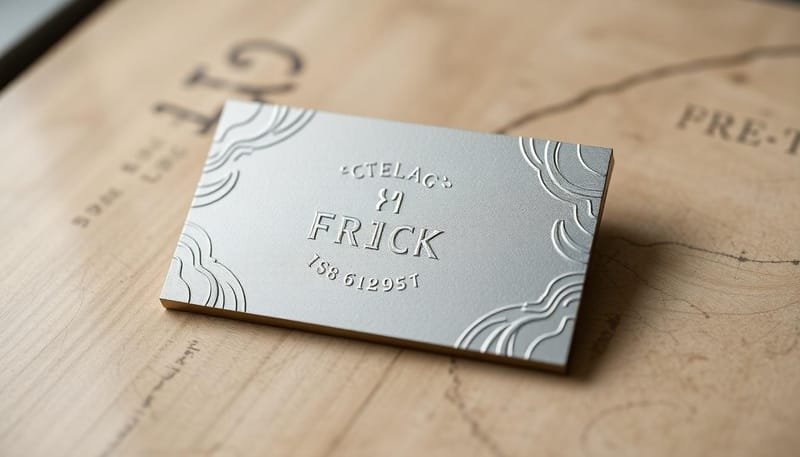
Business card thickness directly influences how people read your professionalism. A thicker card signals credibility, while a thin card can undermine even the sharpest design. According to the Paper and Packaging Board, 79% of people say they are more likely to remember information on high-quality printed materials than on digital alternatives. That number alone is reason to think twice about the cheapest option.
Picture it from the recipient side. They collect dozens of cards at a single event. When they sort the stack later, the ones with weight stand out, the ones that feel like they cost something. A 14pt card gets lost in the pile. A 32pt card sits on top, literally and figuratively. That is the whole case for thick card stock printing, and a dark stock such as black business cards at the same weight reads heavier still.
Thickness also drives practical durability. Cards that travel in wallets, pockets, and desk drawers have to survive bending, moisture, and general handling. A 16pt card holds up better than 14pt in daily use, and 32pt or higher resists damage for months. If your card lasts long enough to sit on someone desk, it is doing its job.
Beyond perception, thickness decides which finishes and printing techniques you can use. Embossing, debossing, and foil stamping need heavier stocks to hold their shape. Spot UV and soft-touch lamination look best on thicker cards because the surface stays flat and smooth. If you want premium finishes, you need premium thickness.
Points, millimeters, and what they actually mean
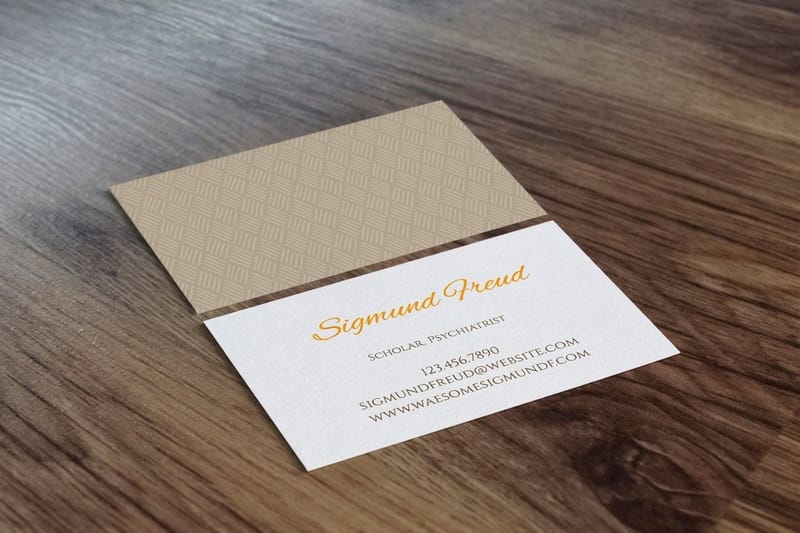
Card thickness is measured in points in the printing industry. One point equals 0.001 inches, which is not the same as font points, a completely different measurement. To convert points to millimeters, multiply the point value by 0.0254. So a 14pt card equals roughly 0.356 mm, while a 32pt card comes in at about 0.813 mm.
Here is why that matters in practice. A standard credit card is about 0.76 mm thick. So when you hold a 32pt card, it feels close to credit-card thickness, and everyone knows what a credit card feels like. A 14pt card, by comparison, feels closer to a thick sheet of printer paper. Not bad, but not memorable either.
Do not get lost in the math. What matters is how the card feels in your hand and how it represents your brand. The numbers help you compare options, but the real test is picking up a sample. 4OVER4.COM sends sample kits for the cost of shipping, so you can feel the difference before you commit, and you can start one from the free sample kit page.
Points, millimeters, and gsm, quick reference
- 14pt, about 0.356 mm, roughly 350 gsm. Economical stock for high-volume cards, postcards, and flyers.
- 16pt, about 0.406 mm, roughly 400 gsm. The professional standard for networking and face-to-face meetings.
- 18pt, about 0.457 mm, roughly 450 gsm. A step up that suits spot UV and matte lamination.
- 24pt, about 0.610 mm, roughly 600 gsm. Premium territory for creative and boutique brands.
- 32pt, about 0.813 mm, roughly 800 gsm. Near credit-card thickness, ready for edge painting and foil.
- 48pt, about 1.219 mm, roughly 1,200 gsm. Maximum-impact statement cards for luxury and executive use.
Quantity and price
Business card pricing and specs
Real configurator numbers, where the more you order, the lower the per-card cost drops.
| Quantity | Price Per Unit | Total |
|---|---|---|
| 100 | 17.6¢ | $17.57 |
| 200 | 11.5¢ | $23.07 |
| 300 | 9.15¢ | $27.46 |
| 400 | 7.96¢ | $31.86 |
| 500 | 7.25¢ | $36.26 |
| 600 | 6.77¢ | $40.64 |

How to measure a card you already have
You do not need a caliper to work out what stock a card is printed on. Hold it against a credit card, which runs about 0.76 mm. If your card is clearly thinner and flexes between two fingers, it is 14pt or 16pt. If it matches the credit card almost exactly, it is 32pt.
For a closer reading, stack ten identical cards, measure the stack with a ruler in millimeters, and divide by ten. Ten 16pt cards come to about 4 mm. Ten 32pt cards come to about 8 mm. The stack cancels out the error in reading a single card edge by eye.
One warning. Lamination adds a little on both faces, so a laminated 16pt card measures slightly over the chart number. When you are matching a reprint to an existing card, ask the original printer for the stock weight rather than trusting a measurement.
Common business card thicknesses explained
The chart above has the numbers. This is what each stock does once it is printed, cut, and handed over, so you can pick by feel and by job instead of by decimal.
- 14pt, the budget-friendly standard. It gets the job done for startups watching every dollar, but it bends easily, feels less premium, and limits finishes. Gloss and matte lamination sit on it fine, embossing and edge painting do not. This is the good-enough option, not the wow option.
- 16pt, the professional sweet spot. Noticeably sturdier than 14pt without a dramatic price jump, and it still holds a straight edge after months in a wallet. Real estate agents, lawyers, and consultants land here because it balances cost and quality and feels like a real business card. It is the default for business card printing at 4OVER4.COM.
- 18pt, a step above standard. A touch more rigidity and a better surface for spot UV or matte lamination, so those finishes read cleaner and more polished because the card stays flat under the coating.
- 24pt, premium territory. The card feels solid, resists bending, and pairs beautifully with embossing and foil, both of which need enough material to hold their shape. A favorite of creative professionals and luxury brands.
- 32pt, ultra thick and ultra memorable. Roughly credit-card thickness, it earns a comment the moment you hand it over, and it supports every finish from soft-touch matte to edge painting. It is also the heaviest card that still slides into a wallet slot.
- 48pt, maximum impact. As thick as business cards get. Heavy, rigid, and impossible to ignore, built for high-end real estate and executive-level statement pieces, and best handed over in person rather than filed away.
How thick is a standard business card in mm?
A standard business card is 0.356 mm thick on 14pt stock and 0.406 mm on 16pt, the two weights most runs use. A premium 32pt card measures about 0.813 mm, close to the 0.76 mm of a credit card, and 48pt reaches about 1.219 mm.
Is 16pt good for business cards?
Yes. 16pt is the weight most professionals should order. It costs a little more than 14pt, it does not flex in a wallet, and it takes gloss, matte, and spot UV cleanly. Step up to 24pt or 32pt when you want embossing, foil, or a painted edge, and drop to 14pt only when the quantity matters more than the feel.
Why gsm and points do not measure the same thing
Points measure caliper, which is how thick the sheet is: a 16pt card is 0.016 inches, about 0.406 mm. Gsm measures mass, the weight of a square meter of the paper, and that same 16pt card weighs roughly 400 gsm. Two stocks can share a gsm figure and still feel different, because one is bulkier and one is denser.
That is why a 300 gsm card can sit thinner than a 250 gsm card. A dense coated sheet packs more weight into less thickness, while an uncoated or textured sheet is airy and reads thicker at the same weight. Printers in Europe and Asia usually quote gsm, and printers in the United States usually quote points.
So brief a printer with the point weight and the finish. If a supplier gives you only a gsm figure, ask what it measures in points or millimeters before you compare two quotes, because the two scales do not convert cleanly across different papers.
How to pick the right thickness for your industry
Your industry should guide the thickness choice more than personal taste. Here is how different professionals usually approach it.
- Real estate agents hand out cards constantly, so they need something durable enough for a pocket or purse but affordable in bulk. 16pt with a gloss or matte finish lasts through multiple open houses.
- Creative professionals like designers, photographers, and artists need cards that show their eye for detail. 24pt or 32pt with a specialty finish tells clients you care, and Artist Business Cards are built specifically for creative work.
- Corporate executives and consultants benefit from 32pt stock, which signals authority and attention to quality when you meet decision-makers.
- Startups and small businesses on a tight budget can start at 14pt or 16pt, then upgrade thickness later as one of the easiest ways to level up brand presence.
- Event and hospitality professionals can consider 30Mil Clear Plastic Cards, which are waterproof, tear-proof, and unforgettable.
Thickness and finish, how they work together
Thickness and finish are not separate choices. They interact. A matte lamination on 14pt stock feels decent. The same lamination on 32pt stock feels luxurious, because the thickness gives it a rigid, smooth surface that amplifies the tactile experience. Here is how popular finishes pair with thickness.
- Gloss UV coating works on any thickness but shines brightest on 16pt and above, adding protection and making colors pop.
- Matte lamination pairs best with 18pt or thicker for a smooth, velvety feel.
- Soft-touch lamination is best on 24pt or 32pt, the finish you cannot stop touching. On thin stock it feels floppy.
- Spot UV needs at least 16pt to keep contrast between glossy and matte areas without warping.
- Foil stamping and embossing need 24pt minimum so the card holds the impression without buckling.
- Edge painting wants 32pt or thicker so the edge has enough surface for the color to show.
If you want a dramatic, high-contrast look, Black Business Cards on heavy stock with foil accents are hard to forget.
Compare formats
Popular business cards, side by side
Stock, finish, quantity, turnaround, and from-price across our most-ordered business cards.
 free business cards |  Standard Business Cards |  3D Lenticular Business Cards |  Metallic Foil Business Cards | |
|---|---|---|---|---|
| Min price | Free | $17.57 | $690.88 | $222.13 |
| Paper / stock | 14pt Gloss Cover | 14pt Gloss Cover | 31pt Lenticular Lens | 16 Point Silk Laminated |
| Finish | - | Standard Finish | - | - |
| Size | 2" x 3.5" | 2" x 3.5" | 2" x 3.5" - Vertical | 2" x 3.5" |
| Default qty | 200 | 100 | 500 | 500 |
| Turnaround | 5 business days | 3 business days | 22 business days | 7 business days |
| Rating | ||||
| View & customize | View & customize | View & customize | View & customize |
Specialty materials beyond traditional cardstock
Traditional cardstock is not your only option. The printing industry has expanded into materials that change what a business card can be.
Plastic cards at roughly 20 to 30 mil bring waterproof durability and a completely different feel, popular with fitness trainers, outdoor businesses, and anyone whose cards meet moisture. 3D Lenticular Business Cards push this further with animated effects that shift as you tilt the card.
Cotton and textured stocks add a handmade, artisanal quality. These papers are naturally thicker, often in the 18pt to 32pt range, with a distinct feel that sets them apart from coated stocks. They suit brands that want to communicate craftsmanship.
Kraft and recycled papers appeal to eco-conscious brands. They run slightly thinner, around 14pt to 16pt, but make up for it with a natural look and texture, and the sustainability story adds value beyond the card. For more on how paper weight and material play out across products, see these Logo Sticker Design Ideas.
What is the thickest business card stock available?
48pt, at about 1.219 mm, is as thick as business cards get. It is heavy, rigid, and impossible to ignore, which suits high-end real estate and executive statement pieces. It will not fit a standard wallet slot or Rolodex, so if the card has to be stored, 32pt is the practical maximum.
Is 32pt card stock worth the extra cost?
It is when the card has a job beyond carrying a phone number. At about 0.813 mm it is close to the 0.76 mm of a credit card, and it is the first weight that holds embossing, foil, and a painted edge properly. Spread across 500 cards the per-card difference is often just pennies. If you hand out thousands at events, 16pt is the better economics.
Premium thick card stock printing at 32pt and above
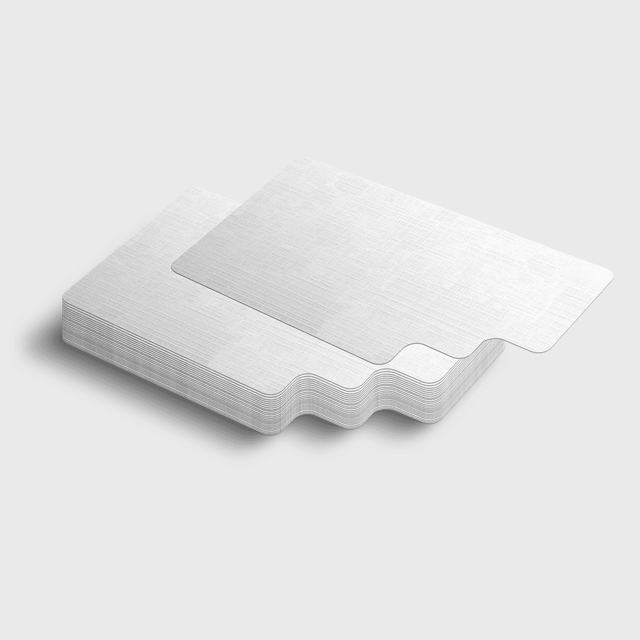
Past 32pt, thickness stops being a spec and becomes the thing people mention out loud. Ultra thick business cards start at about 0.813 mm, land on a desk with a knock instead of a flutter, and hand you a fourth surface to design on, the edge.
Triple layer construction. Most ultra thick stock is built rather than milled. Two printed sheets are laminated to a core, so a 32pt card is really three layers pressed into one. That core is what shows on all four cut edges, which is why a colored core reads as a stripe running around the whole card. The Construction Business Cards web story lists the stocks a builder can pick from.
Painted and colored edges. A painted edge does the same job on a plain core, in whatever color you choose. Both need material to show, so neither works below 24pt. Pick the edge color before the artwork, because it frames every side of the card and it is the detail people notice when the card sits in a stack.
What it does to the feel. 16pt flexes slightly. 32pt does not move at all. 48pt feels like a chip of board and is better handed over than filed. Finish shifts the impression again: soft-touch matte over a thick card feels warm and grippy, gloss makes it feel harder and colder, and ultra thick diamond glitter business cards add a layer that catches light as the card turns. The diamond glitter business cards web story shows the stock options and price breaks.
Cost versus thickness, what to expect
Let us be honest, thicker cards cost more. But the difference is smaller than you might think, and the return can be large.
A batch of 500 cards on 14pt stock costs a few dollars less than the same order on 16pt. Jump to 32pt and the increase is more noticeable, but spread across 500 cards the per-card difference is often just pennies. Pennies that decide whether your card gets kept or tossed.
Think of it this way. If even one thicker card sparks a conversation that becomes a client, the whole order has paid for itself many times over. Business cards are one of the cheapest marketing tools available, so spending a little more on thickness is one of the highest-return upgrades you can make.
4OVER4.COM offers quantity-based pricing, so larger orders bring the per-unit cost down. On runs of 1,000 or more, the gap between 14pt and 16pt practically disappears, and with 4.8 out of 5 stars across 10,000+ reviews, the quality matches the investment.
| Thickness | How it feels | Best use | What it does to the quote |
|---|---|---|---|
| 14pt | Flexes between two fingers | Large handout runs and first orders | The baseline every other stock is priced against |
| 16pt | Firm, no flex in a wallet | The everyday professional card | A few dollars more per 500 than 14pt, and the gap practically disappears at 1,000 or more |
| 24pt | Solid, holds an embossed or foiled detail | Creative and boutique brands | Sits between 16pt and 32pt on every quote |
| 32pt | Credit-card rigid | Executive, luxury, and finish-led cards | The most noticeable jump, and spread across 500 cards it is often just pennies each |
| 48pt | Board-stiff | Hand-delivered statement pieces | The top of the range, so order the quantity you will actually hand over |
Common thickness mistakes and how to avoid them
After printing 10 billion+ cards, 4OVER4.COM has seen every mistake in the book. These are the most common thickness errors.
Going too thin to save money. This is the number-one mistake. You save a few dollars and lose credibility. If budget is tight, cut quantity before you cut thickness. Fifty great cards beat 500 forgettable ones.
Going too thick without a plan. A 48pt card is impressive, but it will not fit a standard wallet slot or Rolodex. If recipients need to store your card, 32pt is the practical maximum, and anything thicker works best as a hand-delivered statement piece.
Ignoring finish compatibility. Embossing on 14pt stock warps. Edge painting on 16pt barely shows. Match finish to thickness or you waste money on effects that do not deliver.
Skipping samples. Photos and descriptions can only tell you so much. The feel of a card in your hand is something you have to experience, which is why 4OVER4.COM offers free sample kits to compare thicknesses side by side before your full order.
How to brief a printer for a premium thick card run
Say the number, not the adjective. Thick means 24pt to one printer and 48pt to another, so lead with the point weight, then work down the list: whether the stock is a single sheet or a laminated build, what color the core should be if it is a build, whether you want a painted edge and in which color, which finish goes on which side, and where any spot UV, foil, embossing, or debossing sits. Close with the quantity and the date you need them in hand.
Two more lines save most reprints. Ask for a sample of the exact stock and finish before the full run, and send print-ready artwork with bleed and your text pulled clear of the trim, because a thick card is cut through more material and every edge is on show.
Design tips that work best on thicker cards
Thicker cards open up design possibilities that thin stocks cannot support. Here is how to make the most of premium thickness.
- Use white space generously. Thick cards already say quality through feel, so let the card breathe. A clean, minimal design on 32pt stock says more than a cluttered one.
- Turn the edge into a design element. On 32pt and 48pt cards, a bold edge color that matches your palette shows even when the card sits in a stack.
- Pair dark backgrounds with foil. A deep navy or black 32pt card with gold or silver foil lettering rivals luxury packaging, especially for finance, law, and high-end hospitality.
- Lean on texture. Print thicker cards on linen, felt, or cotton so people do not just see your card, they feel it.
- Keep fonts readable. On very thick cards with specialty finishes, thin fonts get lost, so use medium-weight typefaces that hold their shape through embossing, debossing, and foil.
Prefer to start from a print-ready file? Grab a 3D lenticular business card blank or a black business card blank sized to exact product specs, so your art lines up with the cut and bleed at any thickness.
Start fast
Templates and print-ready blanks
Design templates and exact-size blanks so your art lands inside the cut line at any thickness.





Wally weighs up card thickness
From flimsy 14pt to credit-card-thick 32pt
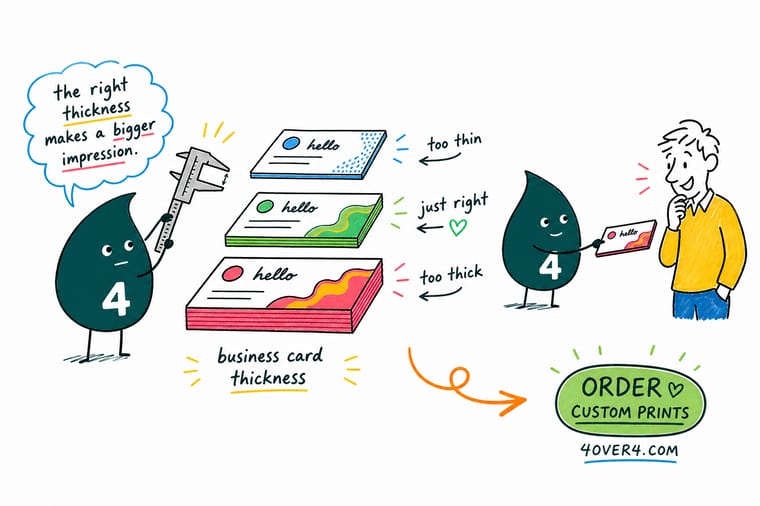
Thickness is the first thing people feel before they read your name. Start at 16pt for everyday professional use, step up to 32pt when you want a card people keep, and match heavier finishes like foil or edge painting to 24pt or thicker. Order a free sample kit, feel each weight, then print the one that fits your brand.
Order standard business cards →What to remember about business card thickness
How to weigh your thickness choice
- Budget. Thicker cards raise printing and shipping costs, so match the stock to what the project can support.
- Purpose and audience. Premium weight lifts a luxury brand, while standard thickness serves economical, high-volume needs.
- Project type. Business cards, brochures, and postcards each have their own functional sweet spot, so align thickness with use.
- Finish plans. If you want foil, embossing, or edge painting, start at 24pt or thicker so the finish holds.
- Durability. Cards that live in wallets and pockets need enough weight to survive daily handling.
- Storage. If recipients file your card, keep it at 32pt or under so it fits standard slots.
Explore more
More ways to choose and order business cards
Related pages on 4OVER4.COM so you can keep comparing stocks, finishes, and formats.
Ready to pick your card thickness?
Order a free sample kit to feel every weight, then print your cards on the stock that fits your brand, as fast as same day.
Common questions about business card thickness
Is 14pt or 16pt thicker?
16pt is thicker. A 14pt card measures about 0.356 mm and a 16pt card about 0.406 mm, so the gap is half a tenth of a millimeter. You can feel it, because 14pt flexes between two fingers while 16pt holds a straight edge in a wallet.
Is a 300 GSM card thick?
300 gsm is on the thin side for a business card. It sits close to the 350 gsm range of a 14pt stock, which works for a high volume handout but bends in a pocket. Most professionals go heavier, and 400 gsm, roughly 16pt, is the weight that holds up in daily use.
Is 250gsm good for business cards?
250 gsm is light for a card. It is closer to a heavy flyer stock than to a business card, so it creases at the corners and feels flimsy in a stack. Use it only when the piece is disposable, and step up to 400 gsm or heavier for anything you hand to a client.
Is 400 GSM good for business cards?
Yes, 400 gsm is the everyday professional weight. It matches 16pt stock at about 0.406 mm, it does not flex in a wallet, and it takes gloss, matte and spot UV cleanly. Go heavier only when you want embossing, foil or a painted edge, which need 24pt and up.
What are the best practices for business card thickness?
Start with 16pt as your baseline for professional use, then upgrade to 32pt when you want maximum impact. Match thickness to finish, since embossing and foil need 24pt minimum, and order samples before a full run. If you need waterproof durability beyond cardstock, look at 30Mil White Plastic Cards.
How do I choose the right business card thickness?
Weigh three things, your industry, your budget, and your finish. Corporate and luxury brands do well at 32pt, while startups and high-volume distributors can start at 14pt or 16pt. For specialty finishes like spot UV or soft-touch lamination, go 18pt or thicker. For most professionals, 16pt is the best all-around starting point. Browse more tips in our Printing Articles.
What makes business card thickness effective for marketing?
Thicker cards get kept longer. A rigid, weighty card signals quality before the recipient reads a single word, and it survives wallets and desks so your brand stays visible well past the first handoff. With 10 billion+ cards printed, 4OVER4.COM sees that buyers who upgrade thickness report stronger response rates.
How much should I budget for business card thickness?
The gap between thicknesses is smaller than most people expect. Moving from 14pt to 16pt adds just pennies per card on orders of 500 or more, and jumping to 32pt stays one of the most affordable marketing upgrades you can make. For exact pricing on your thickness and finish, visit the Help Center or start a custom quote. Budget roughly 20 to 40 percent more for ultra-thick 32pt stock versus standard 14pt.
