Table of Contents
- Home
- content hub
- what is uv coating on business cards: Premium finish guide
 Share and earn
what is uv coating on business cards: Premium finish guide

Dec 3, 20257416 views
Dec 3, 20257416 views
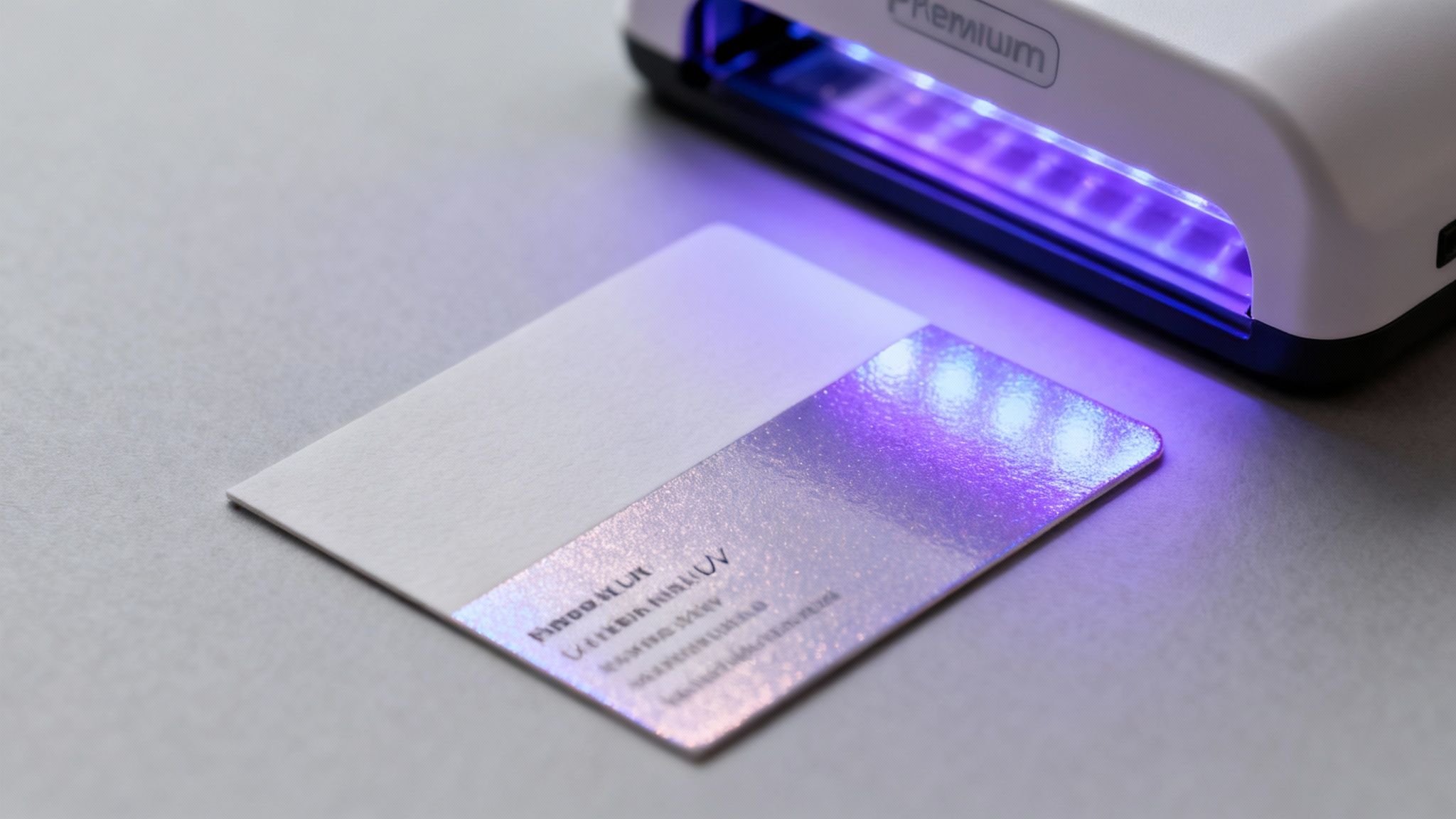
So, what exactly is UV coating on business cards?
Think of it as a liquid shield—a special polymer that’s applied to the paper and then instantly cured, or hardened, with ultraviolet light. This process creates a brilliant, high-gloss finish that makes colors pop and adds a tough, protective layer to your card.
Decoding UV Coating and Its Impact
The best analogy is the clear coat on a new car. It gives the paint that stunning showroom shine while protecting it from everyday scuffs, scratches, and fading. That's precisely what UV coating does for a business card. It transforms a simple piece of paper into a memorable, professional tool that nails the first impression.
The enhanced look and feel do more than just catch the eye; they play a big part in building brand awareness by creating a tangible, high-quality touchpoint for your brand.
This powerful finish comes in two main flavors, which we'll dive into later:
- Full UV Coating: This option covers the entire surface of the card, giving it a consistent, all-over sheen.
- Spot UV Coating: This is a more artistic technique. The gloss is applied only to specific areas—like a logo or a bit of text—to create a stunning contrast against a matte background.
In a crowded market, the quality of your business card says a lot about your company’s credibility. A premium finish like UV coating isn't just about looking good; it's a strategic move to stand out and communicate professionalism from the get-go.
And these details are becoming more important than ever. The global business card market is expected to hit USD 0.45 billion by 2035, largely driven by the ongoing need for corporate networking. Plus, surveys have found that a whopping 72% of people judge a company based on the quality of its business cards, making premium finishes a seriously smart investment.
Getting a handle on what UV coating is and how you can use it is the first step toward creating cards that truly leave a mark. You can explore the wide range of customizable business card printing options to see just how much this finish can elevate your design.
The Science Behind the Shine
Ever wonder how a liquid coating turns into that hard, super-glossy shell on a business card in just a few seconds? It’s not magic, but it’s close. The process behind UV coating is a really cool mix of chemistry and light that creates a finish that older, air-drying methods just can't compete with.
It all starts with a special liquid polymer that gets applied to the surface of the printed card. This isn't your everyday varnish; it's a unique compound engineered to react specifically to ultraviolet light. Once that liquid is spread evenly across the cardstock, the real action begins.
The Curing Process Explained
The coated card is then sent on a quick trip under a set of high-intensity UV lamps. This is the crucial "curing" stage. As the card passes under this intense light, a chemical reaction called photopolymerization happens almost instantly. The UV energy zaps the liquid's molecules, causing them to link together and form a solid, tough layer in less than a second.
This instant hardening is what makes UV coating a game-changer. Forget waiting hours for a finish to air-dry. The result is a perfectly smooth, durable, and brilliantly glossy surface that’s ready for trimming and boxing up right away.
This diagram breaks down the three simple stages of the process, showing how a liquid polymer becomes a finished, glossy card with just a little help from UV light.
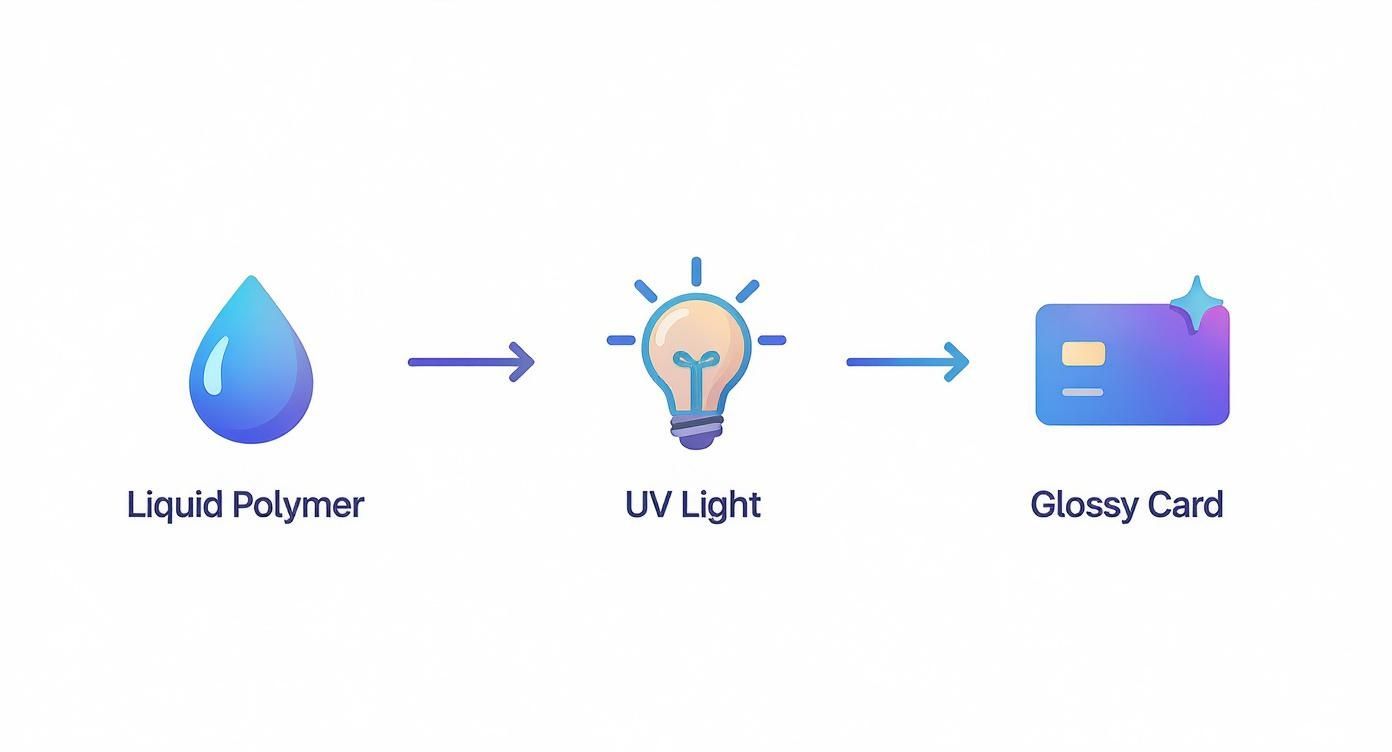
As you can see, it's a straightforward and highly efficient process. Liquid polymer goes in, gets a blast of UV light, and a cured, glossy card comes out.
Why This Modern Method Matters
The sheer speed of this process has a huge impact on production. Instant curing can slash turnaround times by up to 50% compared to water-based coatings that have to slowly evaporate and dry. For any business needing high-quality print materials from a place like 4OVER4 on a tight schedule, that speed is a massive advantage.
The science of UV coating is all about precision and speed. Unlike air-drying, where you risk imperfections like dust settling on a wet surface, the instant UV cure locks in a flawless finish every single time. It's how we guarantee consistent quality across an entire print run.
This technology really shines when you want to make specific parts of your design pop. Applying a gloss finish to just a logo or a bit of text creates a tactile and visual contrast that people can't help but notice. To get a better feel for how this precision works in the real world, check out the different spot UV printed products that use this exact technique.
Once you understand the science, you don't just see a shiny card—you appreciate the advanced process that makes such a striking and durable result possible.
Choosing Between Full Gloss and Spot UV
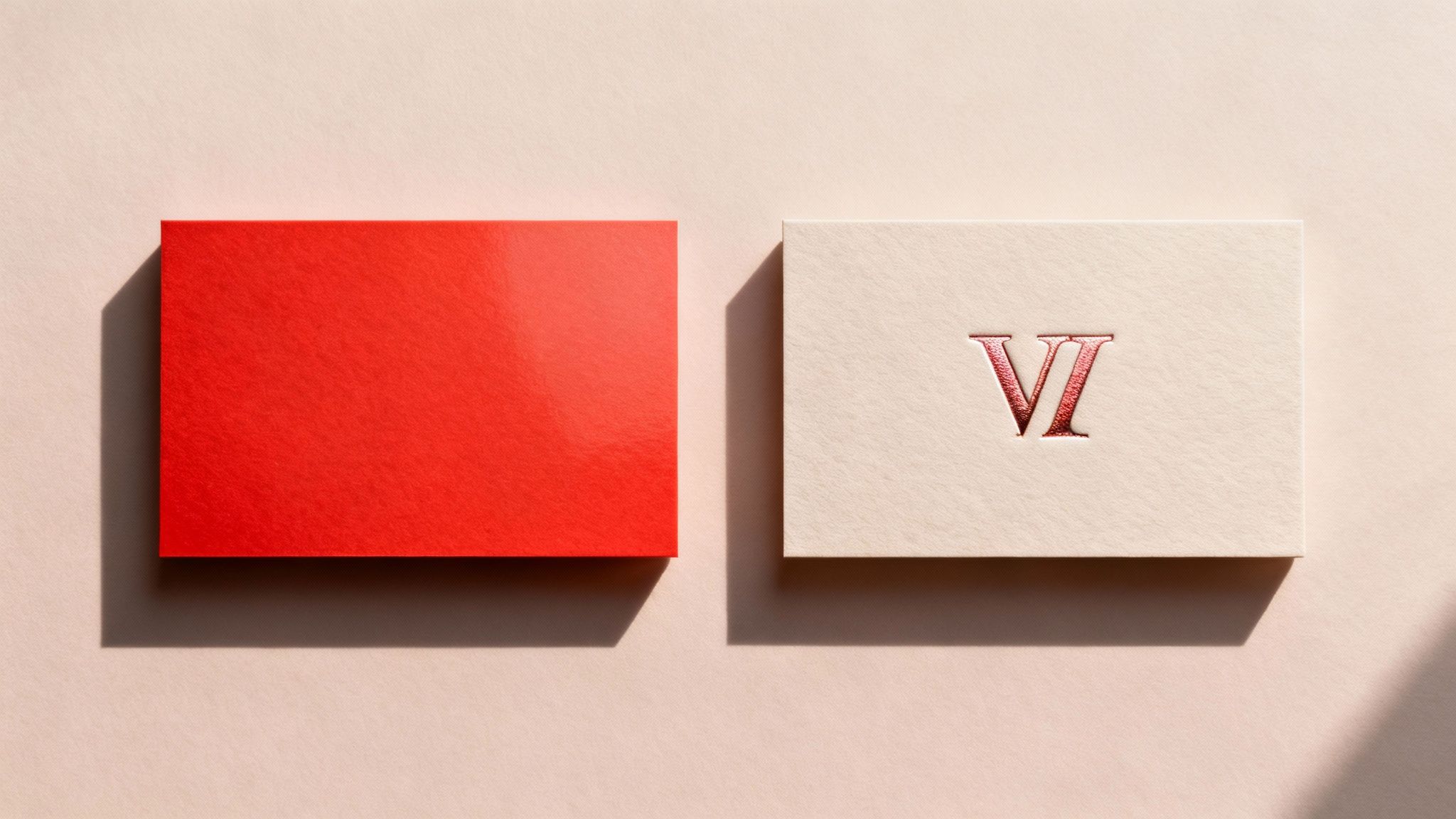
Alright, so you're sold on using a UV coating. The next big question is how you want to apply it. This isn't just about looks; it's a strategic move that directly shapes how people perceive your brand. Your two main options are Full UV and Spot UV, and they each create a completely different first impression.
Getting the difference between them is the key to making sure your business card's finish truly clicks with your brand's message. One is bold and uniform, grabbing attention from across the room. The other is all about subtle, sophisticated contrast that begs to be touched.
The All-Over Shine of Full UV Coating
Just like the name implies, a Full UV coating covers every square inch of your business card, from one edge to the other. Imagine dipping the entire card in a thin layer of liquid glass. What you get is a consistent, high-gloss finish that makes the whole design look intensely vibrant and slick.
This approach is perfect for designs that need to make a loud, confident statement.
- Vibrant Photography: If your card has a colorful photo, a full gloss coat will make it pop with incredible depth and sharpness. It’s a game-changer for photographers or real estate agents.
- Bold Graphics: Got a design with bright colors, cool gradients, or complex patterns? The uniform sheen kicks up the visual energy and makes those elements sing.
- Maximum Durability: By covering the whole card, you're giving it a complete protective shield against moisture, scuffs, and fading. It’s a super practical choice for cards that will get passed around a lot.
A graphic designer with a bold, colorful pattern on their card or a travel agent showcasing a stunning destination photo would be perfect candidates for a Full UV finish. That consistent gloss guarantees the design is the undisputed star of the show.
The Precision Artistry of Spot UV
This is where things get really creative. Instead of flooding the whole card, Spot UV applies that glossy finish only to specific, hand-picked areas. This technique creates a stunning contrast between the shiny, slightly raised elements and the cardstock underneath, which is usually a smooth, non-reflective matte.
That contrast isn't just visual—it's tactile. It makes people want to run their thumb over the card to feel the different textures. It’s a subtle but incredibly powerful way to direct someone’s eye and highlight the most critical parts of your design.
Spot UV is less about an all-over shine and more about creating a deliberate, multi-sensory experience. It elevates a design from something you just see to something you feel, adding a layer of perceived value and sophistication.
Here’s where Spot UV really shines:
- Highlighting a Logo: Making your company logo the only glossy part of a matte card guarantees it’s the first thing people notice and remember.
- Emphasizing Text: Applying the gloss to just your name or a tagline can make it stand out with understated elegance.
- Creating Patterns: A subtle, glossy pattern over a solid matte color adds a "wow" factor that only reveals itself when it catches the light.
Picture a sleek, matte black business card for a luxury consultant where only their minimalist logo has that high-gloss finish. The effect is confident, memorable, and feels incredibly premium. For businesses chasing a similar high-end feel, checking out a range of gloss laminated printed products can spark some great ideas.
When it comes down to it, the choice between full and spot UV depends on the story your brand wants to tell.
Full UV vs Spot UV at a Glance
To make the decision even clearer, let's break down the key differences between these two fantastic finishes. Think of this table as your quick-reference guide to matching the right coating to your design goals.
| Feature | Full UV Coating | Spot UV Coating |
|---|---|---|
| Coverage | Covers the entire card surface | Applied to specific, selective areas |
| Primary Effect | High-gloss, uniform, vibrant shine | Creates contrast between gloss and matte |
| Best For | Photo-heavy designs, bold colors | Highlighting logos, text, or patterns |
| Feel | Smooth and slick all over | Tactile, with varied textures |
| Overall Vibe | Loud, energetic, and eye-catching | Sophisticated, subtle, and elegant |
| Durability | Excellent overall protection | Protects only the coated areas |
Ultimately, both coatings offer a professional look, but they tell very different stories. Full UV shouts your message with vibrant confidence, while Spot UV whispers it with refined elegance. Your choice will define that critical first touchpoint with a potential client.
When you're picking a finish for your business cards, it's a classic balancing act between making a visual splash and dealing with real-world practicalities. UV coating brings some serious advantages to the table, making it a go-to choice for many. But, like any finish, it has its limits. It’s crucial to weigh both sides to see if it’s the right move for you.
The biggest win here is outstanding durability. A UV-coated card is just plain tough. It stands up to scratches, scuffs, and smudges way better than an uncoated card, so it stays looking crisp even after being passed around or shoved in a wallet. That protective shell also gives it excellent moisture resistance, saving it from minor spills or a bit of dampness.
Beyond its brawn, this finish packs a visual punch. The high-gloss surface makes colors look deeper, richer, and just more alive. This little trick can take a good design and make it truly great, giving your brand a premium feel that screams professionalism and an eye for detail.
Advantages of a UV Coating
Let’s get specific about the strengths you get with this finish:
- Superior Protection: That hardened top layer is like armor for your cards, protecting them from the everyday wear and tear of being handled.
- Vibrant Color Enhancement: The glossy surface bounces light back, which cranks up the intensity of the inks underneath and makes your whole design pop.
- Professional Appearance: The sleek, smooth texture adds a level of sophistication that boosts your brand's perceived value.
- Cost-Effective Durability: When you stack it up against other premium finishes, UV coating offers a high degree of protection and visual appeal without a huge price tag.
A UV coated business card doesn’t just look better—it lasts longer. That resilience means every card you hand out maintains its pristine, professional appearance, ensuring your first impression remains a strong one, time and time again.
But no finish is perfect for every single job. It’s just as important to understand the practical downsides that come with that slick, shiny surface.
Potential Downsides to Consider
The very things that make UV coating so attractive also create a few headaches. The biggest one? That smooth, non-porous surface is extremely difficult to write on with a normal ballpoint pen or pencil. If you’re someone who constantly jots down notes, appointment times, or a quick personal message on your cards, this could be a dealbreaker.
That super reflective surface, especially on dark or solid-colored designs, can also be a magnet for fingerprints. Sure, you can wipe them off, but it's something to think about if your design relies on looking flawlessly clean at all times. Lastly, the coating is rigid, which means it can sometimes crack if the card is sharply creased. This might not be ideal if you’re planning on folded business cards.
Before you pull the trigger, really think about how your cards are going to be used out in the wild. If they’re all about making a killer visual statement, the benefits are hard to beat. But if they need to be interactive, these drawbacks are definitely worth considering.
Comparing UV Coating with Other Finishes
When you're deciding on the perfect finish for your business cards, UV coating is a fantastic option, but it’s certainly not the only player in the game. Figuring out how it stacks up against other popular choices like lamination and aqueous coating is key to picking the one that best fits your brand, message, and budget. Each finish brings a unique mix of durability, texture, and visual pop to the table.
Think of these finishes like different types of protective gear for your phone. UV coating is like a sleek, hard-shell case—it's tough, shiny, and makes the colors underneath look incredibly vibrant. It gives you excellent protection with a modern, high-gloss appeal.
UV Coating vs. Lamination
Lamination is a whole different beast. Instead of applying a liquid coating, lamination bonds a thin layer of plastic film directly to the cardstock using heat and pressure. The result is an exceptionally durable and rigid barrier against moisture, tearing, and just about any kind of heavy wear and tear. If UV coating is a hard shell, lamination is full-on armor.
This process also opens the door to some incredible textural experiences. While UV is famous for its gloss, lamination is available in various styles, including matte, gloss, and even luxurious soft-touch finishes that feel like velvet. For anyone wanting to add a high-end, tactile element, exploring options like soft-touch printing can really show you how different finishes create distinct sensory experiences.
The trade-off? Lamination adds noticeable thickness and rigidity, which can sometimes feel a bit bulky. It’s also usually a more premium-priced option compared to the more streamlined UV coating process.
UV Coating vs. Aqueous Coating
Aqueous coating is the most subtle of the three. It's a water-based, fast-drying sealant that offers a basic level of protection against fingerprints and minor scuffs. You can think of it as a light, clear raincoat for your card—it provides some defense, but it won't hold up against a downpour.
Visually, an aqueous coating gives a soft sheen, landing somewhere between a matte and a satin finish. It doesn't have that dramatic, high-impact gloss that defines UV coating, making it a much more understated choice. While it’s often the most cost-effective and eco-friendly option, its protective qualities are far less robust than what you get with UV.
Choosing a finish is all about matching the material to the message. A high-gloss UV coating shouts confidence and vibrancy, a soft-touch lamination whispers luxury and sophistication, while a simple aqueous coat suggests practicality and subtlety.
To help you decide, it helps to see their core differences laid out side-by-side.
Comparison of Business Card Finishes
Here’s a quick breakdown of how these three popular finishes compare across key attributes, making it easier to see which one aligns with your specific needs.
| Attribute | UV Coating | Lamination | Aqueous Coating |
|---|---|---|---|
| Protection Level | High (scuffs, moisture) | Very High (tears, water) | Basic (fingerprints, scuffs) |
| Appearance | High-gloss, vibrant | Matte, gloss, soft-touch | Subtle sheen, satin-like |
| Feel & Texture | Smooth and slick | Thick, rigid, varied textures | Smooth but not slick |
| Cost | Mid-range | Higher-end | Most affordable |
Ultimately, your choice really comes down to your priorities. For maximum shine and strong protection at a great value, UV coating is an excellent all-rounder. If you need unmatched durability and want unique textures, lamination is worth the investment. And for basic protection with a subtle finish on a tight budget, aqueous coating gets the job done.
How to Prepare Your Design Files for UV Coating
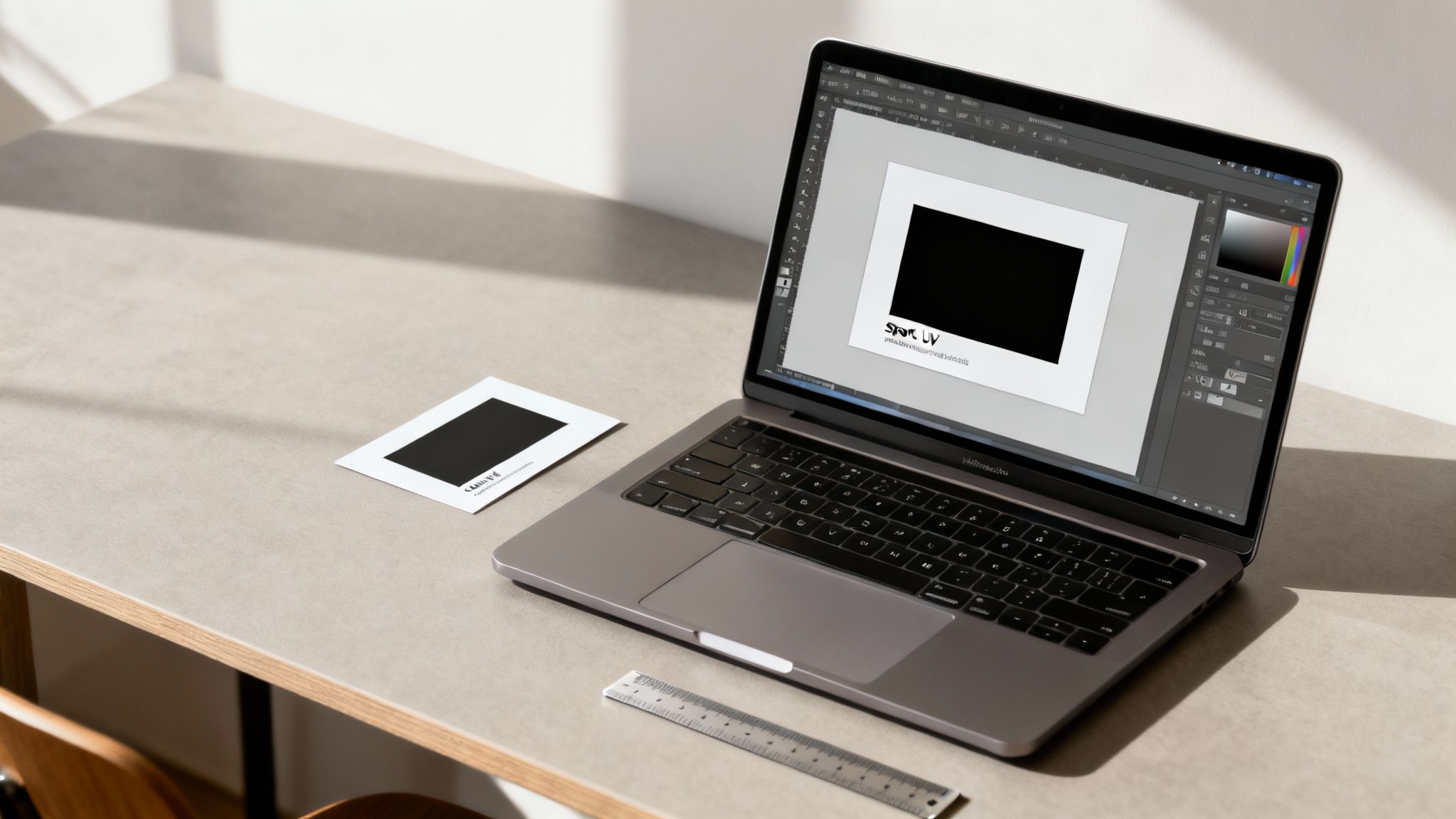
A stunning business card starts with a perfectly prepared design file. Before you send your art to the printer, taking a few extra minutes on the setup is the secret to getting a final product that looks exactly as you pictured it.
If you’re going for a full gloss finish, the process is dead simple—your standard print-ready file is all we need. But for Spot UV, you have to give the printing press a little instruction manual. This is where a "mask" file comes into play.
Creating the Perfect Spot UV Mask
Think of a Spot UV mask like a stencil. It’s a separate file that tells the printer precisely where to lay down that glossy coating and where to leave the paper bare. It’s your way of pointing and saying, "Put the shiny stuff right here."
Here’s how to set it up for success:
- Use Solid Black: The areas you want to be glossy must be filled with 100% solid black (C:0, M:0, Y:0, K:100). Don't use a rich black or any shade of grey—the machine is looking for pure, solid black. Anything else will be ignored.
- Create a Separate Layer: In your design software, build the mask on its own layer, completely separate from your main artwork. This ensures everything lines up perfectly during printing.
- Remove Everything Else: The mask file should only contain the solid black shapes for your UV elements. All other text, images, and design elements must be deleted from this file.
This mask file leaves no room for error, telling the machine exactly which parts of your card get the star treatment.
A well-made mask file is your direct line of communication with the printing equipment. It translates your creative vision into a tangible, tactile result, ensuring the gloss lands perfectly on your logo or pattern and not a millimeter off.
Beyond the file itself, a few design considerations can really elevate the final product. Try to avoid using extremely fine lines or tiny text for the UV effect, as the coating can sometimes bleed or not adhere cleanly to super small details.
Want to take it to the next level? Consider combining the visual pop of Spot UV with other unique finishes. Exploring custom shapes through die-cutting services can create a business card that is genuinely unforgettable.
Common Questions About UV Coated Business Cards
Even after digging into all the benefits and design tips, you might still have a few practical questions about UV coating. That’s perfectly normal. Getting straight answers to these common questions will help you order with confidence, knowing exactly what to expect when your cards arrive.
Let's clear up some of the most frequent things we hear from customers.
Is UV Coating Completely Waterproof?
While the hardened UV layer gives your cards fantastic protection against moisture, it's not 100% waterproof. Think of it as highly water-resistant. If you splash a little coffee on it, a quick wipe will likely save the day.
But if a card takes a full dive into a puddle and stays there, the underlying paper will eventually get damaged. It’s tough, but not indestructible.
Can I Write on a UV Coated Card?
This is a big one. The slick, non-porous surface created by a UV coating is designed to repel liquids, and that includes most inks. A standard ballpoint pen or a pencil simply won't work on that glossy finish.
If you plan on jotting down notes or appointment times, you’ll need to use a permanent marker.
The fact that you can't write on a UV coated card with a regular pen is probably its biggest practical drawback. If your networking style involves adding a personal note on the spot, you’ll be much happier with a matte or uncoated finish.
Does UV Coating Cost a Lot More?
UV coating is definitely a premium finish, so it does add a little to the total cost compared to a basic, uncoated card. However, it's often more budget-friendly than other high-end finishes like lamination.
It strikes a great balance, giving you a major boost in visual impact and durability without breaking the bank.
Is the UV Coating Process Eco-Friendly?
The curing process itself is pretty efficient. The UV lamps use minimal energy and release very few volatile organic compounds (VOCs), which makes it a cleaner choice than many old-school, solvent-based varnishes.
That said, the plastic-like coating isn't biodegradable. Whether the card can be recycled really depends on the capabilities of your local recycling facility.
Ready to create business cards that actually get noticed? At 4OVER4, we offer a huge range of premium finishes, including gorgeous UV coatings, to make your brand shine. Explore our options and start designing today at https://4over4.com.
More from

49
If you've ever wondered about the standard gift card dimensions, there’s one number you need to know: CR80
 Emma Davis
Mar 17, 2026

36
When you’re launching a product, your bottle label is often the first thing a customer sees. Think of it as your silent salesperson
Emma Davis
Mar 16, 2026

91
When you're brainstorming ideas for landscaping business cards, it helps to think beyond just contact information. Your c
Emma Davis
Mar 15, 2026

222
When you think of a yard sign, the classic 18"x24" is probably what comes to mind. It’s the industry workhorse fo
Emma Davis
Mar 14, 2026

132
When you’re ready to invest in an A-frame sign, the first question you'll ask is, "What size do I need?" It usually comes down
Emma Davis
Mar 13, 2026

1368
The real secret to mastering your direct mail budget isn't complicated. It comes down to one simple fact: a standard 4" x 6&q
Emma Davis
Mar 12, 2026

161
Tear-off flyers are a classic for a reason. They’re a tangible marketing tool, designed with perforated, removable tabs at the bottom. Each
Emma Davis
Mar 11, 2026

290
Printing stickers at home is a seriously fun and rewarding project. It boils down to four main parts: designing your image, picking the right
Emma Davis
Mar 10, 2026